
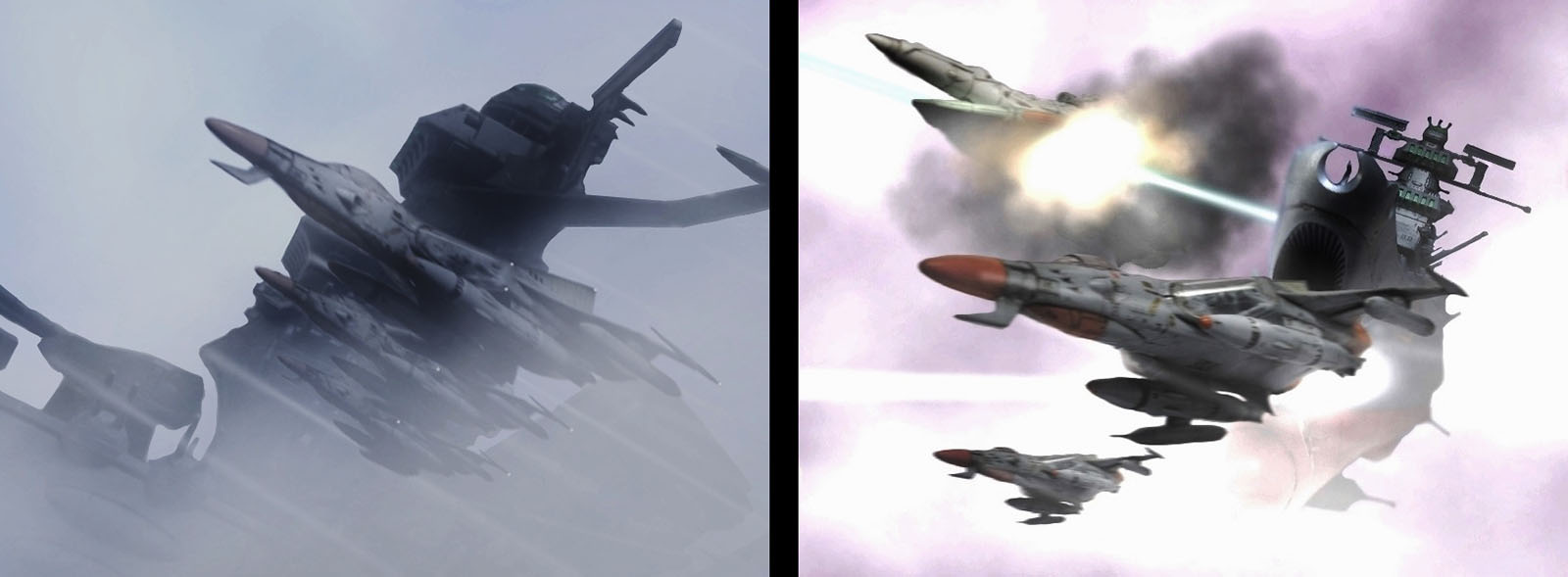
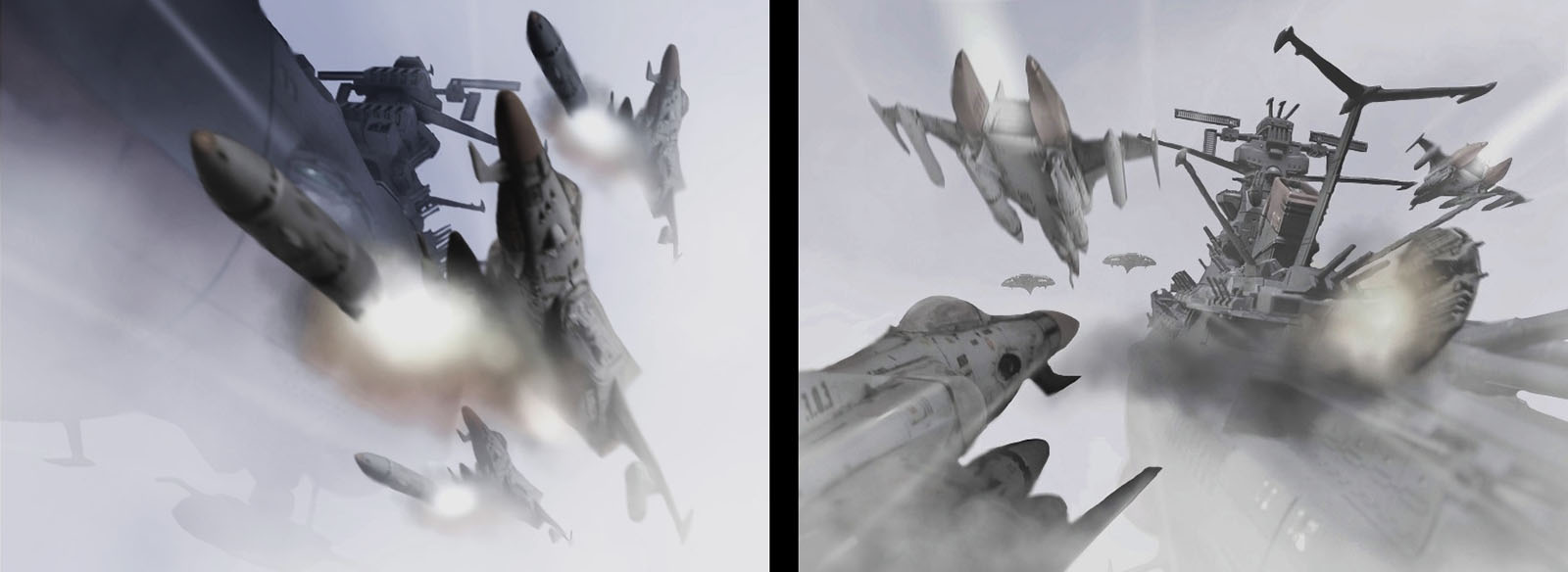
Even among the geniuses we’ve met in this series of profiles, fan artist “Juuzo Hizikata” (not his real name) is something of a legend, having been producing his own distinctive works since the days of the official Yamato fan club in the late 1980s. His style occupies solid ground directly between the anime and Leiji Matsumoto’s manga, synthesizing the best of both into something new.
He’s been at it for about 40 years, producing fan art that accommodates the remake era while still holding tightly to the original roots. In addition to answering the usual questionnaire, he was kind enough to recount his personal history in Yamato fandom, giving us a window into the life of a long-haul devotee in the homeland.
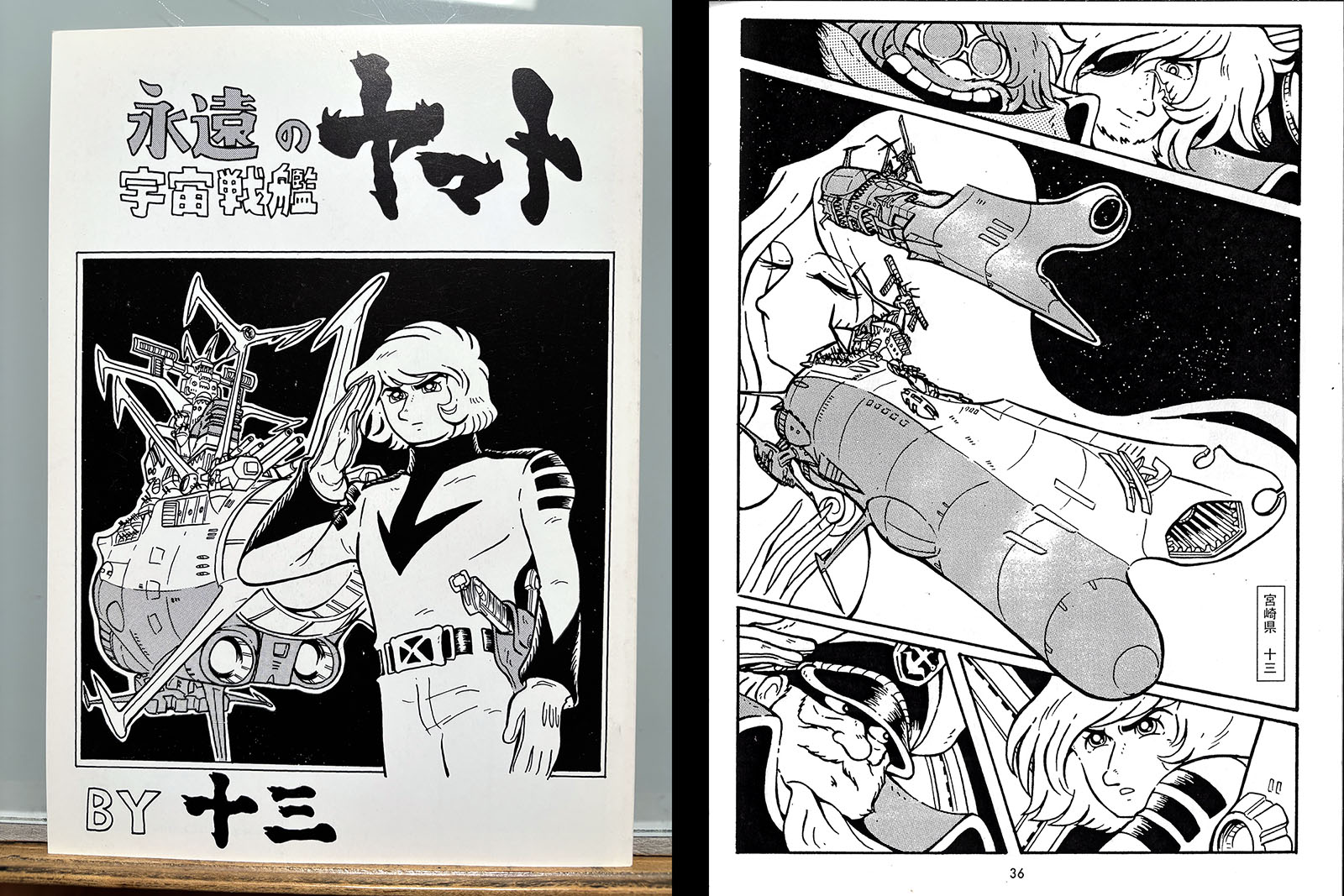
1. What was your first Yamato experience?
When I was in elementary school, I discovered Leiji Matsumoto’s manga in the magazine Bouken Oh (Adventure King), and I was immediately captivated by the sight of the rust-colored battleship Yamato displayed on our TV screen. I believe the fact that my late father was a former Navy man, and that he often told me stories about battleships when I was a child, also served as the foundation for this fascination.
At the time, my family actually owned two TV sets, one color and one black-and-white, but I watched on the black-and-white set. Even in that simple format, I could still feel the sheer visual power of the imagery. Consequently, I initially experienced the “Rainbow Star Cluster” completely devoid of color. Years later, when the theatrical film version was released, seeing Yamato for the very first time in full color, and on a massive cinema screen, no less, gave me a second shock of awe!
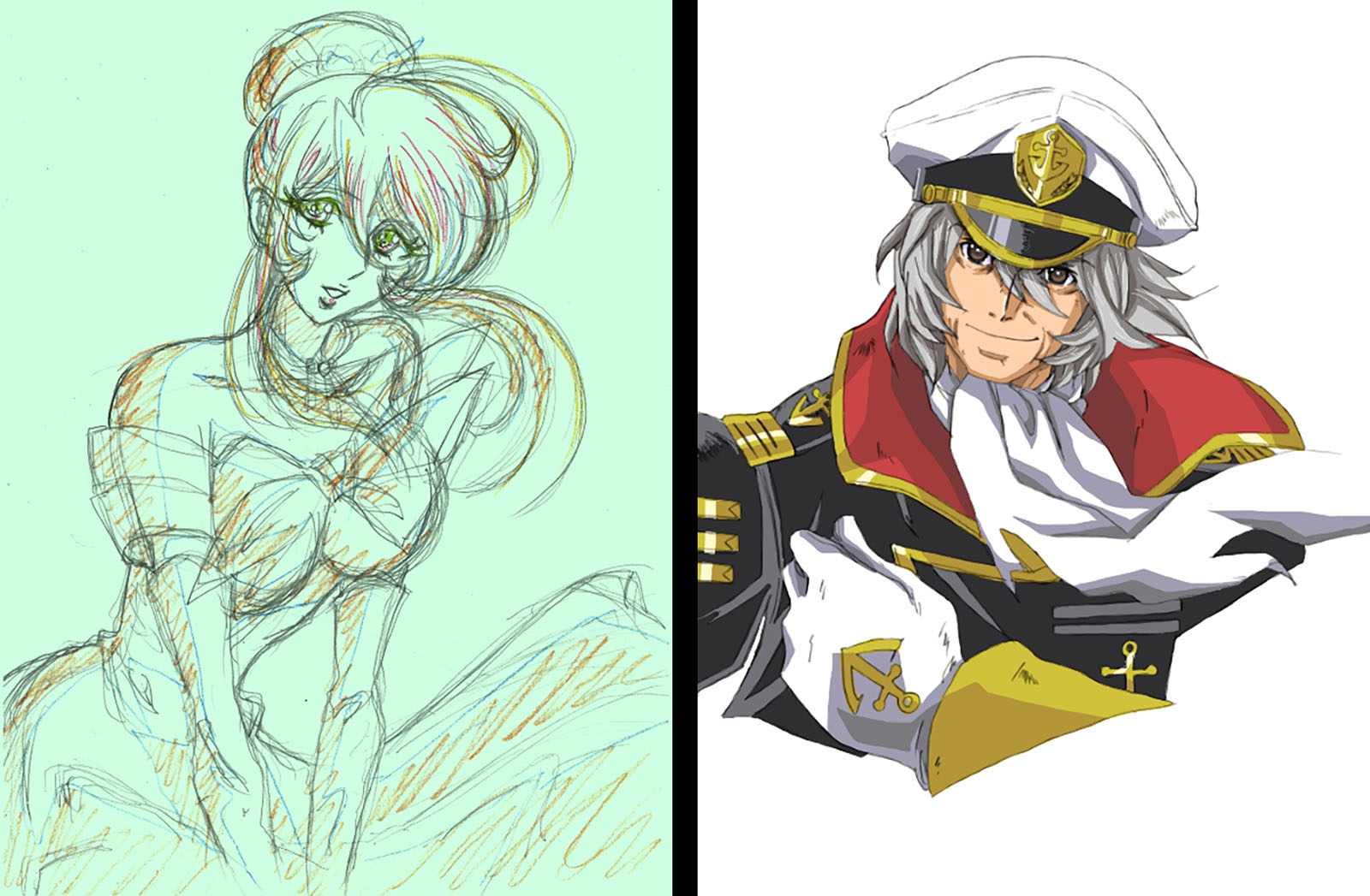
2. What is your favorite aspect of Yamato?
I love the realistic movement of the mecha, machinery so substantial and weighty that you can practically smell the iron. I also love the core concept itself, a battleship traversing the vast cosmos, which evokes a sense of “masculine romance.” Furthermore, I adore the cast of compelling characters, starting with Susumu Kodai, and, in particular, the mysterious beauty of the female characters as depicted by Mr. Matsumoto.
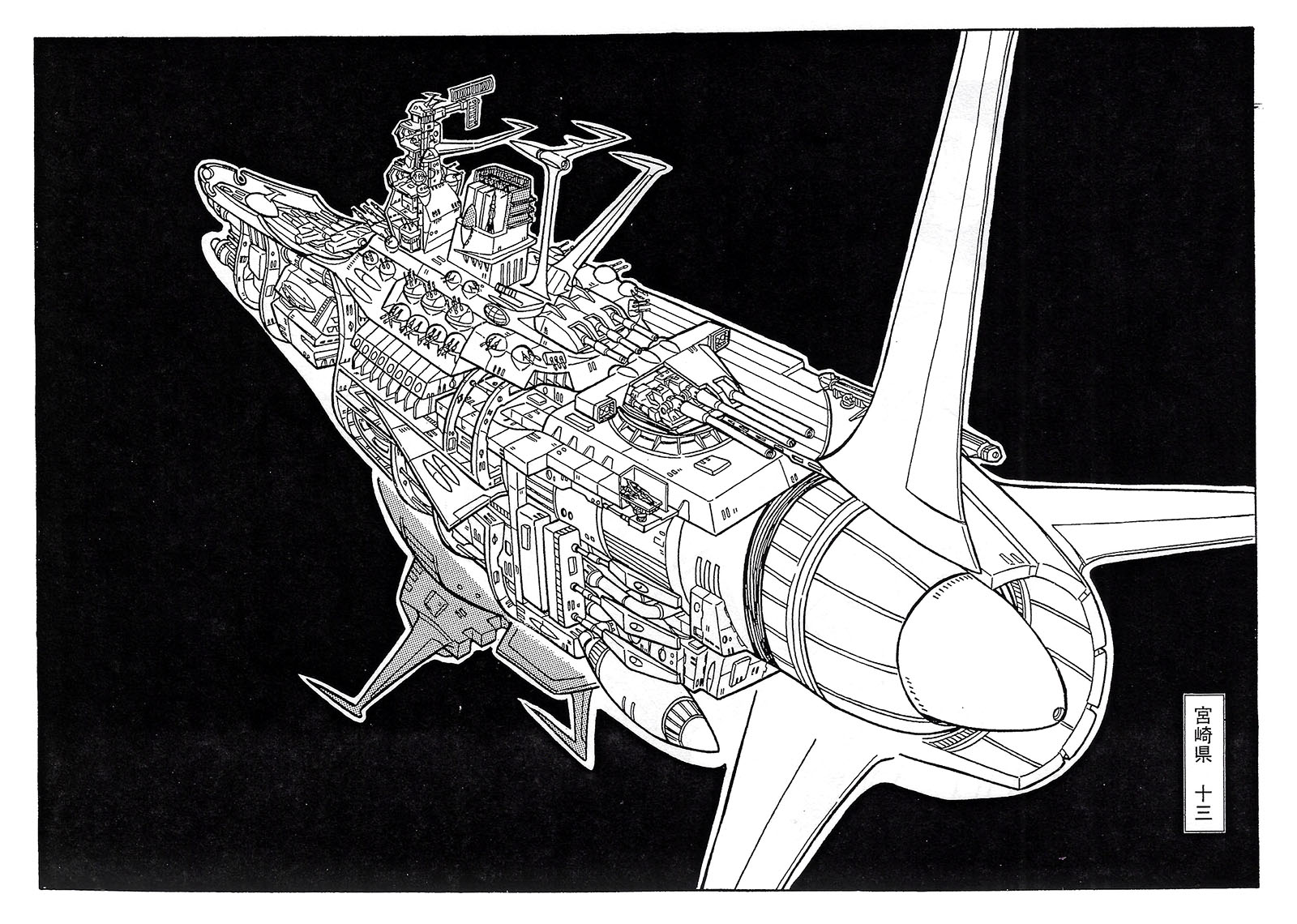
3. Are you a Yamato collector?
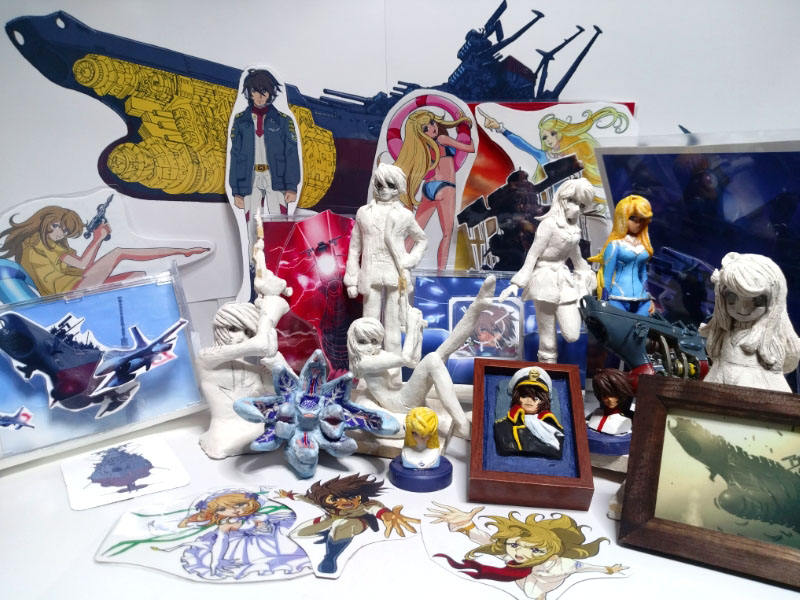
I wouldn’t describe myself as a “collector” in the sense of actively seeking out specific items, such as animation cels or stickers, but since it’s a series I truly love, I do tend to purchase multiple copies of any merchandise that catches my eye (especially plastic models). As a result, I have naturally ended up amassing a collection over time.
4. What is your most treasured Yamato item?
That’s a difficult question! For me personally, it’s not so much about the physical items themselves as it is about the sentiments and memories attached to them. So, to be honest, I simply couldn’t bring myself to choose just one single favorite.
Mr. Matsumoto’s autograph and clippings from his manga of that era. An autograph I received from my mentor, Michio Murakawa. A model of a Gamilas fighter, created by Shoichi Manabe, who sculpted the prototype for the 50th Anniversary Yamato model kit. Art books by professional creators involved with Yamato, such as Mr. Kaneda, Mr. Yuuki, Mr. Tamamori, Mr. Nishii, and Mr. Itabashi. And doujinshi (fan works) gifted to me by friends. Each and every one of these items is a cherished treasure of mine.
5. What are your favorite drawing tools?
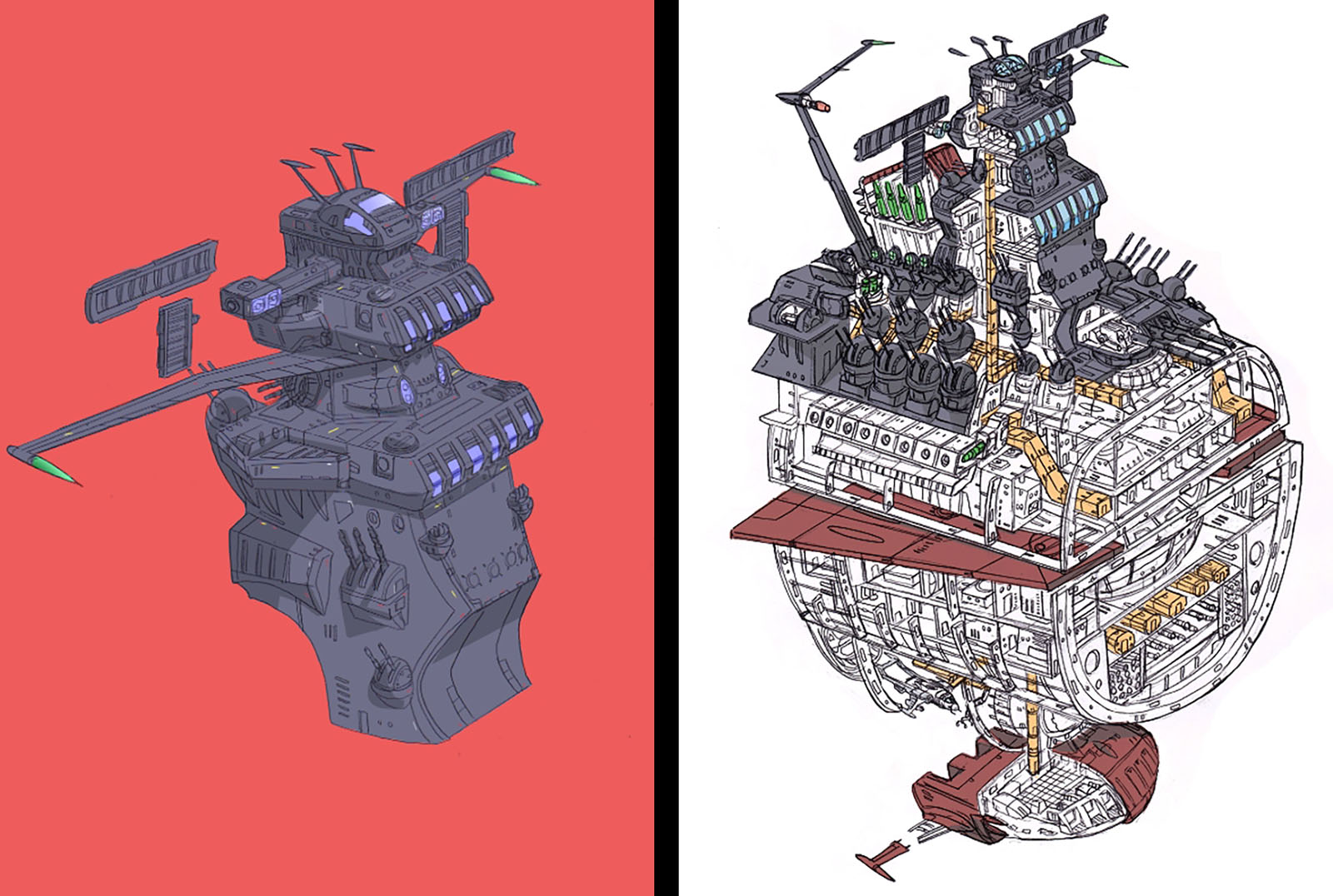
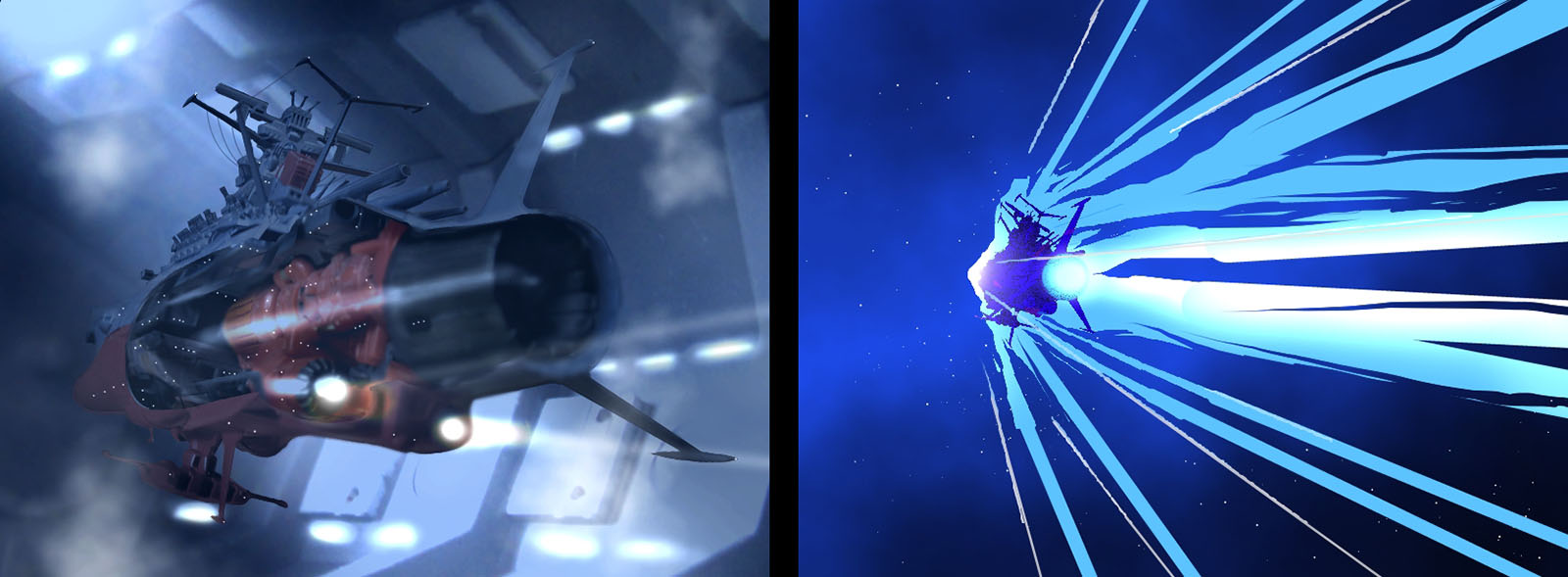
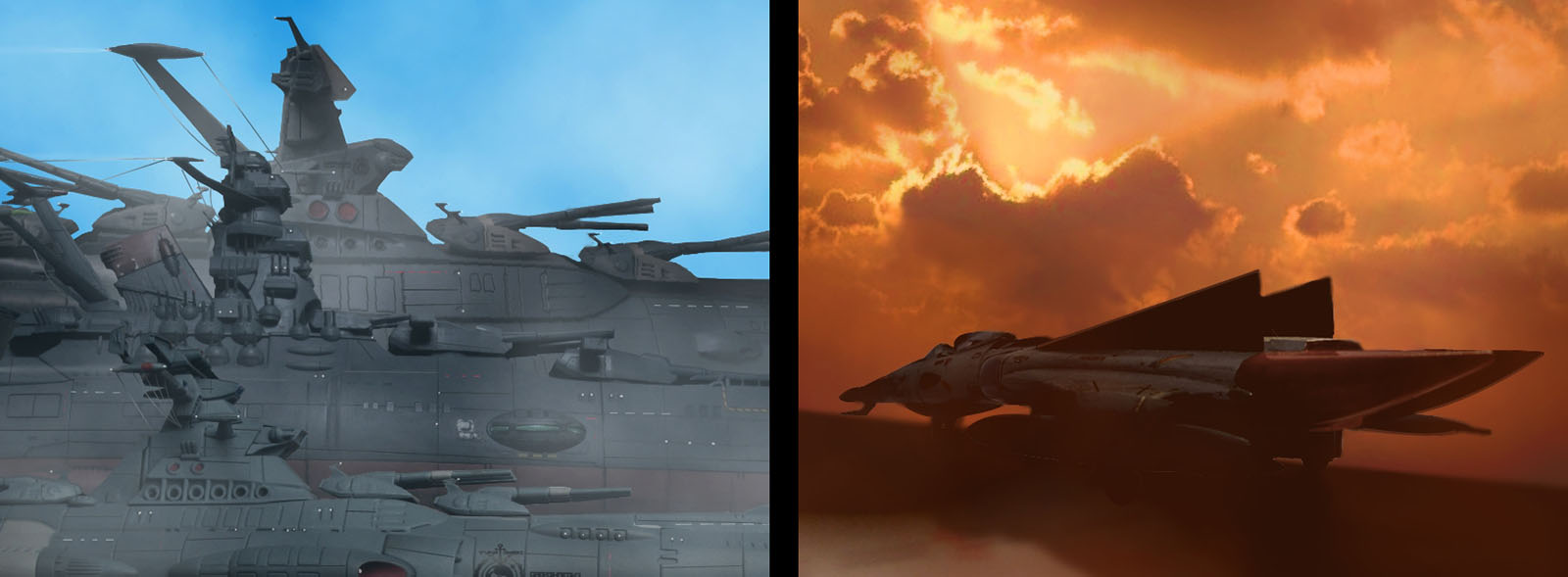
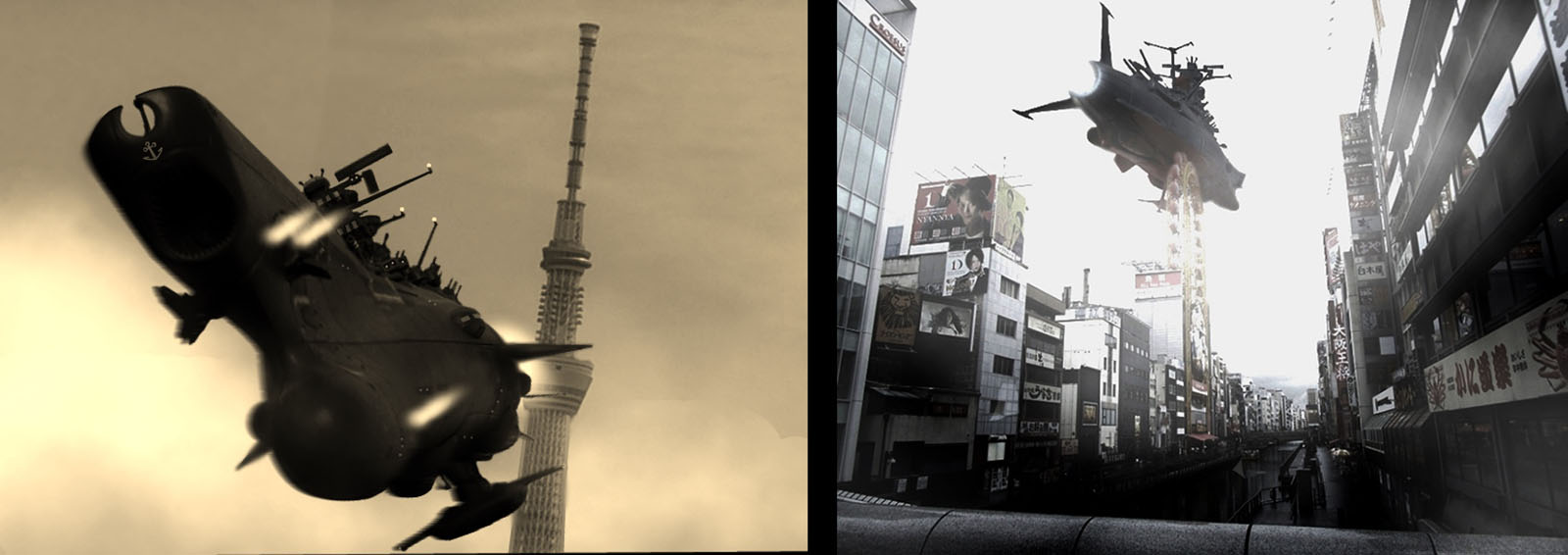
I am an “analog” artist at heart. For my illustrations, I draw the original line art on paper using mechanical pencils (specifically, 0.3mm and 0.5mm leads in 2B hardness). For coloring, I scan the line art into my PC and process it using an older drawing software called Illust Studio 1.0. I apply this same process to my “special effects-style” photos of models. I take pictures of the models with my smartphone, import the images into my PC, and edit them using that same software.
6. Where can your work be seen?
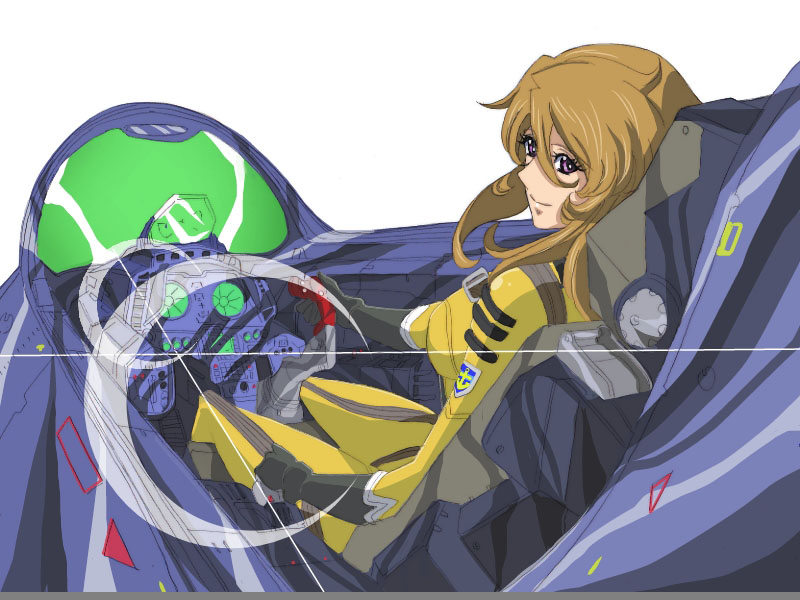
I primarily post my illustrations for public viewing on Pixiv. however, I recently began posting on Twitter under the handle “Juuzo.” There, I share not only illustrations and photos but also my figure sculptures and model builds, so I’d be delighted if anyone interested would take a look.
7. Does your family share your hobby?
My wife isn’t exactly a die-hard Yamato fan herself, but she always accompanies me to the movies and enjoys watching them with me at the theater. She places no restrictions on my hobby-related activities and is very understanding of my passion. she is truly a wonderful and supportive partner, for which I am deeply grateful.
8. Please tell us something about your life outside your art.
I retired about three years ago from the company where I had worked for many years, and now my wife and I are enjoying a quiet, relaxed life together. Recently, my wife has been having trouble with both of her eyes, and I have been experiencing issues with my left eye as well as a condition affecting my right hand. consequently, we have been talking about how we need to be extra mindful of our health going forward.
9. Are you involved in Yamato activities with other fans?
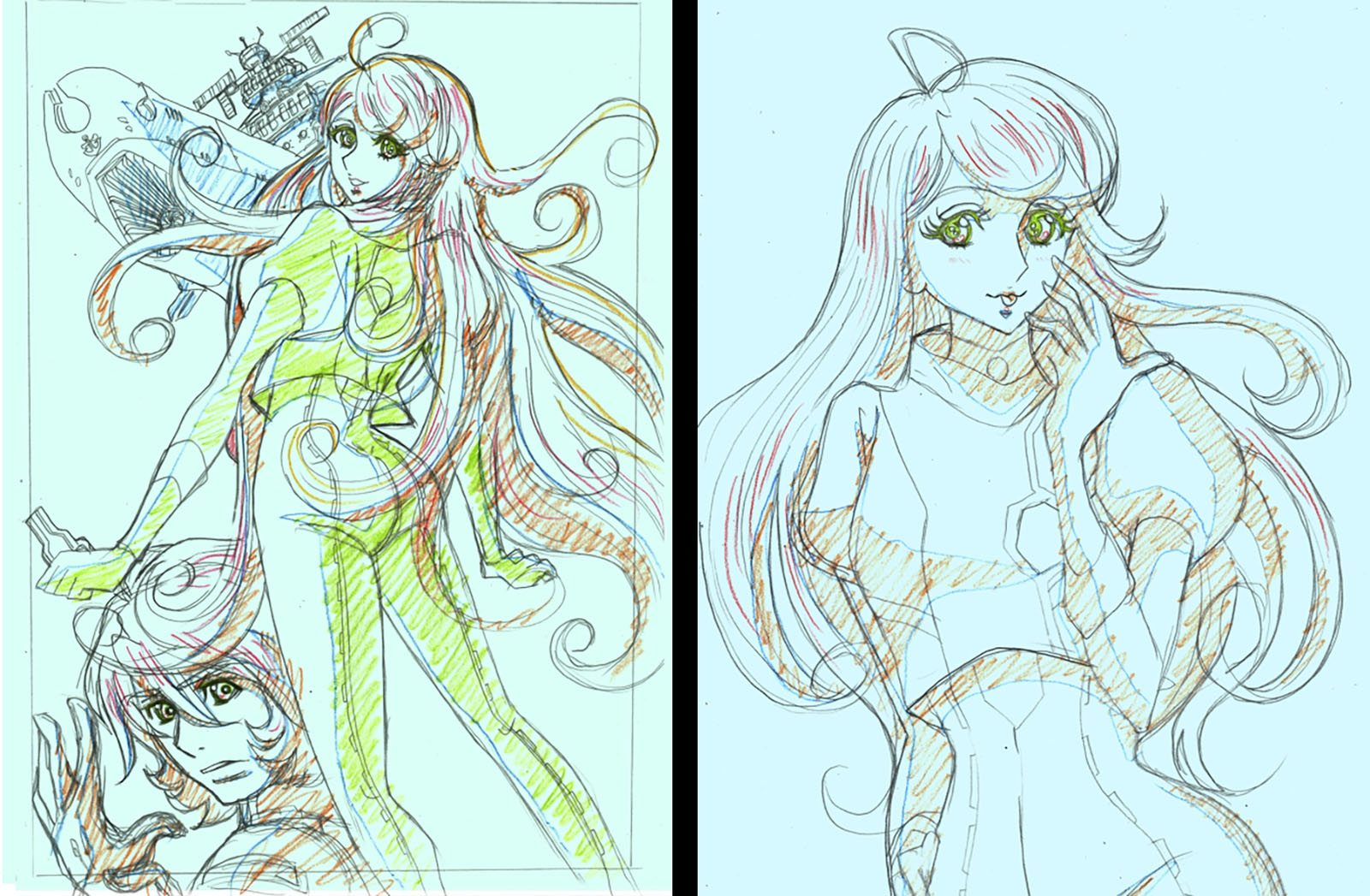
Although I primarily work as an individual in a rural, provincial area, I am fortunate to have benefactors, friends, and acquaintances who support and encourage my activities online. For an “illustration collection” I recently produced, I was deeply grateful and honored to have the manga artist Michio Murakawa graciously assist with the cover design. Furthermore, I draw inspiration for my work by viewing the creations of fellow Yamato doujinshi artists with whom I share close ties, receiving information and reference materials from friends, and encountering the work of talented young artists from my own hometown.
10. What do you hope to see in a future Yamato anime?
As a franchise, Yamato represents the pinnacle of content. therefore, I hope that future productions will incorporate the latest visual technologies while crafting stories set in the vast cosmos, tales brimming with love and masculine romance, that embody the true essence of Yamato.
11. What is your favorite anime after Yamato?
I haven’t really been keeping up with other anime recently, but I have a fondness for the works of Go Nagai, specifically the Mazinger and Getter Robo series, that I used to watch in my youth. Outside of anime, I am also quite fond of tokusatsu productions, such as Ultraman, Godzilla, Gamera, and Kamen Rider.)
12. What would you like to say to Yamato fans around the world?
To me, Yamato is “the ship of eternal youth,” like a flame that continues to burn brightly within my heart to this very day. Even as I grow older and my physical self diminishes, that flame will never be extinguished deep within my soul. So, I implore all my fellow Yamato friends around the world: please, do not let the flame within your own hearts go out. I truly believe that as long as that flame continues to burn, your own youth will last forever.
“Yamato is, and will always remain, the ship of our eternal youth.”
13. What should everyone know about Japan and its people?
I believe that, at their very core, the Japanese people possess a deep-seated respect for courtesy and the spirit of Wa, the pursuit of harmony. A spirit of respect for others, a sense of moderation, and Yamato, the very word that symbolizes Japan, also signifies Wa: a concept of profound harmony.
Regrettably, as the times change, these values may be transient and perhaps even fading away. Yet, I firmly believe that within the hearts of many Japanese people, the spirit of Wa, of uniting one’s heart with others and showing them compassion, still lives on. Given the difficult global climate we face today, this sentiment might be dismissed as mere idealism. Nevertheless, I hope that all those who have connected with one another through Yamato will keep this concept of Wa close to their hearts.
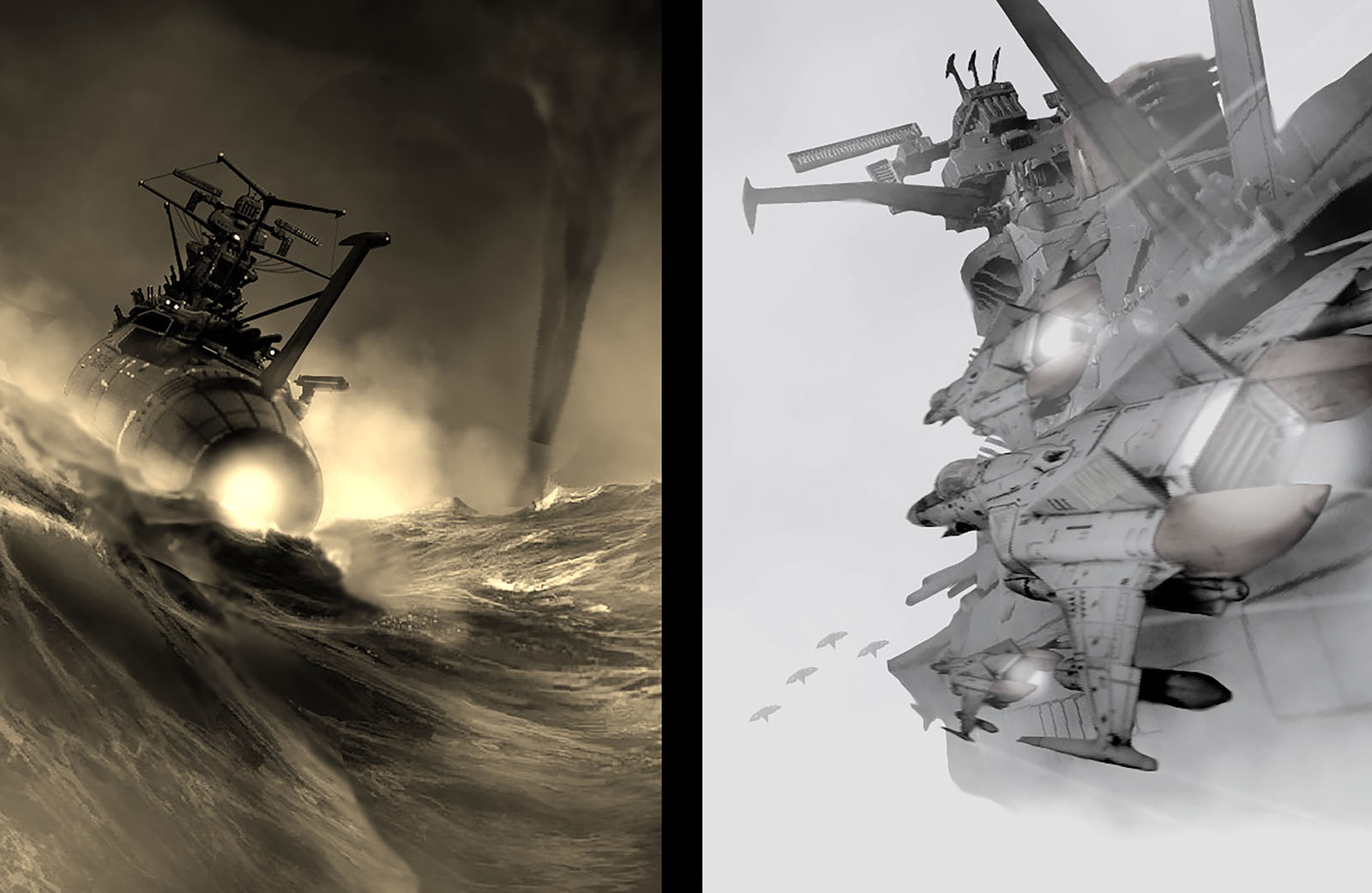
Could you please tell us a bit about your journey, your background and career, as a fan artist? If my memory serves me right, I first encountered your work in the newsletter of the Yamato Fan Club. Subsequently, I began seeing your illustrations frequently in various other publications as well. I would be delighted to hear the details of how that all came about.
My Journey So Far
An anime boom swept through the country when I was in junior and senior high school, and that’s when I first began drawing Yamato illustrations for my local fan club, “Ginga Densetsu” (Galaxy Legend). However, I didn’t officially join the Yamato Fan Club until I had entered the workforce, specifically, just prior to the theatrical release of Final Yamato.
Although the fan club continued to operate even after that, progress on any potential sequels was agonizingly slow. Feeling a sense of sadness at the thought of Yamato gradually fading away within my own heart, I decided to start submitting my artwork to the fan club’s newsletter. I absolutely adored Mr. Matsumoto’s artwork, so I strove to emulate his distinctive style in my own drawings.
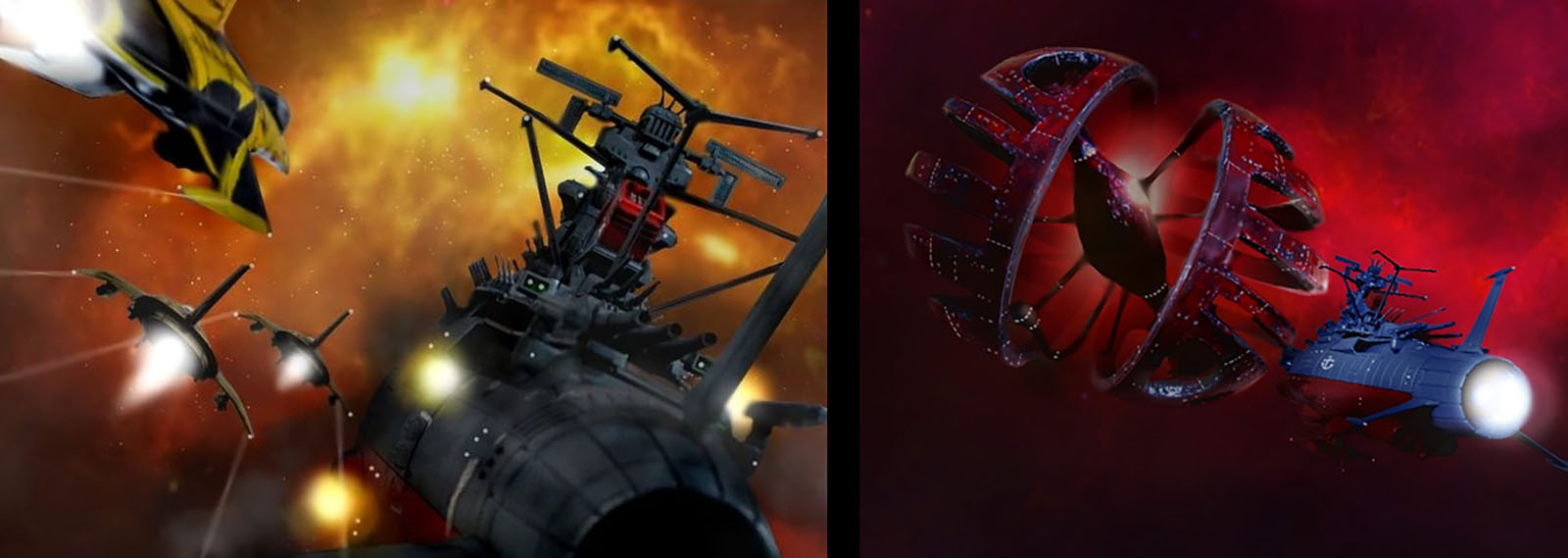
Eventually, the fan club went on hiatus. just as I found myself without an outlet for my creative activities, I was introduced to Yamato Party, a Yamato-centric doujinshi convention. To participate in the event, which I attended several times, I began self-publishing my own independent ‘zines.
I also contributed artwork to various other fan circles and groups, such as the “Yamato Revival Committee” (now disbanded) and “N.W.A.” (currently on hiatus). I was a member of the now-disbanded Official Fan Club of the late Yoshinori Kanada, an animator for Yamato, and also contributed in-between animation to “G.Y.C.” [Group Yamato Company], a Yamato fan animation group that has since dissolved.
Eventually, I began submitting Yamato illustrations to the reader’s column of B-Club (a now-defunct hobby magazine published by Bandai), where they were featured on several occasions. Later, when the modeling magazine Dengeki Hobby (now a digital-only publication) began running special features on Yamato models, I started submitting my own model builds to the reader’s column (inspired by the work of modelers Mr. Manabe and Mr. Sakurai), where they were subsequently published. Many of the model kits I built were created during this period.
Shortly before the theatrical release of Yamato Resurrection (2009), I found myself without a venue to submit my work. consequently, and thanks to an introduction from my friend Zenta Mizuno, who was involved with the Yamato fanzine Yamato Zakicho (Notebook), I joined the social networking service Mixi and began sharing my creations online.
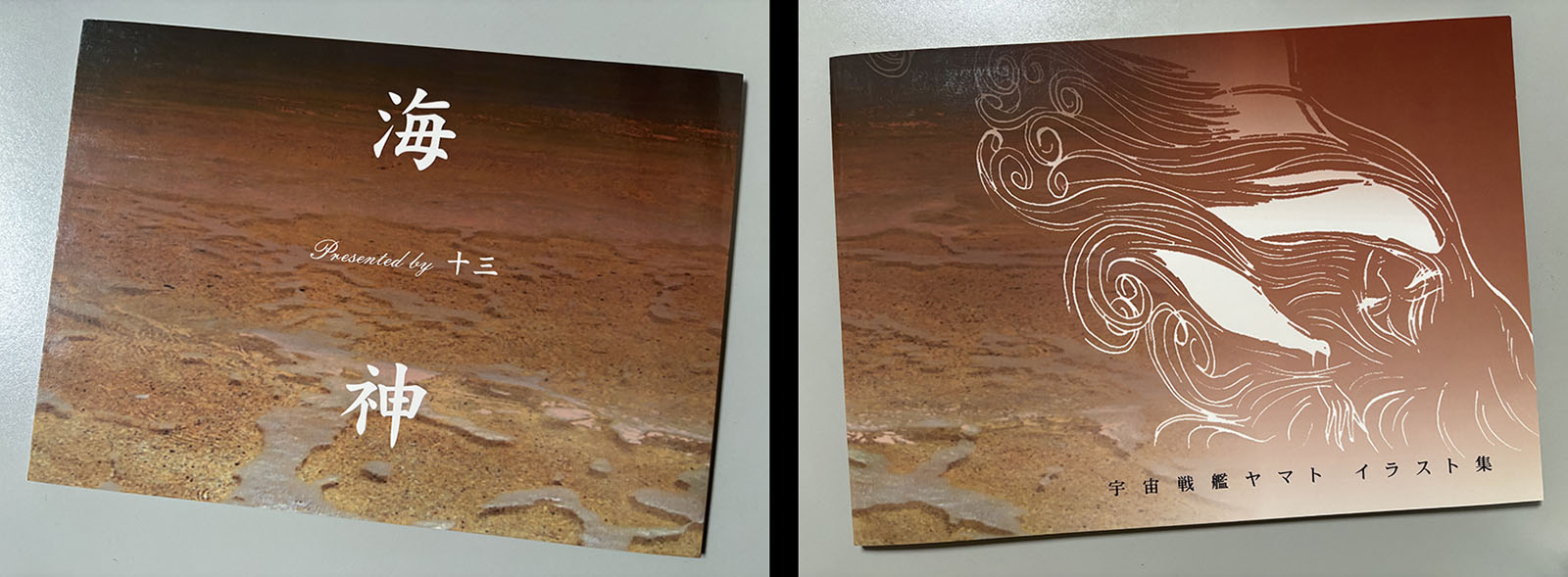
While on Mixi, I collaborated with the Yamato fanzine circle “Project PS Story” (led by Mr. Iida) to publish an Illustration Collection titled Sea Emperor.
During a period when I was unable to produce artwork, I met Mr. Morimura, the head of the garage kit manufacturer M.E.F (known for the Yamato Mechanical Collection candy toys and Yamato Crew garage kits for Resurrection. And, taking up my pen once again, I began working as an amateur mechanical designer.
Subsequently, I began posting illustrations and tokusatsu-style photographic images to Pixiv. When Yamato 2199 was released, I became deeply inspired by the character designs created by Mr. Yuuki and decided to shift my artistic style to emulate his distinctive touch.
In 2023, I participated in Yamaket, a convention dedicated to Yamato fanzines, and published a Yamato “Photographic Record Collection.” I am also scheduled to publish an “Illustration Collection” in 2026.
Since 2024, I’ve been submitting my Yamato model builds to the reader’s column of the modeling magazine Hobby Japan, where they have been featured on multiple occasions.
Currently, I am active on Twitter, where I regularly share my model builds, sculptural works, and illustrations.
When I first began my doujin activities, I had no access to the internet. since there were no means for an amateur to publicly share their work, I was compelled to rely on methods such as submitting contributions to magazines. Thanks to the internet, individuals can now publish their work and connect with people all over the world, I truly feel that we have entered a wonderful era.
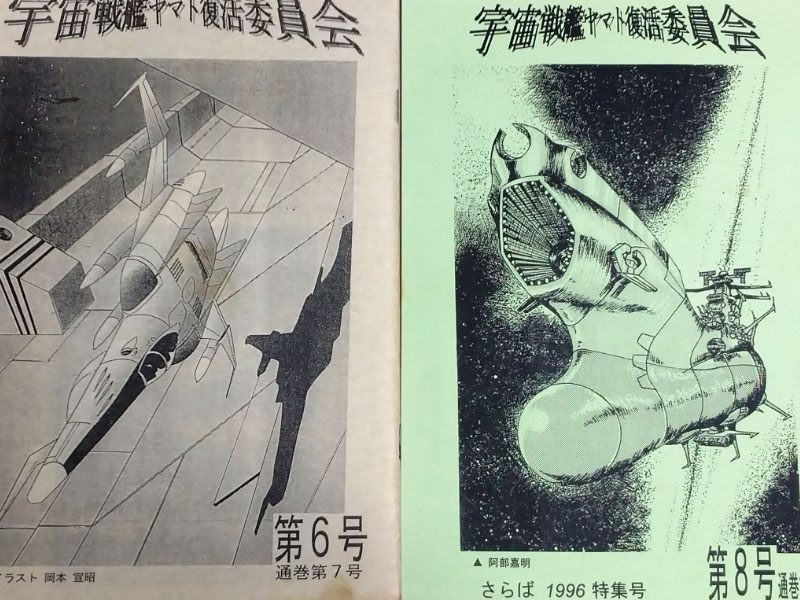
Sidebar: the Yamato Revival Committee
Following the closure of the official Yamato fan club, a “shadow organization” stepped in to pick up the slack, operating from 1991 to 2001. They published an irregular newsletter and participated in activities that would otherwise have vanished into memory. (Read more about them here.) Since Juuzo was involved in the group, I asked him to shed some light on their work…
This gathering took place some 25 years ago, so my own memories have grown rather vague. consequently, I am unable to speak about it with absolute certainty. The following information is presented to the best of my knowledge and recollection.
The Revival Committee was established following the suspension of activities by the main Yamato Fan Club headquarters, and was organized by a staff member from the editorial department, Toshiki Kazama. Publication of the newsletter likely began with Issue No. 5, and I believe the final issue was No. 25. Membership registration was free. the annual subscription fee for the newsletter was 600 yen, plus shipping costs.
While plans for Yamato Resurrection were underway (first iteration, 1994), the committee aimed to foster interaction among fans and support the revival of the Yamato franchise. To this end, they solicited and published various contributions, including opinions, news updates, illustrations, and short stories.
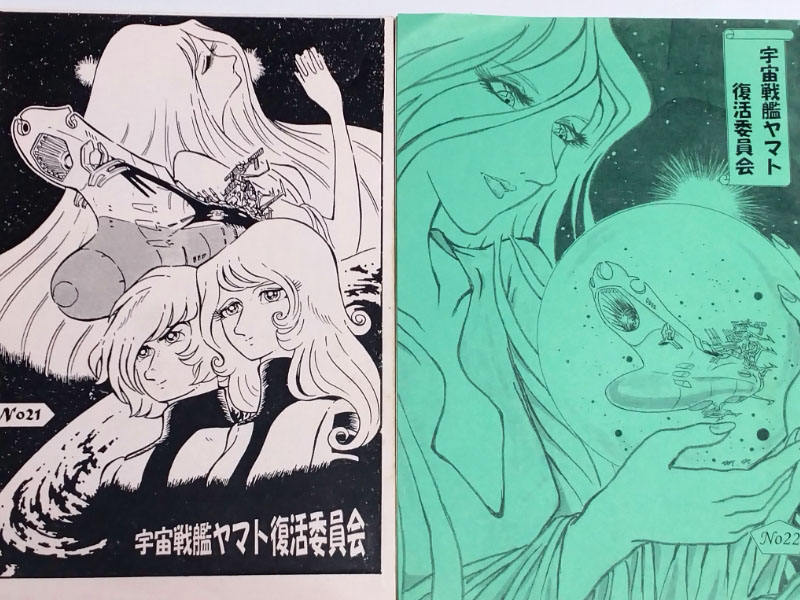
Specific features and projects included:
“Yamato Spotted in the City”: Showcasing shop signs and business names that incorporate Yamato-related terminology.
“The Yamato Detective Agency”: Introducing articles and features related to Yamato that appeared in magazines and newspapers.
“The Successive Space Battleships Yamato“: A segment dedicated to conceptualizing designs for the various iterations of the ship, specifically those between the original and the 17th vessel (i.e., the 2nd through the 16th).
“The Members’ Club”: A forum for members to exchange opinions and ideas.
…and other similar features.
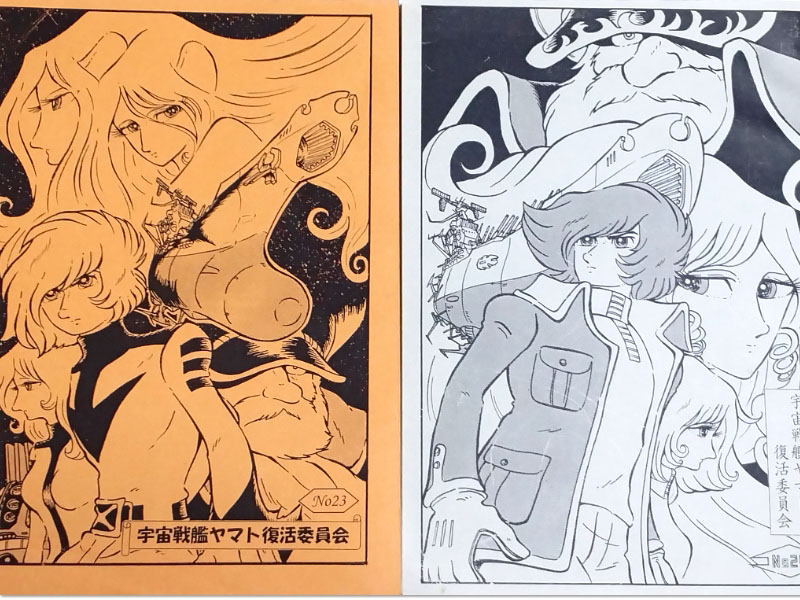
During our period of activity, the following developments occurred regarding Yamato:
The release of Yamato 2520
The launch of the serialized manga sequel to Galaxy Express 999 by Leiji Matsumoto (featuring an appearance by Yamato within the story).
The launch of Leiji Matsumoto’s New Space Battleship Yamato series (A.K.A. Great Yamato).
The release of the Space Battleship Yamato video game for the PlayStation, produced by Leiji Matsumoto.
Regrettably, the Committee did not manage to survive long enough to witness the theatrical release of Resurrection, but I firmly believe that throughout our active period, we served as a vital touchstone for a segment of the fan community.