

Official description:
Composer Hiroshi Miyagawa was a leading figure in the Japanese pop music scene and one of the country’s foremost entertainers. In 2026, the 20th anniversary of his death, his son, music director Akira Miyagawa, will bring together vocalist Ari Miyakawa, pianist Chiko Miyagawa, and the chorus group “Gakudan Goo” for a special presentation of his music at Osaka’s Symphony Hall.
The first half, titled “Hiroshi Miyagawa Music History,” will trace the many famous songs that graced the era, sung by The Peanuts, Crazy Cats, Kenji Sawada, and others. The second half will be a complete change of pace, presenting the Space Battleship Yamato Memorial Collection.
Shion has performed Yamato music many times before, but this time, with new arrangements written by Akira Miyagawa,
it will depict an even more evolved world of wind orchestra music and Yamato music.
■ Carrying You
■ Geba Geba 90 Minutes
■ The Peanuts Medley
■ Una Sera di Tokyo
■ Wansaka Wansakun
■ Wansakun’s Mama
■ Unjarage
■ I Want to See You So Badly
■ Where the Blue Sky Goes
■ Being Young is Wonderful
■ White Comet
■ The Fleet Assembles
■ Yamato in Sorrow
■ Birth ~ Crew March ~ Space Battleship Yamato
■ Original Yamato BGM Special
■ Yamato Sleeping in the Sunset
■ Black Tiger
■ Cosmo Tiger 2199
■ Iscandar
■ Hope for Tomorrow

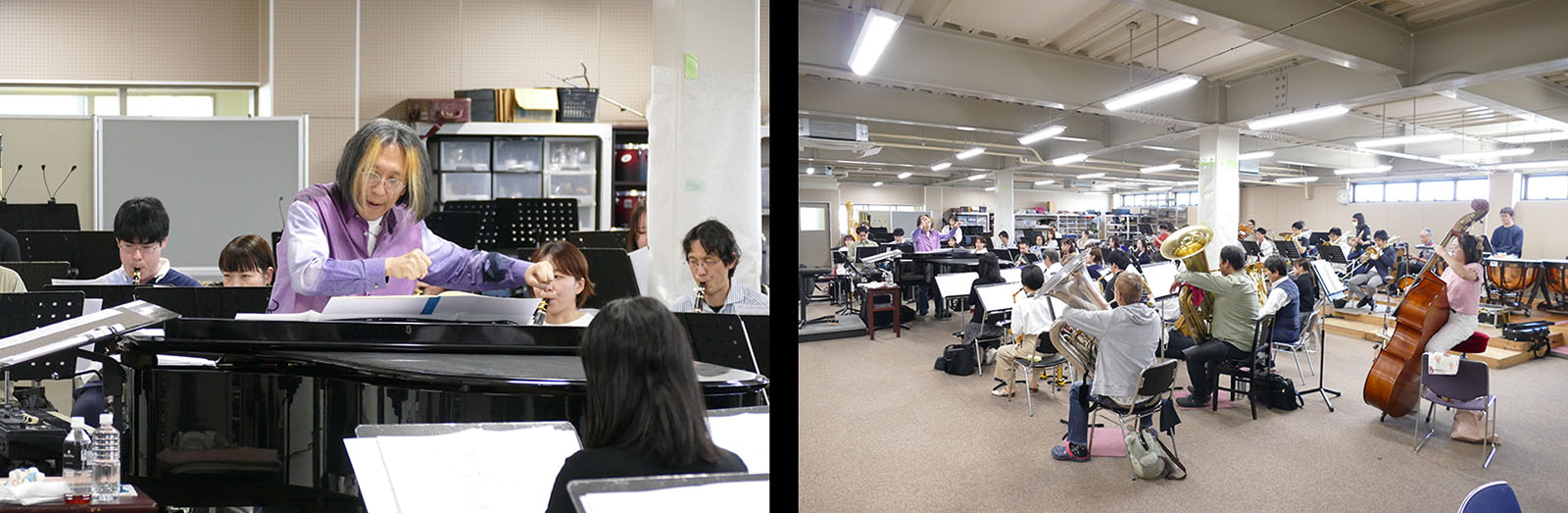
Rehearsal sessions; photos posted on Twitter by Osaka Shion
I went to the 166th regular concert of the Osaka Shion Wind Orchestra. Today was a Hiroshi Miyagawa festival, with the second half consisting entirely of Yamato tracks. And for the encore, Isao Sasaki made an appearance to perform Space Battleship Yamato and The Scarlet Scarf, drawing thunderous applause from the audience.

The first part alone already gave me a complete sense of fulfillment, but the second part surpassed it with even more explosive energy!! The Miyagawa family is the best! Shion is the best! Bravo!!
– hisapple

White Comet was featured in both Chiko Miyagawa’s solo pipe organ performance and Akira’s combo version. Chiko powerfully advanced with the weighty tones resonating through the hall. A cherished work passed down in the Miyagawa family. The Hammond organ that Akira himself played might have been a reply to his younger self.
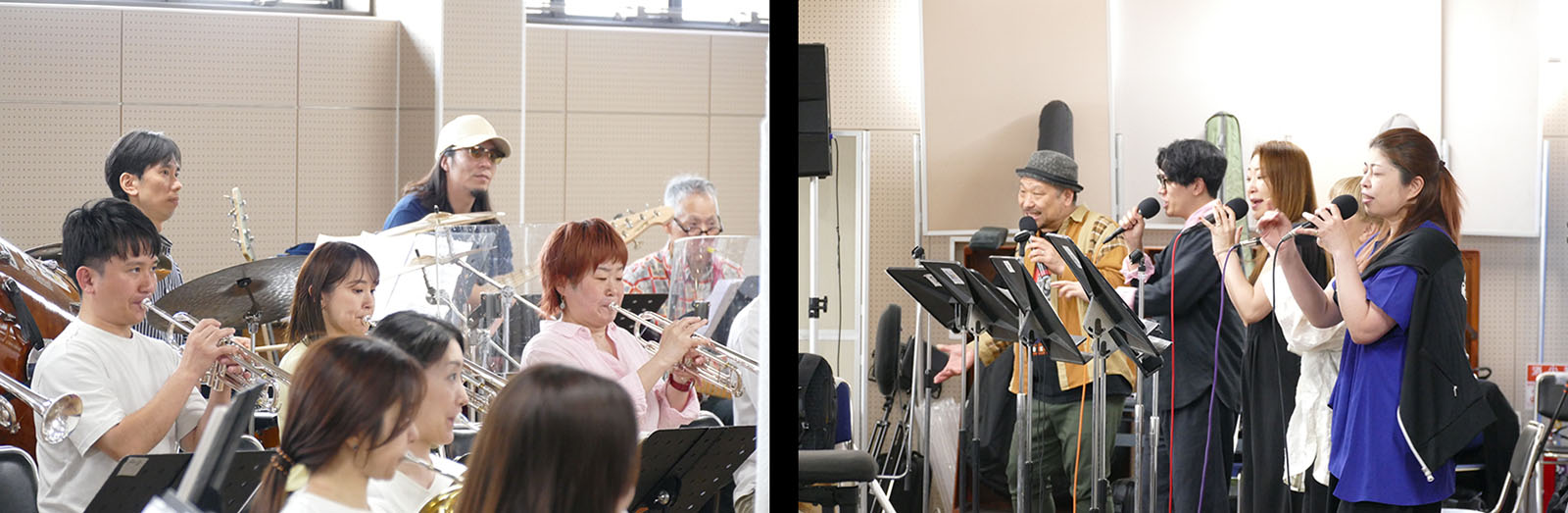
I finally got to hear the wind orchestra version of The Birth. Unlike the previous Yamato Crew March in C minor original, this was in the original D minor. It was performed right before my eyes, and I was deeply moved from the bottom of my heart. As expected, C minor and D minor are different!
– chun7chun8chun
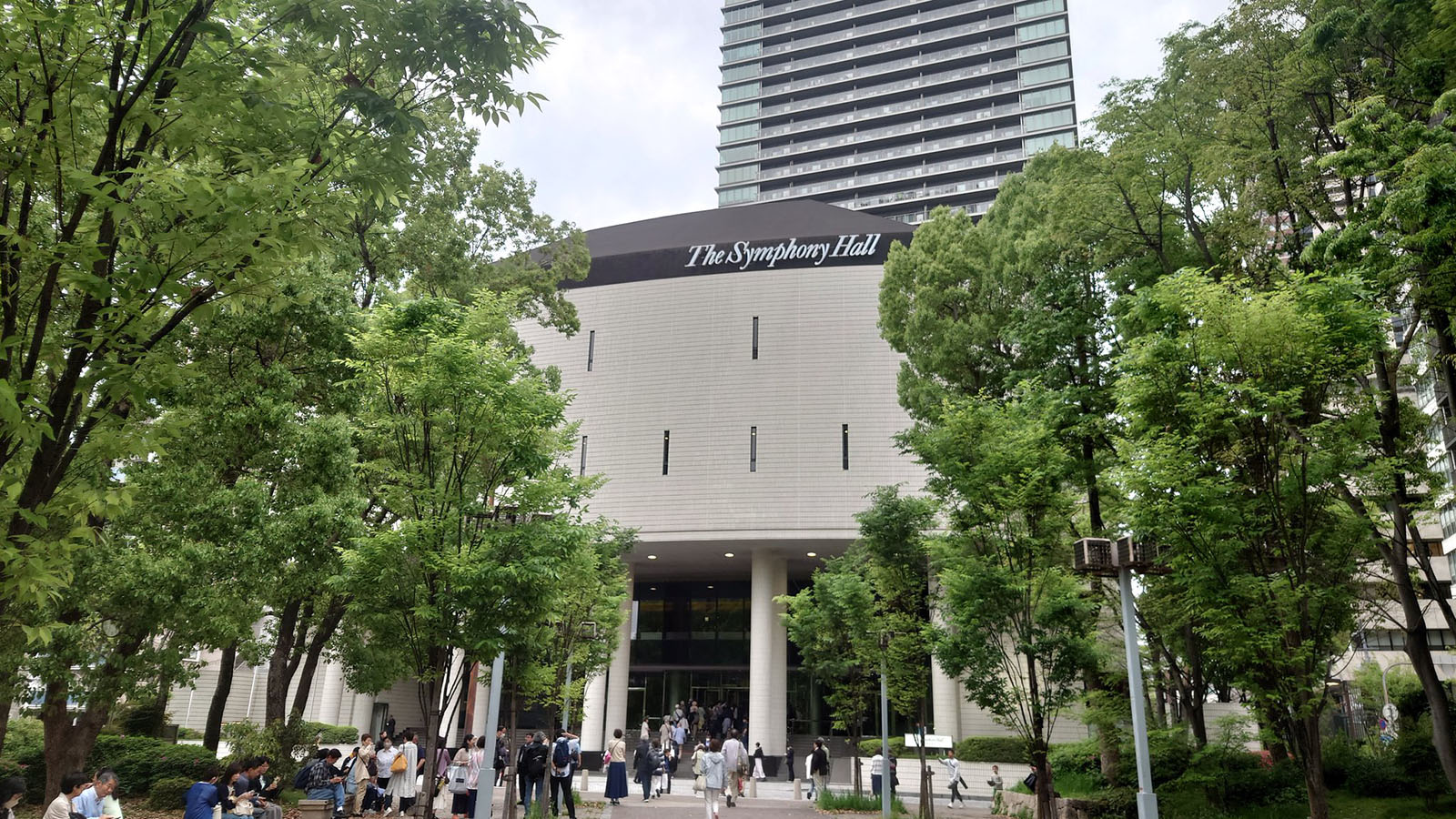
Photo posted by katsuji0929
In Yamato, where life and death are constantly at your sides, it becomes an even more profoundly chiseled melody, and you could really see that well in the Hiroshi Miyagawa Festival. Without that heated back-and-forth with the producer, those famous songs might never have been born. And I was thrilled to learn that the bossa nova from Wansa-kun’s Mama forms the foundation for Starsha from Symphonic Suite!
– chun7chun8chun

Photos posted by Popoki_Cat
I had the honor of drawing celebratory flower illustrations. Akira-san is pointing to the heavens as usual. Chiko-san and Ari-san in the image of The Peanuts. Looking forward to the opening!
The pipe organ piece commonly known as White Comet is inseparable from Miyagawa’s music. Looking behind the scenes, Akira-san performed it with a university professor, Hiroshi and Kentaro Haneda did it on a separate day, and at this concert – surprisingly – Chiko-san performed it solo after three generations. It’s actually a tremendous achievement. That moment, historic even in the annals of Yamato music history, was profoundly moving. It’s regrettable that there’s no archive, but it was such a brilliant, passionate performance that it makes you feel that way.

Watch Chiko Miyagawa’s rehearsal video here
Chiko Miyagawa:
I had the honor of performing a solo organ rendition of White Comet at Osaka Shion’s 166th Concert! The sound of the organ at The Symphony Hall was truly magnificent. It made my heart tremble with emotion. I was a bit nervous, so the tempo of White Comet ended up being a little faster than intended — but thanks to everyone who helped, I was able to have such a truly wonderful experience. It really struck me once again what an incredible piece of music this is!
My deepest gratitude goes to organist Seiko Katagiri for her invaluable assistance; Yuka Ishimaru for her expert advice; Ari-chan [vocalist Ari Miyakawa] for filming the performance; Music Director Akira; Osaka Shion for granting me this opportunity; the entire staff at The Symphony Hall; Daiten-kun, who (just moments before the performance) suggested, “Let’s make the sound even more powerful!” and helped me fine-tune the registration; my husband, who built me a DIY pedalboard; and everyone who offered their support. Thank you all so very much!

Here’s what things looked like just two months ago!

Miyagawa family pictures on display in the lobby. Photos posted by officevega and hisapple

Photos posted by S_Meijin

Photos posted by S_Meijin
The finale Hope for Tomorrow is my absolute favorite in Symphonic Suite. I love it so much! I must have listened to it over ten thousand times, for real! But since it’s a mixed choir piece, there aren’t many chances to hear it live, so I was hyped beyond belief, but it totally surpassed my expectations! Please use this for my funeral.
– Popoki_cat

On-stage rehearsal, photo posted by Osaka Shion
For the encore, Isao Sasaki made an appearance!! I thought, “He’s aged a bit more than the image in my mind,” but his singing voice and aura are still as strong as ever, and it brought back nostalgic memories from my childhood!

Photos posted by S_Meijin and Hideki Tabata
Hope for Tomorrow. I never thought the day would come when I’d be performing the song from Symphonic Suite Yamato that I listened to endlessly back in middle school. The part right before the chorus kicks in, with all that pure classical flavor, is just insanely good. Ahh, I wanna do it again.
– Hideki Tabata, percussionist
Thank you for coming and watching! The applause from a full house was an exceptionally wonderful reward. Welcome back, Sasaki-san. It felt so natural that I wondered if I was born in the Showa era. The songs were all ones I love so much. I was utterly spent.
– Mai Tsuneda, wind section

Photo posted by Osaka Shion
Concert Commentary by M.T
See the original Twitter thread here
I went to The Symphony Hall to attend the Osaka Shion Wind Orchestra’s 166th Subscription Concert: “Hiroshi Miyagawa Festival.” According to Akira-san, it was shaping up to be something truly incredible, so I was incredibly excited! Thanks to a stroke of good fortune, I managed to secure the absolute best seat in the house, so I intended to literally bathe in the sound and savor every moment! It was magnificent! I actually cried three times.
The program was presented as a rather substantial booklet, featuring detailed and well-written commentaries on each of the musical pieces. Below are some of my thoughts and impressions, albeit a bit belatedly…
Part 1 was titled “Hiroshi Miyagawa Music History: From Akira’s Playlist,” featuring a selection of ten pieces chosen by Akira-san, excluding any tracks from Yamato. For nine of these ten pieces, the performance took the form of vocals provided by soloist Ari Miyakawa and Gakudan Goo, backed by the Osaka Shion Wind Orchestra.
Gakudan Goo is described as a collective of vocalists who perform under the direction of Akira Miyagawa, known for their fluid and ever-changing ensemble configurations. The members performing today consisted of five individuals:
Yuuki-san & KWANI-san (from Dynamite Shakariki Circus), Minako Takagi-san & Miki Asahi-san (from VOJA), and Shunnosuke Kusano-san.
The opening piece was Kimi wo Nosete (Carrying You), performed by Ari Miyakawa. (Note: This isn’t the song from Laputa!) Apparently, it is a signature song of Kenji Sawada (known as “Julie”). However, Yasuri-san’s crystal-clear voice, distinctly different from Julie’s, rang out across the venue, enveloping the entire audience.
That said, I did feel that whenever the volume of the Osaka Shion Wind Orchestra swelled, Ari Miyakawa’s vocals were slightly overshadowed, or “masked”, by the instrumentation. I suspect this was because I was seated in front of the spot where the vocals, projected from the left and right speakers on the stage, converged. Next time, if the setlist features a lot of vocal-centric songs, I think I’ll try sitting a little further back.

Photo posted by Hideki Tabata
The second song was Geba Geba 90 Minutes. It’s practically a staple by now. Accompanied by the performance of the Osaka Shion, the members of Gakudan Goo made their entrance while marching in formation. During this piece, the trombone and trumpet players would stand up and swing their instruments in various directions, up, down, left, and right. With every swing, the soundscape would shift, making the performance of this song even more delightful.
This song also served as the introduction for the day’s performers, effectively acting as the opening ceremony for the “Hiroshi Miyagawa Festival.” The audience erupted into a whirlwind of laughter when the life-sized silhouette panel of the “secret guest”, whose identity was already an open secret, was unveiled.

Photo posted by Osaka Shion
The third song was another classic staple: The Peanuts Medley. The vocal harmonies of the two singers, Yuuki-san and Miki Asahi-san (I believe?), were truly reminiscent of the familiar voices of The Peanuts themselves.
I had a vague recollection of the songs from the fifth and sixth numbers, the Wansa-kun tracks (Wansaka Wansa-kun and Wansa-kun’s Mama), and listening to them again filled me with a sense of nostalgia. I can’t recall a single thing about the actual plot of the anime series, though…
The ninth song, Aozora no Yukue (The Whereabouts of the Blue Sky), began with a piano intro that brought to mind the track I Remember You from Farewell to Yamato. Just when I thought it was going to be a tender, introspective piece, it underwent a key change, shifting from minor to major. The major-key section felt joyful and upbeat, while the finale built to a grand, magnificent conclusion. It was a truly protean composition, a perfect example of what one might call “Hiroshi Miyagawa Magic.”
The finale of the first act was Wakai te Subarashii (Being Young Is Wonderful). This is truly a magnificent song. Listening to it feels so refreshing and invigorating! It is, without a doubt, a masterpiece, the perfect choice to bring the first act to a close!
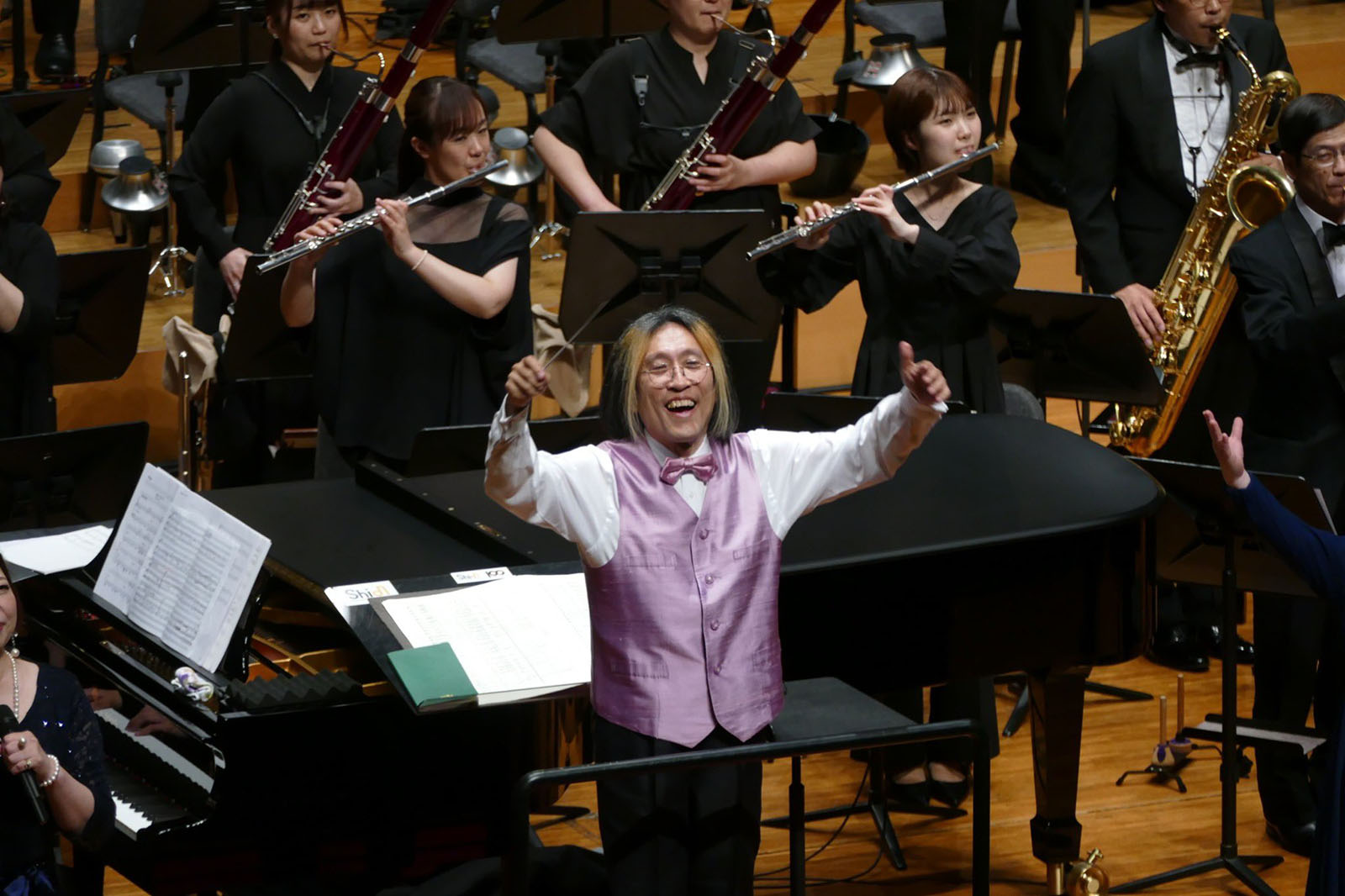
Photo posted by Osaka Shion
In Part 1, every piece clearly bore the unmistakable imprint of the late Mr. Hiroshi Miyagawa; listening to them was a sheer delight. Rather than simply observing Osaka Shion’s performance, I felt as though I was fully immersing myself in the music itself, vocals and all. Part 1 truly left me with the impression that Mr. Miyagawa composed his works with a genuine desire to entertain his listeners.
Then came Part 2, the highly anticipated “Space Battleship Yamato Memorial Collection.” It opened with a pipe organ solo of The White Comet, performed by Ms. Chiko Miyagawa.
The program listed the piece as “The Gateway to Success: The White Comet.” This piece, originally performed by Akira during the Farewell to Yamato era, served today as a “gateway” through which Chiko sought to prove herself, bridging the generations. And, I believe it is safe to say that she cleared this challenge with flying colors.
As the performance began, I caught a glimpse of Akira’s back as he watched from below. I couldn’t help but wonder if, deep down, he was feeling a bit anxious for her. For a pianist, someone who typically makes sparing use of foot pedals, performing The White Comet on a pipe organ is reportedly an “extremely difficult undertaking.”
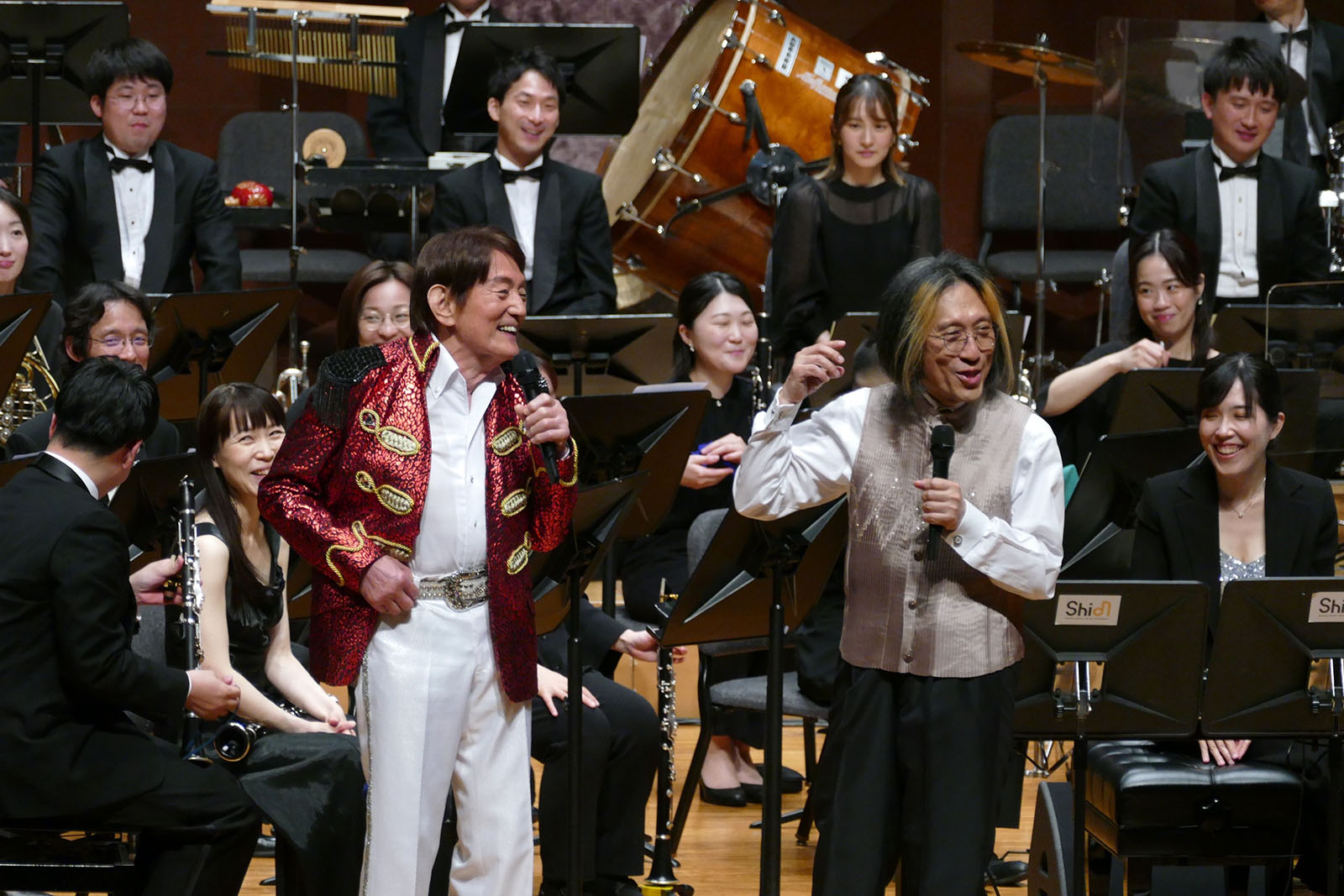
Photo posted by info_IsoSasaki (photographer: Miyuki Sasaki)
Having successfully conquered that challenge, Chiko’s solo performance was praised by Akira as “magnificent.” I imagine that moment brought a sense of joy and relief to them both. And to think that Akira, back in his high school days, managed to pull off such a technically demanding piece in a completely unrehearsed, spur-of-the-moment performance…simply incredible!
Following the organ solo came the performance of The White Comet: A Tribute to Keith Emerson. This was a bold, rock-style arrangement, a testament to Akira’s deep respect for Keith Emerson. Akira himself was kept busy, juggling both conducting duties and keyboard performance. This piece has been performed by the Osaka Shion on numerous occasions, but was it just my imagination, or did this particular rendition strike me as slightly more subdued in tone than previous performances?
Next on the program was a piece titled “Mashup: The 1st Yamato,” a selection of iconic tracks from Space Battleship Yamato Part 1. While the term “mashup” typically refers to combining two distinct songs and mixing them into a single track, according to an announcement video by Akira, he interpreted the concept here as a new arrangement and new structural composition of the Space Battleship Yamato background music, centered specifically around the theme Birth.
Looking back now, it does strike me that a structure placing Birth at the core, and concluding with The Infinite, Expanding Universe followed by Yamato Sleeping in the Sunset (I wept), was indeed something we hadn’t heard before. However, while listening, I honestly wasn’t really thinking about “new arrangements” or “mashups”; I was simply utterly entranced by the performance of the Osaka Shion Wind Orchestra!

Photos posted by info_IsoSasaki (photographer: Miyuki Sasaki)
The next segment, titled “Wind Orchestra Yamato: Best Choice,” featured a selection of three tracks: Black Tiger, Cosmo Tiger 2199, and Iscandar.
Black Tiger was performed at a slightly slower tempo, drawn from the Symphonic Suite. Cosmo Tiger 2199, true to its name, was the version Akira arranged specifically for the 2199 series. Notably, it omitted the “Wan-Dah-Bah” vocalizations. As I listened, I found myself wondering, “I wonder if Akira actually prefers this version over the one used in 2205?”
The finale of Part 2 was Hope for Tomorrow, taken from the Symphonic Suite. The choral parts, typically performed by a large, mixed choir, were handled on this occasion by the six vocalists present. Yet, I felt not the slightest sense of inadequacy; they sang with soaring, resonant voices. Following Yamato Sleeping in the Sunset, this moment brought me to tears once again.
For the encore, the moment everyone had been waiting for finally arrived: the grand entrance of the “Great King” himself, Isao Sasaki! His lively banter with Akira, punctuated by a rapid-fire barrage of “dad jokes,” had the entire venue roaring with laughter. The two songs he graced us with were Space Battleship Yamato and The Scarlet Scarf. Moved to tears once again by a singing voice that remains undiminished, defying even a major illness, I found myself weeping right there in my seat.

Photo posted by info_IsoSasaki (photographer: Miyuki Sasaki)
The final number of the encore was, once again, Geba Geba 90 Minutes. Accompanied by the Osaka Shion Wind Orchestra, the vocalists, including Isao Sasaki and Ari Miyakawa, along with Akira, made their exit. Responding to the thunderous applause with a brief reappearance, Akira then personally retrieved the memorial portrait panel of the late Maestro Hiroshi Miyagawa that had been on display, carrying it with him as he left the stage for the final time. With that, the festival drew to a close.
The Osaka Shion Wind Orchestra’s performance was, as always, incredibly solid and steady! This time around, there was a lovely visual touch where musicians playing solos or main melodic lines would stand up while performing; this made it easy, and enjoyable, to visually identify the source of the sound. Listening to pieces like Birth and Hope for Tomorrow left me with a strong desire to hear the entire Symphonic Suite performed by Shion.
And so concludes my personal impressions of the concert. My apologies if any details are inaccurate due to the fallibility of memory. Thank you for bearing with this rather lengthy post.