
Published at NOTE, August 11, 2026
See the original blog post here
Author profile: Jiraigyo
Born in 1973. Worked for the PC magazine LOGIN before becoming a freelance writer. Author of works such as Romance of the Three Kingdoms Newspaper and Etten no Sora.
From the perspective of later figures in the anime and manga industries, as well as otaku fans, Yoshinobu Nishizaki’s reputation is almost consistently negative.
He exploited creators, treated Yamato as his personal property, was arrested for stimulant abuse, and ultimately died after falling from a boat. None of these facts are incorrect, and indeed, much of his conduct was indefensible.
However, if one overlooks the industrial structure and the era in which these judgments were formed, the story simply ends with “there was a bad guy.”
What did it actually entail, in 1970s Japan, to screen an animated film in theaters nationwide and collect the resulting box-office revenue? If one judges Nishizaki without addressing that question, ultimately, nothing becomes clear.
What a Self-Made Music Promoter Brought to Anime
Yoshinobu Nishizaki, real name Hirofumi Nishizaki, was born in Tokyo on December 18, 1934. His father, Tadashi Nishizaki, was a graduate of the University of Tokyo’s Faculty of Law who joined the Industrial Bank of Japan and served as an executive for companies like Nippon Soda. He was reportedly known as a turnaround specialist for struggling businesses.
Nishizaki entered the world of show business via a path that included being a trainee at the Bungakuza Theatre Company, attending the Nihon University College of Art, working as an MC at a jazz café, and serving as a music manager. He established Office Academy in October 1963, but lacking funds, he scraped by on work for events organized by the Min-On Concert Association (affiliated with Soka Gakkai).
Starting in 1968, he spent about a year and a half touring Western Europe as an assistant to a French promoter, eventually rising to the roles of manager and road manager. In short, he was not someone who came from an academic background in anime. He was a man who had worked his way up from the ground floor of the entertainment business, touring the provinces, securing venues, drawing in audiences, and counting the receipts.
After returning to Japan in 1970, he joined Mushi Productions through an introduction from the advertising agency Toyo Koho. That same year, he signed a personal contract with Osamu Tezuka to become his manager. He styled himself a “General Management Producer.” Around February 1971, he became the head of planning and production at Mushi Pro, effectively acting as the company president, and set about reforming the business. However, his methods were seen as too radical and high-handed. Combined with resentment over the personal income he derived from his private contract with Tezuka, this led to further management chaos. This period can only be described as a failure.
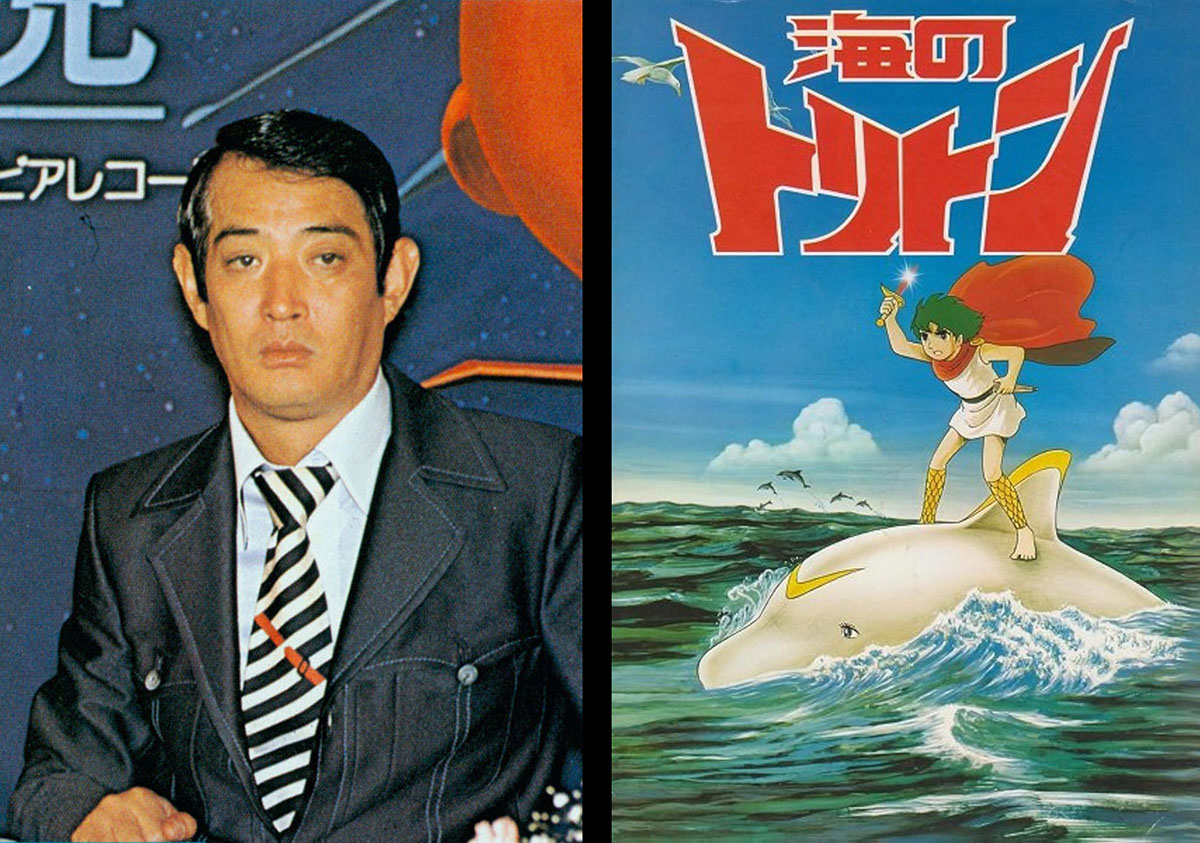
His first foray into anime production was the 1972 series Triton of the Sea. According to the director, Yoshiyuki Tomino, Nishizaki ultimately purchased the copyrights after Mushi Pro went under, effectively “wresting” them away from Tezuka. To pitch the show to television networks, Nishizaki personally raised 10 million yen for promotional expenses. Although Tezuka was initially grateful when the broadcast was greenlit, he later became furious, and the two ceased all communication.
At least in primary records, there is no confirmation of exactly how that 10 million yen was spent. However, it is evident that the quality of the proposal alone was insufficient to get the project approved by the TV networks and advertising agencies of the time.
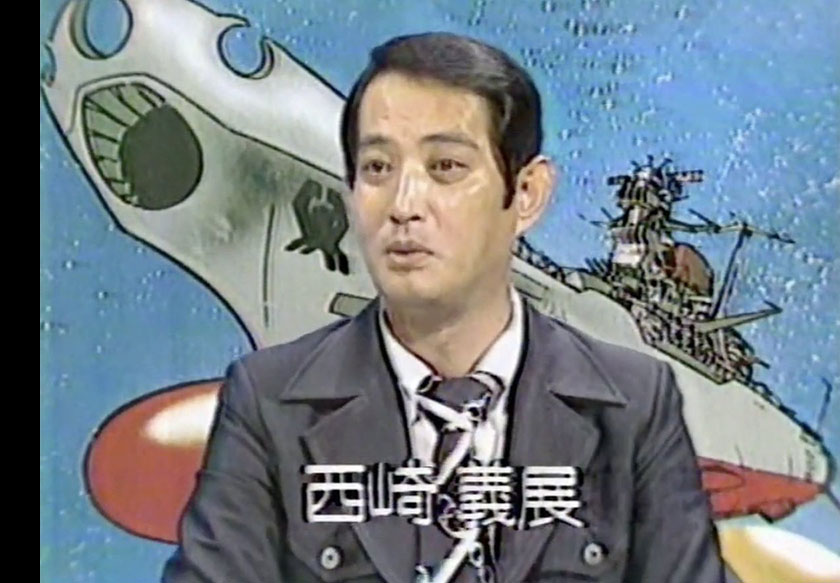
In October 1974, the broadcast of Space Battleship Yamato began on Yomiuri TV. The show was a complete failure in commercial terms. Building upon the foundation of reruns and fan engagement, the theatrical version was released on August 6, 1977. This was a moment where Nishizaki’s professional instincts were most starkly revealed. After being rejected by major film studios across the board for distribution, he turned to Shigeru Okada, the president of Toei. Ultimately, the film utilized the distribution network of Toei’s foreign film division, while theatrical screenings in Tokyo were handled by Tokyu Recreation, a company where Okada also served as president.
The film achieved 900 million yen in distribution revenue and 2.1 billion yen in box office receipts, drawing an audience of over 2.25 million. It became the first Japanese film to see fans camping out overnight for tickets. The templates for strategies that would later become standard practice for anime films, such as advance tickets with bonus items, stage greetings on opening day, and giveaways of actual animation cels, were established here.
Toei Animation, a studio with high production capabilities, came on board for the 1978 sequel, Farewell to Yamato. The film generated 2.1 billion yen in distribution revenue, surpassing the 1.5 billion yen target set by Shigeru Okada.
The same approach applied to the music. Partnering with Nippon Columbia director Hidetoshi Kimura, Nishizaki released the Symphonic Suite Space Battleship Yamato in 1977. With compositions by Hiroshi Miyagawa and a full orchestral arrangement, the investment was unprecedented for anime music at the time. The LP became a massive hit, elevating anime music from a mere accompaniment to children’s programs into a standalone commercial product.
His strict directive to the staff, “Do not create silence”, was not only a creative choice regarding direction but also a business decision intended to establish the music as an independent commercial asset. The concept of designing revenue streams outside the work itself beforehand is the mindset of a showman.
Who stepped in after organized crime groups vanished from the entertainment promotion business in 1964?
To understand the significance of this specific role, one must first discuss the waters in which Nishizaki was swimming.
Kobe Geino-sha was an entertainment promotion company incorporated on April 1, 1957, with a capital of one million yen. Its president was Kazuo Taoka, the third-generation boss of the Yamaguchi-gumi. Its predecessor was the Yamaguchi-gumi’s own entertainment division. The company held the performance rights for a roster of stars that included Hibari Misora, Yoshio Tabata, Kokichi Takada, Kotaro Satomi, Yukio Hashi, and Haruo Minami.
The reason for this arrangement lies in the nature of regional touring: it is a complex of practical tasks, securing venues, negotiating with local stakeholders, collecting cash on the day of the event, and quelling any disputes that arose.
Consequently, an organization that had a nationwide network and the capacity to use force was best equipped to handle these operations efficiently. This was a matter of logistics and revenue collection infrastructure, entirely unrelated to the artistic quality of the performances or the works themselves.
In February 1964, the Metropolitan Police Department established a headquarters to crack down on organized crime. This marked the “First Top-Level Operation” (a campaign targeting the leadership of organized crime groups). As a result, Kobe Geino-sha was barred from using public venues. In 1965, the Motion Picture Producers Association of Japan resolved to exclude organized crime groups from the industry, and cinema associations followed suit.
Revenues plummeted from 132.79 million yen in 1964 to 38.52 million yen in 1966. Based on the figures alone, it appeared that organized crime groups had exited the entertainment promotion business.
However, while the public face of the operation may have withdrawn, the underlying networks of personal connections remained intact. Released by Toei in 1973, The Third Generation of the Yamaguchi-gumi was a film produced after Toei president Shigeru Okada, inspired by the success of The Godfather, approached Kazuo Taoka directly and secured his agreement. Ken Takakura played Taoka under his real name.
Okada and Taoka shared a bond described as that of sworn brothers. Toei went further by bringing Taoka’s eldest son, Mitsuru Taoka, onto the production team and churning out titles such as Yamaguchi-gumi Side Story: Kyushu Invasion Operation. With Mitsuru Taoka reviewing the scripts, the directive “cooperate, but do not oppose” was effectively communicated to the yakuza-affiliated figures appearing in the films, ensuring that both production and theatrical release proceeded without a hitch. This was the standard operating procedure for Japanese cinema in the early 1970s.
From a legal standpoint, the Act on Prevention of Unjust Acts by Organized Crime Group Members (the Anti-Boryokudan Act) was enacted on March 1, 1992, while ordinances for the exclusion of organized crime groups came into effect in Tokyo and Okinawa Prefecture on October 1, 2011. In other words, back in the 1970s, the organization’s business ventures, whether in the entertainment industry or port cargo handling, were essentially treated as legitimate enterprises. This continuity remained unbroken right up until the “underground business” scandal involving Yoshimoto Kogyo in 2019. Yoshinobu Nishizaki lived his life along that line before it was severed.
For the record, no primary documentation exists to confirm that Nishizaki himself was a member of an organized crime group.
The remark attributed to Yoshikazu Yasuhiko, that “the yakuza took over the company”, should be regarded as a subjective metaphor on the part of the person who made it.
What Nishizaki possessed was not the “shingle” of a crime syndicate, but the audacity and savvy to sit at the same table as such people and negotiate prices. In the entertainment business of that era, this amounted to an ability to generate revenue directly, more so than skills in planning or creative direction. One cannot understand the world of show business and entertainment in the 1970s and 80s without grasping the specific nature of Yoshinobu Nishizaki’s role.
Indeed, this undercurrent persists in the industry even into the 2020s. One could say it lives on through the flow of money and personnel involving “under-the-table” gigs and hangure (semi-organized crime groups).
The “Astro Boy 550,000-Yen Myth” Originated in a Eulogy by Hayao Miyazaki
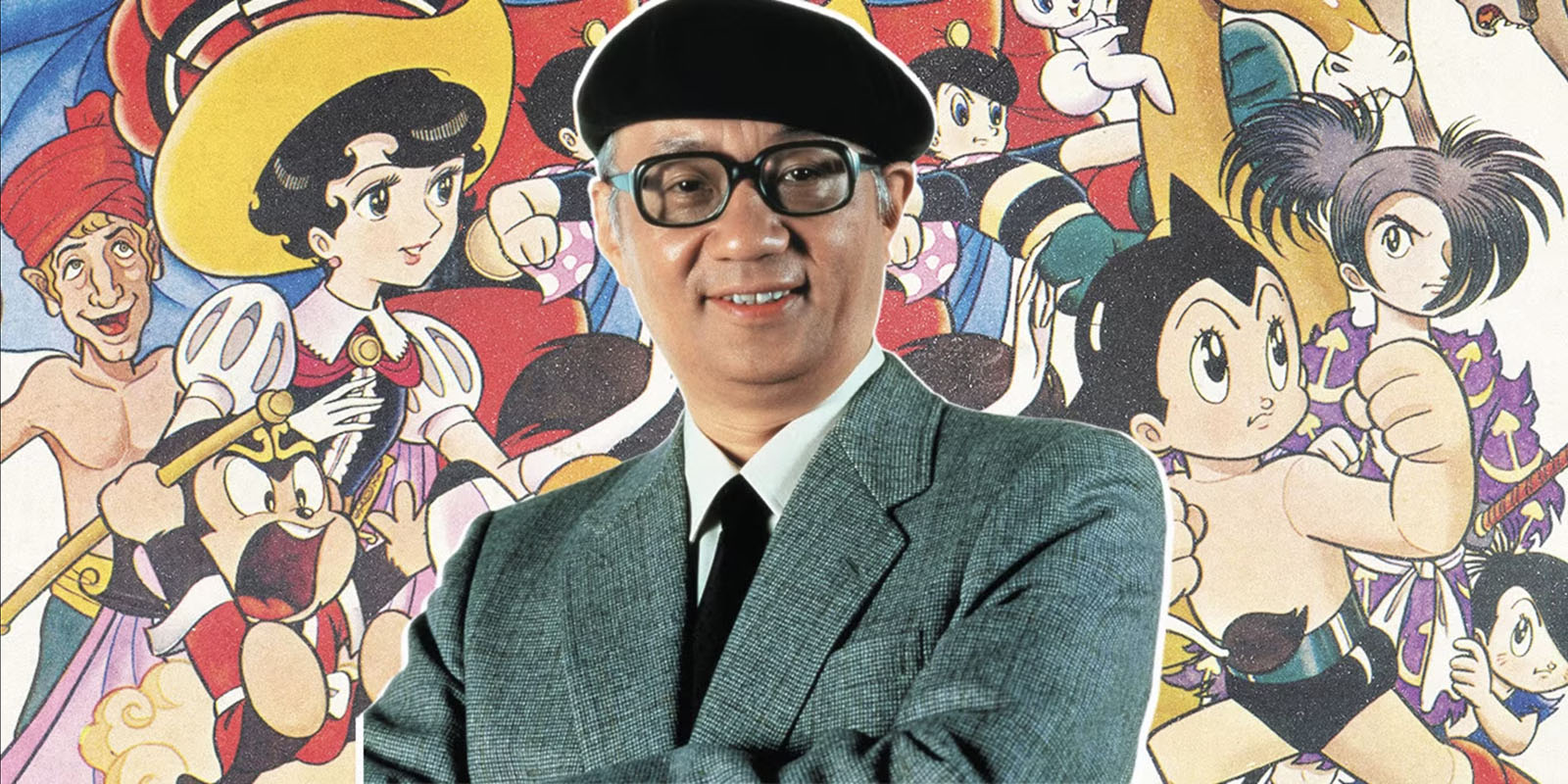
In discussing this topic, one cannot avoid the famous story that Tezuka sold Astro Boy for a bargain-basement price of 550,000 yen per episode, thereby becoming the root cause of the industry-wide low wages that followed.
The source of this story is clear. It comes from a eulogy Hayao Miyazaki wrote for the May 1989 issue of Comic Box, a piece later included in his autobiography Starting Point. In it, he cites the figure as “500,000 yen per episode.” Tezuka himself, in his autobiography I Am a Manga Artist, recalled offering the series for “around 550,000 yen” and admitted it was a “huge mistake,” so he, too, was aware that he had sold it cheaply.
However, the figures are inconsistent. According to the testimony of Shozo Sudo, a sales representative for Mannen-sha, the amount actually paid to Mushi Production was 1.55 million yen, and the actual production cost for the first episode ranged anywhere from 1.3 million to 2.5 million yen.
Nobuyuki Tsugen has academically concluded that the criticism attributing the industry’s deterioration to low production costs is misplaced. After all, Tezuka had designed a business model in which he retained full copyright ownership for Mushi Pro, intending to recoup costs through sales of Astro Boy to NBC Enterprises and revenue from character licensing. The fact that NBC began broadcasting Kimba the White Lion in September 1966 was a continuation of this strategy.
In short, Tezuka did have a plan for managing the flow of funds. Where he failed was not in the unit price of production, but in the fact that expenditures ballooned before the revenue streams could kick in. Even if the creators retain the copyrights, a company will die if the cash flow doesn’t balance out. This dynamic would continue to hold true in later eras as well.
A Quarter-Century Lost to a Single Sheet of Paper
There are two real-world examples where verbal agreements and sloppy contract management from the 1970s and 80s destroyed decades of subsequent business.
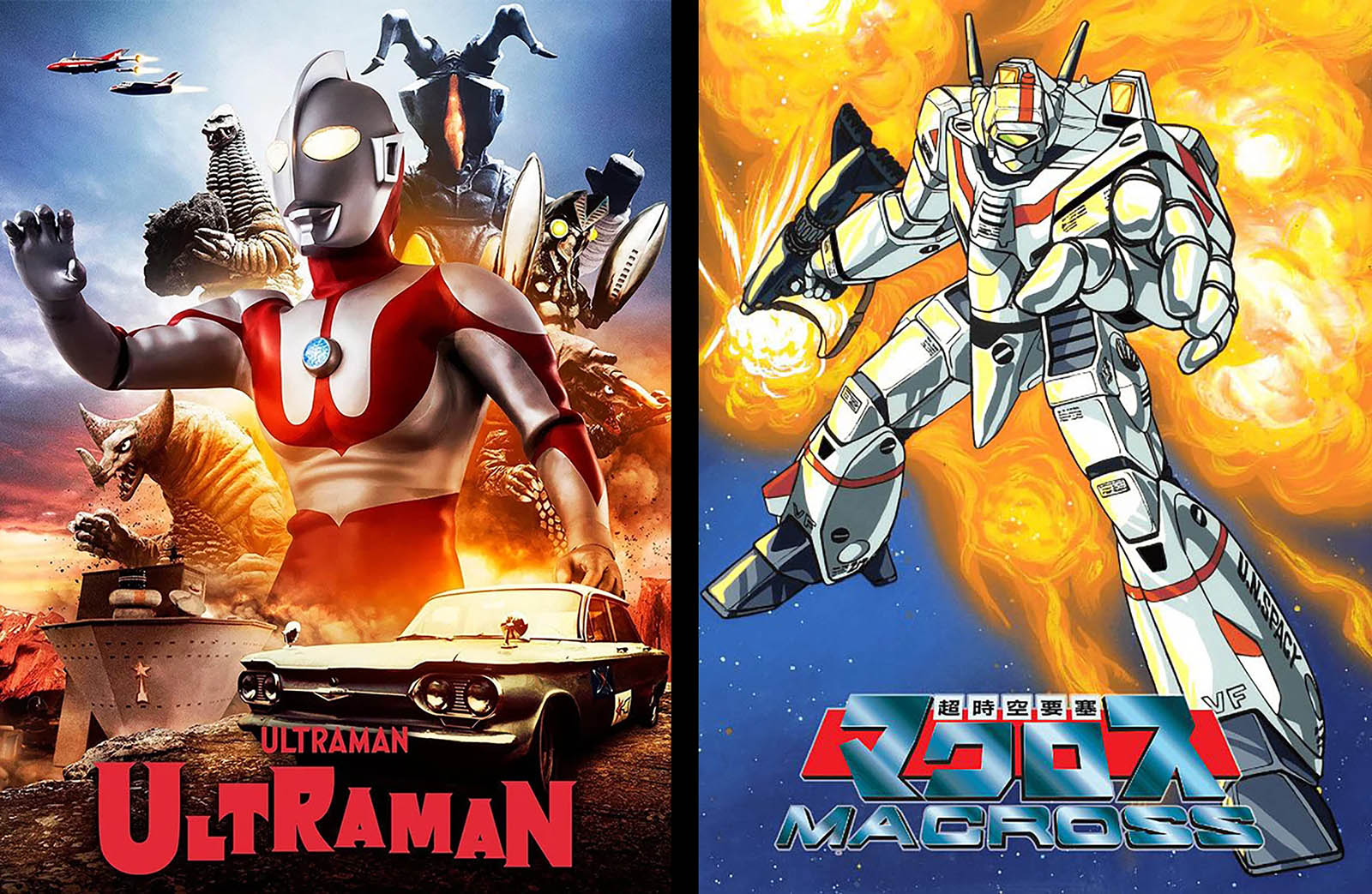
One such case involves Ultraman. At the heart of the dispute was a single contract allegedly signed in 1976 by Noboru Tsuburaya, then-president of Tsuburaya Productions. In 1996, the year after Noboru’s death, Thai businessman Sompote Saengduenchai suddenly produced this document, claiming it granted him exclusive overseas rights in perpetuity to seven titles: the six early series ranging from Ultra Q to Ultraman Taro, plus Jumborg Ace.
The document contained errors in the titles of the works and discrepancies regarding the number of titles involved. Furthermore, it lacked any mention of licensing fees or provisions governing the handling of the copyrighted material. By any standard, it was an unnatural contract for the transfer of such a critical asset. Tsuburaya Productions consistently maintained that both the signature and the company seal were forgeries. Nevertheless, in 2004, a Japanese court ruled against Tsuburaya Productions without the original document ever being submitted or a rigorous handwriting analysis conducted.
Citing this ruling, companies such as Japan’s UM Corporation, China’s Guangzhou BlueArc Culture Communication, and TIGA, which had acquired the rights from Sompote, pushed ahead with Ultraman business ventures and the unauthorized production of new content overseas, leading to simultaneous lawsuits in Thailand, the United States, and China.
In 2008, the Supreme Court of Thailand ruled the document a forgery based on handwriting analysis, while in 2018, a U.S. federal district court, following the discovery process, saw a jury unanimously determine the document to be invalid. In Japan, even assuming the contract was valid, a notice of termination was issued in 2014 based on the legal principle that a contract without a fixed term can be terminated prospectively. A subsequent court ruling confirmed the non-existence of overseas usage rights.
This resulted in lost opportunities spanning over a quarter of a century and amounting to tens of billions of yen, all caused by a single sheet of paper. During this period, the Tsuburaya family’s management of the company also faltered. The firm came under the umbrella of TYO in 2007, saw Bandai acquire an equity stake in 2008, and was ultimately transferred to Fields in April 2010.
Another case involves Super Dimension Fortress Macross. Conflict arose among three parties regarding the interpretation of contract terms: Big West (which led the planning and secured sponsorship), Studio Nue (responsible for the core mechanical designs and settings), and Tatsunoko Production (which handled actual production).
In the 1980s, Tatsunoko licensed overseas distribution rights to the US-based Harmony Gold, a move that resulted in the massive success of Robotech. Big West filed a lawsuit asserting that the copyrights for character and mechanical designs belonged to itself and Studio Nue. Japanese courts subsequently recognized joint copyright ownership of the designs.
This resulted in a sharp divide between the party holding overseas distribution rights and the party holding the fundamental design copyrights.
For more than twenty years thereafter, titles such as Macross Frontier and Macross Delta remained in limbo, unable to be legally released in international markets, with no progress made until a comprehensive agreement was reached in April 2021.
When a production company holds rights exclusively, the disappearance of that company leaves no clear path for obtaining necessary permissions. This is the mechanism behind “lost rights”, or the creation of “orphan works.” Group TAC, the studio behind Manga Nihon Mukashi Banashi and Touch, filed for quasi-bankruptcy in 2010 with debts totaling 650 million yen, while Kokusai Eigasha, known for the “J9 Series”, also went bankrupt and ceased operations.
Cases like Nishizaki’s, where a bankruptcy trustee liquidates copyrights and establishes clear ownership, are actually the successful ones. If documents have gone missing or rights are too fragmented to attract a buyer, the rights are simply left in limbo. While the Agency for Cultural Affairs has launched a system for the use of unmanaged copyrighted works, allowing for up to three years of use upon payment of compensation, this is merely a belated attempt to clean up the mess left by “forty lost years.”
The Production Committee System Emerged as a Defensive Immune Response
The industry’s response to this accumulation of failures was the “production committee” system.
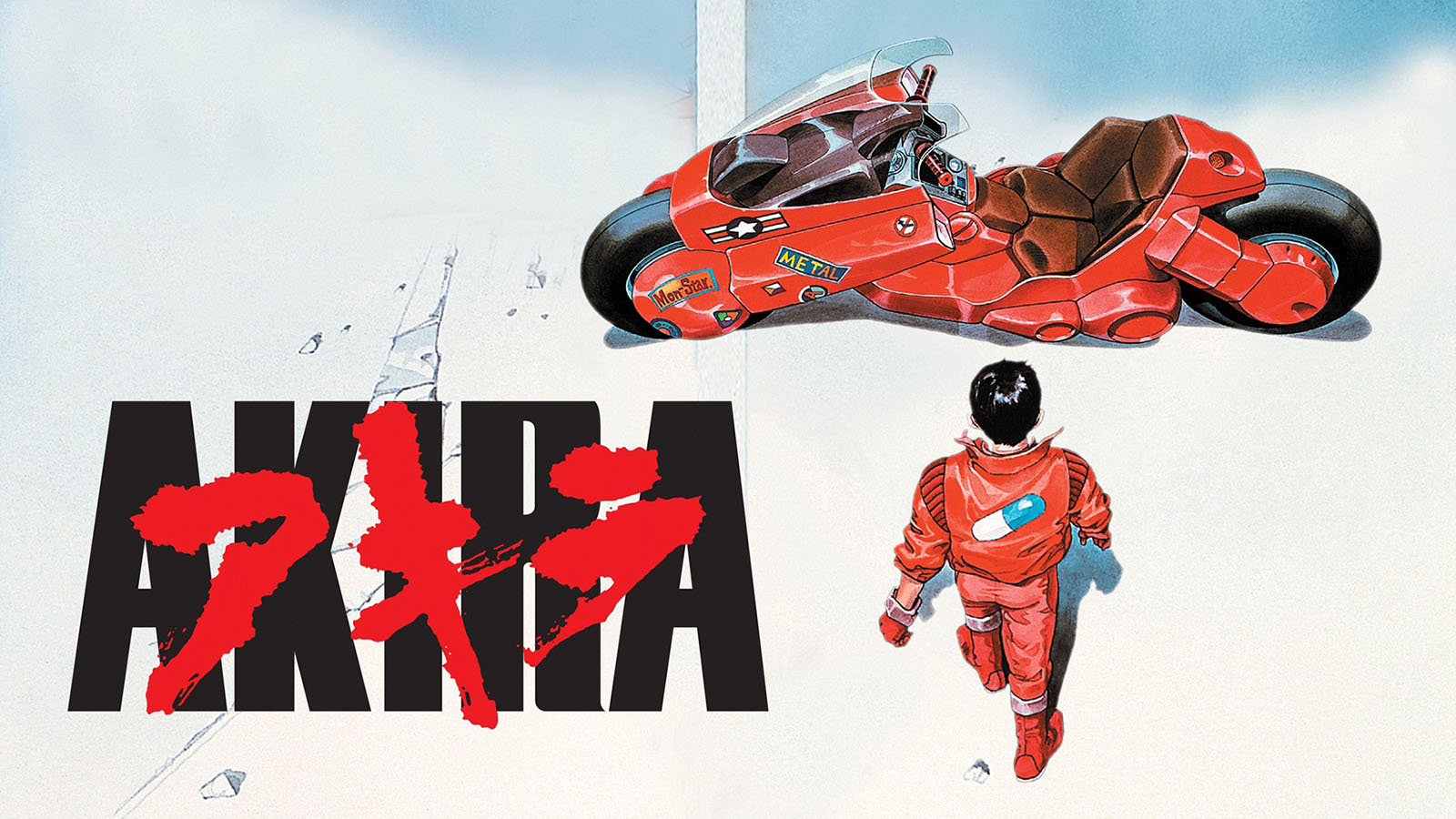
The Akira Production Committee, a joint venture established in 1988 by Kodansha, Mainichi Broadcasting System (MBS), Bandai, Hakuhodo, Toho, and Sumitomo Corporation, is considered the starting point. Following the success of Neon Genesis Evangelion in 1995, the model became the industry standard, particularly for late-night anime.
There are two primary objectives. The first is to distribute the production costs, ranging from several hundred million to several billion yen per title, and the associated box-office risks among multiple companies. This structurally eliminated the need for the “Nishizaki-style” of fundraising, in which an individual would shoulder the entire financial burden and debt, relying on shady connections and loan sharks.
The second objective is the centralization of rights: copyright shares are determined based on investment ratios, and contracts allocate specific rights, such as overseas distribution, merchandising, music publishing, and home video releases, to the participating companies. If one company goes under, the lead company can simply buy out its share, or the production committee can continue managing the project. In principle, this eliminates the possibility of international lawsuits arising from a single document of dubious origin, like the 1976 paper, as well as the kind of interpretive disputes seen with Macross.
However, diversifying risk also means diversifying returns. With Evangelion, Studio Gainax did not invest in the production committee and received only royalties for Hideaki Anno. In contrast, Production I.G, which invested 35 million yen, is said to have recouped many times that amount. Even with the same successful title, the scale of financial return differs by an order of magnitude between the investors and the creators. It is more accurate to say that the share of profits once claimed by speculators was redistributed, rather than that speculators were eliminated entirely.

What lies between 3.3465 trillion yen and 427.2 billion yen
So, what lies beyond that redistribution? The numbers paint a stark picture.
According to the Association of Japanese Animations’ Anime Industry Report 2024, the “broadly defined” anime market in 2023, representing the total amount paid by end-users, reached 3.3465 trillion yen. This marked a 114.3% increase from the previous year’s 2.9277 trillion yen, setting an all-time record. Meanwhile, the “narrowly defined” market, the combined sales of production and studio companies, stood at 340.7 billion yen in 2022 and 427.2 billion yen in 2023. There is a difference of one order of magnitude.
An August 2024 survey by Teikoku Databank revealed that the proportion of anime production companies operating in the red has exceeded 30% for four consecutive years. Among specialized studios acting as subcontractors, that figure rises to 43%. A survey by the company, cited in a Ministry of Economy, Trade and Industry document from January 2025, explicitly states that companies lacking IP ownership fail to generate secondary-use revenue from licensing, leading to a deterioration in profitability.
Furthermore, Makoto Asanuma, President of Bandai Namco Filmworks, pointed out at the Cabinet Secretariat’s Council for Public-Private Partnership in Content in September 2024 that overseas platforms like Netflix and Amazon dominate video streaming; consequently, Japanese production companies (the actual creators), receive little return, while profits flow overseas.
In 1963, Osamu Tezuka devised a business model relying on recouping costs through licensing rights, yet Mushi Pro collapsed when its cash flow ran dry before that could happen. By 2023, production companies, still lacking IP rights, were operating outside the core of the 3-trillion-yen market, with nearly 40% running in the red. Sixty years have passed, yet one thing remains entirely unchanged: money fails to reach the party that does not hold the licensing rights.
And yet, in the summer of 1977, the film was screened in theaters across the country
Let us recap the verifiable facts regarding Yoshinobu Nishizaki.
He was arrested in late 1997 for violating the Stimulants Control Act and arrested again in 1999 for violating the Swords and Firearms Control Law. In February 2003, a sentence of five years and six months in prison was finalized. He served time at Hachioji Medical Prison and Kurobane Prison before being released in December 2006. Lyricist Yu Aku submitted a petition for leniency to the Tokyo District Court on his behalf.
In 1997, both Nishizaki and his company, West Cape, were declared bankrupt following a petition filed by a major creditor. A lawsuit regarding authorship rights involving Leiji Matsumoto began in 1999. A March 2002 Tokyo District Court ruling recognized Nishizaki’s proposal for Space Battleship Yamato as the original work, determining that Matsumoto’s involvement was limited to certain aspects of the art and setting design. An out-of-court settlement reached during the 2003 appeal confirmed Nishizaki as the author and holder of moral rights. He was serving a prison sentence at the time of the proceedings.
In November 2010, he died after falling into the sea from a boat off the coast of Chichijima in the Ogasawara Islands.
It is all true: the high-handedness, the lavish spending, the drugs, and the handguns. He was the same man who, with the 1985 film Odin: Photon Sailer Starlight, suffered a disastrous defeat, generating only 200 million yen in distribution revenue, and saddled West Cape Corporation with 600 million yen in losses.
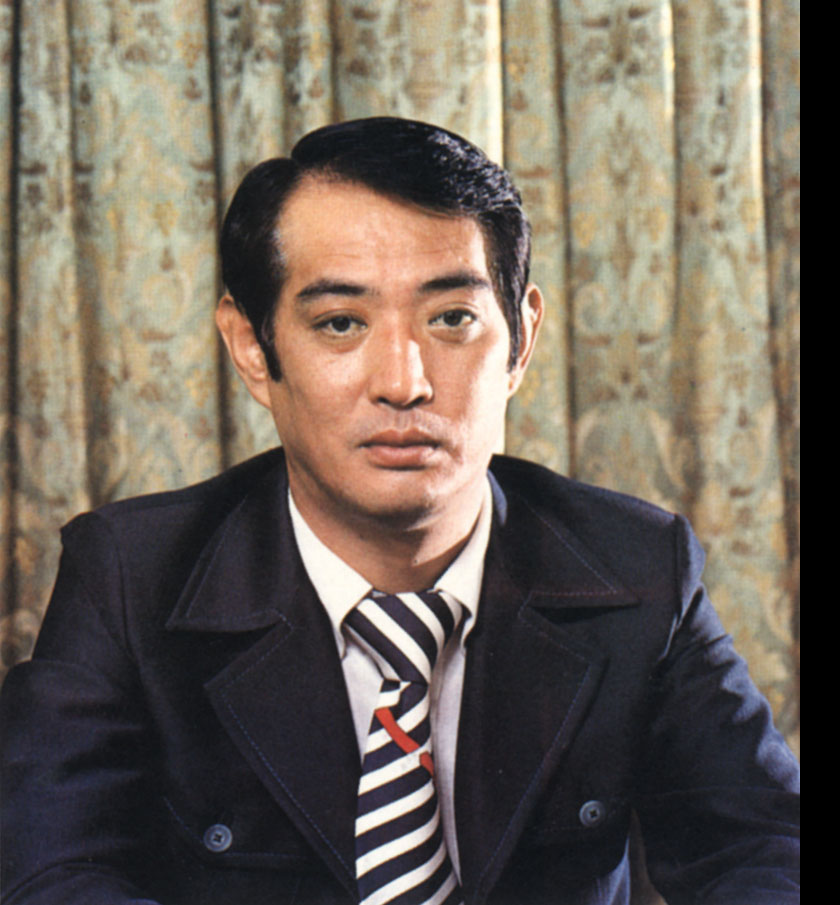
Yet, this same man, after being rejected by every major film studio, barged into the office of the Toei president, secured a distribution network, and managed to get the Yamato film screened in theaters nationwide on August 6, 1977. Japanese animated films have followed the template established on that day ever since.
Nowadays, there is no longer a need to hate the person who performs that role. Responsibilities are now dispersed among production committees, lead companies, distribution agents, and overseas platforms, leaving no single name or face to blame. No one gets arrested, and no one falls off a boat.
By the same token, however, no specific names surface when 40% of production companies operate in the red. The anime industry, freed from the need to pin blame on any one individual, and thus freed from the need to hate anyone, has transformed into a machine that simply churns out anime, subservient to the vague authority and accountability of the “production committees” that hold the copyrights. I sometimes find myself thinking that it wouldn’t hurt to have “someone” out there funneling a bit more money directly to the front lines.