
Redesigning the “Civilization OS”: The Next 50 Years for Japan and the World, Part 7
Published at NOTE Blog, May 14, 2026. See the original post here
Yushi Wada, Future Navigator
For over half a century, I have been engaged in wide-ranging research and analysis covering future forecasting, crisis management, new social systems, and the strategic direction Japan should pursue. The concept of “The Future That Is Already Here,” the title of this series, does not refer to some distant, fanciful dream. Rather, it signifies a stance of discerning the future by observing the subtle signs and indicators that are already hidden all around us in the present moment.
Humanity currently stands at a historic turning point, a moment where we are compelled to fundamentally re-examine the core design of our civilization.
The 20th-century civilization, built upon the foundation of petroleum resources, is now being subjected to a triple-pronged pressure: resource depletion, climate change, and geopolitical fragmentation. Consequently, the inherent limitations of this civilization’s “Operating System” are becoming starkly apparent.
The issue at hand is not merely a matter of isolated policy challenges. We are now compelled to re-examine the fundamental premises that drive our society, questions such as: What do we define as a “resource”? What do we define as “pollution”? And who possesses the right to design the future?
In response to these questions, two Japanese manga works proved to be far ahead of their time.
Leiji Matsumoto’s Space Battleship Yamato (1974) and Hayao Miyazaki’s Nausicaa of the Valley of the Wind (manga version, 1982–1994) confront the theme of “civilization’s self-renewal” in two diametrically opposed ways. What lies between these two works is not merely a difference in the eras in which they were created. rather, it represents a fundamental schism in civilization’s very self-perception.
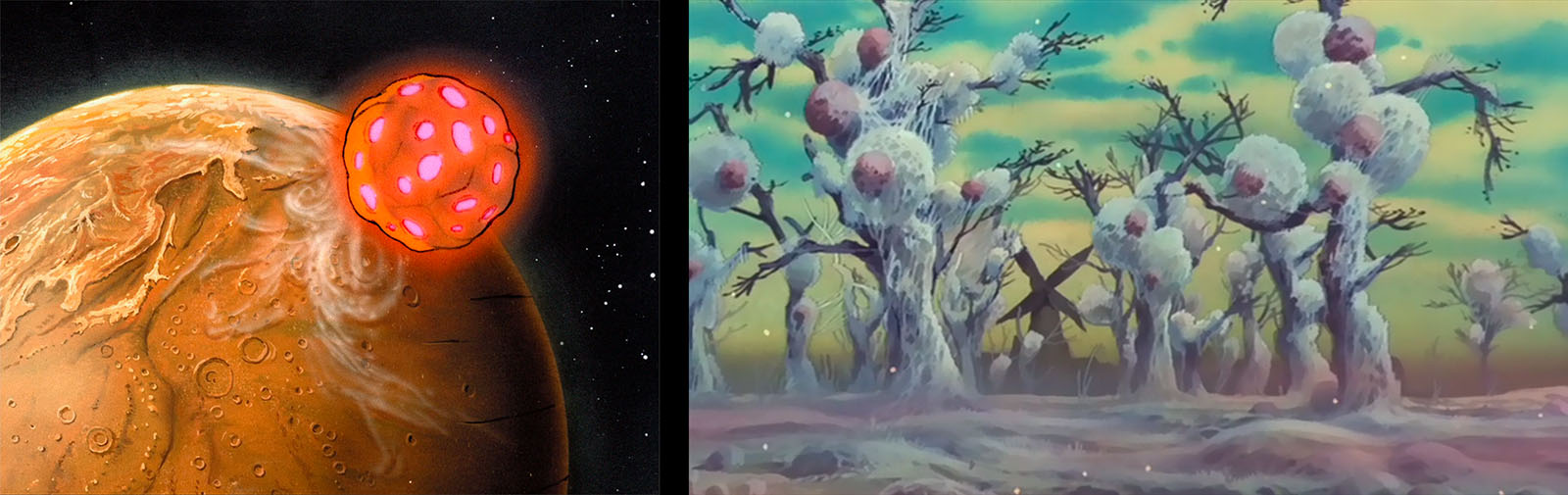
Key Points of the Two Works
Space Battleship Yamato tells the story of a mission to retrieve a purification device known as the “Cosmo Cleaner” from the far reaches of the universe in order to save an Earth dying from radioactive contamination. Here, pollution is portrayed as an external threat, something to be eliminated through technology. Humans are depicted as beings to be preserved in their original, unaltered state. Adaptation or transformation is rejected as something hostile.
Although the story establishes that the blue skin of the enemy Gamilon people is the result of biological adaptation to a high-radiation environment, the narrative never suggests that such adaptation is a path humanity should aspire to follow. The side that has adapted is the enemy. The side that remains unadapted, humanity, is the side that must be protected.
Born out of Japan’s era of rapid economic growth, this story represents a pure expression of modernist thought: a mindset that clearly separates problems from solutions and seeks to procure those solutions from external sources. The very name of the device, the “Cosmo Cleaner,” is telling. It implies using technology on a cosmic scale to make pollution “clean.” It stands as the crystallization of a faith in the idea that problems can simply be erased.
The manga version of Nausicaa, which began eight years later and took twelve years to complete, inhabits an entirely different ideological universe. Set in a world where a toxic forest known as the “Sea of Corruption” has engulfed the Earth, the young girl Nausicaa ceaselessly grapples with the question of humanity’s destiny in the wake of civilizational collapse.
The pivotal truth revealed in the latter half of the story is nothing short of shocking. The Sea of Corruption was not a natural backlash, but rather a “purification mechanism” intentionally designed by scientists of the old civilization. Furthermore, embedded within this design was a plan: once a millennium had passed and the purification was complete, current humanity was to be replaced by “improved humans,” beings adapted to the new environment.
It was a perfectly rational plan for salvation, conceived by benevolent designers. Unable to logically refute the plan’s premise, Nausicaa nevertheless chooses to destroy the plan, and the mechanism, entirely. This stands in stark contrast to the animated film version, in which she is portrayed as “the girl who saves the world.” The Nausicaa of the manga is depicted, instead, as one who rejects the notion of “total salvation born of good intentions.” This very divergence reflects the fundamental difference between two distinct “civilization operating systems.”
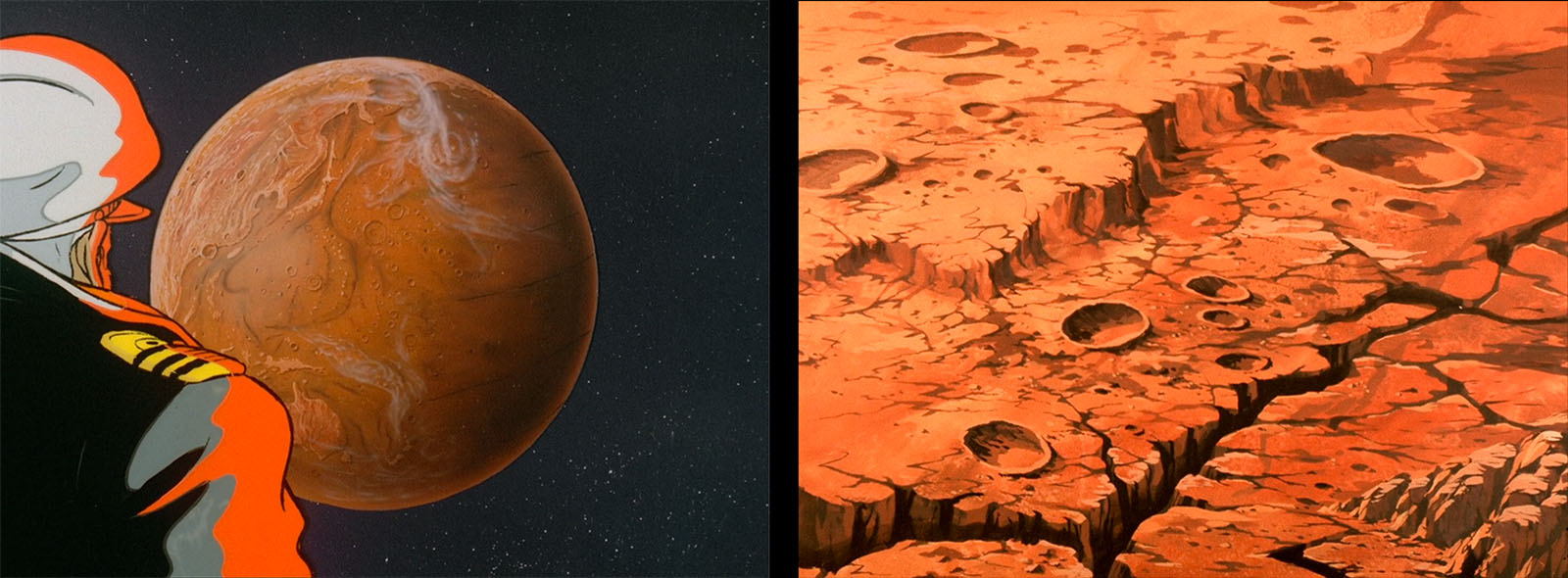
The Structure of the 20th-Century OS
The philosophy embodied by Space Battleship Yamato serves as a direct mirror of the operating system of 20th-century civilization. Its fundamental structure consists of four axioms:
First: An epistemology positing that pollution, toxins, and waste are external factors that must be eliminated. The problem lies outside the system and can be isolated from its interior.
Second: A methodology asserting that solutions are brought about through technology. Technology is a neutral tool. if applied correctly, it can resolve problems.
Third: A view of humanity maintaining that human beings must be preserved in their original state. Adaptation, transformation, or modification are regarded as an intrinsic loss of essence.
Fourth: A philosophy of history holding that civilization must be sustained and restored. The future is perceived as a direct extension of the present civilization.
These four axioms mutually reinforce one another, forming a coherent and internally consistent worldview. The “Cosmo Cleaner” represents the ultimate realization of this worldview: it overcomes the problem of pollution through the solution of technology, without altering human beings, while simultaneously ensuring the continuity of civilization. No other device so purely encapsulates the essence of the 20th-century OS.
What is crucial to understand is that this philosophy is not, in itself, “wrong.” From the era of rapid economic growth through the 1990s, this operating system actually worked. Pollution was, to a certain extent, mitigated through technology. Energy efficiency improved and living standards rose. The problem lies not in any inherent flaw within the OS itself, but rather in the fact that its shelf life is drawing to a close.
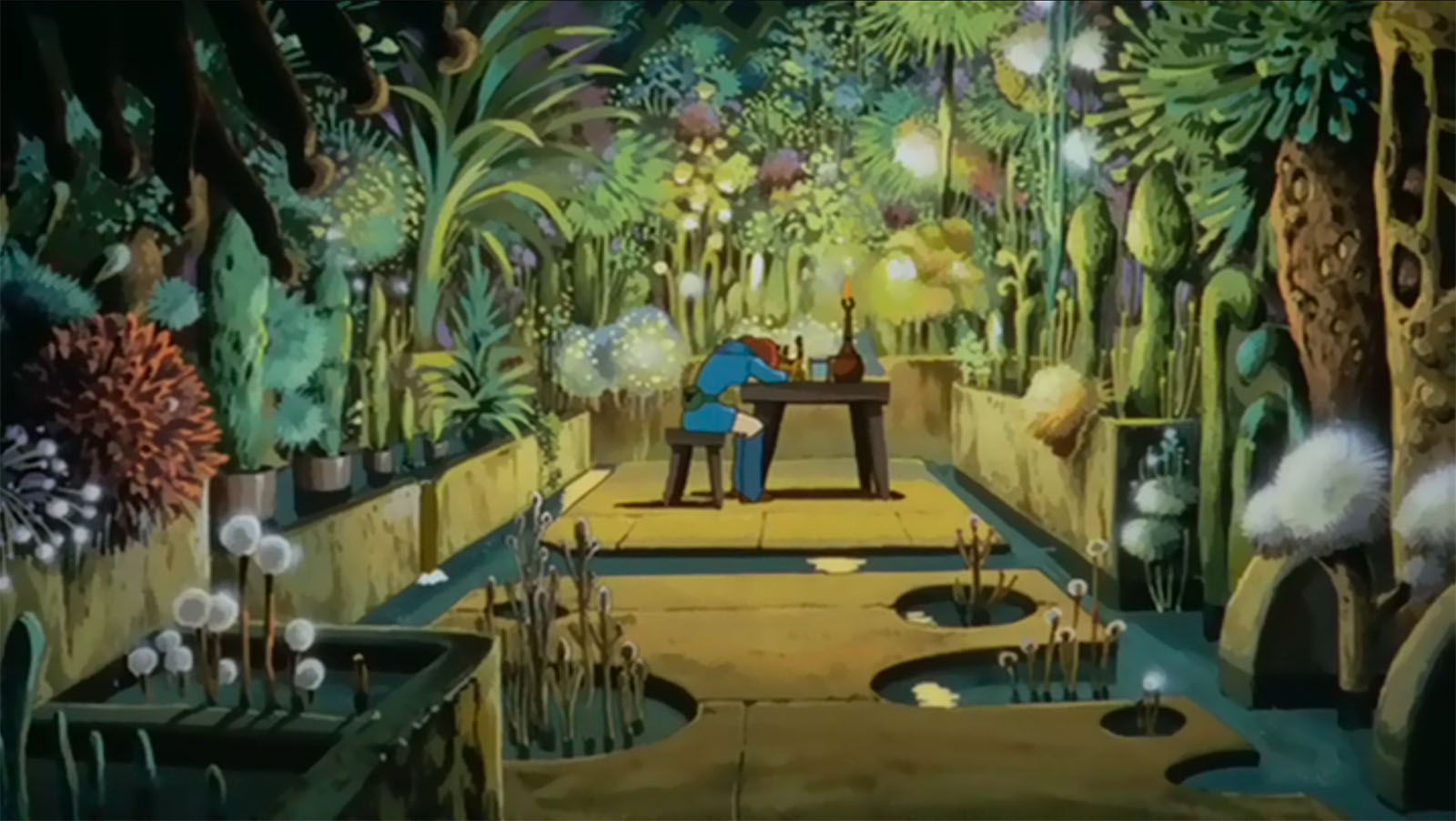
The Contours of a Next-Generation Civilizational OS
What the manga version of Nausicaa presents is the outline of an alternative OS, one that fundamentally re-examines all four of these axioms.
Its attitude toward pollution is radically different. The toxins of the Sea of Corruption are not external factors to be eliminated. rather, they function as an integral part of a “circulatory system.” Toxic mycelia purify the soil, while highly virulent spores restructure the ecosystem. When waste is integrated into a circulatory loop, it ceases to be mere waste.
In a contemporary context, this concept is analogous to redefining waste plastics, shifting the perception from “pollutants to be eliminated” to “hydrocarbon resources to be metabolized.” Chemical recycling, the process of recovering petroleum-derived waste as hydrocarbons once again through pyrolysis and gasification, reveals its true significance only when reframed not merely as a technological solution, but as a matter of resource security. Herein lies the real-world manifestation of the Nausicaa philosophy.
The philosophy regarding human adaptation is also inverted. The architects of the “Old Civilization” view humans genetically modified to possess immunity to the toxins of the Sea of Corruption as mere “defective products of a transitional era.” Nausicaa, however, affirms them as embodying a “unique mode of existence.” This logic resonates with the perspective that reinterprets “adaptation to constraints,” a strategy that Japan, a nation with scarce energy resources, has cultivated over many years, not as a defect, but as a source of potential. If a civilization that cannot sustain itself without petroleum is merely a transitional entity, then the seeds of the next-generation OS lie with those who have continued to survive amidst constraints.
The relationship with technology is likewise fundamentally different. In Yamato philosophy, technology is a problem-solving device procured from external sources. in the Nausicaa philosophy, however, technology is merely a tool for redesigning relationships. What enables coexistence with the Sea of Corruption is not purification technology, but rather a cognitive shift, the decision to cease viewing the Sea of Corruption as a “problem.” Technology follows this shift in perception. it does not precede it.
The Trap of Design
What the manga version of Nausicaa further calls into question is the very limit of design itself.
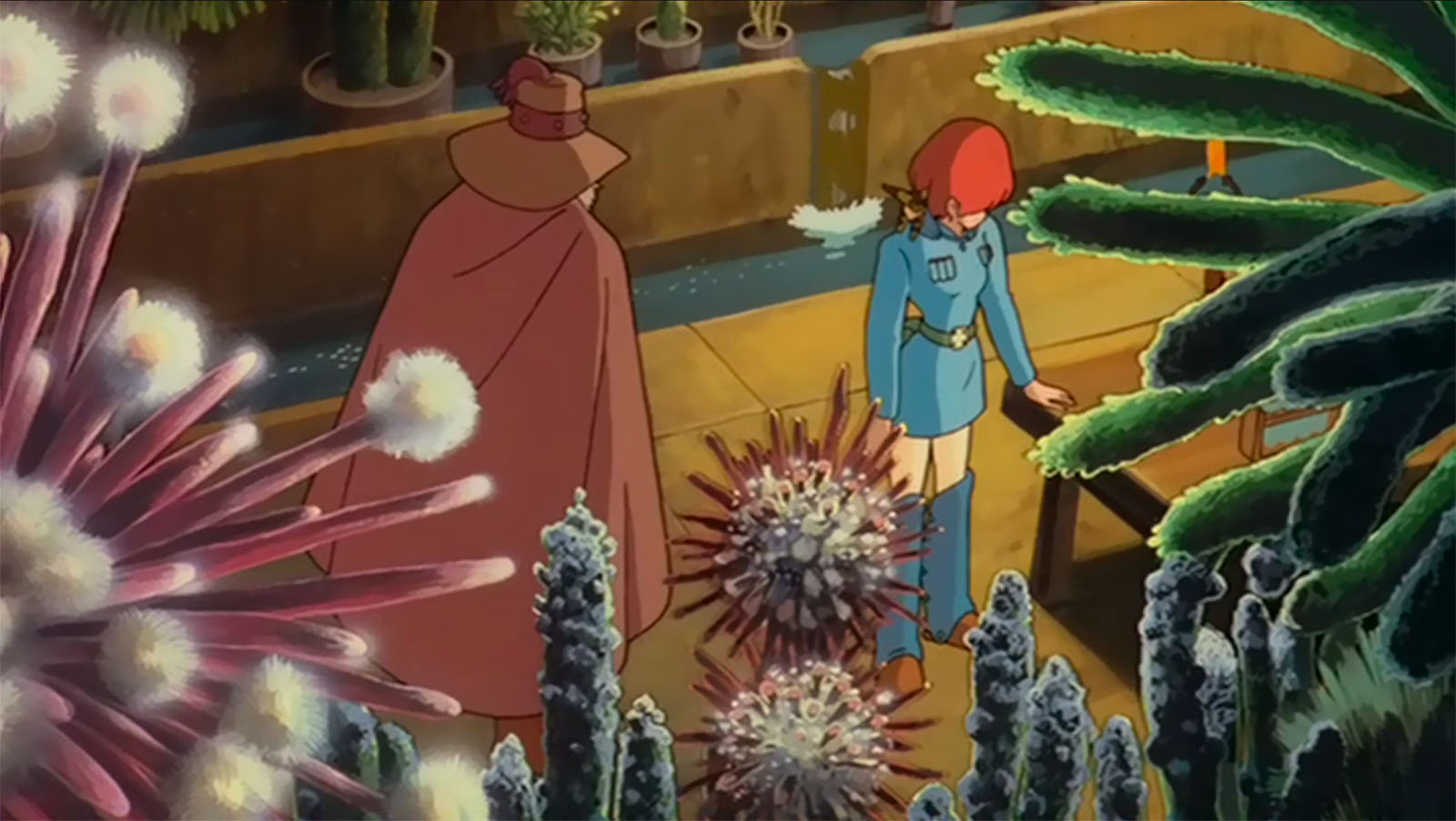
The benevolent designer, embodied by the master of the “Crypt,” was absolutely correct. The diagnosis was accurate, the prescription was rational, and the plan was internally consistent. Current civilization was unsustainable. The blueprint for the next civilization was already complete. and altering human beings to minimize the costs of this transition was a rational means to that end. The fact that the subjects’ consent was deemed unnecessary stems from the premise that the subjects lack the capacity for judgment. It is exceedingly difficult to refute this logic.
And that is precisely why it is dangerous. A perfect design, in principle, strips away the autonomy of those who live within it. To correctly design the future is, simultaneously, to erase any room for future human beings to make their own choices. The greater the precision of the design, the more the autonomy of the individuals involved diminishes. This represents a structural contradiction into which any benevolent dictatorship inevitably falls, and a fundamental problem inherent in the Enlightenment tradition itself.
Nausicaa’s rejection is not a protest against an error in the design. Rather, it is a rejection of the design for being too correct. This paradox casts a fundamental question over the entire enterprise of policymaking. What does it truly mean to “design” Japan’s next fifty years? Who designs it? For whom? And on what basis? In principle, (1) enhancing the precision of a design, and (2) safeguarding the autonomy of the individuals involved, stand in a state of tension.
Optimization via AI, policymaking driven by big data, future forecasting through simulation; all of these represent attempts to eliminate uncertainty through “correct design.” When such attempts reach their ultimate completion, what significance will choices made by the human beings living within that system hold? The manga version of Nausicaa had already provided an answer to this question back in 1994.
Reset or Metabolism?
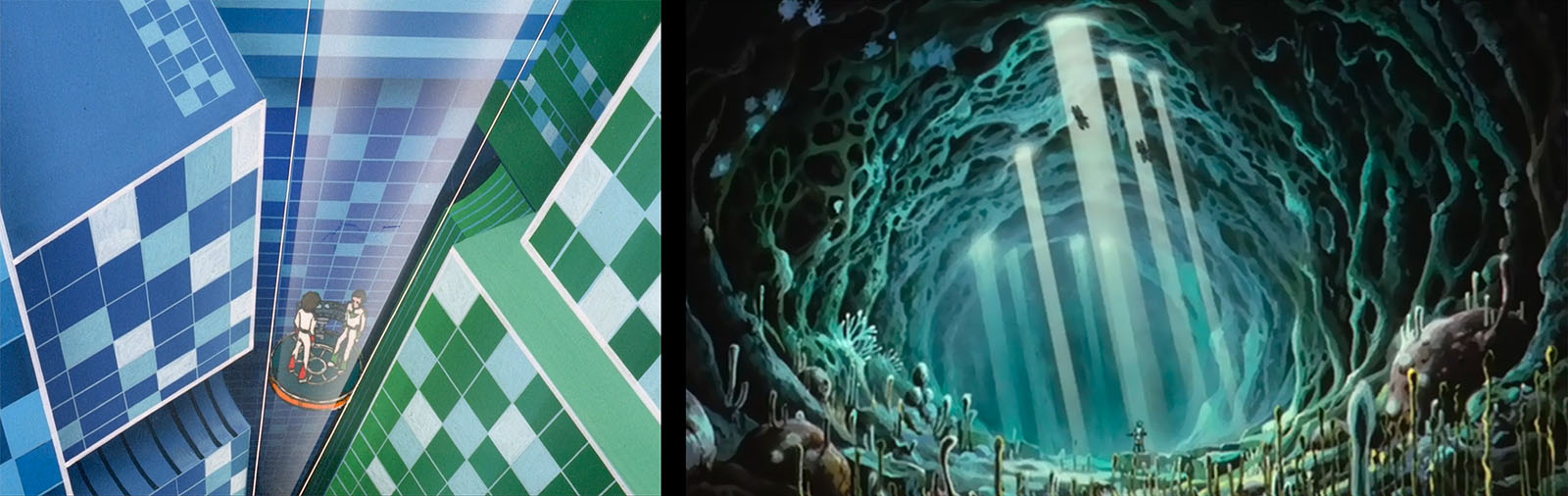
Viewed from a different angle, the conflict between Yamato and Nausicaa can be interpreted as a clash between the philosophy of the “reset” and the philosophy of “metabolism.”
The “Cosmo Cleaner” is the ultimate reset device. It returns a contaminated state back to absolute zero. The plan for the “Crypt” follows this same pattern: to bring an end to a contaminated civilization and initiate a pristine one. Both approaches share a common underlying concept, either “reverting to the original state” or “starting anew.”
In contrast, the path Nausicaa chooses is that of “metabolism.” It entails moving forward while allowing contamination, purity, life, and death to remain in continuous flux. The Sea of Corruption functions as a purification mechanism not because it eliminates death and decay, but precisely because it integrates them into its cycle. A metabolic system requires no reset.
The 20th-century model of civilizational renewal was inherently reset-oriented. Revolution, development, redevelopment, disruptive innovation, all share the same fundamental structure: “ending the old to initiate the new.” Yet, a reset incurs colossal costs. The world that emerges rarely conforms to the designers’ original intentions, and the very act of resetting often generates new forms of contamination.
Fundamentally, the concept of a circular society signifies a transition toward a form of metabolism that requires no “reset.” Rather than merely disposing of waste, we metabolize it. Instead of halting growth only to reset the system, we metabolize and transition from growth into maturity. Rather than overthrowing hegemony to initiate a reset, we metabolize a shift from “Hegemony” to “Harmony.”
From 1974 to 2026
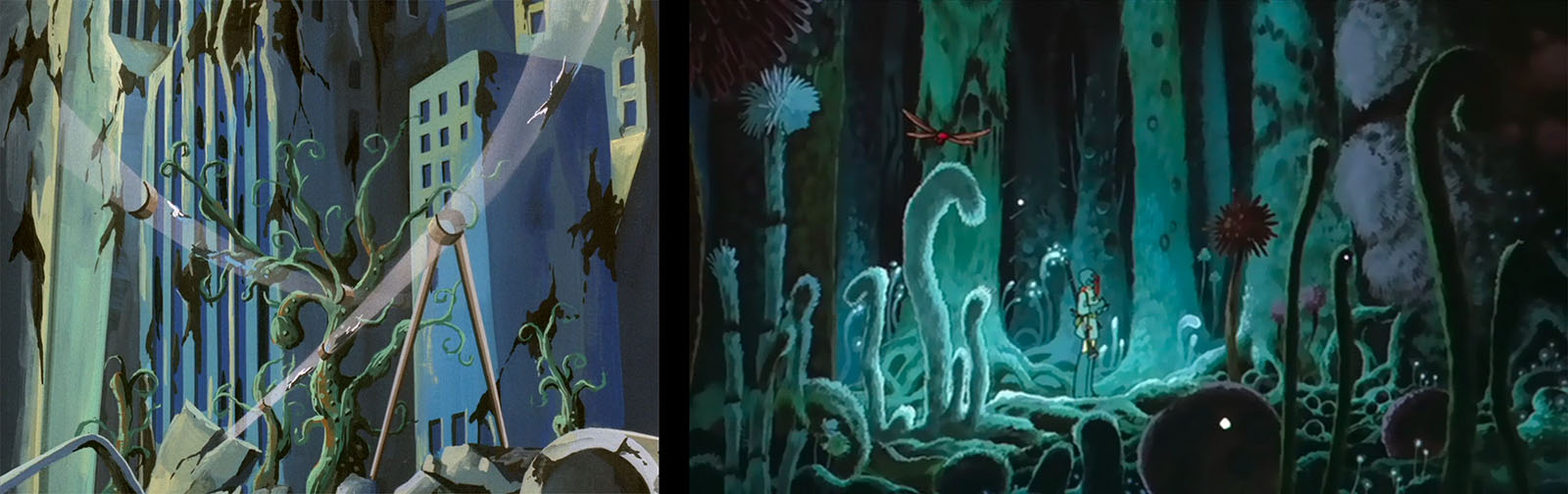
The year 1974, when Yamato was first released, followed immediately on the heels of the first Oil Shock. In a year when the finite nature of natural resources was perceived as a tangible threat for the very first time, Japan found itself in need of a narrative, a belief that “if we simply develop new technologies, we can solve any problem.” In a sense, this served as an honest self-portrait of that era. Japan’s own lived experience, having successfully weathered the Oil Shock through energy-conservation technologies, provided the bedrock for the dream embodied by the “Cosmo Cleaner.”
The year 1994, when the manga version of Nausicaa reached its conclusion, found Japan in a state of profound lassitude following the collapse of the economic bubble. This period coincided with the moment when Japanese society as a whole began to ask: What lies beyond the narrative of perpetual economic growth?
Hayao Miyazaki, anticipating the discourse of policymakers by a full decade, had already fully articulated the core themes of a “next-generation operating system”: circularity, adaptation, and the limits of design.
And now, in the present day, our oil-dependent economy is converging precariously upon a single choke point: the Strait of Hormuz.
Meanwhile, waste plastics are being redefined as “urban oil fields,” and Japan’s declining population is beginning to be reinterpreted, no longer as a mere “burden,” but as a “pioneering model” for the future. Our efforts to adapt to climate change, specifically in the sense of “coexisting with pollution,” are transforming the Nausicaa-esque inquiry into a tangible reality. concurrently, the optimization of governance through AI is elevating the “benevolent designer” problem into a pressing policy issue.
The choice between the Yamato philosophy and the Nausicaa philosophy no longer presents itself merely as a fictional dilemma. it now stands before us as a concrete, real-world policy choice, a fork in the road. Shall we continue our quest for a “Cosmo Cleaner,” or shall we instead design a new relationship with the “Sea of Corruption”? In all likelihood, the answer is not a simple either/or proposition. Yet, the specific path we ultimately choose to walk will determine the trajectory of both Japan and the world for the next fifty years.