Manga by Akira Hio
Reply

Final Yamato‘s epilogue has an interesting history all its own. It was the last sequence of the production, cut together the night before the movie premiered in March, 1983. Thus, it was basically abandoned before it could be finished. When Nishizaki spot-checked it in theatres on opening day, he was so unhappy with it that he ordered it eliminated from all seven prints of the film showing in Tokyo. In other words, only viewers who caught the first screenings on day one got to see it.
The piece was reworked and lengthened over the summer into its finished form, which was attached to the 70mm re-release. In 1989, after wresting the Yamato catalogue from other video labels, Bandai rolled out its first laserdisc box set of all the movies, which included the first cut of the epilogue as a bonus feature. It has been included in all subsequent releases since then, and can also be found on the DVD from Voyager Entertainment.
Though their content was basically the same, here’s how the two versions differed…
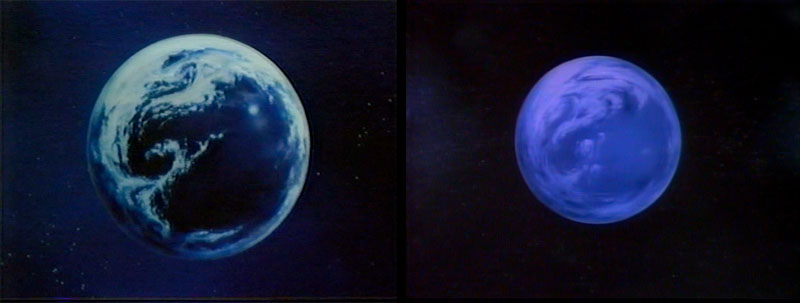
Fade up on two different paintings of Planet Earth.
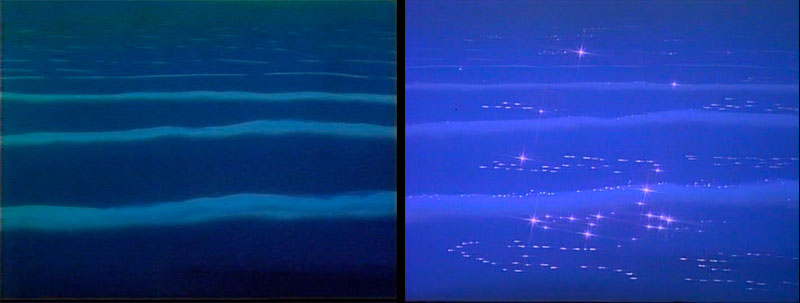
Dissolve to waves lapping against a shore. Version B added color enhancement and glitter.
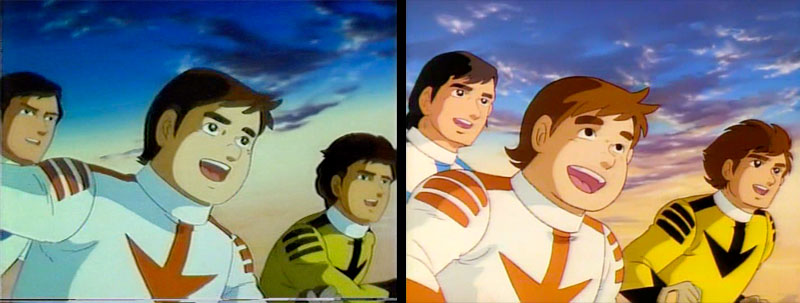
Yamato crewmembers run along a beach. All of these shots were redone for Version B to improve the likenesses and liven up their expressions.
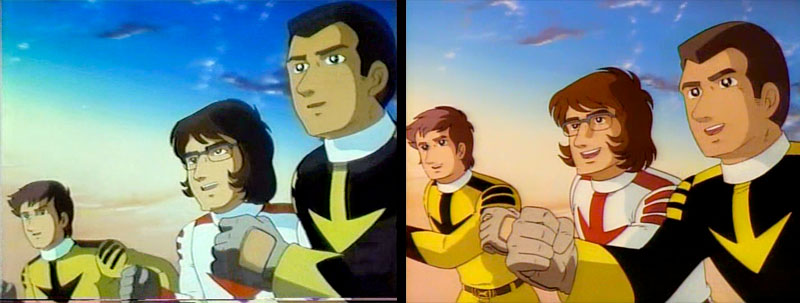

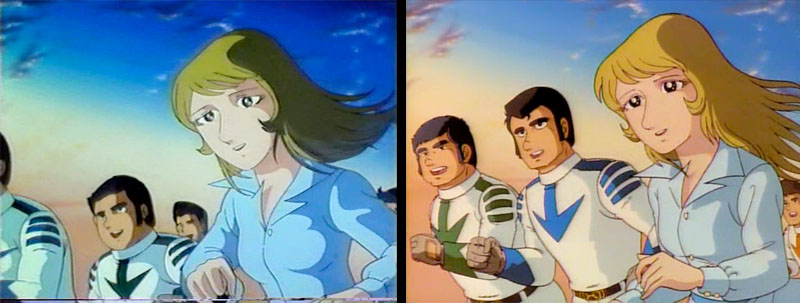
Yuki in particular benefited from this revision process, losing the directionless stare seen in Version A.

Everyone runs toward the sunset. In Version B the sun is still mostly above the horizon and glitters on the water.
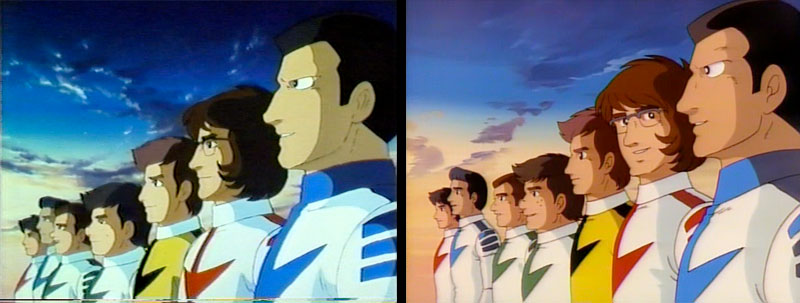
Everyone lines up at the shoreline. Version B gives them livelier expressions and more interaction.
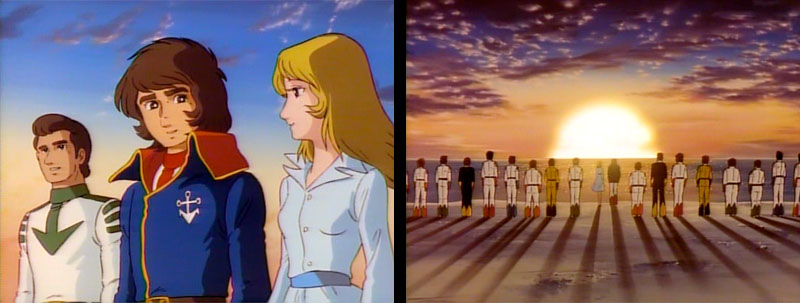
This shot of Kodai and Yuki was done for Version B, which then cuts wide to see everyone standing together.
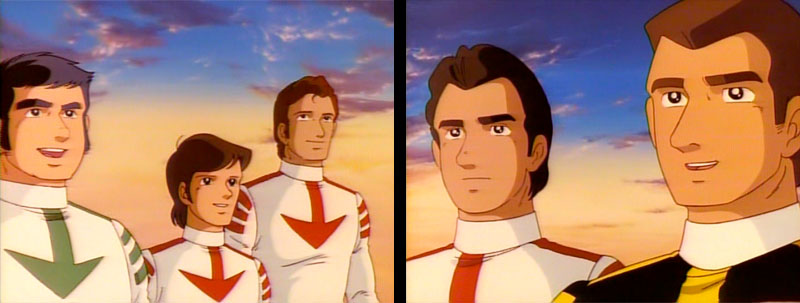
Version B also includes new shots of selected characters, mostly crewmembers who were cadets in Series III.
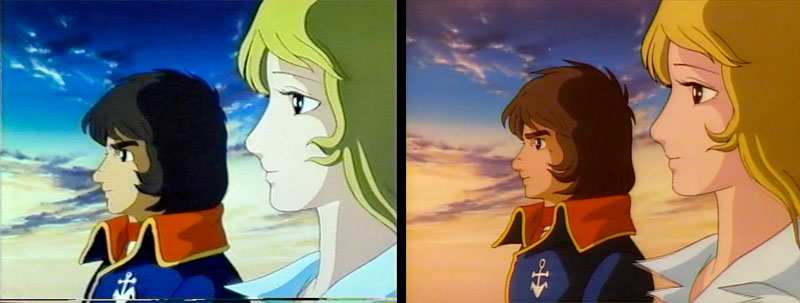
We go to a two-shot of Kodai and Yuki together. The color was warmed up for Version B.
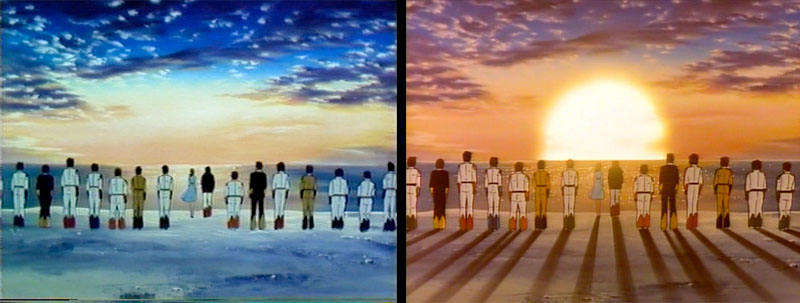
Back to the group shot: Version B added a sun and animated Yuki’s dress blowing in the breeze. (It was unmoving in Version A.)
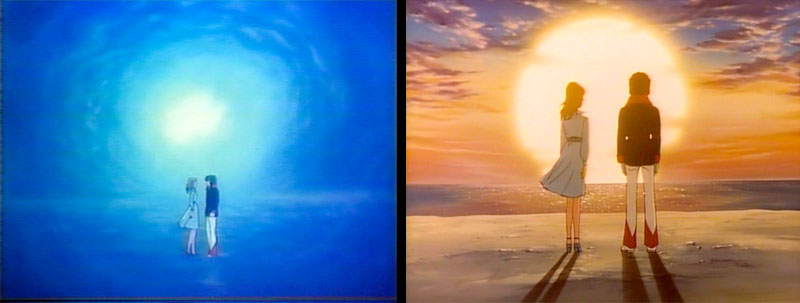
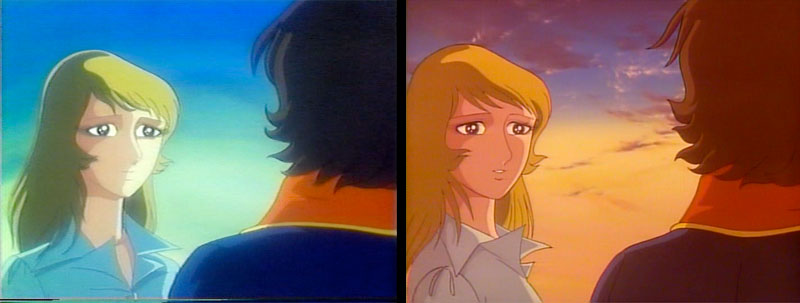
The other characters fade off, leaving our two lovebirds with eyes only for each other. These two shots were redone for Version B in the warmer color palette.
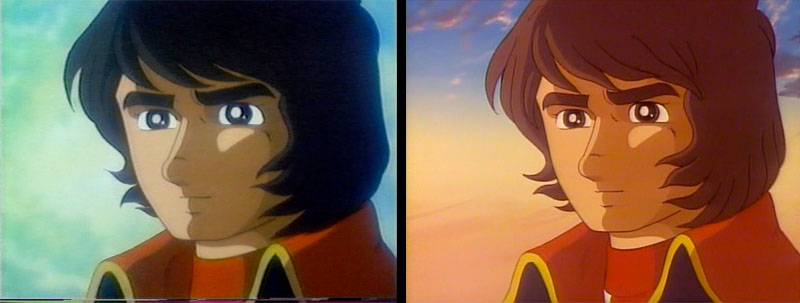
This animation of Kodai was good enough to keep, but the sky behind him was changed for Version B.
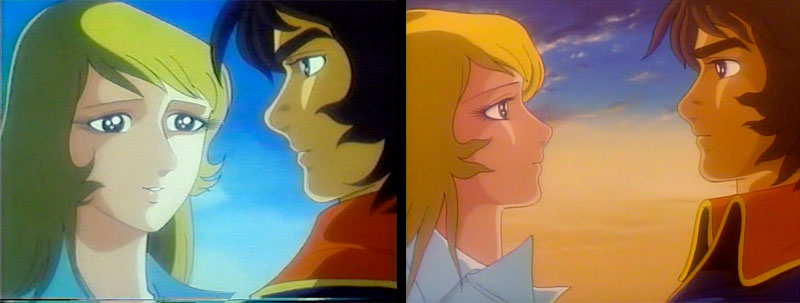
The next shot ended on slightly different angles from A to B.
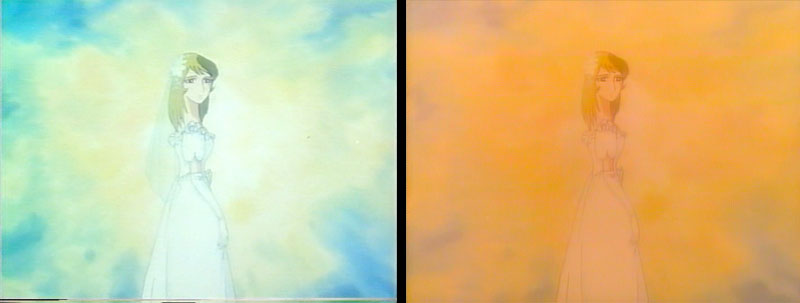
Who hears wedding bells? The animation was the same in both versions, but the color tint was altered.

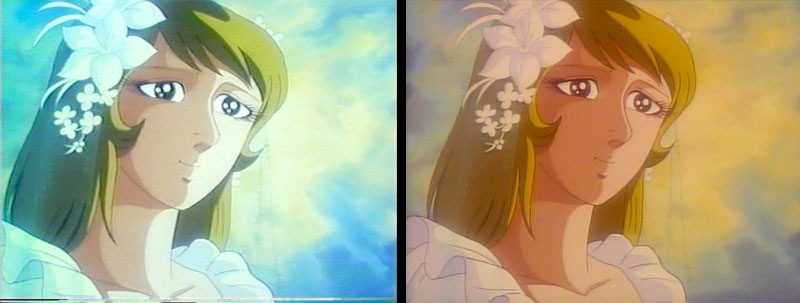

You may kiss the bride. Version B goes to a different background here, and the most notorious divergence of the entire film begins.
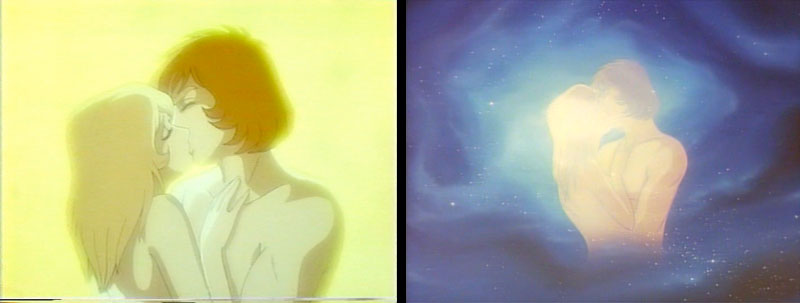
All Earthly cares dissolve away along with all Earthly clothes. In Version A, we stay with the lovers for a while they consummate their marriage on camera. In Version B they drift off into outer space where we cannot follow to intrude on their most private and tender moment.

Version B then takes an entirely different turn, reuniting us with the Queen of Aqarius.
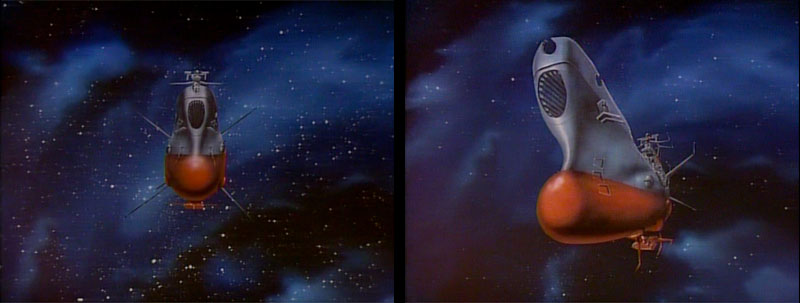
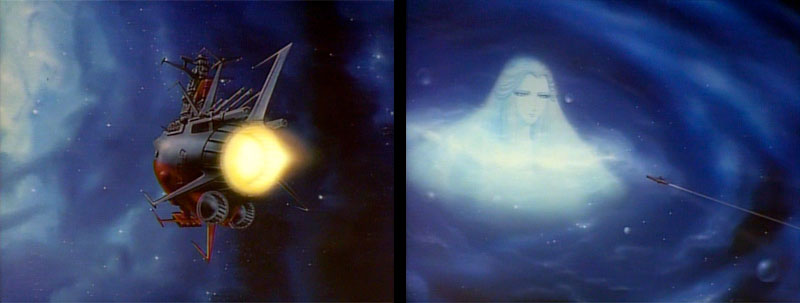
She delivers a short lecture on the grand cycle of life in the cosmos, and the film’s narrator returns to say his eternal goodbye to Yamato. Version B then fades to black.

Version A concludes with a thoroughly satisfied Yuki and then goes to end credits. Whereas Version B’s credits roll over a quiet ocean background, A gives us a welcome montage of past moments and one more round of the classic Yamato theme song.
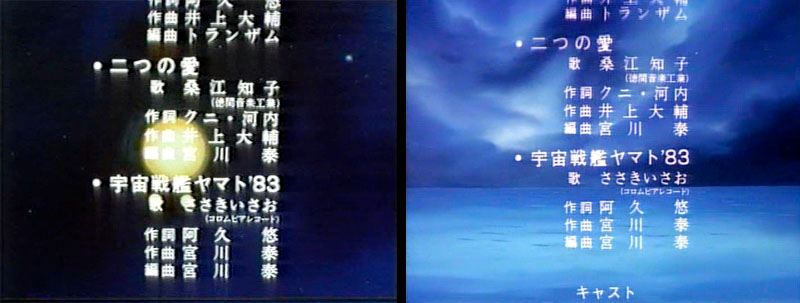
This particular rendition of the theme was called Space Battleship Yamato ’83 and was newly recorded for the film. Oddly, it was left out of Version B entirely, even though it remained listed in the credits. Just for the sake of complete internal accuracy, it was restored to the Voyager Entertainment DVD release.

Both versions of the film end with one more divergence. Version B simply says, “End.”
Watch the Version A epilogue on YouTube here
Continue to 1983 magazine coverage
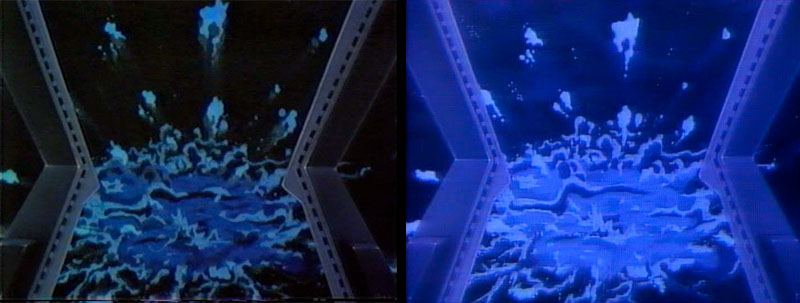
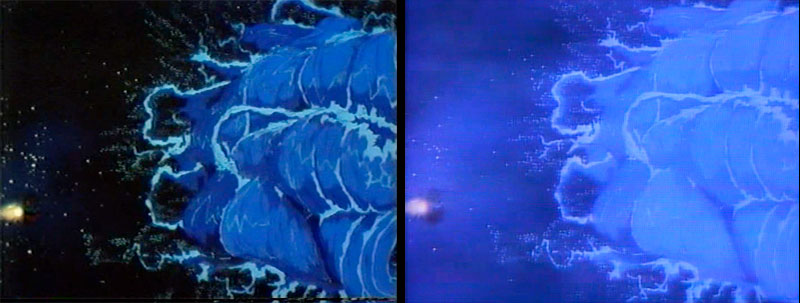
The enhancement in Version B continues as Yamato lines herself up in the path of the roiling space flood.
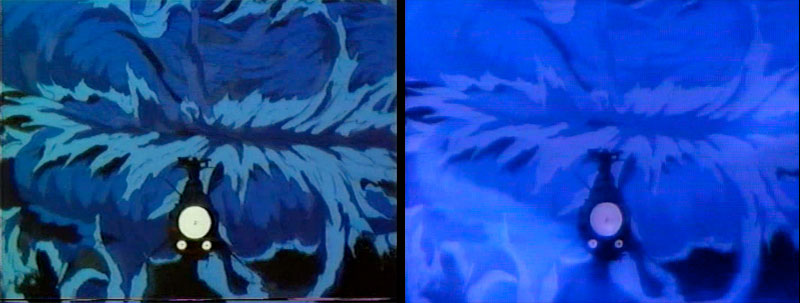
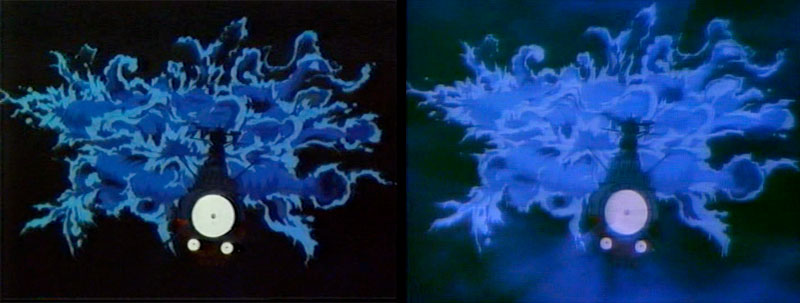
Though similar in composition, these two shots bracketed scenes of Captain Okita preparing to fire the Wave-Motion Gun.
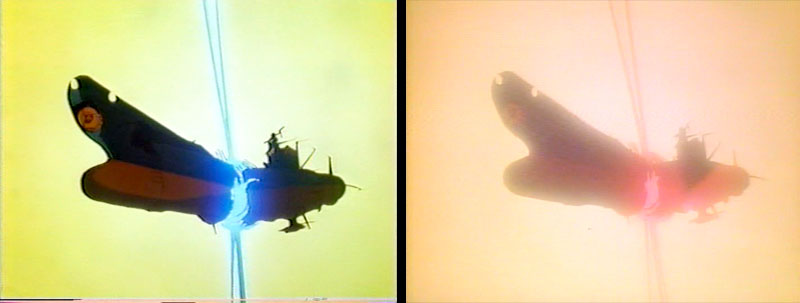
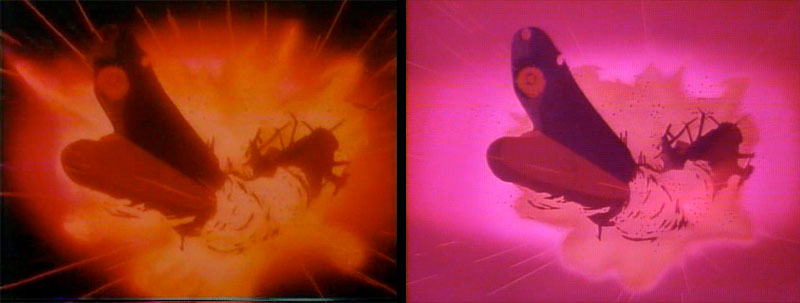
The fatal burst tears Yamato in half, just like its World War II predecessor. This, of course, was another chance to apply color enhancement in Version B.
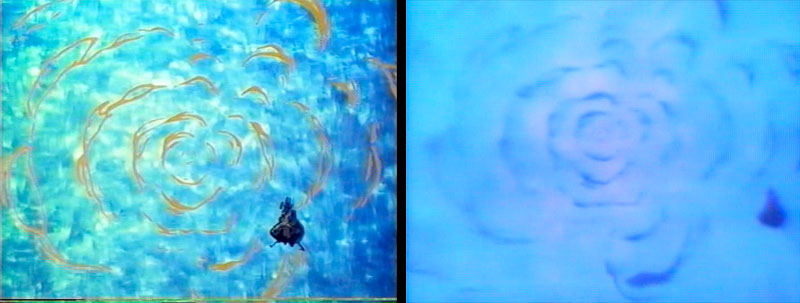

Another rare case of a revised scene that wasn’t an improvement: the crew watches the vast, flood-stopping explosion from the safety of the Fuyuzuke. Version A showed this clearly. Version B enhanced the scene to the point of blurring the ship out of view and then zoomed in to eliminate it entirely.
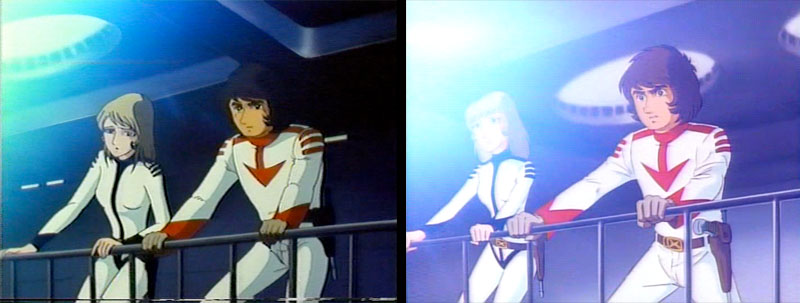
Next we cut inside for reactions from Kodai and Yuki. Here’s another scene that was completely redrawn for Version B.

Version A then cut in for close-ups of them both…
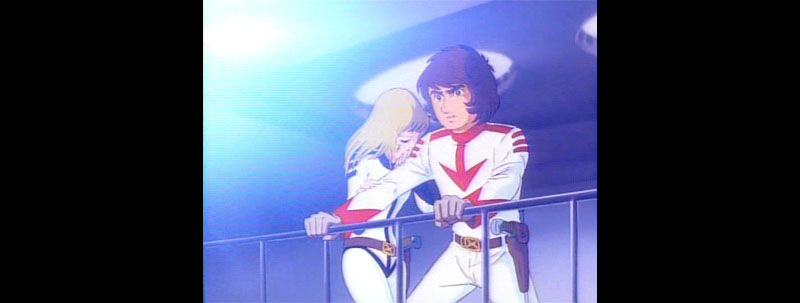
…while Version B stayed on the first shot and had Yuki move to Kodai and look away.
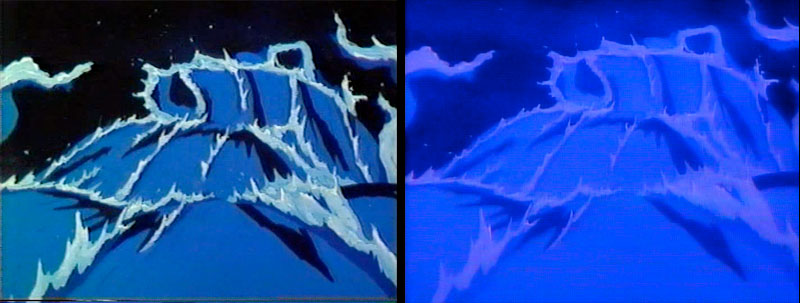
We then go back outside to see the waters of Aquarius reform into a self-contained mass. Enhancement effects were applied to Version B.
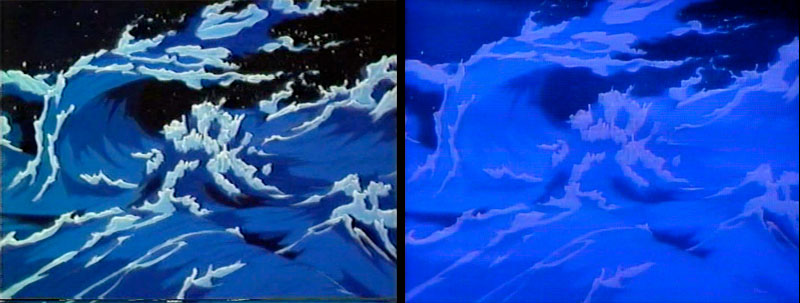
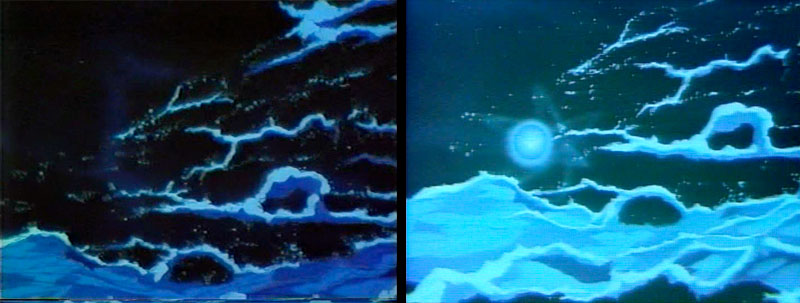
The waters coalesce in a long panning shot that goes to open space in Version A but includes a receding Aquarius in Version B.
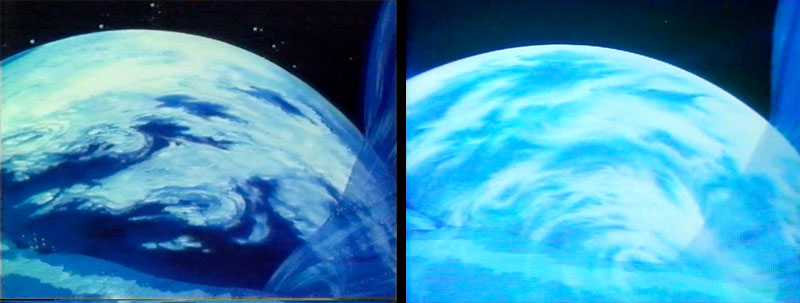
Though taking on a substantial amount of water, Earth has escaped disaster. As with some earlier scenes, the planet was repainted for Version B.
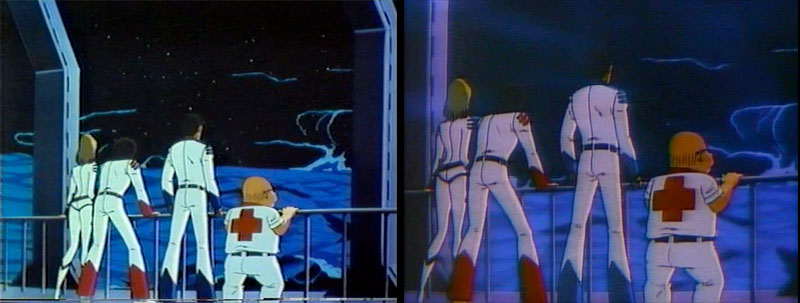
Our last shot of the crew watching from Fuyuzuke. Version B zoomed in tighter on this shot and lost some picture resolution as a result.
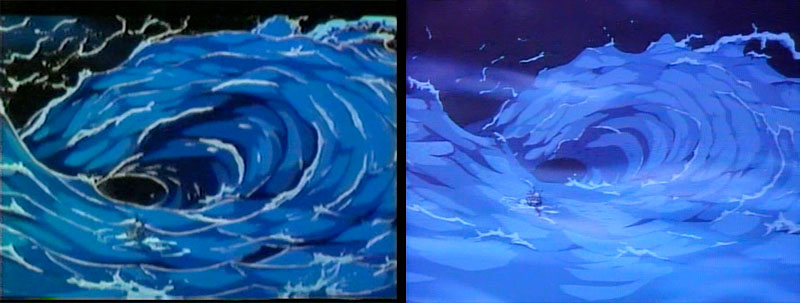
The flood begins to calm and we see the top of Yamato‘s superstructure peeking out from the waves.
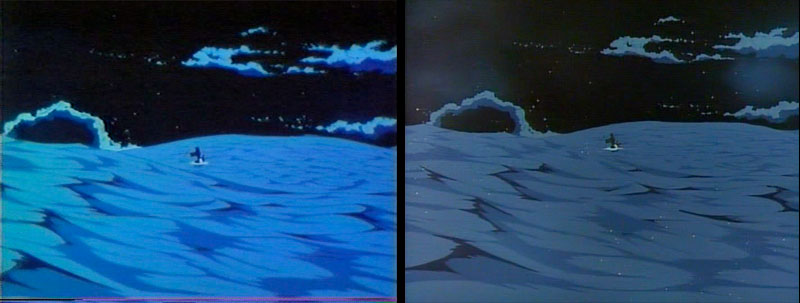
The storm abates and the picture widens. In Version B, the water was slightly transparent, letting some starlight through. This is also where the color enhancements ended.
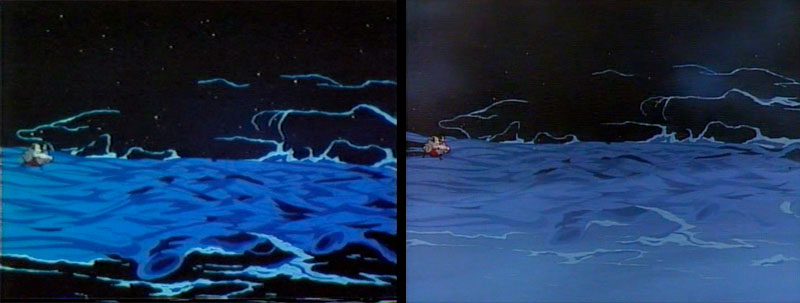
Cutting out even wider, we see a different background and more water in Version B.
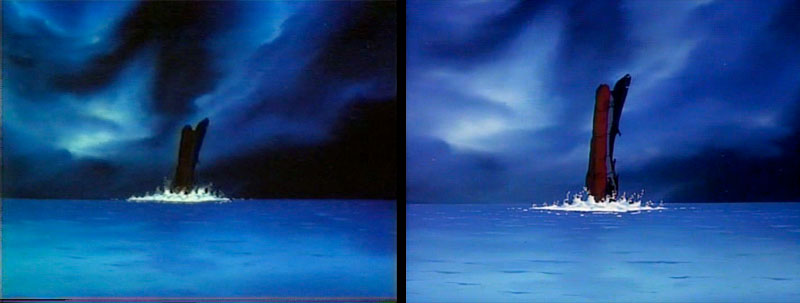
Mysteriously, a mostly-intact Yamato bursts out of the waves, trumpets its death knell, and slowly drops back down. This shot was retimed and reshot in Version B for a much longer descent into the watery grave.
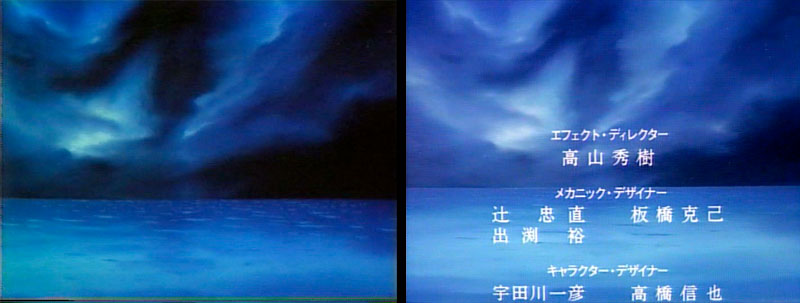
The waves quietly lap for about a minute, and the two versions diverge for the last time. Version A goes to the epilogue and then the credit roll. B begins with the credit roll and then goes to the epilogue. In either case, the epilogue contains significant differences as we’re about to see.

Aquarius is now headed for Earth and Captain Okita explains his final plan of attack to the crew. The background and framing of this scene changed noticably from Version A to Version B.
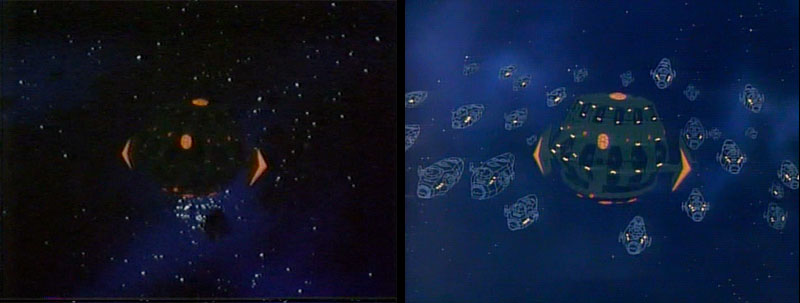
Emperor Lugal’s remaining fleet is hot on Yamato‘s heels, and they’re much easier to see in Version B.
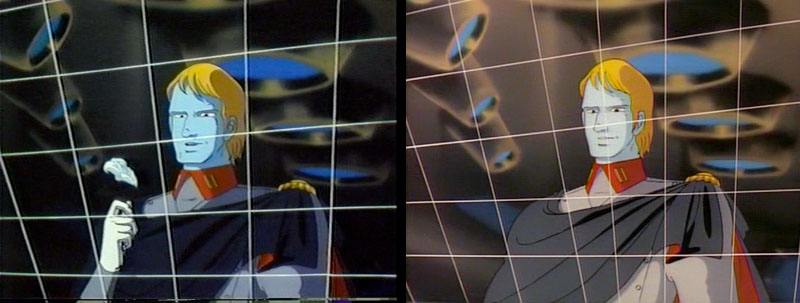
Dessler shows up just when he’s needed most. His first on-screen appearance differs slightly from A to B. In A he starts with a raised flower (recovered from Yamato‘s earlier funeral offering at his ruined planet) whereas in B he starts with the flower below camera range. Also, the grid on Yamato‘s viewscreen was redrawn for Version B.
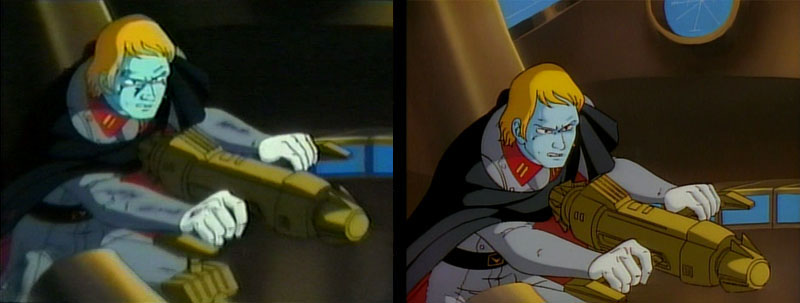
A few seconds later, Dessler takes aim at Lugal’s ship with the Dessler cannon. In Version A, he’s been roughed up a bit; scenes were planned that would show him getting tossed around, but they didn’t make it into the film for whatever reason. (For that matter, Dessler and Lugal were originally supposed to kill each other in this battle, but that didn’t happen either.) Since the unproduced scenes were never restored, Dessler simply got cleaned up for Version B and they were never missed.

Yamato escapes while Desslok deals the final smackdown to Lugal. This shot of the bridge was widened for Version B, but the background painting was rather clumsily expanded. Side note: in the movie script, Dessler was to die in his battle with Lugal. Apparently he was pardoned by the governor at the last moment.

Yamato moves to rendezvous with EDF battleship Fuyuzuke. This shot was new in Version B.
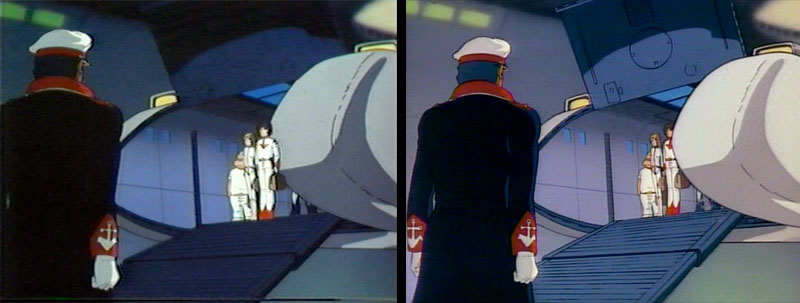
After an emotional farewell with Captain Okita, the crew transfers to Fuyuzuke, and we see another good reason to remake a film: Version B corrected a problem with the cel layers.
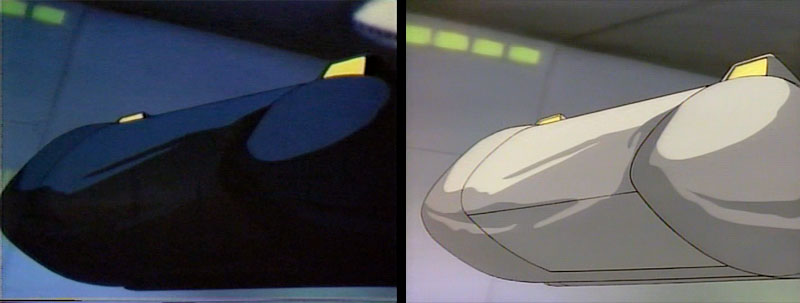
Something else you can do in a remake: repaint a cel that was originally the wrong color.
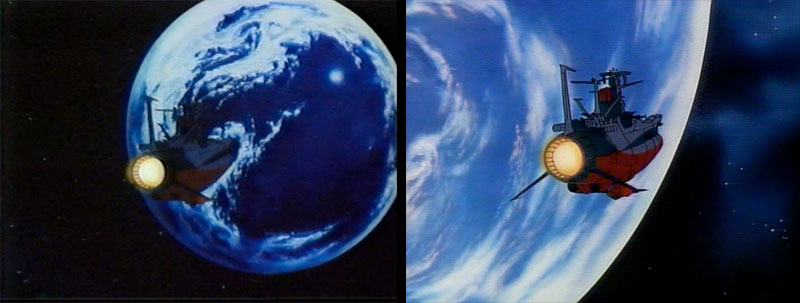
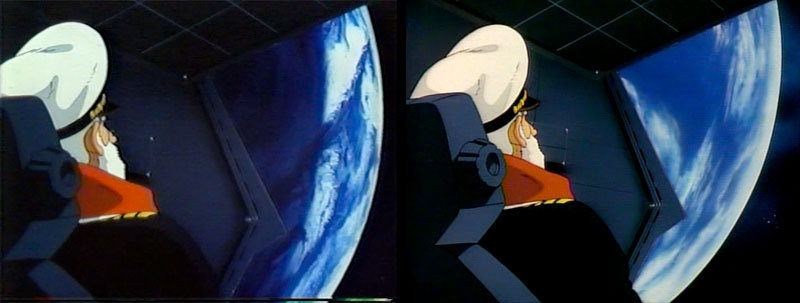
Captain Okita takes off on his solo flight toward destiny against noticeably different background paintings.
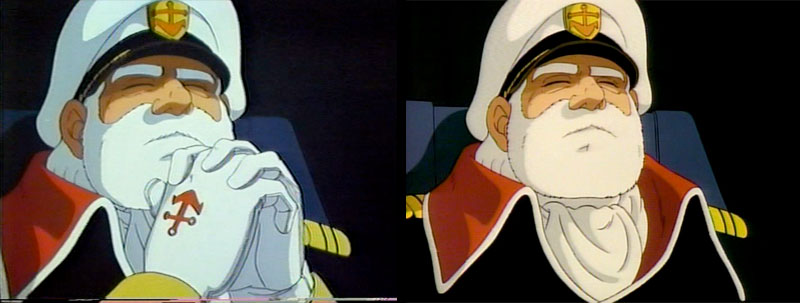
Another interesting alteration: in Version A he raises his hands in prayer. In B, the hands stay offscreen.
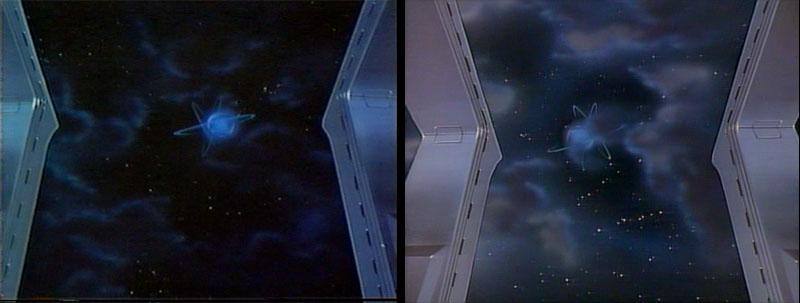
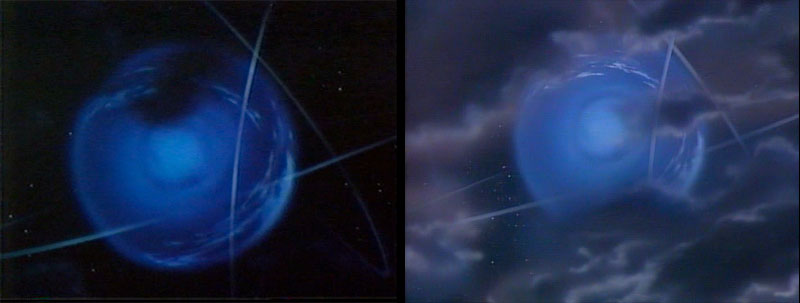
The first two shots of the approaching Aquarius also differ from Version A to B. Unlike some previous shots, however, the rings are present and accounted for.
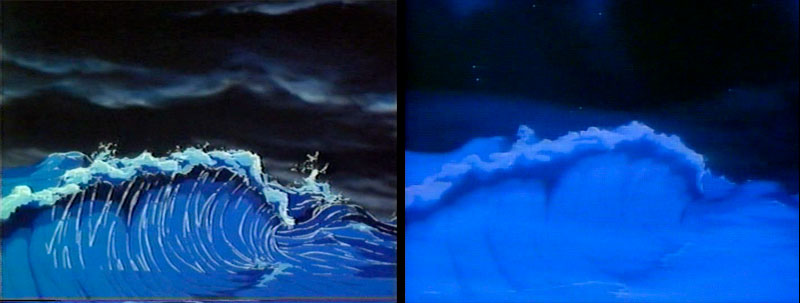
Next begins one of the most demanding scenes in anime history. The Aquarius flood was incredibly intricate and took a long time to play out. At best, the animators could manage only two cels a day, which put the movie even farther behind schedule than it already was. Understandably, then, Version A shows a lot of errors, such as a foreground cel layer that didn’t fill the entire frame.
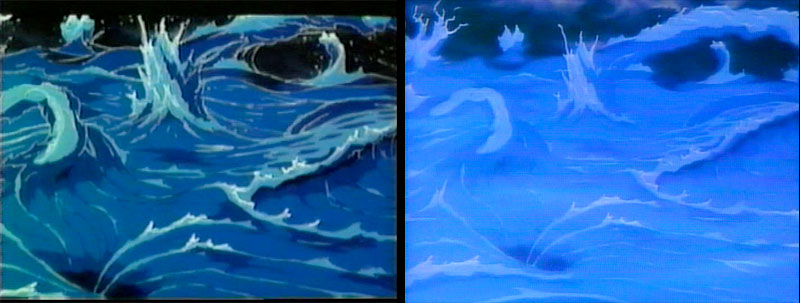
In all cases, these scenes were heavily enhanced with color and mist effects for Version B. This served to smooth out a lot of the mistakes.
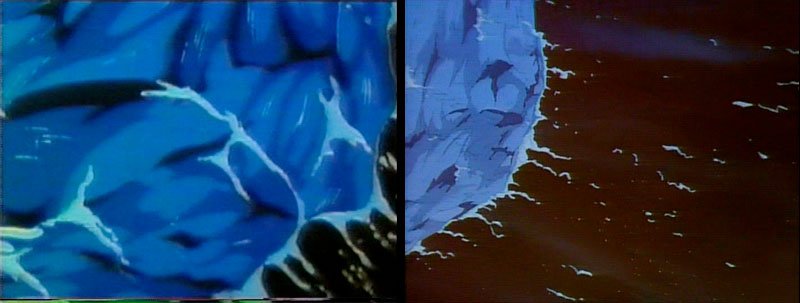
One of the few scenes from this sequence that was entirely redone: a huge body of water lifts off the surface of Aquarius. Version B offered a much wider view.
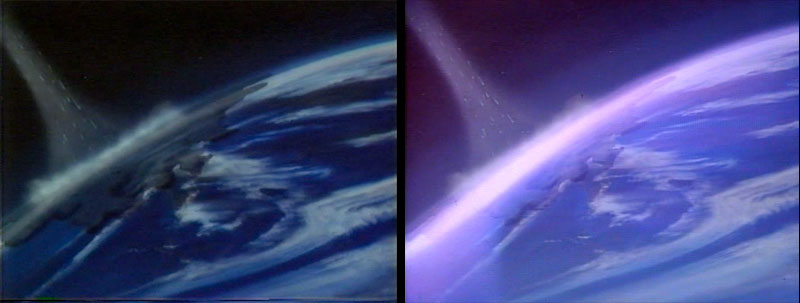
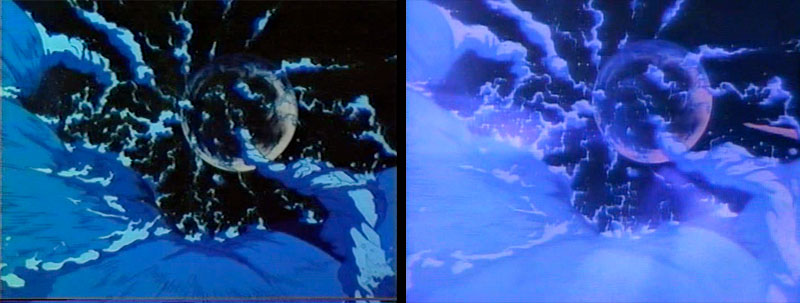
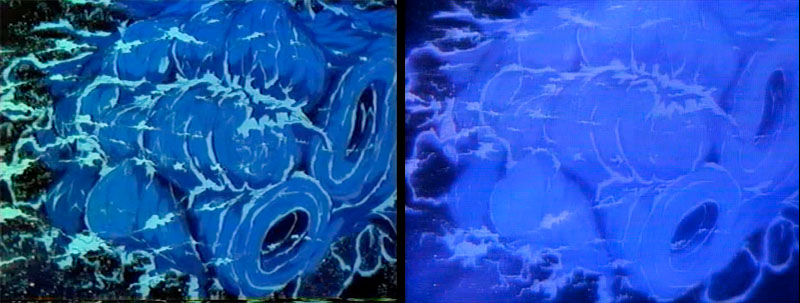
As a massive deluge strikes the Earth, things look hopeless. What can one space battleship do against such an onslaught?