
From the pages of Hobby Japan Vintage Vol. 14 (April 2026): a new conversation with desiger/director Yutaka Izubuchi, tracing his days as a fan, a staff member of Yamato III, and the visions from his youth that ultimately found their way to our screens when he directed Yamato 2199.
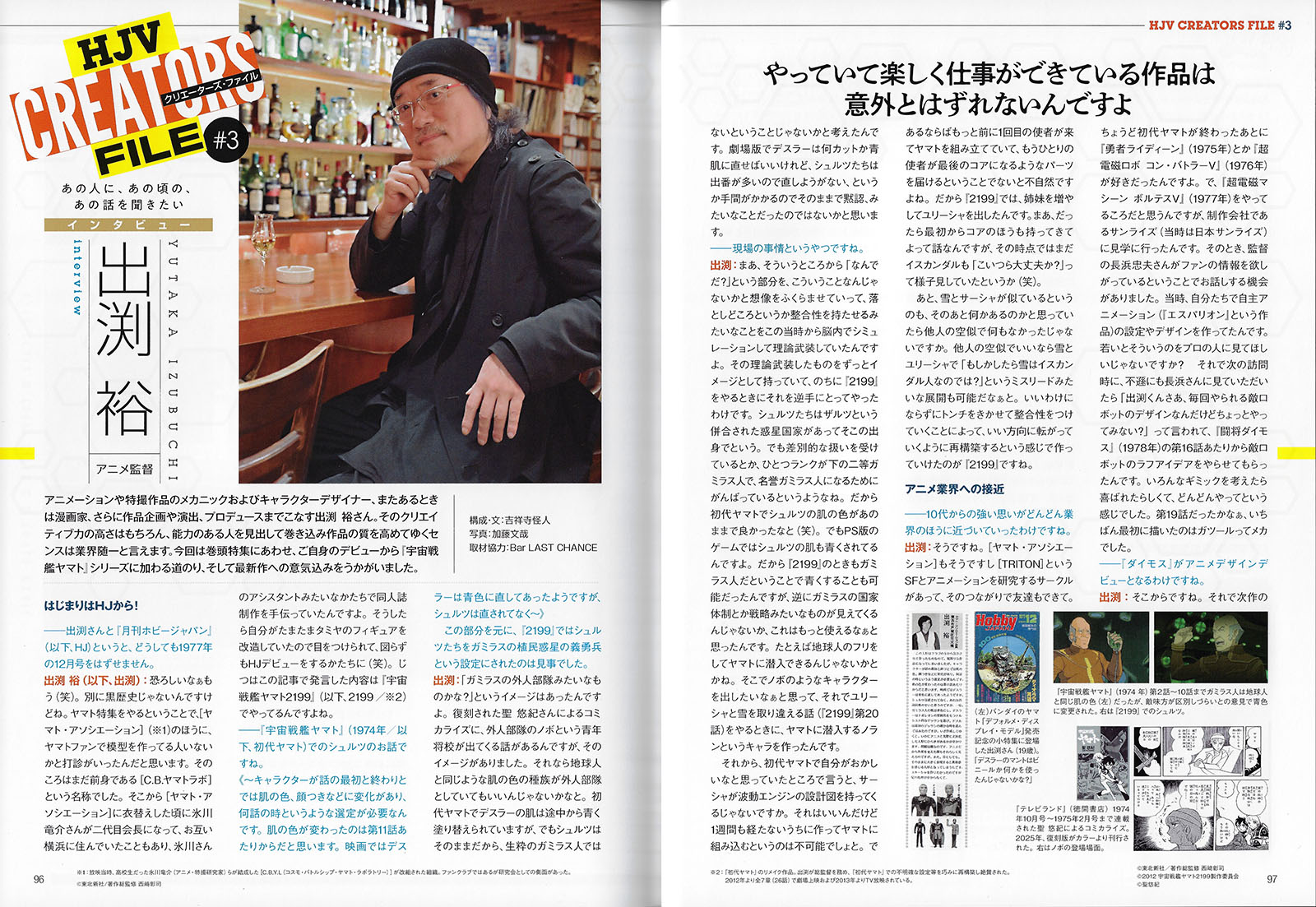
I want to hear that story from that time
Interview: Yutaka Izubuchi
Projects that you enjoy working on tend to be surprisingly successful
Yutaka Izubuchi is a mechanical and character, designer for anime and special effects works, a manga artist at times, and also handles project planning, direction, and production. His high level of creativity is undeniable, and his sense for discovering and involving talented people to enhance the quality of his works, is second to none in the industry. In this issues, cover story, we asked him about his journey from his debut to joining the space battleship Yamato series, an and his enthusiasm for his latest work.
Composition and text: Kichijoji Kaijin
Photo: Fumiya Kato
Interview cooperation: Last Chance Bar
It all started with Hobby Japan!
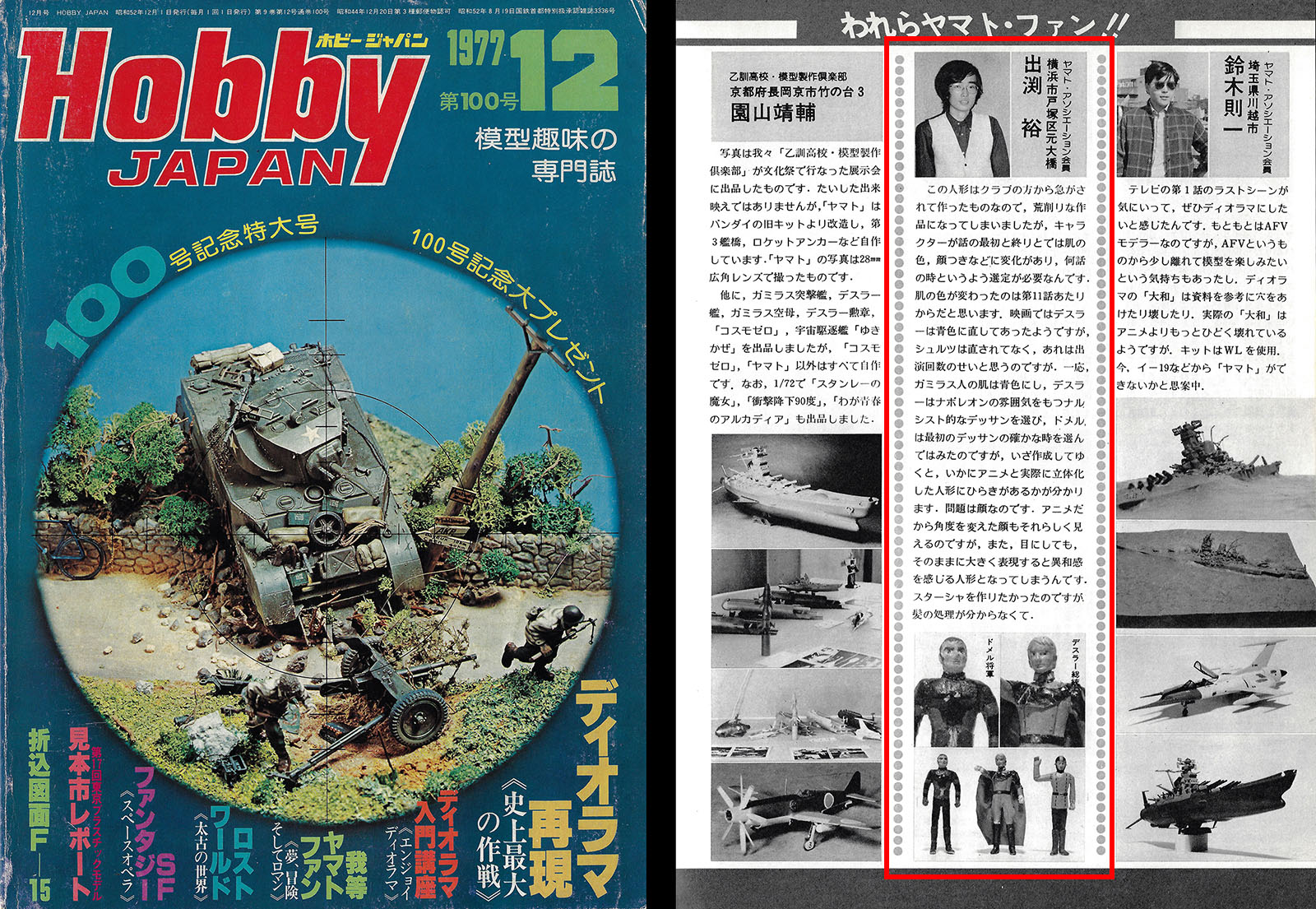
Interviewer: When talking about you and Hobby Japan, you simply can’t leave out the December 1977 issue.
Izubuchi: That’s terrifying. (Laughs) It’s not like it’s a dark chapter in my history or anything. I think they contacted the Yamato Association to see if there were any Yamato fans who made models, because they were doing a Yamato article. At that time, the group was still called Cosmo Battleship Yamato Lab. When it changed its name to Yamato Association, Ryusuke Hikawa became the second chairman, and since we both lived in Yokohama, I was helping him with production of the doujinshis as his assistant. Back then, I happened to be into modifying Tamiya figures, so he took notice of me, and I unexpectedly made my debut in Hobby Japan. (Laughs) Actually, the things I said in this article are covered in Yamato 2199.
(Footnote: At the time of the first broadcast, Ryusuke Hikawa – now an anime and tokusatsu researcher – and others formed Cosmo Battleship Yamato Laboratory. Although it was a fan club, it also had aspects of a research group.)
[Read the 1977 Hobby Japan article here]I had an image of something like the Gamilas foreign Legion in mind, thinking, “I wonder if that’s the case?“ In the reprinted manga adaptation by Yuki Hijiri, there’s a story featuring a young officer named Nobo from the foreign Legion, and that’s what I had in mind. If that’s the case, then it would be fine if the foreign Legion consisted of a race with the same skin color as Earthlings. In the original Yamato, Dessler’s skin is repainted blue partway through, but Schulz’s skin color remains the same, so I thought it meant he wasn’t a pure blooded Gamilan. In the movie version, they could just change Dessler’s skin to blue for a few shots, but Schulz and the others had a lot of screen time, so it would be impossible to change it. Or rather, it would be too much trouble. So I think they just tacitly accepted it as it was.
Interviewer: You’re talking about Schulz in the first series, right?
Izubuchi: The characters, skin color and facial features change between the beginning and end of the story, so it’s necessary to select an episode. I think the change in skin color started around Episode 11. In the movie, Dessler‘s skin was apparently changed to blue, but Schulz’s wasn’t. Based on this, the decision was made to portray Schulz and his group as volunteer soldiers on a Gamilas colony planet in 2199.
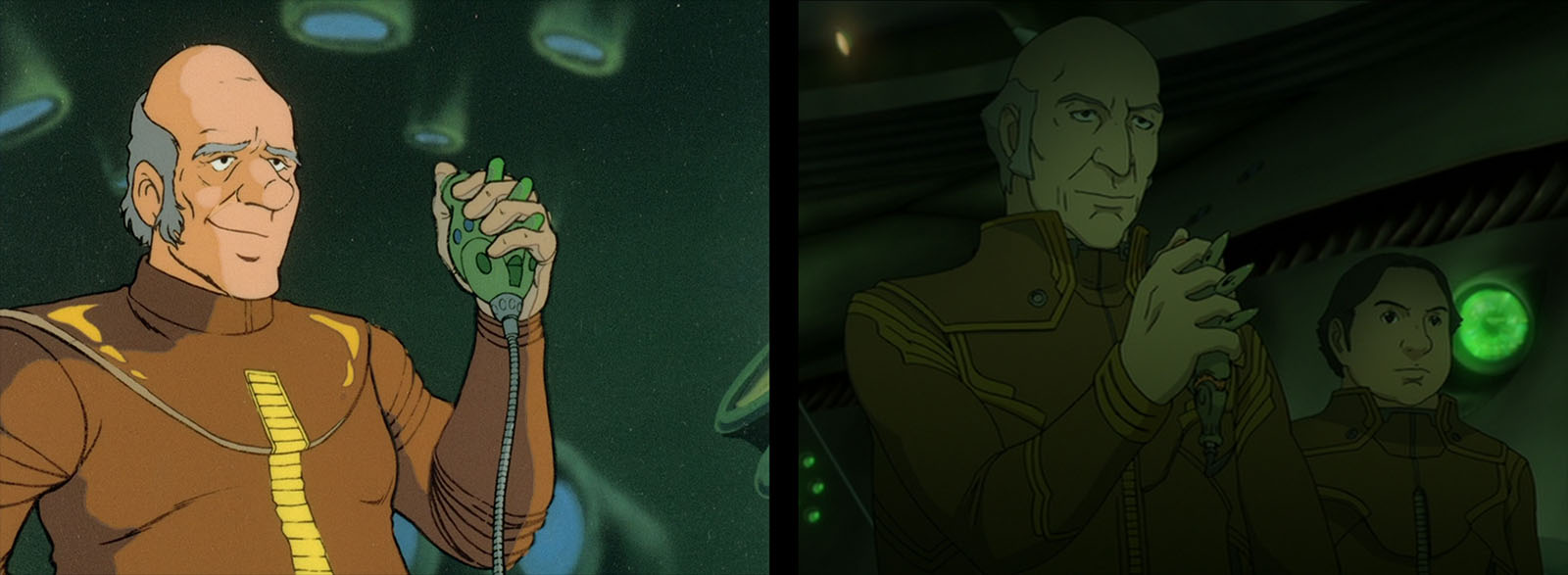
Interviewer: That’s what you call the circumstances on the ground.
Izubuchi: Well, from that point, I expanded on the “why?” part, imagining what it might be. Even back then, I would simulate it in my mind and arm myself with theories to find a consistent resolution. I theoretically armed myself with an image, and later when I worked on 2199, I used it to my advantage. Schulz and his people are from a planetary nation called Zalts, which was annexed. But they’re discriminated against. They’re second class Gamilans, one rank lower, and are working hard to become honorary citizens. That’s why I thought it was good that Shulz’s skin color remained the same as in the original Yamato. (Laughs)
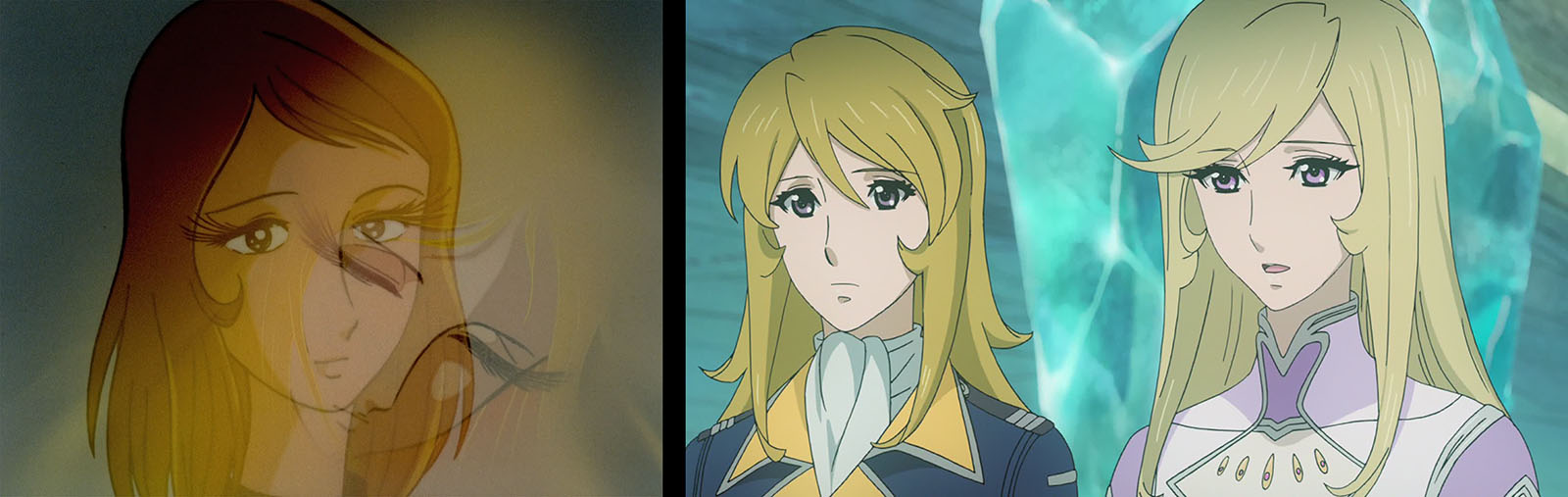
But in the PlayStation version, Schulz’s skin was made blue. So, in 2199, it would have been possible to make him blue because he’s a Gamilas, but I thought it would reveal something about the Gamilas national system and strategy, and that this could be used more effectively. For example, he could infiltrate Yamato pretending to be an Earthling. That’s when I thought I wanted to introduce a character like Nobo, and that’s why, when we did the story where Yurisha and Yuki are mistaken for each other (Episode 20) I created the character Noran who infiltrates Yamato.
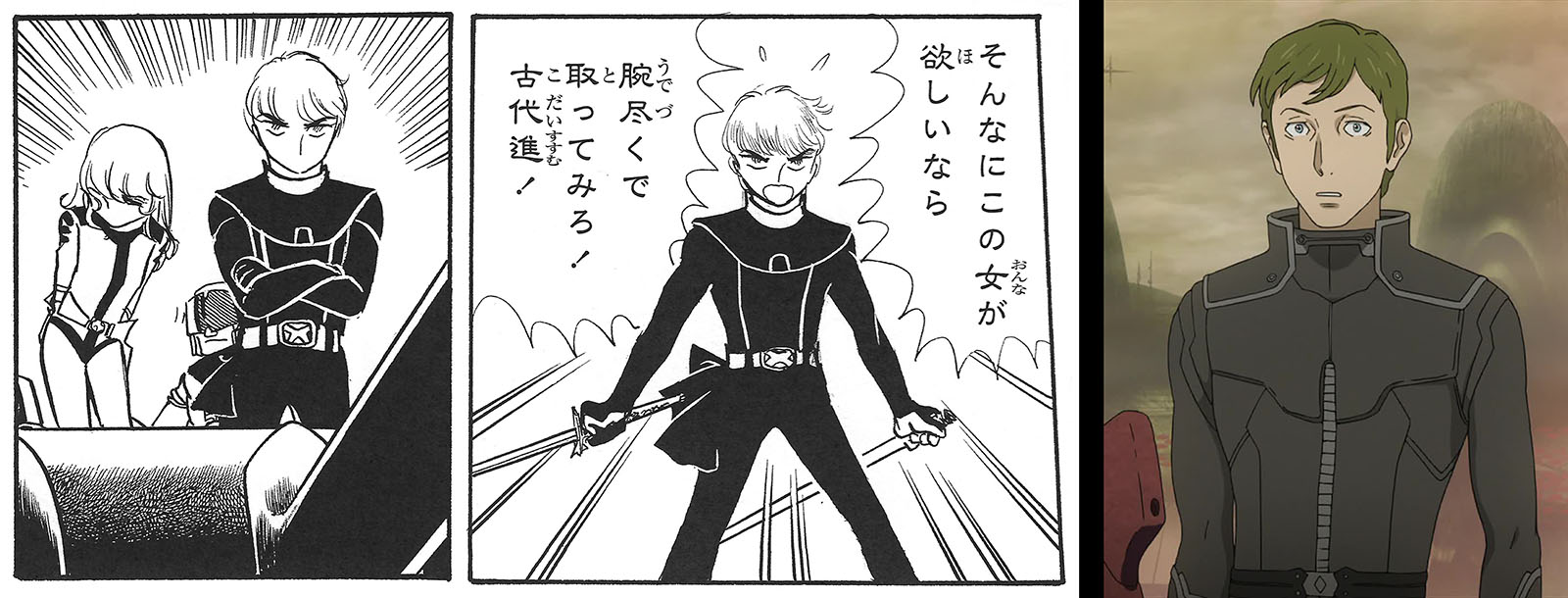
Left: Nobu from the manga by Yuki Hijiri. Right: Noran from Yamato 2199.
Also, something I found strange about the original, is that Sasha brings the blueprints for the Wave-Motion Engine, right? That’s fine, but it would be impossible to build it and install it in Yamato in less than a week. If that’s the case, then a previous messenger must have come much earlier and assembled Yamato, and the second messenger must have delivered the final core part. Otherwise, it’s unnatural. That’s why in 2199 we added another sister, Yurisha. Well, if that’s the case, then why didn’t they bring the core from the beginning? But at that point, even Iscandar was still observing them, wondering, “Are these guys OK?“ (Laughs)
Also, regarding the resemblance between Yuki and Sasha (in the original), I thought something would happen with that later, but it turned out to be just a coincidence and nothing came of it. If it’s OK for it to be just a coincidence, then it could be possible to create a misleading development with Yuki and Yurisha, like, “could Yuki be from Iscandar?” By using clever wordplay to make things consistent without resorting to excuses, we were able to reconstruct the story in a way that would lead to a positive outcome, and that’s what we did in 2199.
Approaching the anime industry
Interviewer: Your strong passion from your teens gradually led you closer to the industry, right?
Izubuchi: That’s right. There was the Yamato Association and also a club called Triton that studied science-fiction and anime, and I made friends through those connections. Right after the original Yamato finished, I was really into Brave Raideen (1975) and Combattler V (1976). I think it was around the time they were working on Voltes V (1977) that I went to visit the production company, Sunrise (then Nippon Sunrise). At that time, I had the opportunity to talk to director Tadao Nagahama, because he was interested in feedback from fans.
Back then, we were creating our own concepts and designs for our own independent anime (a work called Espalion.) When you’re young, you want professionals to see your work, right? So on my next visit, I presumptuously showed it to Mr. Nagahama, and he said, “Izubuchi, why don’t you try designing the enemy robots that get defeated every time?“ So from around Episode 16 of General Daimos (1978), I was allowed to work on rough ideas for the enemy robots. He seemed pleased when I came up with various gimmicks, and he encouraged me to keep going. I think it was in Episode 19, the very first mecha I drew was called Gatsuru.
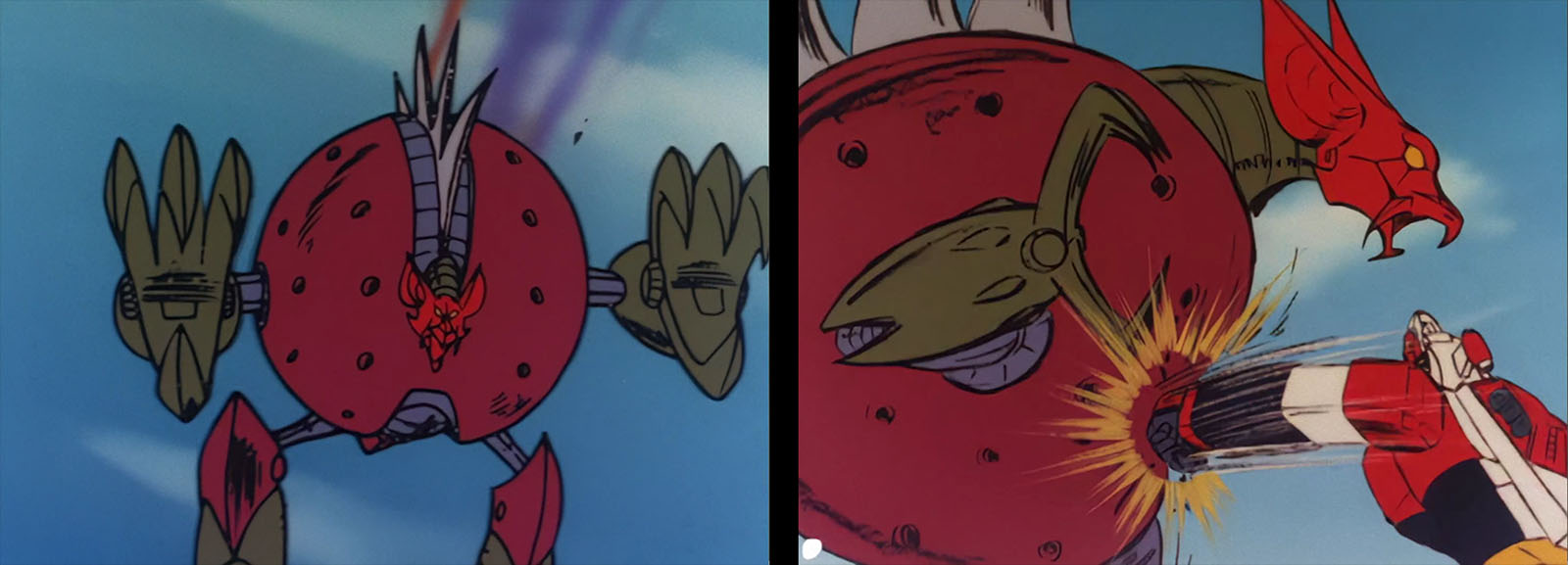
Interviewer: Then Daimos marks your debut as an anime, designer, right?
Izubuchi: That’s where it all started. Then I was asked to work on the next project, Future Robo Daltanius (1979), and then I was asked to continue on the next one, Traider G7 (1980), and I think that’s when I started doing the final design work as well.
Around that time, I had a senior colleague named Kei Hoshi, who I met and interacted with through SF fandom. One day, he asked me, “Bu-chan, you like Yamato, right?” And I replied, “I love it!“ (Laughs) He had connections with the writer Aritsune Toyota, who had worked on the SF research for the original Yamato. Mr. Toyota was called in again for a new Yamato project, and Hoshi-san was also participating, but they needed someone who could turn the ideas into illustrations. So he asked me if I’d like to do it, and I immediately replied, “Yes!“
Finally, a member of Yamato
Interviewer: That was Yamato III (1980).
Izubuchi: That’s right. My job was to illustrate Toyota’s and Hoshi’s ideas. But I ended up asking things like, “Could I do this?“ Or “[Mecha designer] Mr. Itabashi must be very busy,“ and I was allowed to draw a few things here and there. In that way, I drew several Gamilas-type mecha: the the twin-barrel reflector satellite cannons, Dagon’s disc-shaped flagship, the Seeaddler III interceptor fighter, and I also worked on the idea for the Dimensional Submarine.
And then there was the battleship Arizona. Actually, Itabashi‘s design for Arizona was already finished. But it was different from the Earth fleet style in Farewell to Yamato, and I really wanted to keep the style that Mr. Miyatake and others had done. So I begged them to let me draw it, even though Itabashi‘s design was already there. That’s terrible, isn’t it? It was a huge overreach of my authority.
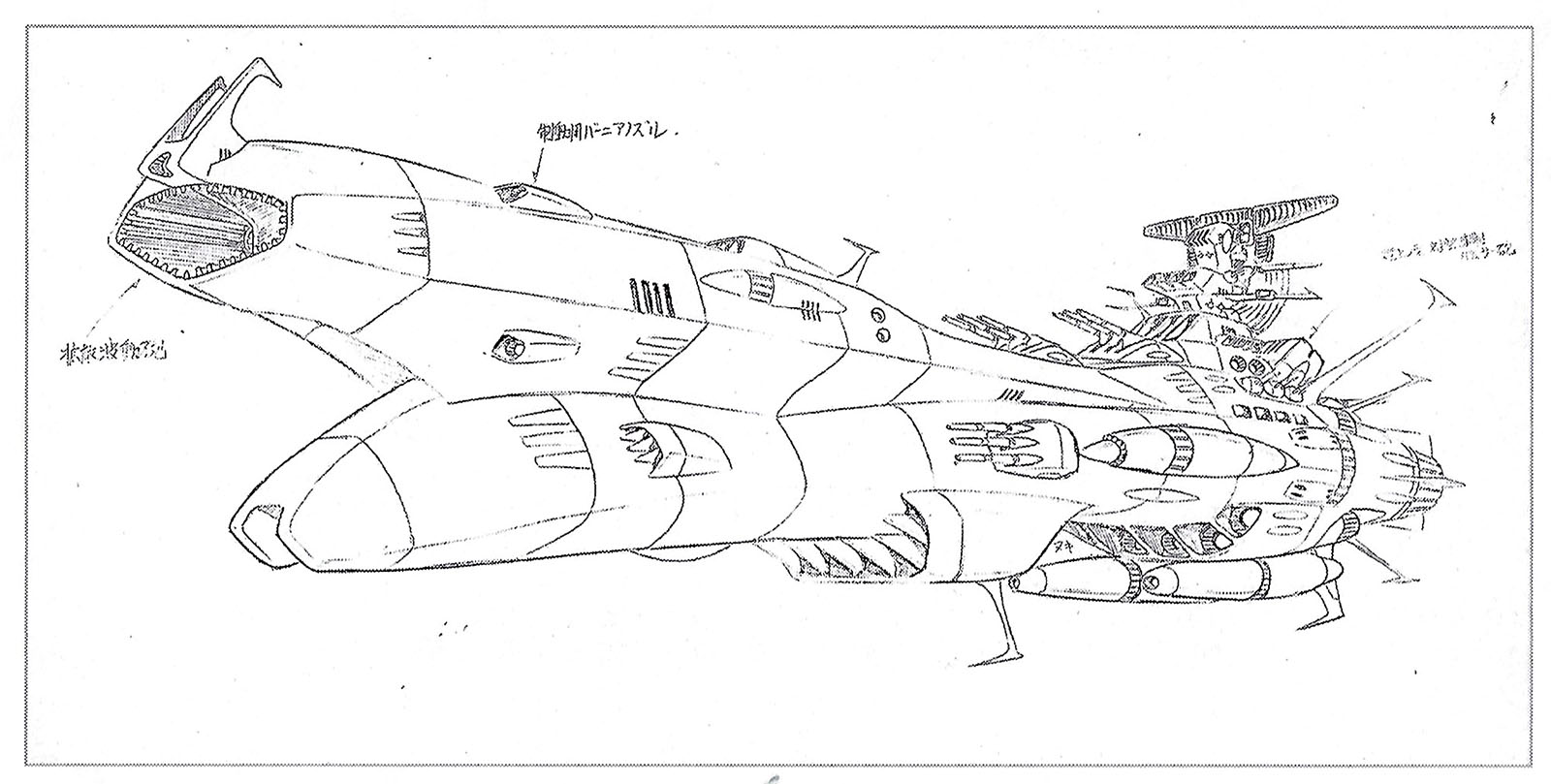
On space battleship Arizona: “Even though it only appeared briefly, people still say they like it…”
Izubuchi said, sounding deeply moved. It reappears in REBEL 3199.
Interviewer: Appearing in Hobby Japan with Yamato, and then getting involved with Yamato again three years later…that’s amazing.
Izubuchi: That’s true, but it wasn’t the ideal workplace I had imagined.
Interviewer: What do you mean?
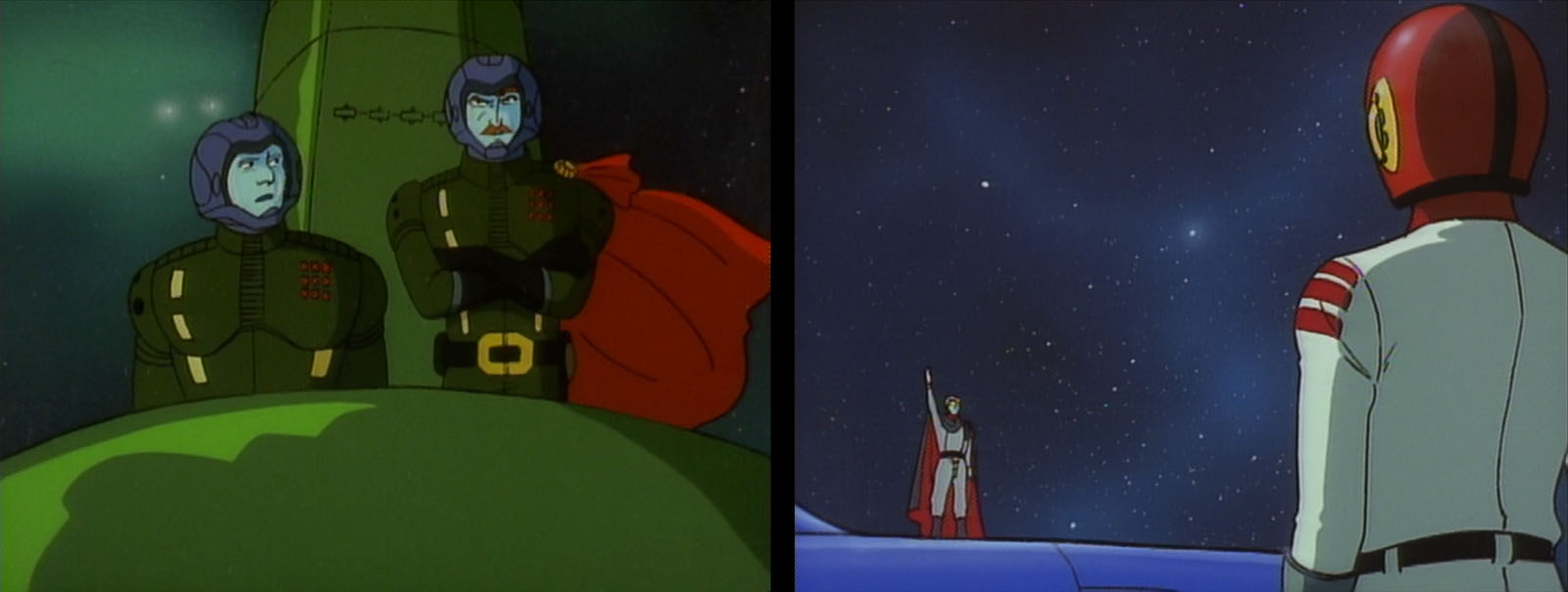
Izubuchi: Whenever Yoshinobu Nishizaki would hold a meeting, it was long. Plus, there were a lot of things that made me think, “isn’t that wrong?“ For example, when the Dimensional Submarine makes contact with the space fortress, Frakken is looking at the fortress from on top of the conning tower. In the storyboard, they were inside something like a dome because it was in outer space, but Nishizaki started saying that it would be better if they entered with their capes blowing in the wind, and that they shouldn’t even be wearing space suits. Then everyone was like, “the boss is right,“ and I was the only one to voice a dissenting opinion. I said, “You didn’t do that in the original Yamato. When Kodai and Shima were fighting outside on the deck, it looked strange, so you put up a barrier dome over the deck.”
Then Mr. Nishizaki said, “I know Yamato best. When Yuki and Kodai took that picture, it was in outer space!“ And then I pointed to the rear observation dome of the Yamato model that was on the conference table, and said, “That was inside this dome.“ (Laughs) By chance, Leiji Matsumoto was at that meeting, which was rare. Nishizaki thought that since they were both from the same generation, Matsumoto would back him up, so he said, “Mr. Matsumoto says this cool scene would be good.“ To which Matsumoto replied, “Mr. Nishizaki, you’ll be laughed at if you do that now.“ And Nishizaki was shocked. Thank you, Mr. Matsumoto!
In the end, we were able to get him to compromise on the space suits. However, in the final episode, in the scene where Dessler and Kodai talk to each other across their ships, I had a feeling that would happen. In the storyboard, Dessler was standing there in outer space without a space suit. There it was again. Just when I thought that, Nishizaki, sensing what was going on, said something like, “You shut up! I’m definitely going to do this.” At that point, I felt like it was pointless to say anything more, so I just said something like, “Okay, okay.” (Laughs)
Interviewer: And then you also participated in Final Yamato (1983), right?
Izubuchi: That was also more like helping out. I guess I played the roles of the medium battleship, the robot horse, and a fighter. Putting that aside, I was really annoyed by Captain Okita‘s return, which was simply dismissed as a “misdiagnosis.“ I offered my own idea for his return, which I thought might somehow makes sense. It was based on a many-worlds interpretation that turned the galactic collision in the final chapter on its head, but Mr. Nishizaki didn’t understand it at all.
Interviewer: After Yamato concluded, only Yamato 2520 was produced in the 1990s, but the situation surrounding Yamato changed dramatically in the 2000s, didn’t it?
Izubuchi: Mr. Nishizaki came up with the idea for Yamato Resurrection (2009). Furthermore, the generation of former fans gained influence, rising to positions of power in various companies, and there was a growing momentum to revive Yamato. So with Mr. Nishizaki himself insisting on working on Resurrection, we decided to create a triple-prompt approach with a certain degree of freedom to produce a live-action version and a remake of the original series.
Interviewer: How did you become involved in the remake?
Izubuchi: It was originally supposed to be a joint production between Minamimachi Bugyosho and XEBEC. As a prelude to that, when I was working on the TV anime Toward the Terra (2007) at Minamimachi, I was having a lively discussion with Nobuteru Yuuki and Masanori Niishi, who would later join us on 2199, about how we’d love to do a remake of the original Yamato. Then, as mentioned earlier, it actually came to fruition, and that’s how Minamimachi contacted us. Well, Minamimachi itself ceased to exist after that, but I’m really glad we did Toward the Terra since it led to 2199.
The world of Patlabor further expands
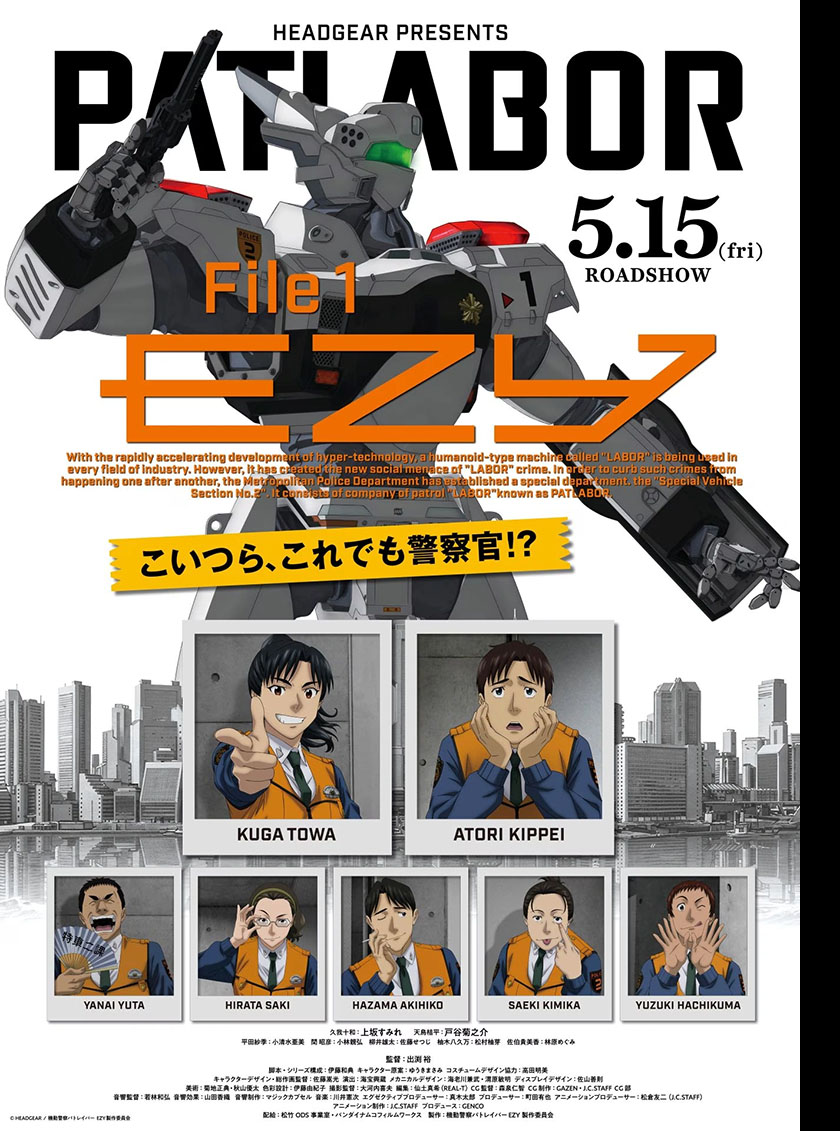
Interviewer: In 1988, which could be called a hiatus for Yamato, Mobile Police Patlabor began as a project by you and others.
Izubuchi: I was invited by Hoshi-san, who I mentioned earlier, to work at Mr. Toyota‘s SF planning office (Parallel Creation) for a short time. My SF-related friends, as well as manga artists Yuki Masami and Miki Tori, started coming to visit. I was thinking about how I could turn Yuki-san‘s idea notebook, the prototype for Patlabor, into a concrete project, and just then Sunrise ask Parallel Creation if they could submit a project proposal.
I submitted two project proposals. One was Yuki‘s Patlabor, and the other was Future Wanderer Gardeen, which Isao Hiura later turned into a novel. However, Sunrise agreed to my condition that if the project didn’t get approved, I could take it back, which allowed me to retain the title, design, and everything else. Around that time, I met Kazunori Ito and Akemi Takada through a dialogue in the magazine Animec, and I introduced them to Yuki, explaining that we had this project in mind. We then refined it and finally presented it to Shin Unozawa of Bandai Visual, which brought it to a full-fledged state.
We started with six OVA’s, and then made a theatrical film, which was well-received, so we started a TV series in parallel, which became popular with a wider audience, and Yuki-san also started serializing a manga in Shonen Sunday, so things were going well. After the TV series ended, we made a new OVA series, and around the time the manga series ended, we made a second theatrical film. We were also given the opportunity to make a spinoff, Patlabor WXIII (2002).
Interviewer: And now, 38 years after the OVA, a new series will begin in 2026. It has grown into a long-running franchise.
Izubuchi: I think it was around the time we were working on 2199 when Bandai visual approached us about doing it again, but it fell through. But the fire was rekindled when Mr. Oshii made the live-action version. Actually, that project proceeded without informing any of the other Headgear members besides Oshii-san. There’s a rule that everyone has to be informed before any Patlabor project is made into a video. It was kind of a reaction to that, but then we decided that this time, it would just be me, Yuki-san, Ito-san, and Takeda-san doing it as a proper anime work. We did talk to Oshii-san about it, of course. (Laughs)
Interviewer: So that’s Mobile Police Patlabor EZY. You’re the director this time. How did that come about?
Izubuchi: I was planning to be involved in a creative producer role, but the two people we asked to direct the film dropped out one after another, and the producer said to me, “Well, I guess you’re the only one who can do it, Izubuchi.“ And I replied, “Really? OK.“ So I braced myself and became the director. (Laughs)
Despite those issues, once we actually started working on Patlabor, it was really fun. When I told Mr. Ito, who is in charge of the series, composition and scriptwriting about it, he said, “That’s a good thing.“ One of the key things, or things that gives me a sense of accomplishment when creating a work, is that projects I enjoy working on tend to be successful. Conversely, projects that I’m a little hesitant about, that make me wonder if they’ll turn out OK, don’t seem to do so well. That being said, I try not to make it a losing battle. My motto is to fight a battle that I won’t lose, even if I can’t win.
Recorded on October 25, 2025, in Daizawa, Tokyo
Yutaka Izubuchi Profile
Born in Tokyo on December 8, 1958. A versatile creator who excels as a mecha designer and manga artist. He debuted in 1978 with the mecha designs for Daimos. Since then, he has also designed monsters for Toei Super Sentai series. His major works include Mobile Suit Gundam Char’s Counterattack and the Mobile Police Patlabor series, among many others. He made his directorial debut with the TV, anime RahXephon and served as general director for Yamato 2199.

Yutaka Izubuchi Mechanical Design Works 1
出渕裕メカニカルデザインワークス (1)
103 pages, b&w
Movic, 2000
Collection of mecha designs from Gundam, Votoms, Xabungle, Gasaraki and others (no second volume was published)
Yutaka Izubuchi 30th Anniversary Art Collection IIIX
出渕裕画業30周年記念画集 IIIX
232 pages, color and b&w
Tokuma Shoten, 2008
2-volume hardcover set (with bonus DVD) covering numerous anime, tokusatsu, illustration and manga projects
Bonus
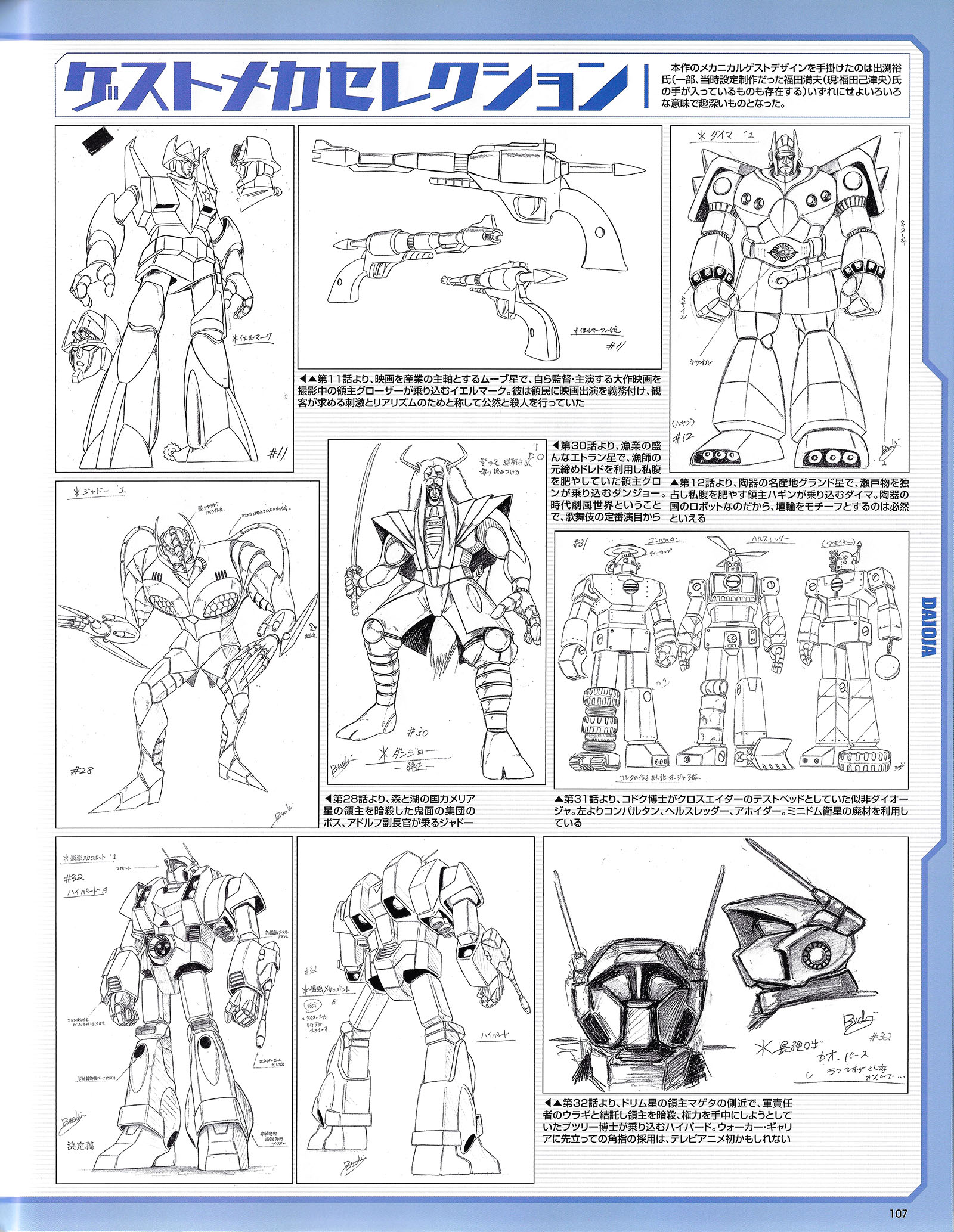
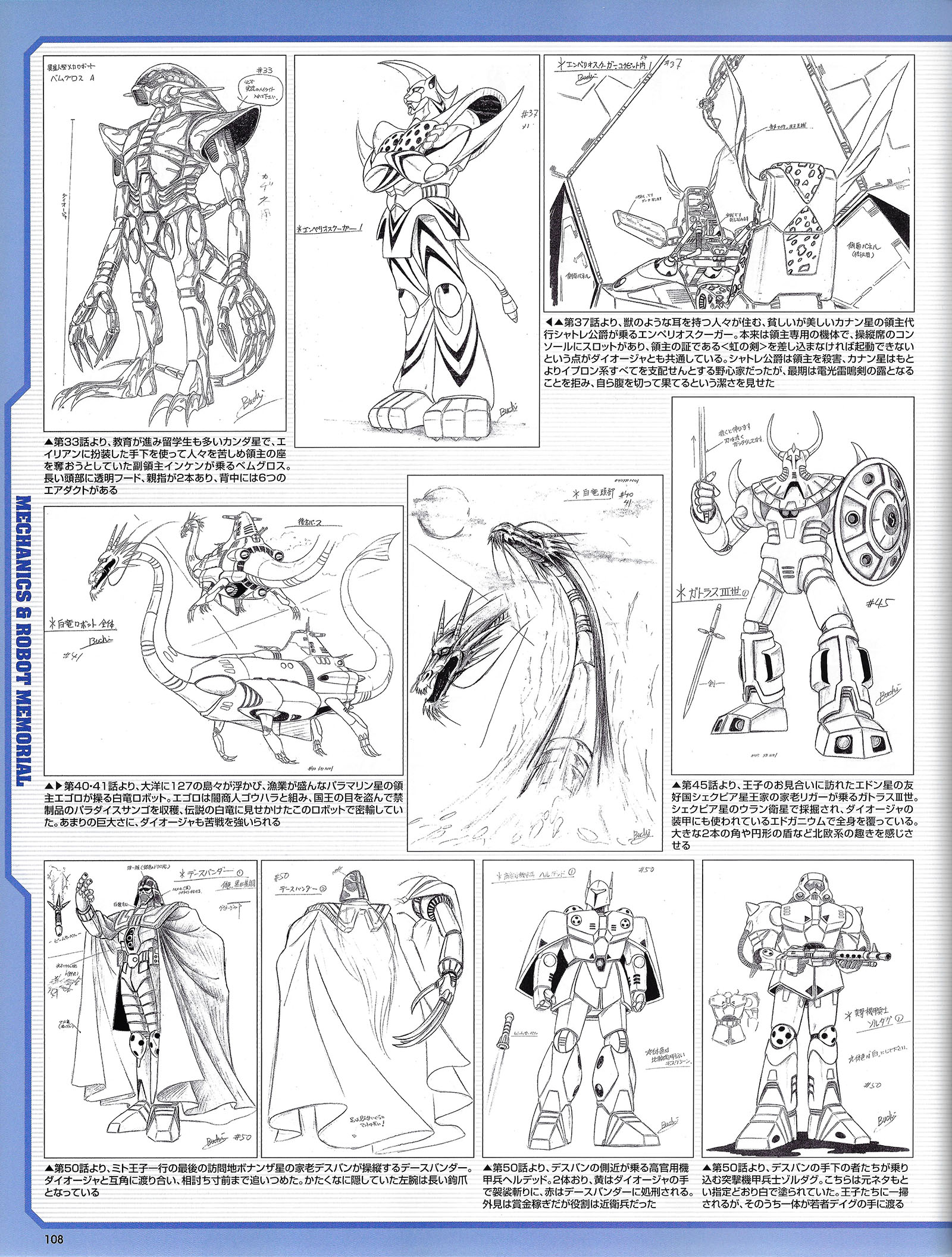
A selection of Yutaka Izubuchi’s mecha designs for Robot King Daioja (Nippon Sunrise, 1981). Reproduced from HJ Mechanics 27, published by Hobby Japan.
Such a great interview and I always thought Yutaka Izubuchi is the best director for the franchise altogether both remake and original but that’s just my opinion.