
Kongo-class, Kongo-Kai, Kongo-Kai Type II Space Battleships
Kai = Modified
From Yamato 2199 to REBEL 3199, a series explaining the mechanics of battleships and other vessels appearing in the Space Battleship Yamato remake series. The 22nd installment features the Kongo-class battleships, which were active in the United Nations space Navy, even before the Garmillas War. During the Gatlantis War, they were modified and became the main force of the reorganized Earth Federation fleet, and were veteran ships that were also used in the partisan counteroffensive in 2207.
Explanation: Yuka Minagawa
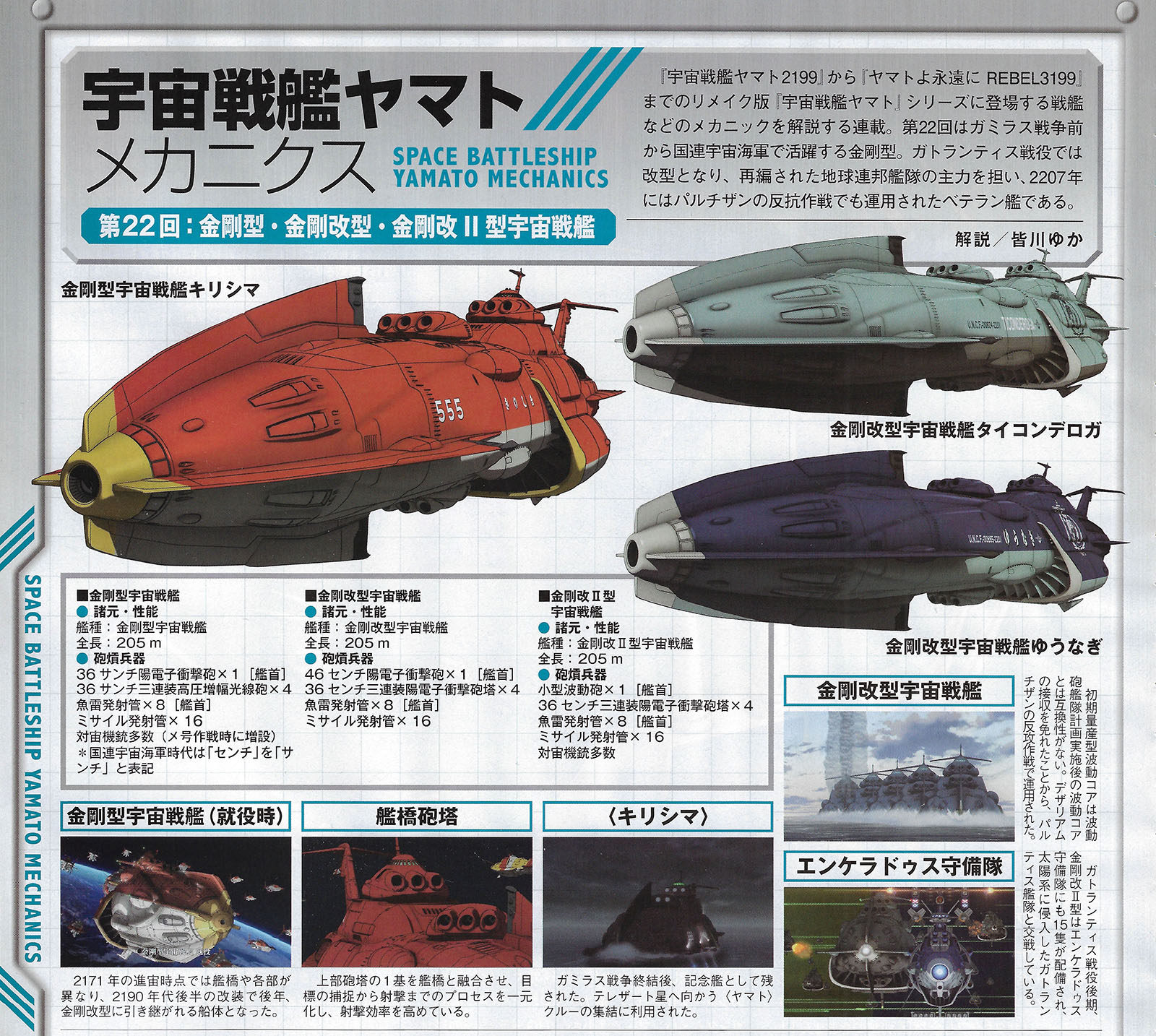
Total length: 205m
Artillery:
36cm positron shock cannon x 1 (bow)
36cm triple high-pressure amplified beam cannon x 4
Torpedo tubes x 8 (bow)
Missile launch tubes x 16
Numerous anti-aircraft machine guns (additional guns were installed during operation M)
Total length: 205m
Artillery:
46cm positron shock cannon x 1 (bow)
36cm triple positron shock turret x 4
Torpedo tubes x 8 (bow)
Missile launch tubes x 16
Total length: 205m
Artillery:
Small Wave-Motion Gun x 1 (bow
36cm triple positron shock turret x 4
Torpedo tubes x 8 (bow)
Missile launch tubes x 16
Many anti-aircraft guns
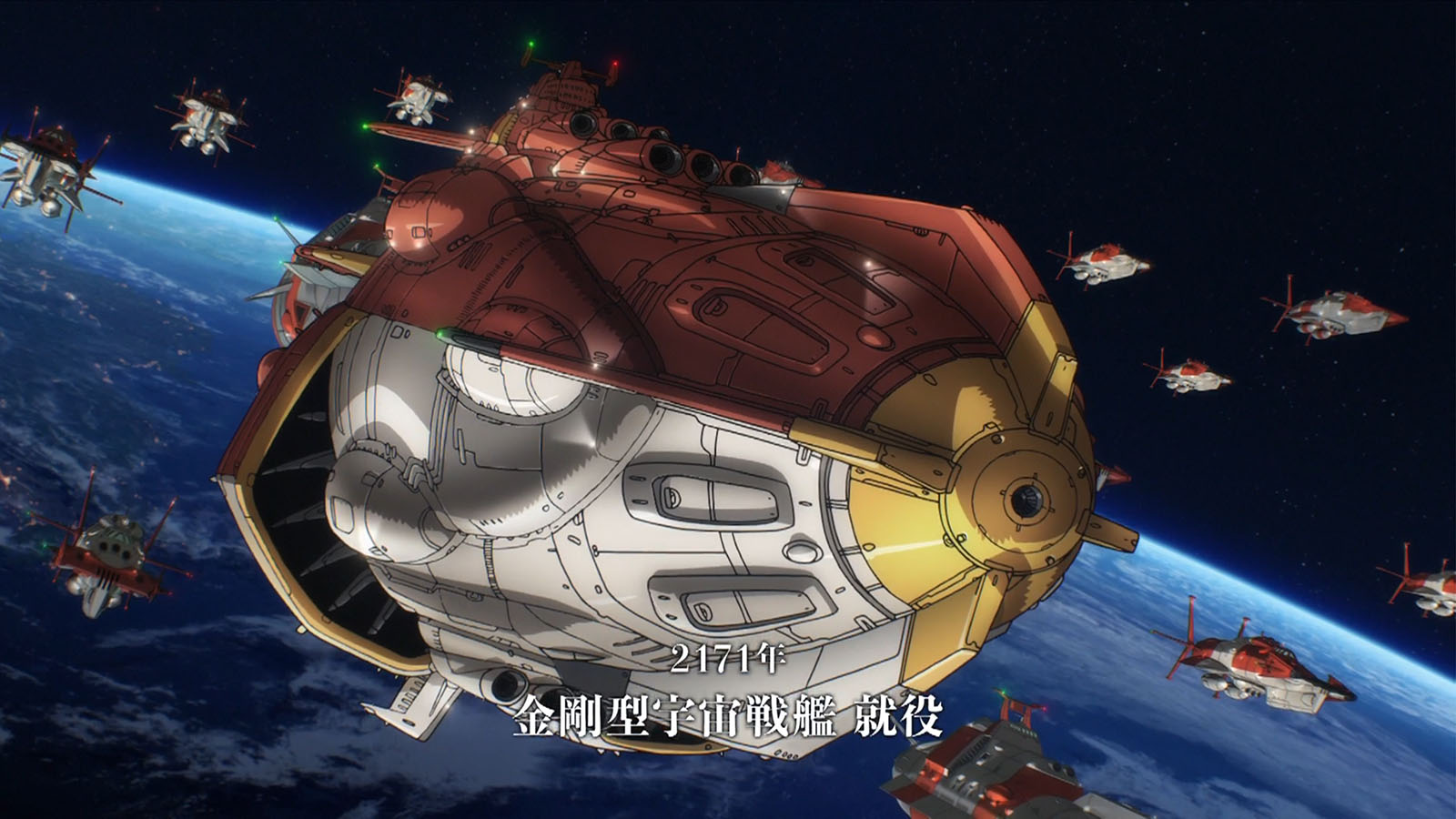
Kongo-class space battleship (at the time of commissioning)
At the time of its launch in 2171, the bridge and other parts were different, and a refit in the late 2190s resulted in the hull that would be used for the Kongo-class battleships.
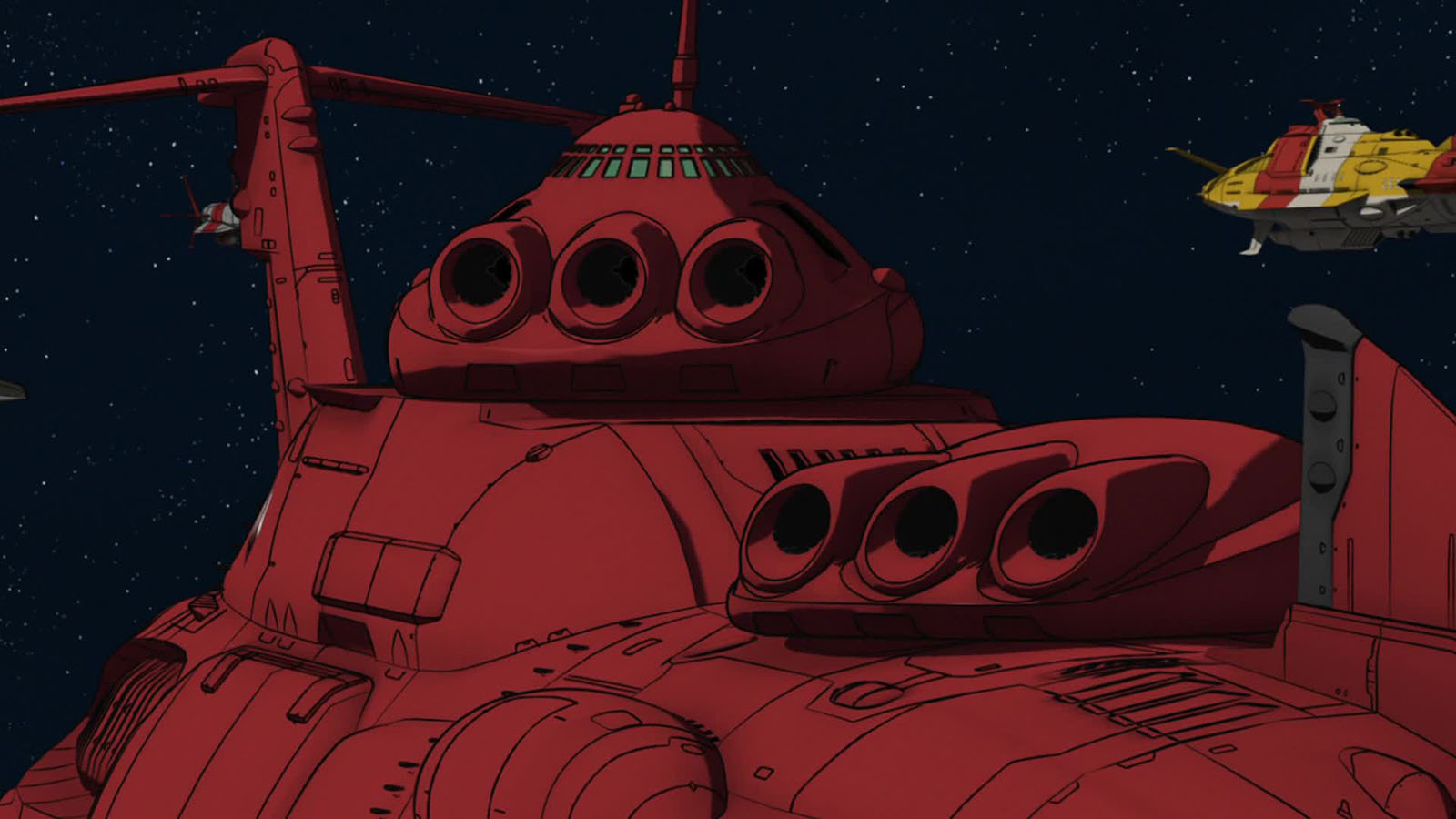
Bridge turret
One of the upper turrets is integrated with the bridge, unifying the process from target acquisition to firing and improving firing efficiency.
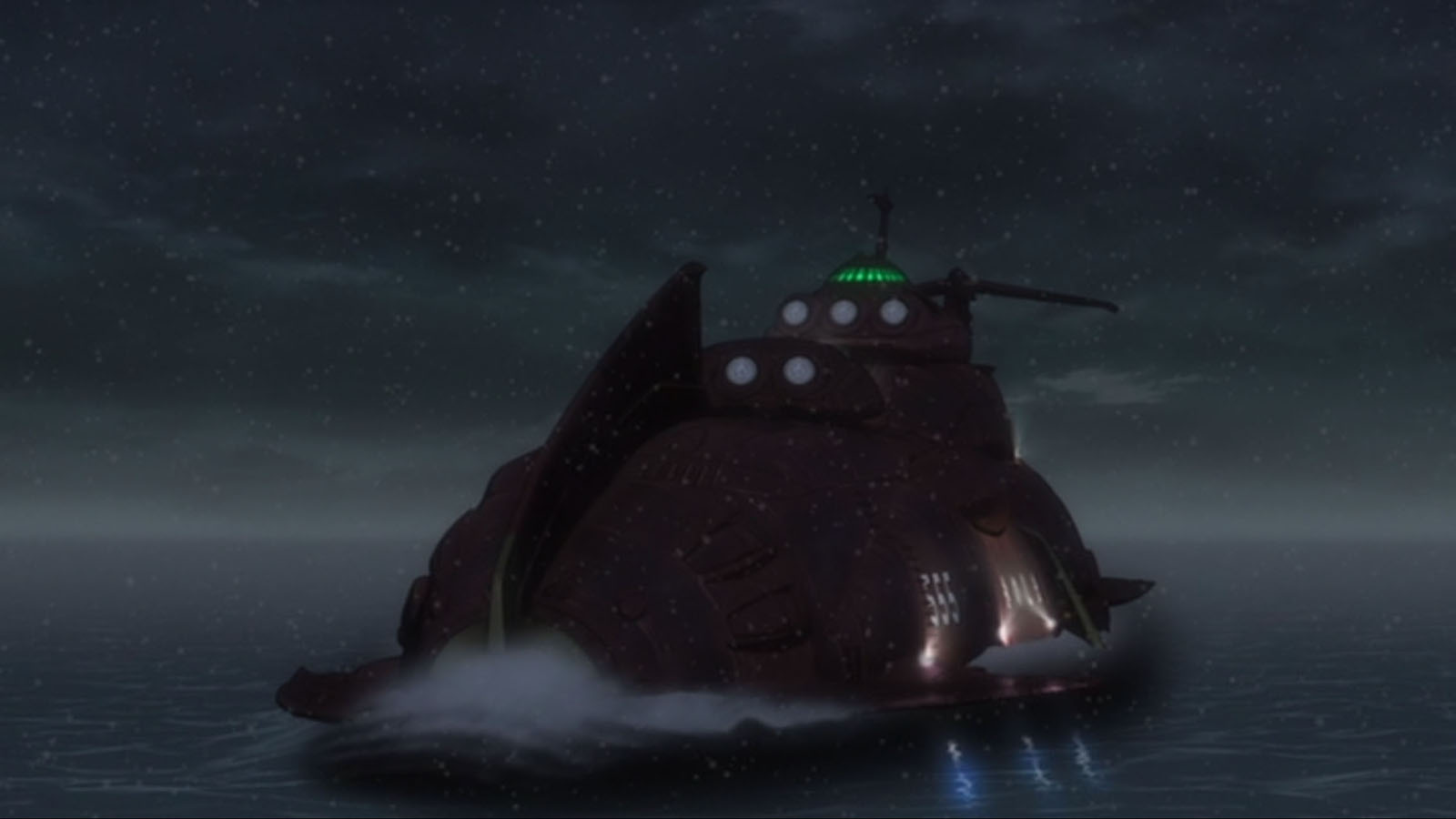
Kirishima
After the end of the Garmillas War, it was preserved as a memorial ship. It was used to assemble the Yamato crew on their way to planet Telezart.
Kongo-class space battleship
The initial mass-produced Wave-Motion Cores were not compatible with the Wave-Motion Cores used after the implementation of the Wave-Motion Gun Fleet plan. Having escaped seizure by Dezarium, they were used in partisan counteroffensive operations.
Enceladus Garrison
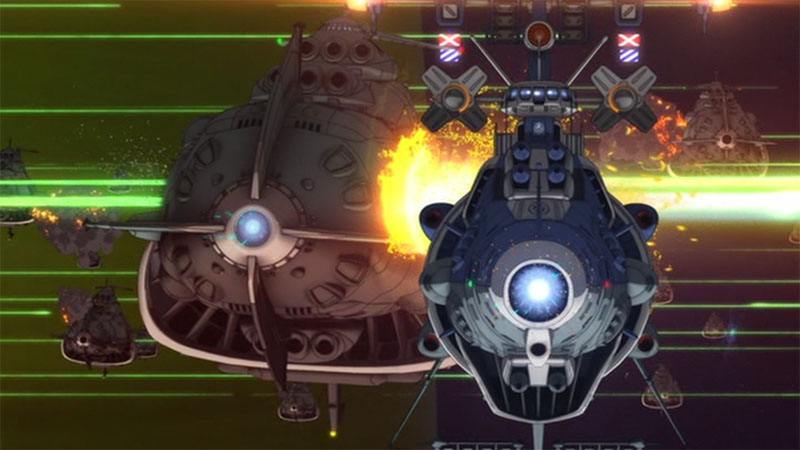
During the later stages of the Gatlantis war, 15 Kongo-class destroyers were deployed to the Enceladus Garrison and engaged in combat with the Gatlantis fleet that had invaded the solar system.
The Kongo-class battleships were representative vessels of the United Nations space Navy from the Second Inner Planetary War to the Garmillas War. After the end of the Garmillas war, the Kongo-Kai [modified] class, which had a similar hull shape, was put into Service, and the Kongo-Kai II class was put into service during the later stages of the Gatlantis War.
The Kongo-class space battleships were designed and manufactured by Nanbu Shipbuilding and launched in 2171. Following the example of the Martian Autonomous Government that fought in the first Inner Planetary War, the United Nations established the UN space Navy in 2168 and formed a full-fledged space fleet. The Kongo-class was the most advanced battleship at the time, following the Murasame-class space cruisers, and played a major role in the victory of the Second Inner Planetary War.
However, when they encountered Garmillas ships in 2191, they were confronted with a significant performance gap between their armament and propulsion systems. In response, the Kongo-class battleships underwent several major refits in the late 2190s, including the addition of extra armor for beam resistance, stabilizing fins, and increased armament. In particular, the ship’s fixed positron shock cannon achieved the feet of sinking a Garmillas ship in a single shot during operation Ka-2, (Second Battle of Mars) in 2998. However, the thermonuclear reaction engines at the time lacked the power to achieve rapid firing of the positron shock cannon, and it also require required time to recharge its energy.
After Yamato‘s return to Earth, Earth established a defense force and reorganized its space fleet. One of the main ships built at this time was the Kongo-Kai-class space battleship, which followed the basic design of the Kongo-class. The Kongo-Kai-class was equipped with a Wave-Motion Engine, enabling warp drive and dramatically increasing is cruising range. Furthermore, its artillery also benefited greatly from the output of the Wave-Motion Engine, which was far greater than conventional thermonuclear reaction engines.
The positron shock cannon at the bow was made capable of rapid fire, and its caliber was increased to 46cm. The triple turret, which was previously a high-pressure amplified beam cannon, was also made into a positron shock cannon, similar to the bow. The fact that its caliber is the same as that of the Kongo-class (36cm) also indicates the high output of the Wave-Motion engine.
However, at this stage, Earth lacked technical know-how regarding Wave Energy, and the control efficiency of excess dimensions by Wave Cores mass-produced in the early stages was by no means high. Equipping Wave Shields, let alone Wave Cannons, was difficult. As the Wave-Motion Gun Fleet plan got into full swing, the Kongo-Kai class relinquished its position as the main force to newer ships.
The Gatlantis war, which broke out in 2202, was anticipated as an invasion of the solar system by the White Comet, the home planet of Gatlantis, prompting Earth to rapidly strengthen its fleet. In the process, many Kongo-class battleships were refitted and reclassified as Kongo-Kai Type II space battleships equipped with small Wave-Motion Guns and Wave-Motion Shields.
Although officially classified as a space battleship, the emergence of newer, larger ships, such as the Andromeda-class and Dreadnought-class effectively meant it was positioned as a cruiser.
The Kongo-Kai and Kongo-Kai Type II were transitional ships equipped with Wave-Motion Engines, but they can be considered a successful modernization of the Kongo-class, which was based on thermonuclear reaction engines. This is an example that demonstrates the solid design of Earth ships in the era of the United Nations Space Navy.