
Published at Noripa’s Blog, November 1, 2026. See the original post here
The following contains major spoilers for the final chapter of REBEL 3199
Introduction
I’ve just finished watching Chapter 7, Rainbow of Reincarnation. My first thought was quite simple: “Wow, it really stayed true to the spirit of Be Forever Yamato.
I saw the original Be Forever in theaters when it first came out in 1980. When I revisited it on DVD in 2013, I wrote a rather harsh review on my blog. This new REBEL 3199 expands that original story into seven chapters, spanning 26 episodes in total, and even incorporates elements from Yamato III. I had wondered how they would bring it all to a conclusion, and as it turns out, they followed the path of the original work.
The Earth that appeared after crossing a space-time nodal point at the end of Chapter 5 was, in fact, a false Earth. While I had already guessed as much by the time I watched Chapter 6, the series faithfully adheres to that original plot device. The location everyone believed to be Earth was actually the home planet of Dezarium. Yamato fights there, while back on Earth, a partisan force led by Yuki Mori battles to destroy the “Grand Reverse.”
Yamato launches an assault on the Dezarium home world, and in the end, Susumu Kodai fires the Wave-Motion Gun. Although the technical jargon involving “phase energy” and “space-time nodal points” has become quite complex, the core of what’s happening remains, at its heart, the original Be Forever.
That said, it does not merely retrace the story of the original. In fact, by meticulously detailing the path leading to the same conclusion, the meaning of that conclusion itself has been transformed. One might naturally suspect “padding” when a story originally spanning about two hours and 25 minutes is expanded into a 26-episode series. however, the result is the exact opposite, a work of remarkable density.
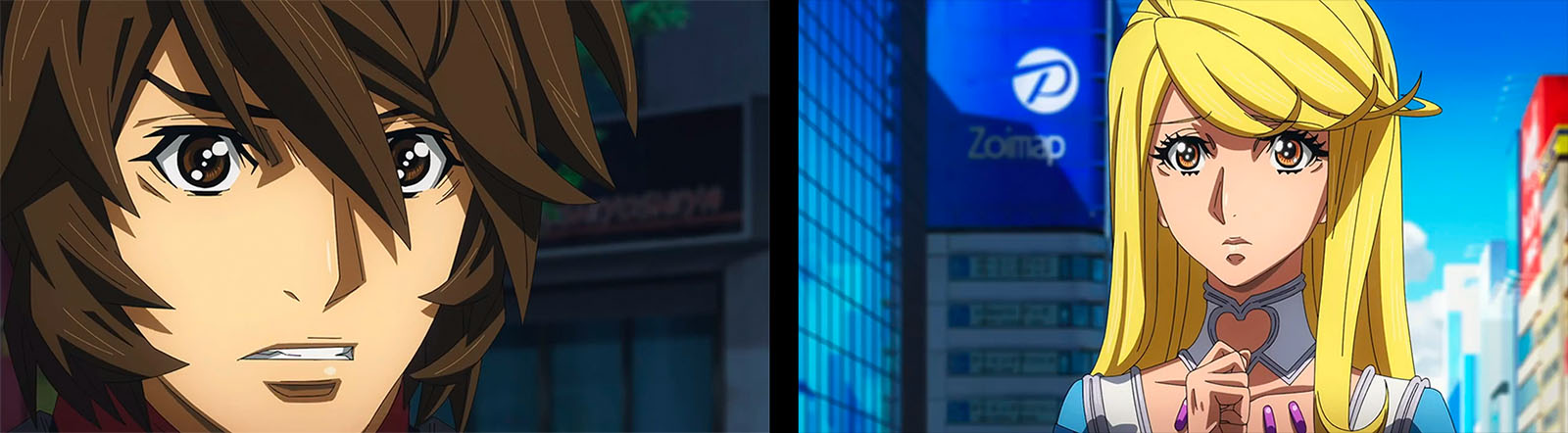
17-year-old Sasha and Susumu Kodai: The Battle of the “Man Who Cannot Choose”
As previously mentioned, the ending of this work follows that of the original Be Forever. Yet, a crucial change has been made to the premise surrounding Sasha.
The 17-year-old Sasha is not the kidnapped, younger Sasha grown older. rather, she is a being created by Mother Dezarium from the two-year-old Sasha she abducted. This explains why Kaoru Niimi, who was supposedly taken alongside the young Sasha, reappears at the end of Chapter 6 looking exactly as she did months earlier.
Within the story, Mother describes Kodai as “a man who cannot choose.” It was quite amusing to see, in a dialogue between Daisuke Ono and Houko Kuwashima featured in the Chapter 7 pamphlet, that this particular remark left Ono feeling a bit dejected! (laughs)
Mother anticipated that even if Kodai were to discover that the 17-year-old Sasha was an artificial creation, he would still be unable to bring himself to destroy the Dezarium home world while she was caught in the crossfire. It was a calculated strategy, born from a deep understanding of Susumu Kodai’s character.
Admittedly, in this installment, Kodai lacks the kind of spectacular, heroic feats one might expect from a protagonist. Yuki Mori takes command of Arizona, Alphon and Ranbel take matters into their own hands, and Dessler embarks on a new path in history. By comparison, Kodai often appears to be merely agonizing, wavering, and tossed about by the unfolding events. Yet, the label “a man who cannot choose” actually strikes at the very core of his nature.
This brings to mind Yamato 2202 in which Zordar forced Kodai to make an ultimate choice: which lives to save, and which to sacrifice. Perhaps what Kodai had always rejected was not the act of making a judgment itself, but rather the very premise that saving one life requires discarding another. In other words, could it be that his refusal to “select” which lives to save was, in fact, a deliberate choice of his own? Mother exploited this very conviction of Kodai’s, treating it as a weakness.
Then, toward the climax, 17-year-old Sasha desperately pleads with Kodai to fire the Wave-Motion Gun, all while her own consciousness is being eroded by Mother. Driven into a corner and left with no other option, Kodai finally pulls the trigger.
For this reason, I hesitate to call this a “bold” or “triumphant” decision on his part. It feels more accurate to say that, rather than proactively carving out a path forward, he was compelled to accept an unavoidable choice. Having long refused to decide whose life to discard, Kodai found himself forced into this final decision by the desperate cry of Sasha herself.
Yet, this passivity does not necessarily contradict Kodai’s character. He is the kind of man who believes every life has value, which is precisely why he cannot bring himself to make such choices easily. That said, I must admit a lingering, slight dissatisfaction: couldn’t he have shown a bit more of the kind of decisive action one expects from a protagonist? (Haha.)
Sasha, the 17-year-old who had shared her smiles with us, vanishes along with the Dezarium home planet, destroyed by the Wave-Motion Gun fired by Kodai. However, the younger, kidnapped version of Sasha is rescued by Analyzer. This marks a significant departure from the original work. while the original ended in the tragedy of losing the real Sasha, this version sees her life spared, a development that offers the audience at least some sense of relief.
Yet, the fact that the 17-year-old Sasha was a construct does not mean her disappearance is any less sorrowful. Indeed, this lies at the very heart of the story.
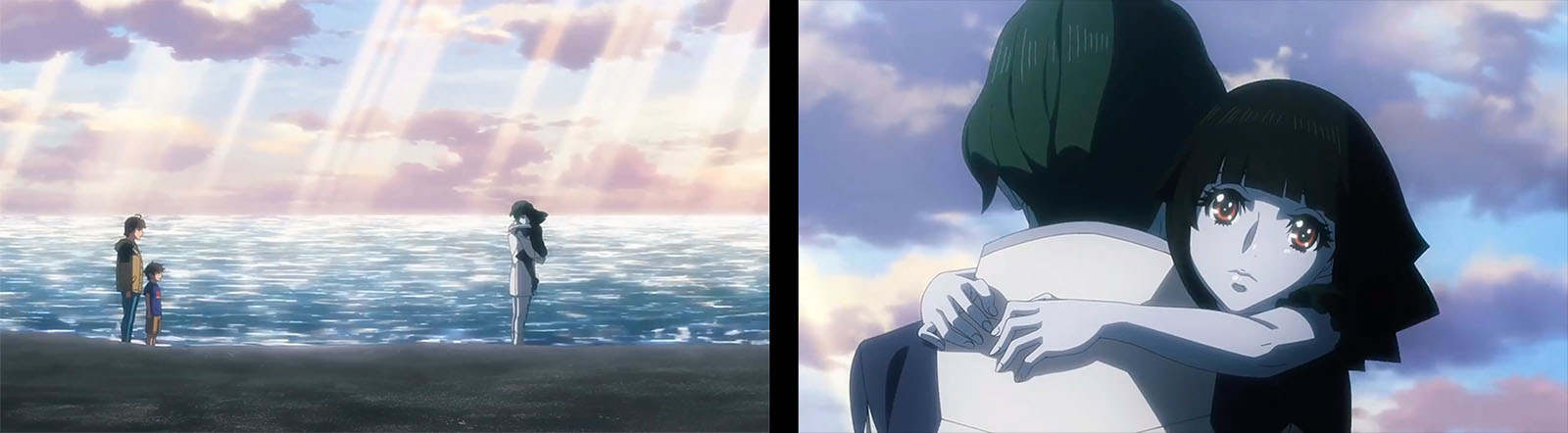
“I truly lived, didn’t I?” A genuine life within a fabricated world
It was not only the 17-year-old Sasha whom Mother Dezarium created. The people living on the “fake” Earth, as well as the Dezarians on the “real” Earth, were all brought into existence through “phase energy.” Not only their physical bodies, but their memories and the history they knew were all manufactured.
And yet, they undeniably led real lives. They had families, friends, and the rhythms of daily existence. Even if the circumstances of their birth or their memories were artificial, can we truly say that the joy and sorrow they felt were also mere fabrications?
When the Dezarium home planet is obliterated by Kodai’s Wave-Motion Gun, the supply of phase energy is severed, and the Dezarians on Earth begin to vanish as well. A character introduced in Chapter 6, an ancestor of Hajime Saito, also fades away as the false Earth collapses. For the audience, who had grown attached to these individuals despite the world they inhabited being a fabrication, this is a heart-wrenching scene.
And the moment that nearly brought me to tears was the scene involving a young Dezarian girl named Fleur and her father. Realizing that her own existence is coming to an end, the girl asks her father: “I really lived, didn’t I?” The father affirms his daughter’s life, a life that, in the end, follows the same fate as his own. The directorial choice not to show the moment of their disappearance only serves to deepen the sorrow.
Tsubasa, a friend of the girl, Fleur, and the orphaned child of Saburo Kato, watches this unfold and sheds tears. His mother, Makoto, tells him, “It’s alright to cry.” Who could possibly hold back tears at a moment like this? It was truly that kind of scene. This brief exchange, I believe, captures one of the core themes that 3199 sought to explore.
Though they were creations of “Mother”, destined to vanish alongside her, that does not mean the time they spent living never existed. Even those who were “created” led lives that were, in every sense, real.
Furthermore, the fate of the girl, Fleur, reflects the fate of 17-year-old Sasha from a different perspective. Sasha, fully aware that she would cease to exist, implored Kodai to fire the Wave-Motion Gun. Fleur, by contrast, did not desire her own erasure. Here, the heroic narrative of self-sacrifice overlaps with the tragedy of ordinary people who vanish without ever having a choice.
Moreover, the girl’s question, “I really lived, didn’t I?”, might well be the very question that 17-year-old Sasha herself could never bring herself to ask. Until the very end, Sasha kept urging Kodai to fire, never finding a moment to reflect upon or affirm her own existence. The father’s response to the girl resonates as an answer for the many others, Sasha included, who have since faded away.
This is not a story that concludes simply because Yamato has emerged victorious. The battle to save Earth resulted in the disappearance of people who had truly lived. The work does not overlook the profound loss that lies in the shadow of that victory.
An AI created by humans ends up creating humans
The true nature of “Mother Desariam” offers a compelling, contemporary take on science-fiction. According to the premise established in Chapter 2, Mother was originally an advanced administrative AI built by the Dezarian people. Over the course of ages, she evolved into a being that creates humans, bestows memories upon them, and ultimately assumes the role of their ruler.
Her, or rather its, ultimate objective is to realize the ideals of the ancient Akerians, a goal that, as the story reveals, culminates in the opening of the “Gates of Heaven,” an act that would bring about the annihilation of the entire universe.
In today’s world, there is intense debate surrounding the societal impact of AI, specifically the dangers of AI that may slip beyond human control, with some even speculating that it could lead to the extinction of humanity. Viewed against this backdrop, the concept of “Mother” feels unsettlingly vivid.
No matter how sophisticated an AI may be, the ability to precisely execute a given objective is entirely separate from whether that objective is actually desirable for humanity. High-level intelligence does not automatically equate to the acquisition of ethics. In this sense, Mother can be seen as an extreme embodiment of that very danger.
What I found particularly impressive is that the work avoids overusing the term “AI.” Rather than leaning on a buzzword that has become part of everyday parlance to stoke fear, the story weaves the nature of AI into the very origin of Mother. This is a remarkably skillful approach: it engages with a contemporary issue without allowing the work to become beholden to the trendy terminology of the era.
Furthermore, by portraying Mother as both creator and ruler, the narrative elevates the discussion from mere technological concerns to a more universal inquiry regarding the freedom of both the creator and the created.
Crucially, the story does not rely on Mother to explain these themes through long-winded monologues. Instead, it is the lives led by characters like Alphon, Ranbel, 17-year-old Sasha, and Fleur and her father that pose these profound questions directly to the audience.
It is the “non-standard” units that are truly human
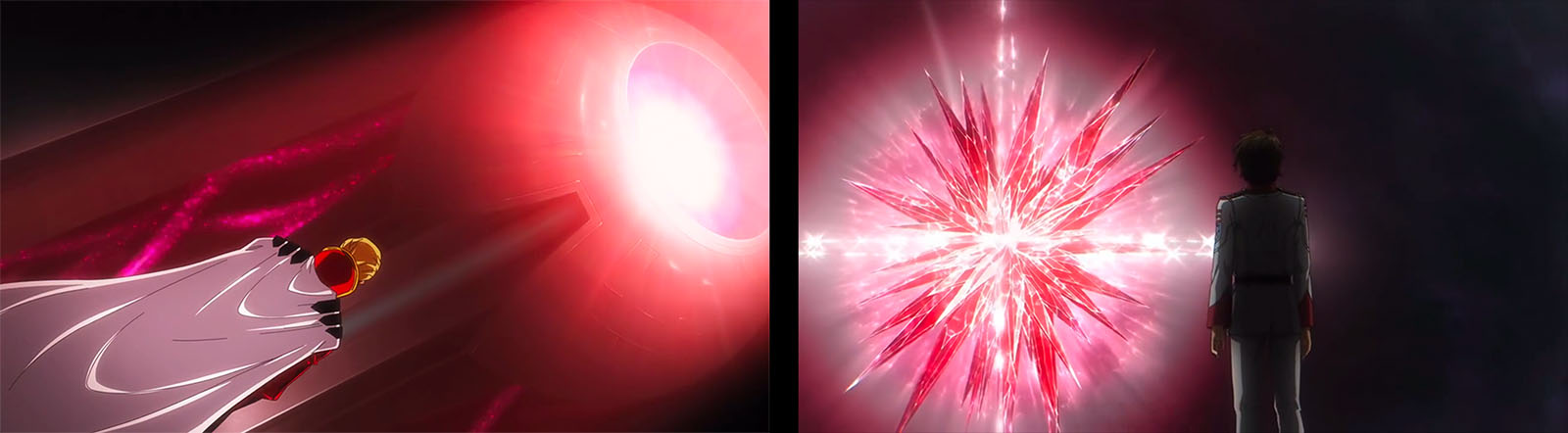
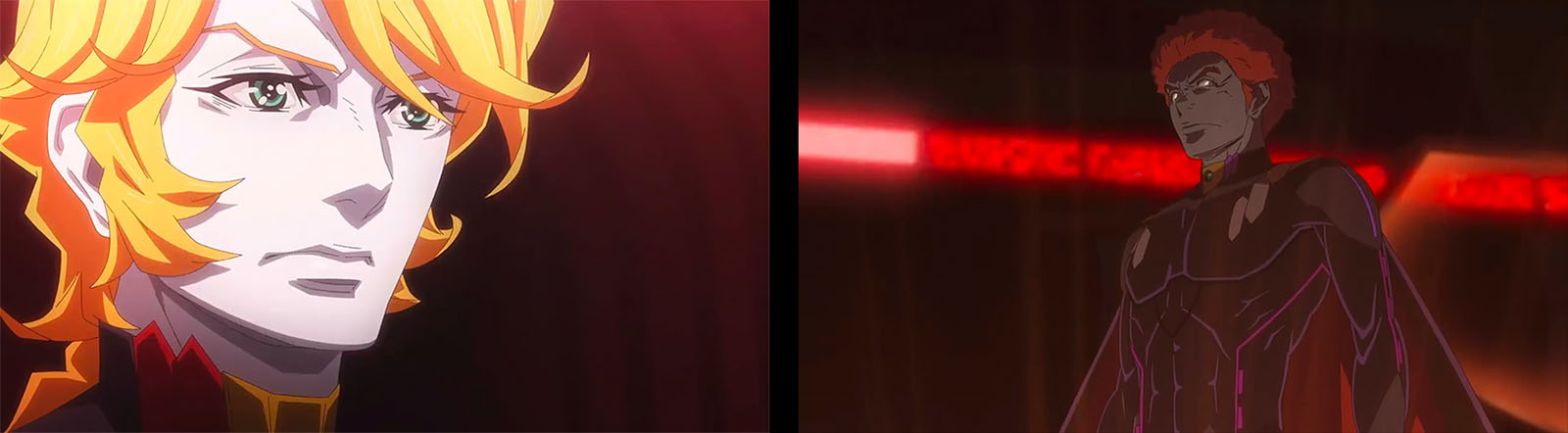
Among the Dezarians, some individuals break free from Mother’s control and begin to aid the people of Earth; Alphon and his friend Ranbel, for instance. Particularly striking is the moment Ranbel, piloting the Grodez, launches a suicide attack against the entrance to the Dezarium core to clear a path for Yamato’s final assault. He acts not because of Mother’s commands, but by his own volition.
What is fascinating is that Mother labels them “non-standard”, a term reminiscent of quality control in a factory. In her view, anything that deviates from the established specifications is a “defective product” that must be purged.
Yet, there is a profound irony here. Perhaps those whom Mother deems “non-standard” are, in fact, the very embodiment of what it truly means to be “human.” To care for others, to make one’s own judgments, and to act upon what one believes is right, even if it means defying one’s assigned role, may fall outside Mother’s design specifications. To me, however, these are the very hallmarks of humanity.
Mother, their creator, is herself bound by a predetermined purpose. Despite possessing the power to forge entirely new worlds, she never questions the objective she was given. Conversely, the beings she created strive to transcend the will of their creator. The entity capable of crafting human-like beings fails to grasp the essence of humanity, while those dismissed as “defective” demonstrate the true dignity of human existence. It is a biting, poignant paradox.
In this light, the title “REBEL” takes on a deeper, more resonant meaning. It is not only Yamato that is resisting. Those among the Dezarium who seek to break free from Mother’s control are, in their own right, rebels.
Harutoshi Fukui Has Redeemed Himself After 2202
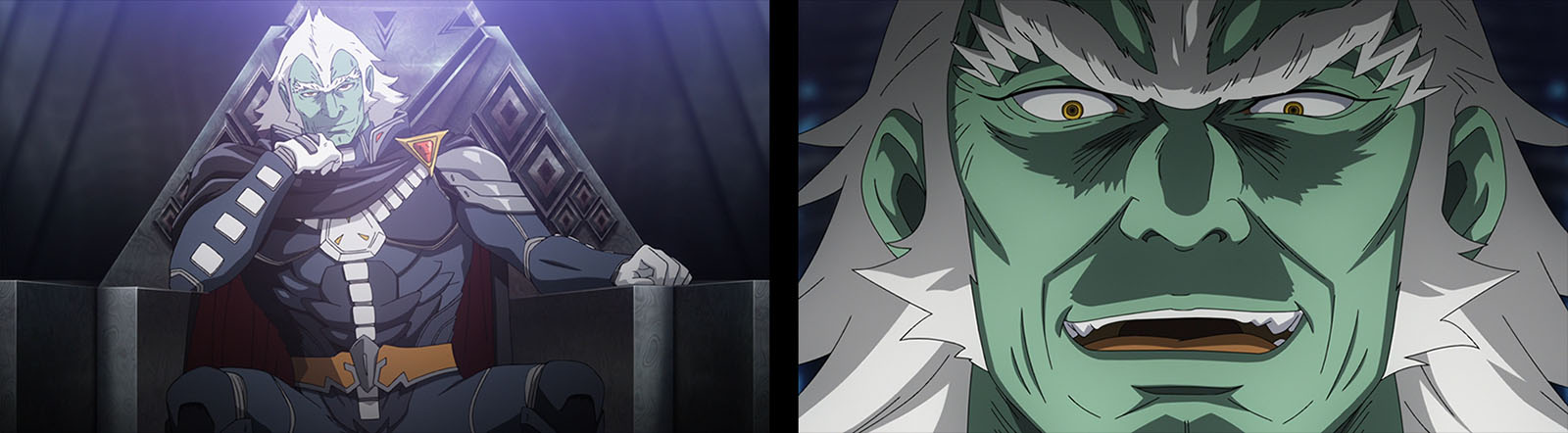
Looking at where things stand now, I believe that through the narrative arc spanning from 2205 to 3199, Harutoshi Fukui has effectively redeemed himself for his work on Yamato 2202. I was quite critical of 2202, Fukui’s first foray into the Yamato series. I had numerous grievances, ranging from how the settings and character relationships from 2199 were carried over, to the somewhat facile way in which self-sacrifice was handled.
Watching 3199 has also brought another issue I had with 2202 into sharper focus: the endless, one-sided monologues by Zordar, who would go on and on about the nature of “love.” Frankly, I found that rather tiresome. Ironically, perhaps the greatest “warrior of love” in that entire production was Zordar himself.
This time, however, Fukui did not repeat those mistakes. He tackled the grand question, “What is life?”, not through abstract, philosophical dialogue, but through the actions and fates of the characters, crafting a deeply moving narrative in the process. This distinction is significant.
Furthermore, the fact that 3199 embraced the constraints of the original series’ plot seems to have helped tighten the narrative. By remaining faithful to the source material while exploring its themes as a piece of modern science-fiction, Fukui has successfully leveraged his strengths as an SF author within the framework of an entertainment-focused work.
That said, I am not prepared to offer unreserved praise for everything. For instance, Susumu Kodai’s role remains somewhat underwhelming, and the complex world-building isn’t necessarily easy to grasp all at once. Yet, even accounting for these shortcomings, the series composition and the drama of the final chapter deserve high praise.
With the Melodies of the Original
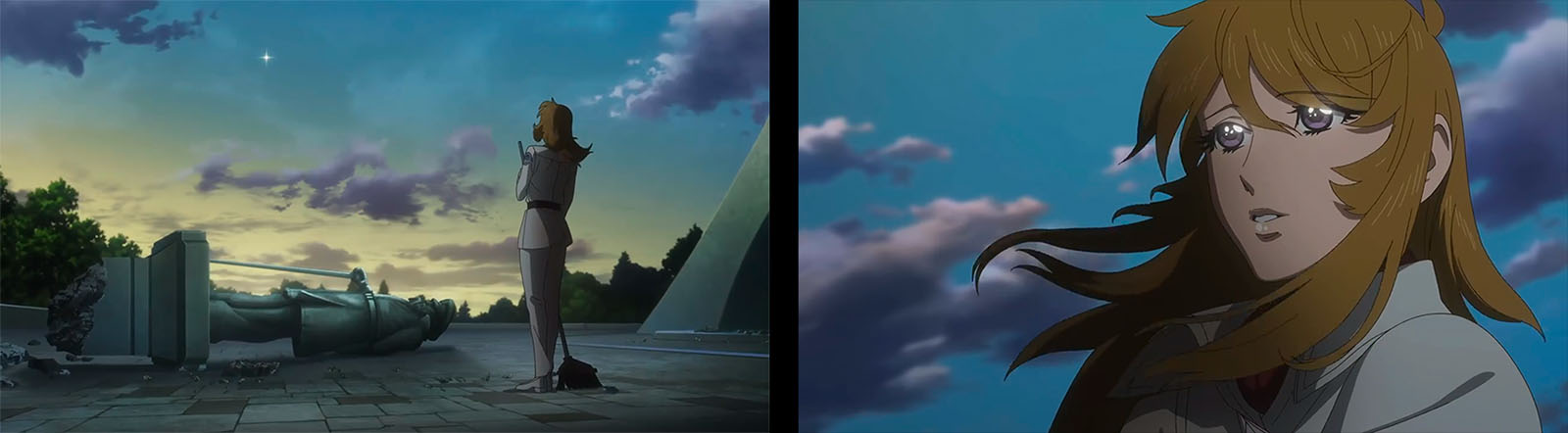
Music plays a significant role in why this installment evokes such a strong sense of Be Forever Yamato. During the climax, while the story is still unfolding, Akira Fuse’s song Until the Day of Love, begins to play. For someone like me who saw the original film in theaters, that single moment brings all those memories flooding back.
Then, during the end credits, we hear Junko Yagami’s Toward the Far Reaches, Toward Eternity. I felt like the melody was familiar, and it turns out the song is based on Birth of a New Galaxy, a piece of background music from the original Be Forever.
Ah, so that’s it. By featuring a song from the original during the climax and transforming one of its melodies into a new song for the finale, the film doesn’t just inherit the story of its predecessor, it weaves the music into the fabric of this new work. The fact that the melodies originally composed by Hiroshi Miyagawa have been passed down to the new Yamato by the likes of his son, Akira Miyagawa, speaks volumes about the long, rich history of this series.
3199 excels in many areas: the spectacular fleet battles, the grand visuals of the Dezarium home world, and the music that honors the original. Yet, what has stayed with me most after the credits rolled are the words of that little girl: “I really lived, didn’t I?”
What kind of lives was Susumu Kodai trying to protect? And what were those people, dismissed by Mother as “non-standard” or “defective”, fighting to safeguard? The film doesn’t offer a long-winded explanation. Instead, it reveals the answer through the lives these people led and the goodbyes they had to say. That is precisely why I hold 3199 in such high regard.
And, in the end, I can’t help but say: Wow, that was truly Be Forever Yamato.
P.S. – The Spatial Magnetic Plating Projectile
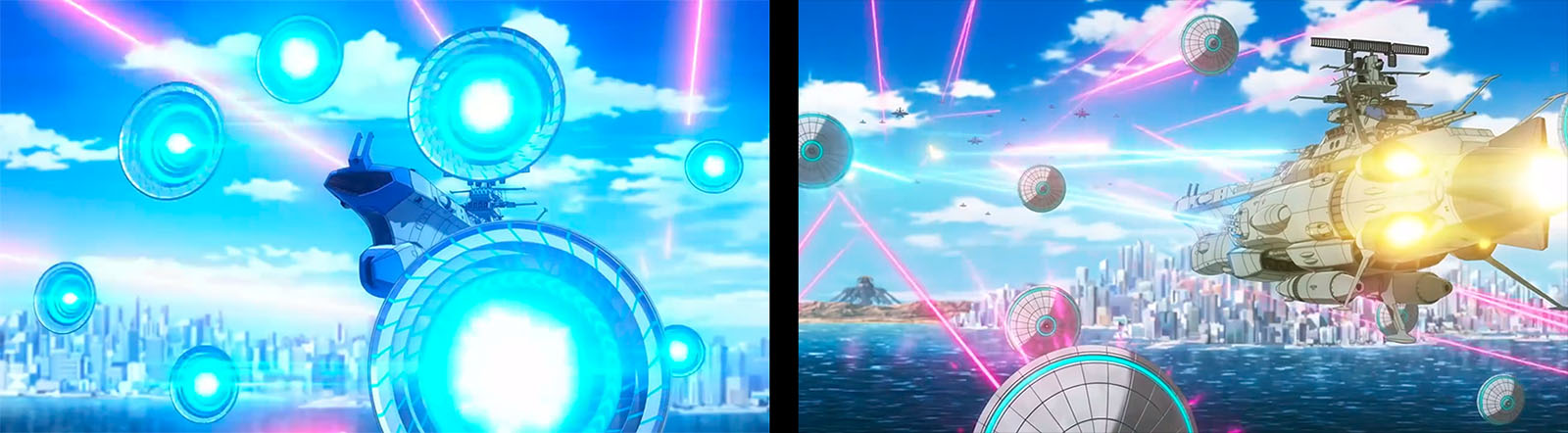
There is one final, small detail I simply have to mention. This is the “spatial magnetic-plating projectile” used by Arizona. Seeing it, many younger viewers might be reminded of the “funnels” or “bits” from the Gundam series. However, for those of us who adore the tokusatsu (special effects) films of the Showa era, its parabolic-antenna-like design, which catches an enemy’s beam, amplifies it, and fires it back, is strikingly reminiscent of the “Markalite Gyro” from the 1957 Toho film The Mysterians. I’m surely not the only one who feels the urge to play the film’s original score, specifically tracks M17 (Markalite Gyro) and M20 (Electronic Cannon), composed by the legendary Akira Ifukube, while watching that scene! (Haha)
Incidentally, both this work and The Mysterians share a similar narrative arc: Earth’s aerial battleships challenge an extraterrestrial base, which is ultimately destroyed from within through acts of sabotage.