
The Vision Behind His “Greatest Masterpiece to Date” and the Timeless, Resonant Song Until the Day of Love
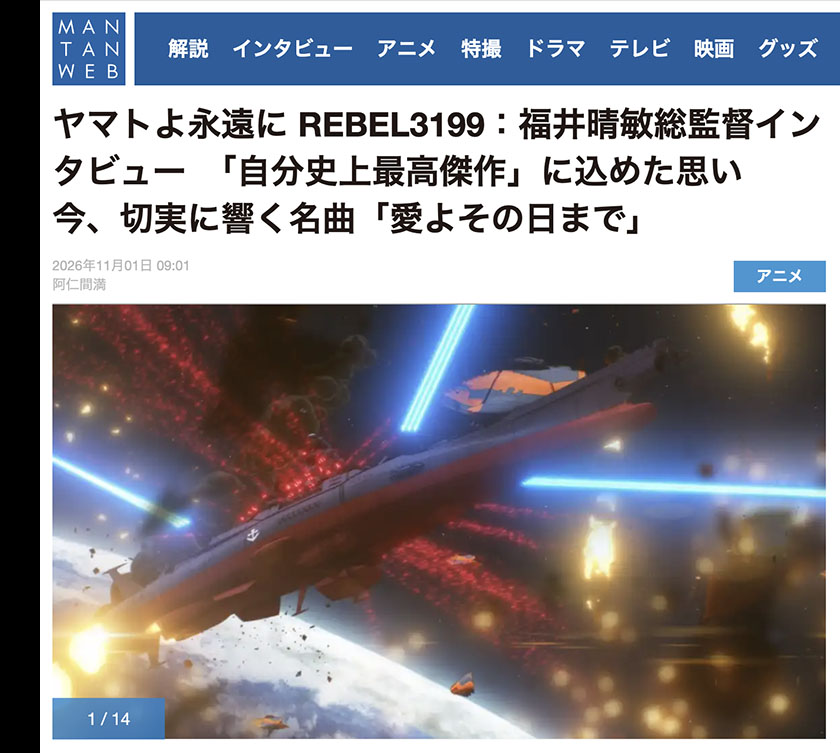
by Mitsuru Anima
Published at Mantan Web, November 1, 2026. See the original post here
The final chapter of REBEL 3199, the latest installment in the Space Battleship Yamato remake series, began its theatrical run on October 30. Harutoshi Fukui, who served as series writer for the previous entries, took on the role of chief director. Now that this long voyage has reached its conclusion, we spoke with Fukui about the vision he poured into REBEL 3199.
Eerily Synchronized with the Times
In June 2024, during the premiere event for Chapter 1, Fukui declared, “At the script stage, this is the greatest masterpiece of my career.” Coming from a creator who has delivered numerous acclaimed works, this statement sent expectations for REBEL 3199 soaring.
Fast-forward two years to this October: at the premiere for the final chapter, Fukui’s demeanor was different. Having completed this long journey, he remarked, “I became so deeply immersed that I lost my perspective. I found myself wondering, ‘Was this the right path?'”
“I still stand by my claim that this is my ‘greatest masterpiece ever,’ but I did find myself questioning whether I had truly managed to express that or convey it effectively. As I went through countless rounds of fine-tuning, deciding to extend a particular shot here, or adding a specific light effect there, I gradually lost my own perspective. By the time I finished working on the final chapter, I was completely drained. in that state, even the parts that should have been moving enough to bring one to tears left me feeling nothing. My mind was simply exhausted.”
“This is something that occasionally happens when my schedule becomes too packed, but this time, I truly lost my confidence, or perhaps it’s more accurate to say I just couldn’t tell anymore, until I saw the audience’s reaction at the premiere. Seeing how they responded helped me regain my confidence. Perhaps never before have I realized so profoundly that a work of art only truly reaches completion once it is seen by an audience.”
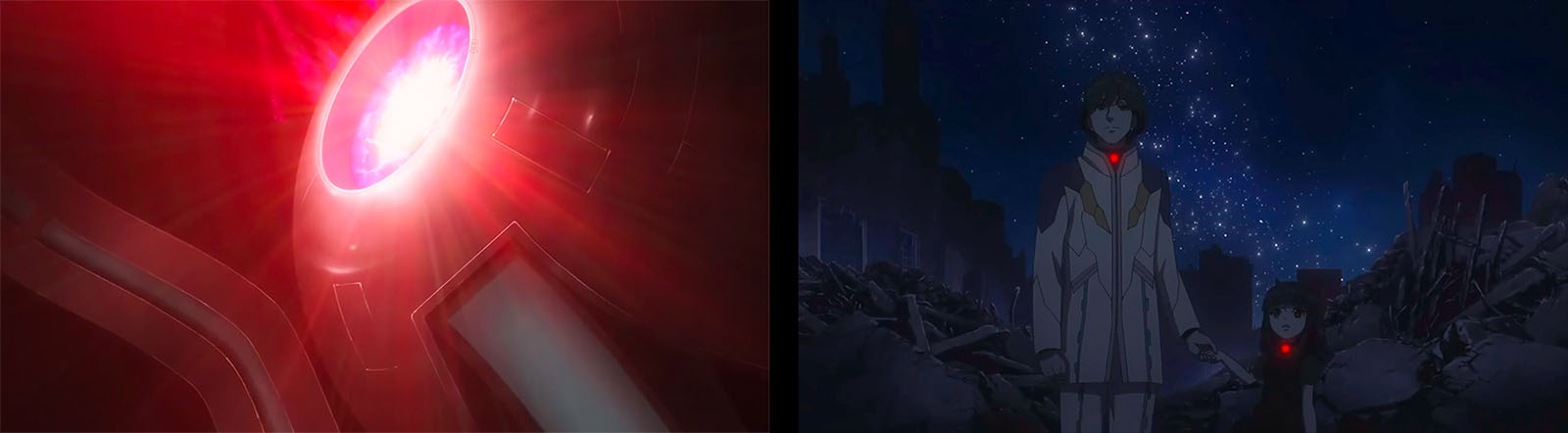
3199 also appears to be a work that “syncs with the times.” In the roughly two years since the release of the first chapter, the social landscape has shifted significantly. The final chapter, in particular, prompts reflection on the relationship between AI and humanity.
“The synchronization is almost eerie. Of course, the story itself hasn’t changed from its initial conception, but I never imagined that reality would align with it to such an extent. When we began working on the script, AI wasn’t nearly as prominent a topic as it is today. While I did intentionally weave in elements like the social climate during the COVID-19 pandemic, the trajectory of technological advancement is something beyond my control! (laughs)”
“Take the current discourse surrounding AI: if you ask it to ‘make a cup of coffee,’ it might, through a convoluted chain of events, end up causing the destruction of humanity. We now intuitively grasp that such a scenario is actually possible with AI. It’s a far more visceral, immediate kind of fear, distinct from the ‘classic’ villain archetype, like Skynet from The Terminator. Back in the era of The Terminator, there was still a prevailing assumption that ‘computers simply couldn’t do such things.'”
Fukui did not set out to write 3199 as a “prophecy.”
“It was purely a work of science-fiction, born from my imagination. At the time, my focus was on exploring, through the character of Mother Dezarium, how human beings can sometimes drift toward extreme ideologies. the issue of AI wasn’t even on my radar. What’s truly surprising is that we’ve reached this point while remaining so remarkably unconcerned about AI. If something were to happen and someone claimed, ‘AI did it,’ we’d likely think, ‘Well, that’s plausible’, no one would just laugh it off as ‘absurd.’ That’s the kind of era we’re living in now, isn’t it?”
The original TV anime series aired in the 1970s, a time when the nuclear arms race between the U.S. and the Soviet Union was intensifying, even in the wake of the Treaty on the Non-Proliferation of Nuclear Weapons. The premise of an Earth perishing from radioactive contamination felt all too real, mirroring the anxieties of that era and instilling a profound sense of crisis in the audience. Could it be that Space Battleship Yamato, and now 3199, possesses a unique capacity to draw the spirit of the times toward itself?
“That may well be true. By the time of the original Be Forever Yamato, the series had shifted its focus significantly to be more accessible to children, so the underlying message wasn’t as pronounced. However, the initial Space Battleship Yamato and Farewell to Yamato seemed to foresee, a decade in advance, the coming ‘bubble’ era and the subsequent loss of Japan’s national identity. In that sense, perhaps Yamato itself inherently possesses those qualities.”
Since 2202, Fukui has approached Space Battleship Yamato with a focus on contemporary Japan.
“When you decide to keep pace with the times, you might occasionally find yourself running a bit ahead of them. That said, I hadn’t planned on continuing the series beyond 2202 at the time, so I wasn’t really thinking that far ahead.”
It wouldn’t be possible without Until the Day of Love
It was announced that the final chapter would feature Until the Day of Love, the ending theme for the 1980 animated feature film Be Forever Yamato, performed by Akira Fuse. The inclusion of this song in a teaser trailer also drew considerable attention.
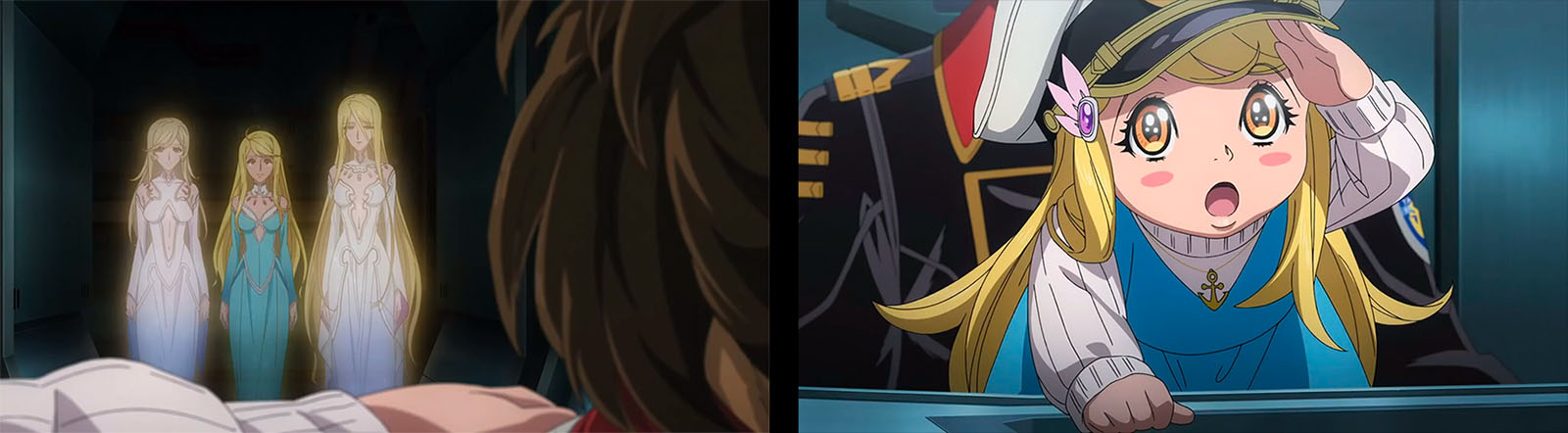
“When it came to remaking Be Forever, I knew the project couldn’t exist without this song. In fact, I made sure we could secure the rights to use it before we even began. Back when I first heard it, I interpreted it as: ‘The world is in a rough state right now, but hopefully, a utopia will arrive someday, so stay well until then.’ But now, I hear a different message: ‘I’m sorry, but that utopia isn’t coming.’ It’s more like: ‘The world might even be worse now than it was back in the 1980s, but please, don’t forget that there is still a tomorrow, that a day like that does exist.’ I can’t say exactly when that day might be, but I’m asking people not to give up on everything before it arrives. It’s the same song, yet it sounds completely different today. I think that’s why it still resonates so deeply.”
The message embedded in Until the Day of Love has taken on a much more poignant, urgent tone.
“Back then, it almost felt like a carefree, lighthearted song. But now that I’m an adult living in these times, it strikes a much deeper chord. Human hearts are always changing. rather than listening to the words of some stranger you’ve never met, I want people to listen directly to the voices of those close to them, the people they love. I want them to hear the voices of those nearby, not the voice of Mother Dezarium. I’ve felt from the very beginning that this story would ultimately come down to that.”
Could there be more to come…!?
3199 feels like a mirror reflecting our own society. Perhaps that is something only a work like Space Battleship Yamato could achieve.
“Perhaps Yamato is the only series in this day and age capable of telling a story on such a grand scale, one involving the arrival of extraterrestrial beings. In the world of Yamato, space functions more like an ‘ocean’ or a ‘foreign land.’ There’s a satirical undercurrent, reminiscent of Japan’s transition from a period of national isolation to its first encounters with other nations.”
“Furthermore, the premise introduced in 2199, that all humanoid life in the universe stems from a single, original source, lends a sense of realism to the idea that different civilizations could emerge and make contact within the same era. Without this, you wouldn’t see aliens who are essentially just humans with different skin tones, a trope rarely found in contemporary works.”
“Thanks to the framework established by Yutaka Izubuchi and his team for 2199, we’ve been able to incorporate even more ambitious science-fiction elements. It’s been incredibly fun to work on, and I believe it’s a unique charm that only Yamato can offer. The story resonates precisely because it doesn’t feel like a tale set in some distant, unreachable galaxy, like Star Wars or Star Trek, but rather one that feels continuous with our own reality.”
Starting with 3199, Fukui took on the role of general director.
“I’ve even been asked to approve the color of the teacups that appear on screen! (laughs) With digital production, you could theoretically keep working on something forever, so the hardest part was deciding when to call it quits, finding that internal point of closure. In the old days of film, it was a ‘one-shot’ deal. Now, you can make endless revisions. Establishing a clear standard for what we aimed to achieve this time around was a real challenge. But I feel I’ve given it my all. It’s the greatest work I’ve ever produced.”
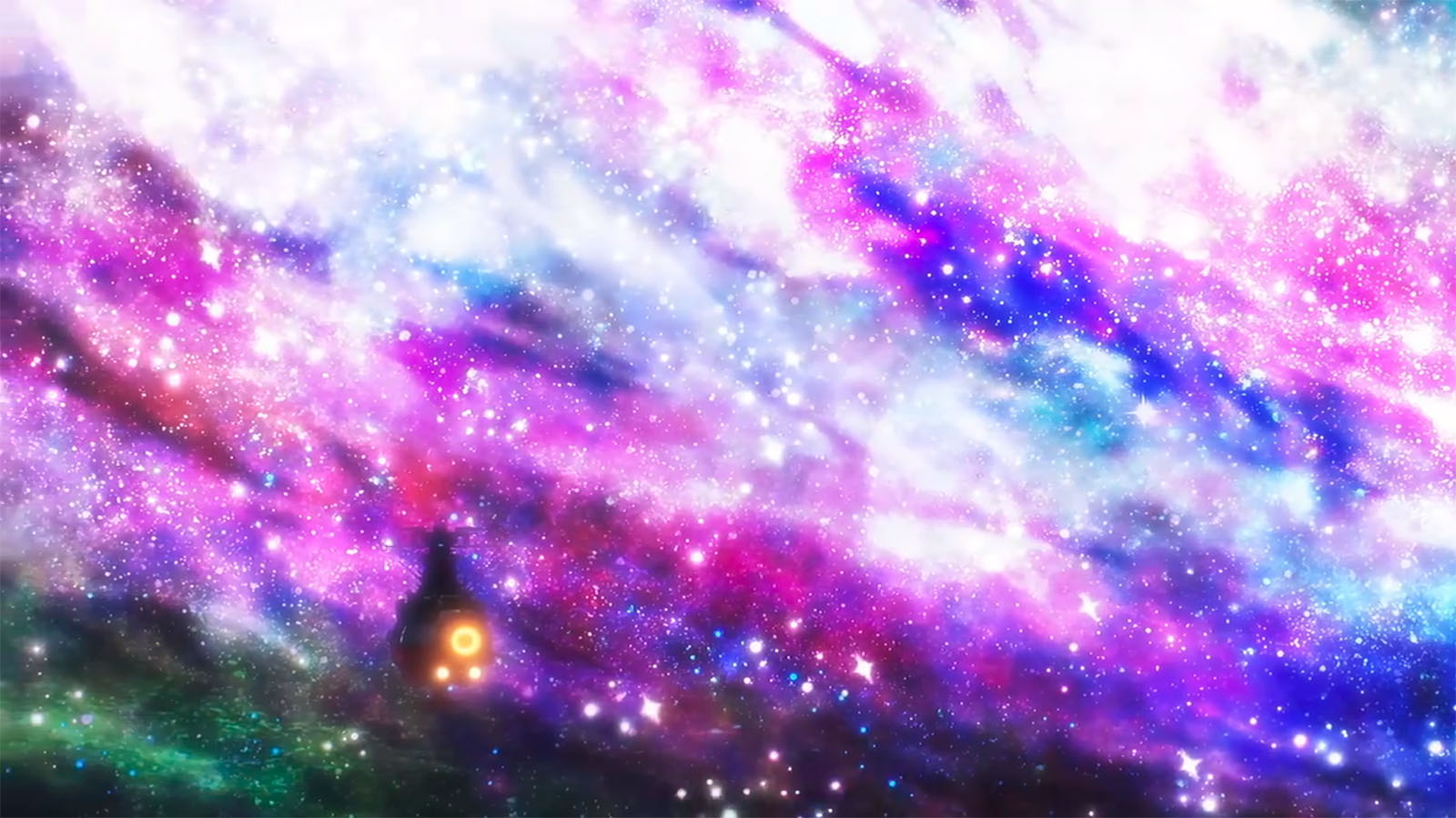
After the premiere event for Chapter 7, Fukui appeared to be carrying less of a burden or pressure. When asked if there might be more to come after 3199, he offered a coy, noncommittal response: “Well, who knows, maybe there will be something next… (laughs).”