
A Legacy Enduring Beyond Half a Century
Published at Mantan Web, October 30, 2026. See the original post here
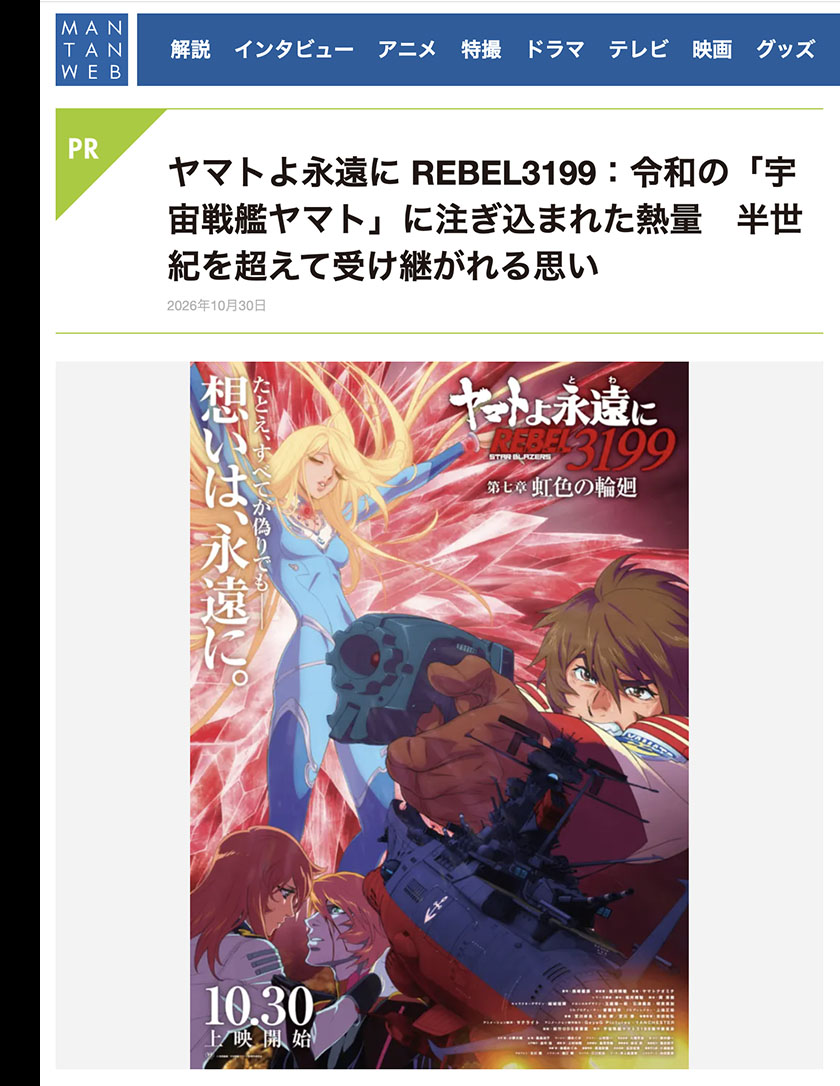
REBEL 3199 is the latest installment in the remake series of the popular anime Space Battleship Yamato. Why does this enduring masterpiece continue to resonate so deeply with us today, half a century after the original 1974 TV series? Through insights from General Director Harutoshi Fukui, Director Naomichi Yamato, and voice actor Daisuke Ono, who plays the protagonist Susumu Kodai, we explore the passion poured into this Reiwa-era Space Battleship Yamato and the enduring appeal of the series.
Harutoshi Fukui’s “Greatest Masterpiece to Date”
REBEL 3199 is a reimagining of the 1980 works Be Forever Yamato and Yamato III, presented with a fresh interpretation. Harutoshi Fukui, who served as series composer and screenwriter for the previous remake entries, took on the additional role of General Director for REBEL 3199, remaining at the core of the production. Fukui has previously described REBEL 3199 as “the greatest masterpiece of my career.” Now that this long voyage has concluded, he expresses a sense of relief, noting, “I feel like I’ve truly given it my all.”
3199 seems to resonate with the turbulent nature of contemporary society. In the year 2207, two years after Yamato first encountered the enemy known as Dezarium, an invasion of Earth begins. The Dezarians, who claim to be humans from approximately 1,000 years in the future, are executing a plan to “redo the future, starting from the past.”
Yamato‘s crew resists, seeking to verify the truth behind the history the Dezarium describe. While the Dezarium attempt to sway humanity with plausible-sounding rhetoric, one must ask: are they truly humans from a millennium hence? Being tossed about by a deluge of information, to the point where the truth becomes impossible to discern, this is a recurring pattern in human history, and it mirrors the very challenges we face today.
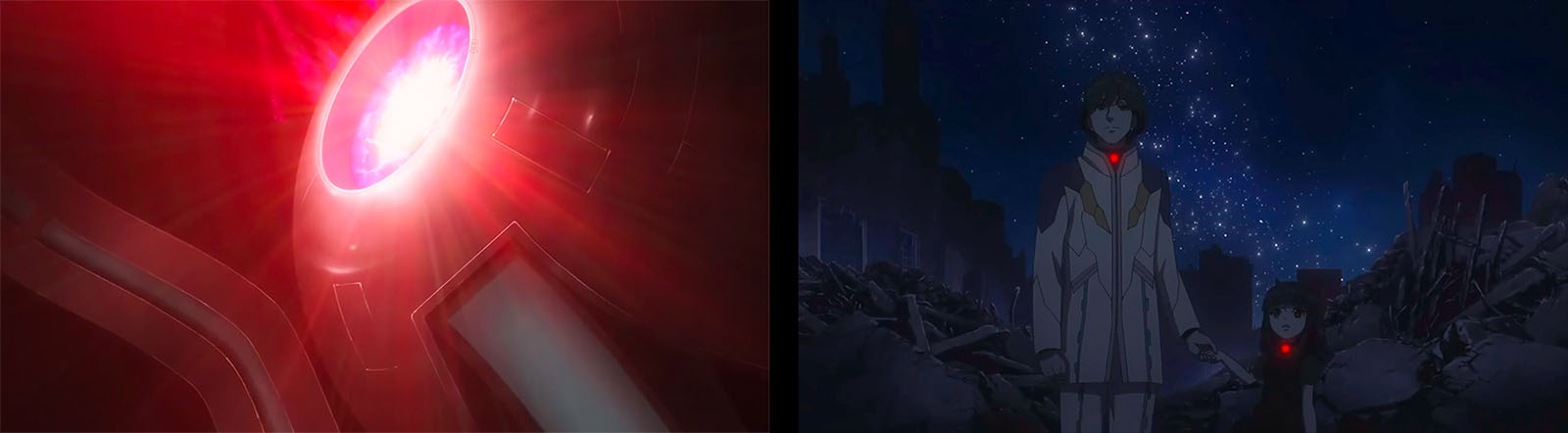
In the roughly two years since the release of the first chapter, the social landscape has shifted significantly. The final chapter invites deep reflection on the relationship between AI and humanity. That said, Mr. Fukui notes that he did not write the scenario for 3199 as a “prophecy.”
“It’s become eerily synchronized with reality. Of course, the story itself hasn’t changed from its initial conception, I just never imagined that reality would align with it to this extent. When we began working on the script, AI wasn’t nearly as prominent a topic as it is now. While I did intentionally weave elements like the social climate during the COVID-19 pandemic into the script, the rapid advancement of technology is something I couldn’t have possibly orchestrated (laughs).”
“I was writing this purely as a work of science-fiction, born from my own imagination. In fact, my primary focus back then was to explore, through the character of Mother Dezarium, how human beings can sometimes drift toward extreme ideologies. the issue of AI wasn’t even on my radar. What’s truly surprising, however, is that we’ve reached this point with so little wariness toward AI. If something were to happen and someone claimed, ‘AI did it,’ we’d likely just think, ‘Well, that’s plausible’, no one would simply laugh it off as ‘absurd.’ That’s the kind of era we’re living in now, isn’t it?”
The 1970s, when the original TV anime series first aired, was a time when the nuclear arms race between the United States and the Soviet Union was intensifying, even in the wake of the Treaty on the Non-Proliferation of Nuclear Weapons. The harsh premise, a world perishing from radioactive contamination, sharply captured the social anxieties of the time and instilled a profound sense of crisis in the public. Perhaps Space Battleship Yamato serves as a mirror reflecting the era in which it exists.
Since Yamato 2202, Fukui has approached the saga with the theme of contemporary Japan as a foundational element. “By the time of the original Be Forever Yamato, the series had shifted its direction significantly to be more accessible to children, so the underlying message wasn’t as pronounced. However, the initial Space Battleship Yamato and Farewell to Yamato, released a decade earlier, seemed to foresee the impending ‘bubble’ era and the subsequent loss of Japan’s national identity. In that sense, perhaps Yamato inherently possesses such a quality. When you commit to walking alongside the times, you may occasionally find yourself running ahead of them. That said, we hadn’t planned on continuing the series beyond 2202, so we weren’t really thinking about that at the time.”
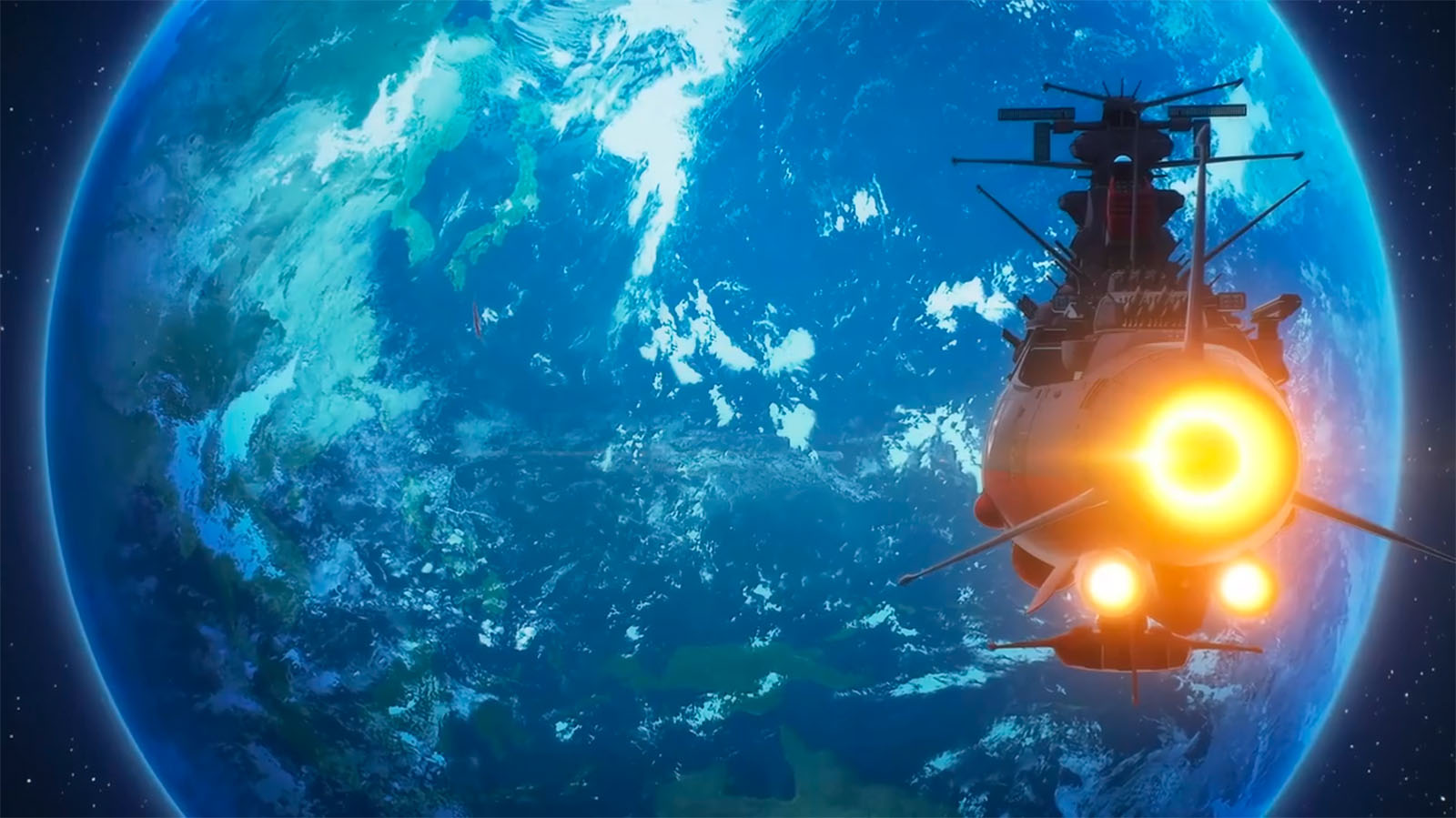
Even while set against the backdrop of a grand, expansive universe, the work retains a raw, visceral quality that makes it feel deeply connected to contemporary society. This is perhaps something that could only be achieved through a series like Space Battleship Yamato.
“Perhaps Yamato is the only series today capable of telling a story on such a grand scale, one involving the arrival of extraterrestrial beings. In the Yamato universe, space functions more like an ‘ocean’ or a ‘foreign land.’ There is an underlying satirical spirit, reminiscent of Japan’s transition from a period of national isolation (sakoku) to its first encounters with various other nations.”
“Furthermore, the premise introduced in 2199, that all humanoid life in the universe originated from a single source, provides a sense of realism, making it plausible for these civilizations to emerge and make contact within the same era. Without this framework, you wouldn’t see aliens who are essentially just humans with different skin tones, a trope rarely found in contemporary works.”
“The framework established by Yutaka Izubuchi and his team for 2199 have opened the door for even more ambitious, grand-scale science fiction concepts. It’s genuinely fun to work with, and it offers a unique appeal that you simply can’t find anywhere else. The story resonates precisely because it doesn’t feel like a tale set in a distant, unreachable galaxy, like Star Wars or Star Trek, but rather one that feels continuous with our own reality.”
Deep Respect for the Original Work
Space Battleship Yamato is a landmark series that has been cherished for over 50 years, ever since the first TV anime aired in 1974. As the director of 3199, Naomichi Yamato faced immense pressure while leading the production. He approached this historic title with a profound sense of resolve.
“Creating a work like Yamato requires a profound level of commitment. it is a title that carries immense weight. There are fans who have followed the series for many years, and the scale, as well as the standards expected, differs significantly from that of a typical anime. The challenge lay in maintaining a high level of quality under these circumstances. The current state of the anime industry and the environment surrounding production are, to put it mildly, far from comfortable. It’s only through the dedicated efforts of so many staff members and collaborators, and by struggling with everything we had, that we managed to bring this project to fruition.”
The original TV anime series, which aired in 1974, is a legendary work that elevated the status of anime, previously dismissed as mere “children’s cartoons”, and dramatically expanded its fan base. Carrying a deep respect for the original material, the team behind 3199 took on the challenge of this new installment.
“The visuals created by the original production team were truly one-of-a-kind. To put it plainly, the unique modes of expression and the subtle nuances in the analog animation of that era can’t be perfectly replicated using today’s technologies and production systems. Modern animation tends to prioritize logic and internal consistency, with a reliance on digital processing to add spectacle and visual effects.”
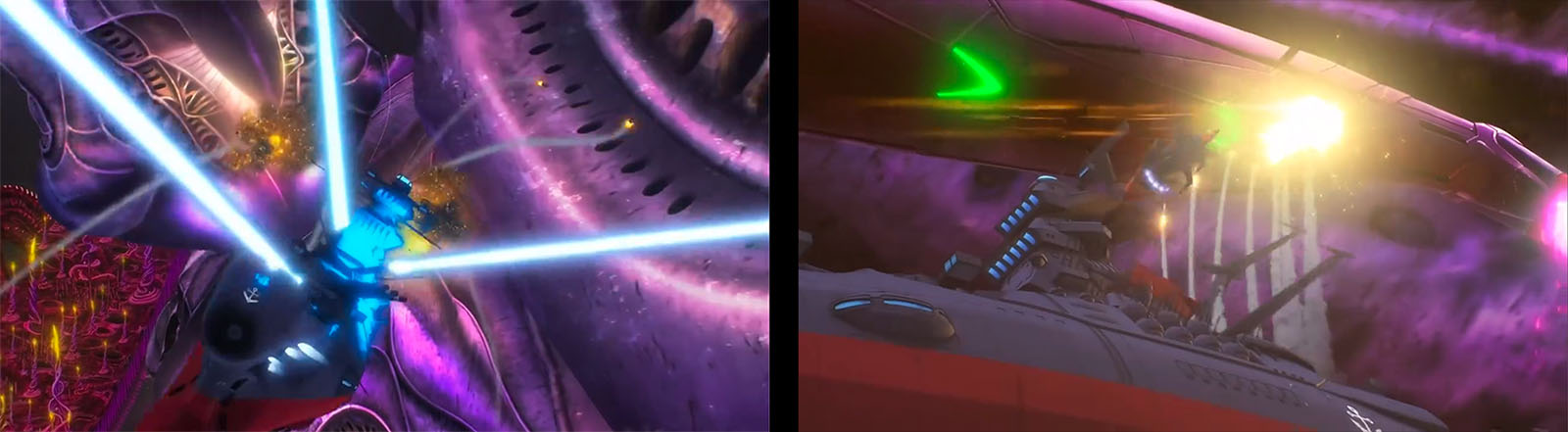
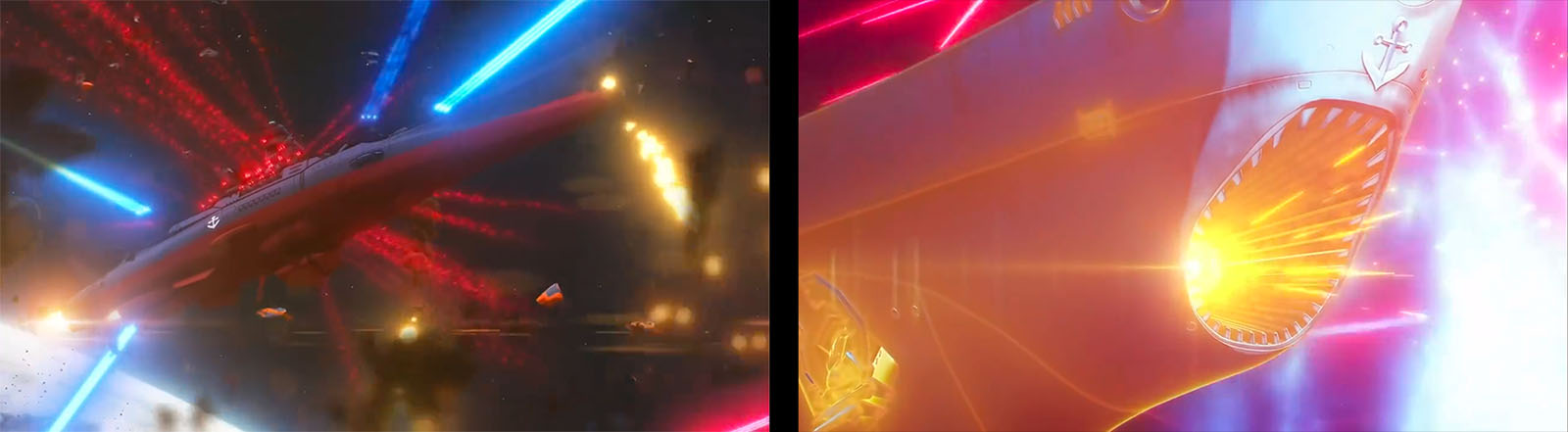
“In contrast, the original work captured elements that defy quantification or theoretical analysis, intangible qualities like ‘imagery’ and ‘nuance’, brought to life through the sheer, overwhelming artistic skill and expressive power of the animators of that time. For Chapter 7, there were scenes on which we spent nearly a year, striving to get as close as possible to that original intensity. The very act of hand-drawing a massive battleship and making it move fluidly is, by today’s production standards, an impossible undertaking. It inspires nothing short of awe. It’s clear that the original team worked with immense passion, despite the extremely tight production schedules they faced.”
With a profound respect for the original work, Yamato set out to craft a version of Yamato uniquely suited to the Reiwa era.
“The appeal of Space Battleship Yamato lies in the fact that it is not merely a ‘mecha’ anime or a simple ‘good triumphs over evil’ hero story. The ‘breath of the era’, the historical context of the time, as well as the philosophies, passions, and internal struggles of those who created it, pulses throughout the work.”
“In today’s world, while the rise of social media allows anyone to easily share their thoughts, people often find themselves confined within somewhat stifling, individualistic bubbles. Trapped within the narrow confines of the online sphere, bound by rigid, extreme notions of justice or binary standards of good and evil, many young people today carry heavy mental burdens, often losing the courage to move forward. I believe that the dynamic depicted in the original Space Battleship Yamato, where individuals with diverse values clash, debate, and ultimately move forward together as a group, is especially meaningful in our current age.”
“The characters in 3199 are by no means one-dimensional. By moving beyond a simple ‘friend or foe’ dichotomy and creating a human drama filled with varied perspectives and personal convictions, we hope that this story might offer young, contemporary audiences a small source of support, a spark of courage, and the strength to keep moving forward.”
Depicting “Universal Love”
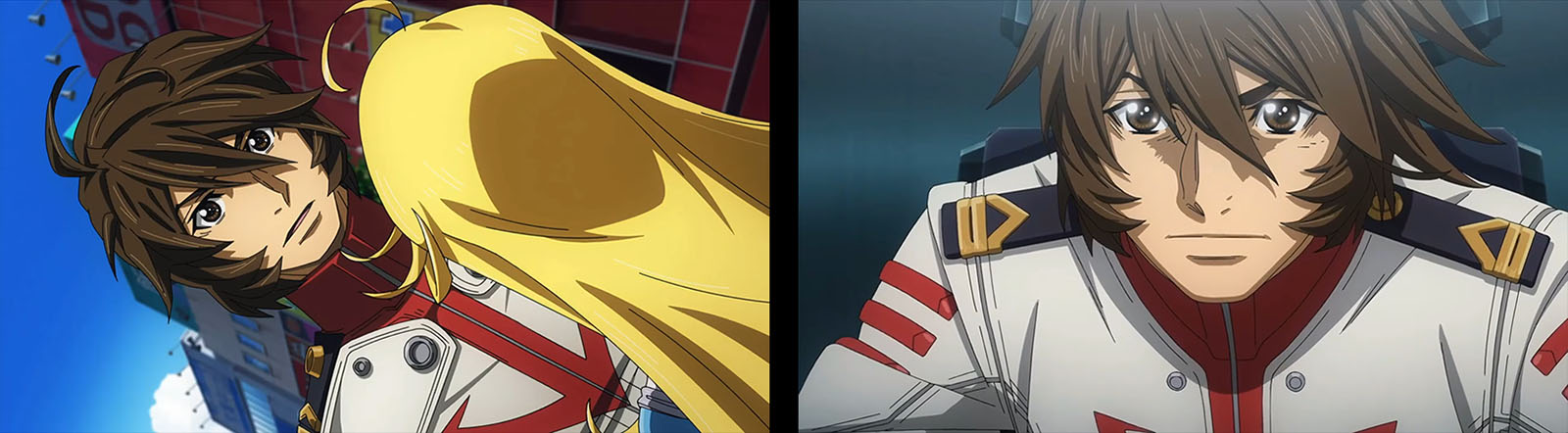
Voice actor Daisuke Ono has portrayed the protagonist, Susumu Kodai, for approximately 14 years, beginning with 2199. Throughout his voyages, Kodai has been forced to make a series of difficult choices. In 3199, he continues to struggle as he strives to overcome adversity.
“I’ve been on a journey with this work for a truly long time. With each new installment in the series, I always begin by grappling with the question, and the pressure, of ‘Why must we set out on this journey yet again?’ It’s been a path filled not only with joy, but also with the pain of parting from loved ones and enduring harsh hardships. in many ways, it has been a difficult road. But upon reaching the destination and bringing the journey to a close, I’m always filled with a profound sense that the experience was truly worth it. As we approach the final chapter of 3199, I feel that same conviction: ‘It was all worth it!’ I’m deeply grateful that I kept going and never gave up along the way.”
Susumu Kodai continues to advocate for human love. In an increasingly rationalized society, the “love” that Kodai proclaims may well serve as a testament to our “humanity”, something that cannot be controlled by any system. Having completed this long voyage, Ono has taken the universal message embedded within Space Battleship Yamato deeply to heart.
“If I were to speak from Susumu Kodai’s perspective, his honest feeling is, ‘I never want to go on another journey’. In other words, he simply wishes for peace. After all, Yamato setting sail always means that Earth and humanity are facing a crisis. And yet, the themes of ‘great harmony’ and ‘love’ that Yamato has consistently explored are universal. They resonate deeply with people, regardless of the era. That’s precisely why it’s Yamato Forever. I truly hope audiences will experience the soul and passion poured into 3199 on the big screen.”
This grand voyage, fueled by the passion and dedication of its cast and crew, has reached a significant milestone. The many questions posed in this Reiwa-era installment are sure to leave a lasting impression on all who watch it.