
A Destiny with Yamato That Never Crossed Paths
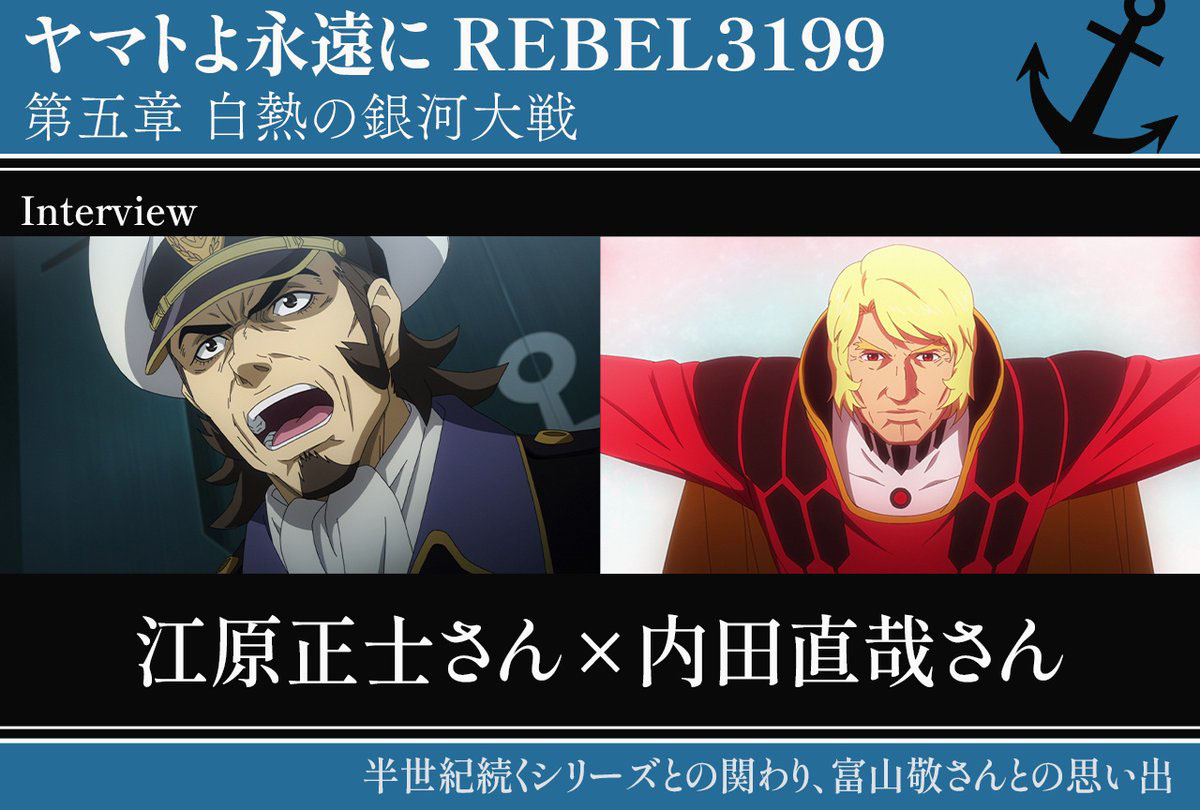
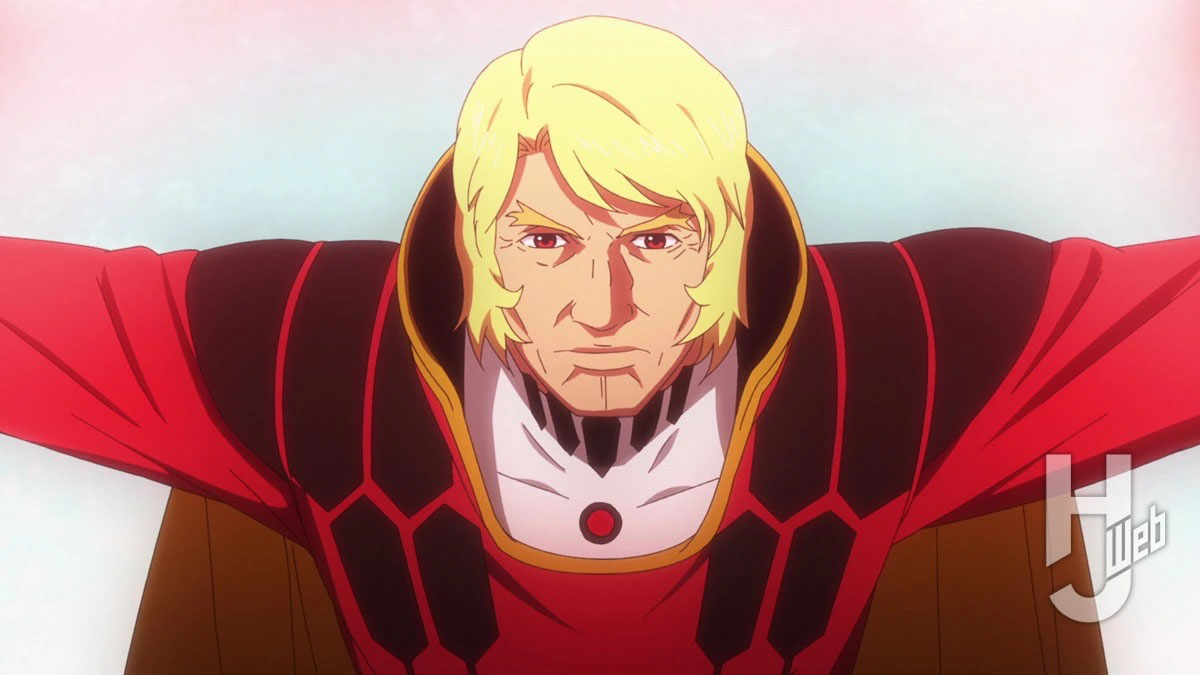
A Dialogue Between Masashi Ebara (Voice of Osamu Yamanami) and Naoya Uchida (Voice of Skaldart)
Interviewer: Hiroyuki Kawai
Published at Hobby Japan Web, March 7, 2026. See the original post here
With Chapter 5 currently screening and Chapter 6 scheduled for release in June, REBEL 3199 is accelerating toward its climax. To mark this occasion, we present a special dialogue between Masashi Ebara, who voices Osamu Yamanami, and Naoya Uchida, who voices Skaldart!
As veteran voice actors of the same generation, how do these two perceive the modern incarnation of Yamato, and how did they approach their respective roles? This interview delves into their individual philosophies on acting, insights only two professionals active in both original voice acting and dubbing fields could offer.
A Destiny with Yamato That Never Crossed Paths
Interviewer: Space Battleship Yamato began broadcasting in 1974, making this its 52nd year. Throughout your careers as actors, in what ways have you previously been involved with Yamato?
Uchida: To be honest, throughout my entire life, I’ve had almost no direct involvement with Yamato. However, I was surrounded by many people who were involved. For instance, when I was around twenty years old, Ryusei Nakao took me along to see Akira Kamiya [original voice of Kato] perform for the very first time. His scene partner happened to be Keiko Han. Keiko was a classmate of mine from university, and that was the extent of my connection: simply hearing her mention, right there on the spot, “I’m participating in Space Battleship Yamato.”
Aside from that, I suppose the only other notable instance was when I filled in for Isao Sasaki at an event held at the Budokan, singing “Space Battleship Yamato” and The Scarlet Scarf. I also frequently dropped by as a guest on the radio show hosted by Taichiro Hirokawa, who played the role of Mamoru Kodai. In any case, while I had plenty of opportunities to hear stories about Yamato, my impression at the time was that I always viewed it from a strictly objective standpoint.
Ebara: Personally, I was drawn more to the actual battleship Yamato, the real-life vessel. When I was in elementary school, a junior high friend gave me a history book that featured an anecdote from a surviving crew member of Yamato. He was an anti-aircraft gunner, and the account of that battle, even though it spanned only a few pages, left a lasting impression on me. In short, whenever the name Yamato came up, the first thing that sprang to mind was the actual battleship. The fact that Space Battleship Yamato was an anime series based on that ship, that was about as far as my knowledge went.
Like Naoya, I came from a background in Shingeki, modern theater heavily influenced by Western dramatic traditions, emphasizing realism and naturalistic expression. To be honest, the world of anime voice acting felt like a completely different universe to me back then. I did do dubbing work for Western films and Disney productions, but the demands of that work differ significantly from those of anime, so I wasn’t often called upon for anime roles specifically.
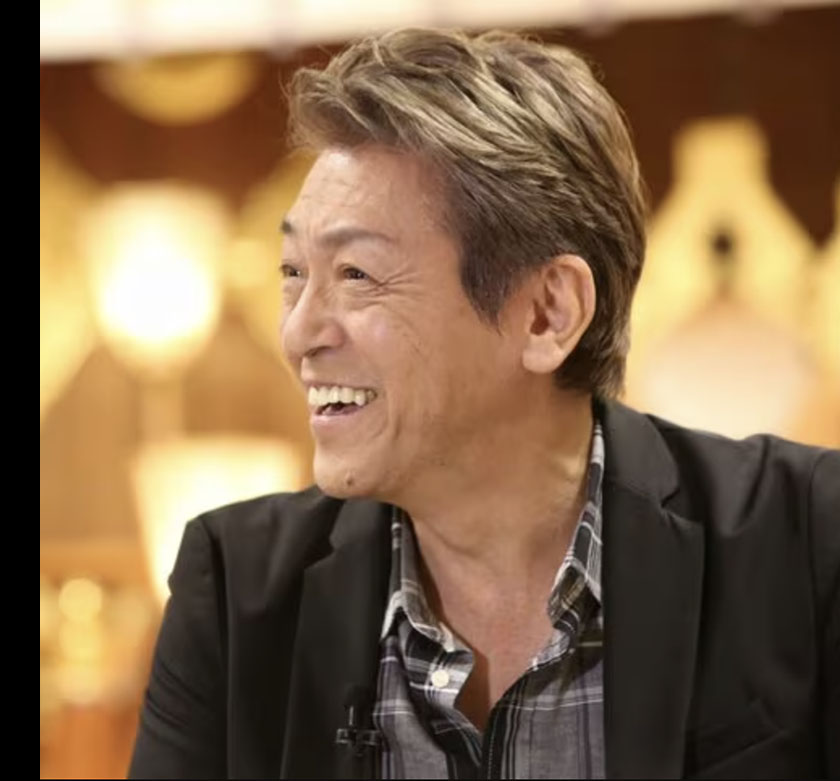
Naoya Uchida
Interviewer: When one mentions Space Battleship Yamato, the story of Susumu Kodai immediately comes to mind. And when one thinks of Kodai, the name Kei Tomiyama is inseparable from the role. What kind of impressions did the two of you have of Mr. Tomiyama?
Uchida: I only met him a handful of times. I don’t believe we ever worked together on the same project, even in the dubbing studio. What I do remember, though, is that he had a truly wonderful voice.
Ebara: In my case, we were practically inseparable. We worked together on the Bugs Bunny series, where Kei voiced Bugs Bunny and I voiced Daffy Duck. we enjoyed working together right up until shortly before he passed away. He was a truly earnest and wonderful senior colleague. He never put any pressure on his juniors, and I was able to rely on him quite a bit.
Uchida: It was a voice that only Kei Tomiyama could produce, wasn’t it? Not just in Yamato, but you could say it was a voice that perfectly suited that era. We likely won’t see actors like him emerge again. Looking back now, the lasting impression I have is that his voice was one destined to live on through the ages.
Interviewer: When portraying the characters you two were assigned, Skaldart and Yamanami, was there anything specific you kept in mind?
Uchida: I’ve had the privilege of appearing in works by Harutoshi Fukui before, such as Mobile Suit Gundam UC (as Otto Mitas), but this time he told me, “This role is the complete opposite. This time, you are a hideous creature. I want you to deliver a grand, resonant speech that deceives the masses.” He explained, “Don’t worry about syncing perfectly with the visuals. just perform as if you’re trying to captivate every single person in the audience.” And that was it, he gave me absolutely no further instructions after that! (Laughs)
Interviewer: Was there anything you focused on to bring out Skaldart’s unique appeal?
Uchida: Well, given the kind of character he is, I’d actually be tempted to ask you what you think Skaldart’s appeal is! (Laughs) Rather than receiving detailed, granular instructions, I find it much easier to work with straightforward directives, something like, “Do whatever you like,” or “Just focus on the speech.” If I’m told, “Do this, do that,” I tend to seize up, I get overwhelmed. But precisely because I was given that freedom, I was able to concentrate fully, and we got a perfect take on the very first try.
Interviewer: And what about Yamanami?
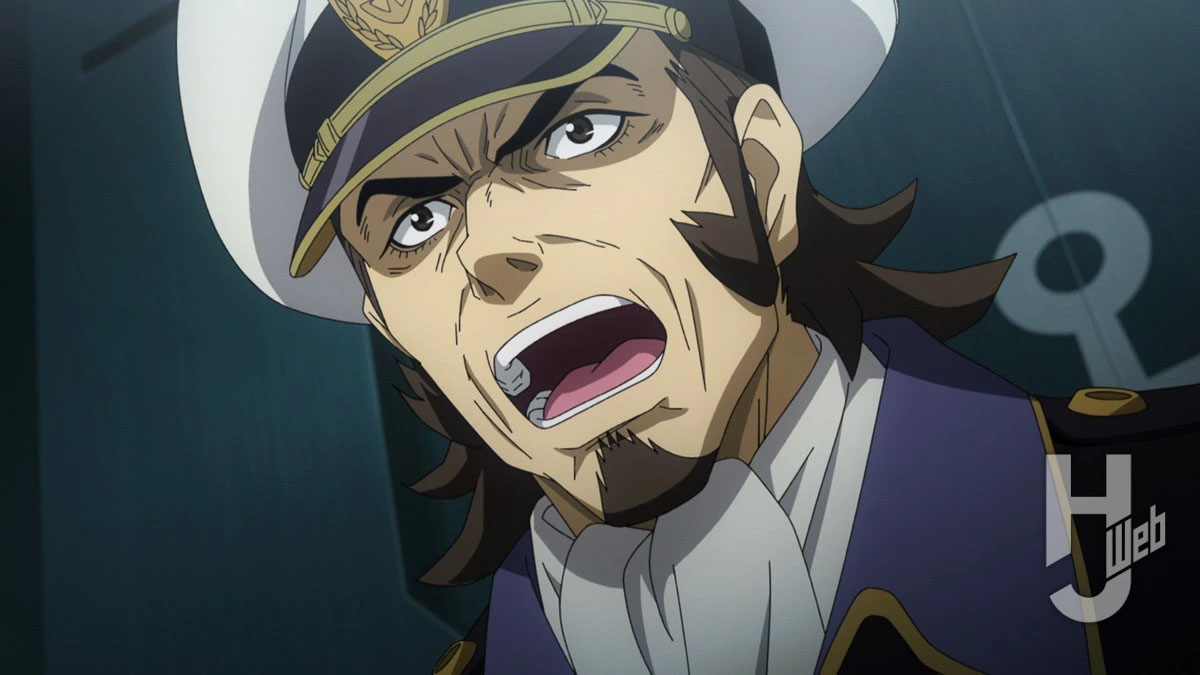
Ebara: Up until 3199, Yamanami was portrayed as a character with a somewhat cynical, detached attitude. But in 3199, I feel we began to see a more human side of him, someone who supports Kodai. It really feels as though he sees a reflection of his own younger self in Kodai. I think his mindset shifted toward a desire to nurture the younger generation, to help them grow while embracing their own aspirations. That said, Operation DAD is what really has me curious. Once we understand his relationship with Director Todo and his position within the operation, I think his approach to Kodai might change a bit too.
Interviewer: Knowing that background really makes it easier to appreciate the depth of Yamanami’s character, doesn’t it?
Ebara: Personally, I’d love to see some side stories depicting his time at the training academy. If they were to go that far, it would really broaden our perception of him. As it stands, simply being told, “Oh, he used to be an instructor,” doesn’t quite sink in, it doesn’t fully resonate on an emotional level. I really hope they decide to produce a story arc dedicated to his past.
An Era Where Realistic Acting Thrives in Yamato
Interviewer: Both of you have a long history of dubbing for various foreign films, lending your voices to performances by renowned actors. Yamato is a series that places a strong emphasis on realism. do you find any commonalities between that approach and the process of recording dialogue for this anime?
Uchida: First off, especially since the onset of the Covid-19 pandemic, I’ve noticed a significant increase in the volume of anime dubbing work available. I believe a major factor behind this is that directors who previously specialized in foreign film dubbing have now started taking on anime projects as well. Since they come from that background, they understand our style and think, “Ah, let’s bring in Naoya Uchida for this.” In terms of comparing foreign film dubbing with anime, my impression is that in recent years, anime has actually begun to offer a greater degree of creative freedom in terms of acting.
Ebara: These days, foreign film dubbing comes with a specific constraint: you have to strictly synchronize your dialogue with the on-screen subtitles. This is particularly true lately, as the methodology for translating foreign films has shifted. there are instances where the phrasing of the Japanese translation doesn’t quite mesh with the actual performance. In the past, we could take a more interpretive approach, adapting the translation to fit the natural flow of the Japanese language, which allowed us to incorporate a certain degree of dramatic embellishment into the script. Whether that was a good thing or a bad thing is a separate matter, but it’s fair to say that the current trend prioritizes strict accuracy above all else.
Uchida: Conversely, with anime, Japanese is the primary language. Even overseas, audiences tend to place greater value on our original Japanese vocal performances than on their own localized dubs. When we deliver the lines in Japanese, it really gets the local audience excited.
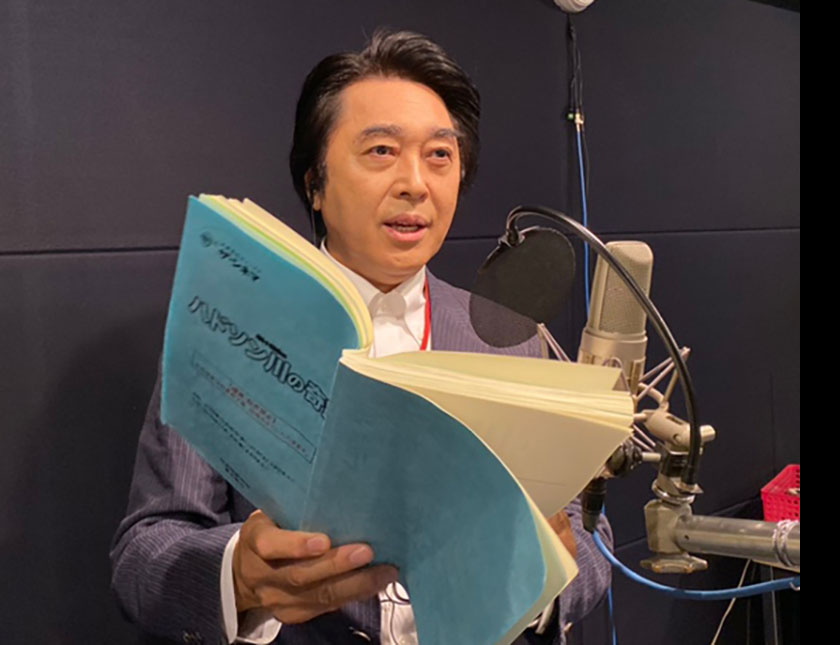
Masashi Ebara
Ebara: Especially with a weighty production like Yamato, I really get the sense that we’re gravitating toward the aesthetic of classic foreign films. If you try to perform while watching the visuals, you tend to become overly conscious of lip-syncing. On the other hand, there are moments where it actually works better to simply tell yourself, “This is live-action.” Ideally, a pre-scoring approach, where dialogue and music are recorded in advance, might allow us to capture that atmosphere even more effectively.
Interviewer: That kind of approach could potentially influence the younger cast members, couldn’t it?
Uchida: I wonder. It’s not really something we set out to teach them directly. Rather, it’s something they pick up on naturally. If they notice it and feel inspired to try it out themselves, then they’re free to incorporate it into their own work.
Ebara: Exactly. There are also characters for whom a more distinctly “anime-style” performance actually fits better. It really comes down to how you strike that balance, how you interpret and define the boundary between pure animation and realism. I think navigating that distinction is one of the most fascinating aspects of being an actor.
Interviewer: With 3199 now reaching its fifth chapter, the story is finally accelerating toward its climax. What are your overall impressions of the series itself?
Ebara: In the story, humanity is gradually being brought under the control of an AI known as Mother Dezarium. In the real world, too, we’re entering an era where AI is becoming an indispensable part of our daily lives. in many respects, we’re already being, for lack of a better word, “absorbed” by AI technology. It really makes you stop and think about what the future might hold for us.
Uchida: Although this is a remake, I’m still amazed by the visionary concepts found in the original work, which was created nearly half a century ago. The themes resonate perfectly with the modern era, nothing feels out of place or anachronistic. In fact, back when the original was released, the concepts felt so distant and far-fetched to us that we couldn’t quite grasp their reality. That was partly because we were right in the middle of Japan’s period of rapid economic growth. We were more interested in things that felt immediate and tangible. It was an era where we were eager to absorb anything and everything, a time brimming with dreams, so there were plenty of exciting opportunities right within our reach. Consequently, I suppose we simply didn’t tend to cast our gaze too far into the distant future.
Interviewer: Finally, do you have a message for the fans?
Uchida: First and foremost, I hope everyone enjoys this remake series, 3199. While the narrative is indeed based on the original film Be Forever Yamato, what I’d really like you to look out for, and what I think makes for the most enjoyable experience, is observing the differences in the characters you remember so fondly from the past, and seeing how they take center stage in this new adventure. That’s how I personally view it.
Ebara: When one mentions Mr. Fukui’s work, titles like Another Nation’s Aegis and Lorelei: The Witch of the Pacific Ocean immediately come to mind, a truly magnificent body of work. I joined this project with the hope and expectation that this new title will follow in that same distinguished tradition. Furthermore, for Yamato fans who have faithfully followed the series all these years, I hope Mr. Fukui will create a storyline that allows them to truly feel, “Ah, we’ve grown together.” Thank you for your support.