
Taking on the Challenge of Space Battleship Yamato, Rooted in Respect for the Original Work and Its Predecessors
by Mitsuru Anima
Published at Mantan Web, October 29, 2026. See the original post here
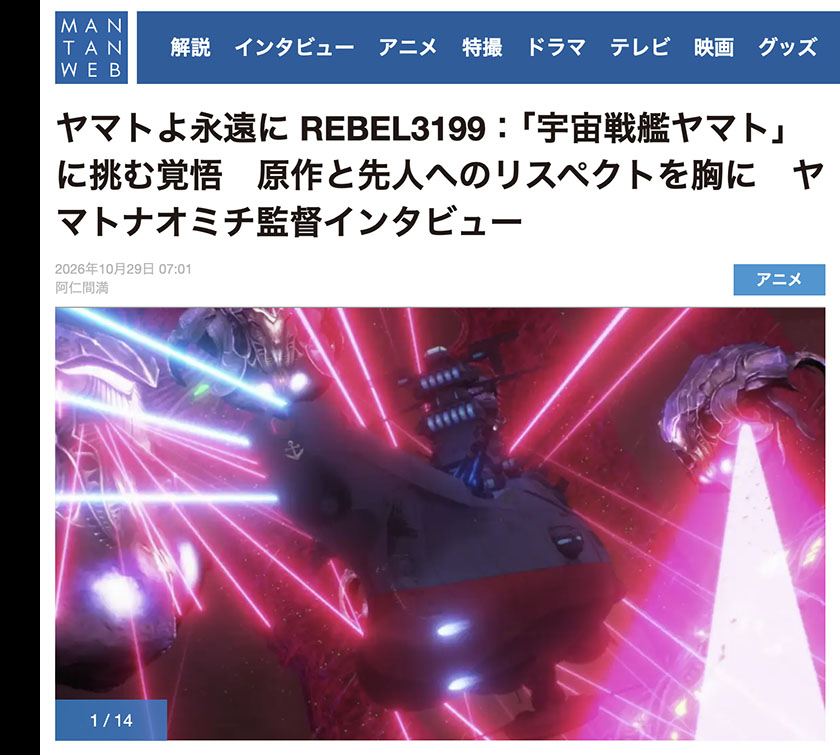
Having launched in July 2024, the Yamato 3199 project is now nearing the end of its long, two-year voyage. Space Battleship Yamato is, needless to say, an enduring masterpiece. Director Naomichi Yamato approached this monumental work with a profound sense of resolve. We spoke with him about his feelings toward Space Battleship Yamato.
A Wealth of Expression That Defies Standard Patterns
The Yamato remake series, which began in 2012, has previously produced Yamato 2199, Yamato 2202, and Yamato 2205. Director Naomichi Yamato joined the project starting with 3199. The original television anime first aired in 1974 and has remained beloved for over 50 years. 3199 is based on Be Forever Yamato and Yamato III, reimagined and reconstructed with a fresh perspective.
“Creating a work like Space Battleship Yamato requires a profound level of commitment. It is a title that carries immense weight. There are fans who have followed the series for many years, and the scale, as well as the standards expected, differs significantly from a typical anime. The challenge lies in maintaining a high level of quality. The current state of the anime industry and the environment surrounding production are, to put it mildly, far from comfortable. It’s only thanks to the support of so many staff members and everyone involved, and through our own desperate, hard-fought efforts, that we managed to bring this project to completion.”
Roughly two years after the July 2024 release of the first chapter, the director has successfully concluded a long voyage. It was a treacherous journey indeed.
“The actual production period for 3199 spanned three to four years, and it’s fair to say that we encountered far more challenges and difficulties than we anticipated. Above all, adapting Yamato for the screen is an exceptionally demanding task. The production environment and staff structure have evolved throughout the series. I’ve come to realize once again that the sheer amount of energy required, the ‘calories’ that must be poured into the creation of this work, is immense, even when compared to other projects. In short, it involves a great deal of expression that can’t be reduced to a set formula.”
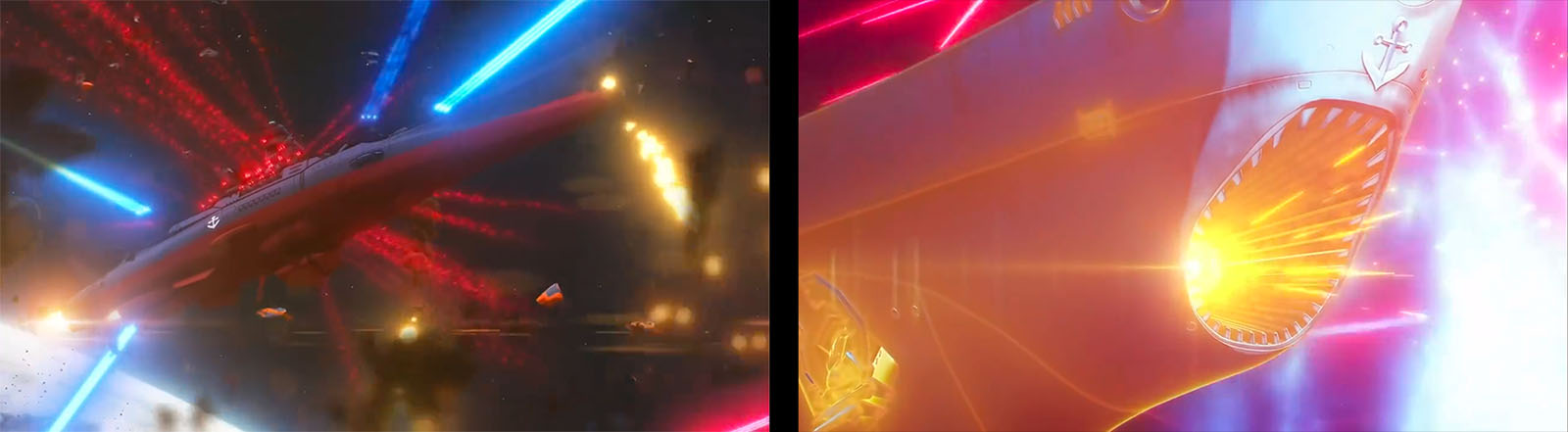
“It isn’t just a matter of staging a robot sword fight. For every single shot, we had to explore from scratch what kind of visual approach would actually work for that specific situation. In some types of production, once the core vision is established, you can adopt a ‘working backward’ approach, setting the goal and then leaving the specific execution, such as direction and animation, to the teams on the ground. Yamato, however, could not rely on any pre-existing format. We had to constantly invent new ways of expression, feeling our way forward as we built it, and that was the truly grueling part.”
Perhaps Space Battleship Yamato is a unique kind of work.
“To give an easy-to-understand example, there are no ‘signature moves’ (special finishing attacks) in the series. Even the firing of the Wave-Motion Gun serves as a crucial narrative device to drive the drama forward, it’s fundamentally different from the typical ‘special move’ seen in action-oriented works. While there are specific staging requirements and key beats that must be hit, the structure doesn’t allow for the reuse of the same footage or ‘stock shots’ (recycled animation sequences).”
“In animation production, stock footage is often used to improve efficiency, but in Yamato, with the exception of occasional flashbacks, there was almost no material that could simply be reused from previous episodes. Every single element for each individual shot had to be built from scratch, which drastically increased the level of production difficulty. It wasn’t just a matter of making the visuals look flashy. The work couldn’t be handled by simply fitting it into a pre-existing template. We were constantly faced with the challenge of how to capture organic textures and unique visual details that couldn’t be fully rendered through 3DCG alone.”
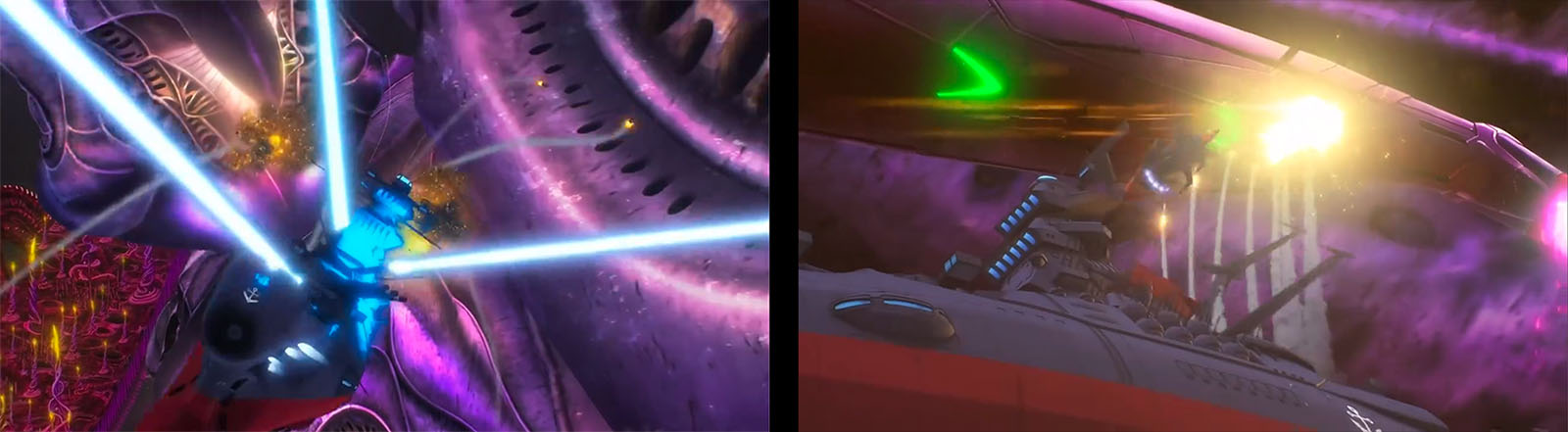
The challenges were immense, yet the team tackled them one by one, engaging in a process of constant trial and error.
“In some scenes, we employed a labor-intensive process: we took precise physical models, crafted by special-effects artist Takayuki Takeya, 3D-scanned them, and then converted them into hand-drawn-style assets to ensure they blended seamlessly with the backgrounds. While this approach allowed for a range of expression beyond standard background processing, it also placed an enormous burden on the production team. Perhaps it’s more accurate to say that this wasn’t just a matter of ‘attention to detail,’ but rather a necessity. Without it, we couldn’t have recreated the unique world and the visual authenticity that define Yamato.”
Animation is not a medium created by a director alone. The director of Yamato repeatedly expressed his gratitude toward his staff.
“We were fully aware that our demands on the staff were quite high, so we established a new workflow and asked the team on the ground to adapt to it. The sheer number of overlapping layers was immense, yet the staff managed to handle it all, ultimately bringing the visuals to life. This result was only possible because the CG, background, and compositing teams each overcame significant challenges and worked in close, sophisticated coordination.”
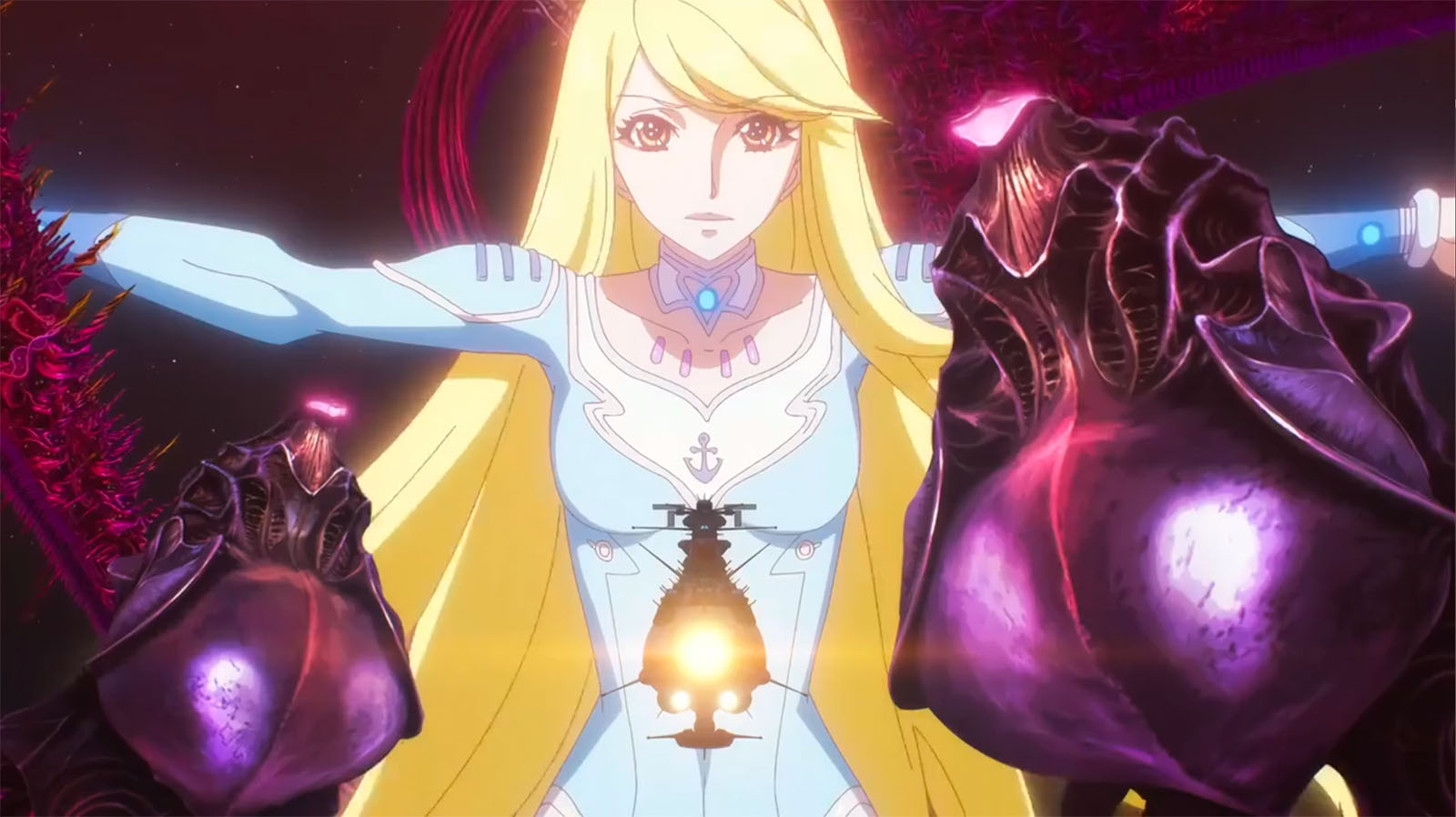
“The final product possesses a profound, substantial quality. We also went through countless rounds of adjustments and trial-and-error regarding the characters. The team brilliantly executed highly complex sequences, such as hair flowing while a character walks, accompanied by shifting expressions and movements, tasks that could easily have gone wrong. This is a testament to the hard work of every animator and staff member involved. I have nothing but gratitude for them.”
A Work That Captures the “Spirit of the Era”
Space Battleship Yamato, which first aired in 1974, dramatically expanded the audience for animation, a medium previously dismissed as mere “children’s fare” or “TV cartoons.” It is a legendary work that transformed the history of animation.
“The visuals created by the original production team were truly one-of-a-kind. To put it plainly, the unique expressive qualities and nuances in the analog animation of that era cannot be replicated today with our current technologies and production systems. Modern animation tends to prioritize logic and consistency, with spectacle and visual effects often added through post-production processing. In contrast, the original work captured elements that defy quantification or theoretical analysis, subtle imagery and nuances, brought to life by the overwhelming artistic skill and expressive power of the animators of that time.”
“For the last chapter, there were even scenes that took nearly a full year to complete. The act of hand-drawing a massive battleship and making it move fluidly is, by today’s production standards, an impossible undertaking, it’s something that commands genuine awe. It’s clear that, back then, the team poured an immense amount of passion into their work, despite having a very limited production schedule.”
With deep respect for the original work, the director approached 3199 with the utmost sincerity.
“The appeal of Yamato lies in the fact that it is not merely a ‘mecha’ anime or a simple ‘good versus evil’ hero story. It pulses with the ‘breath of the era’, reflecting the historical context of its time, as well as the philosophies, passions, and internal struggles of those who created it. In today’s world, despite the rise of social media, which allows anyone to easily share their thoughts, people often find themselves confined within somewhat stifling, insular personal worlds. Many young people, trapped within the narrow confines of the online space by rigid, extreme notions of justice or morality, end up carrying a heavy mental burden, leaving them unable to find the courage to move forward.”
“I believe that the dynamic depicted in the original Yamato, where individuals with diverse values clash, debate, and ultimately move forward together as a group, is especially meaningful in our current age. The characters in 3199 are by no means one-dimensional. By moving beyond a simple ‘friend or foe’ dichotomy and creating a human drama filled with varied perspectives and personal convictions, we hope this work might offer young, contemporary audiences a small measure of support and courage and the strength to keep moving forward.”
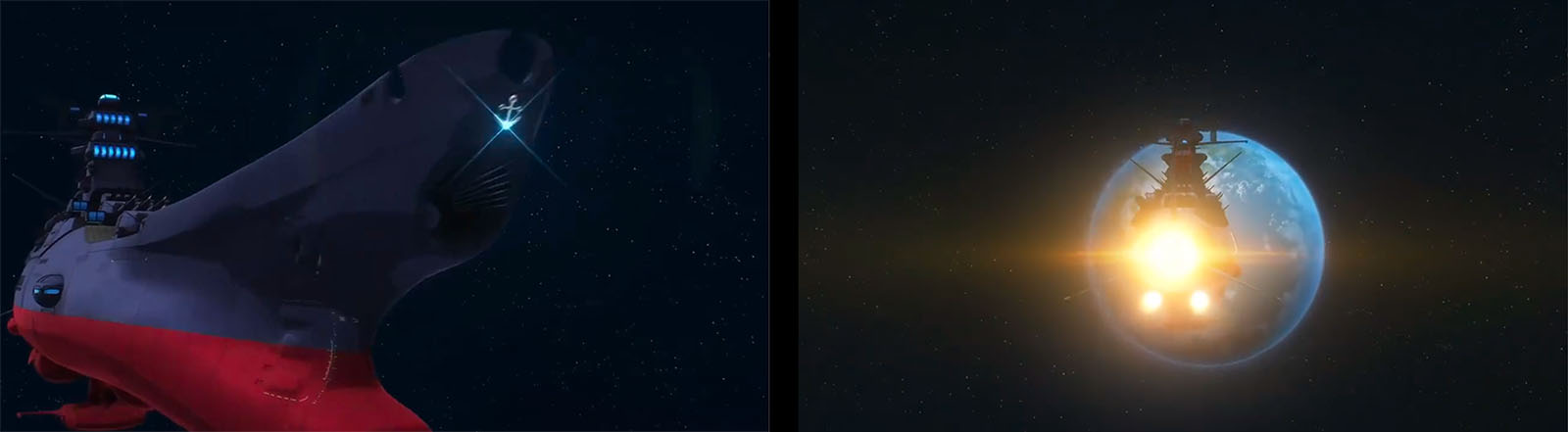
Passing on the Baton
Harutoshi Fukui, who served as series composer and screenwriter for 2202 and 2205, took on the role of general director for 3199, while also continuing his duties as series composer and screenwriter. Director Yamato worked in close partnership with General Director Fukui to bring this project to life.
“For 3199, General Director Fukui was personally present for almost every stage of the production, from the initial directorial meetings and the development of background art and color palettes, all the way through to sound design and editing. It was incredibly significant that he engaged directly with the staff, articulating the importance and intent behind each scene, while I proposed the specific technical approaches and solutions to realize them. We were truly aligned, working toward the same vision. I believe this created an environment where the creators and staff could clearly understand the value of their own work and share in that common purpose.”
Director Yamato approached the work with a profound sense of resolve, finally bringing this long voyage to its conclusion. The pressure of shouldering the monumental mission to deliver a new Space Battleship Yamato for the Reiwa era must have been immense. Finally, he shared his thoughts and the sentiments he poured into 3199.
“In animation, the role of a director is not simply about throwing one’s weight around on set or critiquing the work of others. It’s a position that requires one to uphold the core vision of the project while asking the staff to shoulder a significant workload. For this reason, a director must remain constantly mindful of the staff’s mindset and the challenges they face, ensuring an environment where everyone is aligned and moving in the same direction. That sense of intense responsibility never wavered, from start to finish.”
“As for me, I left my hometown decades ago to enter this industry. I’ve navigated countless failures and hardships, and I’ve reached this point only because of the support I received from my seniors and so many other staff members. If I’ve managed to take the baton passed down through the magnificent works created by those who came before me, and deliver it to the next generation and to all our viewers, then there could be no greater joy. While holding the deepest respect for the long-time fans who have cherished Yamato for over 50 years, I sincerely hope that this work will also leave a lasting impression on the younger generation encountering Yamato for the very first time.”