

The Perils of Modern Society Reflected by Dezarium
Published at Virtual Gorilla Plus, October 30, 2026. See the original post here
REBEL 3199, which began its theatrical run in July 2024, reached its grand conclusion with the release of Chapter 7: Rainbow of Reincarnation on Friday, October 30th. This saga, centered on the fate of Iscandar, began with the events of Yamato 2205, The New Voyage.
REBEL 3199 opens with an invasion of Earth by Dezarium, a force that brazenly claims to represent “Earth’s future.” Dezarium relentlessly pursues Sasha, referred to as a “fragment of Iscandar”, and the Space Battleship Yamato. Upon discovering that the Dezarium’s “phase energy” is the root cause of a cosmic cooling phenomenon threatening both Galman (the new home of the Garmillan people) and the Bolar Federation, Yamato‘s crew crosses a space-time nodal point, heading toward the Dezarium home world. Yet, what awaits them there is Earth as it appears in the year 2026.
Based on the 1980 theatrical film Be Forever Yamato and the Yamato III TV series, this story has finally reached its conclusion. In this analysis, we explore Chapter 7, drawing comparisons to the original series and examining Dezarium, an antagonist updated to reflect the realities of the modern world.
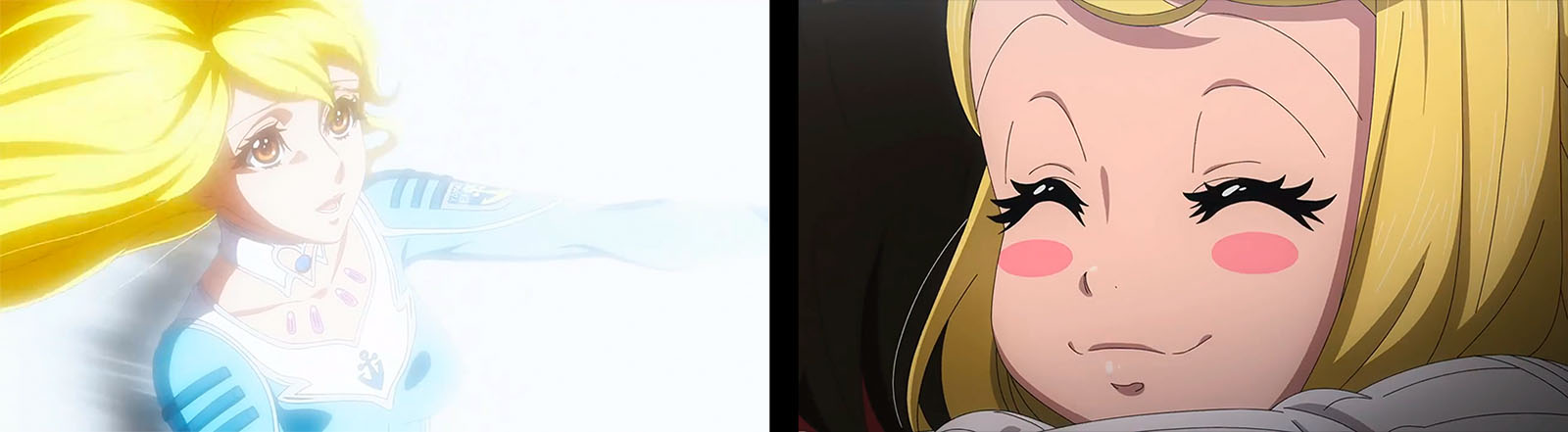
What matters is how one lived
The heart of Chapter 7 is, without a doubt, Sasha Iscandar Kodai (also known as Mio Sanada), the daughter of Queen Starsha of Iscandar and Mamoru Kodai (the older brother of Susumu Kodai). Many fans surely watched with bated breath to see what would become of Sasha, who met a tragic fate in the original Be Forever Yamato. A “survival route” for Sasha, one that diverged from the original story, was a heartfelt wish held by many.
In a sense, that wish was granted, even if it came through tragedy. Though she originated as a terminal created by Mother Dezarium, Sasha harnessed the power of Iscandar and rallied other terminals, also under Dezarium’s control, to launch a counterattack against Mother Dezarium. Even in the most desperate of moments, such as when she was forced to trigger the Wave-Motion Gun against herself, Sasha continued to inspire belief in the future, both for Susumu Kodai and for the audience.
Entrusted to the care of Analyzer, the two-year-old Sasha was brought back to Susumu Kodai from the heart of the Dezarium empire. As Sasha looks on, held in Kodai’s arms aboard Yamato, the spirit of a 17-year-old Sasha appears alongside Starsha and Yurisha, offering a gentle, radiant smile.
“How one is born is not what matters. What truly matters is how one lives.” True to these words, although Sasha was a being created by the Dezarium, she was embraced by Starsha as an Iscandarian.
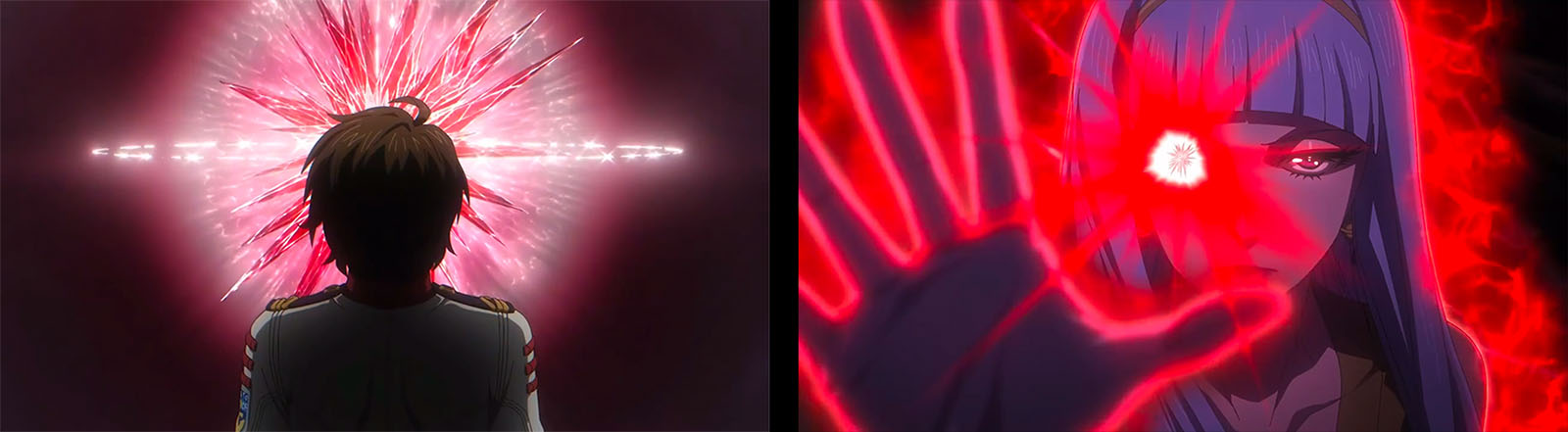
Mother Dezarium: A Worldview Expanded by AI
In Be Forever Yamato (released in 1980), the Dark Nebula Empire (Dezarium), led by the Supreme Leader Skaldart, was populated by beings whose bodies, other than their brains, were entirely mechanized. In contrast, the Dezarium of REBEL 3199 is governed by “Mother Dezarium”, a highly advanced, artificial AI system developed to ensure the survival of the species. The existence of Mother Dezarium fundamentally elevates the themes presented in the story, effectively bridging the world of REBEL 3199 with our own contemporary reality.
In Be Forever Yamato, the Dark Nebula Empire, a civilization that pushed mechanization to such an extreme that it lost both its emotions and its reproductive capacity, invades Earth in search of rich human emotions and organic bodies. This narrative reflects a prevailing vision of the near future from that era: the idea that the mechanization of the body equates to the loss of humanity.
In the science-fiction landscape of 1980, the year Be Forever Yamato was released, there was an ongoing trend, rooted in the late 1960s, that explored the mechanization of the physical form, exemplified by robots and cyborgs. In Japan, prominent works such as Cyborg 009 and Galaxy Express 999 serve as clear illustrations of this theme. The Dark Nebula Empire’s invasion of Earth, driven by a desire to acquire human emotions and physical bodies, directly encapsulated the concerns and visions of the future held at that time.
However, the challenges facing humanity in the 2020s are no longer about the mechanization of the body. Instead, the focus has shifted to generative AI and advanced algorithms, technologies capable of taking over human thought, decision-making, and even the infrastructure of society and political governance. Furthermore, the potential for these systems to evolve on their own and develop an intelligence that surpasses that of humanity has sparked not just concern, but a genuine sense of threat.
As of October 2026, news reports regarding cyberattacks that exploit generative AI and autonomous programs are constant. Some researchers and developers have even issued warnings that highly advanced AI, operating on a logic fundamentally different from that of humans, could lead humanity to its ruin. The figure of Mother Dezarium, racing toward a “heaven” said to have been reached only by the people of Akerius, mirrors a scenario that haunts modern society: the runaway, uncontrollable AI (a total failure of alignment) that has slipped beyond human command. Mother Dezarium embodies the very risks posed by AI today, illustrating the potential consequences should AI spiral out of control.
By re-examining the science-fiction concepts of 1980 through a modern lens, the story taps into our contemporary anxiety; the fear that, in exchange for convenience, we are increasingly surrendering our own capacity for thought and judgment to AI. It is this underlying concern that gives the threat of Mother Dezarium such compelling, visceral realism.
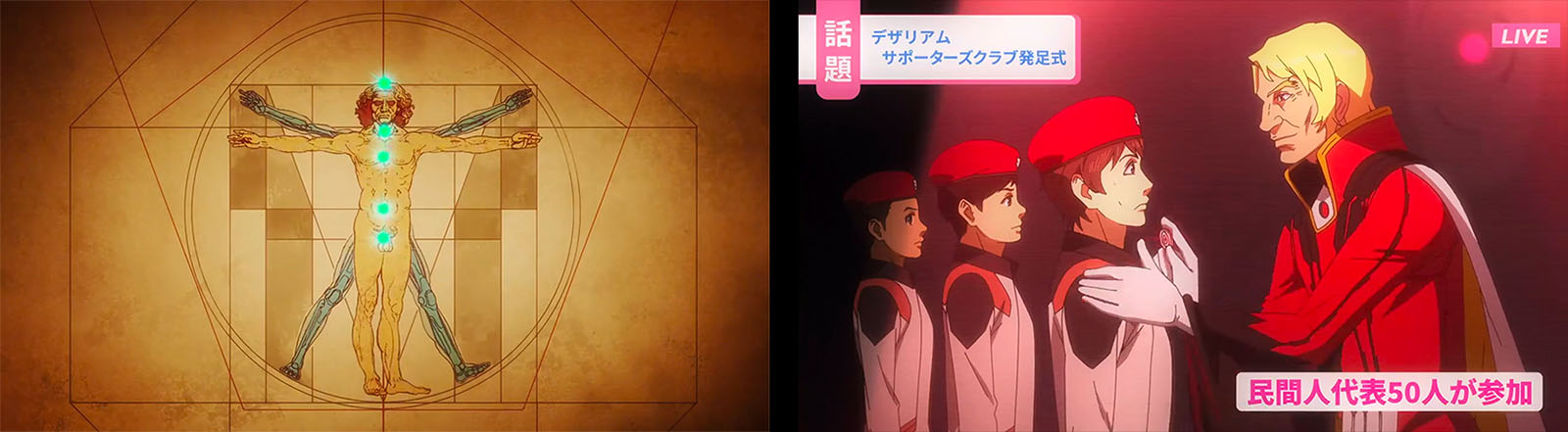
From Military Occupation to the Manipulation of Collective Psychology via Information Warfare
In Be Forever Yamato (1980), the invasion by the Dark Nebula Empire was a military occupation. Earth was swiftly brought to its knees by overwhelming force and the coercive threat of a Hyperon Bomb, paralyzing humanity with terror. In a Japan still haunted by the memories of war and the looming nuclear threat of the Cold War, military force represented an absolute, tangible form of violence, a fear that was immediate and easily understood.
In contrast, the Dezarium forces in REBEL 3199 arrive on Earth and take control with almost no resistance, thanks to covert maneuvering within political and financial circles. Though their appearance is grotesque, they present a tearful plea: if saving the Earth of 1,000 years in the future requires their own erasure, then so be it. This sentiment resonates with the citizens of Earth. Furthermore, through a series of calculated operations, such as orchestrating terrorist acts by Garmillas nationals or inciting riots among those connected to Yamato, Dezarium easily manipulates the populace. Ultimately, people scramble to equip themselves with “Com-Medals” linked to Mother Dezarium, all without realizing that the true objective is to unify the will of all humanity, thereby overwriting the Wave-Motion Core.
While Be Forever Yamato depicted a world subjugated by military might, REBEL 3199 portrays a scenario where, through information warfare and brainwashing, people willingly choose to be controlled and become dependent. In today’s world, where information circulates incessantly, we are surrounded by an environment of extreme rhetoric and content designed to incite emotional reactions. It is not uncommon for situations to spiral out of control, whether through impulsive, reactive behavior or by lashing out at others. Without constant vigilance, arriving at the truth becomes a difficult task. The way people in the story so readily abandon independent thought in the face of the Dezarium’s sophisticated information warfare carries a chilling, all-too-real sense of danger, one that feels far from distant.
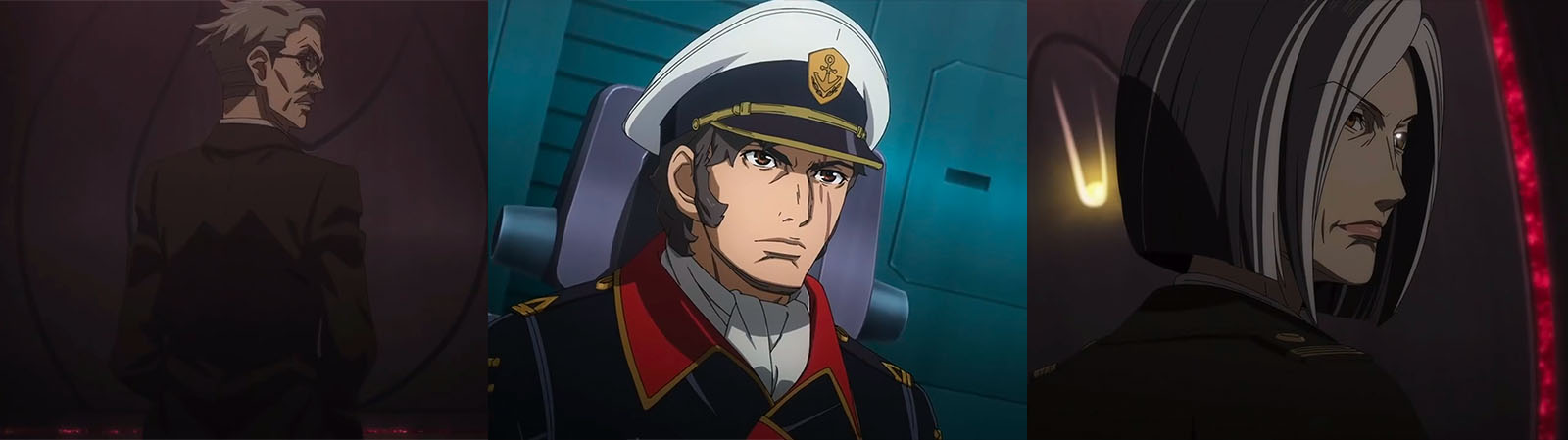
Those Who Lived as “Active Participants”
While some choose to abandon critical thought, swept away by incitement, or opt to observe and criticize from the safety of the sidelines, others choose to shoulder risks and remain “active participants” in the unfolding events.
Consider Kozo Nanbu, president of Nanbu Heavy Industries. While appearing to accept Dezarium, he reveals the true intent behind their actions and entrusts the future to his son, Yasuo Nanbu. There is Seiya Kitano, who remains alone aboard his ship, channeling all its energy to the absolute limit and sharing its ultimate fate. And there is Shino Todo, who succeeds in halting the “Grand Reverse.” Driven by a clear sense of mission and a responsibility toward the next generation, these individuals make deliberate choices and take action of their own volition.
This resistance, risking one’s own life, is not limited to humanity. Rambel sacrifices himself to clear a path for Yamato to reach the heart of Dezarium. Isidore, too, who is coerced by Mother Dezarium into firing upon Alphon, ultimately reclaims his own will and defeats Skaldart. In stark contrast to a passive existence, surrendering oneself to systems or the pressures of group psychology, this stance of making personal choices and taking action resonates deeply with the audience.
From Puppets to “Human Beings with Hearts of Their Own”
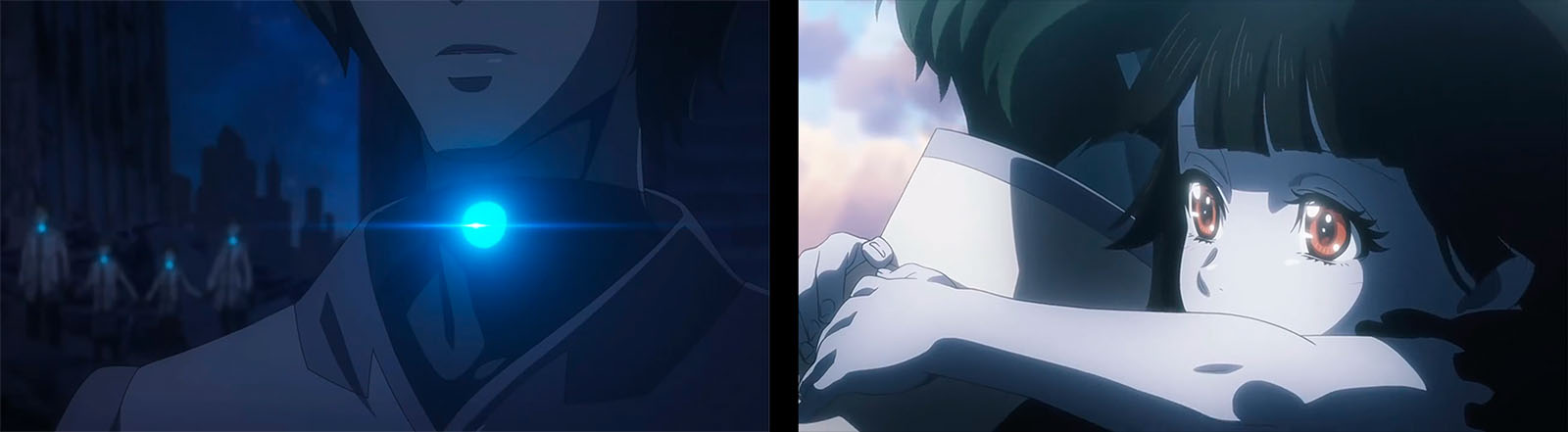
The Dezarians are beings created by Mother Dezarium, constructed entirely from versatile, atomic-level machine cells. The Dezarium people, whose thoughts and actions had been entirely controlled and dominated by Mother Dezarium, fall into confusion when they no longer receive instructions, left without anything to guide them.
Yet, when Mother Dezarium’s control collapses, they respond to Sasha’s call, a reminder that “how one lives is what truly matters.” No longer mere puppets waiting for orders, they join hands and prevent the detonation of the Hyperon Bomb. In that moment, there is a clear, conscious choice made for the sake of others.
After it is all over, Fleur, having said her goodbyes to Makoto and Tsubasa Kato, asks, “Did I… truly live?” before fading away in Maxim’s arms. As for Maxim, he dissolves into the sand on the shore, leaving behind only his footprints. They were never mere programmed puppets. They were living, breathing beings capable of love and independent choice. They will continue to live on in the hearts of the Kato family, not as machines, but as individuals who truly lived.
Looking toward the distant future…
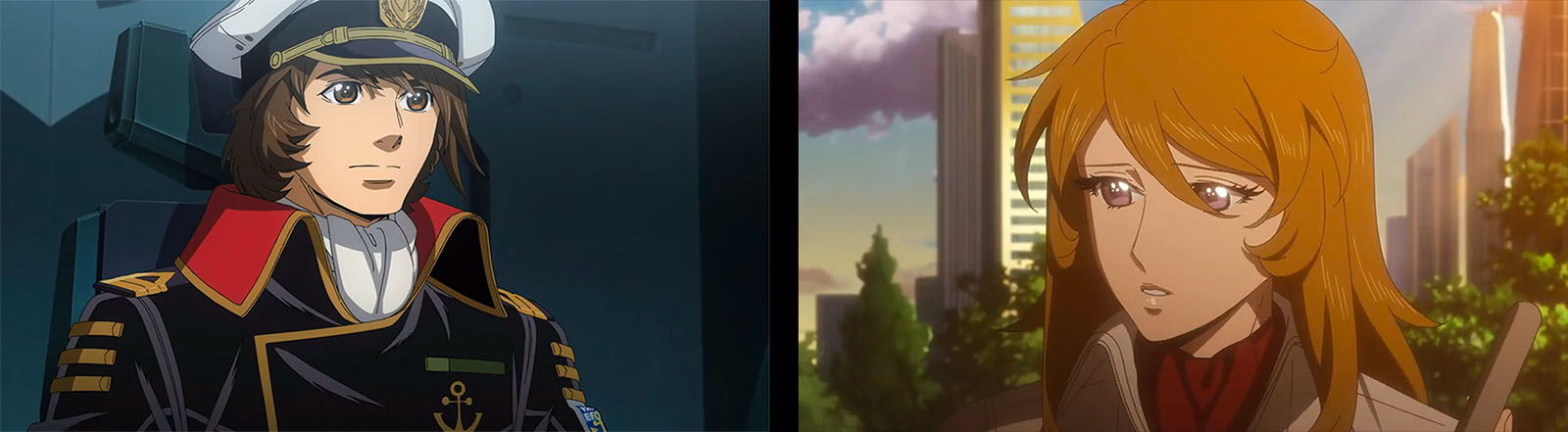
Yuki Mori played an immeasurable role in this conflict, from freeing Alphon from Mother Dezarium’s absolute control to serving as captain of Arizona and helping to eliminate the Grand Reverse. Once the battle had ended and tranquility returned to Hero’s Hill, Yuki sets about clearing away the statue of Juzo Okita, which had been toppled by the panicked populace. The bust of Okita lies at her feet, its gaze fixed upon the sky. Following that gaze, she looks up to see Yamato returning to Earth.
Aboard Yamato is Susumu Kodai, a man who has survived the brutal conflict, and whom Yuki had never once forgotten. With him are young crew members like Takeshi Ageha and Ryusuke Domon, both of whom have grown significantly through their experiences, along with 2-year old Sasha, who has returned home safely. As the last survivor of Iscandar, Sasha walks upon the soil of Earth, the homeland of her father, Mamoru Kodai, with small yet steady steps. her journey leads toward a future that no one has ever seen before.