
Thoughts after watching Episode 24
See the original blog post here
This was the episode that silenced the adults who had dismissed anime as mere “childish fantasy.” That is what I believe.
You can find plot summaries aplenty on other websites. But here, drawing on the lessons etched into my body during 32 years of working in the high-pressure gas industry, I want to explore why this story continues to be discussed even after half a century. If, upon finishing this article, even a single thought lingers in your mind regarding “the difference between fighting and loving,” then that is enough for me.
Recalling a landmark of Showa-era anime, Space Battleship Yamato Episode 24, during a Sapporo summer
It feels like the moment an electric fan’s oscillation suddenly stops. There are summer afternoons that are strangely quiet. In moments like those, my hands pause. Sitting in front of the screen, I find myself thinking back to 1974.
The series began airing in October, and Episode 24 was broadcast the following year, on March 16, 1975. That was back in early spring, when I was an elementary school student glued to the grainy picture of a black-and-white TV. Space Battleship Yamato, a monumental work that changed the history of Japanese anime.
Today, I want to take a deep dive into Episode 24, still hailed as one of the series’ absolute best. It was clearly different from simple sci-fi action stories where good triumphs over evil. The horrors of war, the preciousness of life; back then, anime aimed at children didn’t shy away from shouldering such heavy themes.
It was overwhelming. And by “overwhelming,” I don’t mean it in a critical sense. I mean that when faced with something of that magnitude, my child-self simply didn’t have the words to fully process it. I’m going to write about the plot and the memorable lines, incorporating the perspective I’ve gained from years of hands-on experience in the industry.
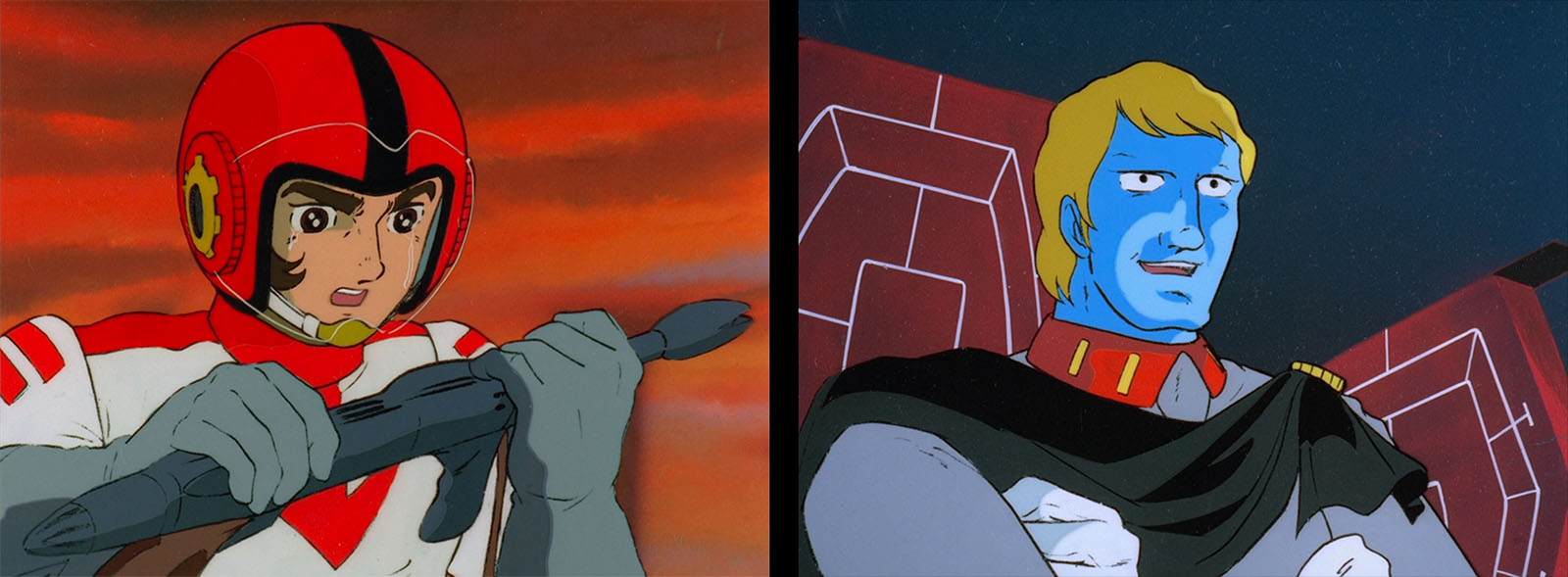
Why is it called a “legendary episode”? Deciphering Susumu Kodai’s inner conflict and Dessler’s madness
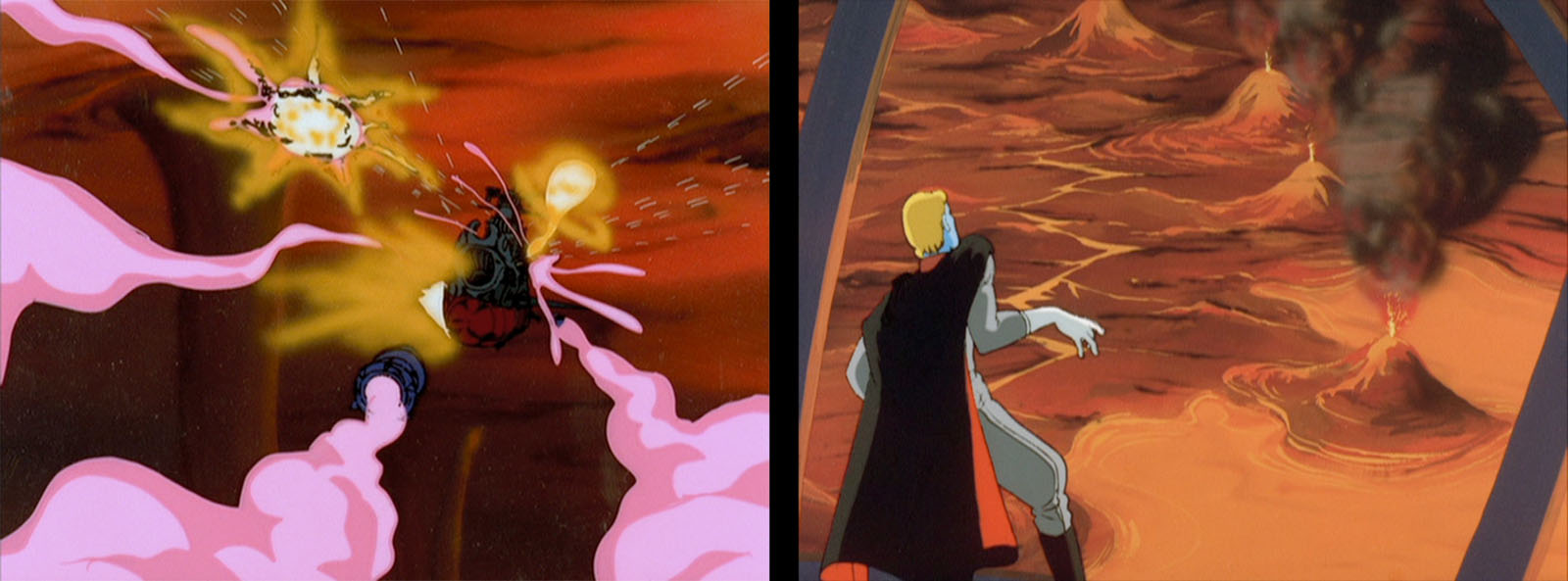
The final path to coexistence, extinguished by Leader Dessler’s gunshot
What makes this episode unforgettable is the behavior of Leader Dessler. There is a scene where, despite receiving reports of a shifting battle situation, he dismisses a drink offered by an aide, snapping, “Don’t disturb my fun.”
The sensibility of a dictator who calls war a “fun time” didn’t make me laugh. It sent a chill down my spine. Things become even more terrifying once the home planet faces the threat of collapse due to Yamato‘s counterattack. Dessler orders every building in the “Ceiling City” to be converted into a missile and fired down upon Yamato.
He chooses to keep fighting, even if it means turning his own country, and the cities where his own people live, entirely into weapons. The very idea of firing the buildings themselves gave me the chills. I, who have dealt with “pressure vessels” in the field in a context quite different from handling weaponry.
That’s when Deputy Leader Hyss steps in.
“It’s not too late! Make peace with Yamato, choose the path of coexistence with Earth!” Hyss pleads, only for Dessler to silence him with a single bullet. In that moment, the possibility of dialogue vanishes with the sound of a dictator’s gunshot. This is how the script demonstrates the sheer folly of war.
Despite the beautiful animation, it leaves a deeply dark aftertaste. That is how it should be. In fact, that is exactly right.
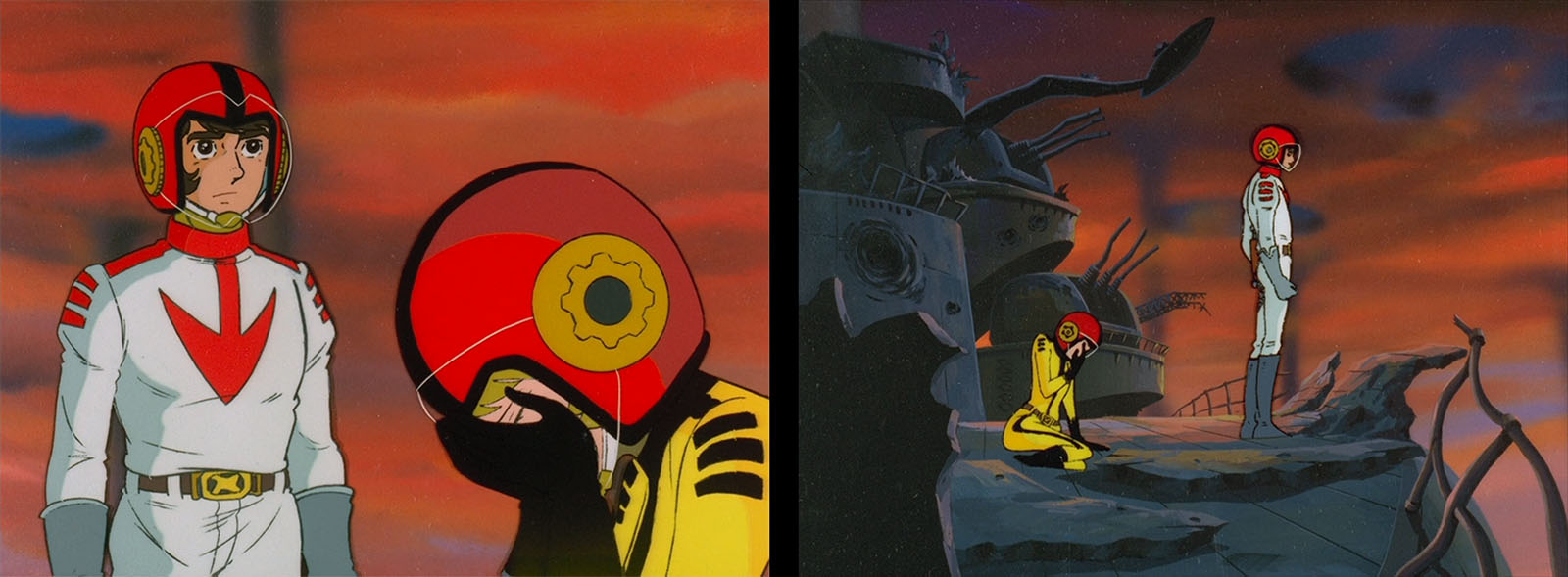
“Where there are winners, there are losers”, The futility of war laid bare by Susumu Kodai’s question
After a fierce, desperate battle, the home planet of Gamilas is devastated. Yamato has won. Yet, spread out beneath the crew’s eyes lay a wretched wasteland swallowed by magma. Nothing moves. There is not even a sound.
Susumu Kodai and Yuki Mori cannot bring themselves to rejoice. And for the first time, Kodai poses a quiet question to himself and his comrades, people raised to believe only in winning.
At school and in society, they had constantly been told to win the competition. But where there is a winner, there is inevitably a loser. Do the defeated have no right to happiness? The planet Gamilas, too, was a dying world nearing the end of its life. They had no choice but to invade Earth in order to survive.
There is no such thing as absolute evil. This was simply a clash where each side staked its very survival. It is a question that strikes a chord with anyone thrust into a competitive society. It hardly seems like a line from an anime aimed at children. Yet, within that single question lies the entire hollowness of victory.
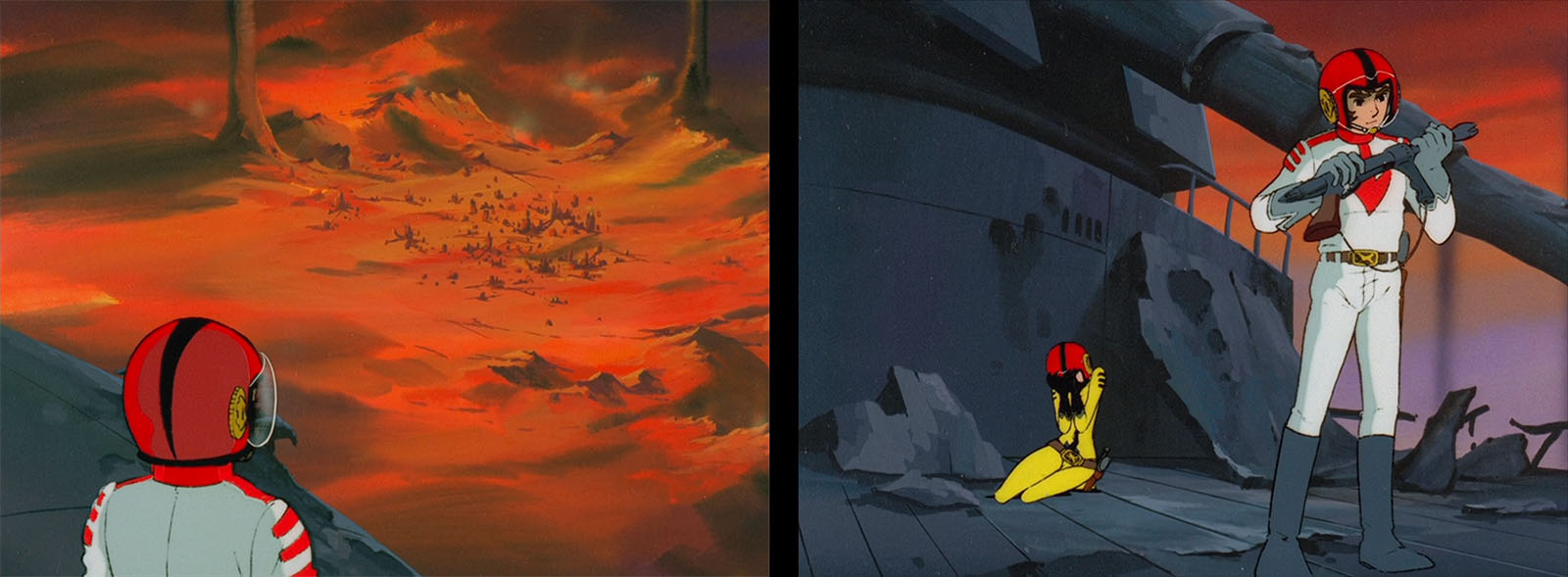
The iconic line: “We should have loved one another.” A plea for peace and a prayer, wrung from the heart of Susumu Kodai.
Gazing at the ruins, Kodai continues.
“People of Earth and people of Gamilas alike, there is no difference in the desire to live happily. And yet, we fought…”
And then came a line that would go down in anime history.
“What we should have done wasn’t to fight. We should have loved one another.”
When I first heard those words as a child, I didn’t understand their meaning. Yet, something deep within my chest stirred. Now that I’m older, I feel like I finally grasp it. That brief line encapsulates everything: the bitter regret over a tragic reality where fighting was the only way to survive, and the deep contrition for having taken the lives of others.
It is the summer of 2026, more than half a century since the show first aired, and as I write this, I find myself turning those words over in my mind again and again. Why? I can’t quite explain it myself. I simply feel that the weight carried by those words is something an AI cannot capture in writing.
Detailed Synopsis: From the Sea of Acid to the Collapse of Gamilas
Countdown to Despair, Yamato Trapped in a Sea of Acid
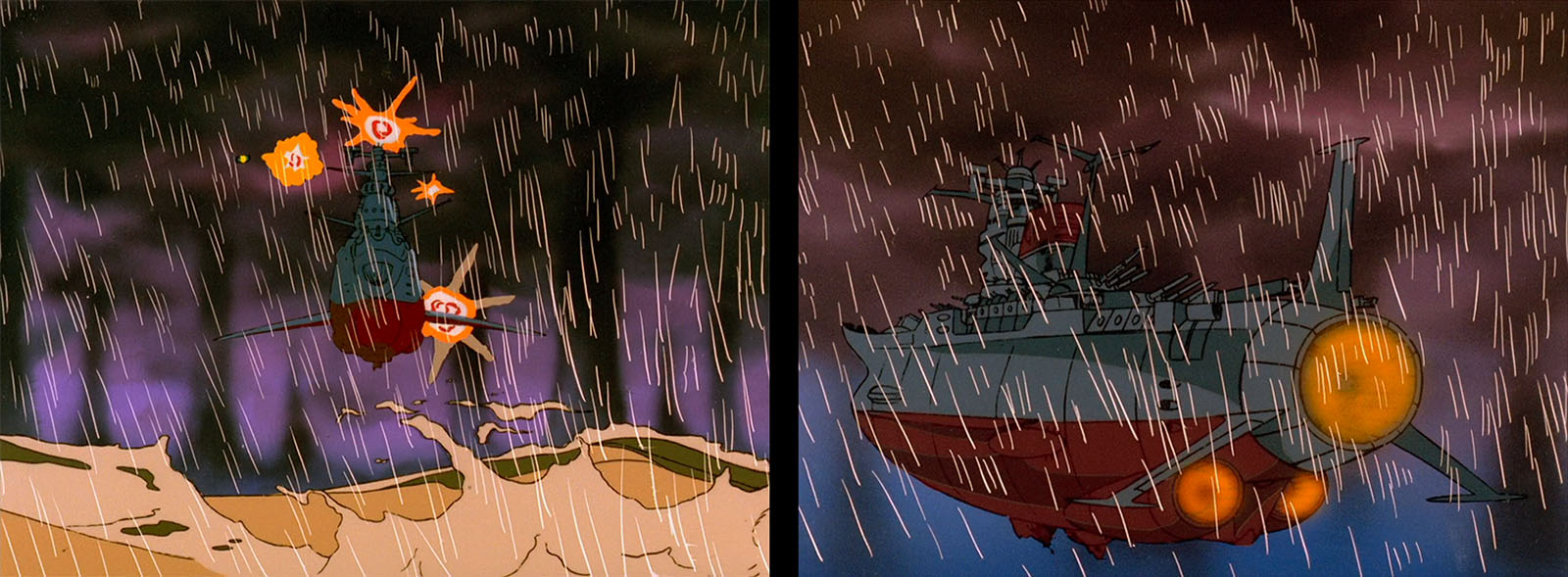
The Space Battleship Yamato, the first vessel in human history to break the light-speed barrier, set out into the cosmic ocean on a critical mission to secure the Cosmo Cleaner. After enduring countless precious sacrifices, Iscandar was finally within sight. However, just moments before arriving at this planet of hope, Yamato faces the very situation it feared most. They have been ensnared by the cunning traps of their arch-enemy and dragged right into the heart of enemy territory, the home planet of Gamilas.
There is a hellish abyss deep beneath the surface. Gamilas is an ancient planet, already nearing the end of its life. Eons of erosion have hollowed out the interior of its crust, creating vast caverns, while severe sulfurization eats away at the entire planet. Consequently, the underground spaces are filled with a stagnant, sea-like expanse of toxic sulfuric lava, a deadly “sea of strong acid” that ruthlessly corrodes and melts everything it touches.
The Melting Hull and Dessler Breaking His Glass
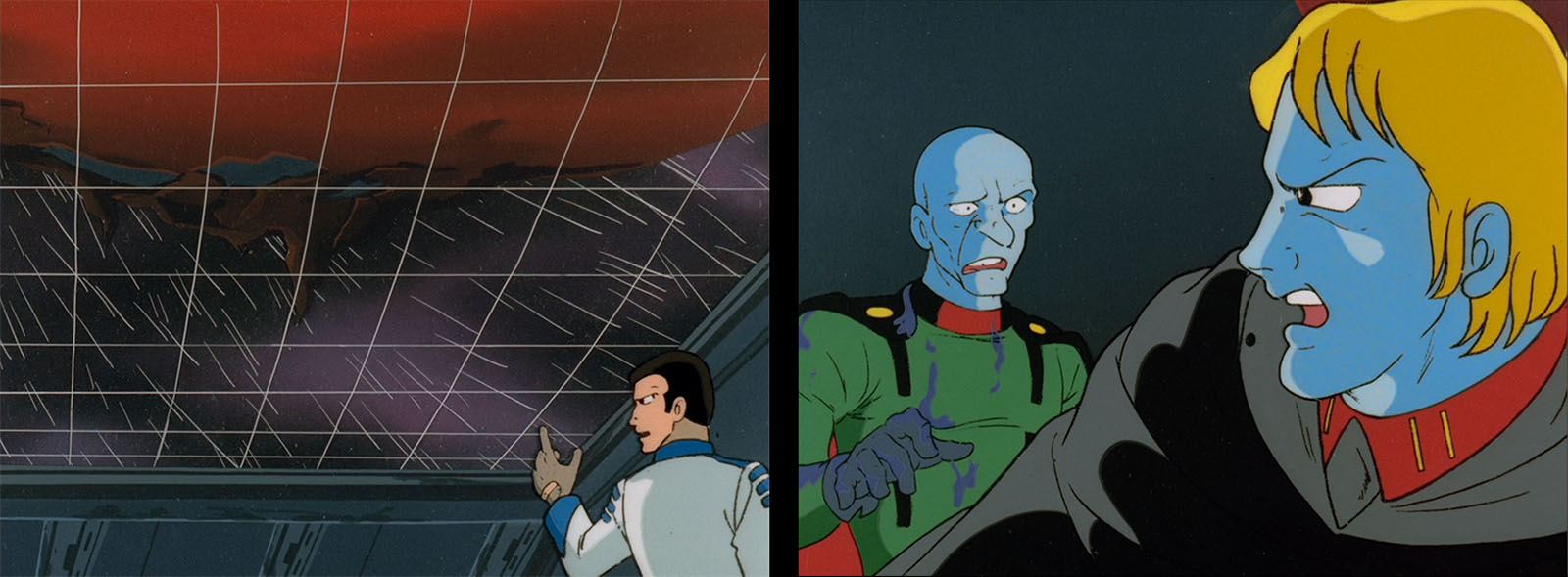
A desperate report echoes through Yamato: “The Third Bridge has melted off!”
The sea of strong acid relentlessly eats away at the ship’s tough space-grade alloy, slowly but surely melting the hull into a molten sludge. Furthermore, Gamilas intentionally generates a subterranean sulfuric acid storm using artificial transformation devices. A torrential downpour of sulfuric acid cascades down upon Yamato like a waterfall, leaving absolutely nowhere to escape.
To make matters worse, a barrage of depth charges and missiles rains down in rapid succession from Gamilas Bases No. 3, No. 6, and No. 7.
“Too soft! The enemy is that hated Yamato! This is the decisive battle for the homeland!”
“Fire! Keep firing! Turn the skies above Yamato into a sea of flames! Plunge it into the sea of sulfuric acid and melt it away without a trace!”
Amidst the frenzied, angry shouts of the Gamilas soldiers, Leader Dessler, the absolute ruler of the Gamilas Empire, does not even blink at the report stating, “Leader, the battle situation is overwhelmingly in our favor.”
“I am waging a war. Do not disturb my most enjoyable moments with such trivia.”
To him, the sight of Yamato struggling in a desperate, life-or-death predicament is merely a form of entertainment.
“Dive into the Sea”, Captain Okita’s Turnabout Maneuver
“What will become of Yamato…? No, it might be all over.”
Amidst a terror that seems to have no end, the shadow of despair begins to creep into the hearts of the crew. Despite desperate words of encouragement, “Don’t give up; this is the most critical moment”, their defensive struggle has reached its absolute limit.
Susumu Kodai, the Combat Section Chief, is also crushed by a sense of his own powerlessness and the feeling that they are backed into a corner with no way out. “Captain… please tell me. I, I don’t know what to do. Please!”
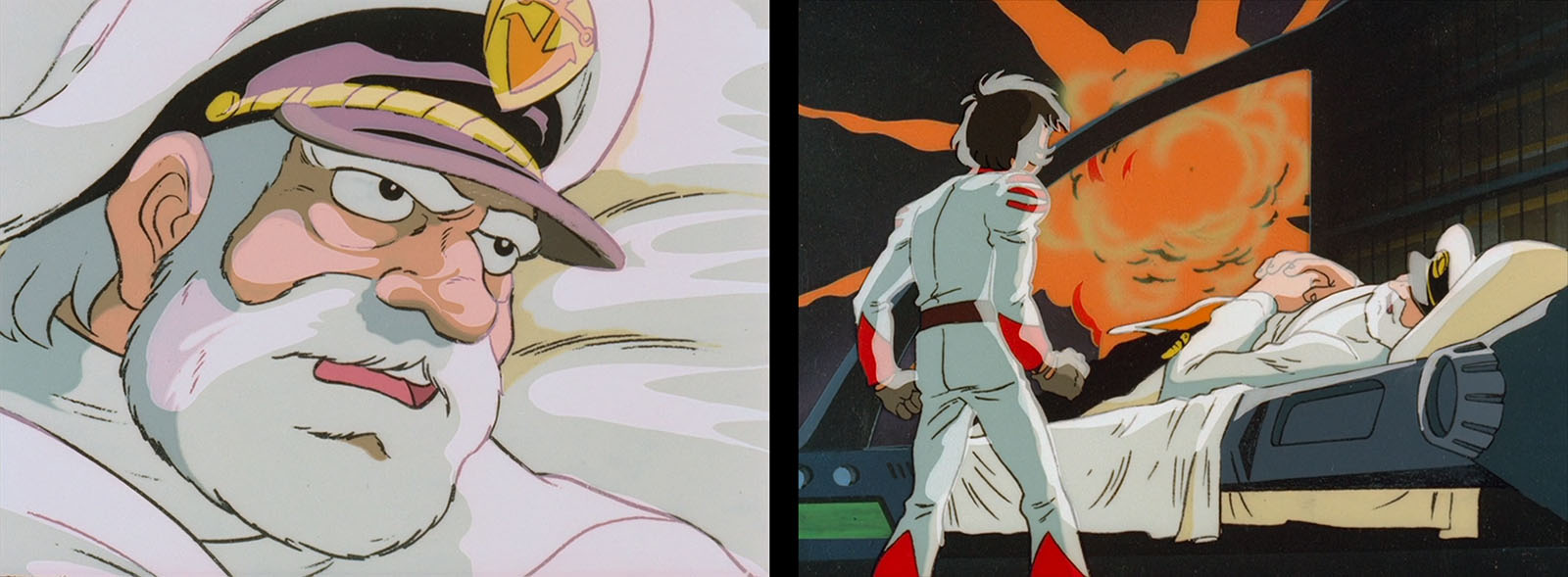
As Kodai pleads for instructions, Captain Juzo Okita, who remains composed despite being bedridden by illness, speaks quietly but firmly.
“Let’s try one thing…we shall dive into the sea.”
Kodai can hardly believe his ears. If they voluntarily submerge into that highly acidic ocean, Yamato‘s armor could dissolve completely in a mere five or ten minutes, sealing their doom. It is tantamount to suicide. Yet, Okita sees a glimmer of a chance for victory.
“Before we dissolve completely, we must locate a mineral vein and strike it with the Wave-Motion Gun. Even this acidic sea must have once been beautiful, clear water. The cause of its acidification is likely a vein of sulfuric volcanic activity within the crust. By blasting through it with the Wave-Motion Gun, we can trigger massive volcanic activity across the surface of Gamilas. I believe this is our only hope of seizing a chance to counterattack. What do you think?”
Captain Okita’s Strategic Logic:
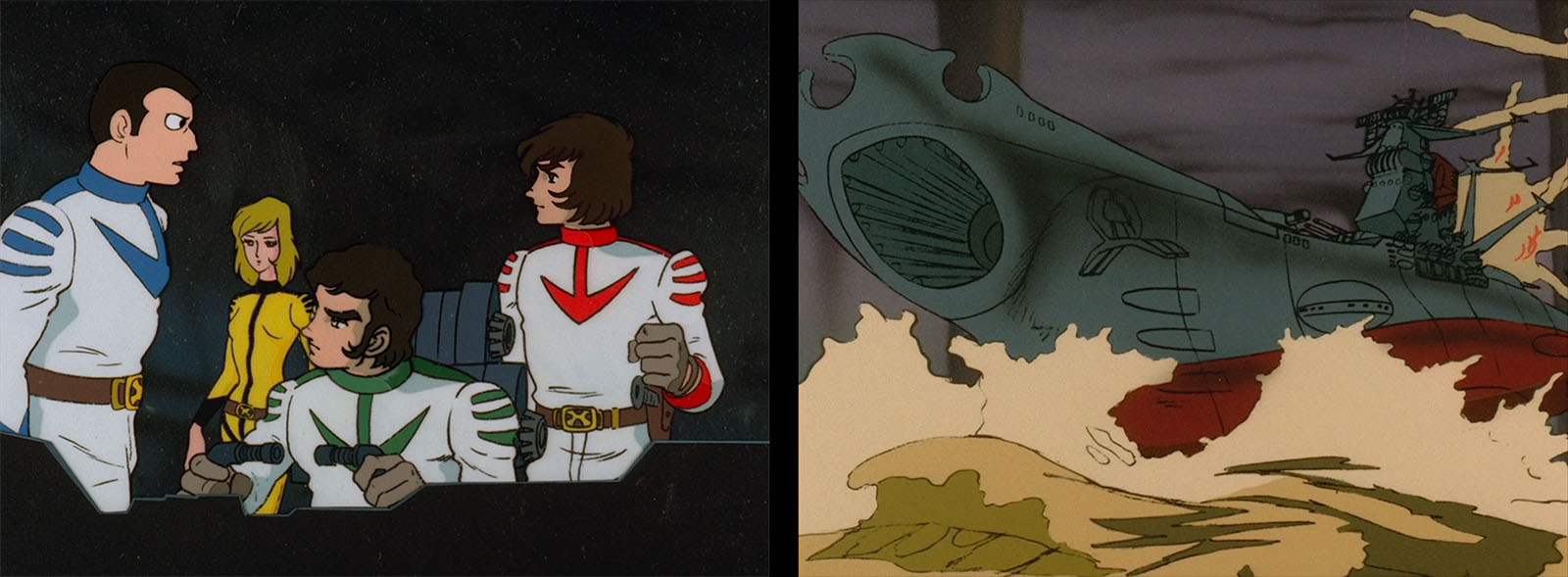
Submerge into the highly acidic sea to temporarily halt Gamilas’ attacks.
Locate a sulfuric volcanic vein on the seabed before the ship dissolves (within five minutes).
Blast the volcanic vein with the Wave-Motion Gun to trigger massive volcanic activity in the crust.
Collapse Gamilas’ surface defense network from within and seize the opportunity to counterattack.
I have spent years working with high-pressure gases at an automated gas station. A single momentary lapse in judgment can cost lives. Having stood on the front lines amidst that kind of tension for over thirty years, I can say this with confidence: Captain Okita never loses his composure. He calmly makes the decision to “dive into the sea,” a choice that defies all conventional wisdom. That kind of serenity belongs only to those who have survived countless life-or-death battles. It suddenly makes perfect sense.
“Understood. We’ll do it!”
A fierce fire of fighting spirit reignites in the eyes of Kodai.
“Don’t forget, we have to do it before we melt! The window of opportunity is brief!”
Yamato finishes emergency repairs and seals the hatches. Then the entire ship begins a rapid dive deep into the sea of strong acid.
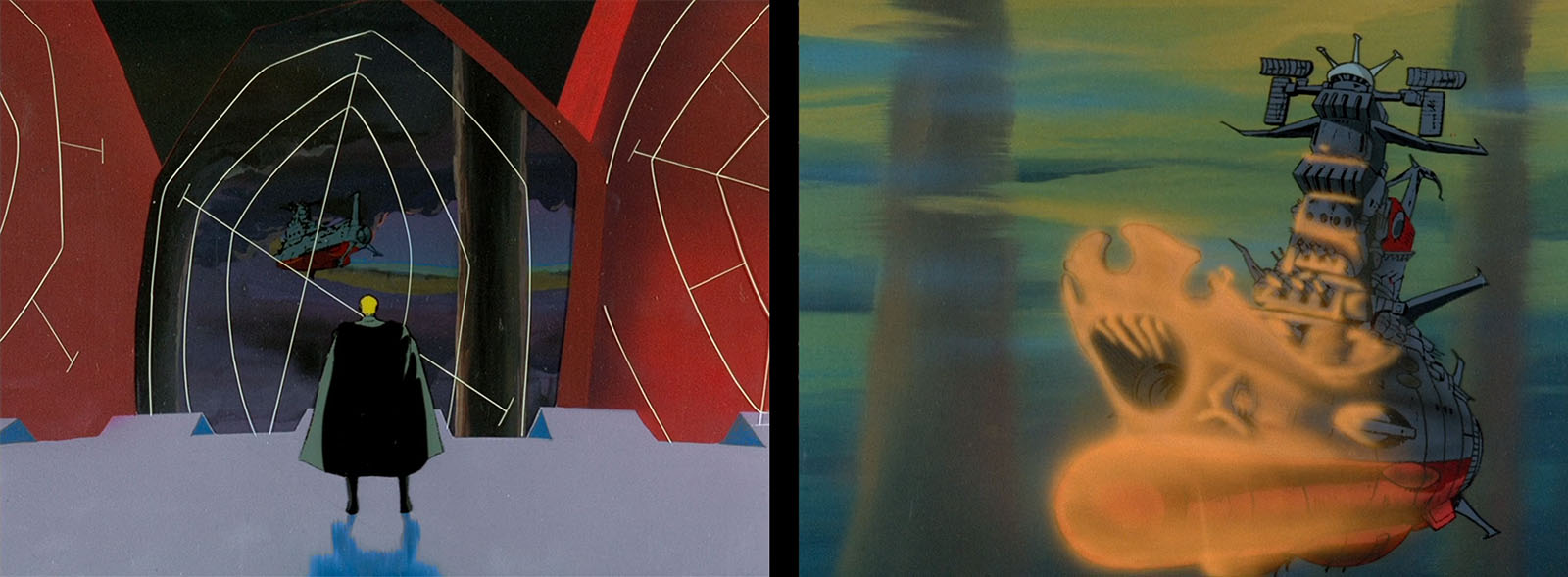
The Gamilas forces scoff, thinking, “They’ve finally run out of options and are attempting suicide,” and paus their depth-charge attacks to observe the situation. That fleeting opening is Yamato‘s only chance for survival.
“Analyzer, utilize all systems to locate the undersea volcanic ridge! Fire the Wave-Motion Gun the moment you find it!”
As the pressure of the acidic waters make the hull groan and death looms closer by the second, the robot Analyzer coolly calculates the coordinates.
“An undersea volcanic ridge extends from the 12 o’clock to the 6 o’clock position. Estimated crust thickness: 16 kilometers!”
“Prepare to fire the Wave-Motion Gun! Targets SE25, NW50! Range 12,000! Hurry, we can only hold out for five minutes!”
Amidst extreme tension, the energy charge builds up.
“Brace for flash, a massive shock is coming! Error correction… Fire!!”
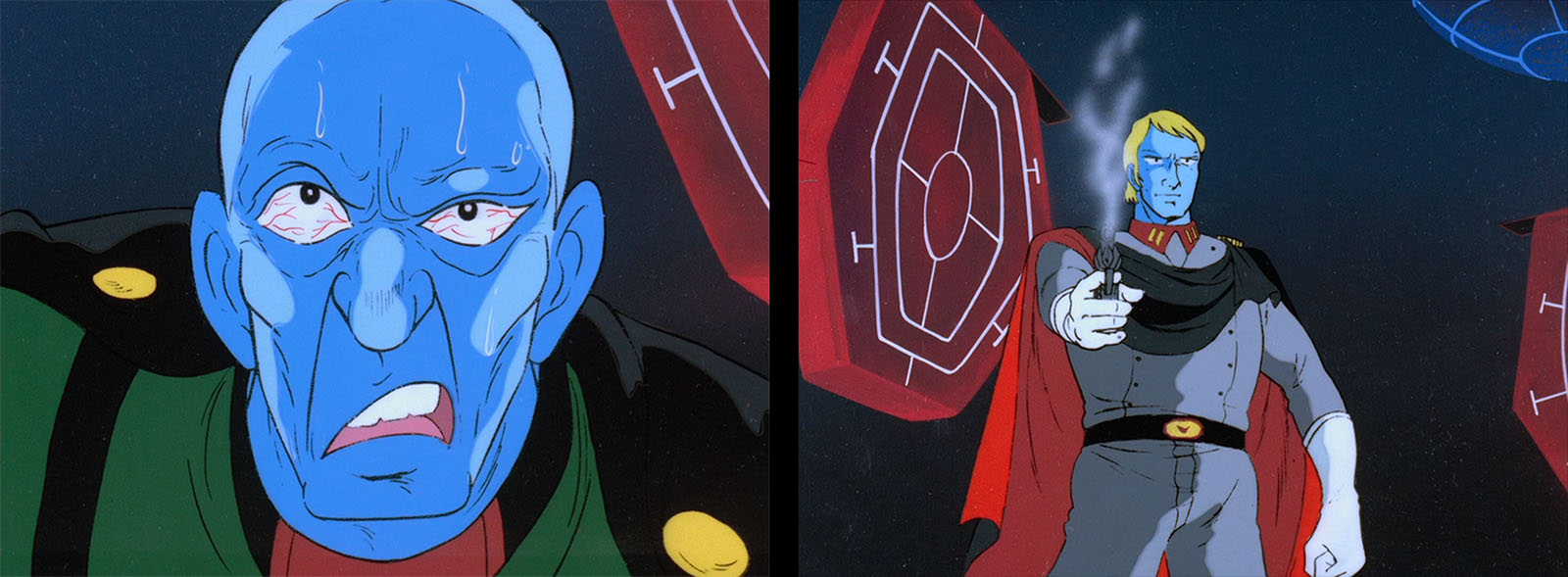
The Collapse of the Gamilas Empire and the Final Moments of Deputy Leader Hyss
The devastating Wave-Motion Gun, fired from Yamato‘s bow, strikes with pinpoint accuracy into the volcanic range slumbering deep beneath the seabed of Gamilas. In that instant, the immense energy accumulated within the planet’s crust is unleashed, triggering cataclysmic volcanic activity across the surface of the Gamilas homeworld.
Seething magma bursts through the ground, shattering the rocky ceiling overhead and swallowing up, one by one, the colossal fortress-cities that are the pride of Gamilas. For the Gamilas military, which had been certain of absolute victory, the unstoppable footsteps of doom are now closing in.
Faced with the horrific spectacle of his crumbling empire, Deputy Prime Minister Hyss desperately pleads with Dessler:
“Even the Great Gamilas Empire can face defeat; further combat is tantamount to suicide. Please, consider peace with Yamato and a path toward coexistence with Earth through dialogue.”
Such was his plea. Yet, the pride of the arrogant dictator will not allow it.
“Have you lost your mind?! Switch to missiles! Rain missiles down upon Yamato from every building in the fortress-city!”
Moments later, Dessler shoots Hyss dead. Driven by Dessler’s madness, a barrage of remaining missiles is unleashed upon Yamato, the very buildings of the collapsing ceiling-city where his own people had once lived.
Yamato, too, is battered and broken, its armor damaged and its compartments overturned, yet the crew musters their final reserves of strength, opening fire with every gun and fighting back with desperate, life-or-death intensity. “We are suffering, but so is the enemy! Victory belongs to those who can hold out through this very moment! Just a little longer!”
After a fierce artillery duel, Yamato destroys the heart of Gamilas, finally putting an end to this long, desperate struggle.
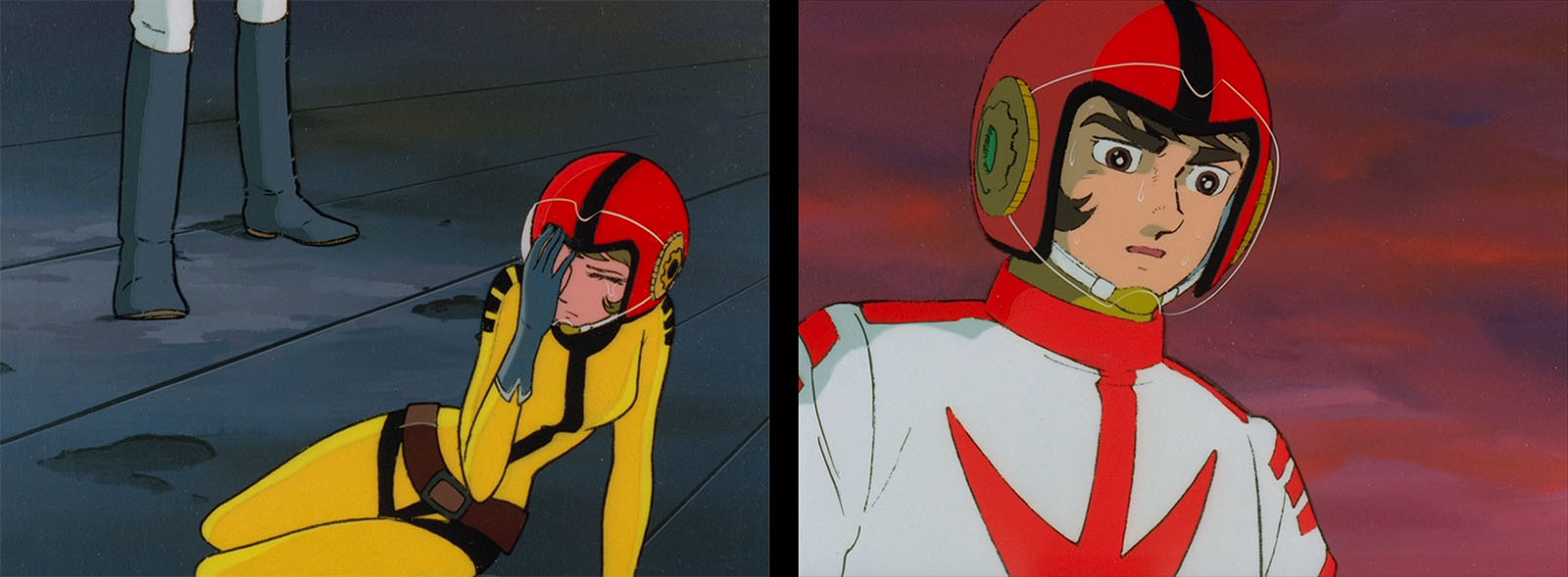
The “Planet-Killer’s” Tears; Susumu Kodai Weeps Amidst the Ruins
What awaits Yamato‘s crew after their overwhelming victory is not a chorus of jubilant celebration, but a crushing, cold void and an eerie silence. Nothing remains on the surface of Gamilas. The cities that once boasted an advanced civilization has vanished completely. All that stretches toward the horizon is the gruesome ruins of utter devastation. Raging flames and mountains of rubble. On the ground, there is no sound, nor any sign of movement.
Gazing down at that vast world of death, Susumu Kodai is in shock. A planet in the cosmos has just died. Tears begin to stream from his eyes. They are not tears of relief at having survived. They are tears born of profound despair, weighed down by the indelible guilt of a “planet-killer” and the realization of war’s true cruelty.
“I can no longer face God,” whispers Yuki Mori.
And then, Kodai begins to speak, wringing the words from the very depths of his soul.
“Since childhood, I was raised to believe that winning, beating others, was the only thing that mattered. Both at school and in society, we are constantly required to compete and come out on top. Yet, for every winner, there is inevitably a loser. What becomes of those who lose? Do the defeated have no right to happiness? Until now, I had never truly stopped to consider that question.”
A heart-wrenching cry from the distant past echoes through the silent halls of Yamato. Whether from Gamilas or Earth, people share the same fundamental desire to live happy lives, and yet, we fought one another.
A victory stained with blood. Though it was done to survive and to save the Earth they love, they have utterly extinguished the future of an entire planet and the countless lives dwelling upon it. The conclusion wrung from this realization is the very phrase cited at the beginning of this article: “It should have been about loving one another.”
There is no other choice, yet the young warriors can only fall silent under the crushing weight of the cost they have paid. The hollowness of destruction wrought in the name of justice weighs heavily upon their hearts.
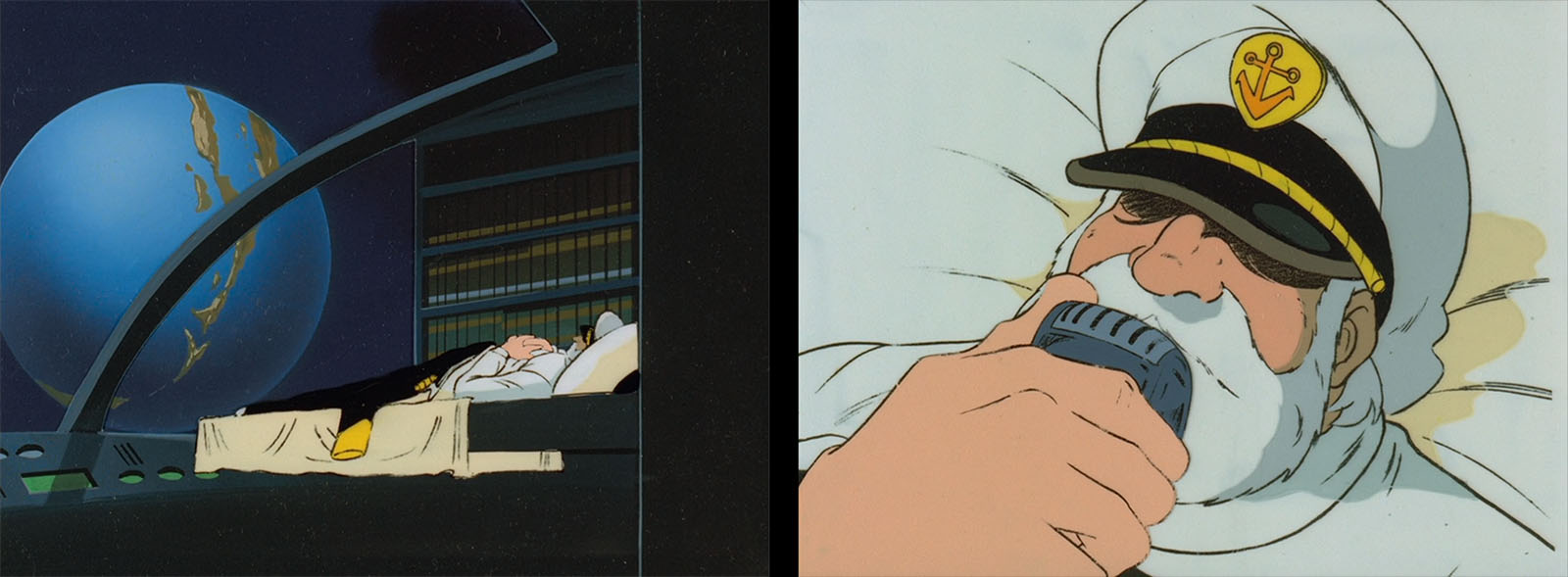
Captain Okita’s “Thank You”, toward the Light of Iscandar
Despite the deep sorrow and the sense of irreparable loss, Yamato cannot halt its journey. Grappling with the weight of the guilt they bear, they press forward once more. “Now, let’s head for Iscandar! Main engines at full power, advance and ascend!”
As Yamato once again surges forward into the dark void of space, Captain Okita’s voice, quiet yet heavy with a multitude of emotions, echoes through the communication circuits.
“Crew of Yamato. You now see Iscandar right before us. As your captain, there is just one thing I wish to say to you…thank you. That is all.”
Having conquered a vast, unknown expanse of space that defies the imagination, Yamato finally beholds the beautiful form of its ultimate destination: the planet Iscandar. Now, Yamato, go and claim the radiation-removal device. The people of Earth are waiting for your return with single-minded devotion.
Only 161 days remain until the fateful day that spells the extinction of humanity. The final leg of the journey, to reclaim the blue Earth and to save their own souls, is about to begin.
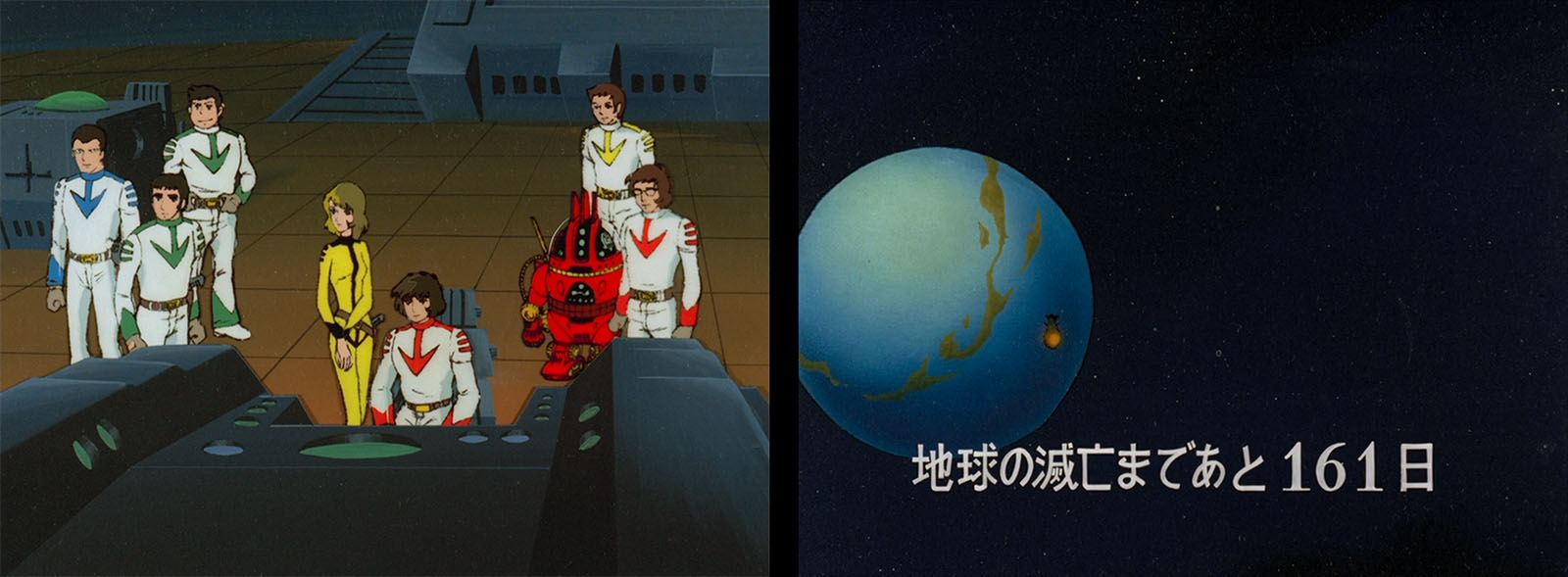
Praying for a happiness that transcends victory or defeat on a summer night, from a dining table in Sapporo
After fierce battles, Yamato finally has Iscandar in its sights. Captain Okita’s brief “Thank you” is imbued with a profound depth of feeling, born of having endured countless sacrifices.
Outside the window, even past ten o’clock at night, a warm, languid breeze still stirs the screen door. The scent of smoke from a grill drifts in from a garden somewhere nearby. More than half of the summer of 2026 has already passed. After stepping down from 32 years of active duty, I now live a quiet life with my mother and sister.
Gathering around the dining table to share casual conversation, what a rare luxury that is. When living in society, one is inevitably swept up in the vortex of competition, victory, and defeat. Yet, the wish lying beneath it all, simply to live happily with the one you love, is surely the same, whether one is an Earthling or a Gamilas native.
It isn’t about defeating someone. It’s about caring for one another and finding mutual understanding. That’s the message children’s anime of yesteryear addressed head-on. I cannot bring myself to call it foolish. On the contrary, it commands my respect.
Summer in Hokkaido is short, intense, and a bit cruel. And yet, writing about an old anime all alone on a night like this leaves me with a strangely pleasant feeling. Did you ever watch this story with someone else? Or did you face the screen by yourself?
It doesn’t matter. That moment of silence, where Yamato‘s crew stands motionless before the ruins, quietly resonates with the personal experiences of defeat and regret held by each viewer. That’s the kind of anime it was.
“We should have loved one another.” These words are not an answer. They are a question.
Even now, more than half a century later, that single episode, originally meant for children, continues to ask us that question.
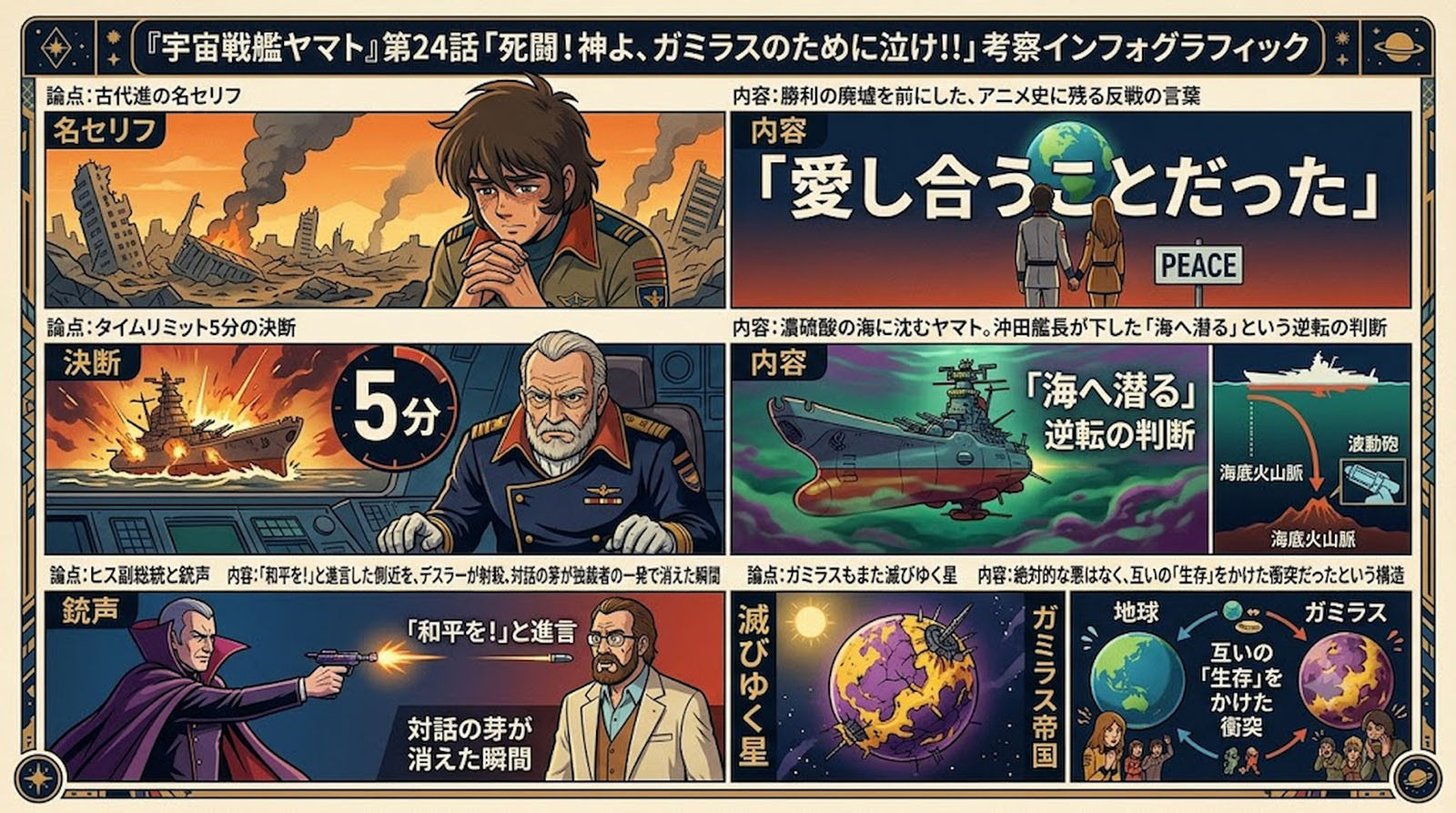
An infographic offering a multifaceted analysis of Episode 24 covering key dialogue, decisions, strategies, and themes.
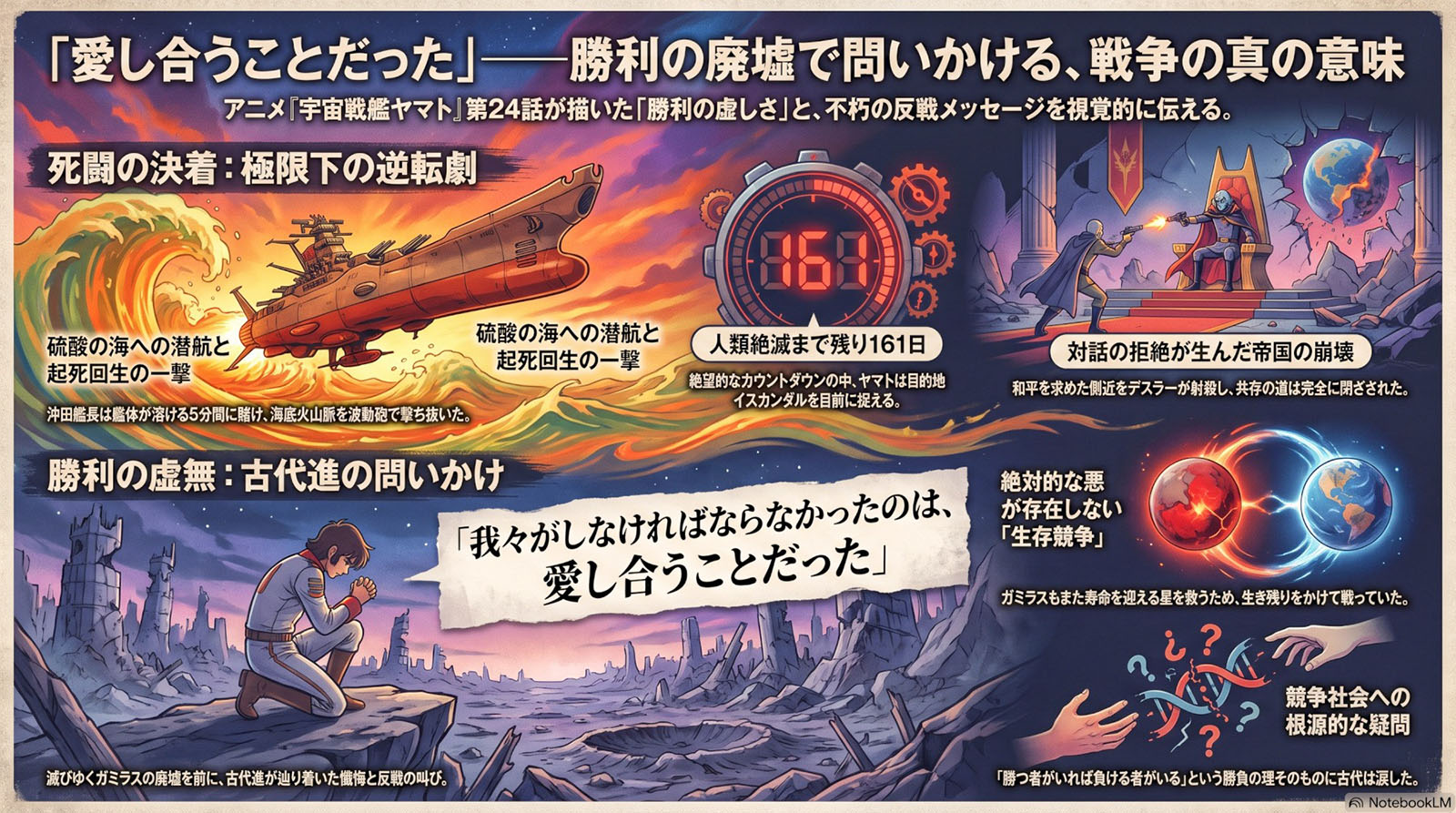
This infographic explaining Episode 24 covers key elements such as the famous line “We should have loved one another,” the dive into the sea of sulfuric acid, the breakdown of dialogue with Dessler, and the themes of the struggle for survival and the anti-war message.
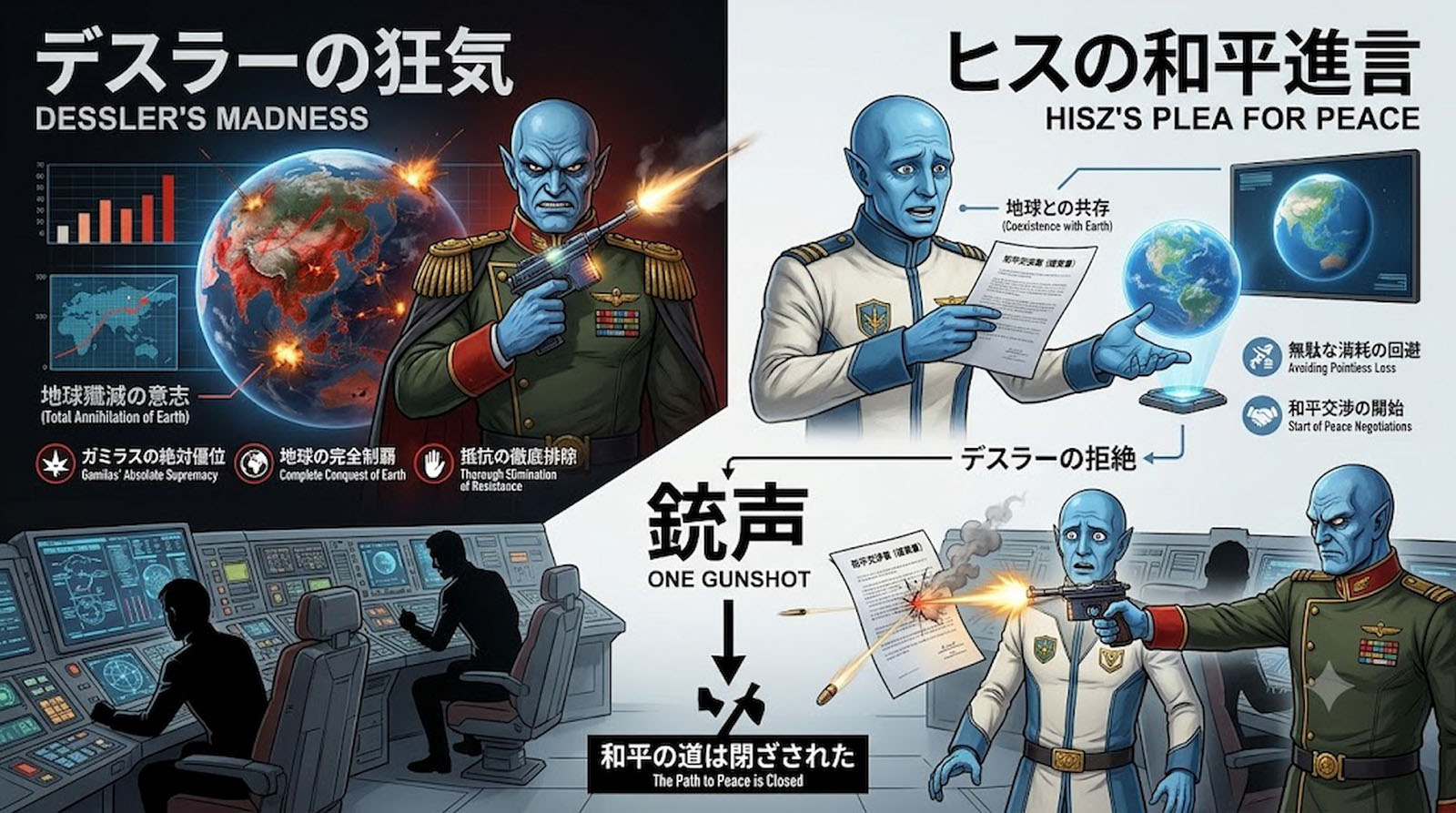
An infographic contrasting Dessler’s madness with Deputy Leader Hyss’s plea for peace, illustrating the moment the path to coexistence was sealed shut by the rejection of peace talks and the sound of a gunshot.
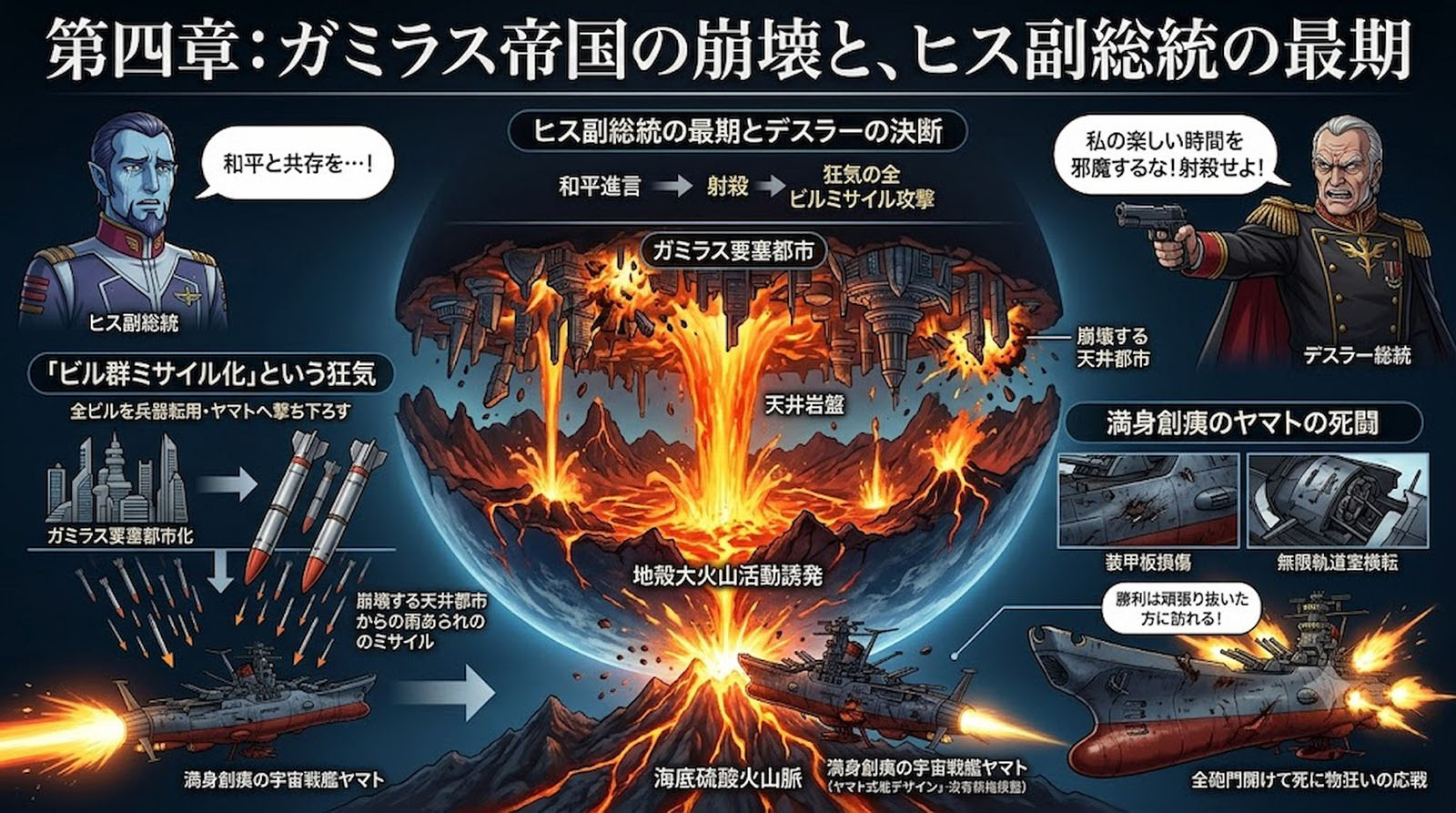
An infographic illustrating the collapse of the Gamilas Empire, the final moments of Deputy Leader Hyss, Leader Dessler’s descent into madness, the destruction of the fortress city, and Yamato‘s desperate battle.
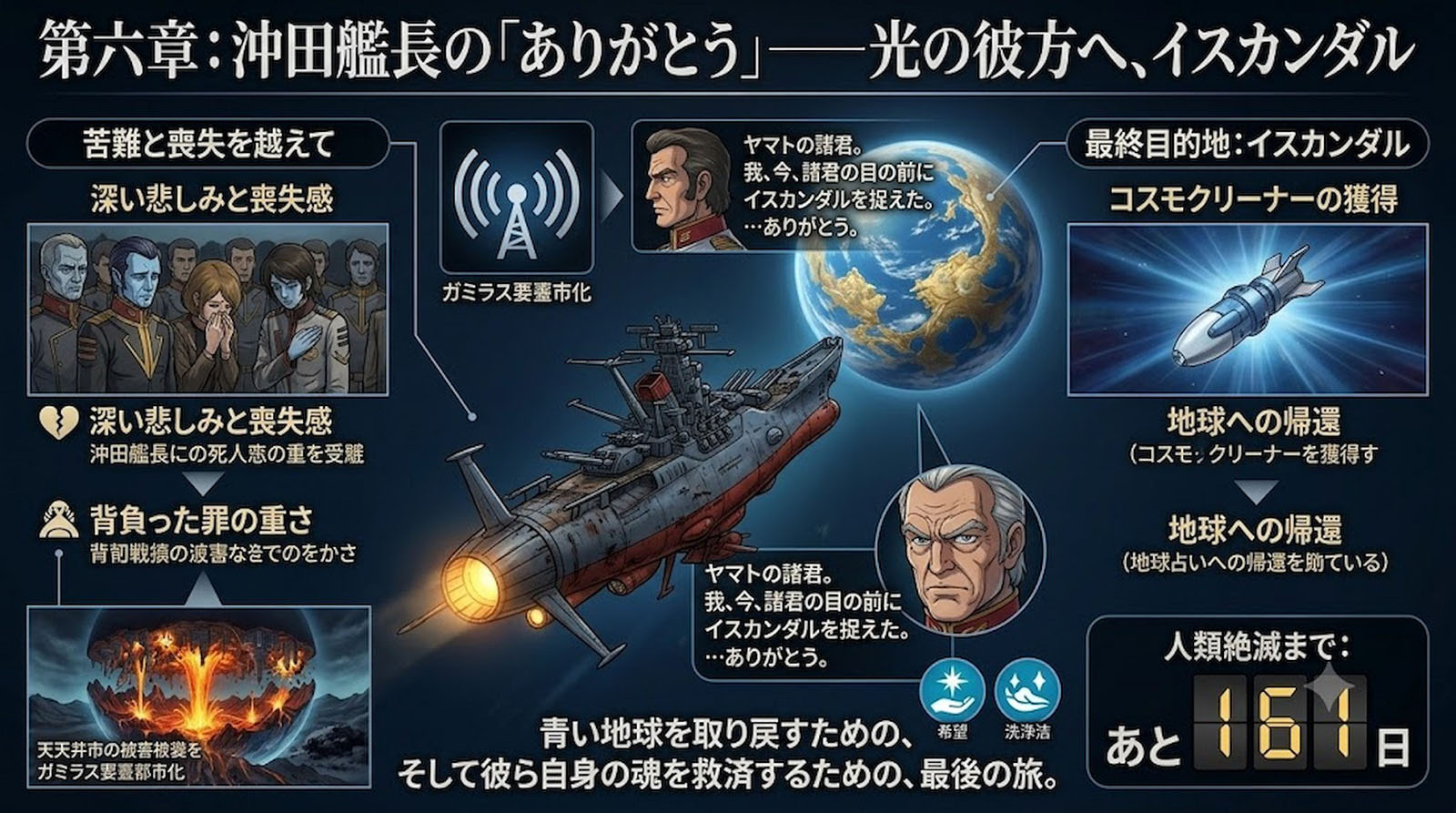
An infographic illustrating Captain Juzo Okita’s words of gratitude (“Thank you”), the looming presence of Iscandar, the hope of securing the Cosmo Cleaner D, and the fact that only 161 days remain until humanity’s extinction.
Thank you for reading to the end.