
Thoughts after watching Episode 25
See the original blog post here
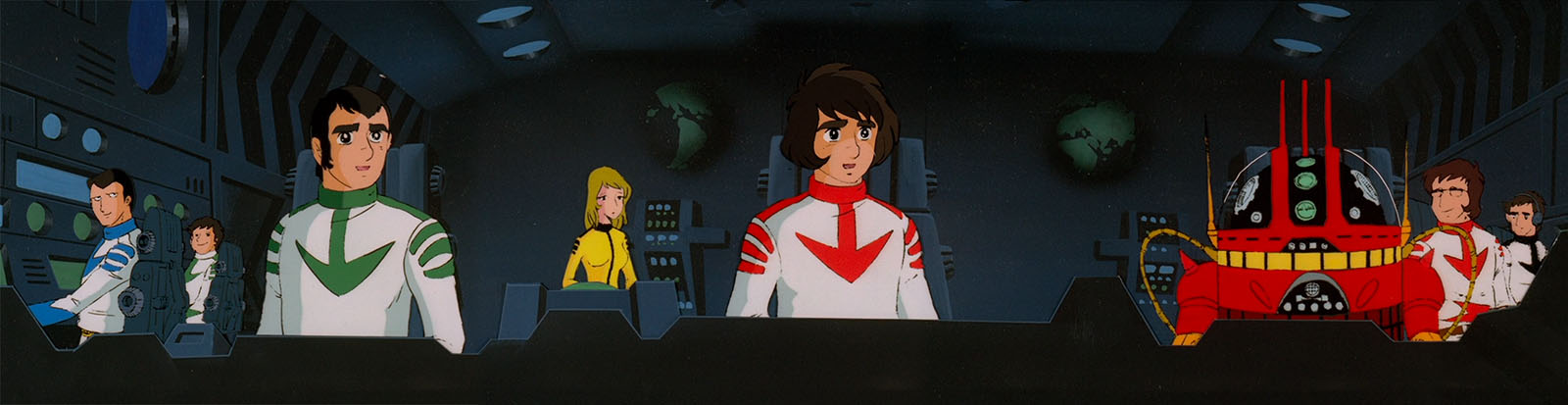
In Sapporo, the sky begins to pale as early as 4:00 AM. It is the season when glasses of barley tea start to bead with condensation. On a morning when the scent of lilacs drifted in through the window, I found myself re-watching Episode 25, originally aired March 23, 1975.
By four in the morning, the sky is already turning pale. Sapporo has entered that season again. I slept with the window wide open, and the scent of lilacs drifted into every corner of the room. The moment I woke up, the thought, “Ah, summer is here again” settled into my mind with a strange sense of rightness.
A glass of barley tea, fresh from the fridge, begins to bead with condensation the moment it’s poured, and the ice clinks sharply. Listening to that sound, sitting on a cheap chair on the apartment balcony, I found myself thinking once more about Episode 25. There are things I notice only now that I’m an adult. Today, I want to take the time to write about the structure of that original Yamato episode and the overwhelming, gritty “earthiness” that becomes apparent when comparing it to modern anime.
To my eyes, accustomed to staring down pressure gauges at LPG plant sites for 32 years, that rough, unpolished cel animation still looks like a functional safety valve. To put the conclusion upfront: Episode 25 delivers a powerful blow, conveyed through 50-year-old animation cels, reminding us that “peace is not something that is simply given to you.”
This article covers the following four points:
① Why Queen Starsha’s wail of grief strikes so deep in the heart
② The significance of the Cosmo Cleaner D not being a “finished product”
③ The inevitability of the mutiny led by Engineer Yabu and his 11 crewmates just before the climax
④ How Mamoru Kodai’s decision embodies the theme running through the entire series.
The Structure of “Peace That Is Not Simply Given”
Episode 25 confronts the viewer with the reality that “peace is not simply given,” unfolding across four axes: the Queen’s solitude, the unfinished Cosmo Cleaner, the crew’s mutiny, and the older brother’s decision. Herein lies the reason why the 50-year-old cel animation still functions effectively today, acting like a vital safety valve.
Starsha’s Wailing, Why the Roughness of the Cel Animation Hits Home
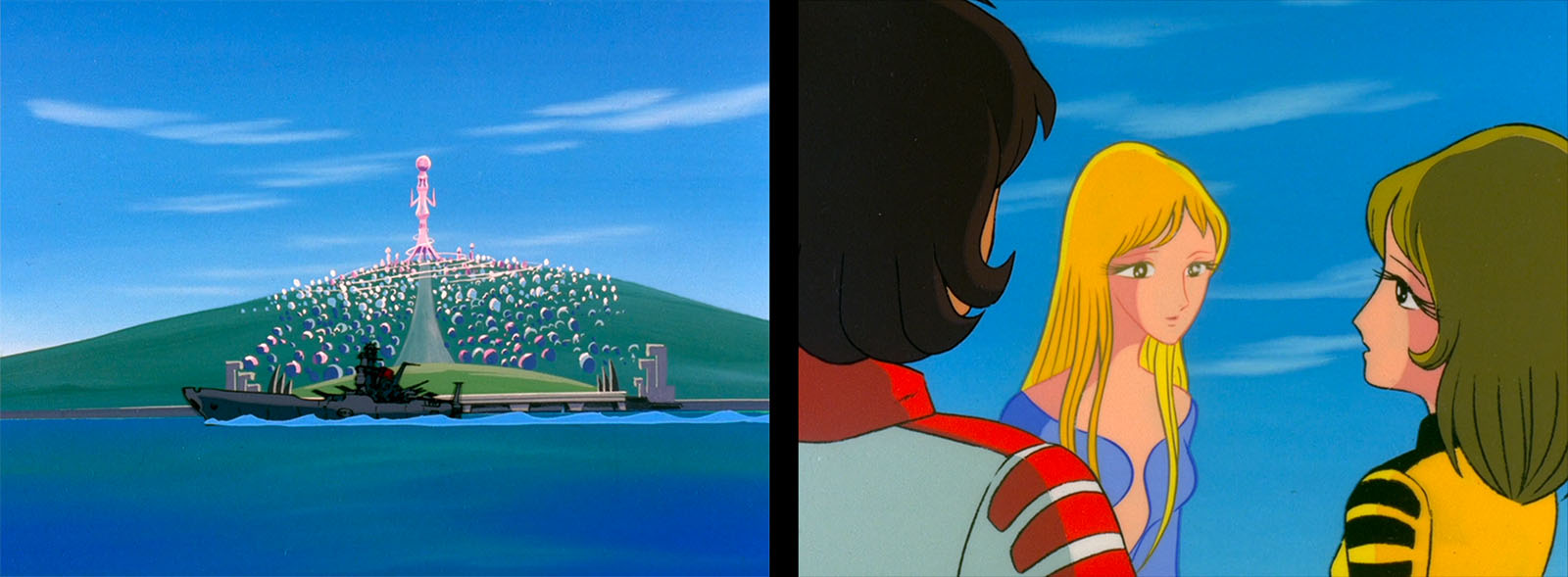
The sea of Iscandar, where Yamato touches down, is eerily still. Iscandar, the twin planet to Gamilas, is also nearing the end of its life as a celestial body. The only one left behind is Queen Starsha. The moment that most powerfully conveys this cruelty is the scene where Starsha sees Yuki Mori and cries out “Sasha!”
The Queen’s trembling voice is heavy with the profound sense of loss from having buried her younger sister and an immense, crushing loneliness. The moment that raw, unpolished line work, something digital animation cannot replicate, merges with such visceral acting, powerfully convey the raw intensity of Starsha’s grief. An overwhelming loneliness is packed right into the very sound of her breathing.
Compared to modern digital animation, the cel animation of that era featured thick, unsteady lines, hardly what you’d call smooth. Yet, the moment those rough lines merge with the voice actor’s raw, visceral performance, the lonely queen’s pain pierces right through the screen.
I once tried to explain this sensation, where the very roughness of the lines strikes you right in the heart, to a modern AI, but it just didn’t get it. Well, I suppose that’s to be expected. After all, you wouldn’t know the silence of the seas of Iscandar.
The Cosmo Cleaner D is not a finished product; the philosophy entrusted to its parts and blueprints
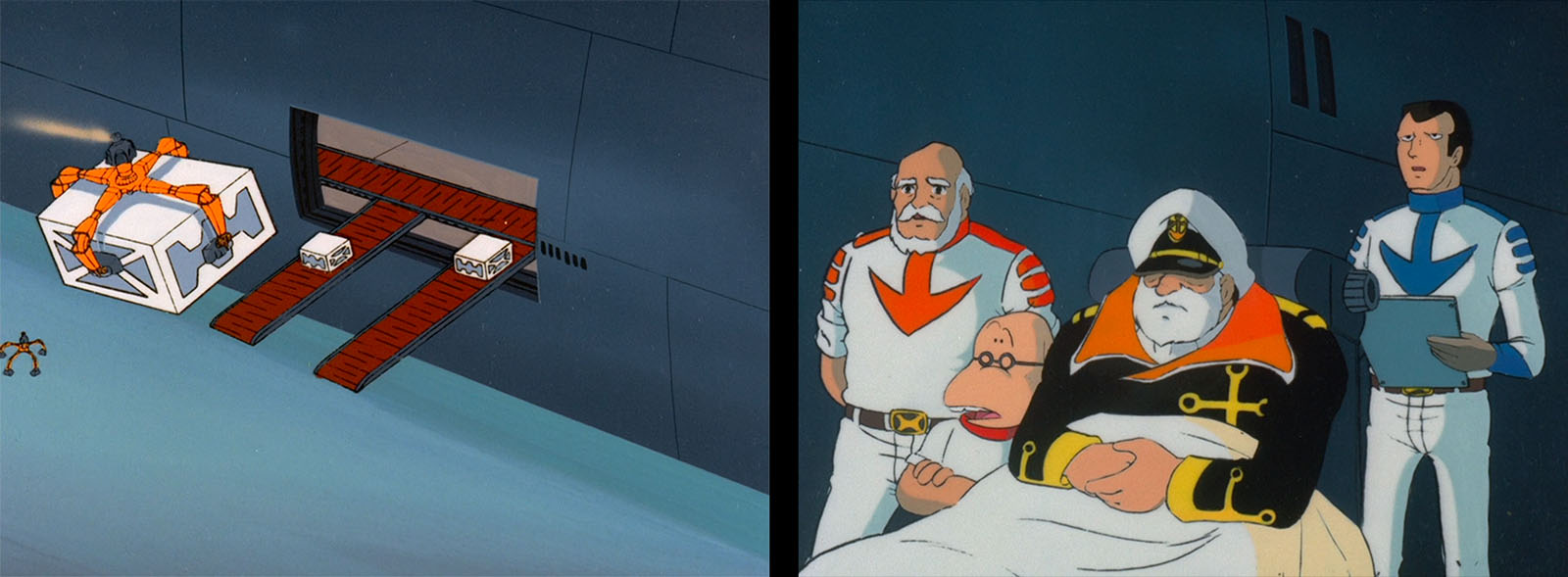
After a journey of 148,000 light-years, what they are handed isn’t a magical, ready-made device, but merely handmade parts and blueprints.
“No one is going to save us with magic.” The original series relentlessly confronts us with this reality, underscored by a weighty remark from Captain Okita. What is given to Yamato after its 148,000-light-year voyage isn’t some magical, ready-made device. It consists of handmade parts and blueprints. That’s all.
The parts of the Cosmo Cleaner D shown on screen are rendered with the rugged yet intricate lines characteristic of hand-drawn animation. Just looking at them conveys the crushing, desperate weight of the realization that “we have to assemble this during the return voyage.”
In modern sci-fi works, or even the remake Yamato 2199, this is a scene where one might expect a sophisticated solution provided by the power of a super-civilization. The original series, however, is unforgiving. It confronts the viewer directly with the reality that “no one is going to come along and save us with magic.”
“By the time we make it back, humanity may well be extinct,” says Captain Okita. This thought brilliantly captures that extreme sense of anxiety caused by their arrival being delayed beyond schedule. The need to seize the future with one’s own hands and skills, that harsh reality makes me catch my breath every time.
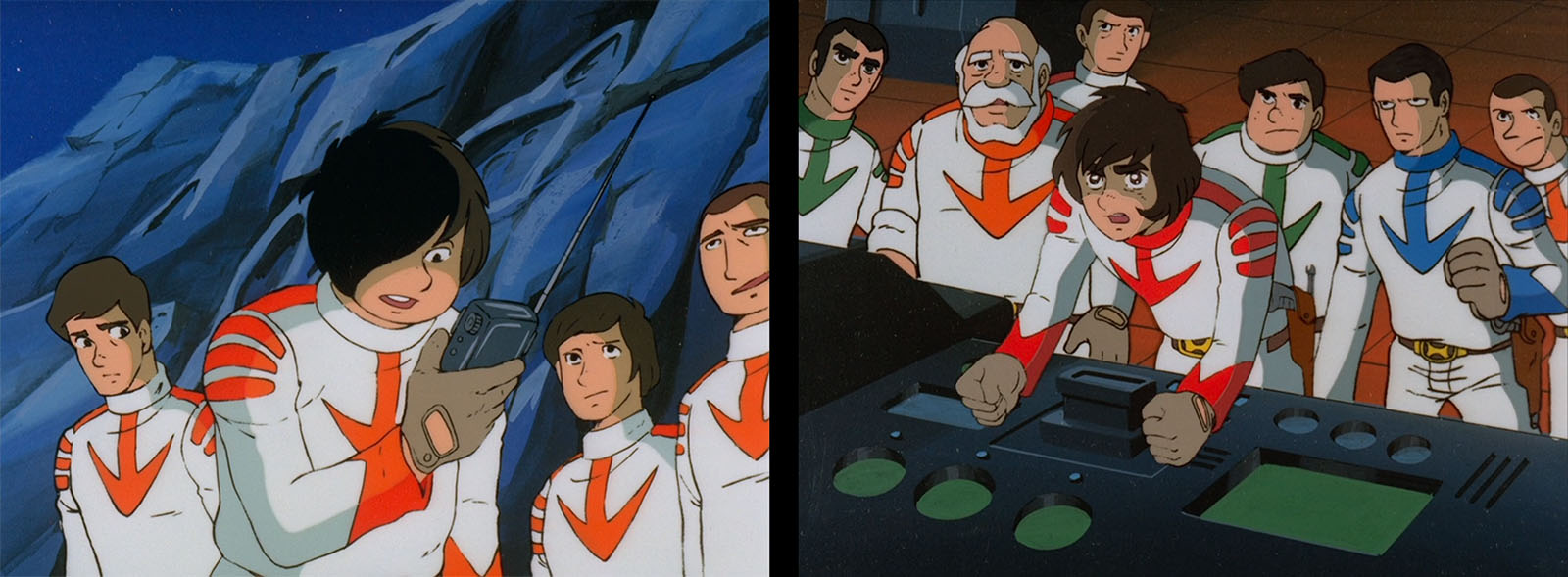
Why is the Mutiny of Engineer Yabu depicted right before the climax? A clash between a noble cause and the instinct for survival
Faced with the noble mission of saving Earth, Yabu and eleven others choose to remain on Iscandar, laying bare their desperate attachment to life. By unflinchingly portraying the human frailty that emerges in the face of death, the series elevates the realism of Yamato as an ensemble drama to the highest level.
This incident is essential to understanding Episode 25, where Engineer Yabu and eleven other crew members barricade themselves on the Diamond Continent. Why did the production team go out of their way to insert this right before the story’s climax, during the handover of the Cosmo Cleaner D? I believe it was to depict the clash between a “noble cause,” the mission to save Earth, and the individual instinct for survival.
Yabu and the others, despairing of a return to an Earth on the brink of annihilation, wish instead to remain on Iscandar, which appears peaceful. By the standards of today’s sleek, idealized heroes, their actions might seem selfish or foolish. In fact, partly due to inconsistencies in the animation, their reckless behavior even appears somewhat comical. To be honest, I actually laughed at it.
Yet, by unflinchingly portraying the human frailty that causes people to turn selfish in the face of death, this ensemble drama actually achieves a heightened sense of realism. I believe this raw, unpolished quality, where characters lay bare their attachment to life over their assigned mission, is precisely what gave the original series its overwhelming appeal.
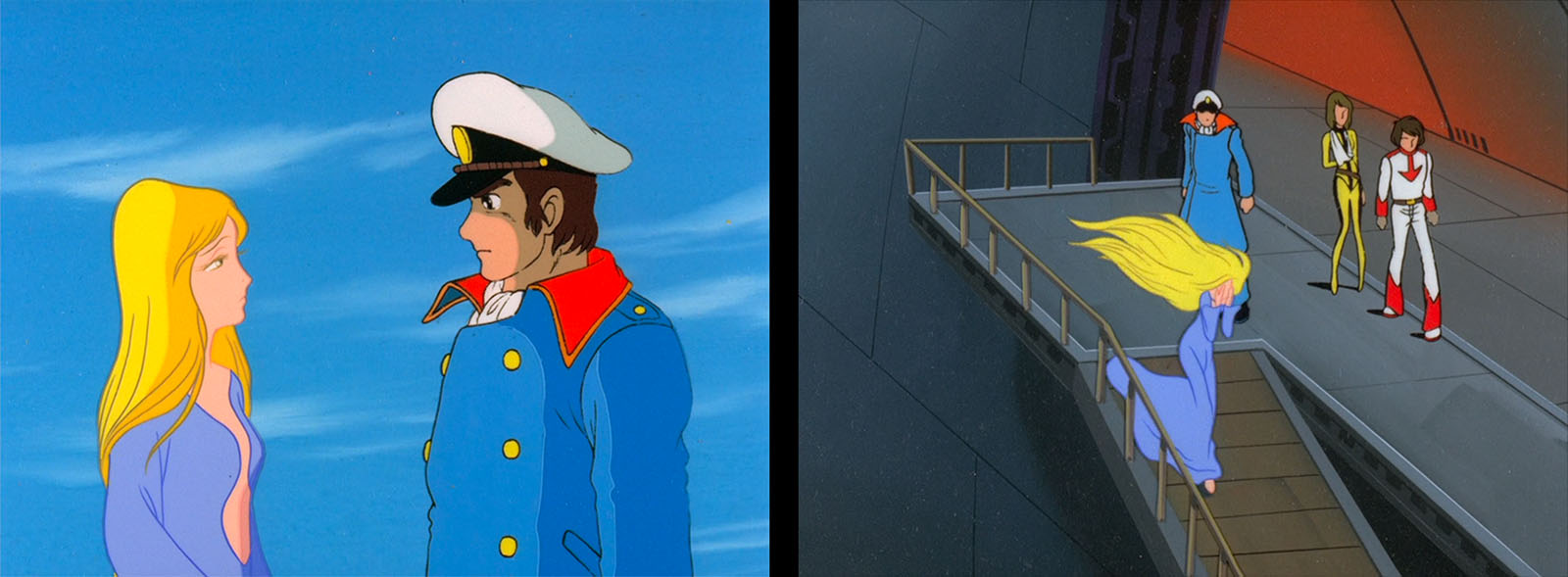
Mamoru Kodai’s Decision and the Culmination of the Theme: “Tomorrow’s Happiness Must Be Won by One’s Own Hand”
One of the series’ most memorable scenes is the reunion between Susumu Kodai and his older brother, Mamoru.
Mamoru decides to abandon the return to Earth and stay behind on the dying planet with Starsha, the woman who saved him; to become the Adam and Eve of a new Iscandar. This embodies the aesthetic of a man who severs ties of blood to remain true to his sense of duty and love. And in the story’s final act, that famous line Starsha delivers to Yamato brings the entire work to a close:
“Happiness for tomorrow is something that can only be won through one’s own efforts.”
From the assembly of the Cosmo Cleaner D to the mutiny led by Yabu and the ultimate decision made by Mamoru, the theme running through every moment of Episode 25 lies right here: refusing to settle for a peace that is merely handed to one, but instead embracing a harsh reality and seizing the future with one’s own hands.
Despite its flaws and rough edges, the intense human drama depicted in the original Space Battleship Yamato carries a weight that holds its own, even when compared to modern works.
I drain my glass of barley tea, the ice long since melted, while listening to the sound of a June beetle bumping against the screen door. Revisiting the raw visual aesthetic and profound themes of that era might well be a luxury, a special way to spend one’s time, that is only possible now that we have grown up.
Why? Because the answer isn’t just lying around somewhere. You have to verify it for yourself, through your own memories and your own body.
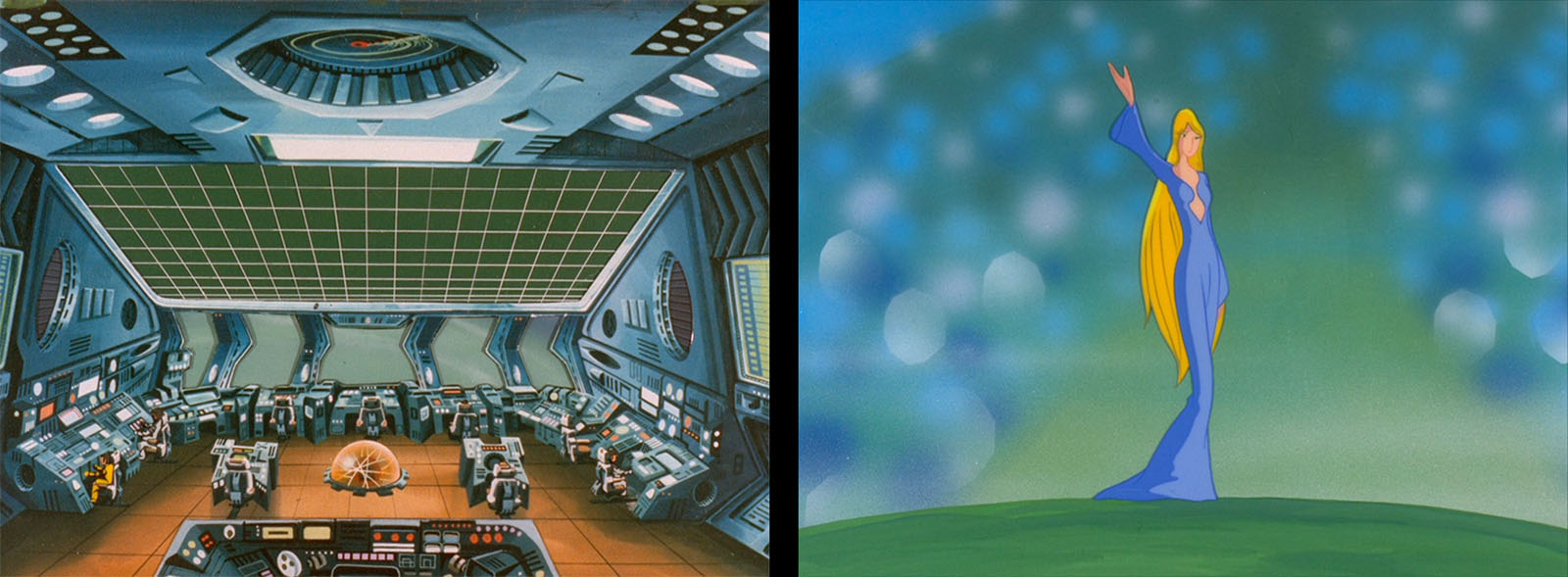
Episode 25 synopsis
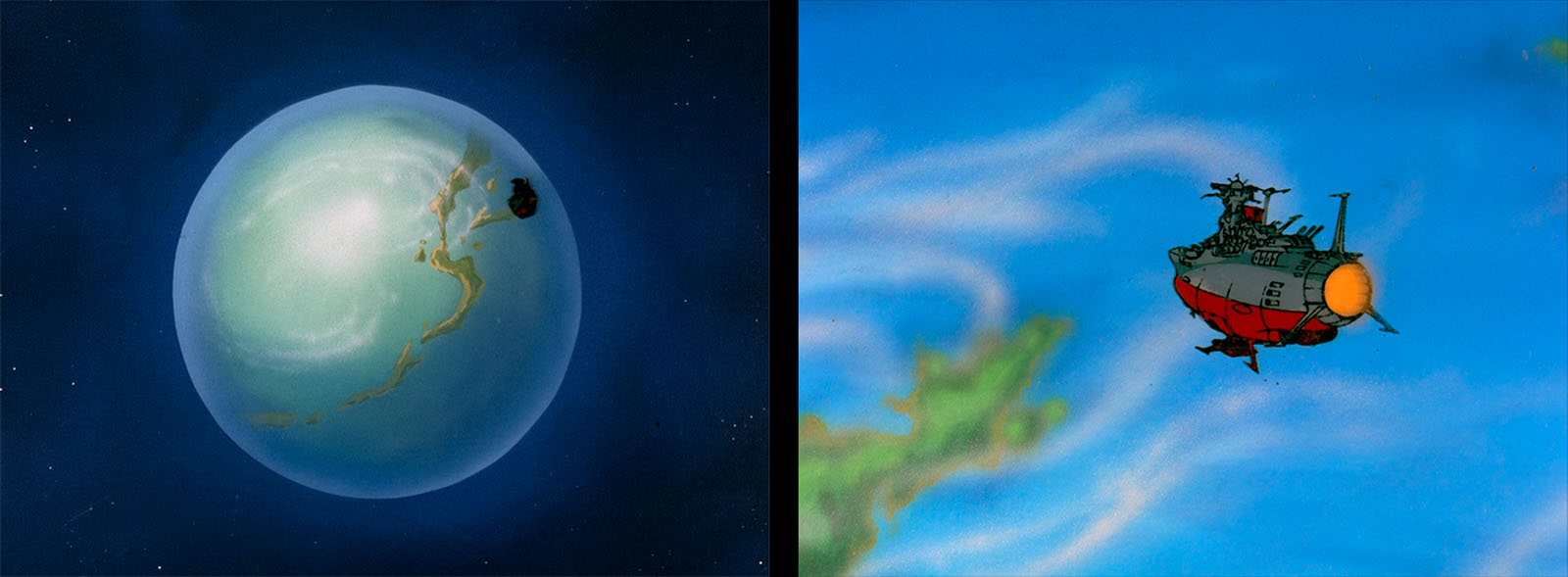
The story begins as Yamato finally arrives at the planet Iscandar, located 148,000 light-years away. As the crew searches for a landing site while maintaining an altitude of 500 kilometers, it receives a guidance signal. The person who responds is Starsha, the Queen of Iscandar. She guides them toward the “Sea of Mother Town” and instructs them to descend.
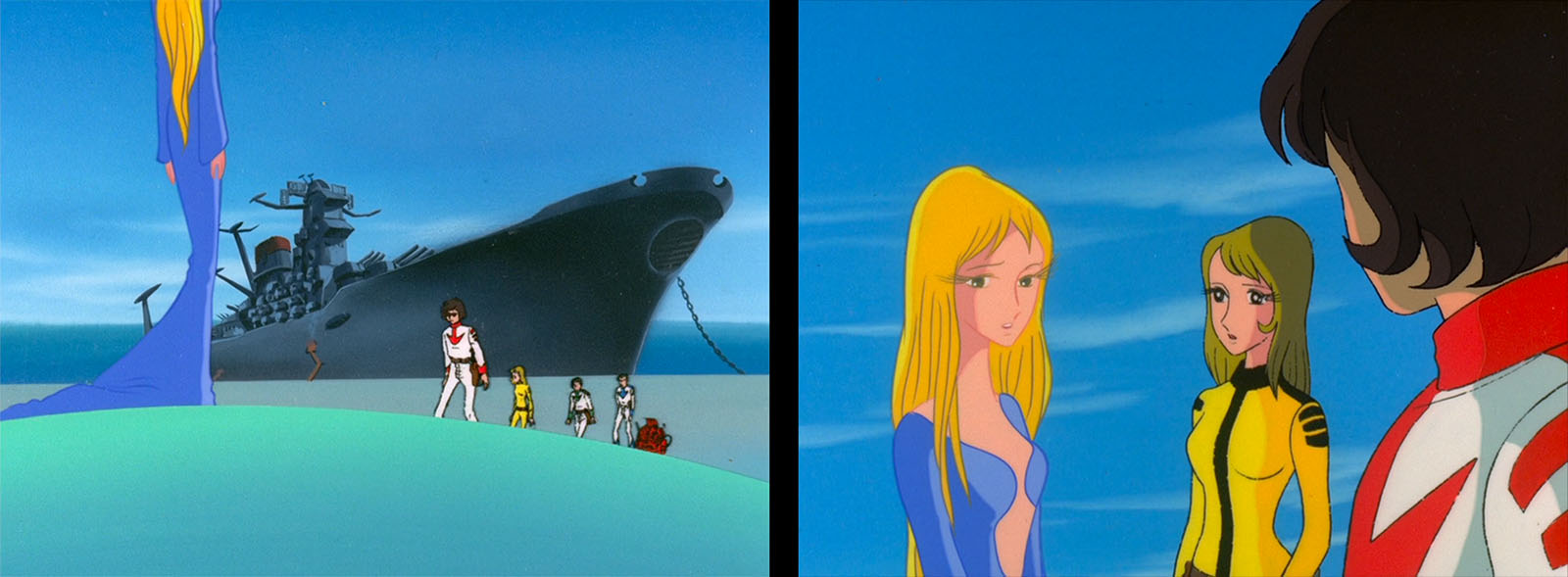
Sasha’s Sacrifice and the Mission Entrusted to Earth
Susumu Kodai and Yuki Mori disembark and come face-to-face with Starsha. There, the fact is revealed that the person who delivered that legendary message to Earth was none other than Starsha’s sister, Sasha. She was shot down by the Gamilas over Mars and passed away after a crash landing. She was discovered by Susumu Kodai and Navigation Officer Shima, who were on Mars for observation training. The two recovered the message and the Wave-Motion Engine design data left in the rocket and brought them back to Earth.
Learning of the mission her sister fulfilled at the cost of her life, Starsha expresses deep gratitude and mourning. At the same time, she quietly explains that Earth must be saved by the Earthlings’ own power, and that the grueling journey to Iscandar was a trial to test humanity’s courage and strength.
The crucial radiation-removal device is not a finished product. Starsha entrusts the parts and blueprints to Yamato, instructing the crew to assemble it in the ship’s factory during their return voyage. Ideally, they would want to hand it over only after verification by the engineers of Iscandar, but there is no time to spare. They are running two months behind schedule; the original plan to return in nine months is now projected to take eleven.
Shiro Sanada openly expresses his alarm, noting that “one wrong move could mean we won’t make it in time,” yet the crew resolves to “give their all to what can be done right now.”
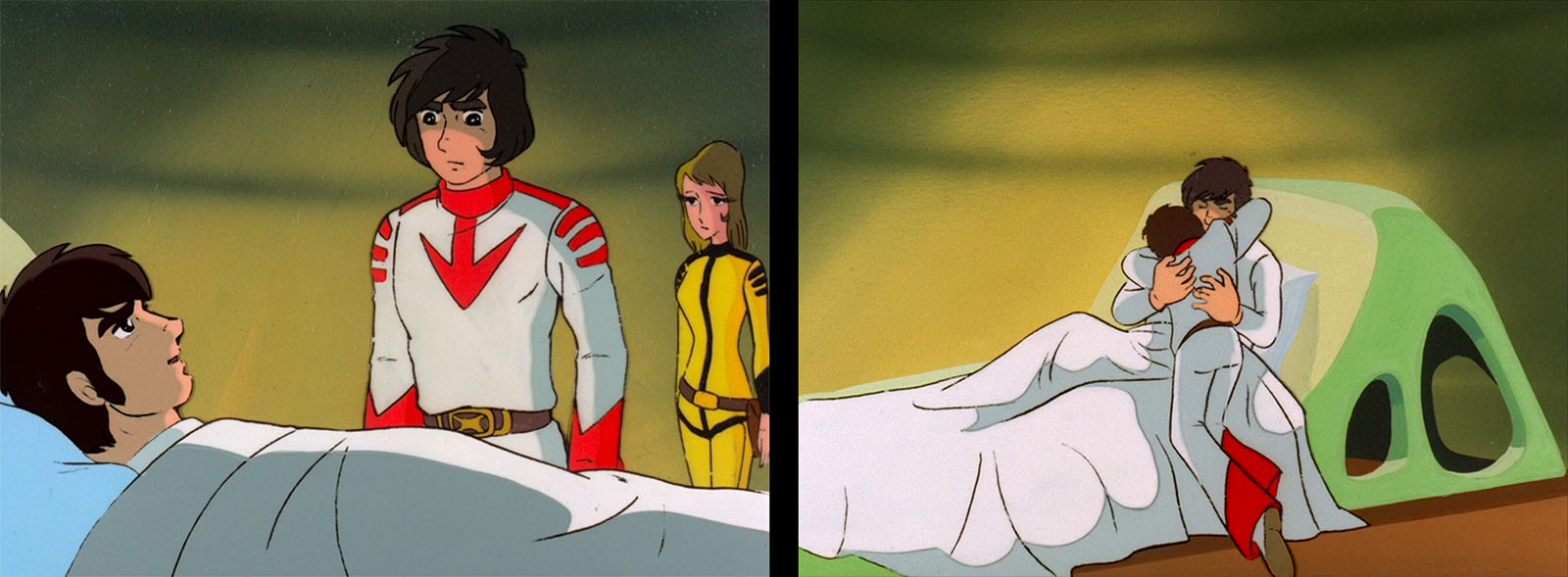
Reunion with Mamoru Kodai, The brother saved by Starsha
The story takes a major turn here. At Sasha’s funeral, Susumu and Yuki receive unexpected news: Susumu’s older brother, Mamoru Kodai, is alive. Mamoru had been captured by Gamilas and held as a subject for research. Following a spaceship wreck, he was drifting near Iscandar when Starsha rescued him.
Although he had been gravely injured and was suffering from space sickness, he has recovered to the point where he was fit to return to Earth. The narrative quietly portrays how Starsha herself rescued and nursed him, and how a special affection developed between the two as a result of her devotion.
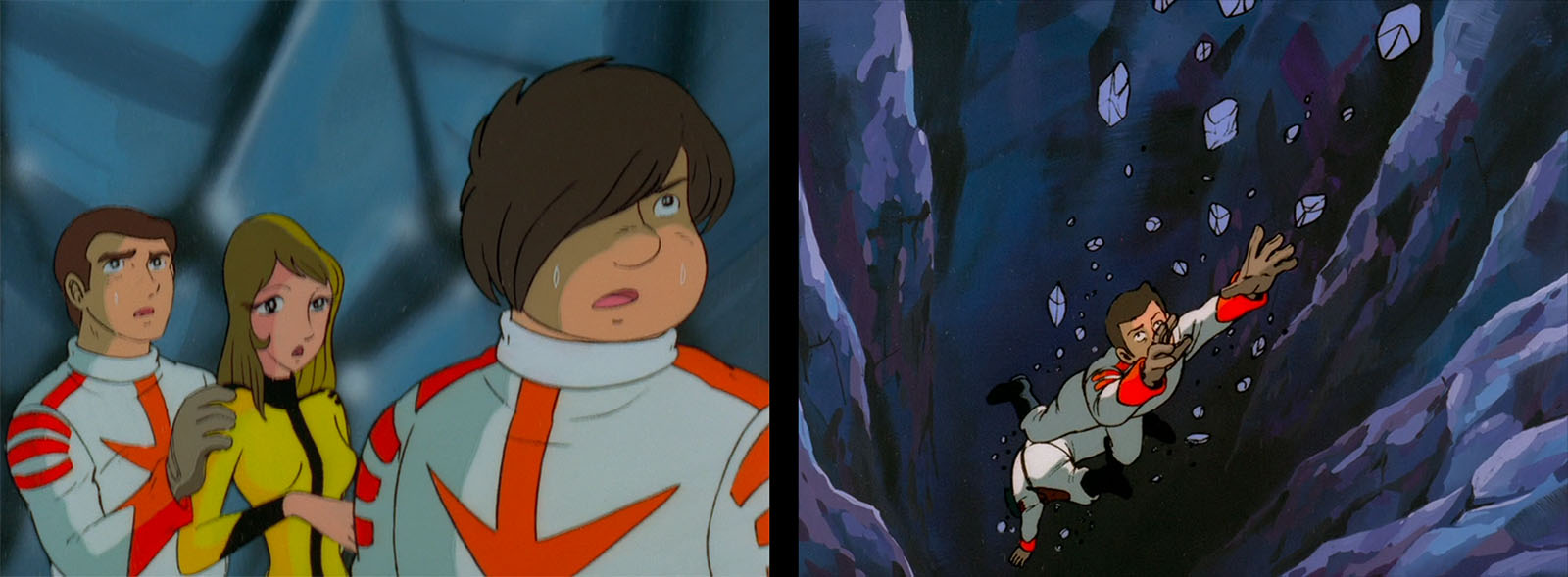
Engineer Yabu’s Request to Remain and the Tragedy of the Diamond Continent
Meanwhile, a separate, tense situation unfolds aboard the ship. Chief Engineer Sanada voices the possibility that the radiation removal device might not be completed in time, posing the grave question of what will become of humanity should that happen. Driven by this anxiety and a reluctance to leave the sanctuary of Iscandar, twelve crew members, including Engineer Yabu, refuse to return to Yamato and request permission to remain on the planet.
Their argument is that rather than risking the total annihilation of the human race by returning to Earth, a portion of the crew could remain on Iscandar to ensure the survival of the human lineage. Their actions, however, go beyond mere desertion. Before barricading themselves on the Diamond Continent, Yabu and his group forcibly take Yuki Mori with them. They scheme to use her as a hostage against Yamato and as a “bride” to bear offspring for their all-male group.
Upon learning the truth, Susumu Kodai furiously confronts them, calling the hostage-taking a “dirty move.” Yabu, however, brazenly replies, “Don’t worry, we’ve got a bride,” and cuts the connection while using her presence to deter an attack from Yamato.
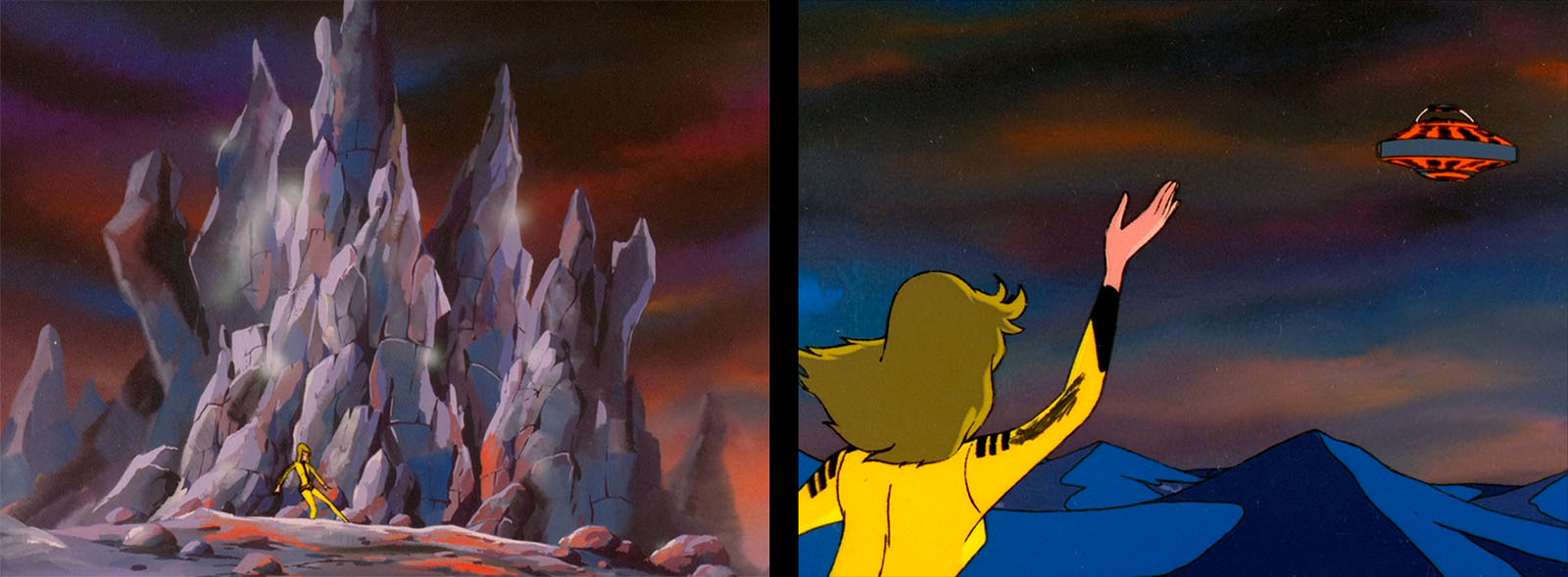
To make matters worse, an anomaly occurrs in Iscandar’s crust. Seismic activity, apparently triggered by the crustal explosion on the planet Gamilas, reveals an emergency: the Diamond Continent itself is sinking to the ocean floor that very night.
Although Kodai desperately tries to warn them, Yabu and his group refuse to believe it. Immediately after communications are cut off, the continent is struck by violent earthquakes and tsunamis. Yabu and the eleven others who had chosen to stay behind fall into a fissure in the torn-apart Diamond Continent and lose their lives. Only Yuki Mori is rescued in the nick of time by a relief helicopter piloted by Kato, allowing her to return to Yamato.
Chief Engineer Tokugawa quietly apologizes to Starsha, saying, “To me, Yabu was a cherished crewman. Please, I ask you to forgive him,” as he mourns the souls of his fallen crew.
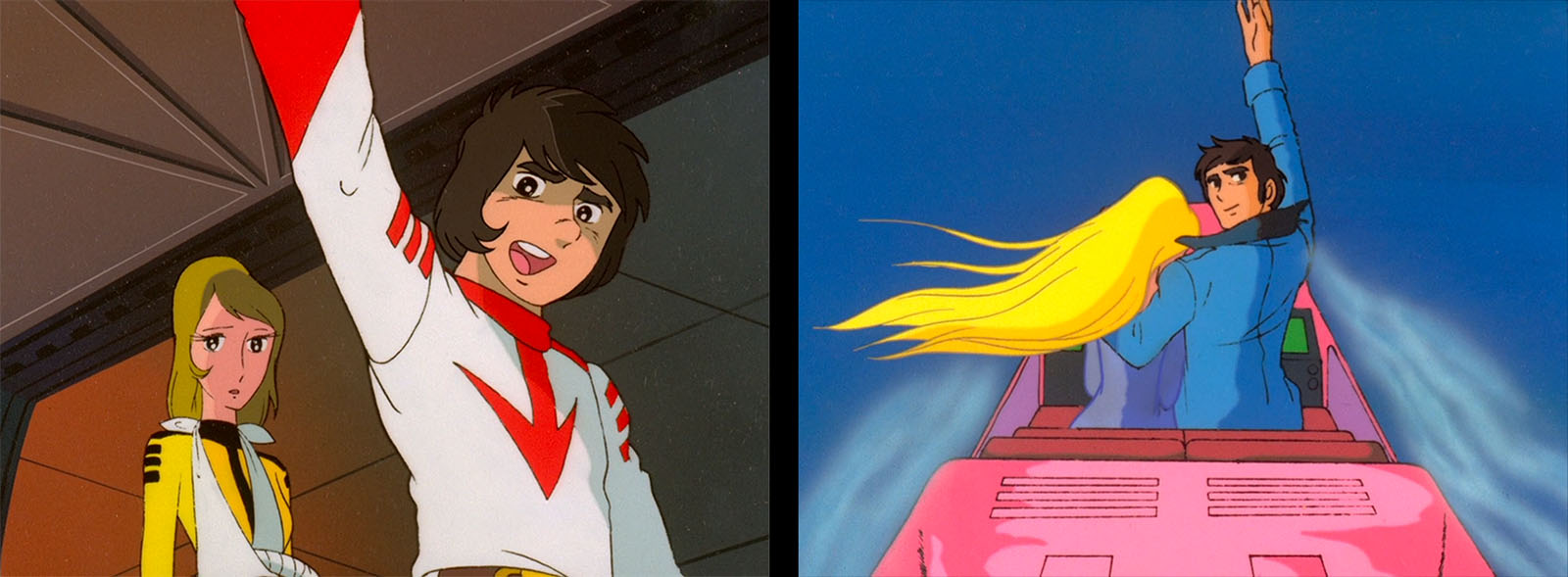
Starsha’s Choice and Yamato‘s Long Journey Home
As events move toward their conclusion, Starsha respectfully declines the offer made by Kodai. When invited to come to Earth, she firmly replies, “I cannot leave Iscandar.” True to her own words, “Happiness for tomorrow is something one must seize with one’s own hands,” she chooses to remain on the planet destined for ruin.
Mamoru Kodai bids farewell to his younger brother and resolves to stay on Iscandar with Starsha. The two are portrayed as figures who will weave the future of a new Iscandar, leaving behind a quiet, poignant impression. And so, Yamato begins the long journey back to Earth, carrying the radiation-removal device. Racing against the dwindling time left before humanity’s extinction, the ship once again ventures into the darkness of space.
In the hearts of the crew, thoughts of home mingle with their individual resolve and the lessons learned on Iscandar.

In Conclusion: An Old Man’s Musings
Speaking as someone who spent 32 years staring down pressure gauges, that rough-around-the-edges quality of the original Yamato is a lot like “valve play.” If you screw a valve shut too tightly, it’s liable to burst somewhere else. It’s by leaving a little bit of looseness that the whole system lasts longer, a principle I learned the hard way out in the field.
The last thing I want to convey is: imperfect lines, an imperfect ending, imperfect people…the very fact that one must move forward while embracing all of that is etched right into those 50-year-old animation cels. Your own happiness for tomorrow isn’t something someone else will simply bring to you, either. You have to build it up, little by little, with your own hands.
Perhaps a single thought has lingered in your heart, too.
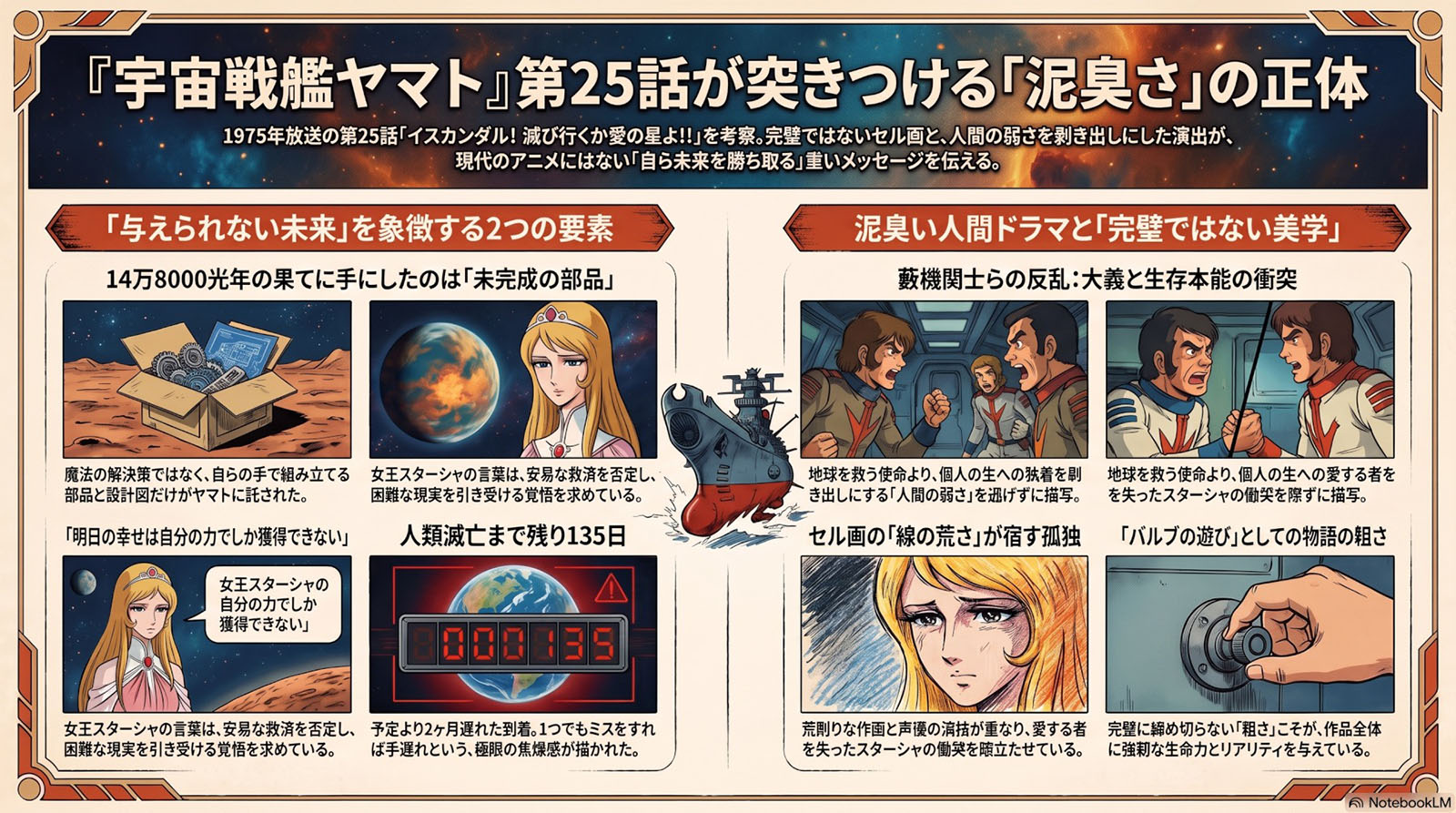
An infographic explaining the gritty human drama and the “unfinished future” of Episode 25, covering elements such as Starsha’s words, the 135-day countdown to Earth’s destruction, and Yabu’s mutiny.
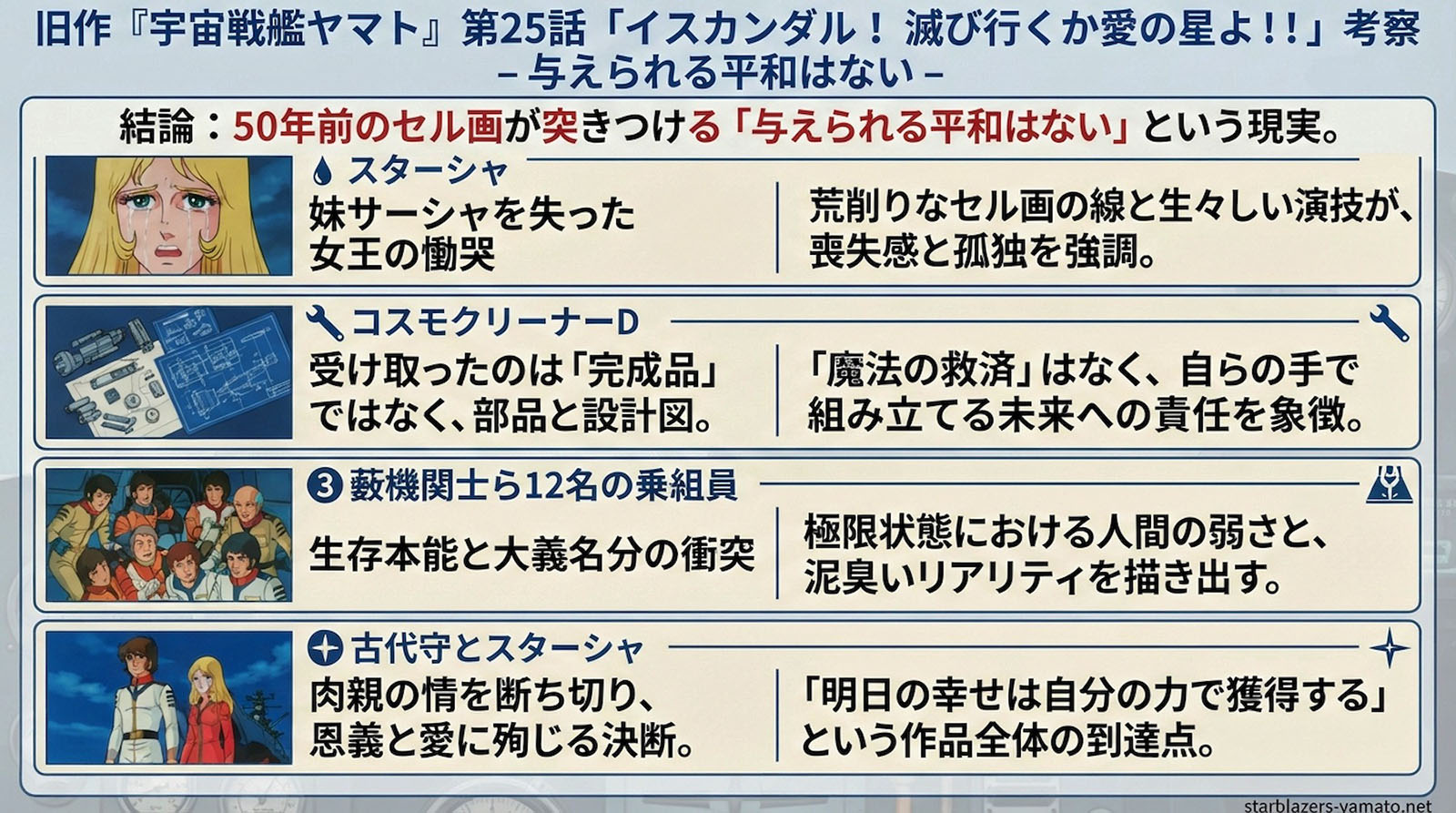
An infographic summarizing the theme that “peace is not simply given” through the lens of Starsha’s wail, the Cosmo Cleaner D’s parts and blueprints, the mutiny led by Engineer Yabu, and the decisions made by Mamoru Kodai and Starsha.
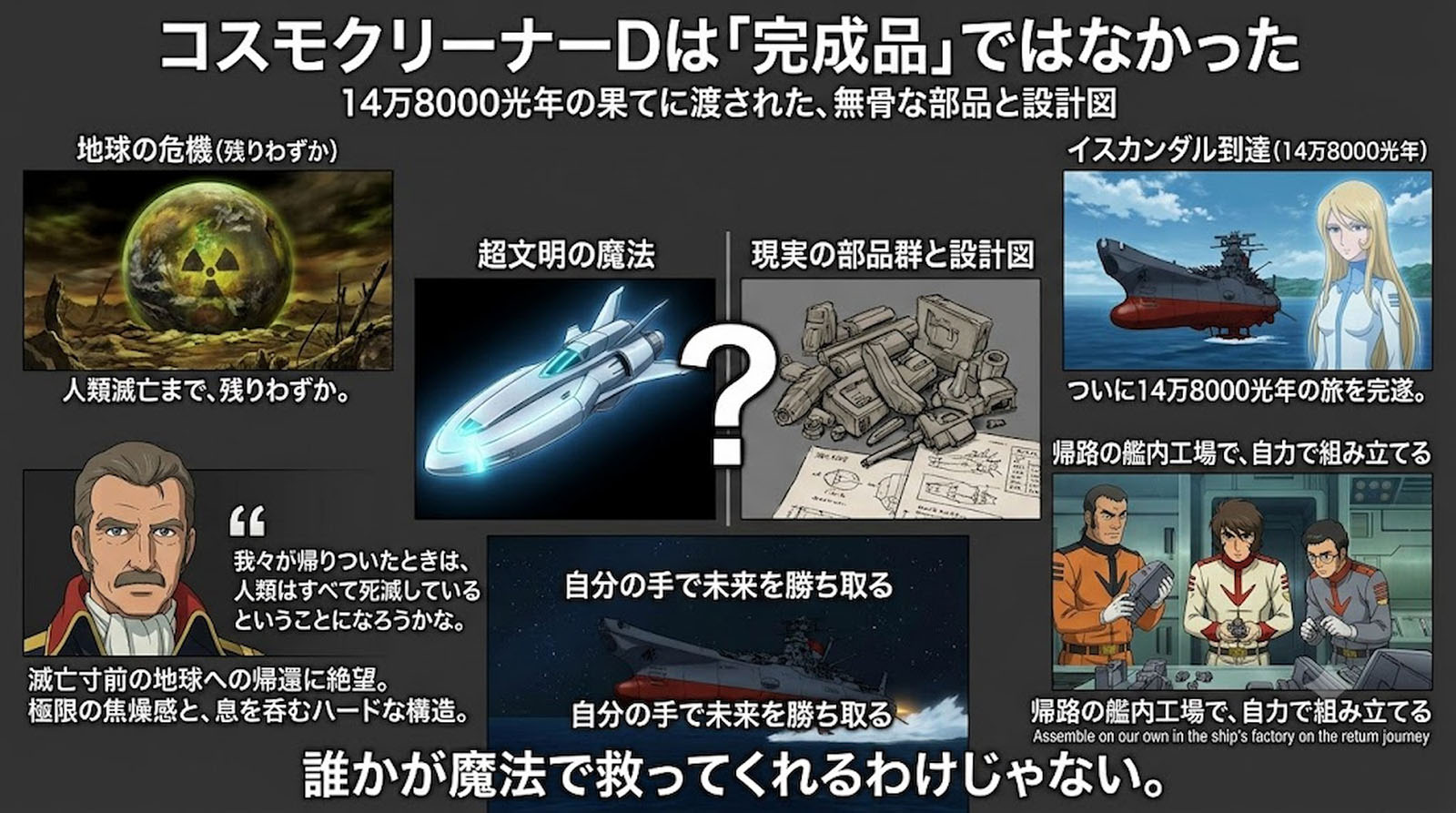
An analytical image explaining how the Cosmo Cleaner D is not a finished product, but rather parts and blueprints handed over at the end of a 148,000-light-year journey, tracing the story from Earth’s crisis and the arrival at Iscandar to the assembly during the return trip.
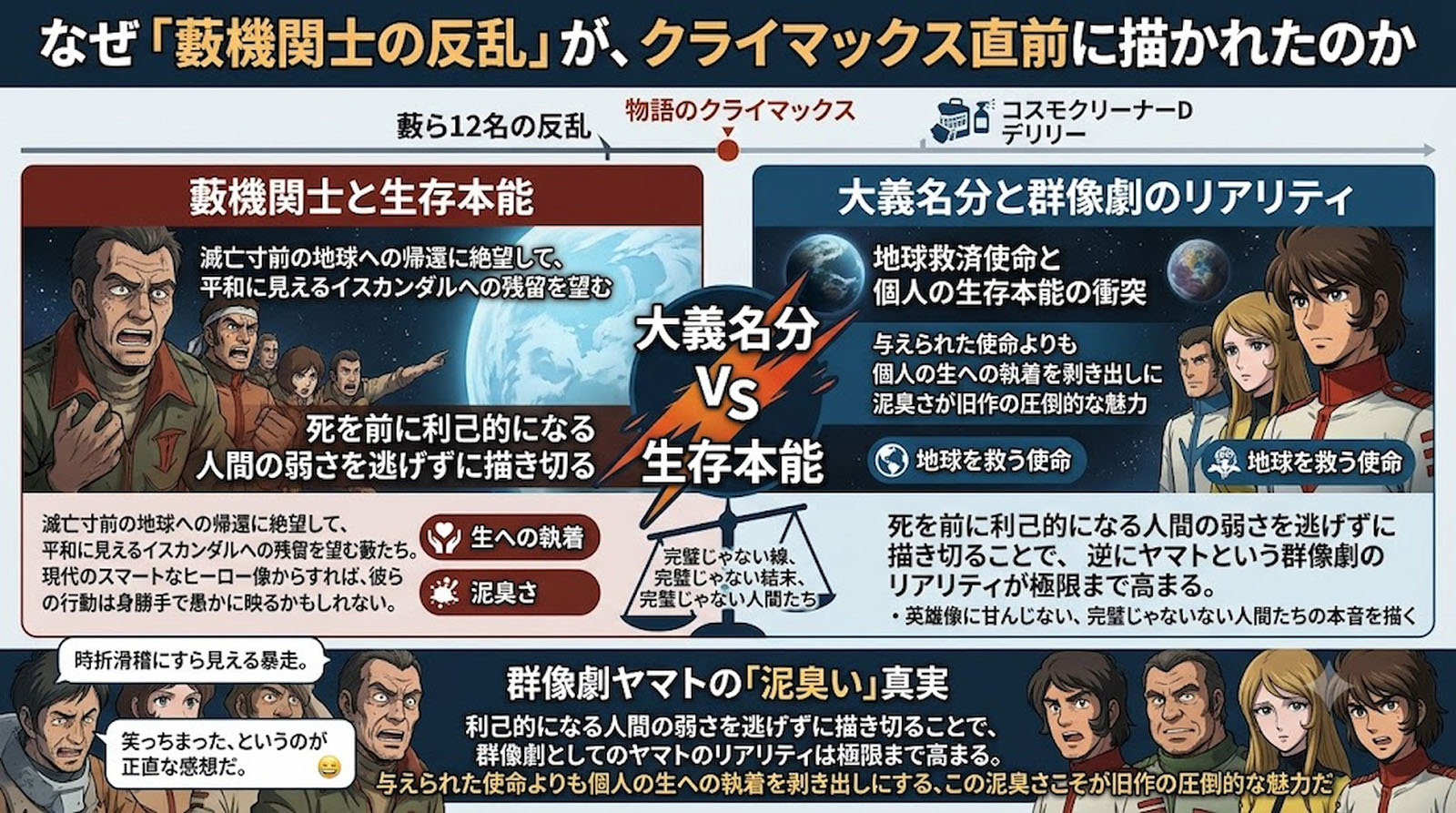
An infographic explaining why the mutiny of Engineer Yabu is depicted just before the climax of Episode 25, focusing on the clash between a noble cause and the survival instinct, the arrival of the Cosmo Cleaner D, and the gritty realism of the ensemble drama.
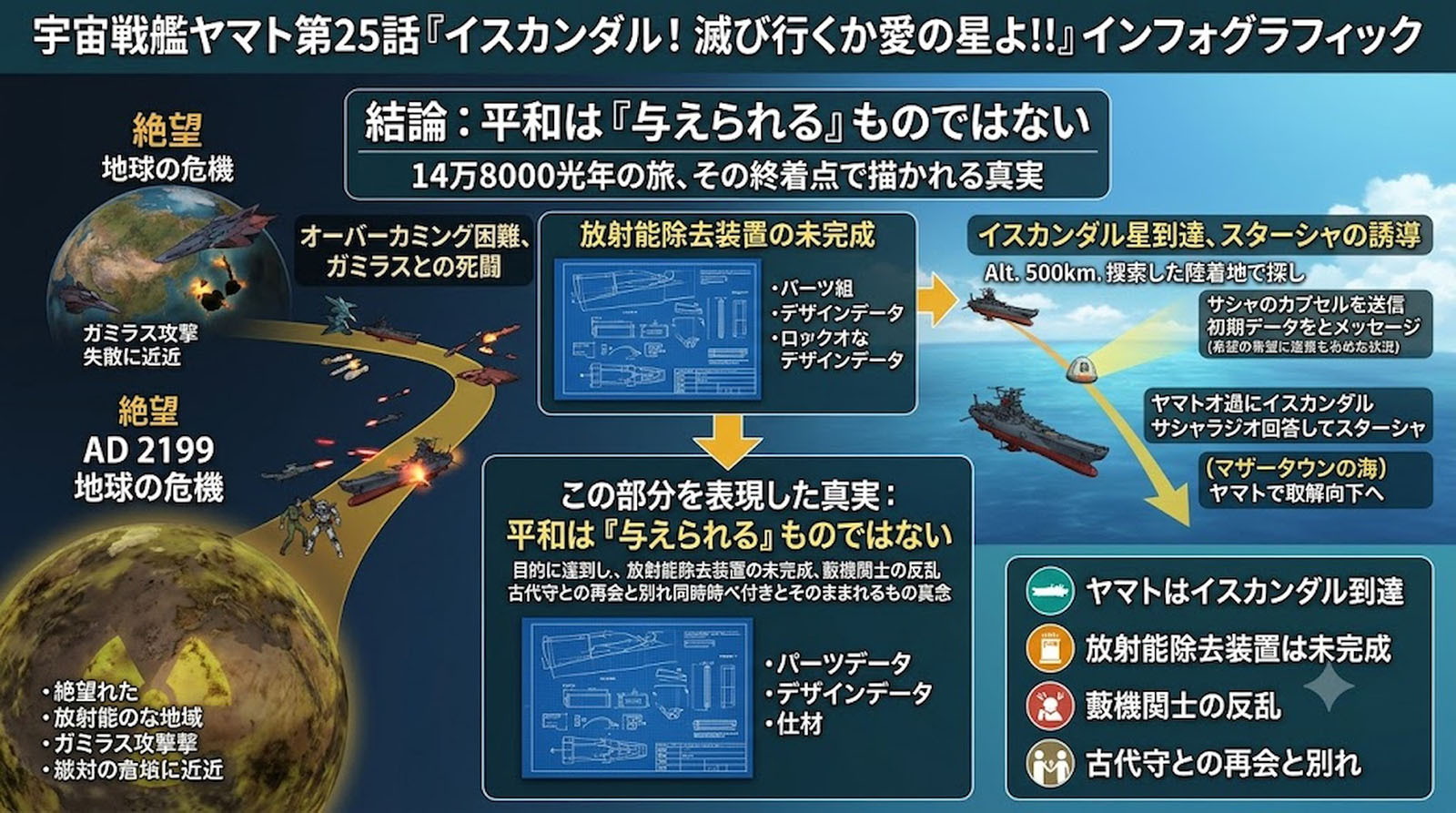
An infographic analyzing the concept that “peace is not simply given,” covering Earth’s despair, the unfinished radiation removal device, the arrival at Iscandar, Engineer Yabu’s mutiny, and the reunion and farewell with Mamoru Kodai.
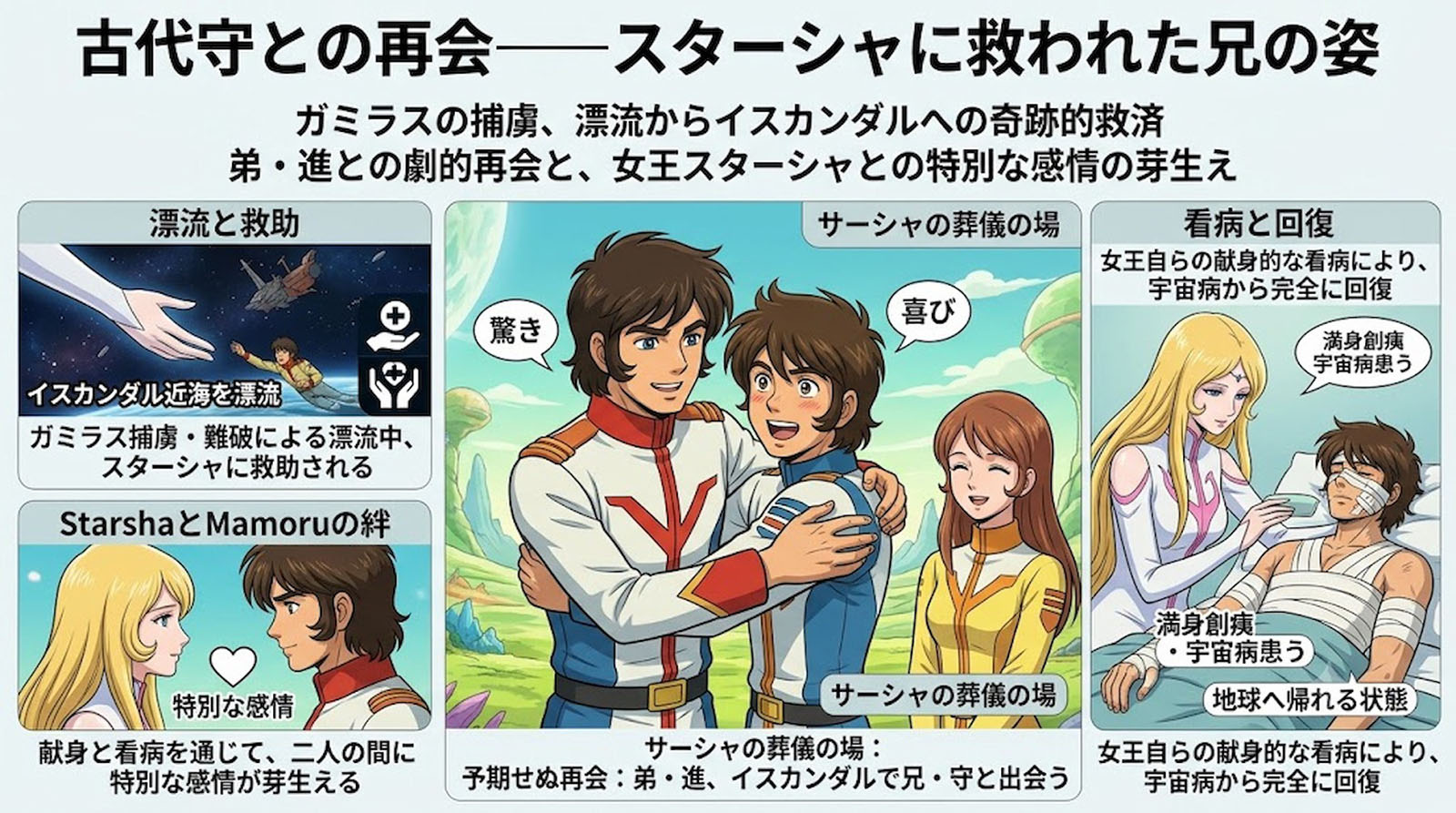
An infographic summarizing the events surrounding the reunion with Mamoru Kodai: his rescue by Starsha, the reunion between the brothers, the bond between Starsha and Mamoru, and his nursing and recovery.
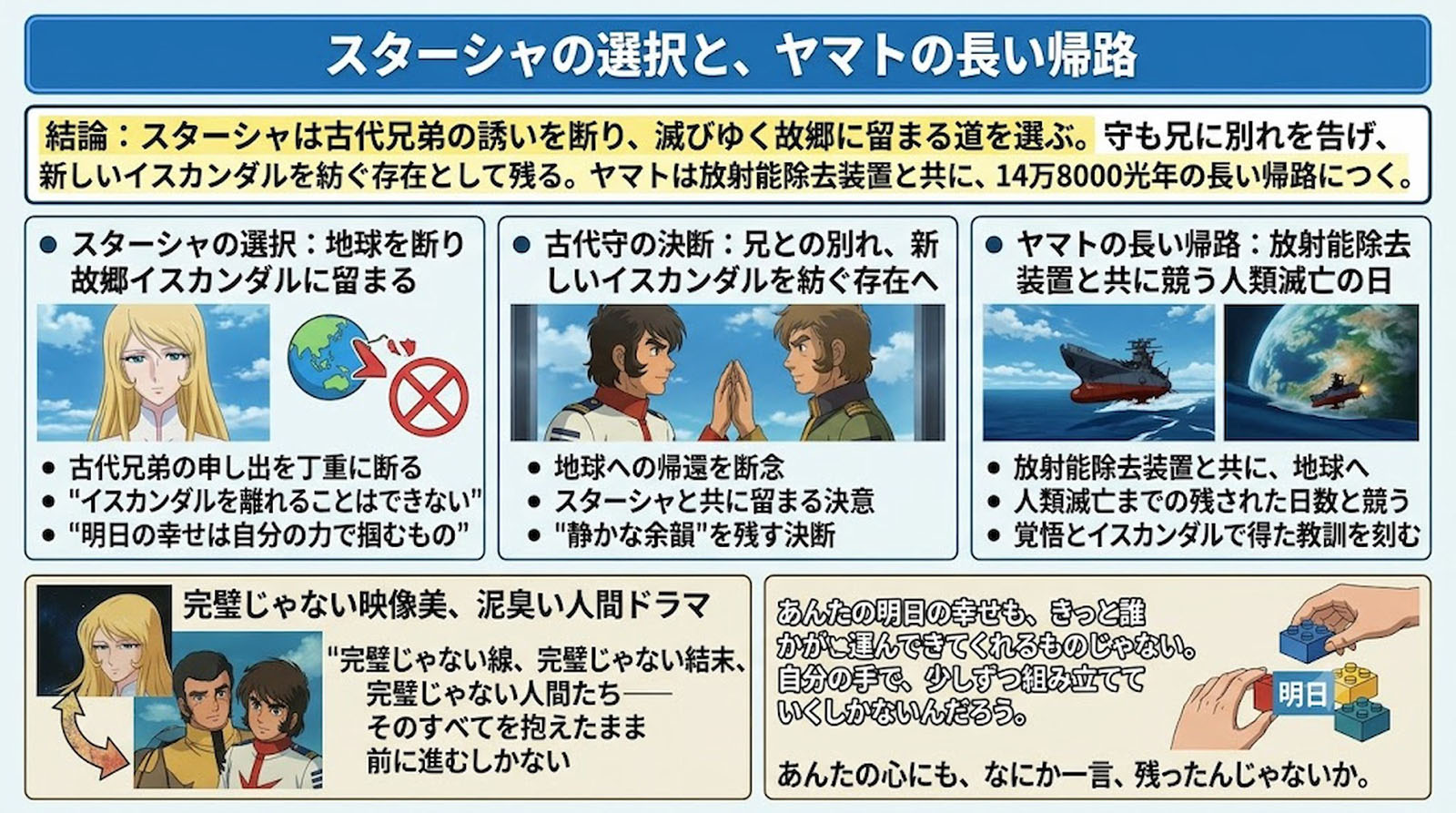
Starsha’s decision to decline the Kodai brothers’ invitation and remain on Iscandar. Her choice and Mamoru’s farewell leave a quiet, lingering resonance as Yamato begins its long journey home.
Thank you for reading to the end.