
Thoughts after watching Episode 6
See the original blog post here
Amidst the waves of a freezing night, searching for my brother…
It is past two o’clock in the morning. Winter in Sapporo sometimes brings with it a silence so profound it feels almost cruel. The cold air seeping through the cracks in the window is ruthlessly chilling the hot shochu I had just prepared; yet, I dare not rise from my seat to refill the kerosene heater, fearing that if I move, this quiet atmosphere — so precious right now — will slip away. Instead, I simply pull my thick cardigan tighter around me.
Drifting from the speakers of my old computer is the 1974 audio drama version of Space Battleship Yamato. Specifically, Episode 6: Space Destroyer Yukikaze Sleeps in the Ice Fields!
Why, you might ask, am I discussing a story from fifty years ago now, of all times? It’s because, as I listen to it alone on this freezing night, I realize that the “cold” and “loneliness” depicted within the story are inextricably intertwined with the very real pain I carry today as a man who has now passed the age of sixty.
Highlights of This Article
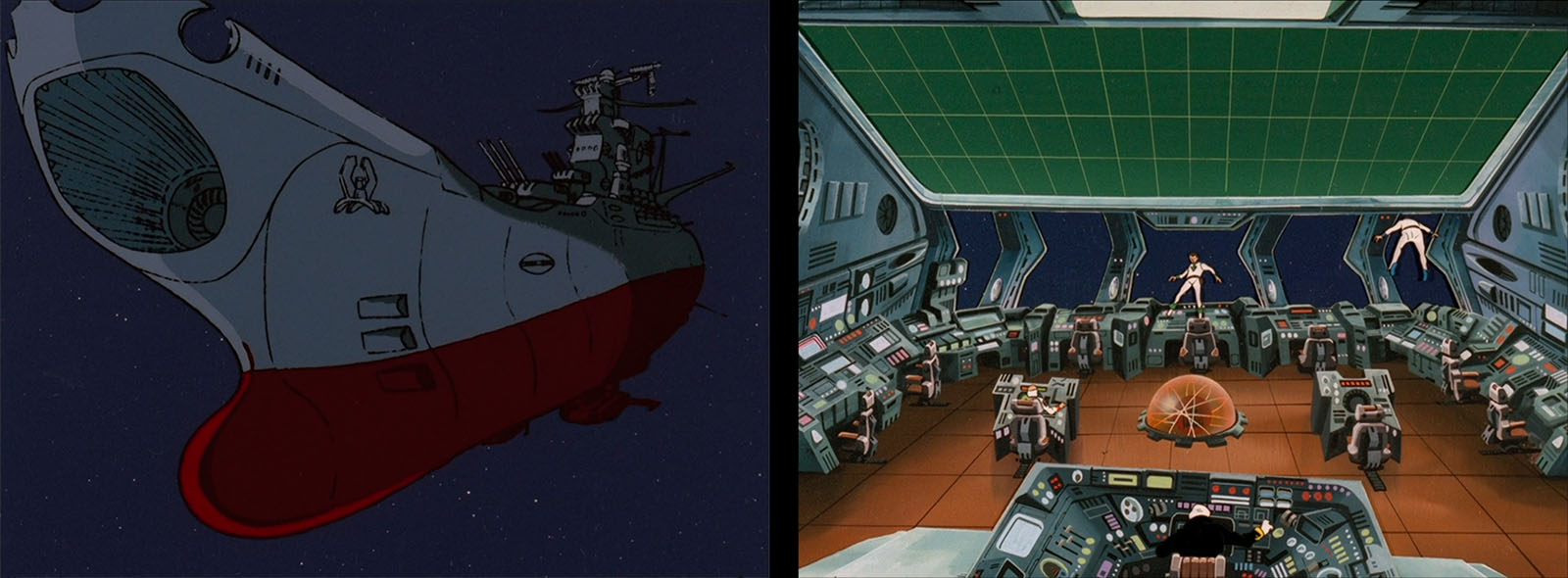
• Episode 6 depicts “an imperfect ship and imperfect human beings.”
• The recoil of the Wave-Motion Gun represents the human body itself, pushed beyond its limits.
• Captain Okita’s reprimands are not merely about discipline; they are a “prayer to keep his subordinates from dying.”
I am reminded of a time long ago when I yelled at a subordinate who had performed a dangerous task out in the field. I wasn’t angry, I was simply terrified that he might die.
That “pause,” that moment of hesitation embedded in Captain Okita’s every word, is the sound of a man’s blood pressure rising; a man who, precisely because he loves his subordinates, feels compelled to become a demon in their eyes. While a youngster like Kodai might not understand it, to me, a member of the same generation that “bears the weight of responsibility,” those words sound like nothing less than a prayer.
This episode tells a story that explores the universal themes of “what constitutes true strength” and “what it truly means to protect someone,” framed within the genre of science-fiction.
What You Will Learn from This Article
The Overlap Between the Imperfect Yamato and the Realities of Life
A profound empathy, unique to those in their sixties, that draws a parallel between Yamato’s fragility (how its circuits burn out from the recoil of the Wave-Motion Gun) and the “realities of life past sixty”: a body that can no longer be pushed to its limits, or the demands of caring for aging family members.
The Value of “Emotion” That Slips Through the Cracks of AI Summaries
The writer’s conviction that the true power to move the human heart lies not in efficient data or plot synopses, which AI can easily generate, but in the “coldness,” “loneliness,” and “superfluous human noise” that drift within the spaces between the lines of a story. In the methane clouds depicted by 1970s-era science, I perceive a “human warmth” that no AI could ever capture.
Mamoru Kodai’s Keepsake
The Cosmo Gun fallen upon the frozen plains stands as a stark testament to a clumsy yet desperate passion: a deep yearning for family.
The Pathology of Organizations and the “Ultimate Compassion” Behind Strictness
An examination of the distortions of modern society reflected in the organization of the Gamilas Empire, alongside the intensely paternal instinct to save his subordinates from death that lies hidden within Captain Okita’s words as he admonishes Susumu Kodai for a breach of discipline.
The “Noise Between the Lines” That AI Cannot Write
Recently, as a humble web writer myself, I began studying AI. However, I find that the prose it produces is simply too polished. To a fault.
If one were to ask an AI to summarize this particular episode, it would likely spit out a dry, clinical conclusion: “A malfunction of the Wave-Motion Gun, the harvesting of resources on Saturn’s moon Titan, and foreshadowing that hints at the survival of Mamoru Kodai.”
However, the true value of a story does not reside in such efficient data points.
Rather, the very essence of humanity is encapsulated in the “coldness,” “despair,” and introspection, as well as the “superfluous emotion,” that drift within the spaces between the lines. Yamato is by no means an invincible vessel. When it unleashes its most powerful weapon, it burns out its own circuits. When pushed beyond its limits, something within it inevitably groans and strains. That very imperfection resonates with me in a strangely profound way, mirroring my own body, worn out after years of service, and the figure of my mother, whose memory has recently begun to fail her.
“It is precisely because things aren’t perfect that we must protect them. We must live our lives with grit and tenacity.”
Episode 6 is a pivotal installment that depicts the clash between “the cost of protection” and the tension between “discipline and compassion.”
Now that I have reached this age, the true weight of that sentiment finally sinks deep into my heart.
The Distortions of Organizations and the Plight of “Middle Management”
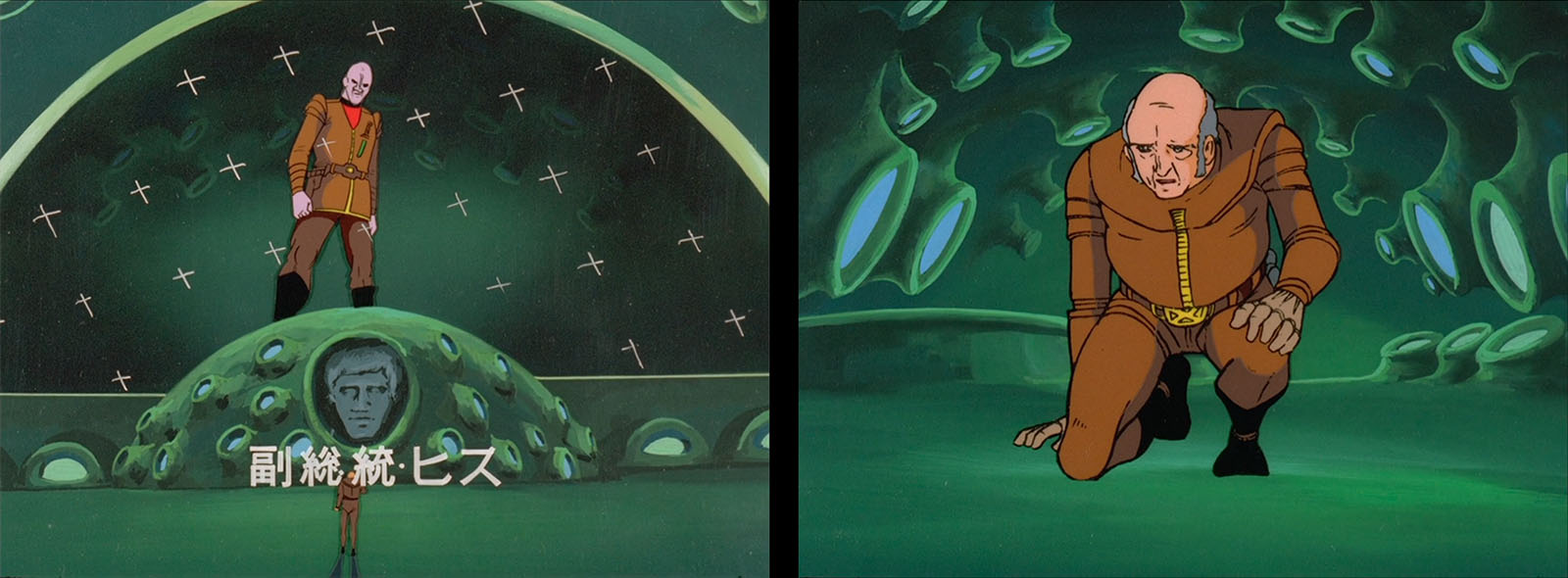
Listening back to the exchange between Hyss and Shulz at the Pluto Base, which takes place at the beginning of the story, gives me a literal stomachache.
There is the arrogance of Hyss, contrasted with the pathos of Shulz, who seems to be constantly, and pathetically, trying to gauge the mood of an invisible superior. It felt like I was watching a microcosm of the government bureaucracy where I once spent my career; I couldn’t help but let out a wry, bitter smile.
Whether it is a totalitarian state at the edge of the universe or an aging office building in Sapporo, when it comes down to it, human behavior doesn’t really change all that much.
“Statistically speaking, the collapse of any organization invariably begins with the hubris of its upper echelons and a breakdown in communication among the rank-and-file.”
The inherent fragility of the mighty enemy known as the Gamilas Empire is, in fact, the very same pathology that afflicts organizations across modern society.
A Father in His 60s’ Perspective: How to View Susumu Kodai’s “Discipline Violation”
Susumu Kodai’s Impatience and Okita’s “Parental Love”
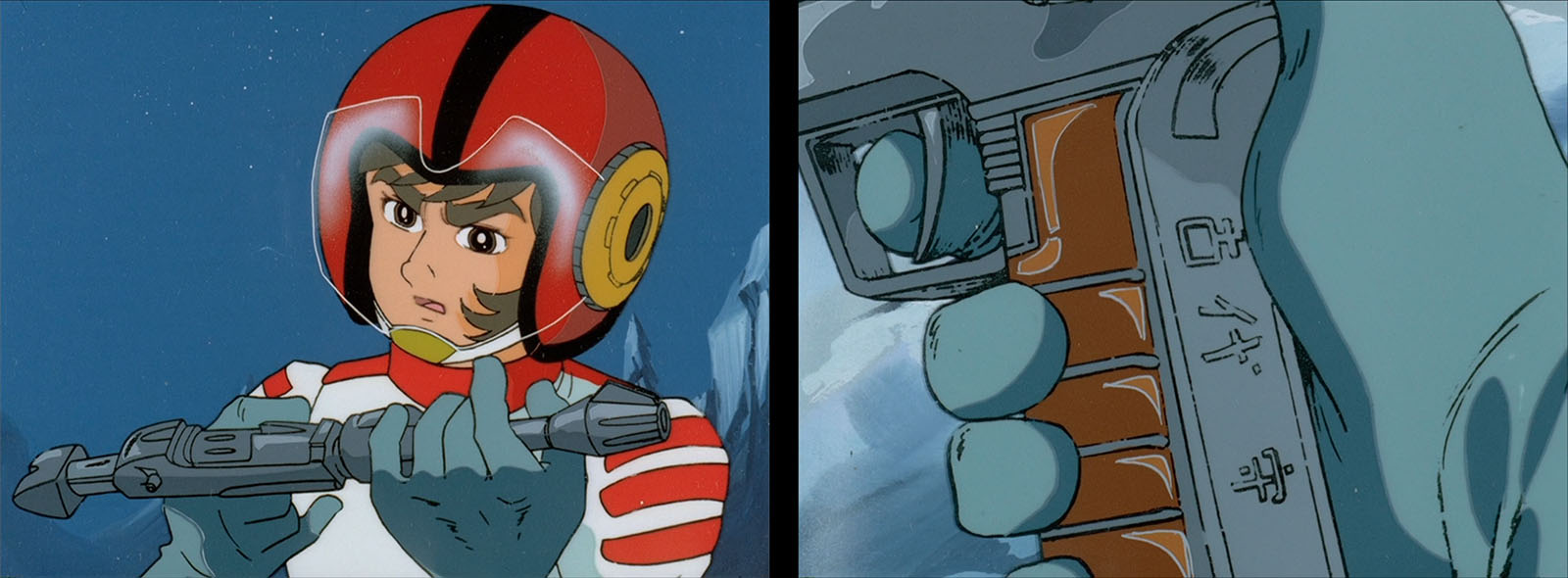
In the blizzard, Susumu Kodai found his brother’s gun, labeled “MAMORU KODAI.” Why was there no body, only the gun? Those who laugh at Kodai’s clumsy passion, his attempt to find his brother even in defiance of orders, as a “discipline violation” probably have never truly loved anyone.
One could dismiss it as the recklessness of youth, but I too have old memories I can’t easily discard. My sister, and the unfathomable anxiety of that blackout night after the earthquake. Emotions that should have been buried in the snow can suddenly resurface, like the coldness of a gun barrel.
Captain Okita’s words, “Yamato doesn’t belong to you alone,” are meant to admonish him. This isn’t a rejection. It’s a poignant expression of love, telling him, “Don’t try to bear too much on your own.” As the leader of an organization, and as a human being, his trembling voice conveys his desire not to let his subordinates die.
Story Summary
Countdown to Human Extinction and the “Double-Edged Sword”
Year 2199 AD. Under assault by “planet bombs” launched by the mysterious Gamilas forces, Earth has been contaminated by radiation, leaving humanity in a desperate situation with only one year remaining until total extinction. To retrieve a “radiation removal device” from Iscandar, located 148,000 light-years away in the Magellanic Clouds, the Space Battleship Yamato, bearing humanity’s last hope, now embarks on a grueling journey.
In the Jovian sphere, the Yamato successfully conducted a test firing of its trump card, the “Wave-Motion Gun.” Its sheer power was enough to send shivers down the spine of Gamilas Leader Dessler. Yet, the immense recoil simultaneously inflicted damage upon the ship, burning out the energy conduits that serve as Yamato‘s very heart.
Emergency Landing on the Icy Moon Titan
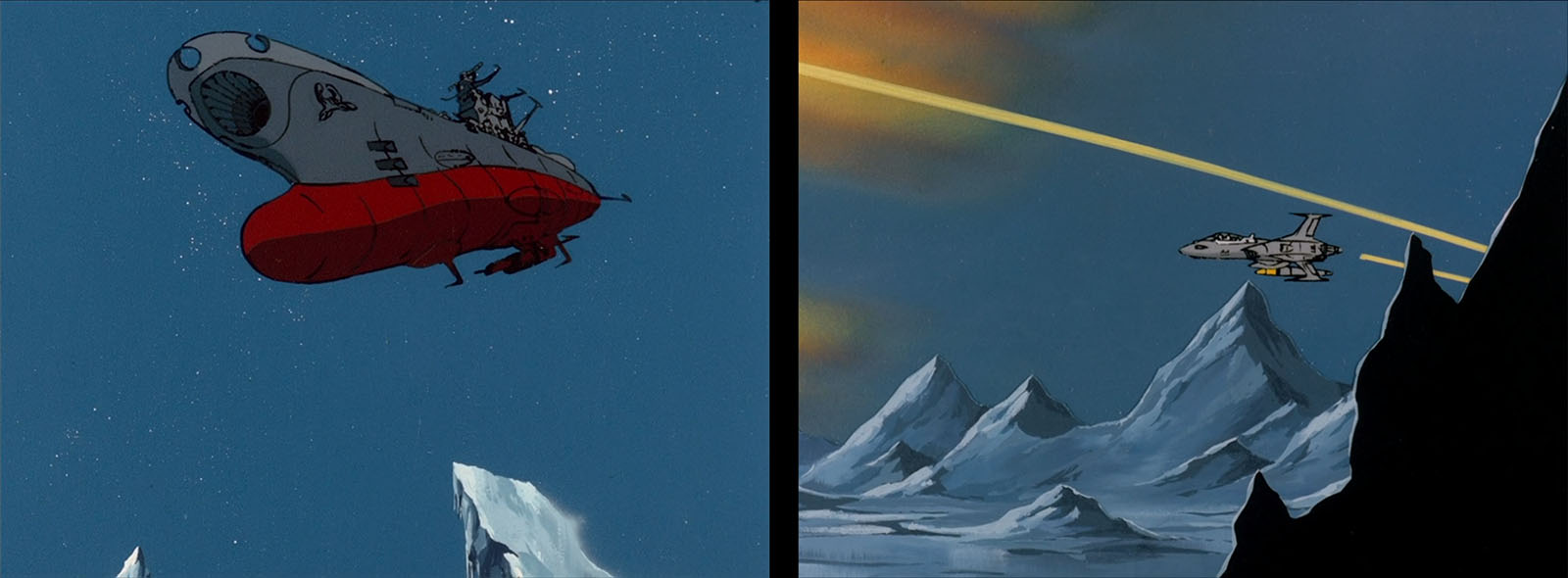
In search of “Cosmonite,” a rare mineral essential for repairs, Yamato heads toward Titan, a moon of Saturn. It is a desolate landscape, shrouded in freezing cold and methane clouds. A place of stark beauty, yet a dangerous combat zone where Gamilas patrol units keep a watchful eye.
Captain Okita orders Susumu Kodai, Yuki Mori, and Analyzer to search for the Cosmonite, while assigning Shiro Sanada’s team the task of procuring supplies. However, having sensed Yamato‘s mechanical distress, the Gamilas also secretly tighten their encirclement.
Discipline, Passion, and Memories of a Brother
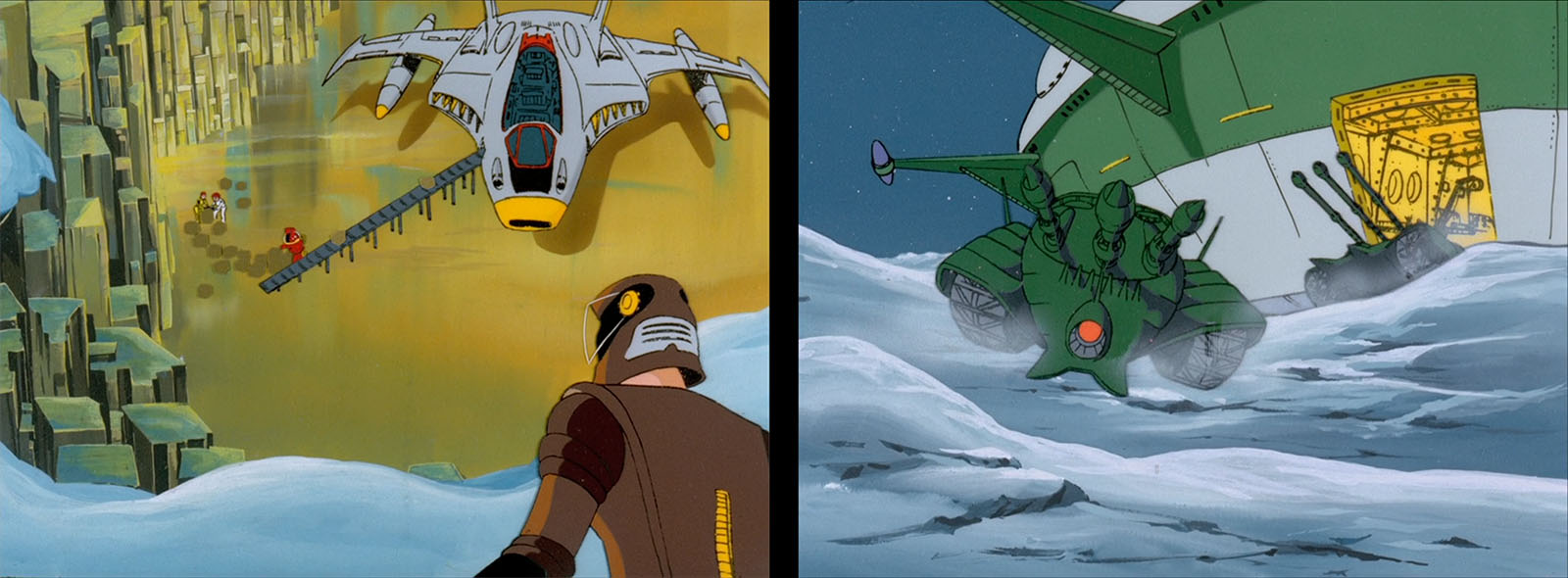
Tracking the Cosmonite’s energy signature, Kodai defies the captain’s order to return and presses ahead with the mining operation. Ignoring the pleas of Yuki Mori, who fears the consequences of his unauthorized actions, Kodai doggedly persists until he unearths the minerals. Yet, at that very moment, a Gamilas space tank launches a sudden attack.
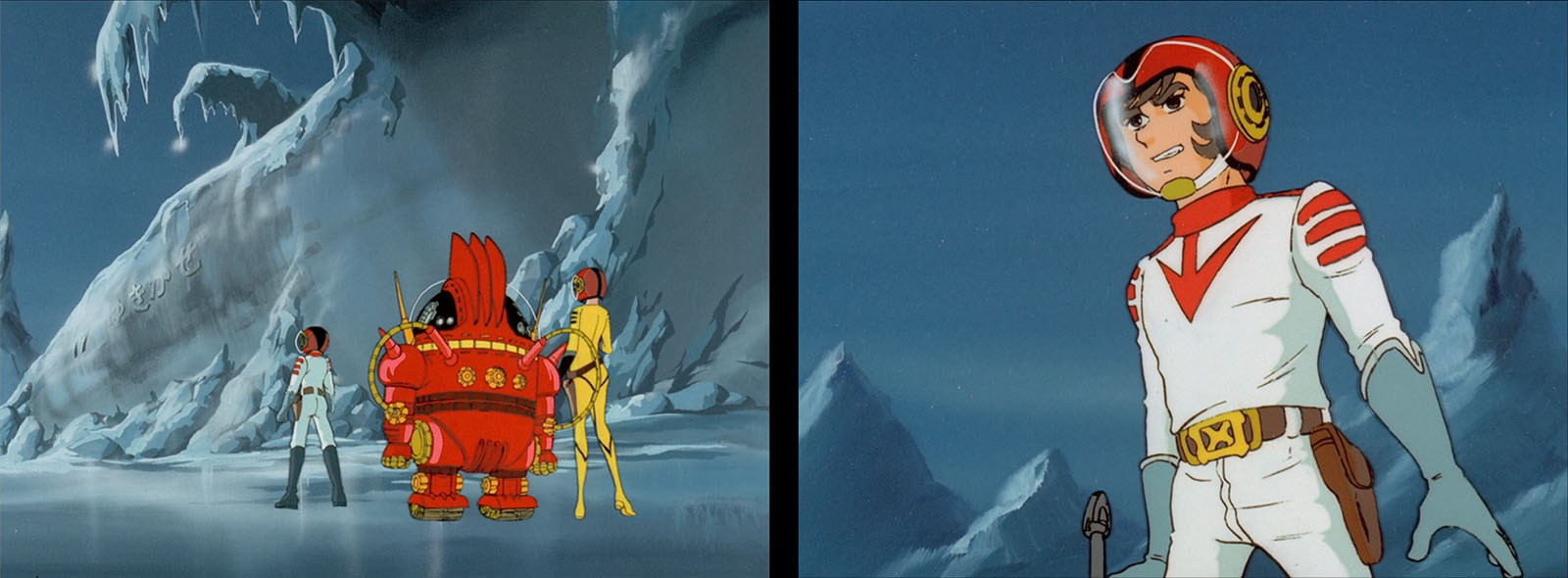
Amidst a fierce firefight, Kodai finds himself cornered in a life-or-death predicament. It is then, amidst the snow-swept terrain, that he makes a discovery: a single “Cosmo Gun.” Inscribed on it is the name of his older brother, Mamoru Kodai; the very man who, during the Battle of Pluto, had sacrificed his life to serve as a shield so that Captain Okita could make his escape.
“It’s my brother’s… Yukikaze! Brother — are you there? Brother!”
Amidst the raging winds, Kodai — holding fast to the belief that his brother has survived — fights off the Gamilas soldiers, as if to carry on his brother’s dying wish. Channeling his grief and rage into strength, he succeeds in safely bringing the Cosmonite back to Yamato.
To Distant Iscandar
Thanks to the efforts of Sanada and his team, repairs are completed and laughter echoes through the ship’s corridors, yet Kodai stands in silence, clutching his brother’s Cosmo Gun and quietly steeling his resolve.
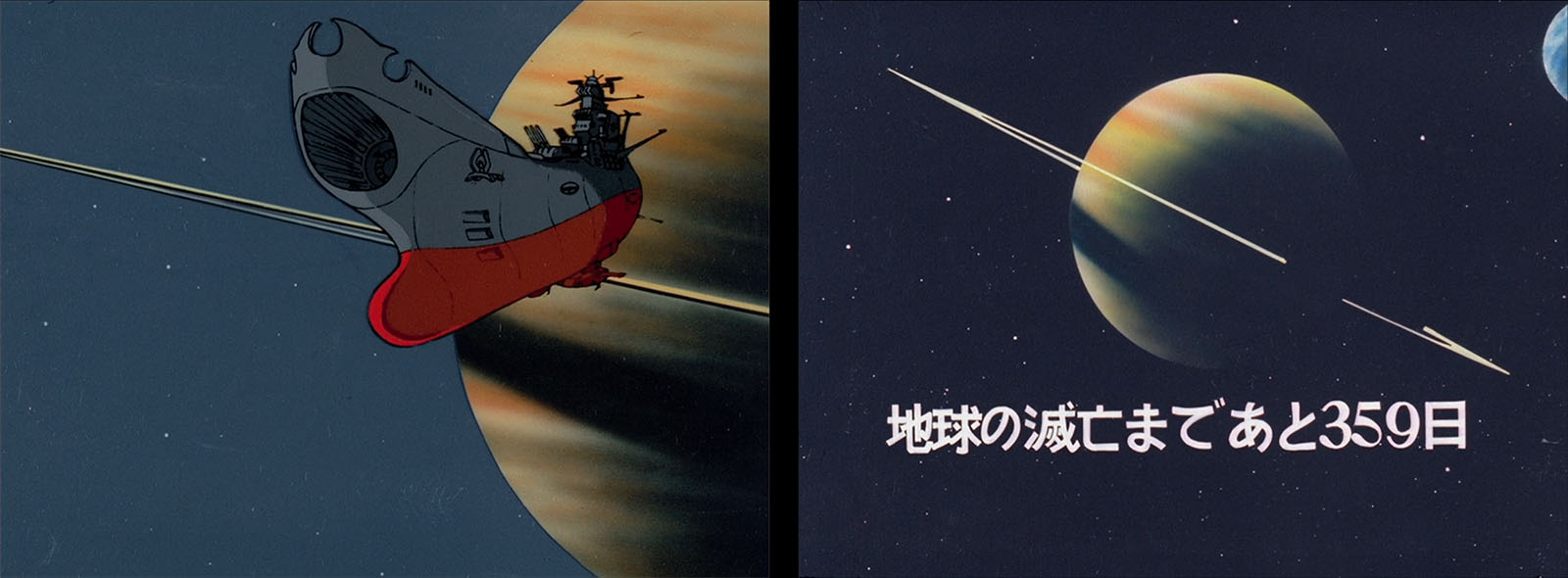
Five days have passed since their departure from Earth. Humanity has but 359 days remaining. To save the loved ones waiting back home, Yamato accelerates into an endless battle, a solitary round-trip voyage spanning 296,000 light-years.
Amidst the Countdown to “The Day of Humanity’s Extinction”
At the story’s conclusion, a narrator announces: “Until the day of humanity’s extinction… 359 days remain.”
Surely, our own lives, too, are unfolding within some kind of countdown.
Here in Hokkaido, we count the months on our fingers, waiting to see how much longer we must endure the winter cold before spring finally arrives. Though our struggle may not be as epic in scale as that of Yamato‘s crew, we live out each day harboring a similar sense of urgency and earnestness.
An AI would likely offer a far more eloquent and sophisticated critique of this episode. But I have no need for such polished words. As I feel the biting cold seeping in through the cracks of my aging window frame, I simply wish to sit here in my solitude, quietly ruminating on the engine’s scream, that piercing cry of Yukikaze.
If, deep within your own heart, there resides a “memory of someone,” a memory that, though flickering and faint, continues to shine on, then tonight, I ask that you gently embrace it.
The “human warmth” found within these classic works of science-fiction will surely serve as a small lighthouse, illuminating the path toward your tomorrow. Well, I suppose it’s about time I went out to refill the kerosene.
Tomorrow, too, another ordinary day will begin. just Mom, Pii-chan, and me.
The stern, yet quiet words Captain Okita spoke to Kodai strike me as nothing less than a prayer from a man who truly understands the realities of the field: a plea not to force a broken component to move when it is on the verge of collapse.
Surely, it is not only iron ships that are in need of repair.

An Old Man’s Musings
For over thirty years, working in plant maintenance and inspection, I’ve kept my senses razor-sharp, alert to the slightest loose bolt or the faintest vibration in a pipe. Metal subjected to such grueling use inevitably suffers from fatigue. Push it past its limits, and it will scream in protest. The scars left upon Yamato, its circuits scorched after unleashing a power far too great for her frame, look to me exactly like my own aging body: worn down and creaking in every joint, yet kept running through sheer force of will despite the heavy toll it takes.
The same goes for the wreckage of Yukikaze, lying abandoned on the frozen plains of Titan. That is no mere hunk of iron. It is the hollow shell of a will, into which someone breathed life, which someone lovingly tended, and which strove to protect others until its very last breath. Here in Sapporo, late at night, in a room where the only sound is the steady roar of the kerosene heater, I gaze at the cracks in my fingertips. It is a wear and tear that no amount of lubricating oil can ever erase, the indelible proof that I have truly lived.
Both machines and humans will eventually break down if left untended. Yet, wasn’t it our job to grit our teeth, painstakingly mend those broken parts, and reignite the flame within them? It’s easy to take refuge in the comforts of convenience and efficiency, but a heart that has abandoned the practice of self-care will shatter all too easily in the biting cold of winter.
Have you taken the time to gently mend your own frayed edges lately? Whether through the kindness of another, or by your own hand? Have you ever poured that kind of love into yourself? A love perhaps clumsy and unrefined, yet deeply earnest, much like applying a soldering iron to an aging, worn-out circuit?

Featured Characters
Susumu Kodai
Chief of the Combat Division aboard Yamato. On Titan, a moon of Saturn, he searches for clues regarding the survival of his older brother Mamoru, who was presumed killed in action during the Battle of Pluto.
Mamoru Kodai
Susumu’s older brother and Captain of the missile destroyer Yukikaze. At the beginning of the story, amidst the annihilation of the Earth Defense Fleet, he sacrificed himself to serve as a shield, allowing Captain Okita to escape. He was subsequently presumed to have perished on the battlefield.
Juzo Okita
The first Captain of Yamato. While upholding strict discipline, he possesses a deep, paternal affection for his crew members, regarding them as if they were his own sons.
Yuki Mori
Chief of the Life Support Division and Radar Operator. During the search for Cosmonite on Titan, she attempts to restrain Kodai, who is acting unilaterally without authorization.
Analyzer
A high-performance robot installed aboard Yamato. In this episode, he is portrayed engaging in remarkably human-like behaviors, such as openly expressing his affection for Yuki Mori.
Shiro Sanada
Chief of the Engineering Division. He directs the resource procurement operations on Titan in order to repair the energy conduits, which were damaged following the firing of the Wave-Motion Gun.
Leader Dessler
The supreme leader of the Gamilas Empire. While astonished by the sheer power of Yamato‘s Wave-Motion Gun, he coolly devises a ruthless counter-strategy.
Vice Leader Hyss
Dessler’s close aide. His character is portrayed with a touch of the pathos typical of a middle manager, constantly having to gauge his superior’s mood while assisting in the administration of the Empire.
Yareta
The commander of a Gamilas patrol unit who appears in Episode 6. The episode features a rare scene in the series where he is depicted actually speaking the Gamilas language.
Related Items
Missile Destroyer Yukikaze
The vessel commanded by Mamoru Kodai (an Isokaze-class Assault Space Destroyer). Discovered lying dormant on the icy plains of Titan, its discovery serves as a pivotal turning point in the story.
Cosmo Gun (The Warrior’s Gun)
A firearm discovered on the snowy plains of Titan, one of the personal effects of Mamoru Kodai. The grip bears the engraving of his name, and it continues to be treated as a significant item in subsequent installments of the series.
Audio Drama Version
Refers to the drama LPs (vinyl records) and radio dramas. At a time when means for recording video were scarce, these audio productions served as a precious medium for fans to relive the story. I have spent countless hours replaying and savoring the engine sounds of Yukikaze, listening to the audio alone, yet the sheer impact that strikes when the visuals and music converge is, truly, an experience of a different magnitude.
Titan (Saturn’s Moon)
The location where Yamato landed to mine “Cosmonite,” a rare mineral ore. It is depicted as a harsh environment shrouded in ice and methane clouds.
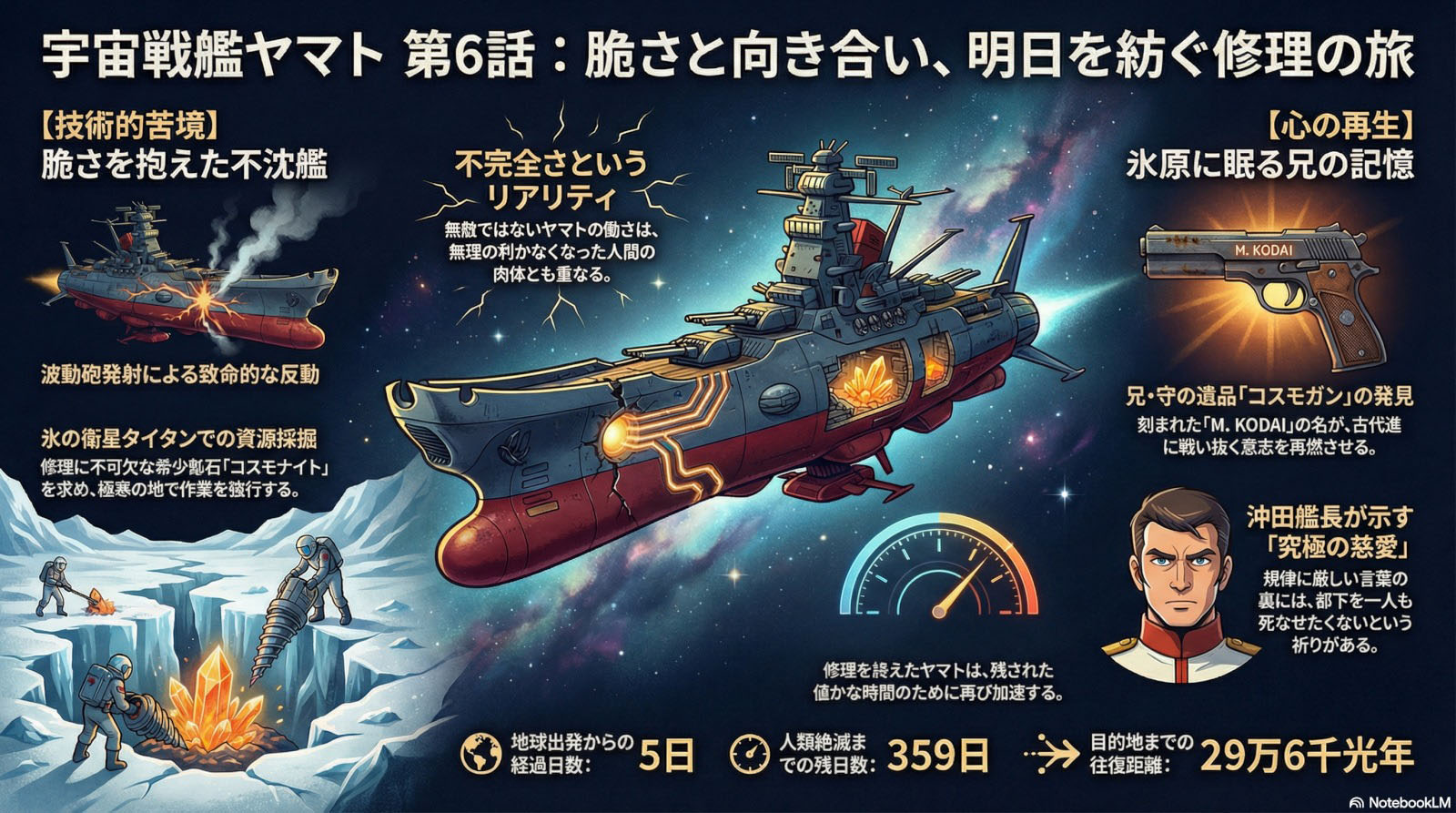
This infographic analyzes the current state of Yamato, portrayed here as a “fragile, unsinkable ship,” as it grapples with the fatal repercussions (recoil) of firing its Wave-Motion Gun. It serves as a summary covering the mining process for the rare mineral “Cosmonite” on the frigid satellite Titan; the “Cosmo Gun,” a memento discovered by Susumu Kodai of his late brother Mamoru; and the compassionate leadership of Captain Okita, who conceals his deep desire to “keep his subordinates from dying” behind a facade of strict discipline.
Thank you for reading to the end.