
Thoughts after watching Episode 7
See the original blog post here
4:00 AM: Amidst the Silence of Sapporo
February 20th. Sapporo has awakened to a calm, tranquil morning, the fierce blizzard of yesterday now seeming like a distant dream. The forecast calls for temperatures to rise above freezing; it is a morning where, little by little, one can sense the faint stirrings of spring.
I know the kerosene gauge on the heater has dipped into the red zone, but for now, I have no desire to rise from my seat.
The rhythmic tapping of my keyboard, punctuated occasionally by the creaking of this old house…these are my companions now.
From the kitchen drifts the faint, steamy scent of porridge being simmered by my mother, who suffers from dementia, for the sake of my sister, who struggles with her own mental health. At the end of November 2025, I stepped away from the auto-gas facility where I had worked for 33 years. Now, while devoting myself to caregiving, I spend my time weaving these words together.
To be honest, there are nights when I feel as though I have been left behind by the world. Nights when I feel as though I am slowly sinking into a cold, dark sea. In those moments, my hand instinctively reaches for Episode 7, an episode hailed even on the official Space Battleship Yamato portal site as the series’ true “origin point.”
While the crisp, vivid visuals of the recent 4K remastered edition are undeniably stunning, I deliberately choose to gaze upon the slightly blurred imagery of the original cel animation. I feel that the sheer “tenacity” poured into every frame by the staff of that era, who sacrificed sleep to bring it to life, resonates in a strangely profound way with the quiet stillness of this snowy night.
This seventh episode is packed with a “stance on life for adults” that transcends mere tales of simple good-versus-evil justice. If you currently find yourself in the depths of despair, feeling as though “it’s over; I’m going under,” I ask that you bear with me and listen to my story for just a little while. I want to convey to you that the time Yamato spent submerged beneath that frozen sea was, in fact, not wasted time at all.
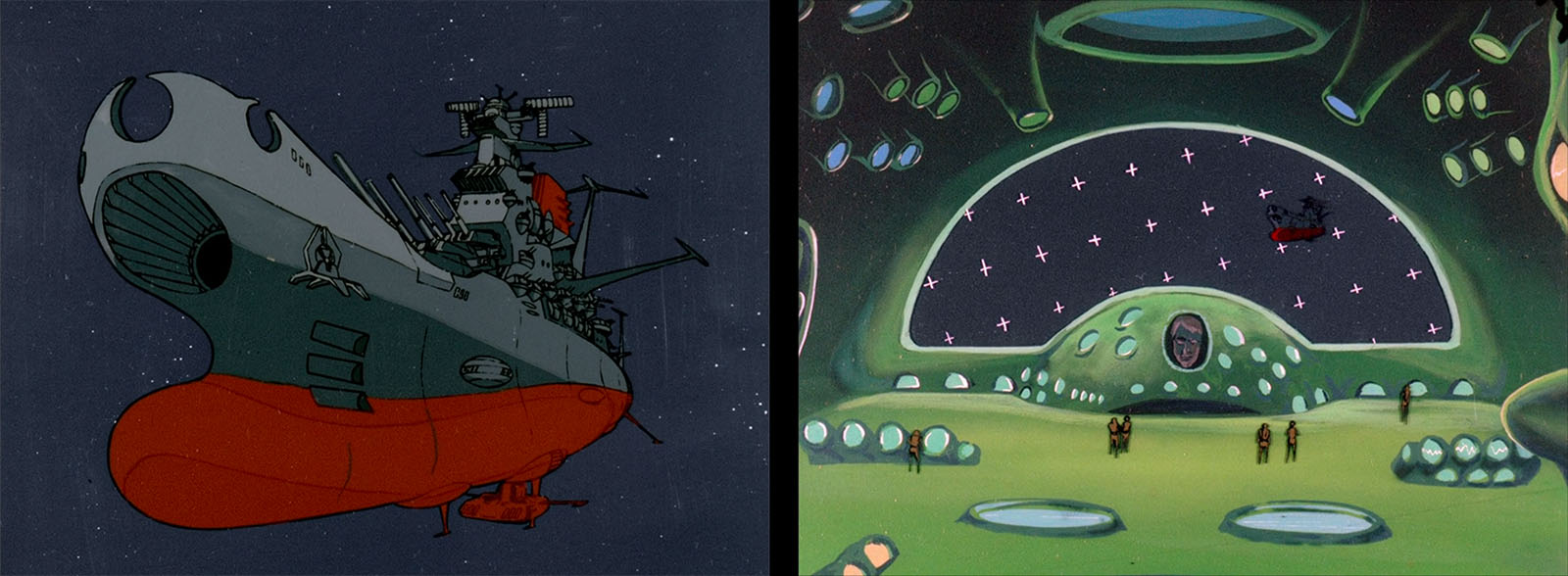
What You Will Learn from This Article
Episode 7’s greatest highlight is Captain Okita’s “decision of honor,” his choice to seal away the Wave-Motion Gun.
The Reflection Satellite Cannon is portrayed as a weapon that symbolizes the terror of faceless, ruthless efficiency. The sinking of Yamato is not a defeat; rather, it is a dramatic staging. A moment of “energy charging” or “gathering of strength,” in preparation for a counterattack. It illustrates the horror of those who, knowing nothing of the feel of tightening a bolt or the scent of gas, attempt to run things based solely on numbers—on “efficiency.”
How to Protect “Pride,” Something More Important Than “Efficiency”
The reasons behind Captain Okita’s decision to seal away the Wave-Motion Gun, and a discussion on the “masculine dignity” that is all too easily lost sight of in today’s efficiency-driven society.
A Perspective on Despair: Viewing It as a “Recoil” for Resurgence
The hope that those very periods when we feel as though we are “sinking,” amidst the rough seas of life brought on by events such as caring for elderly parents or retirement, are actually the preparatory phase for our next great leap forward.
Lessons from a Half-Century-Old Masterpiece: “The Stance of a Mature Adult”
Now that I have reached my 60s, I resonate more deeply than ever with the immense burden Captain Okita bears, and his unwavering resolve never to let his subordinates (his family) glimpse his own despair.
Captain Okita’s Pride: The Deliberate Sealing of the Ultimate Weapon
In contrast to the Gamilas, who prioritize efficiency and victory above all else, Okita chose to seal away the Wave-Motion Gun in order to protect the solar system, his “garden.” Through his actions, a man who has spent his entire life working on the front lines discerns the true meaning of “integrity.”
The Reflection Satellite Cannon, A Symbol of Modern Society’s Distortions
By drawing parallels between Gamilas’s tactic of launching unilateral attacks from a faceless, safe distance and the malice and efficiency-obsessed culture of our modern internet society, this piece offers a sharp critique of the fading humanity in our world today.
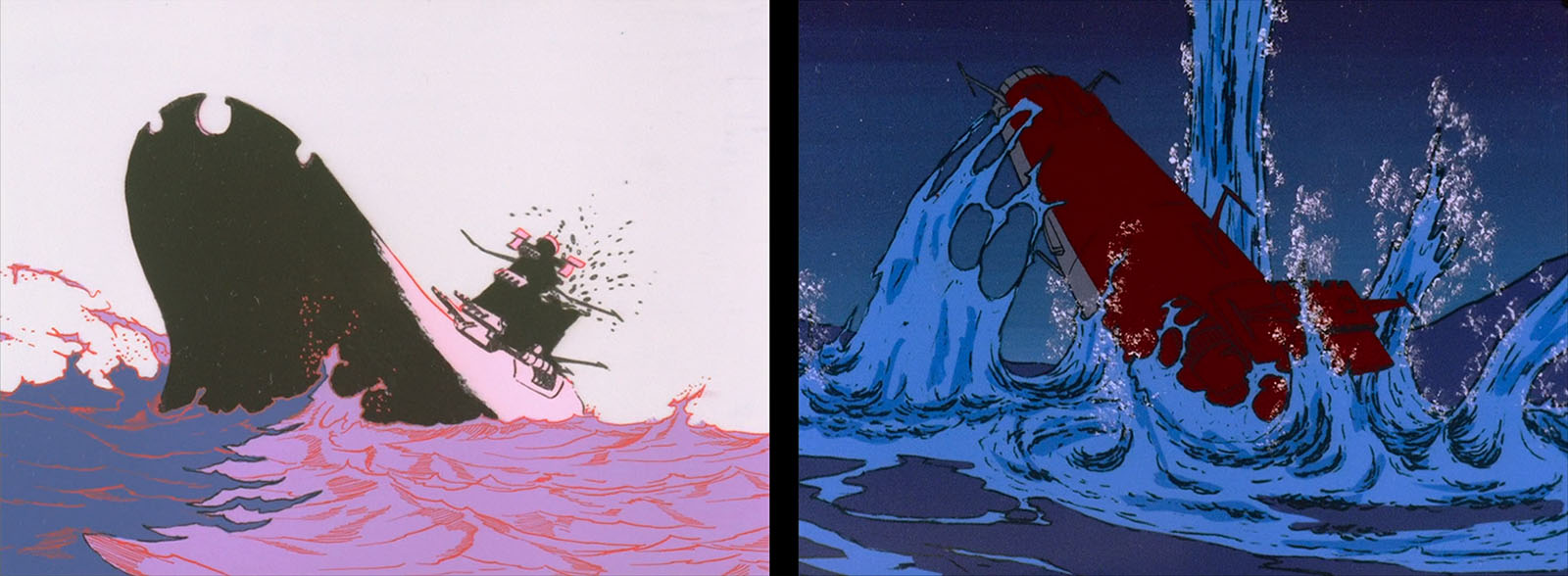
“Sinking” Is a “Recoil” for Resurgence
It is late at night in Sapporo. Having left the gas utility field where I worked for 33 years, I now spend my days consumed by the duties of caring for my elderly parents. Suddenly, I find myself re-watching Yamato Episode 7.
Captain Okita, who chose to seal away the Wave-Motion Gun (the ultimate weapon) declares, “We must not defile the garden of the solar system.” In his figure, prioritizing “pride” over mere efficiency or victory, I see the true dignity of a man who has lived his entire life on the front lines.
In the story, Yamato appears to sink beneath the waves in the face of a despicable enemy attack. Yet, that is no mere sinking. It is a “submergence,” a moment to recharge energy and await the opportunity to strike back. I feel the same way about my own life right now. Even if I appear to have been left behind by the world, sinking into the dark ocean of caregiving duties, I know that this is merely a “maintenance period,” a time to prepare for my next decisive move.
While our enemies laugh and mockingly dismiss us as “fools,” we need only focus on polishing the engines within our own souls.
The scent of porridge drifts from the kitchen. Sapporo lies locked in the snow’s embrace. Just as Yamato broke through the ice to surface, I, too (clumsily yet tenaciously) will defend this everyday life to the very end.
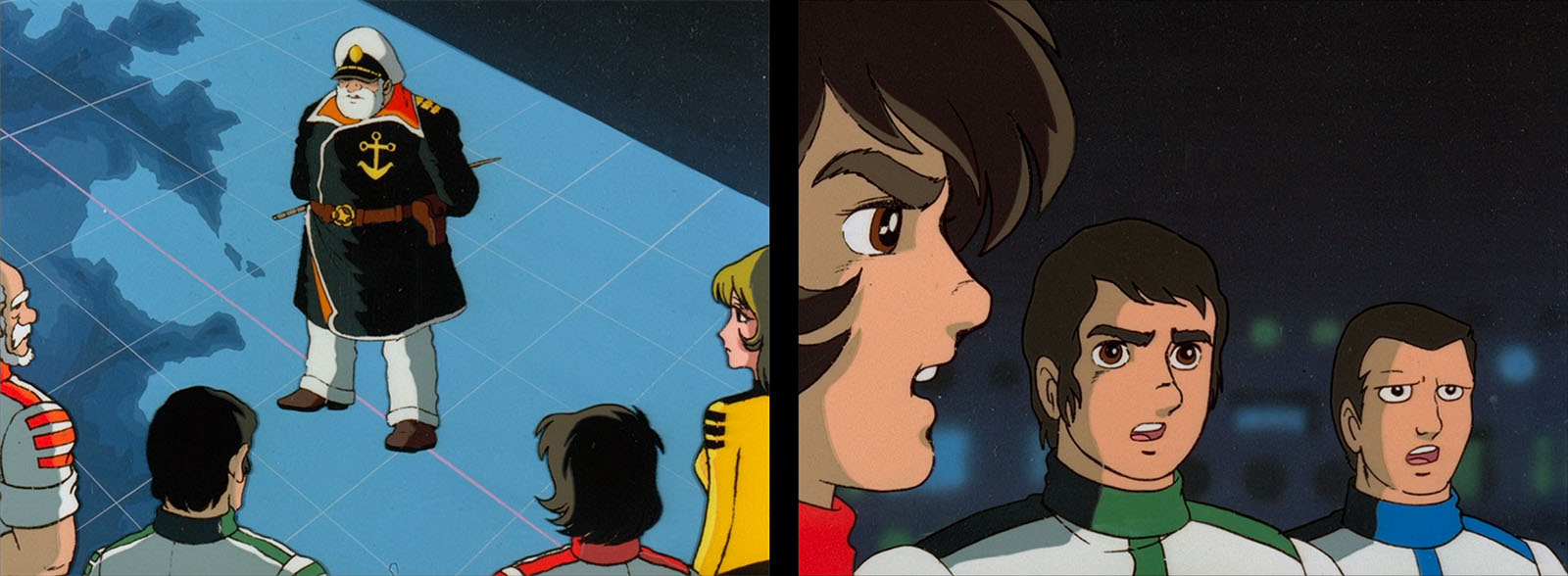
In Captain Okita’s “Sealing of the Wave-Motion Gun,” I see the true pride of a man
When I was a child, my eyes were captivated solely by the destructive power of the Wave-Motion Gun. However, watching Yamato now, having passed the age of 60 and weathered the rough seas of life, it feels like a completely different experience. The words spoken by Captain Okita and Kodai strike deep into the very core of my own sense of pride and conviction today.
As they approach the Pluto base, the hot-blooded Susumu Kodai pleaded relentlessly: “Let me use the Wave-Motion Gun!” But Captain Okita dismisses him instantly: “The Wave-Motion Gun cannot be used.”
Anyone who laughs this off as mere “empty idealism” is surely someone who knows nothing of the hardships faced on the front lines.
Only now, after all this time, do I finally understand the “resolve” that lay beneath that gravelly voice. What Okita sought to protect was the Solar System; our home, our very own backyard. Even if the enemy occupied it, what meaning could there possibly be in winning a victory by burning one’s own backyard to the ground?
For many years, I, too, worked on the front lines. Specifically at an auto-gas station where a single misstep could lead to a catastrophic accident. I have seen, time and again to the point of utter disgust, people who would bend the rules for the sake of “efficiency” or out of sheer “impatience.” Yet, that clumsy, almost awkward integrity — that refusal to cross the final line — is precisely what constitutes the true mark of a leader… nay, the true “pride of a man.”
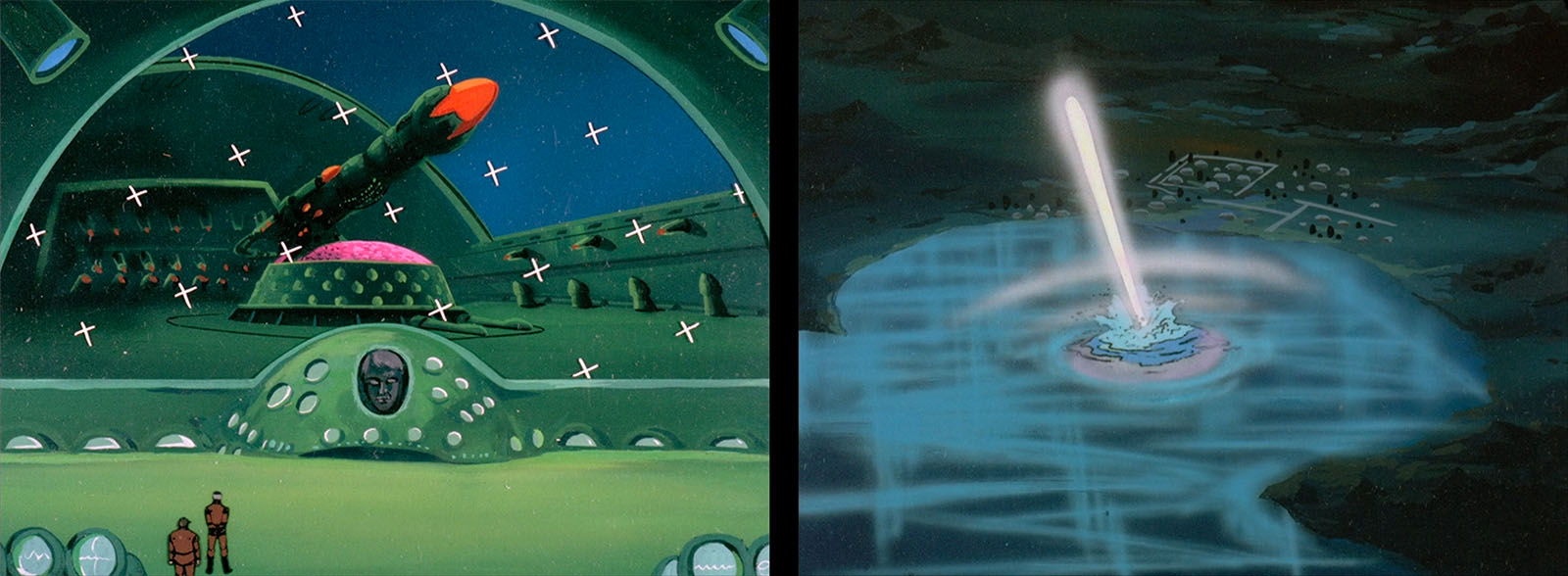
The Reflection Satellite Cannon: The Unease of Faceless “Efficiency-ism”
The element that confronts us with the deepest sense of despair in this episode is the Reflection Satellite Cannon.
It remains unseen, firing upon us from our blind spots by means of satellites. It is fundamentally different in nature from a direct frontal assault, such as the “Operation Yashima” in Neon Genesis Evangelion, where opposing forces clash head-on, pitting their raw power against one another.
In the workplaces where I once served, we looked our customers in the eye and worked with our own hands. That is precisely why I feel an instinctive, visceral revulsion toward methods like this; tactics that unilaterally trample over others from the safety of a secure zone. An insidious structure that gnaws at the spirit, one where you never know from which direction the threat is coming.
It bears a strange resemblance to the faceless malice lurking within today’s internet society, and it leaves me with an unsettling sense of unease. It sends a chill down my spine to realize just how cold human beings can become when they pursue nothing but “efficiency.”
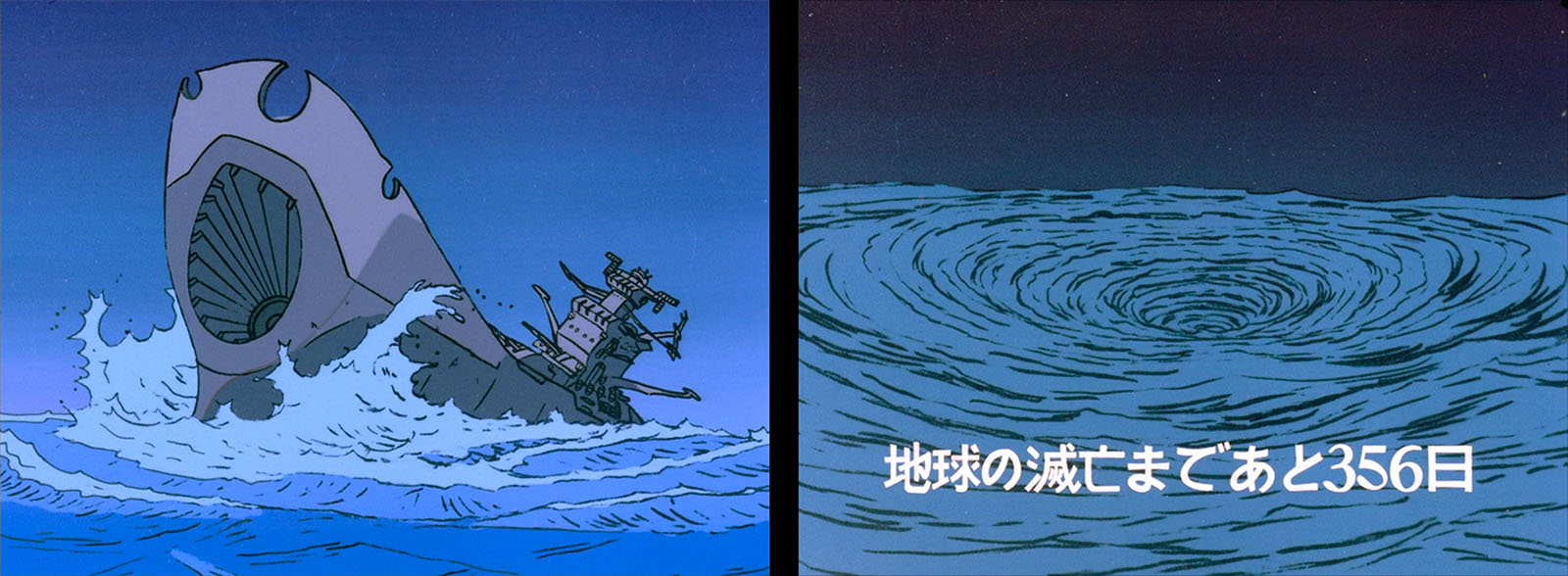
Can You Trust the “Lull,” The Moment of Descent into the Icy Sea?
The scene where Yamato sinks beneath the icy waters.
For a generation accustomed to the breakneck pace of modern life where everything is consumed at double speed, that silence might seem interminably long. Yet, the sight of Yamato vanishing into the dark, frigid depths seems to merge in my mind’s eye with the snowy landscape of Sapporo, falling ceaselessly right before me.
There are times in life when you feel like you’re constantly sinking. Even I, when I retired early before reaching the mandatory age limit to care for my mother and her generation, felt exactly as if I were sinking beneath a sheet of ice.
But listen: this “sinking” is actually a period of “gathering momentum,” a necessary prelude to rising again.
The moment the enemy commander, Schulz, displayed that arrogance only to be instantly dismissed by Dessler with a curt “You fool!,” I couldn’t help but let out a defiant chuckle.
“Just because we’re sinking doesn’t mean we’re simply lying there dead,” I thought. “It is a quiet, yet intense, period of preparation. A time to rev up our engines for the ascent.”
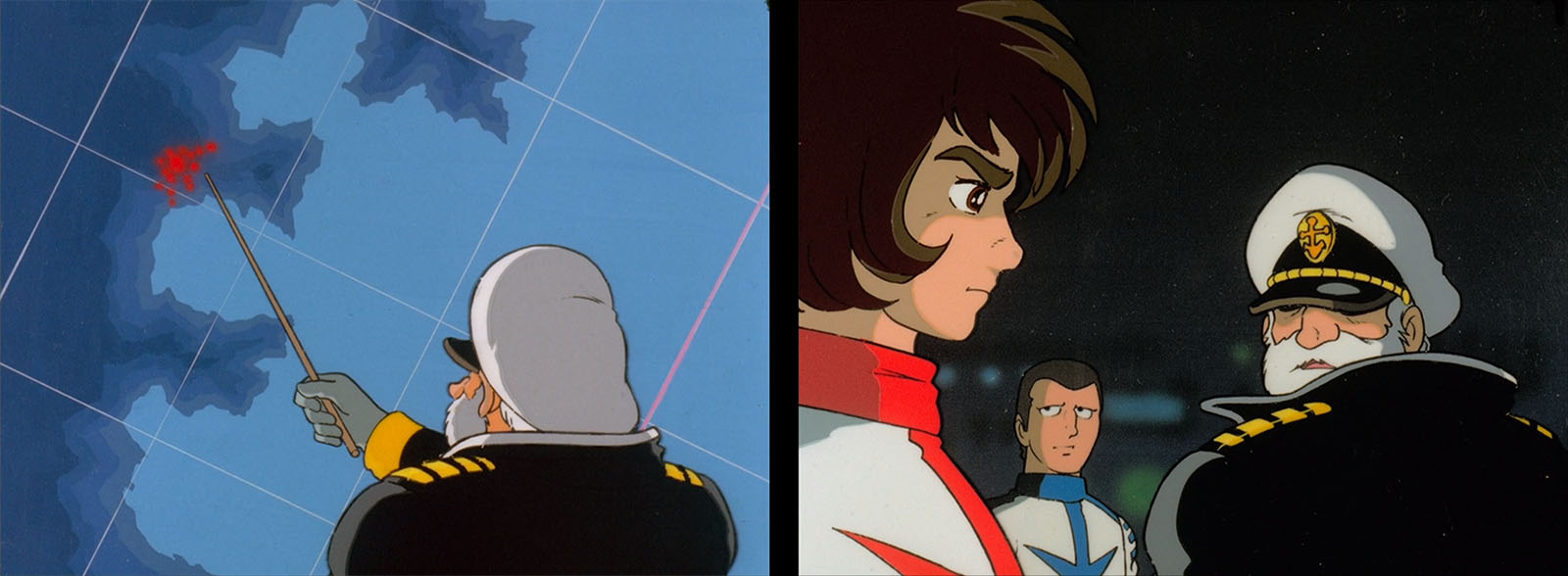
Monologue of a Man in His 60s: The “Burden” and “Trust” Reflected in a Character’s Back
At this point, I’d like to pose a question to all of you, my contemporaries who have lived through the same era.
Back then, Captain Okita was roughly the same age as we are now, just past his 60th birthday. (Although his official profile lists him as 52, the sheer gravitas he exuded made him seem far older and weightier than any of us.)
Even within Yamato, facing a desperate do-or-die situation, he never once lost his composure. Even when the hotheaded young Kodai snapped at him, he remained unshaken. This wasn’t because he was some kind of “superhuman.” It was the sheer weight of the burden he carried on his shoulders that compelled him to remain so utterly calm.
I, too, am currently in the thick of it, engaged in the task of caregiving, a mission with no end in sight. There are moments when, much like Kodai, I feel the urge to scream out: “Why must I be the only one going through this?” Yet, when I look at Captain Okita’s back, that broad, steady silhouette, I am reminded that the time spent silently sinking beneath the icy depths is, in itself, a fundamental duty of a captain.
It’s not about “winning,” but about “refusing to lose.” And, above all, it is about “never letting those under your command (your family) see you in despair.”
Here I am, a man well past 60, learning the very fundamentals of manhood, all from an animated character.
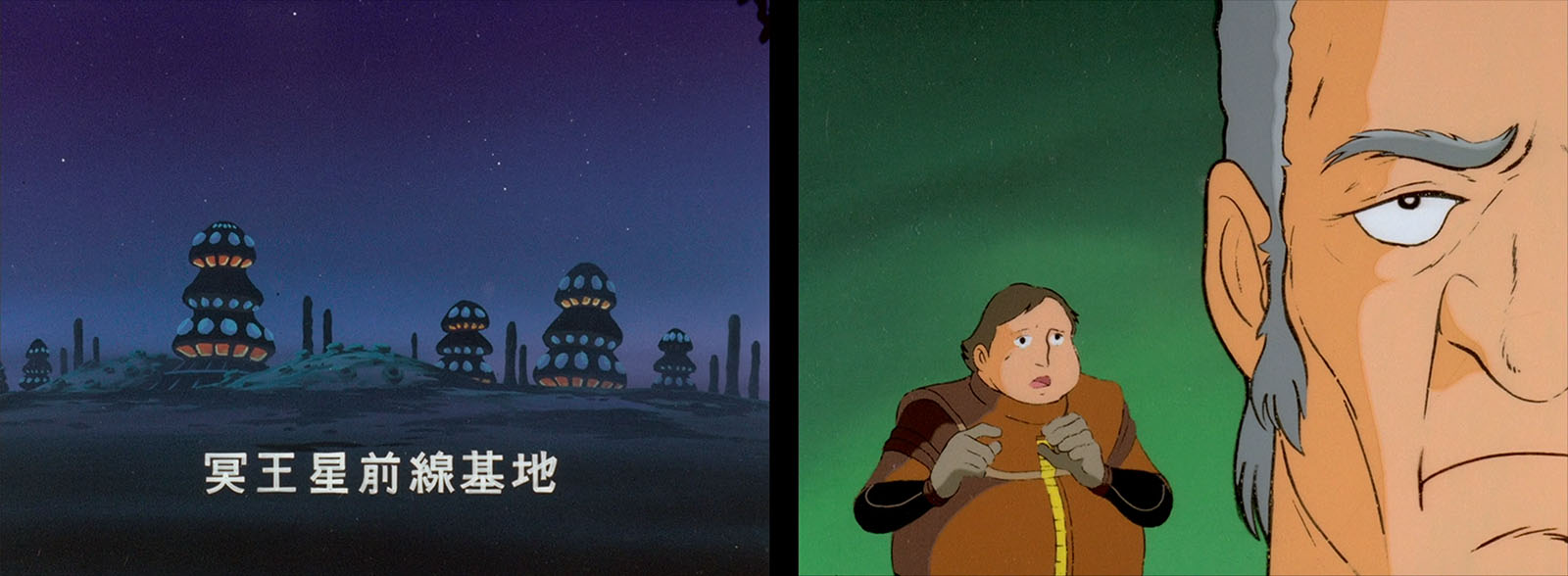
Episode Summary
Having departed Earth, the Space Battleship Yamato has embarked on a journey to the distant world of Iscandar, a staggering 148,000 light-years away. Humanity has only one year remaining. As this desperate countdown continues, Yamato approaches the edge of the solar system: the frigid planet Pluto.
The Frigid Frontier: The Battlefield of Pluto
Pluto. The fact that this world, locked in ice at temperatures of minus 200 degrees, serves as the forward base for the Gamilas forces driving Earth toward extinction was a cruel irony for humanity. Tension ripples through Yamato. For Susumu Kodai, the Chief of the Tactical Division, this place holds a particularly heavy significance; it is the fateful site where he lost his older brother, Mamoru. Is it a thirst for revenge, or a sense of duty? In his eyes, a flame of determination, fiercer than ever before, burns bright.
Schulz’s Cunning Trap: The Reflection Satellite Cannon
Gamilas Commander Schulz, wary of Yamato‘s Wave-Motion Gun, devises a strategy to avoid a head-on confrontation. The weapon deployed for this task is the latest in military technology: the Reflection Satellite Cannon. By using orbiting satellites to relay and redirect a fired energy beam, this tactic – designed to strike a target from its blind spots – leaves Yamato completely outmaneuvered.
Captain Okita’s Decision: The Reason for Sealing the Wave-Motion Gun
“We cannot use the Wave-Motion Gun.”
To the astonished crew, including Kodai, Captain Okita speaks calmly. It is impermissible to destroy the indigenous lifeforms of Pluto, or indeed, the planet itself, a fellow member of our solar system. This conviction serves as a powerful symbol: Yamato‘s voyage is undertaken not merely for survival, but to uphold the very pride and dignity of the human race.
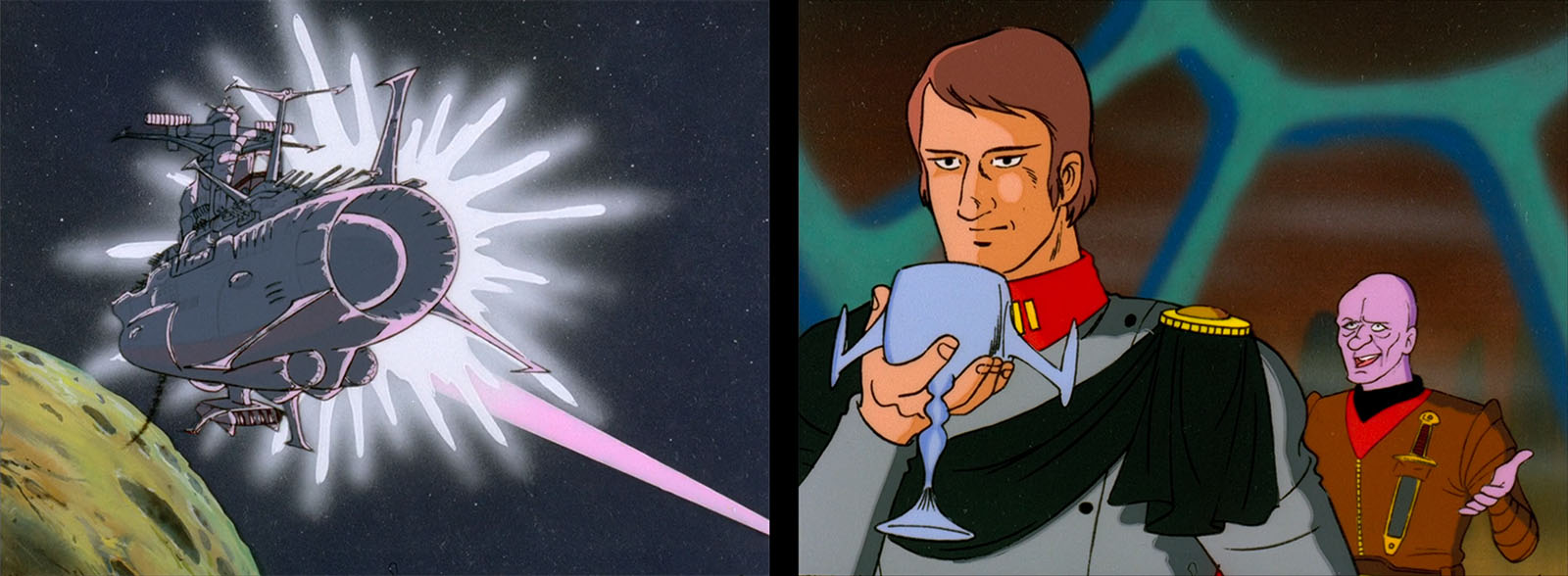
Collision! The Fangs of Reflecting Light
Yamato takes a direct hit from the Reflection Satellite Cannon. Though the ship attempts to take refuge behind the far side of the Moon, the orbiting satellites shift their angles, unleashing a relentless barrage of light, a baptism of destruction from directly above and behind, leaving the ship with nowhere to run. With its hull listing heavily and facing a dire, inescapable crisis, Yamato finally begins to sink beneath the icy seas of Pluto…
Dessler’s Mockery and the Countdown to Despair
“Yamato has been sunk!” Schulz exclaims in triumph; yet, Dessler responds with a cold, dismissive retort: “Fool.” Yamato has vanished beneath the waves. Only 356 days remain until the extinction of the human race. Will there be a tomorrow for this “steel castle,” now lying dormant at the bottom of the frozen depths as if fallen into an eternal slumber?

An Old Man’s Soliloquy
For 33 years, I have gripped heavy wrenches on the front lines of the auto-gas industry, feeling with every fiber of my being the faint, high-pitched scream of metal grinding against metal. Before it wears down, overheats, and bursts beyond its limits, a machine invariably requires a period of silence, what we call maintenance. Right now, buried deep within the snows of Sapporo, I find myself situated in the quiet battlefield of caring for my mother, standing right in the very heart of that silence. It is a scene that exactly mirrors Yamato as she sank beneath the frozen seas of Pluto.
The world might scoff, declaring, “It’s a total wreck!” But that was not a defeat. It was a vital act of “planned maintenance,” building up internal pressure for the next ascent, and polishing the inner engines anew.
It is 4:00 AM. As I listen to the old house creak and groan in the biting cold, I am slowly, deliberately, applying oil to each and every one of the rusted parts that make up my own heart. To pause is never a futile stagnation. It is the loneliest, yet most honest, work of a craftsman: the painstaking labor of holding together a self that feels on the verge of breaking.
Have you taken the time to carefully mend your own frayed edges, whether with the help of another, or by your own hand?
In Closing: To You, Waiting for the Snow to Stop…
Watching it again this time, I became convinced that Episode 7 is far more than just a battle episode.
On one side stands Okita, guided by a “code of conduct” dedicated to protecting what must be protected. On the other, the Gamilas, prioritizing “efficiency” as a means to conquer and seize. It is the fundamental difference in their ways of life that ultimately brings about that final, dramatic reversal.
From the kitchen, the gentle aroma of simmering rice porridge is growing stronger. Dawn is breaking. Outside, the snow shows no sign of stopping. Yet, just as Yamato rises from the frozen depths of Pluto, I, too — however clumsily — intend to stand my ground and protect this quiet, yet resilient, everyday life of mine.
Why? That is a question for which even an AI could never provide the answer. It is simply the fact that I lived my life as myself with unwavering sincerity, right to the very end. For that alone will become the “Wave-Motion Gun” of my life.
I hope that, as you finish reading this article, a small flame, one capable of melting even the coldest snow, is kindled within your heart. Please, try to believe in yourself. Trust that it is precisely when you’re at the very depths of despair that you’re gathering the strength to rise again.
In Closing…
It is dawn in Sapporo. As the steam from my morning porridge fills the room, I, too, am preparing to head out into the battlefield that is today. There are times in life when, no matter how hard you struggle, it feels as though you are simply “sinking.” Yet, much like Yamato as she quietly recharges her energy beneath the ice, that time is never wasted. By the world’s standards, it may look like “stagnation.” But for us, it is a sacred ritual of “rebooting.”
Outside, cold snow may still be piling up. But listen: if we keep our inner engines burning warm, the day will surely come when we can smash through the ice and rise to the surface. It’s fine to be clumsy; it’s fine to be gritty and unrefined. With our pride held close to our hearts, let us tenaciously survive and live through this era together.

Characters and Cast
Juzo Okita / Voice: Goro Naya
The first captain of Space Battleship Yamato. Born in the year 2141 AD; Earth age: 52. Always calm and composed, he serves as the spiritual pillar for the entire crew. His demeanor and resolve exude a gravitas that transcends his actual years.
Susumu Kodai / Voice: Kei Tomiyama
Yamato‘s Chief Tactical Officer. A young leader who carries on the dying wish of his older brother Mamoru, who fell in battle near Pluto, and burns with an intense fighting spirit against the Gamilas Empire.
Mamoru Kodai / Voice: Taichiro Hirokawa
Susumu’s older brother. A hero who sacrificed his life in the depths of space during the Battle of Pluto (Episode 1), where he personally served as the rear guard to protect Captain Okita.
Commander Schulz / Voice: Kiyoshi Kobayashi
The commanding officer of the Gamilas Empire’s Pluto Base. Swearing his allegiance to Leader Dessler, he utilizes the Reflection Satellite Cannon to drive Yamato into a desperate, life-or-death predicament.
Leader Dessler / Voice: Masayuki Ibu (Currently: Masatō Ibu)
The Supreme Leader of the Great Gamilas Empire. Possessing a blend of elegance and ruthlessness, he treats Yamato like an “amusing toy” while demonstrating a staggering disparity in power.
Theme Songs & Music Information
Opening Theme: Space Battleship Yamato
Singer: Isao Sasaki
Lyrics: Yū Aku
Composition & Arrangement: Hiroshi Miyagawa
A powerful vocal performance combined with a full orchestra symbolizes the ship’s departure, a journey shouldering the hopes of all humanity.
Ending Theme: The Scarlet Scarf
Singer: Isao Sasaki
Lyrics: Yū Aku
Composition & Arrangement: Hiroshi Miyagawa
A masterpiece of a song that captures the wistfulness of a man setting out on a journey, along with his thoughts and feelings for the one he loves.
In-Series Background Music (BGM)
The collection of symphonic pieces composed by Hiroshi Miyagawa exerted a profound influence on the landscape of anime music that followed. In particular, melodies such as those accompanying the Reflection Satellite Cannon attack sequence in Episode 7, which served to heighten the tension of the scene, are still spoken of and celebrated to this day.
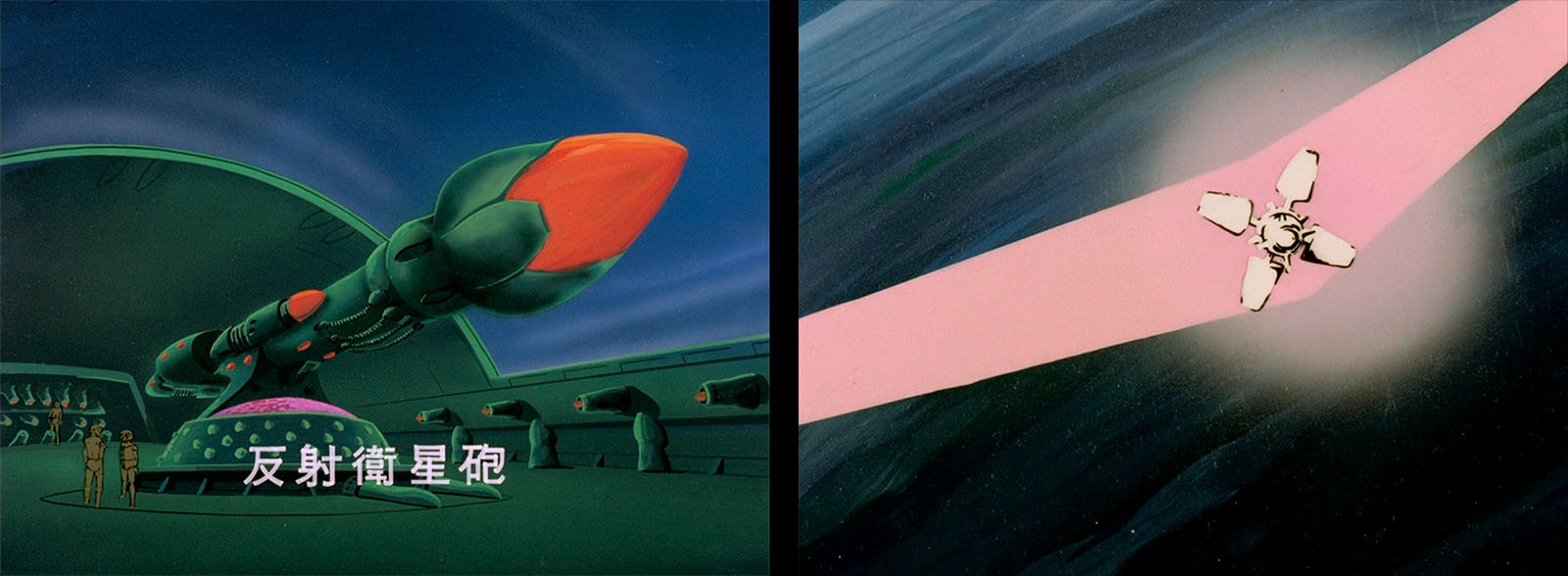
In-Series Terminology & Mechanics
Reflection Satellite Cannon
A powerful beam cannon installed on the ocean floor beneath the Pluto Base. By bouncing its beam off “Reflection satellites” positioned in the exosphere, this weapon can strike targets with pinpoint accuracy even from beyond the horizon, making it a weapon with “absolutely no blind spots.”
Wave-Motion Gun
A super-dreadnought-class weapon mounted in Yamato‘s bow, utilizing tachyon particles. Possessing the destructive power to alter the very topography of a planet with a single shot, Captain Okita maintains an extremely cautious stance regarding its use throughout the series.
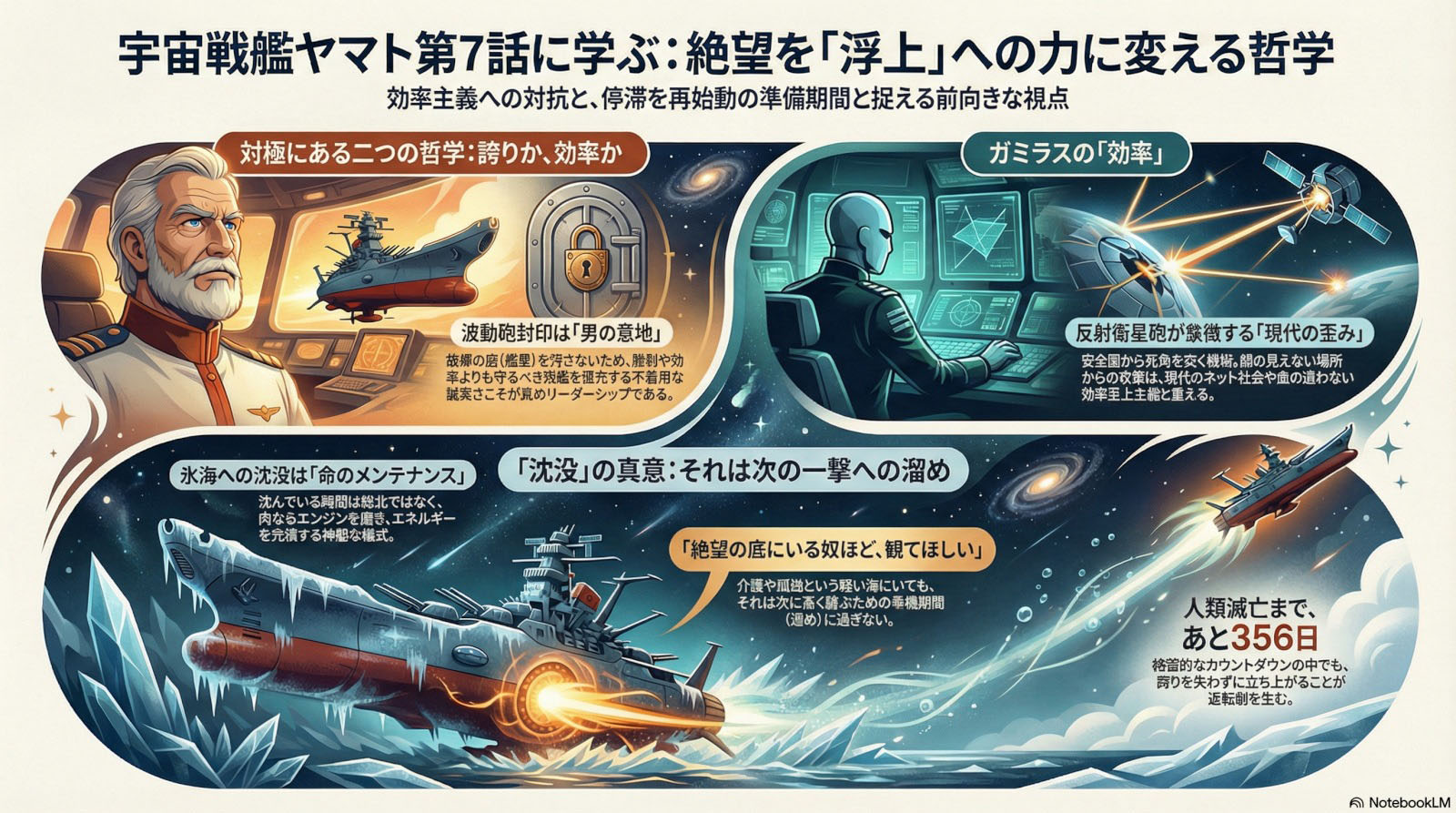
This analysis examines a paradigm shift in thinking: viewing Yamato’s submersion into the icy seas of Pluto not as a “defeat,” but rather as “recharging energy,” a strategic buildup for the next decisive strike. It contrasts Captain Okita’s proud and principled leadership with the efficiency-driven pragmatism of the Gamilas forces (specifically, their Reflection Satellite Cannon). Presented as an infographic, this piece distills a philosophy of life from the perspective of an engineer, offering a message to those navigating the “deep seas” of caregiving or personal hardship: to never lose one’s pride, and to rise back to the surface.
Thank you for reading to the end.