

Battling in the boundless cosmic space, the space battleship YAMATO is carrying hopes and dreams of humans in 2199AD. In 3199, all the people on the Earth are faced with crisis again. YAMATO is restored to protect all human beings from DARQUEEN.
From the very beginning of his tenure as a copyright holder for Space Battleship Yamato (1998-2002), Leiji Matsumoto was determined to bring Japan’s most famous spaceship back to life. 1999 would be the 25th anniversary of the first TV series, and something big would have to commemorate it.
Since he anticipated Yamato would be his for the rest of time, he began to weave it into the vast fabric of his multidimensional SF universe. This meant that Yamato could finally cross paths with Captain Harlock (as per the original TV scenario) as well as Matsumoto’s other creations, like Galaxy Express 999 and Queen Millennia. He was so energized by this long-awaited opportunity that he announced (in an interview for Comic Gon Magazine) a grand storytelling journey that would take another 25 years to complete.

The first step toward this ambitious goal was to thread Yamato into his ongoing Galaxy Express manga. Readers only saw the ship from the outside, but it was unmistakably the real deal. Matsumoto followed up with anime cameos in a pair of OAVs: DNA Sights 999.9 and Galaxy Express: Eternal Fantasia, and a 2001 PlayStation game titled Story of Galaxy Express 999. A Yamato connection was also strongly implied in his Cosmo Warrior Zero PlayStation shooter (1999). (See a visual rundown of these here.)
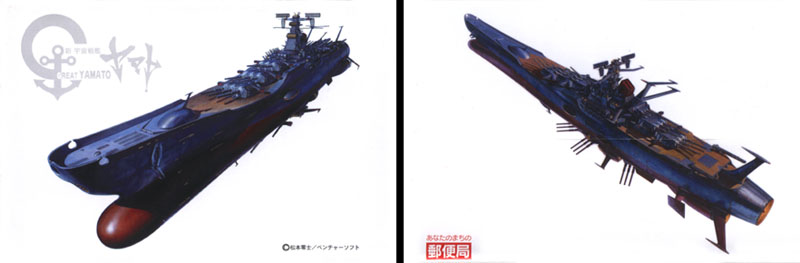
After crossing this boundary, the next step was to give Yamato its own revival. The Japanese title for it was simply Shin [New] Space Battleship Yamato, but the secondary English name did a better job of setting it apart: Space Battleship Great Yamato.


The story first appeared in February 2000 as a serialized manga in Shogakukan’s monthly magazine, Comic Gotta. It was set in the year 3199 and brought together the distant descendants of the Yamato crew to lift off in a much bigger version of the original ship. They launch to combat the forces of a galactic villain named Darqueen (who crosses over into Galaxy Express) and the roving black hole that she deploys toward Earth. A second space battleship named Mahoroba shows up to join the fun. An additional comment on the story comes from the authors of a 2003 book titled Leiji Matsumoto’s Outer Space:

Close adherence to the pedigree is not strange. The 32nd descendent in the line of Kodai and the daughter of Starsha both inherited their names. Like the inheritance of a fine wristwatch from father to son, the legendary lovers Kodai and Yuki have moved many generations to tears.
Handling the machinery of Yamato for the first time comes as naturally as a lullaby once heard from a parent. Matsumoto’s belief is that the spirit is inherited along with DNA, and this allowed him to borrow the characters’ original appearances.
As for this work, the message rises a little too strongly to the surface and it cannot yet be said that a story begins with the new voyage of Yamato. If this work can be understood as a mirror of Matsumoto’s present self, everyone is certain to be interested in where it goes in the future.
The new Yamato, the new 999, and the new Arcadia will sooner or later have to fight against the “nothingness” to prevent the disappearance of the universe. This is clearly a fight against death itself. It is also a struggle for Matsumoto to pour all of his power into this magnificent mythology.
The nature of the fight and the structure of the world will be drawn by the activity of various heroes. We can expect the new expansion of the Matsumoto universe to be huge.
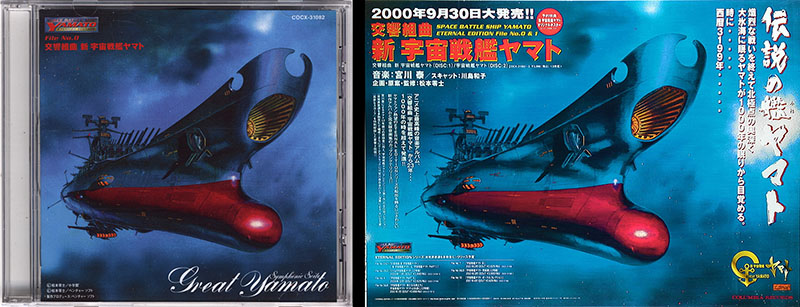
While the manga was underway in Gotta, Great Yamato jumped past anime straight into the world of soundtrack music. In a brilliant move, Matsumoto, Columbia Records, and composer Hiroshi Miyagawa came together in a sort of “holy triumvirate” to revive the world of Yamato music for the Symphonic Suite Great Yamato. It served as the kickoff for both the new story and the groundbreaking Eternal Edition CD series that revisited the entire saga. The suite’s 8 tracks were split evenly between old and new score with Miyagawa returning to the peak of his creative power.

Premiere parties were held for the new album, including one at a Yamano Music store that featured a talk and signing session with Matsumoto. The 2-sided invite is shown above.
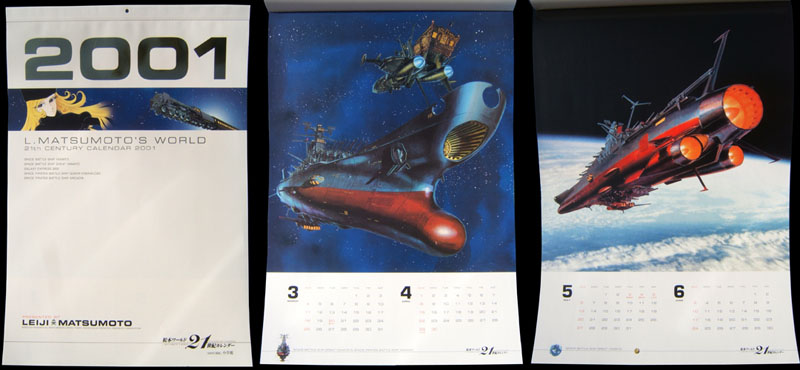
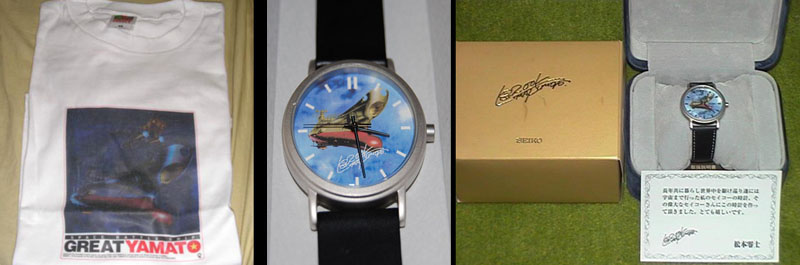
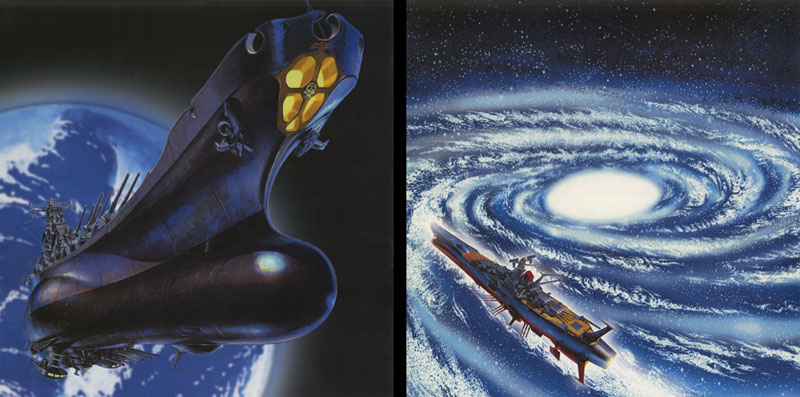
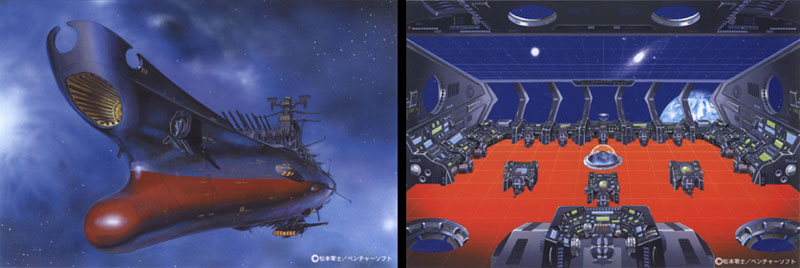
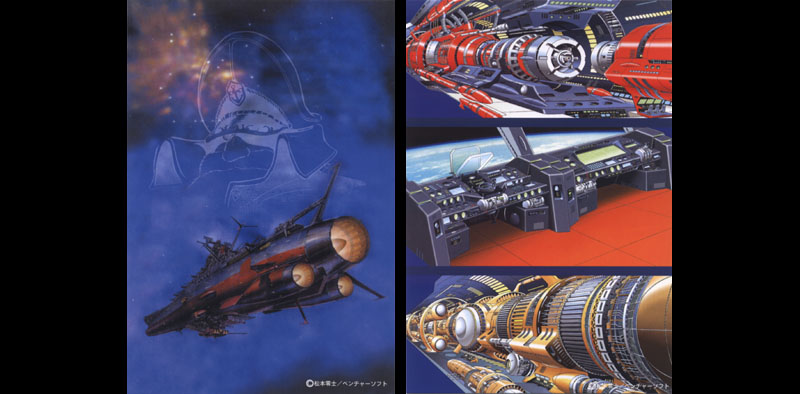
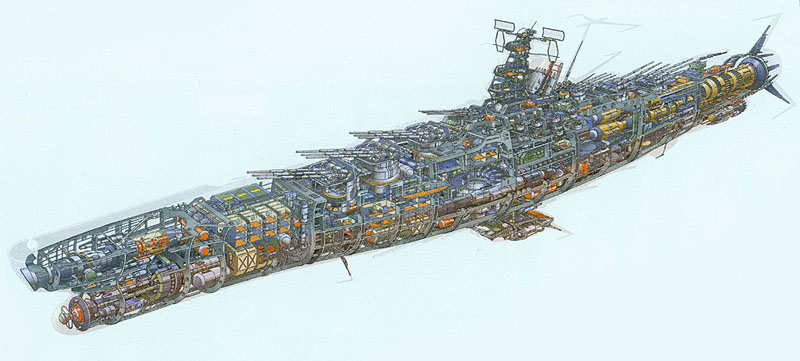
A 2001 calendar was published in late 2000, containing six new paintings from across the Matsumoto universe. Two of them featured Great Yamato. As should be increasingly obvious by now, a lot of mileage would be gotten out of these two images, which were painted by artist Koizumi Kazuaki and his studio. (See more of their work below)
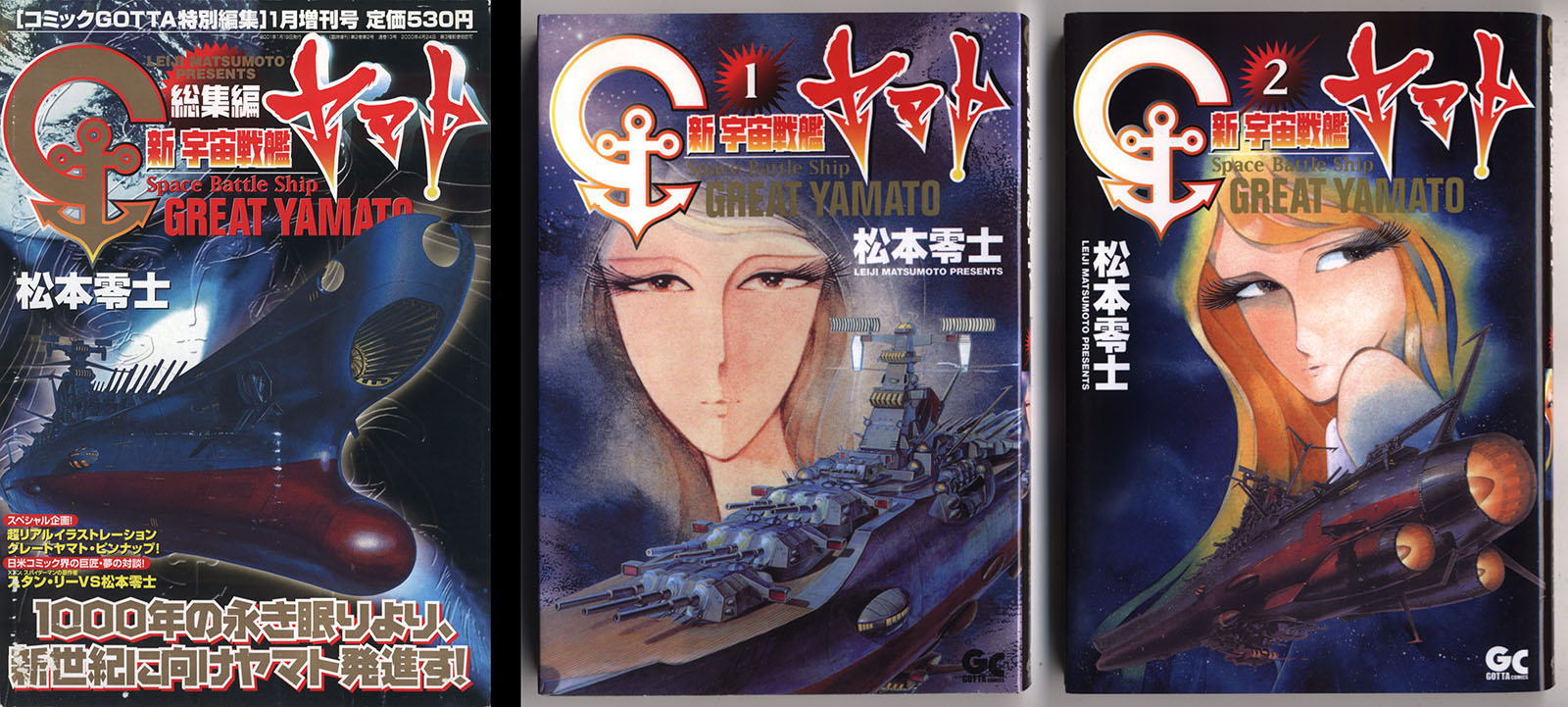
Next came the manga itself, in two forms following its serialization in Gotta. First there was a 264-page Gotta Special (above left), published in January 2001 which did not contain the entire strip, but added some interesting support articles including a meeting-of-the-minds between Leiji Matsumoto and Stan Lee. The paperback collections (center and right) appeared in March and August, taking the story to its conclusion over 400 pages. During this time the ship only managed to launch from Earth, meet up with its sister ship Mahoroba, and fire its weapons, which should tell you something about the pacing.
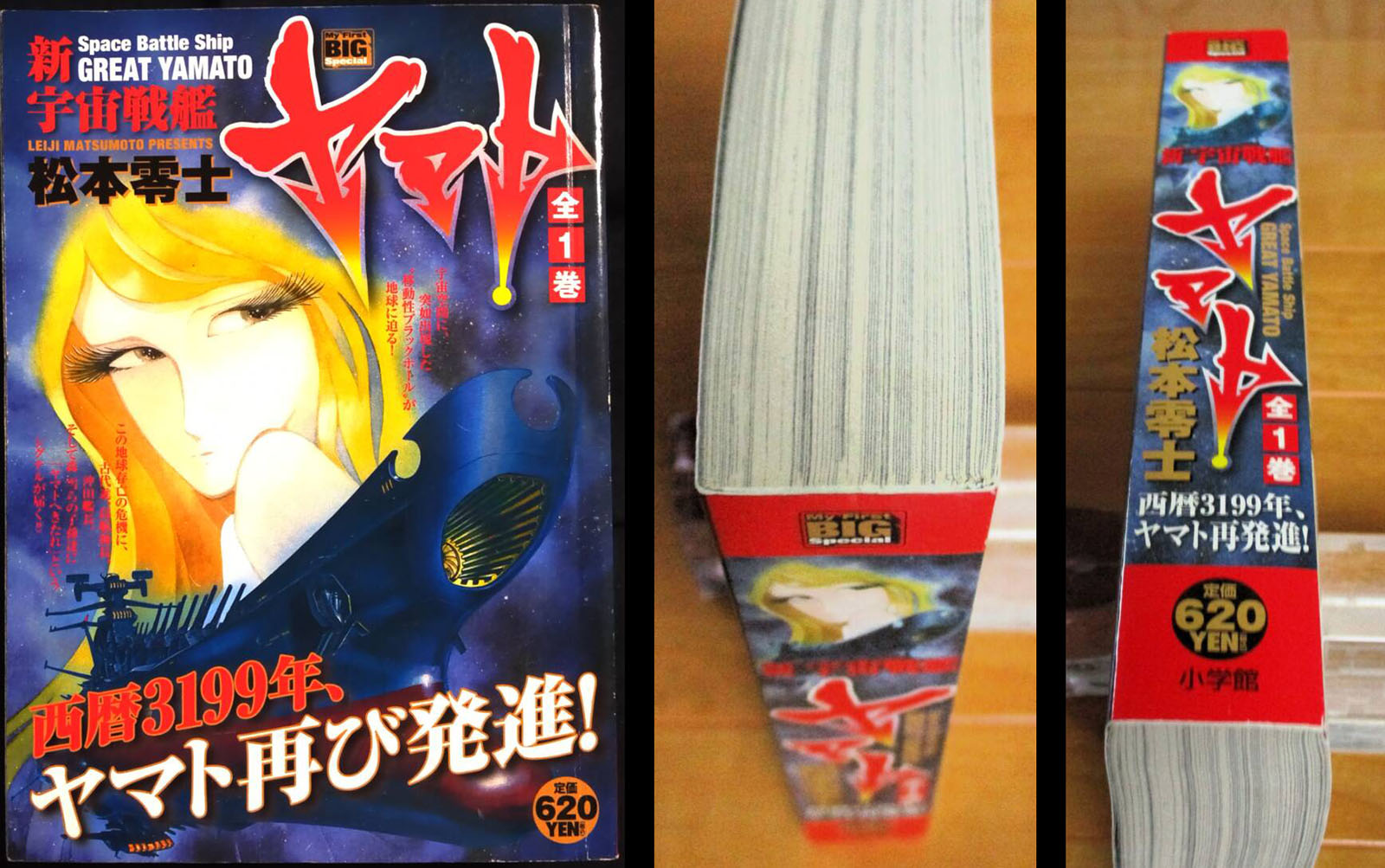
At a later date, Shogakukan followed up with a budget-priced single volume edition sold in convenience stores, part of the “My First Big” manga series.




Find a way to publish this and the fans will buy it. It will be worth it for either the artist to pay to get the rights or the right owner to pay the artist for his work.
I am impressed with this site, really I am a fan .
WHY THE F**K doed Great Yamato has 5+3 main battery TURRETS?!?!?!?!?!?
I’ve always been a Yamato fan since I first watched “Starblazers” I prefer the Japanese version.
Really loved the “Space Battleship Yamato” movie…….