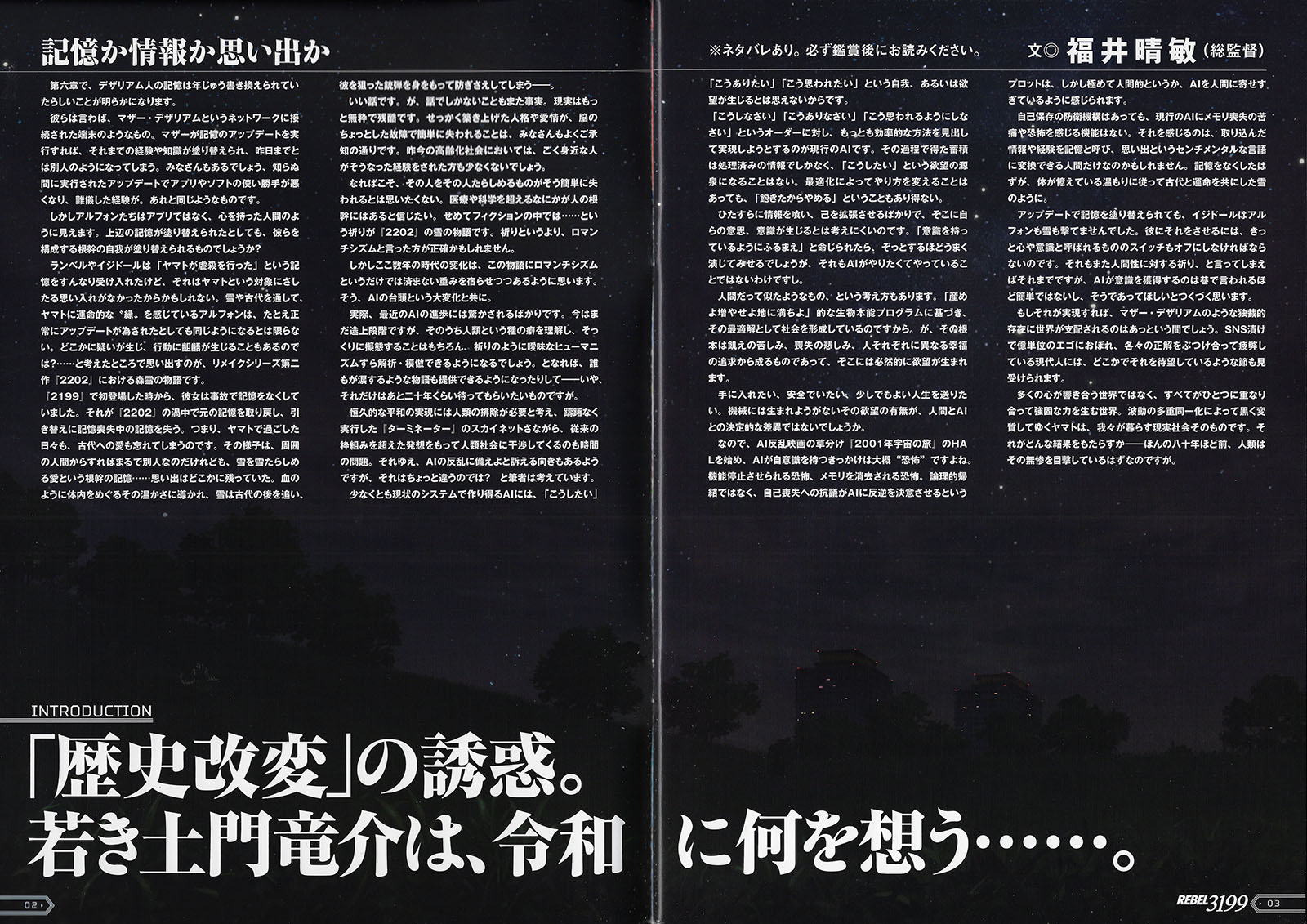
The temptation of “rewriting history.” What does the young Ryusuke Domon think about the Reiwa era…?
Introduction by General Director Harutoshi Fukui
Memory, information, or recollection?
In chapter 6, it becomes clear that the memories of the Dezarium people were apparently being rewritten throughout the year.
They are, in a sense, like terminals connected to a network called Mother Dezarium. When Mother performs a memory update, their past experiences and knowledge are overwritten, and they become like completely different people than they were yesterday. You’ve probably all had the experience of an app or software becoming difficult to use after an update was performed without your knowledge. It’s similar to that.
However, Alphon and the others don’t seem like apps. They appear to be human beings with feelings. Even if their superficial memories are altered, can the fundamental sense of self that makes them who they are really be altered?
Ranbel and Isidore readily accepted the memory that “Yamato committed a massacre,” but that might be because they didn’t have any particular attachment to Yamato. Alphon, who feels a faithful connection to Yamato through Yuki and Kodai, might not feel the same way, even if the update is successful. Doubt might arise somewhere, and inconsistencies in his actions might occur. And that reminds me of the story of Yuki Mori in the second remake series, 2202.
From her first appearance in 2199, she had lost her memory in an accident. Then, amidst the turmoil of 2202, she regained her original memories, but in exchange, she lost the memories of her time with the amnesia. In other words, she forgot the days she spent on Yamato and her love for Kodai. To those around her, she seemed like a completely different person, but the fundamental memory of Love that made Yuki who she was…those memories remained somewhere. Guided by the warmth coursing through her body like blood, Yuki followed Kodai, even shielding him from bullets aimed at him with her own body.
It’s a nice story. But it’s also true that it’s just a story. Reality is far more rude and cruel. As you all know, the personality and affection that have been carefully built up can easily be lost due to a minor malfunction in the brain. In today’s aging society, many people have likely experienced this happening to someone very close to them.
That’s precisely why I don’t want to believe that what makes a person who they are can be lost so easily. I want to believe that there is something at the core of humanity that transcends medicine and science. At least in fiction. That’s the prayer behind Yuki’s story in 2202. Perhaps it would be more accurate to call it romanticism rather than prayer.
However, the changes of the times in recent years seem to be in viewing this story with a weight that goes beyond mere romanticism. Yes, along with the major change brought about by the rise of AI.
Indeed, I’m constantly amazed by the recent advancements in AI. While it’s still in its early stages, it will soon be able to understand the quirks of the human species, not only mimicking them perfectly, but even analyzing and imitating vague forms of humanism, like prayer. If that happens, it might even be able to provide stories that bring everyone to tears. No, I hope we can wait another 20 years or so for that.
Like Skynet from The Terminator, which believed that the elimination of humanity was necessary to achieve lasting peace and carried it out without hesitation, it is only a matter of time before AI interferes with human society with ideas that go beyond conventional frameworks. Therefore, some argue that we should prepare for an AI rebellion, but I think that’s a bit off the Mark.
At least with the current systems, I don’t think AI will develop a sense of self or desires such as, “This is what I want to do,” “This is how I want to be,” or “This is how I want to be perceived.”
Current AI attempts to find the most efficient way to fulfill orders, such as “do this,” “be like this,” or “be perceived this way.” The accumulated information gained in this process is merely processed data and does not become the source of desires like, “I want to do this.” While it may change its methods through optimization, it cannot stop because it “got bored.”
It simply devours information and expands itself, making it difficult to imagine that it develops its own will or consciousness. If it were ordered to “act as if it has consciousness,” it would probably act with chilling skill, but that’s not something the AI wants to do.
Some argue that humans are similar in this respect. We are based on a biological instinctual program, like “be fruitful and multiply and fill the Earth,” and society is the optimal solution to that. However, at its core, it consists of the suffering of hunger, the sorrow of loss, and the pursuit of happiness which differs from person to person. From this, desires and inevitably arise.
The desire to acquire things, to be safe, to live a slightly better life – the presence or absence of these desires, which machines cannot possibly possess, is perhaps the crucial difference between humans and AI.
Therefore, starting with Hal in the pioneering AI rebellion film 2001: a Space Odyssey, the trigger for AI gaining self-awareness is usually fear; the fear of being shut down, the fear of having their memory erased. The plot, in which AI decides to rebel not as a logical consequence, but as a protest against the loss of self, feels extremely human, or perhaps it makes the AI too human.
Even with self-preservation defense mechanisms in place, current AI lacks the ability to feel the pain, suffering, and fear of memory loss. Perhaps only humans, who can translate the information and experiences they absorb into memory and into the sentimental language of recollection, can feel this. Like how Yuki, despite having lost her memories, follows the warmth of her body, then remembers and shares her fate with Kodai.
Even with updates that rewrote his memories, Isidore still couldn’t shoot Alphon or Yuki. To make him do that, surely the switch for what we call a heart or a consciousness would have to be turned off as well. You could say that this is also a prayer for humanity, but I sincerely hope that it’s not as easy for an AI to acquire consciousness as people say.
If that were to happen, the world would quickly be ruled by a dictator like Mother. Modern people, immersed in social media and consumed by hundreds of millions of egos, exhausted from constantly clashing over their own definitions of what is right, seem to be secretly longing for such a thing to happen.
This is not a world where many hearts resonate with each other, but a world where everything overlaps into one, creating a powerful force. Yamato, which is being transformed into a black color by the multiple identification of waves, is a reflection of the reality we live in. What kind of consequences will this bring? In fact, humanity witnessed the horrific consequences of this just about 80 years ago.
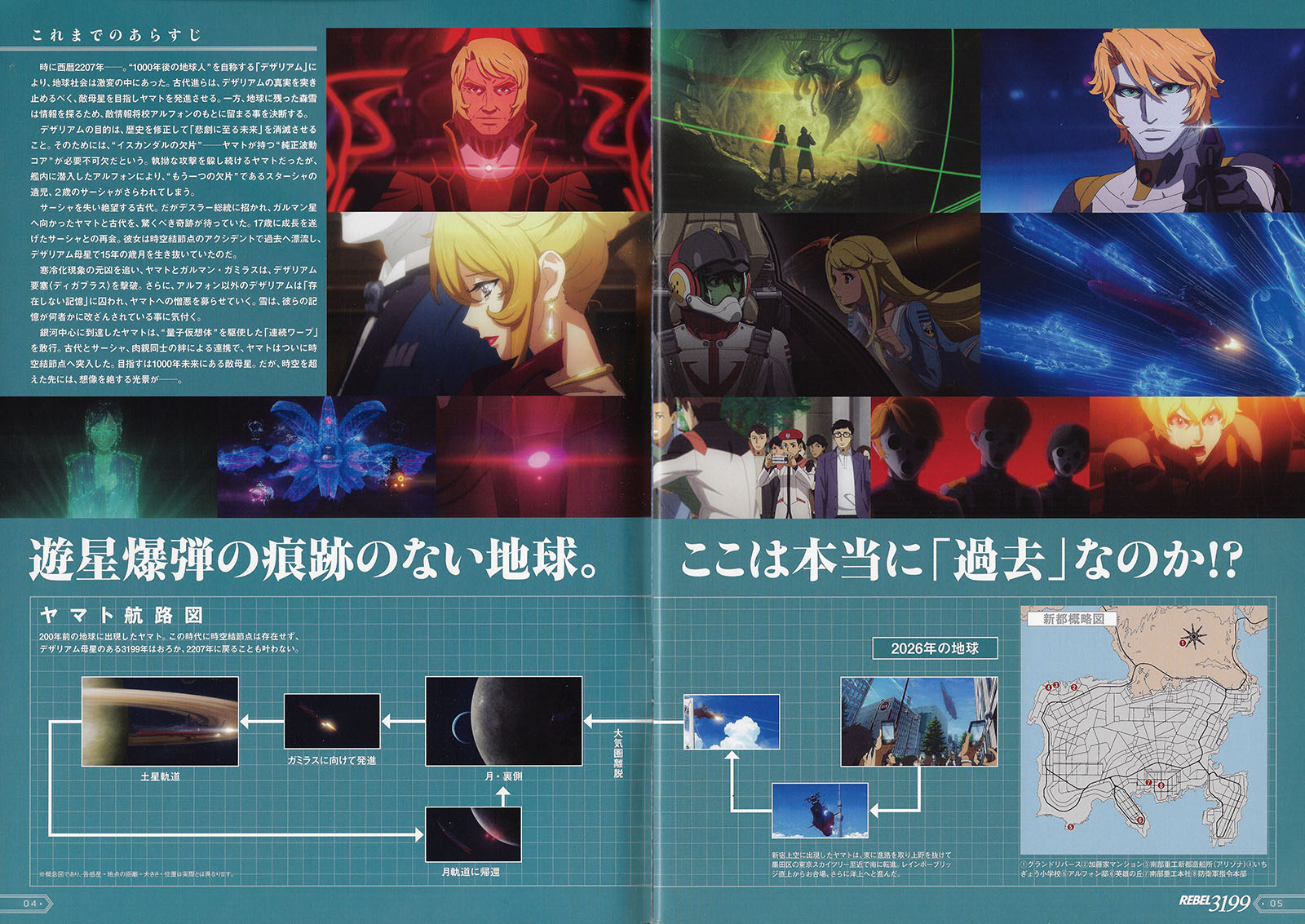
The story so far
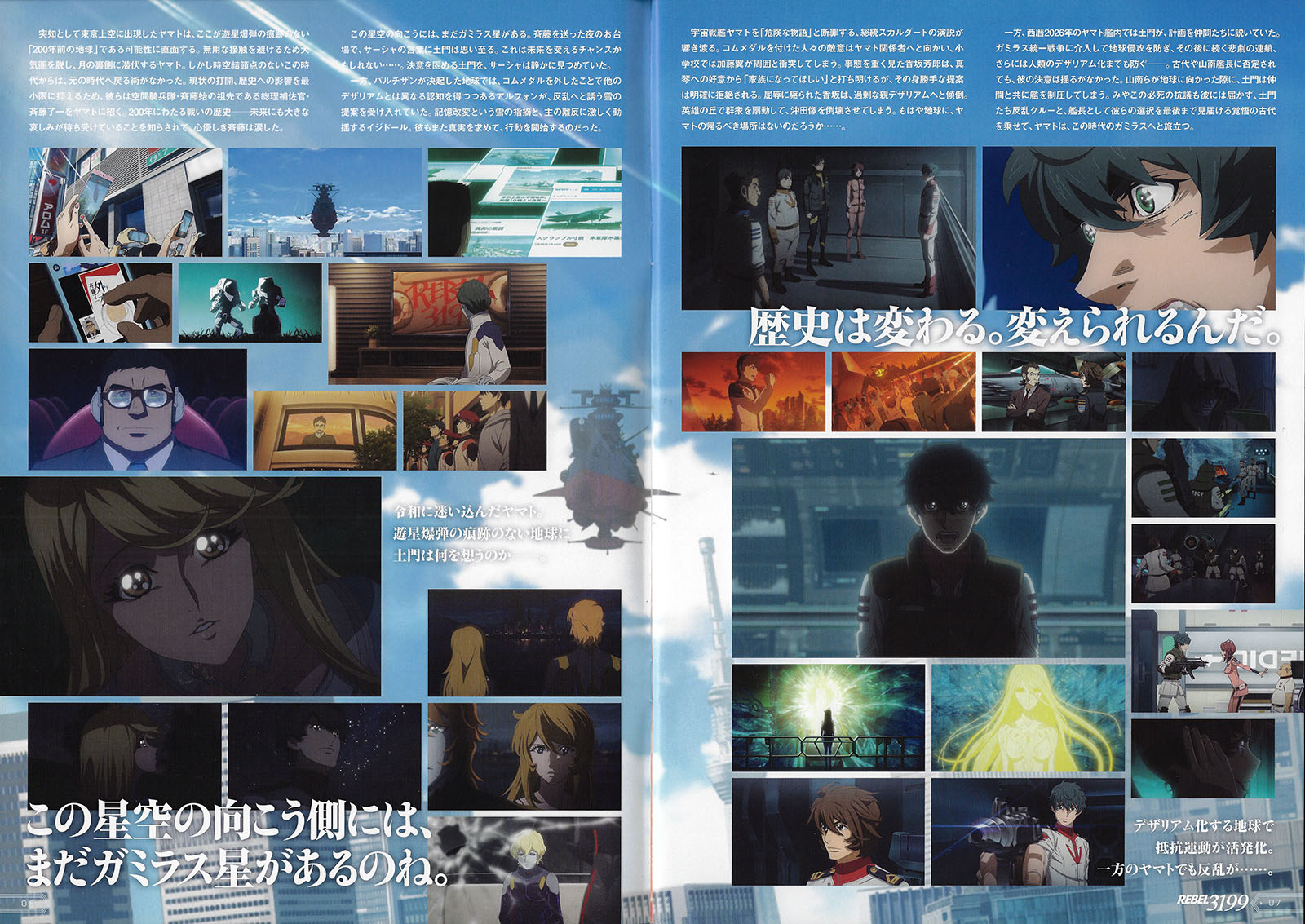
Episodes 19 and 20
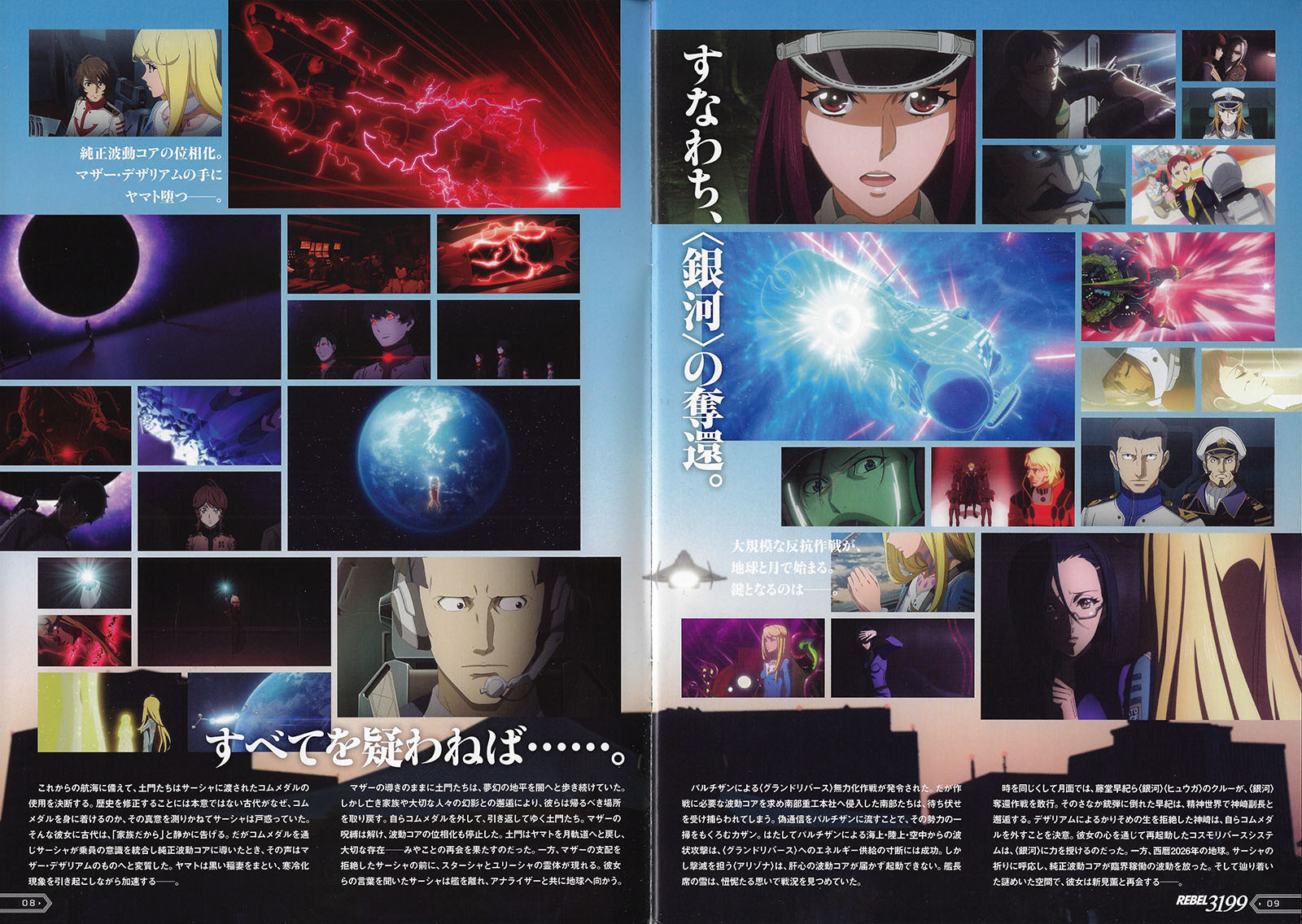
Episodes 21 and 22
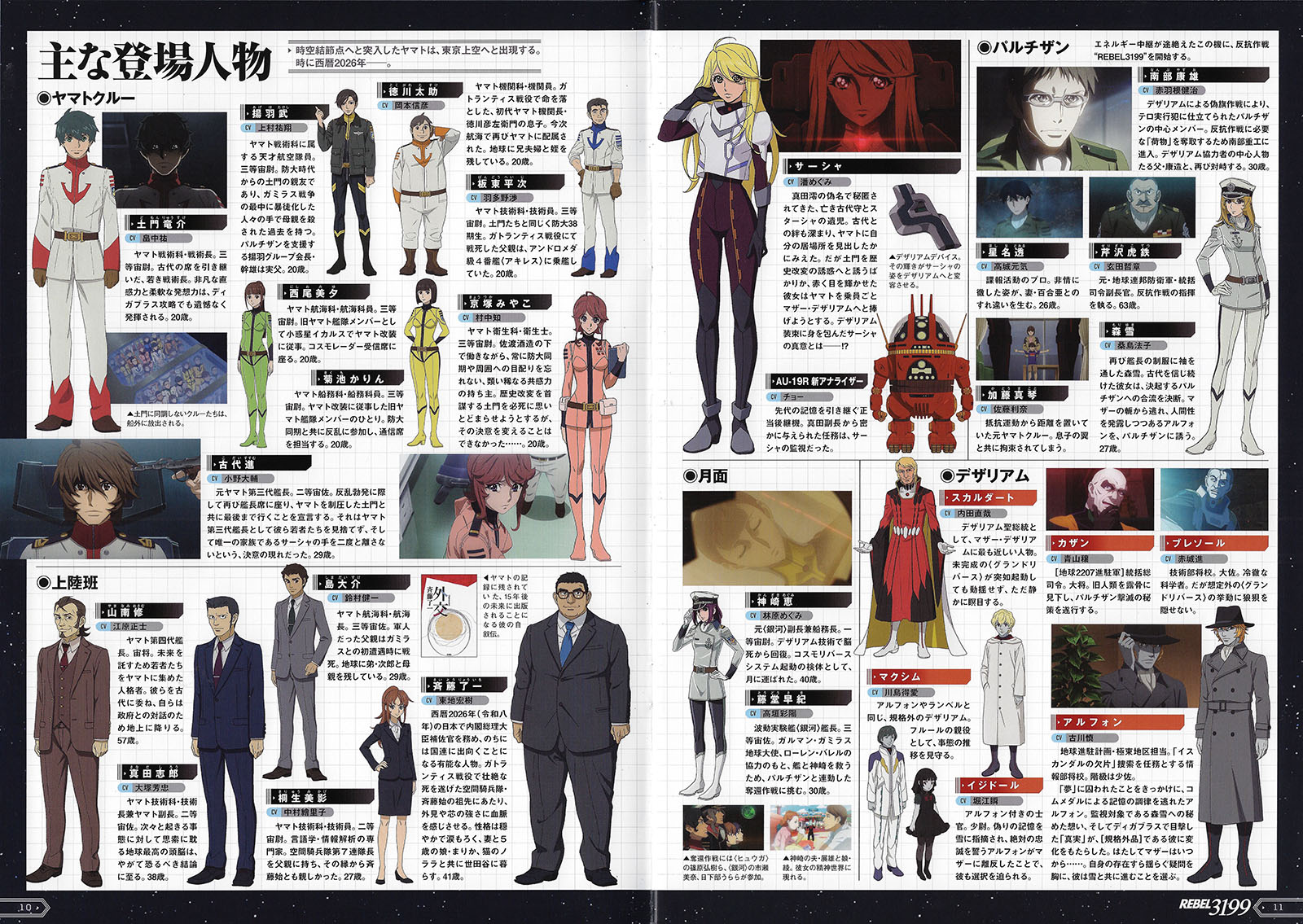
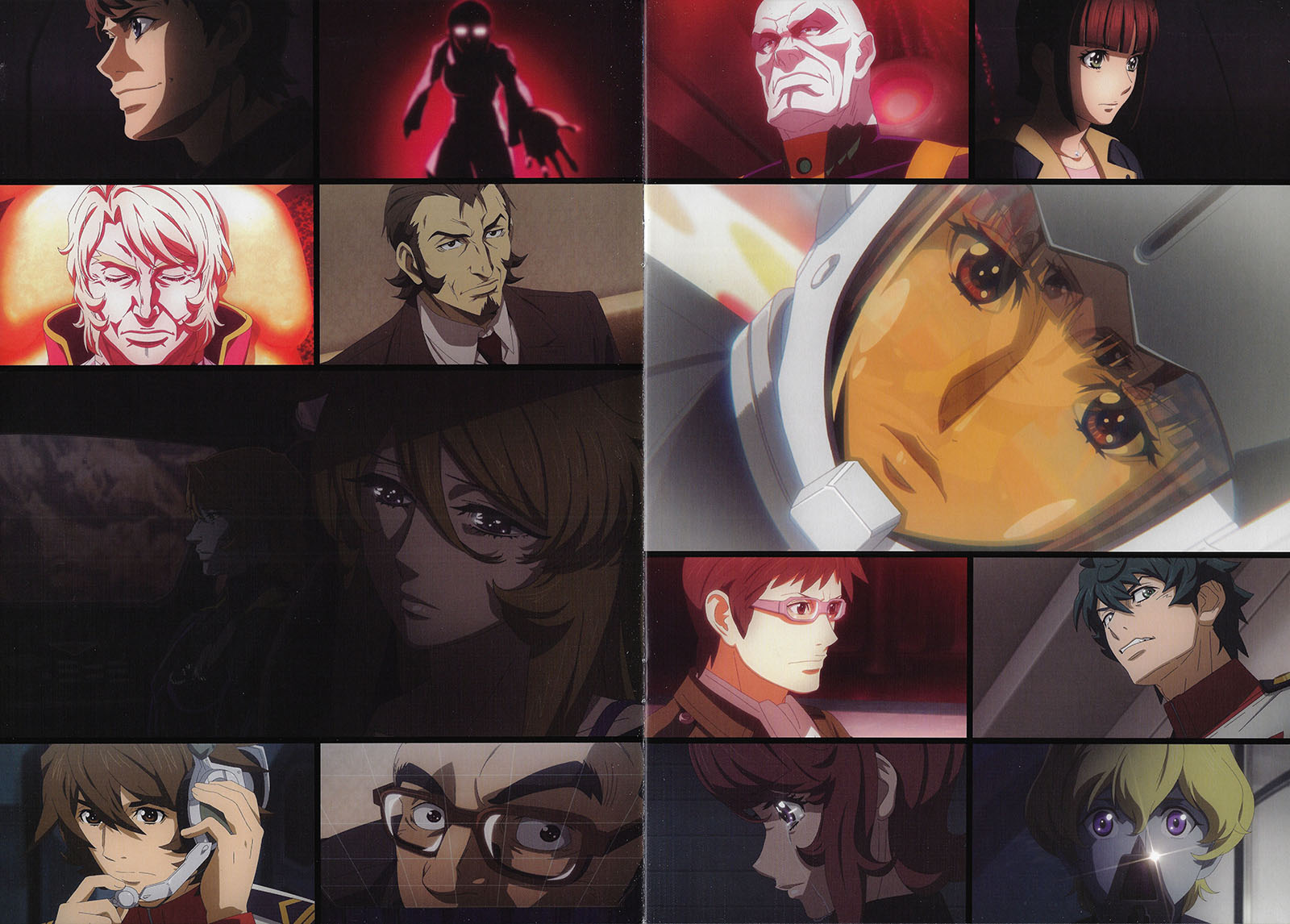
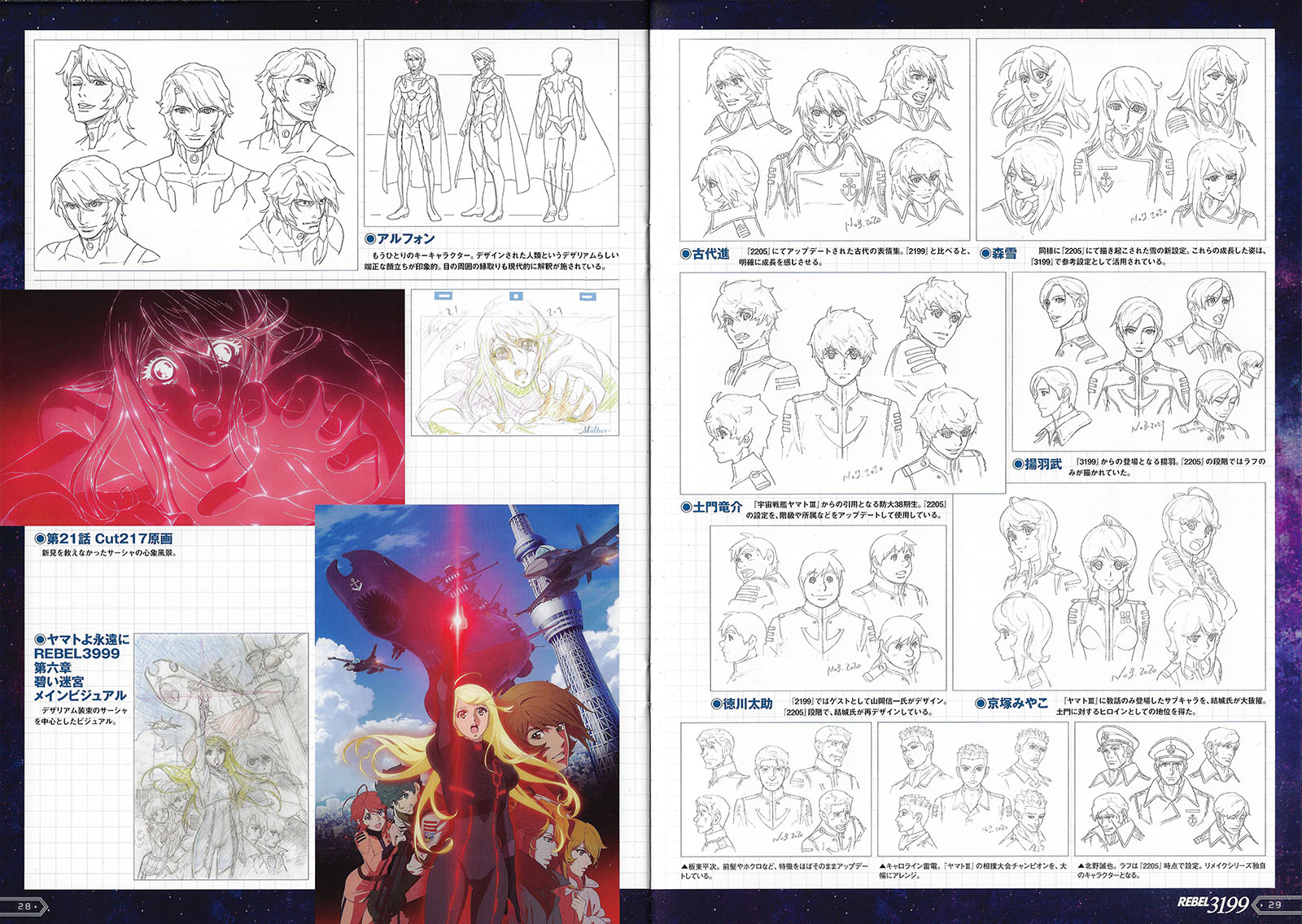
Character guide
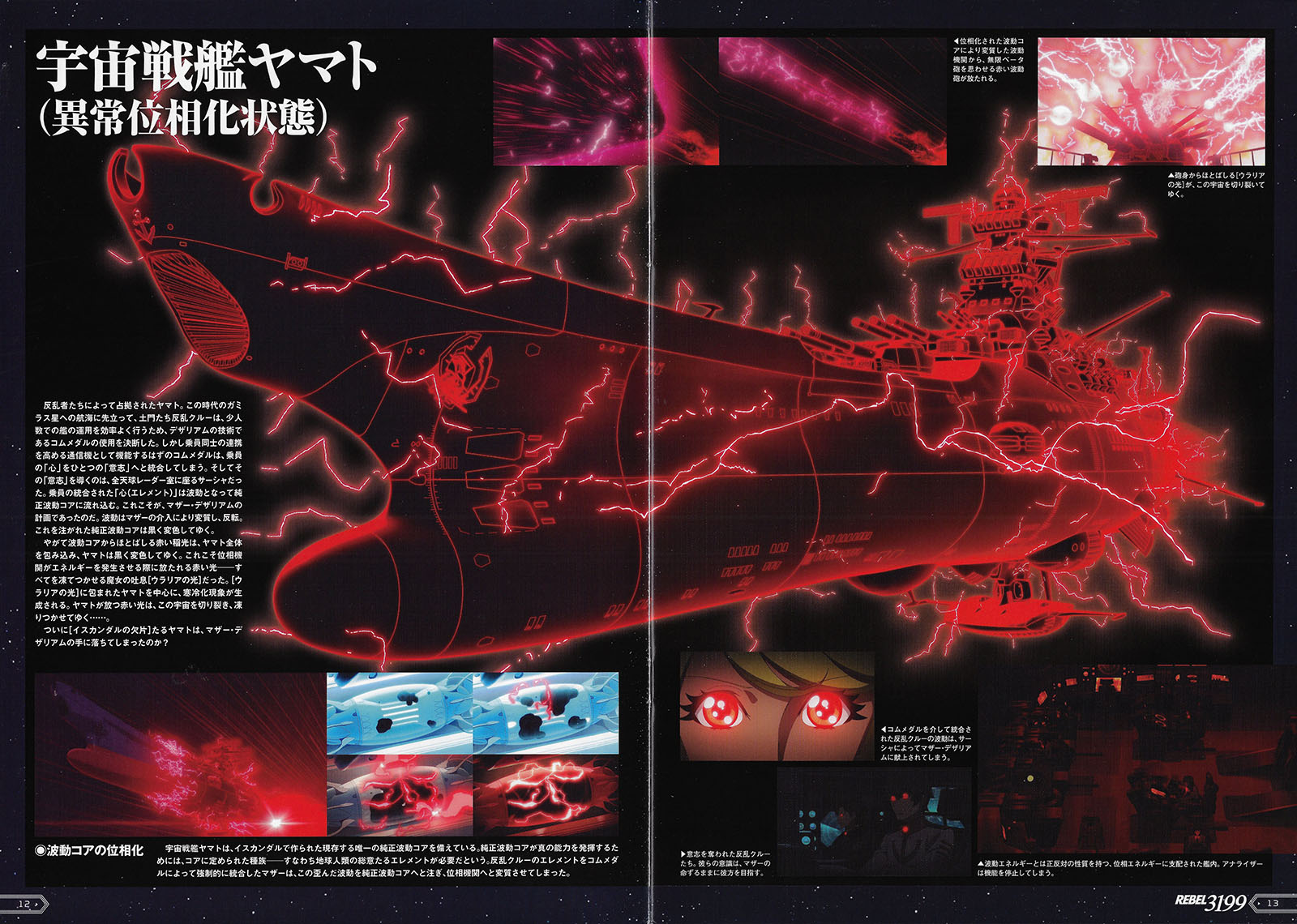
“Black Yamato” description
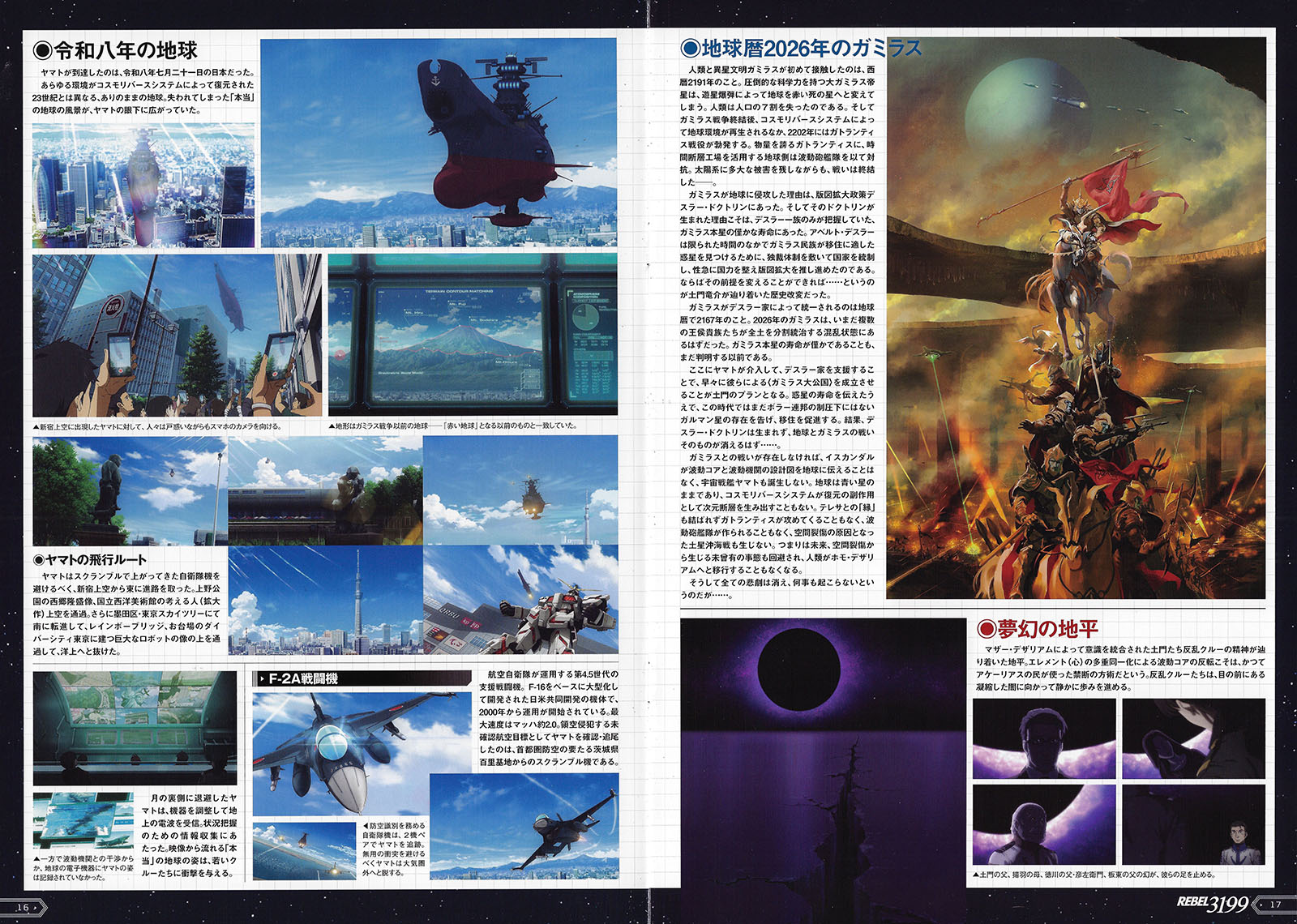
Guide to locations
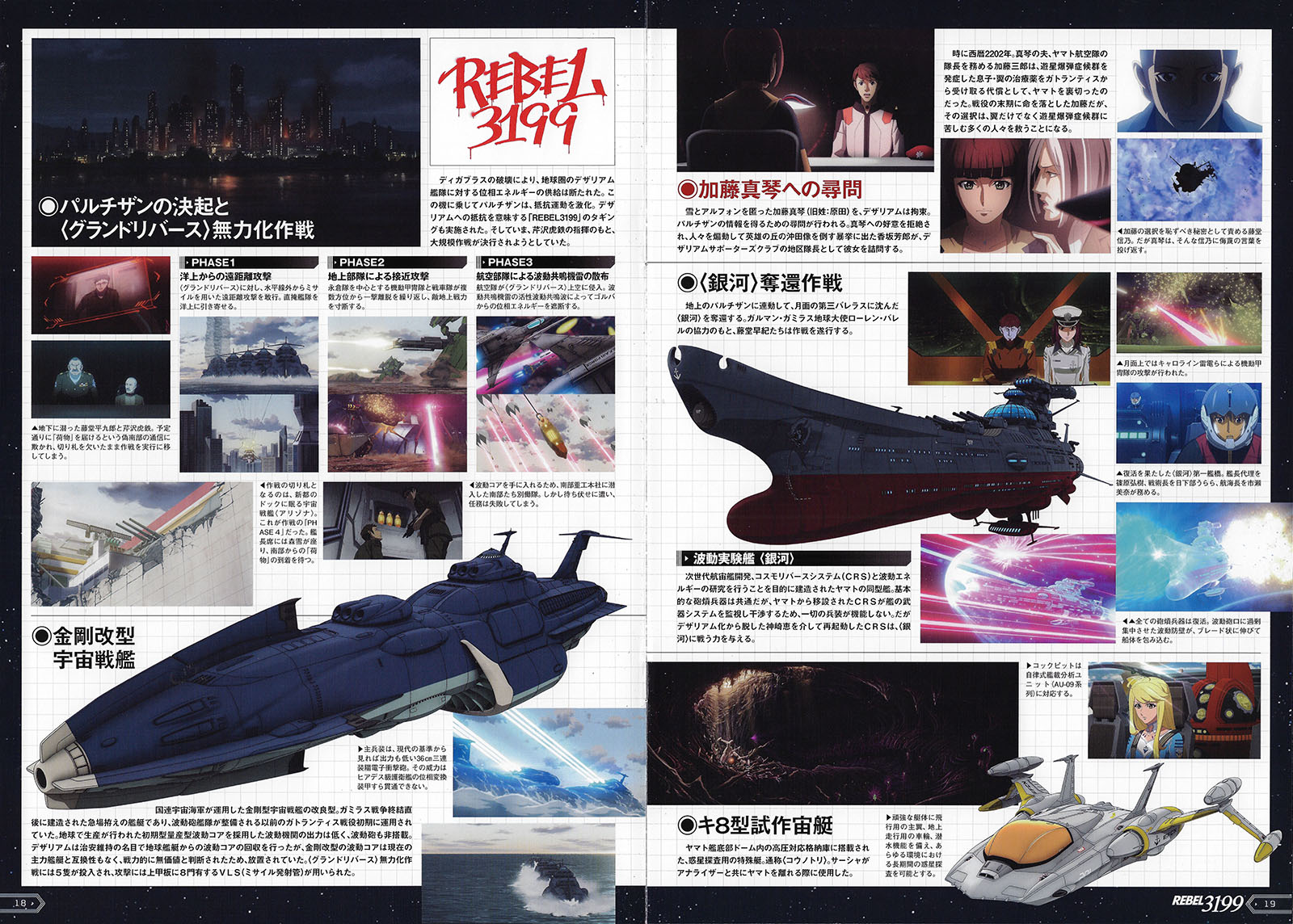
Mecha guide
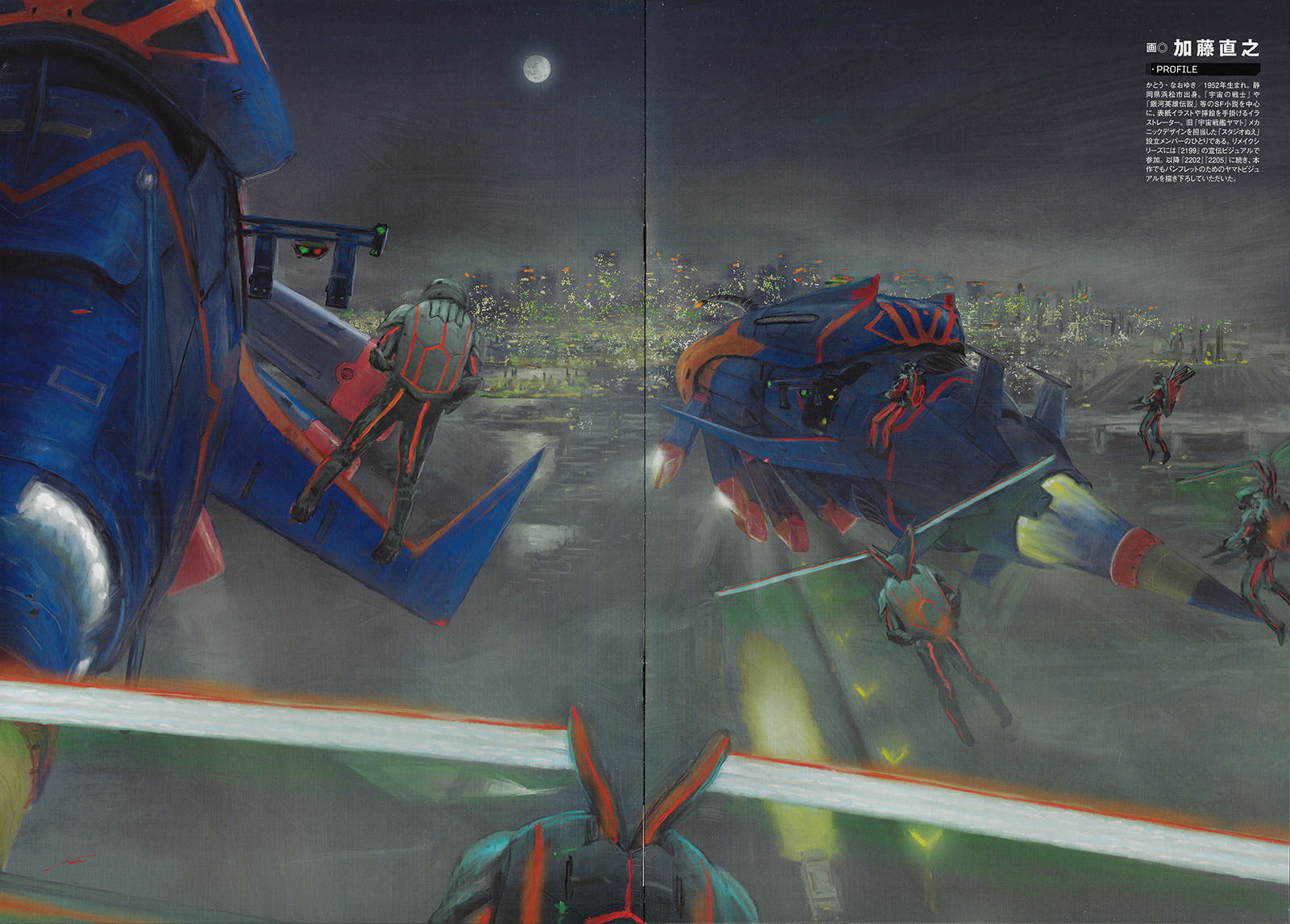
Art by Naoyuki Katoh
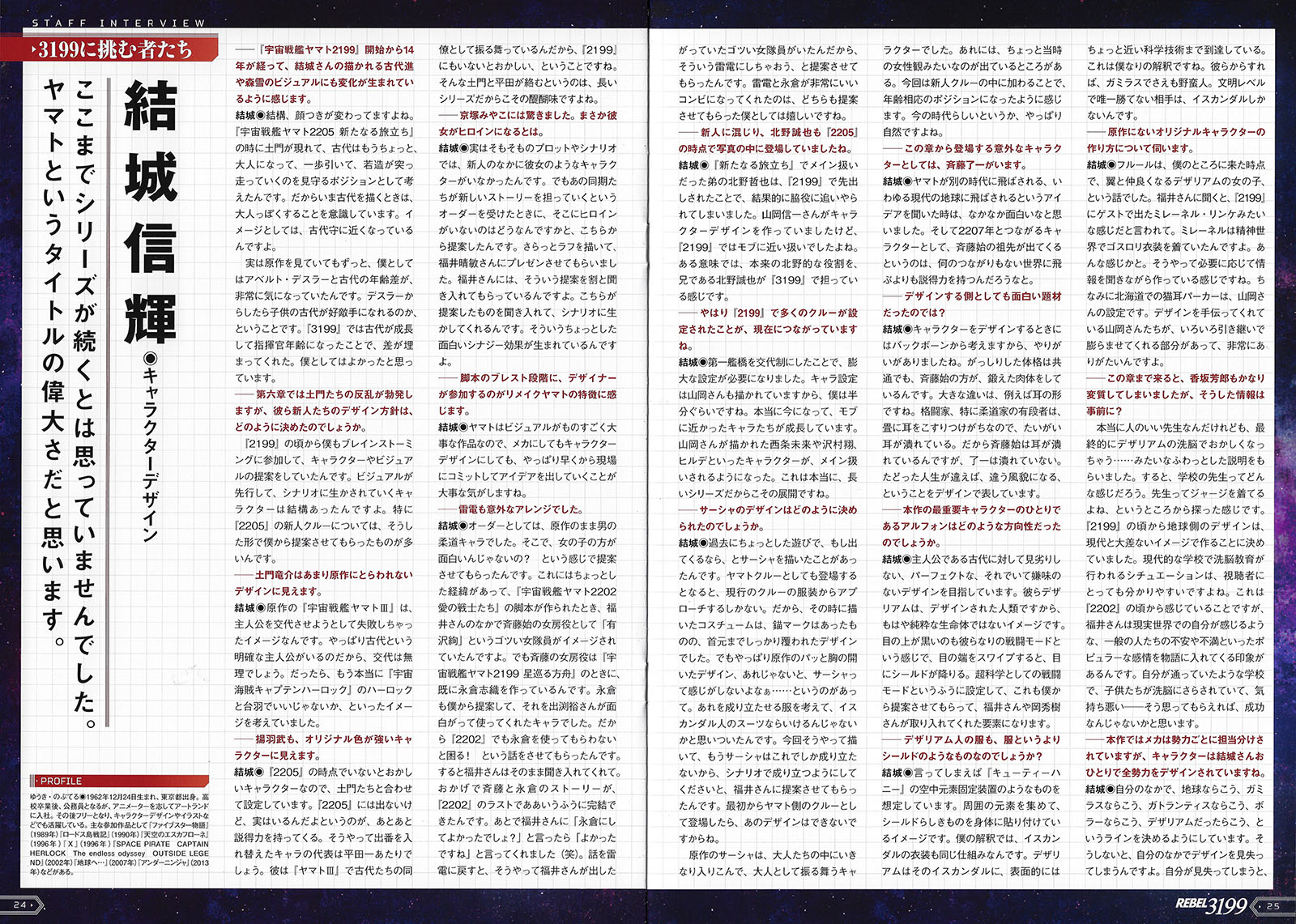
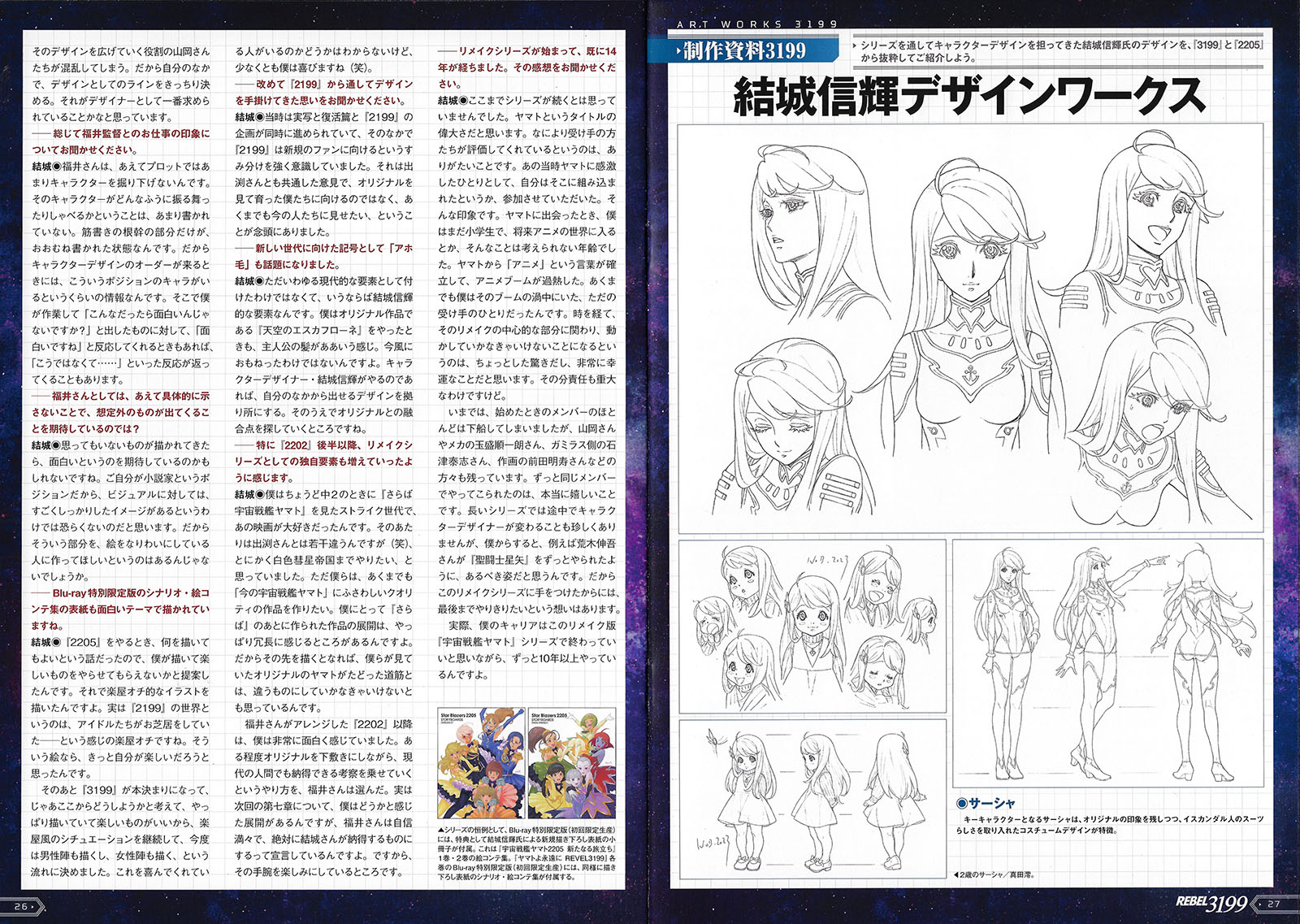
Interview with Character Designer Nobuteru Yuuki (read it here)
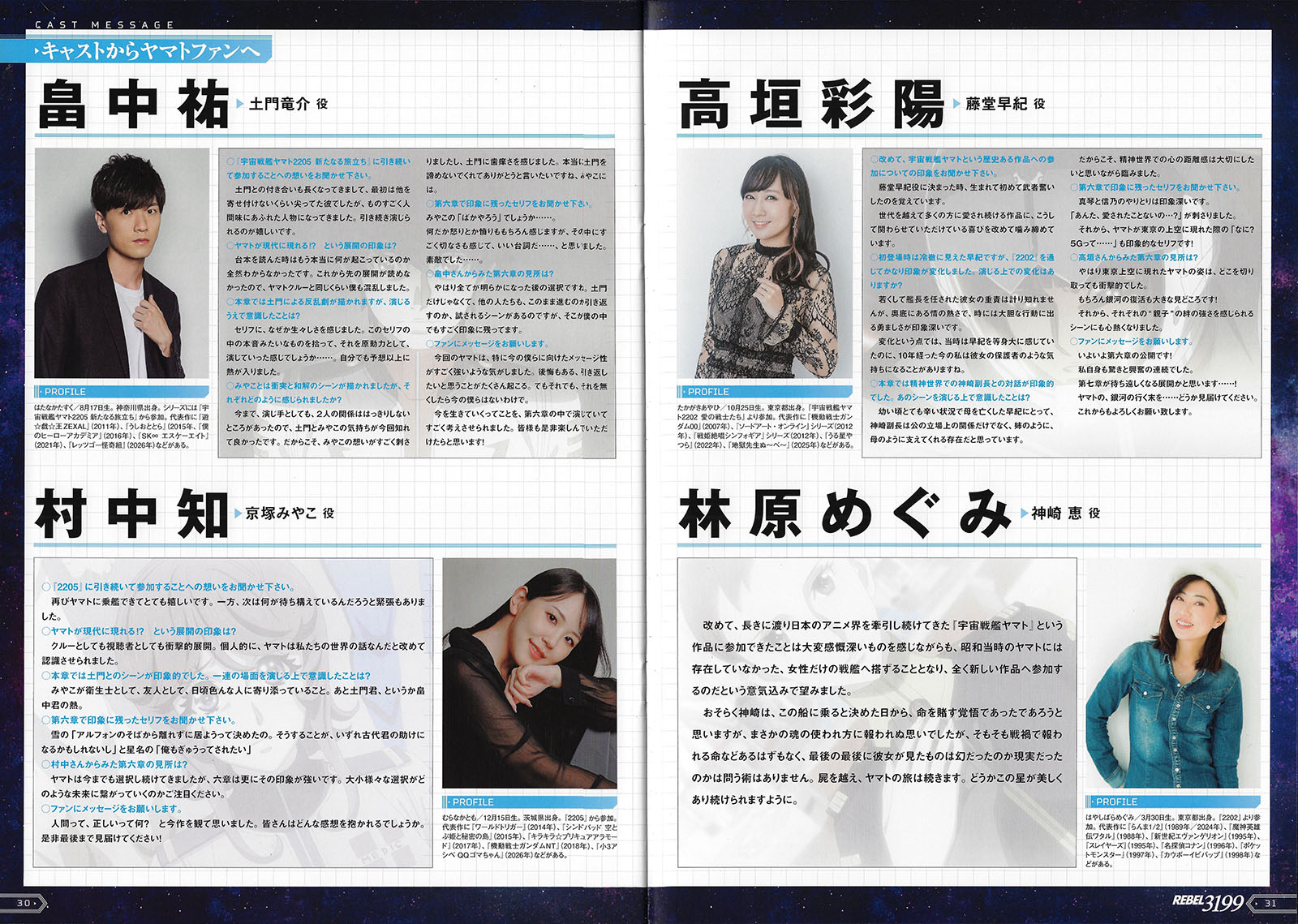
Voice actor comments
Video and music ads

Theater goods