
A Conversation Between Akira Miyagawa and Shu Kanematsu: Discussing the “Musical Legacy” and “New Challenges” at a Milestone
Posted August 22 at RealSound. See the original article here
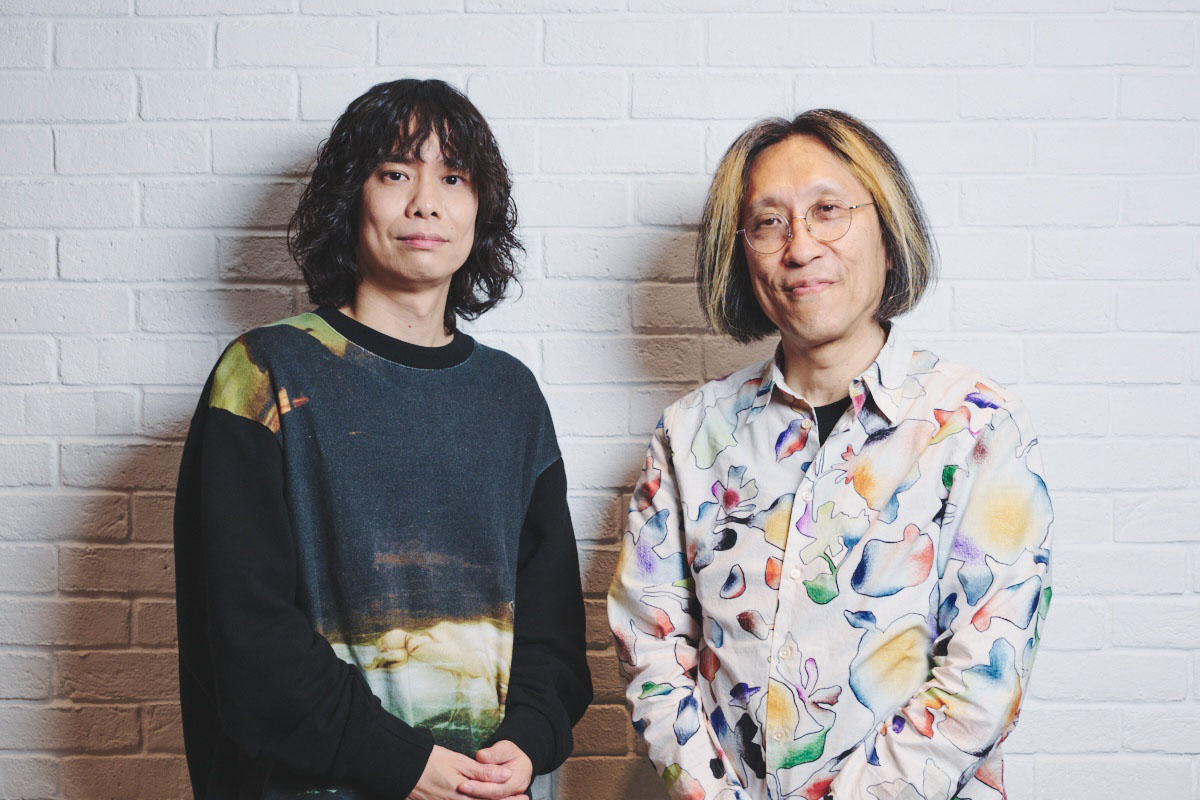
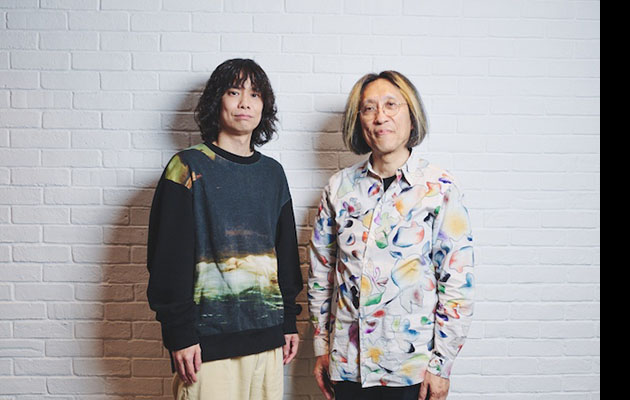
Shu Kanematsu (L) and Akira Miyagawa (R)
With the theatrical release of REBEL 3199 Chapter 7: Rainbow-Colored Reincarnation approaching on October 30, the series that began in 2024 is nearing its conclusion. This also marks a significant milestone for the Space Battleship Yamato remake series, which has been ongoing since 2012’s Yamato 2199.
Akira Miyagawa has been responsible for the music throughout the remake series, handling everything from re-recording and arranging the original scores composed by his father, Hiroshi Miyagawa, to creating entirely new tracks. Starting with 3199, Shu Kanematsu joined the team, breathing fresh life into Yamato sound. It has also been announced that the second 3199 original soundtrack and a collection of theme songs will be released to coincide with the premiere of Chapter 7.
We spoke with Akira Miyagawa and Shu Kanematsu, who have enriched the production with a wide array of musical pieces, about Yamato and the music itself.
Interviewer: Riuichi Taniguchi
Profile: Born in Aichi Prefecture. Book critic and writer. Specializing in light novels, the author writes book reviews for SF Magazine and Mystery Magazine and presents a “Top 10 Light Novels” list for Osusume Bunko Oukoku (published by Hon no Zasshi-sha). They have written the afterwords for all three volumes of Osamu Koshiya’s Itomichi series and contributed critical essays on the works of Fujihiko Hosono, Kei Ichinoseki, and Yu Koyama for Shogakukan’s Mangaka-bon series. While employed at a newspaper company until March 2019, they frequently covered anime and games. since leaving, they have continued to write articles for various outlets, including interviews with anime and film directors and reports on entertainment events.
It looks like a variation, but it isn’t one
Interviewer: REBEL 3199 is finally approaching its seventh chapter. Counting back to Yamato 2199, Akira Miyagawa, you have been involved with the music of Yamato for about 15 years now. Could you share your thoughts on working on Yamato music over this period?
Miyagawa: To tell you the truth, our work on it was actually finished a long time ago. When working on a musical, for instance, you read the script and compose while singing the parts yourself. You might even record demo tapes or make frequent visits to the rehearsal studio. As a composer, I approach the work feeling a sense of responsibility to see it through to the end. However, with a Yamato project, the initial requests are often rather vague. I read the script, but since the written word doesn’t convey everything, I have to fill in the gaps with my imagination. Sometimes, when the final product is revealed, I find that a scene I scored is actually dominated by deafening sound effects.
Interviewer: So, it’s a process where the directors fit the music, which you composed based on a general grasp of the story and atmosphere, to the specific scenes.
Miyagawa: You can hear a lot of things just from the script, but the directors and I don’t necessarily envision the exact same thing. Sometimes our visions are similar yet distinct. I might have been composing with an image in mind that differed from theirs. Perhaps they were telling us to “swim freely.” I think that’s what gives Yamato its unique character. It’s not about strictly adhering to the visuals. it’s about first using music, that mysterious, magical medium, to establish the soul of Yamato.
Interviewer: You create music that aligns with the soul of the Yamato work itself, rather than just syncing up with the visuals or specific scenes.
Miyagawa: I’ve heard that in some instances, the staff would listen to the music and realize, “Oh, that’s the soul of it,” leading them to adjust the visuals accordingly. When I watch the footage, I really feel they’ve used the music masterfully. So I’ve always tried to “pitch the ball” exactly where I felt it needed to go, aiming for a solid hit. If the music doesn’t connect properly, the work won’t deliver that emotional impact. That was my approach.
Interviewer: I think you hit the mark. Did you feel a sense of accomplishment or a positive response?
Miyagawa: It’s not the kind of thing where the process concludes simply because we feel a sense of accomplishment. I think the real sense of success is something felt by Chief Director Fukui and Director Yamato.
Interviewer: Shu Kanematsu, you joined the Yamato series starting with 3199. The musical world of Yamato is a legacy established by Hiroshi Miyagawa and then built upon by Akira Miyagawa, who added new compositions to the mix. Was it a challenge to step into it?
Kanematsu: Neither Mr. Miyagawa nor the director gave me any specific instructions on how to approach the work, but since the recording would take place in the same studio with the same orchestra, I decided to focus on that shared element as I developed the music. I was tasked with both re-creating the soundtrack from the original Yamato and composing new tracks. Naturally, when working on the re-creations, I studied the original scores closely and listened to the vintage recordings. Through that process, I feel like the music of Yamato, or perhaps the atmosphere of the original work, became a part of me. It was as if, while engaging with the original music and working on the arrangements, I suddenly grasped its essence.
Interviewer: Mr. Miyagawa, did you start by working on the revived tracks, grasping the general image and direction of the original works before moving on to the new compositions?
Miyagawa: I didn’t really worry about how much of Be Forever or Yamato III was being retained versus changed for 3199. Sound Director Tomohiro Yoshida handled the planning, deciding things like, “We used that track in the original, so let’s do the same here,” or “We already did this in 2199, so let’s do that for 3199.” Based on that menu, I’d talk with Mr. Fukui and the others. he’d tell me all about the story, almost like a traditional storyteller, and while listening to him I’d turn the ideas that struck me into music. That’s how I worked.
Kanematsu: Exactly. There is a menu, of course, but the things discussed during our meetings were actually more helpful.
Miyagawa: It’s easier to grasp that way. Rather than focusing on the original material, the inspiration that struck during those meetings became the foundation. That’s really how it is. They truly value those flashes of inspiration. After all, you don’t often see a production with this many theme songs, do you?
Interviewer: That’s true. Even looking at the tracklist, the songs aren’t just numbered, they have titles based on characters or specific situations.
Miyagawa: Right.
Interviewer: You’ve long said that Yamato music is melodic and singable. Did you both feel the same way when creating new tracks for 3199?
Miyagawa: Personally, I certainly did. I’ve witnessed firsthand, from a front-row seat, so to speak, just how incredible a melody can be. Back when the show Gebageba 90 first aired [on the Nippon TV network], the very next day, kids would sing my father’s “da-da-da-da” theme song on their way to school. Seeing that made me think, “Wow, Dad is amazing.”
Interviewer: A powerful melody naturally sinks into people’s hearts and compels them to sing along.
Miyagawa: I sometimes think that if we were living on Earth a hundred or two hundred years from now, in a time of great crisis, the melodies wouldn’t be like that. That’s why the “Dezarium String Quartet” piece Kanematsu-san composed was so impressive. I’m not sure if you’d call it a melody, exactly. It was a unique kind of piece, wasn’t it? That’s why, personally, I consider melody to be the most mysterious thing of all.
There are certain things science can’t unravel no matter how much it advances, right? Life is one of them. Then there’s time, or dark matter. They might be explained someday, but there are still things that remain fundamentally unknowable, and I feel like melody, or perhaps music as a whole, belongs in that category.
Interviewer: The secret of melody may never be fully unraveled.
Miyagawa: That’s how much I romanticize melody. Right after the war, Western melodies flooded into Japan, it was like a Big Bang. There are stories like Koichi Sugiyama hearing Stravinsky for the first time and being blown away, or my father hearing Glenn Miller and being absolutely electrified. I feel like something truly vital lies in those moments, and perhaps I’ve used the word “melody” to symbolize that. Yamato has that same quality. if you misinterpret that aspect, I feel it ceases to be Yamato. That’s the kind of work it is, I think.
Interviewer: Kanematsu-san, what are your thoughts on Yamato and melody?
Kanematsu: I do both composing and arranging, but I sometimes wonder, if a piece lacks a melody, can you really call it “composition”? It seems to me that there’s an increasing amount of soundtrack music these days that doesn’t feature a melody.
Miyagawa: That’s true.
Kanematsu: There is wonderful music that lacks a melody, of course, but when I think back to my roots, I realize I’ve always loved songs. You can’t sing a piece that doesn’t have a melody, after all.
Miyagawa: That’s certainly true.
Kanematsu: That’s something I want to keep in mind. Two years ago, when the 3199 project began, there was talk in interviews about how Yamato is defined by its melodies. But in the two years since then, I feel the situation has shifted a bit.
Miyagawa: You mean your own situation?
Kanematsu: The landscape, the world, really. Or rather, I’m speaking about Japanese creators. Around two years ago, there was a divide: on one side, you had people, often in film, who wanted a stylish, sophisticated approach that avoided traditional melodies.
On the other, you had the TV crowd insisting that a melody was essential, that you needed a tune so catchy it was unforgettable after just one listen. It was a two-tiered landscape, so to speak. Lately, though, people don’t talk about “melody” as much. I sense a shift in that direction.
Miyagawa: Like a dying breed?
Kanematsu: It’s not necessarily disappearing, it likely ebbs and flows, but I do sense that trend when watching current dramas and anime. Melodies seem to be vanishing. Music still plays a huge role, but I think we’re in a period where songs and incidental music are becoming completely separated.
Interviewer: Perhaps that’s exactly why the melodies of Yamato resonate so deeply in an era like this.
Miyagawa: There’s a piece called Yamato Sleeping in the Sunset. Kanematsu-san mentioned how wonderful it was, how deeply it moved him.
Kanematsu: It’s incredible.
Miyagawa: At first, I wondered, “What part of it?” but when I thought about it, I realized he was right. Yamato Sleeping in the Sunset is essentially just playing the melody of the Yamato theme song. There’s no embellishment or complex reworking. it’s simply a solemn, weighty performance of the melody itself. Strictly speaking, the orchestration is different, but the fact that the difference came as a shock was actually a fresh realization.
Interviewer: It’s fascinating how the same melody can evoke a completely different scene simply by changing the tempo and atmosphere.
Miyagawa: You can understand it if you imagine playing the Mazinger Z theme song slowly. With Yamato, however, even though it’s a song with lyrics, simply playing it slowly without any major changes shifts the mood of the scene. It doesn’t feel like something was added or altered. Yet, it transforms into a single, cohesive piece of art, a tableau titled Yamato Sleeping in the Sunset. It’s not just a “heavy version” of the Yamato theme. It becomes a distinct song in its own right. It seems like a variation, but it’s something more than that.
Interviewer: It feels as though the melody itself carries the entire scene and all the emotions within it. That’s precisely why the music comes flooding back to memory at unexpected moments, or why Yamato’s music resurfaces at various turning points in people’s lives.
Miyagawa: It shows just how deeply that melody is shared among everyone. That might be all there is to it, but it speaks to the melody’s inherent power. It was a melody with real substance and strength.
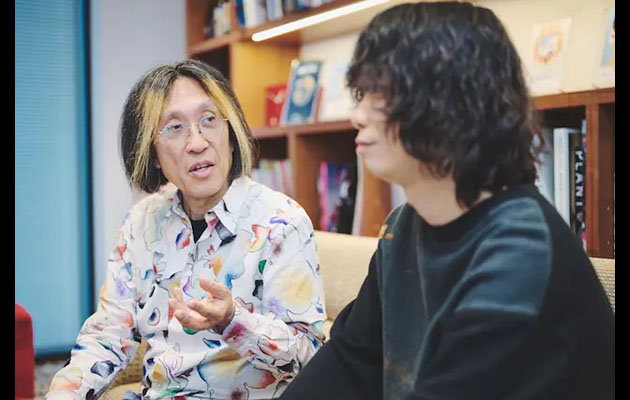
Every piece of Yamato music is built around a melody
Interviewer: You previously mentioned that you brought Kanematsu-san on board to help pass on Yamato musical style to the next generation. Now that two years have passed, do you feel that the essence of that legacy, or the approach to composing this kind of dramatic score, has successfully been conveyed?
Miyagawa: Right now, I feel like I’m the one doing the learning. Practically speaking, there is a need to pass this legacy on, and I certainly hope the next generation understands and carries forward the things I cherish. However, there isn’t a rigid rulebook saying, “You must do this,” or, conversely, “As long as you pass on this specific thing, that’s enough.” There were new discoveries at every turn.
It is truly valuable to see someone from a younger generation fully utilizing sensibilities that I simply don’t possess. I’m not sure if you’d call it “passing the torch,” but I’m certain the message got across that we should approach this creatively in the grandest sense.
Interviewer: Mr. Miyagawa, have you found yourself musically enriched or inspired by Mr. Kanematsu’s methods, such as how he crafts music and places melodies, or his use of new instruments, including digital ones?
Miyagawa: That certainly happens. With things like the string quartet arrangement, for instance, I’d think, “So that’s how you build it”, it’s not something I could do myself, but seeing it done that way gives me a sense of confirmation, like, “Ah, so that’s the answer.”
But more than that, Mr. Fukui’s script and visuals are all trying to depict the present. Even though it’s a story set in the future, it’s really about the here and now, capturing that unsettling sense of being stifled, or the feeling that something “real” might lie just beyond the surface of our society. Kanematsu-san, living in this same era, is able to internalize those sensations and express them quite naturally.
Interviewer: As contemporaries, in other words.
Miyagawa: I suppose he lived through a slightly different era than I did. That plays a part. Our approaches differ slightly, which is a great learning experience for me. I find myself thinking, “That’s amazing,” or “That’s something I couldn’t do, I’m glad he’s the one doing it.” I’m convinced that having Kanematsu-san involved is what gave this work such rich, dynamic music, music that resonates with so many people.
Interviewer: Kanematsu-san, do you feel you’re infusing the music with that kind of contemporary sensibility Mr. Miyagawa mentioned?
Kanematsu: I wasn’t specifically told to stick to Yamato style, nor was I told to make it sound modern. I think he was mainly letting me find my own way and seeing how things developed.
Interviewer: What have you gained from your involvement in the 3199 series? Did you absorb the musical legacy, including the work of Akira Miyagawa and his father, and carry it forward into the future?
Kanematsu: It wasn’t just about absorbing information. The project was a constant learning experience. Even in the process of reviving those old scores for the present day, I encountered techniques I’d never seen before. It wasn’t merely a reproduction. seeing firsthand how they maintained the original style at the core while incorporating modern technology, and being able to participate in that creation myself, was an incredibly valuable experience.
Miyagawa: Actually, there are times when I really want to know the truth about how things were done back then, specifically the recording process. It’s not that I want to replicate it exactly, but consider a 3.5-minute battle cue where the instruction is to loop a specific section at a certain tempo…if you tried to record that today, musicians would often tell you it’s impossible. I find myself wondering if the musicians back then really just powered through and recorded it all in one go. Brass players, in particular, have to be incredibly tough.
Kanematsu: It feels like they were playing without a break.
Miyagawa: Exactly, playing non-stop for three minutes. We’re using the same sheet music they had in front of them, yet I wonder what the difference is. Have modern orchestral musicians lost some stamina? Or is it that each individual plays with more energy now, causing them to burn through their reserves before the piece ends? Perhaps even back then, they used tricks like taking a break at a certain point and overdubbing the rest later. I’d really love to know what the atmosphere was like during those sessions.
Interviewer: Perhaps the music of Yamato is defined by that very intensity of the performance.
Miyagawa: Back when the original Yamato was being made, the musical scores weren’t exactly “black”, meaning densely packed with notes. But over the years, the scores became increasingly dense and complex. I’d love to know how the musicians actually took that. Did they say, “Maestro, you can’t expect us to play this”? Or maybe the atmosphere was more like, “Well, it’s Yamato, so we have no choice, let’s do it.” I’m really curious about that.
Interviewer: The music of the new Yamato series has evolved by incorporating fresh elements while carrying on the passion of the original era. With the upcoming release of the second soundtrack for REBEL 3199, a vast audience will get to hear this new era of Yamato music. Is there any particular part you’d like listeners to focus on?
Kanematsu: We’ve talked about this a lot, but the defining feature of Yamato music is that every single track has a melody. It’s not just the theme songs. Practically every piece, even the background tracks, features a melody. So, I hope people will explore the soundtrack and find the specific tracks that resonate with them personally.
Interviewer: Miyagawa-san, Do you hope that people will listen to the entire body of Yamato music, including the pieces inherited from your father?
Miyagawa: Ideally, I’d prefer they didn’t listen to it, though I know that’s not really possible, is it? (Laughs)
Interviewer: That’s a surprising thing to hear.
Miyagawa: I certainly want people to listen, but I have mixed feelings about it. The “oshi” (fandom/favorite character) culture has really taken off, and dedicated Yamato fans are the ones supporting the franchise. These fans often know more about the music than I do. They’ll point out specific details, like “this part is different” or “the tempo should be exactly this way”, but I find myself wanting to say, “Let’s be a bit freer with it.” I’m not quite sure how to articulate that sentiment in a way that truly conveys what I mean, though.
Interviewer: Do you mean you don’t want the approach to become too rigid or dogmatic?
Miyagawa: Exactly. I don’t want the music to be confined solely to the world of Yamato. I have this lingering feeling that I don’t want music, something so vast, to be confined within the “Yamato box.” It’s fine if someone says, “I fell in love with music because of the Yamato score.” But if they start thinking that Yamato music is the only music that matters, or if they only appreciate a piece because of a specific scene involving Yuki, that might create a bias in how they listen to music.
Part of me has always wanted to say, “Please don’t love it so intensely that it consumes you.” I can’t shake the feeling that this is something I ought to say. I find myself perhaps overstepping by thinking about how I want to help everyone’s musical culture evolve to the next stage.
Interviewer: Perhaps you want the music created for Yamato, passed down from Hiroshi Miyagawa to Akira Miyagawa, and now involving Shu Kanematsu, to spread and be appreciated as music in its own right?
Miyagawa: Exactly. Through that process, I want to pass something on to our children and the next generation. It’s not just about Yamato music being good. it’s about wanting to convey something more fundamental.