When you built your first Yamato model kit, did you wonder who conceived and designed it, or how human thought translated into technical precision? It turns out questions like these have answers, and the best person to ask is the one who created these models in the first place.
Hobby Japan Vintage, a legacy magazine that explores the craft of model kit creation, has been around since 2019. Published roughly twice a year, it features archival reviews of classic kits and interviews with the teams who brought them to life.
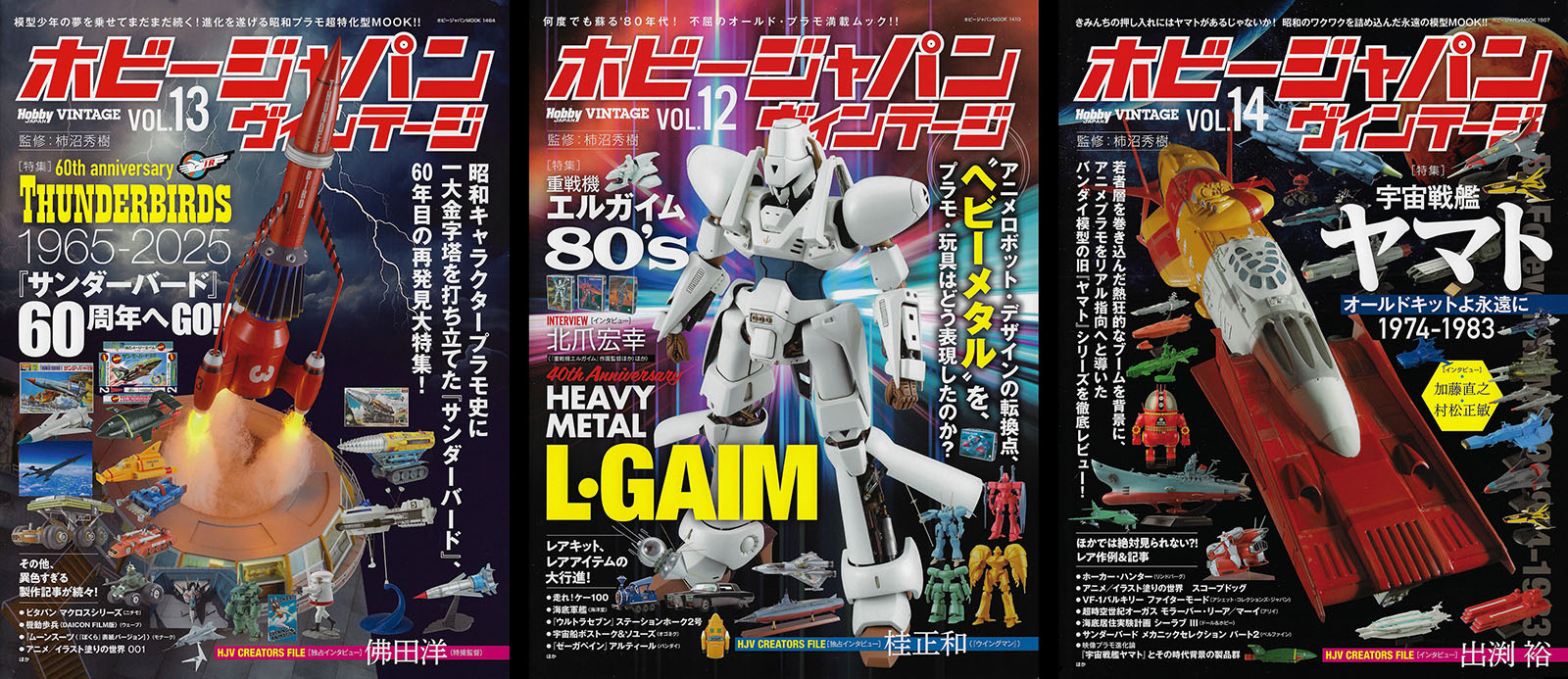
Starting in Vol. 12 (Dec 2024), a serialized interview was conducted with veteran designer Masatoshi Muramatsu. This engaging conversation covered his career from the beginning through his tenure creating the Yamato kits for Bandai. Collected here are the interviews published in Hobby Japan Vintage Vol. 12-14. The conversation will continue in future issues, so watch for a followup.
Translator’s note: In this interview you will see the term “character model” more than once. This is not a term for human characters; it is used to differentiate a “scale model” (based on a real object) from a fictional object such as an anime mecha.
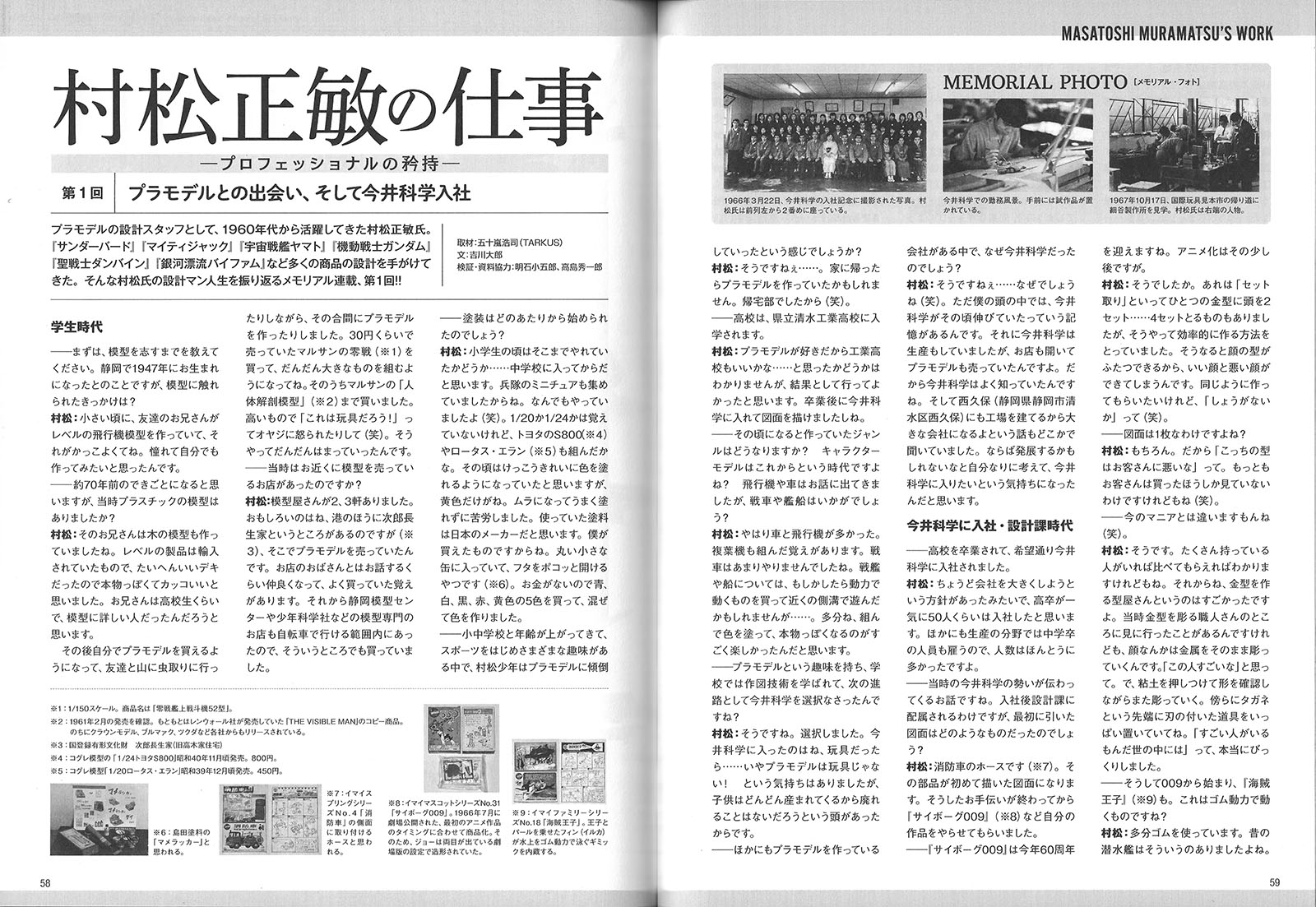
The Works of Masatoshi Muramatsu
The Pride of a Professional
PROFILE
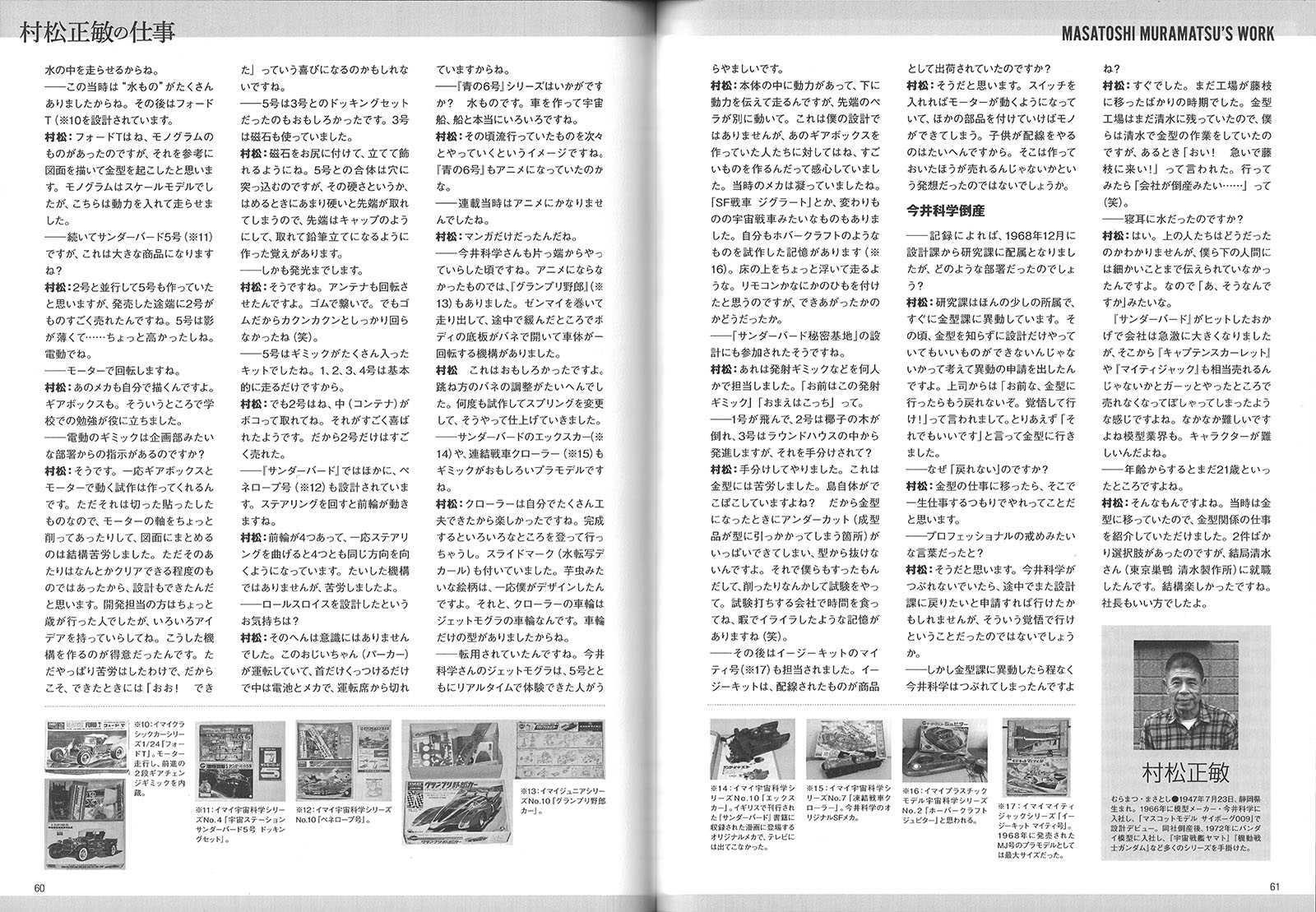
Masatoshi Muramatsu has been active as a model kit design staff member since the 1960s. Born July 23, 1947, in Shizuoka prefecture. In 1966, he joined the model manufacturer Imai Kagaku and made his design debut with “Mascot Model Cyborg 009.” There, he worked on the design of many products, including Thunderbirds and Mighty Jack. After the company went bankrupt, he joined Bandai Models in 1972 and worked on many series, including Space Battleship Yamato, Mobile Suit Gundam, Aura Battler Dunbine, and Galactic Drifter Vifam. This memorial series looks back on Mr. Muramatsu’s career as a design engineer.
Interview by Koji Igarashi (TARKUS)
Text by Yoshikawa Tairo
Part 1: First encounter with plastic models, and joining Imai Kagaku
Student days
First, please tell us about how you came to pursue model making. You were born in Shizuoka in 1947, but what sparked your interest in model making?
When I was little, my friends’s older brother was building Revell model airplanes, and I thought they were really cool. I admired them and wanted to try building them myself.
This would have been about 70 years ago. Were there plastic models available back then?
That older brother also made wooden models. The Revell products were imported, and they were so well-made that I thought they looked very realistic and cool. I think he was probably around high school age and was very knowledgeable about models. Later, I was able to buy plastic model kits myself, and I went bug hunting in the mountains with my friends.
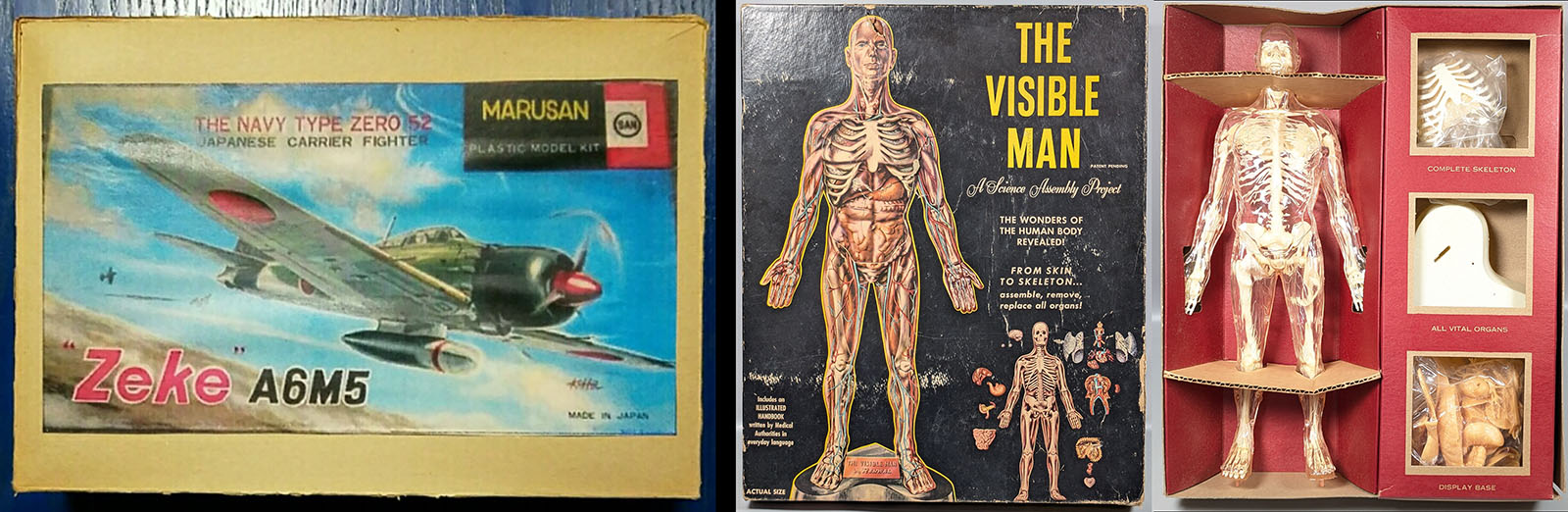
While doing that, I would build plastic models in between. I bought a Marusan Zero Fighter (above left) that was on sale for about ¥30, and gradually I started building bigger ones. Eventually, I even bought a Marusan “Human Anatomy Model” (above right). it was expensive, and my dad got angry at me, saying, “that’s just a toy!” (Laughs) That’s how I gradually got hooked.
Note: The “Human Anatomy Model” is confirmed to have been released in February 1961. Originally titled “The Visible Man” released by Renwal. Later, it was also released by various companies, such as Crown Model, Bullmark, and Tsukuda.
Were there any model shops near you at that time?
There were two or three model shops. Interestingly, there’s a place called Jirocho’s Birthplace near the port, and they sold plastic models there. I remember becoming friendly with the lady who ran the shop and often buying from her. There were also specialty model shops like Shizuoka Model Center and Shonen Kagakusha within cycling distance, so I bought from those places as well.
Note: Jirocho’s Birthplace is a nationally registered tangible cultural property (former Takagi family residence).
At what point did you start the painting process?
I wasn’t able to do that much when I was in elementary school. I think it was after I entered junior high school. I was collecting miniature soldiers, too. I was doing all sorts of things. (Laughs) I don’t remember if it was 1/20 or 1/24, but I think I assembled a Toyota S800 and a Lotus Elan (below, both released by Kogure).
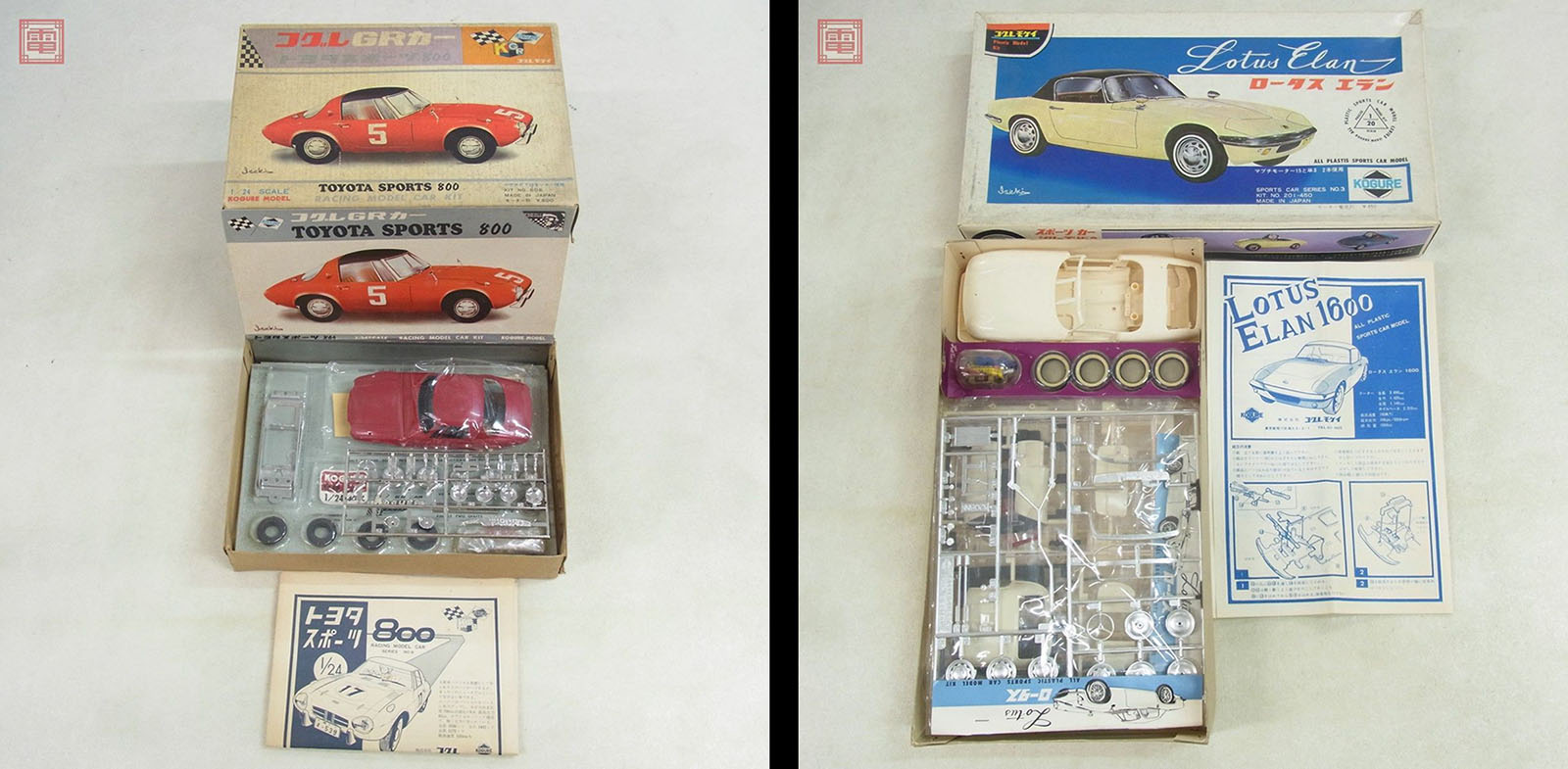
LEFT: Kogure Model’s 1/24 Toyota S800, Nov 1965 (¥800). RIGHT: Kogure Model’s 1/20 Lotus Elan, Dec 1964 (¥450).
By then, I think I was able to paint quite nicely, but yellow was the only thing I struggled with. It would get uneven and I couldn’t paint it well. I think the paint I used was from a Japanese manufacturer. It was something I could afford. It came in a small round can with a lid that you popped open. I didn’t have much money, so I bought five colors: blue, white, black, red, and yellow, and mixed them to make my own colors.
As you got older, going through elementary and junior high, and had various hobbies, including sports, did you become increasingly devoted to plastic model kits?
Well, I might have been building plastic models when I got home. I wasn’t in any clubs, after all. (Laughs)
You went onto Shimizu prefectural technical high school.
I don’t know if I thought, “I like plastic models, so maybe a technical high school would be good…” but in the end, I’m glad I went. After graduation, I was able to join Imai Kagaku and draw blueprints.
What genres were you working on around that time? Character models were just starting to emerge, right? You mentioned airplanes and cars, but what about tanks and warships?
They were mostly cars and airplanes. I remember assembling a biplane, too. I didn’t do much with tanks. As for battleships and ships, I might have bought a motorized one and played with it in a nearby ditch. I probably just assembled and painted it. I think what I enjoyed most was building them, painting them, and making them look like the real thing.
You had a hobby of building plastic models, you studied drafting techniques at school, and then you chose Imai Kagaku as your next career path.
That’s right. I made the choice. The reason I joined Imai was because, although I felt that if it was a toy…no, plastic models weren’t toys! I also thought that since children were being born all the time, it would never become obsolete.
With so many other companies making plastic models, why did you choose Imai Kagaku?
I wonder. (Laughs) But in my mind, I remember that Imai Kagaku was growing at that time. In addition to manufacturing, they also had a store that sold plastic models. So I knew Imai well. And I’d heard somewhere that they were going to build a factory in Nishikubo and become a big company. (Nishikubo, Shimizu Ward, Shizuoka city, Shizuoka prefecture.) So I thought to myself that it might develop, and that’s probably why I wanted to join Imai Kagaku.
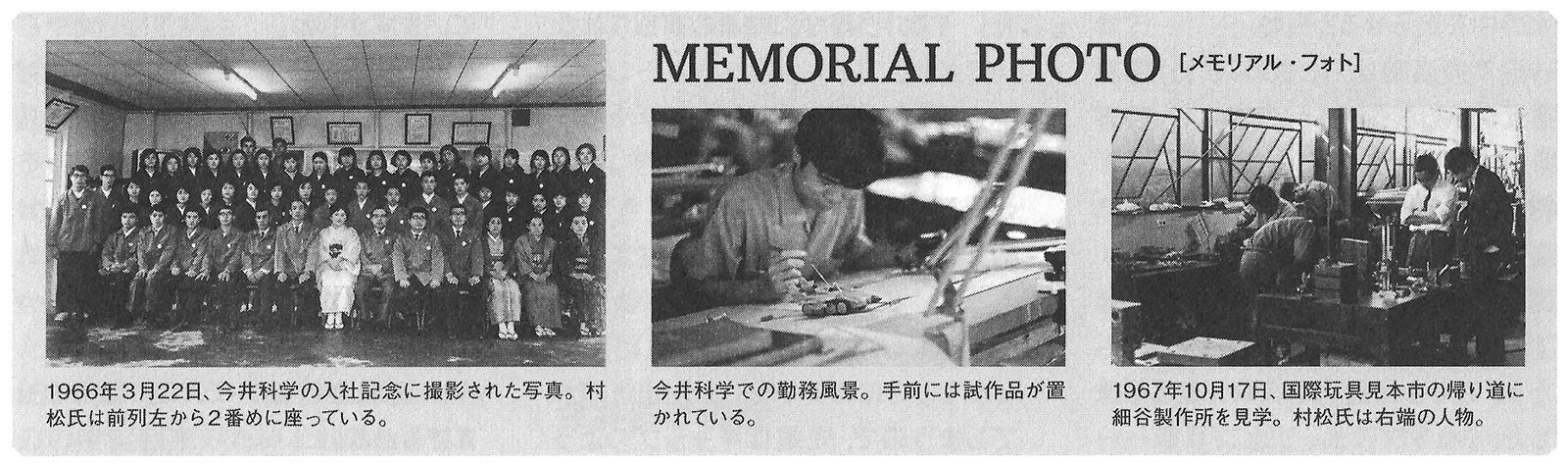
LEFT: This photograph was taken on March 22, 1966, to commemorate the employees joining Imai Kagaku. Mr. Muramatsu is seated second from the left in the front row.
CENTER: A scene from work at Imai Kagaku. Prototypes are placed in the foreground.
RIGHT: On October 17, 1967, visiting Hosoya Manufacturing on the way back from the international toy fair. Mr. Muramatsu is at the far right.
Joining Imai Kagaku and working in the design department
After graduating from high school, you joined Imai Kagaku, as you had hoped.
When they were thinking about expanding the company, it seemed they had a policy of hiring high school graduates, and I think about 50 people joined the company all at once. In addition, they also hired people with only a middle school education in the production department, so the number of people was really large.
That story really conveys the momentum of Imai at that time. You were assigned to the design department after joining the company, but what kind of drawings did you create first?
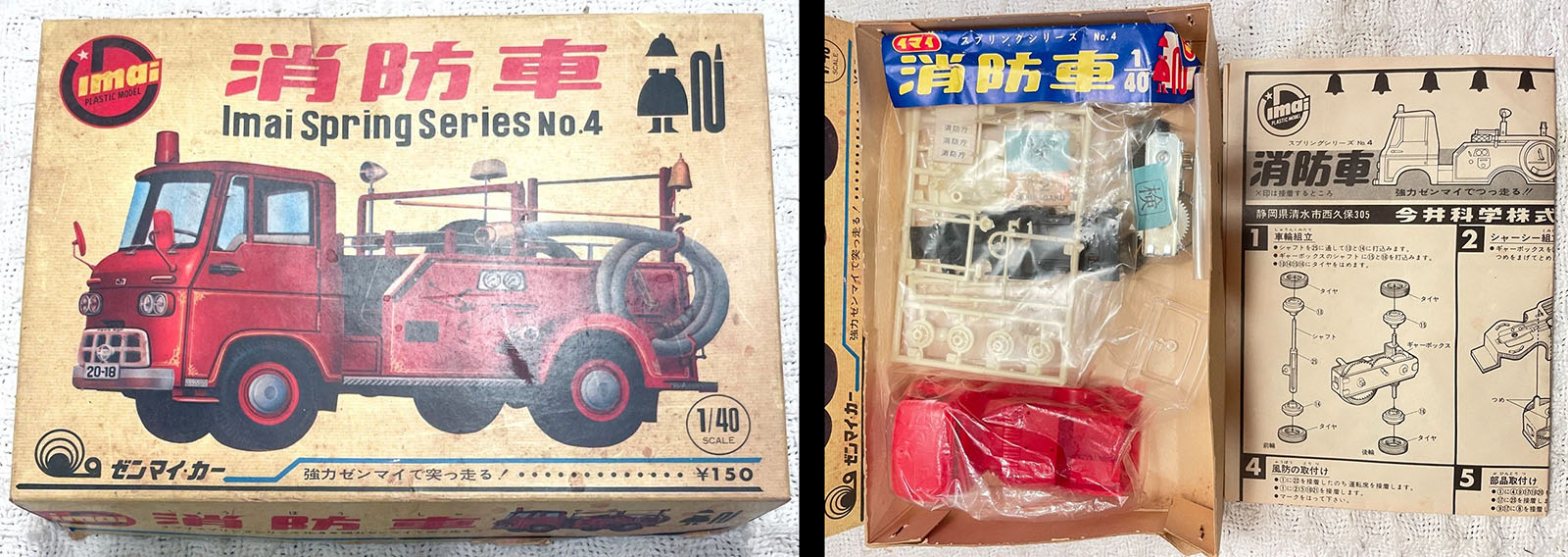
Muramatsu’s debut part: a hose that attaches to the side of the Imai Spring Series No. 4 fire truck.
It was a fire truck hose. That part was the first blueprint I ever drew. After I finished helping out with that, I was allowed to work on my own projects, such as Cyborg 009.
Cyborg 009 is celebrating its 60th anniversary this year, isn’t it? The anime adaptation came a little after that.
That was called “set molding,” where they would make two sets of heads in one mold. Some even made four sets. That was an efficient way to produce them. But that meant two molds of faces would be created, resulting in one good face and one bad face. We wanted them to be made the same, but we just had to accept it. (Laughs)
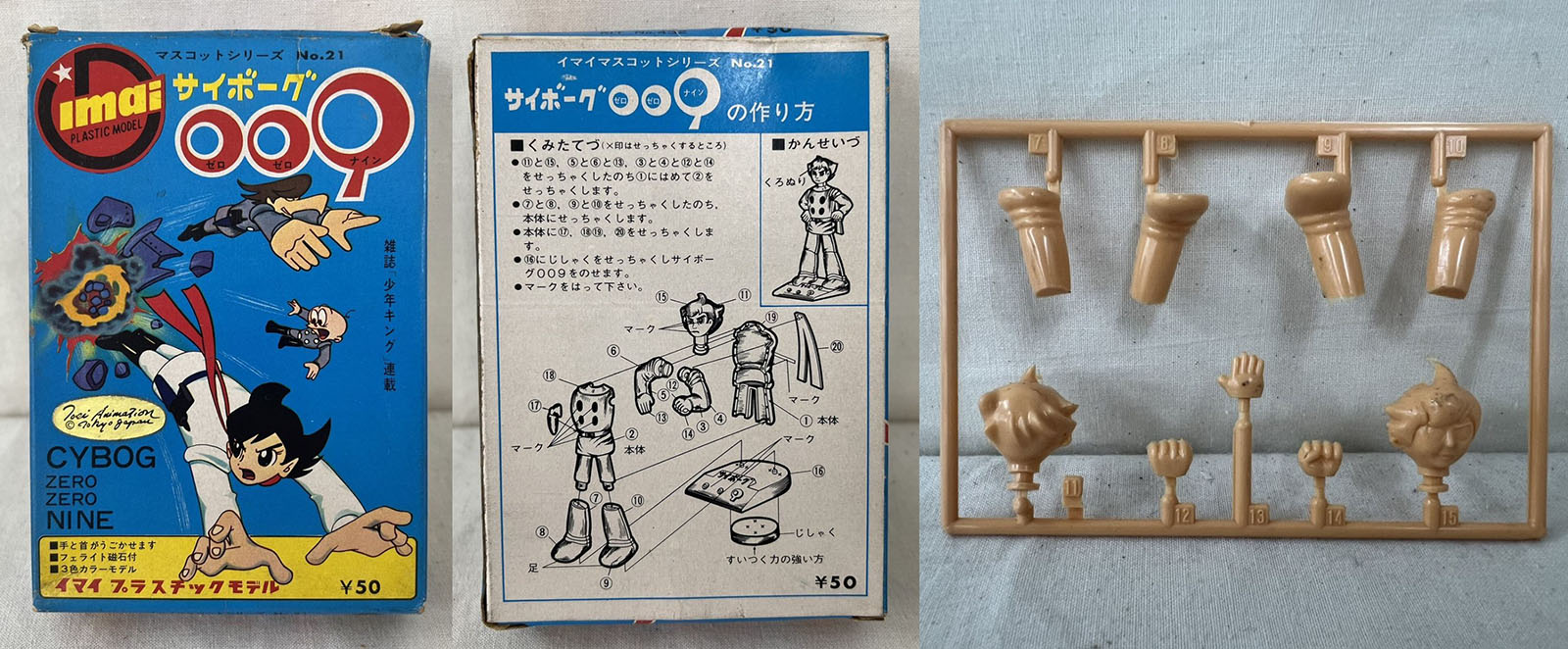
Imai Mascot Series No. 31, Cyborg 009. This product coincided with the theatrical release of the first animated film in July 1966. Therefore, Joe was sculpted according to the theatrical version’s design, where both eyes are visible.
So there was only one drawing, right?
Of course. That’s why I thought, “this model isn’t good for the customer.” Although, customers only looked at the one they bought. (Laughs)
They were different from today’s enthusiasts, weren’t they? (Laughs)
That’s right. If there’s someone who owns a lot of of them, you can compare them and you’ll see the difference. Also, the mold makers were amazing. I once went to see a craftsman who carved molds back then, and he carved faces directly into the metal. I thought, “this guy is incredible.” He would press clay into the metal to check the shape and then carve again. He had a lot of chisels, tools with blades at the end, lying beside him. I was truly astonished, thinking, “there are some amazing people in the world.”
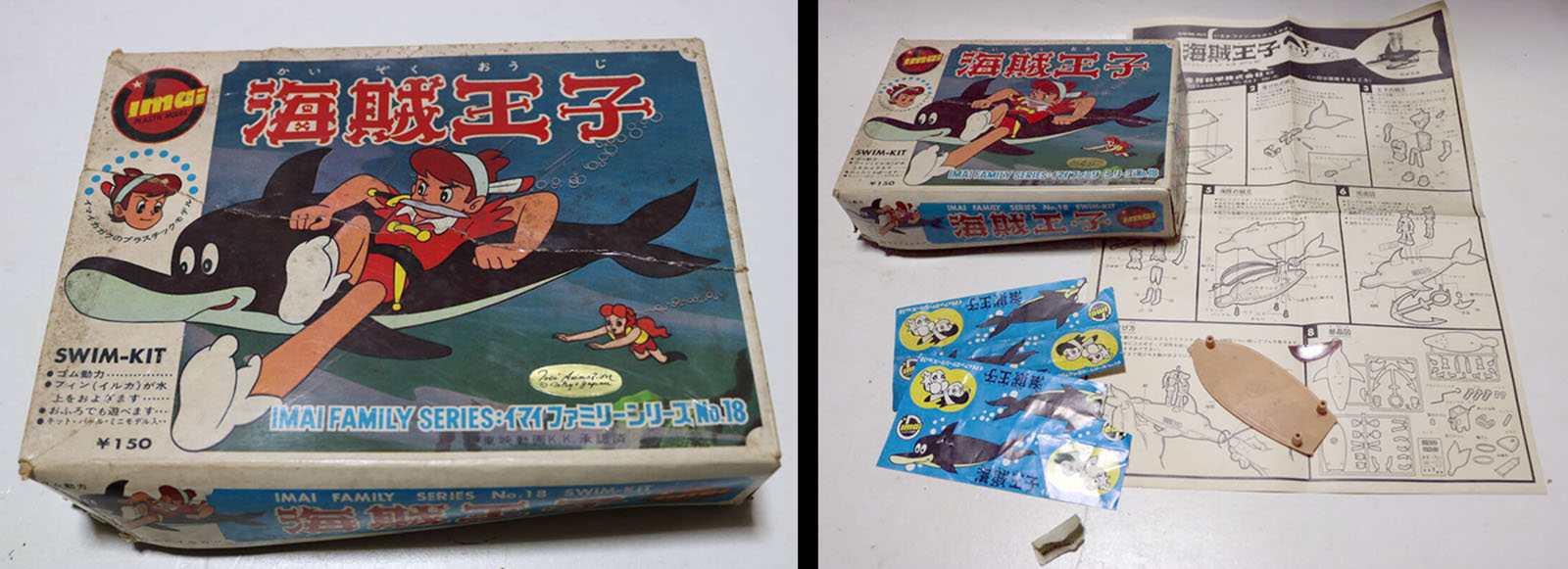
Imai Family Series No. 18, Pirate Prince. It had a built-in gimmick that allowed the fin
carrying the prince and (dolphin) Pearl to swim in water using rubber band power.
So it started with 009, and then there was Pirate Prince. this one was powered by a rubber band, right?
It probably used a rubber band. Old submarines used to have something like that, right? Because they ran underwater.
There were a lot of “water related” things back then. After that, you designed the Ford T.
As for the Ford T, there was a Monogram model, and I think we use that as a reference to draw the plans and create the mold. The Monogram version was a scale model, but this one was powered and could run.
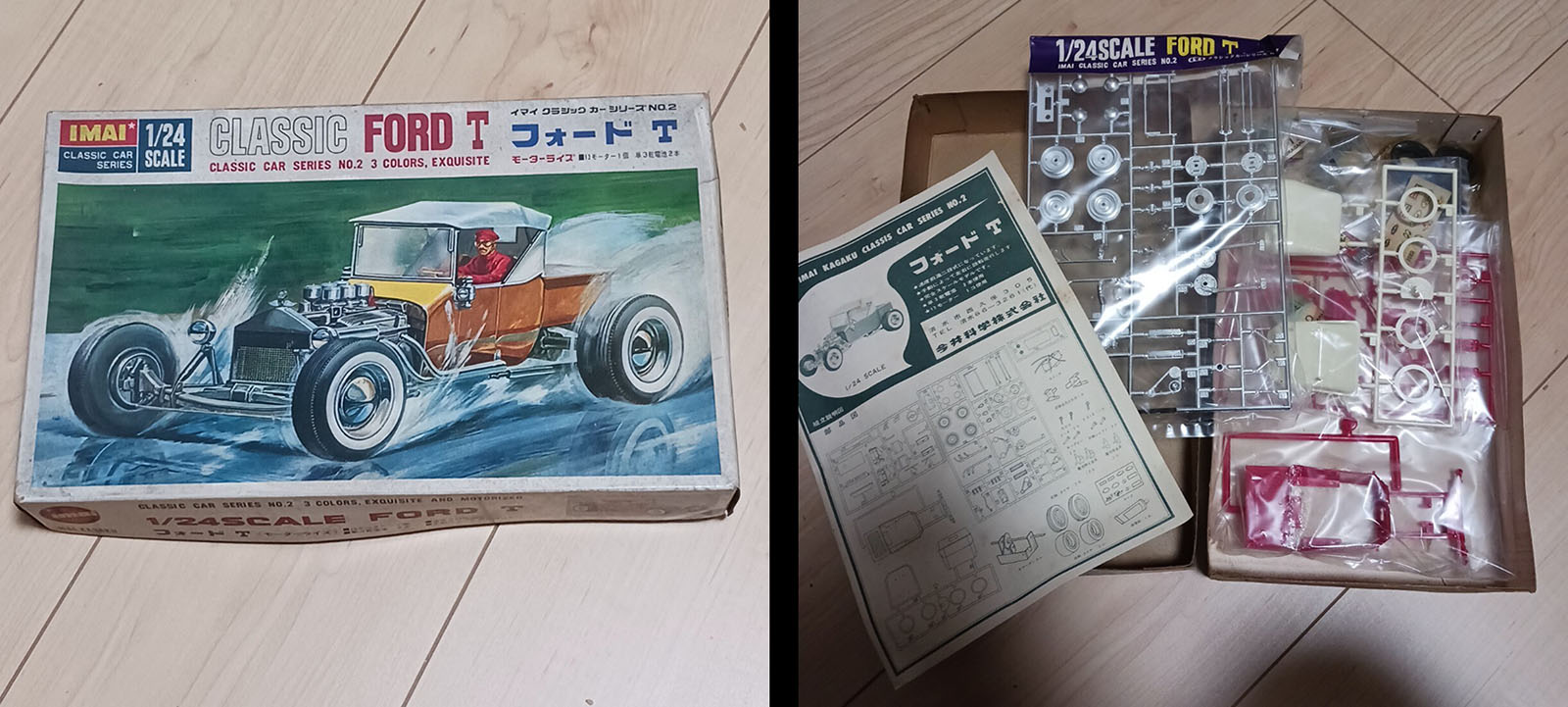
Imai classic car series 1/24 Ford T. It was motor-driven and had a built-in 2-speed gear shifting mechanism for forward movement.
Next up was Space Station Thunderbird 5, which was a big product, wasn’t it?
I think we were working on No. 5 at the same time as No. 2, but as soon as No. 2 was released, it sold incredibly well. No. 5 was overshadowed. It was a bit expensive, too. And it was motorized.
It rotated using a motor, right?
I drew those mechanics myself, too. Even the gearbox. That’s where what I learned in school came in handy.
Were the electric gimmicks designed based on instructions from a department like the planning department?
That’s right. They did make a prototype that worked with a gearbox and motor. However, it was made by cutting and pasting parts together, so the motor shaft was slightly filed down, and it was quite difficult to put it all together into drawings. But it was something that could be overcome somehow, so I think that’s why we were able to do the design. The person in charge of development was a bit older, but he had a lot of ideas. He was good at making these kinds of mechanisms. But it was still a struggle, and that’s probably why it was such a joyous “Wow! We did it!” moment when we finally finished it.
It was also interesting that No. 5 was a docking set with No. 3, which also used magnets.
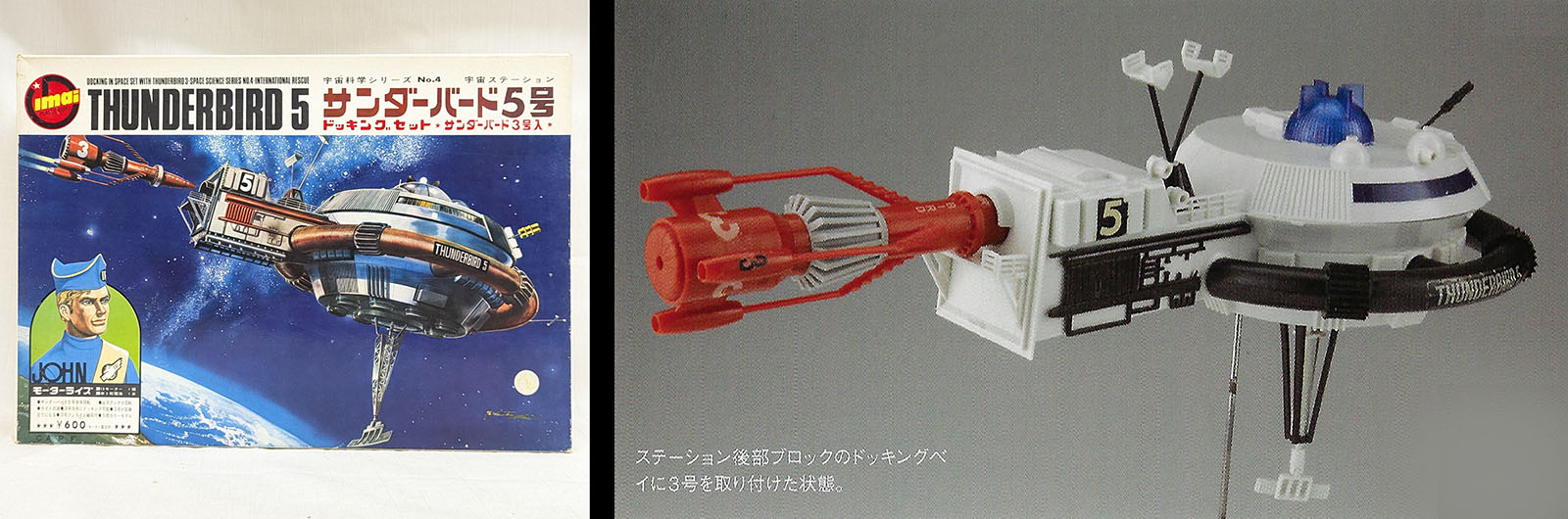
Imai Space Science series No. 4, space station Thunderbird 5 docking set
I attached a magnet to the bottom, so it could stand upright for display. When combining it with No. 5, you insert it into a hole, but if it was too stiff when you put it in, the tip would come off, so I remember making the tip like a cap so that it could be removed and used as a pencil holder.
And it also emitted light.
That’s right. We even made the antenna rotate. We connected it with rubber. But because it was rubber, it didn’t rotate smoothly and just jerked around. (Laughs)
Kit No. 5 had a lot of gimmicks, didn’t it? Kits 1-4 basically just ran.
But with No. 2, the inside container came off in a big chunk. That seemed to be a big hit. That’s why No. 2 sold really well.
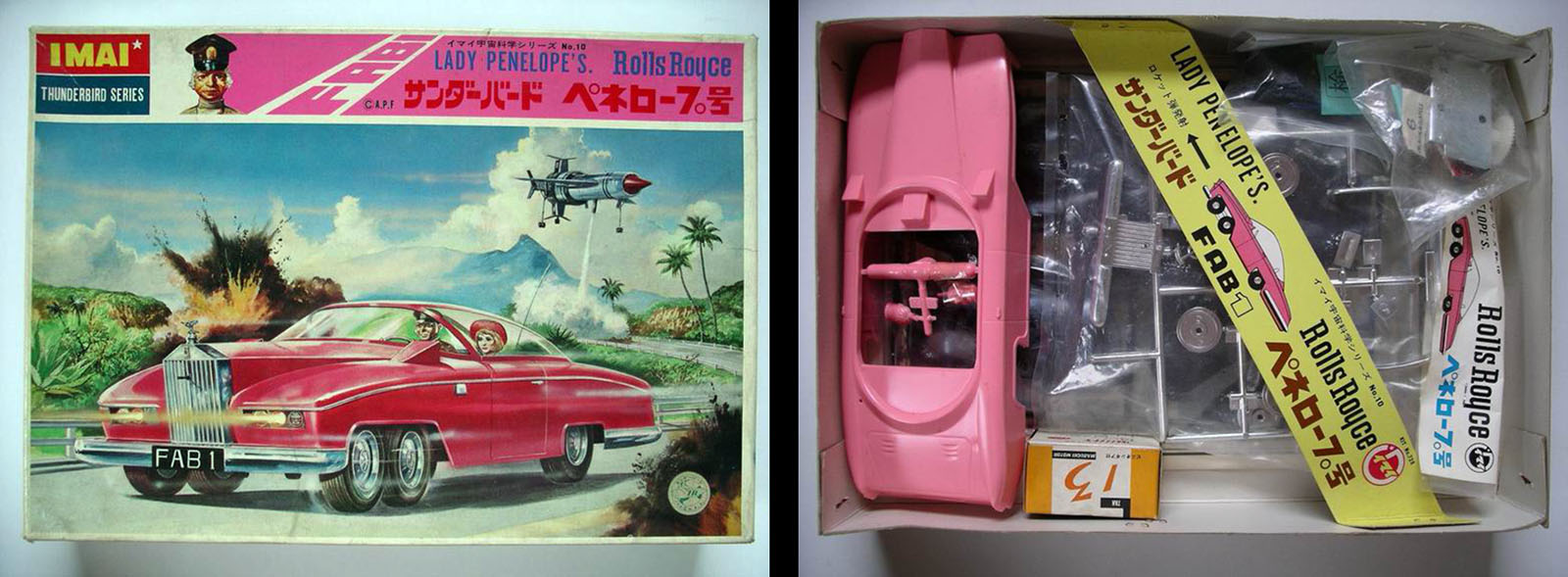
In addition to all that, the Thunderbirds series also featured a design for the Penelope vehicle [Fab 1]. When you turned the steering wheel, the front wheels turned, right?
It had four front wheels, and when you turned the steering wheel, all four pointed in the same direction. It wasn’t a particularly complex mechanism, but it was a lot of work.
How did you feel about designing a Rolls-Royce?
I wasn’t really thinking about that. This old man (Parker) was driving, and all I had to do was attach the head to it. The inside was just batteries and mechanics, and it was disconnected from the driver‘s seat.
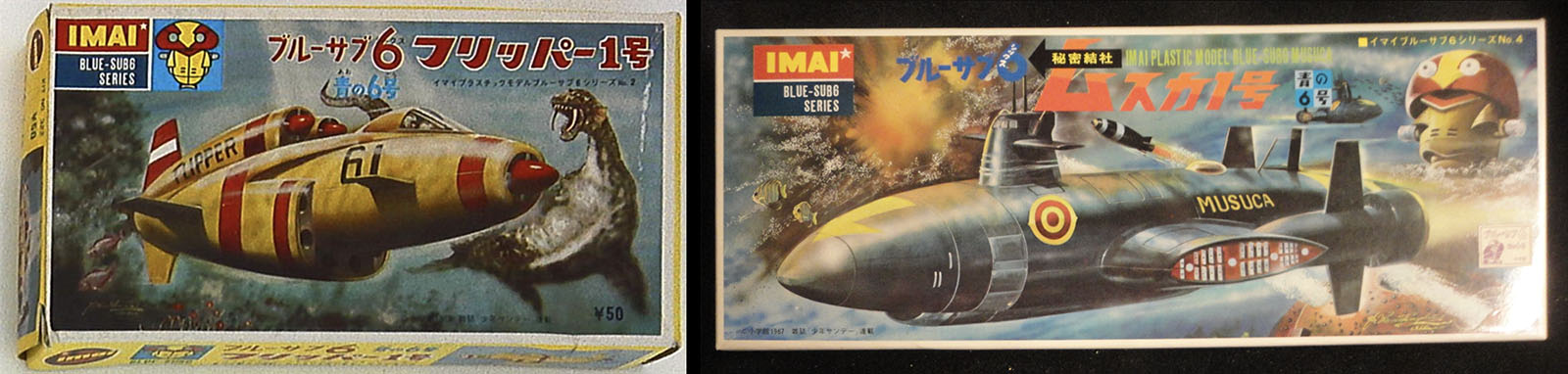
What did you think of the Blue Submarine No. 6 series? It was always about water. You made cars, spaceships, ships, and all sorts of things.
We did whatever was popular at the time, one after another. I wonder if Blue Submarine No. 6 was also made into an anime…?
It wasn’t made into an anime when it was being serialized, was it?
So it was just manga.
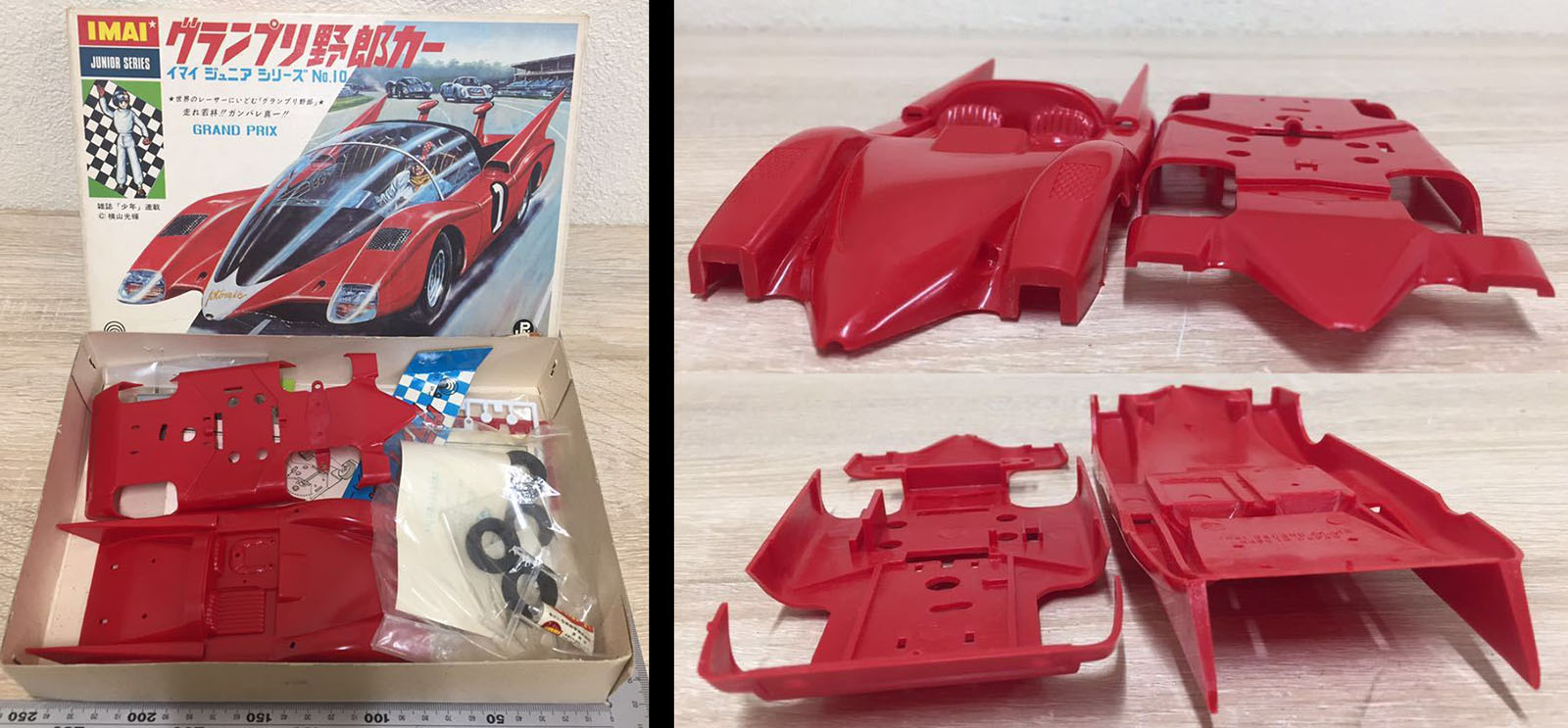
Imai Juniors Series No. 10, Grand Prix Yarou Car
That was around the time when Imai Kagaku was working on everything they could get their hands on. One of the things that never got made into an anime was the Grand Prix Yarou Car. You’d wind it up and it would start moving, and if it unwound along the way, the bottom plate of the car would spring open and the car would rotate 360°.
That was fun. Adjusting the spring for the bounce was a real challenge. I made prototypes many times, changed the springs, and that’s how I got it right.
The X-Car from Thunderbirds and the Articulated Tank Crawler were also interesting plastic models with unique gimmicks.
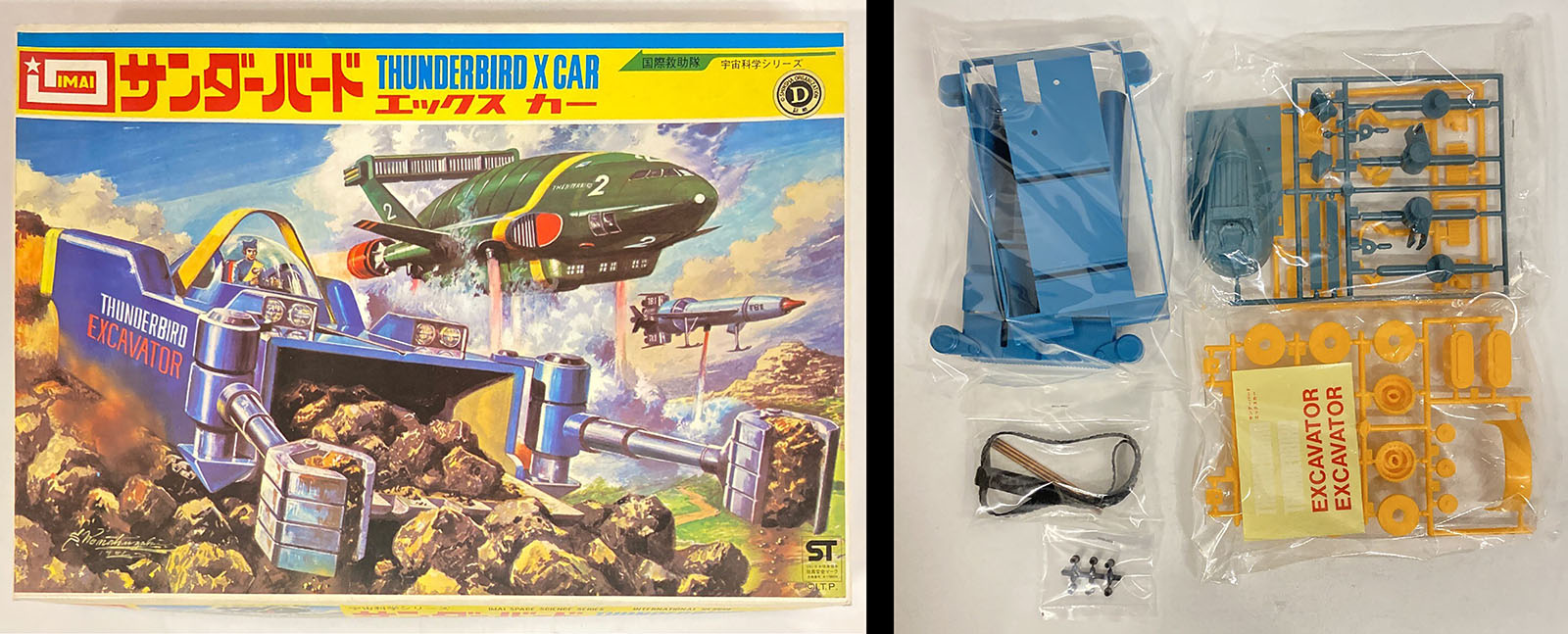
Imai Space Science Series No. 10, Excavator “X-Car.” This was an original mecha that appeared in a comic strip,
included in a Thunderbirds book published in the UK, and did not appear on television.
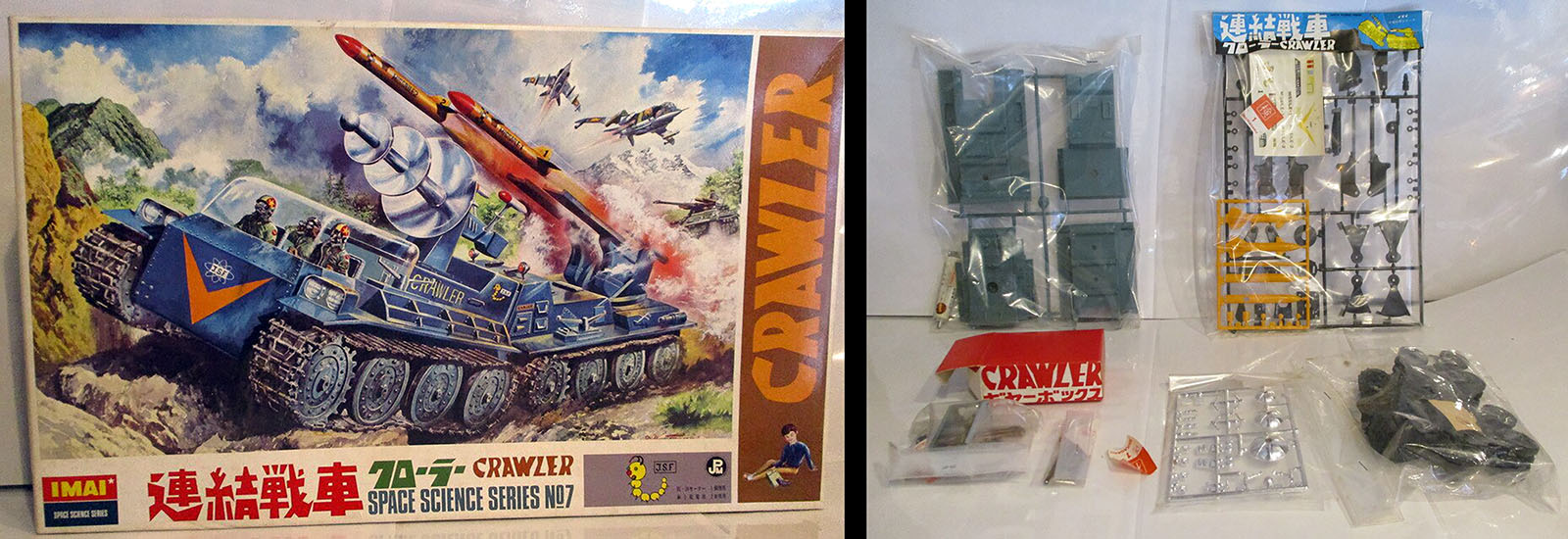
Imai Space Science Series No. 7 “Articulated Tank Crawler.” An original sci-fi mecha from Imai.
I did a lot of work on the Crawler myself. It was fun because I could do a lot of the work myself. Once it was finished, it could climb all sorts of things. It also came with waterslide decals. I actually designed the caterpillar-like pattern. And the Crawler wheels were from a Jet Mole. There was a mold just for the wheels, you see.
So it was repurposed. I’m envious of the people who were able to experience Imai Kagaku’s Jet Mole in real time, along with Thunderbird 5.
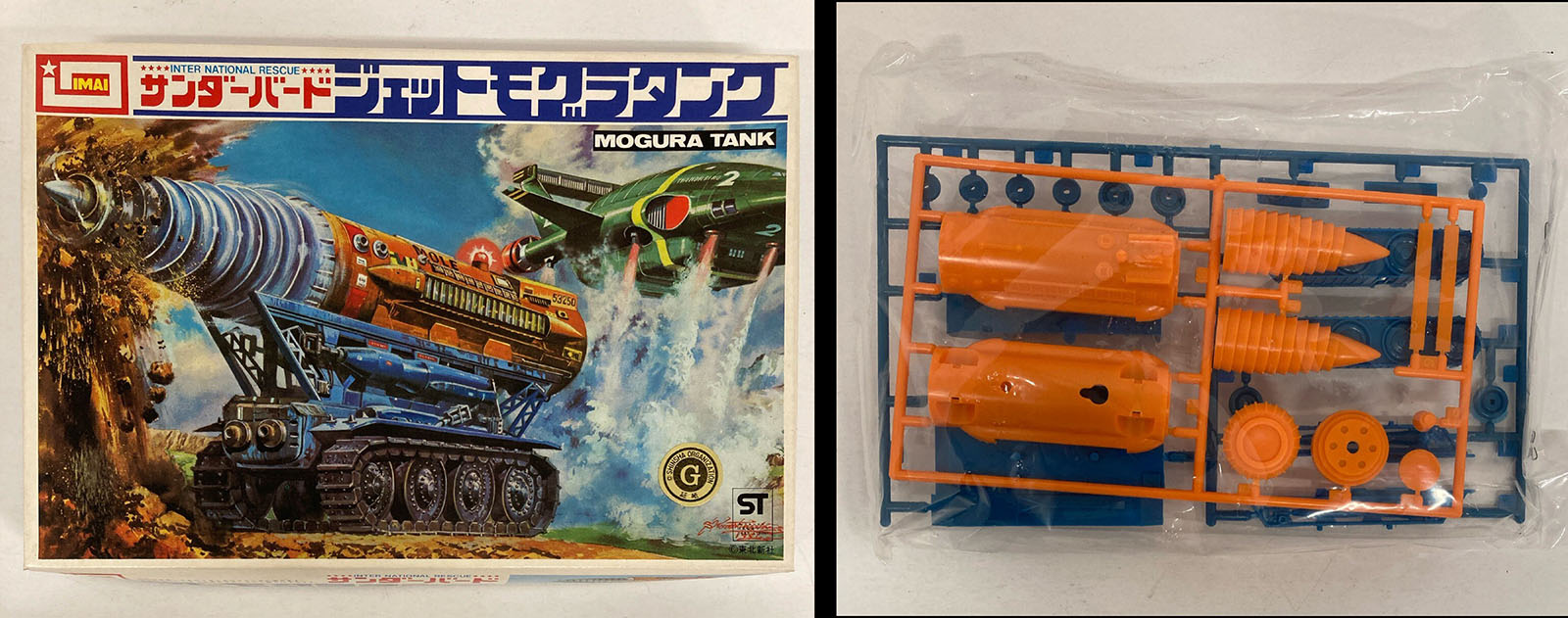
The power source was inside the main body, below. It transmitted power to run, but the propeller at the front moved separately. This wasn’t my design, but I was really impressed by the people who made that gearbox. They created something amazing. The mechanics back then were really sophisticated.
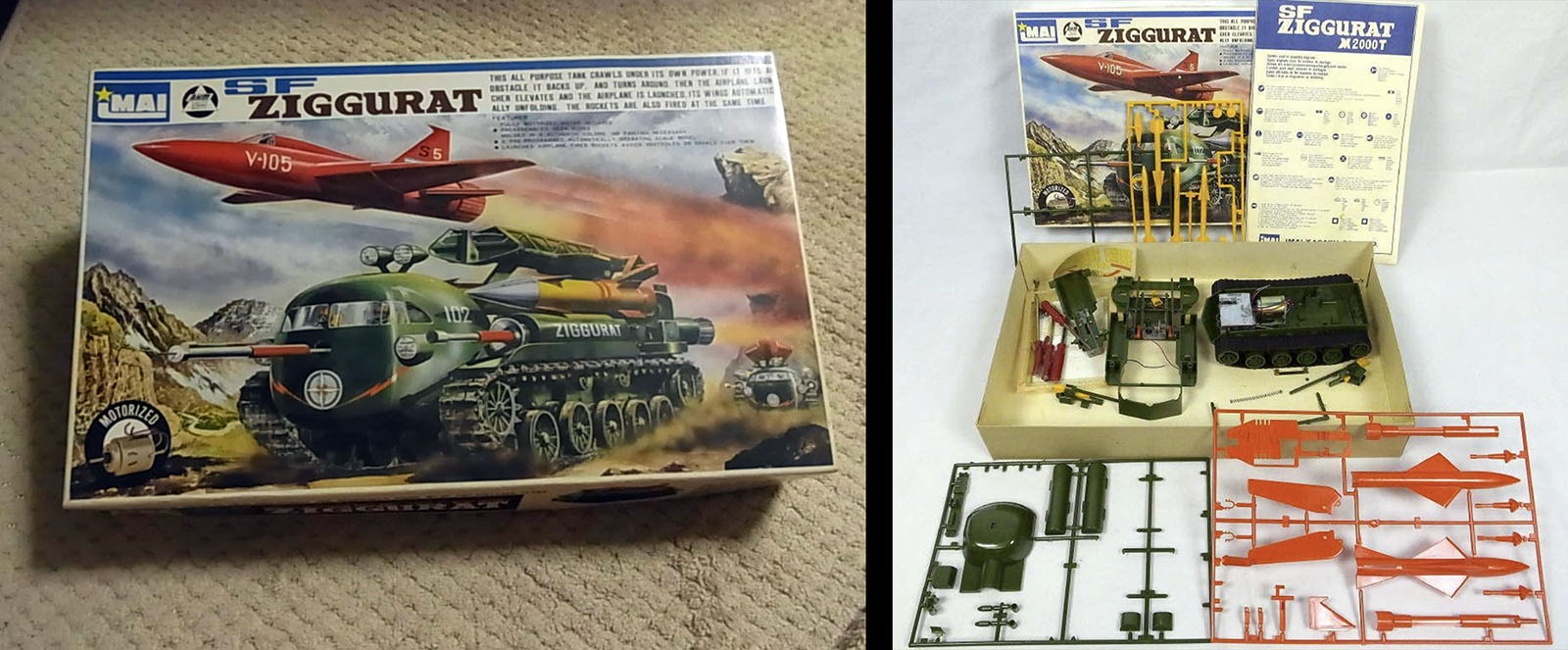
There were also unusual space tanks like the SF Tank Ziggurat. I also remember making a prototype of something like a hovercraft. It would float slightly above the floor and move around. I think I attached a string for a remote control or something, but I can’t remember if I actually finished it.
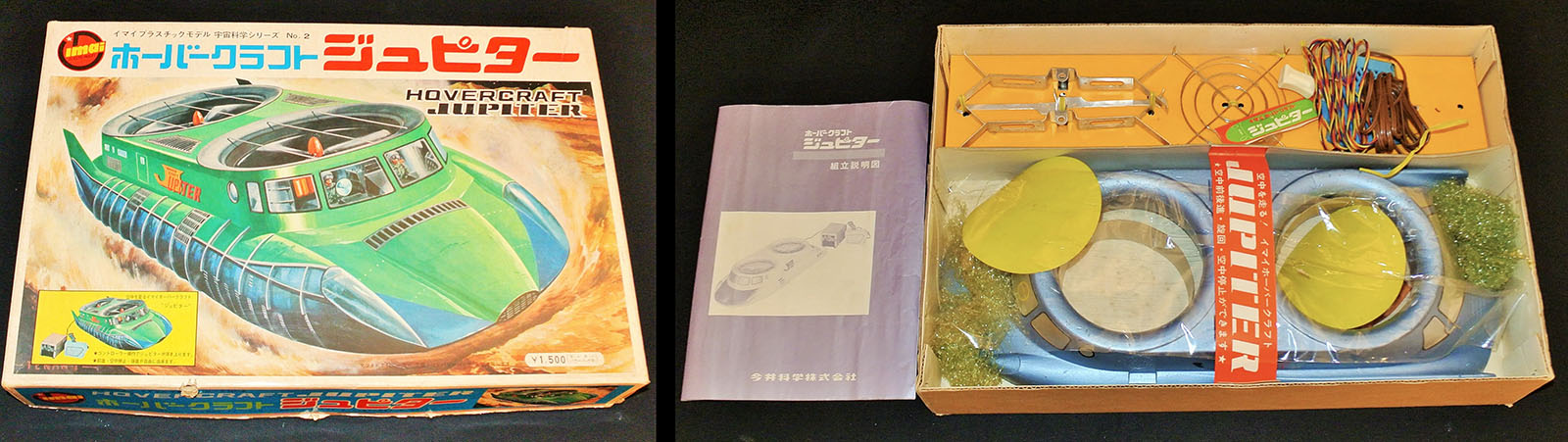
Imai Plastic Model Space Science Series No. 2, Hovercraft Jupiter
I hear you participated in the design of Thunderbirds Secret Base.
Several people were in charge of the launching mechanisms and other things. It was like, “you handle this launching mechanism,” and “you handle this one.”
Unit 1 took off, Unit 2 knocked down a palm tree, and Unit 3 launches from inside the Roundhouse. Were these tasks divided up?
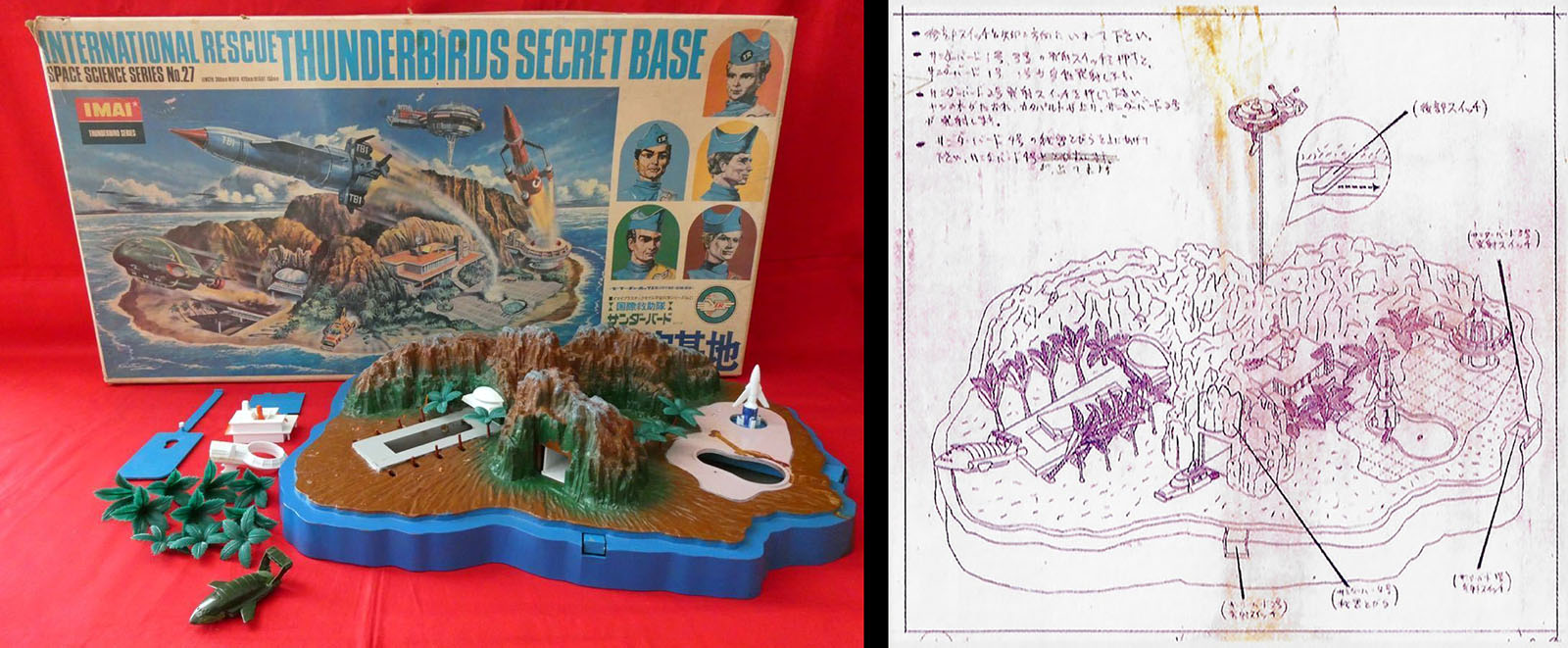
We decided to work amongst ourselves. We had a lot of trouble with the mold. The island itself is uneven, right? So when we made the mold, there were a lot of undercuts (places where the product gets stuck in the mold), And it wouldn’t come out of the mold. So we struggled with it, filing it down and doing tests. We wasted a lot of time at the company that was doing the test runs, and I remember being bored and frustrated. (Laughs)
After that, you were also in charge of the Easy Kit Mighty Go (below) from Mighty Jack. Were the Easy Kits shipped as pre-wired products?
I think so. The motor starts working when you plug it in, and you can build the product by attaching the other parts. It’s difficult for kids to do the wiring, so I think the idea was that it would sell better if that part was already done.
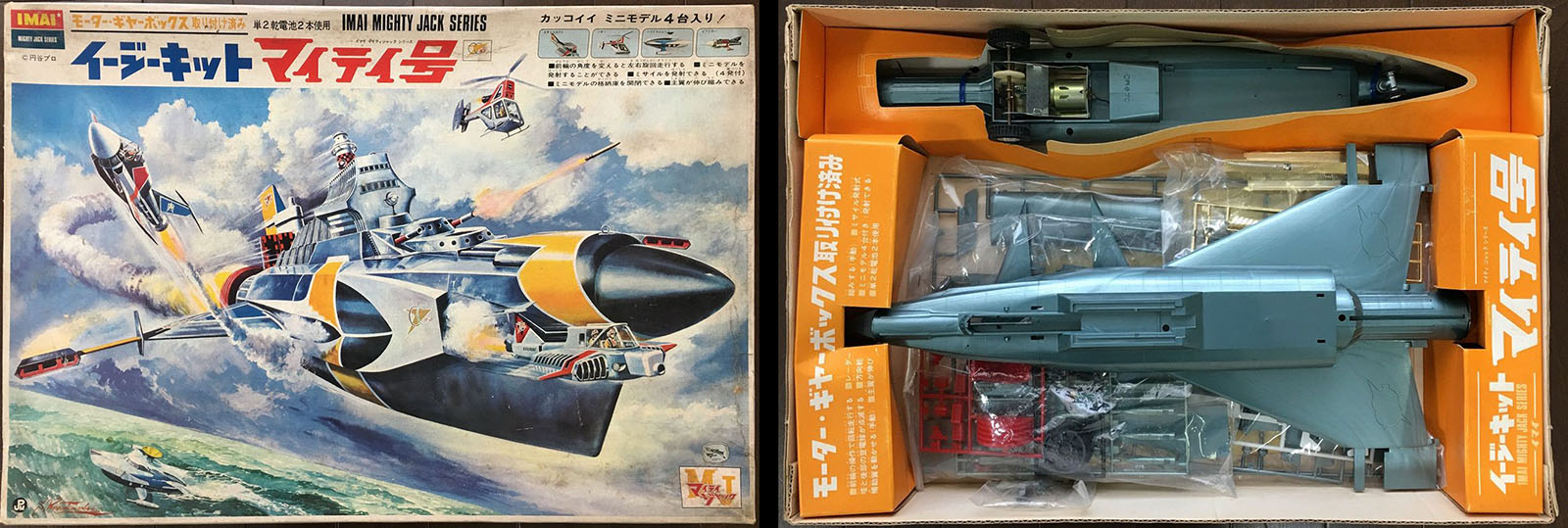
Imai Mighty Jack series “Easy Mighty-Go.” Released in 1968, it was the largest plastic model kit of the Mighty Jack.
Imai Kagaku’s bankruptcy
According to records, you were transferred from the design department to the research department in December 1968. What kind of department was it?
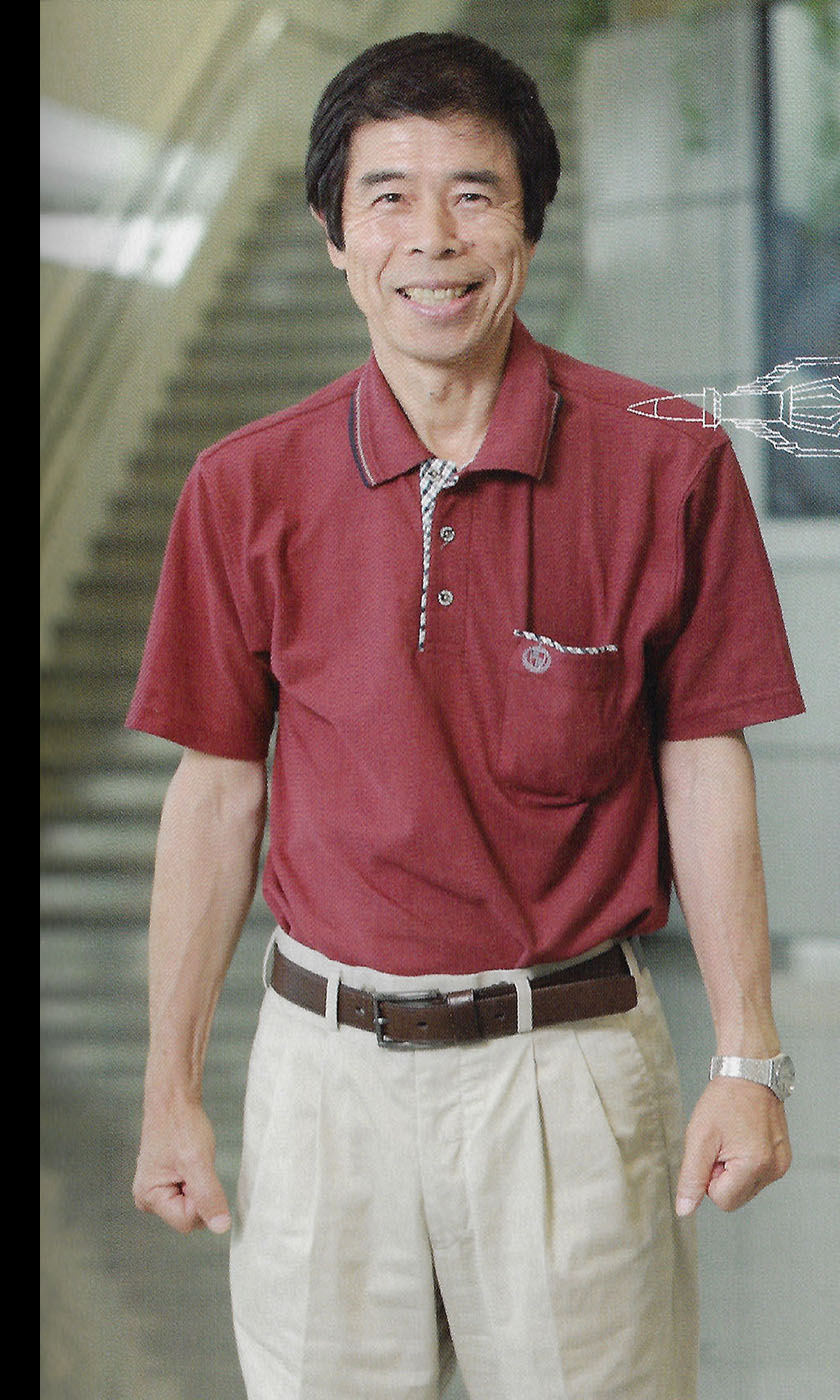
Photo taken in 2013
The research department was a small group, and I was transferred to the mold department soon after. At that time, I thought I wouldn’t be able to make good products if I only did design work without knowing about molds, so I applied for a transfer. My boss told me, “if you go to the mold department, there’s no going back. Be prepared!” So I said, “that’s fine,” and went to the mold department.
Why was it that you couldn’t go back?
I think the implication was that if you moved into the mold making business, you should do it with the intention of working there for the rest of your life.
So it was like a cautionary tale for professionals?
I think so. If Imai hadn’t gone bankrupt, I might’ve been able to apply to return to the department midway through, but I think they wanted me to go with that kind of resolve.
But shortly after you transferred to the mold department, Imai Kagaku went bankrupt, right?
It was very quick. The factory was still in Fujieda. It was shortly after we had moved. The mold factory was still in Shimizu, so we were working on the molds there, but one day I got a call, saying, “Hey! Hurry up and come to Fujieda!” When I got there, they said, “it looks like the company has gone bankrupt…” (Laughs)
Was this completely unexpected?
Yes. What about the people above me? I didn’t know why, but we lower-ranking employees weren’t told the details. So it was like, “oh, really?” The company grew rapidly, thanks to the success of Thunderbirds, but then they went all in on Captain Scarlet, and Mighty Jack, expecting them to sell well, only for them to fizzle out. The model kit industry is pretty tough, isn’t it? Character models are the hardest.
Judging by your age, you were probably around 21 years old, right?
That’s about right. At the time, I had moved into the mold making business, so I was introduced to jobs related to mold making. I had a couple of options, but in the end I joined Shimizu (Shimizu Seisakusho, Sugamo, Tokyo). It was quite enjoyable. The president was a nice person too.