
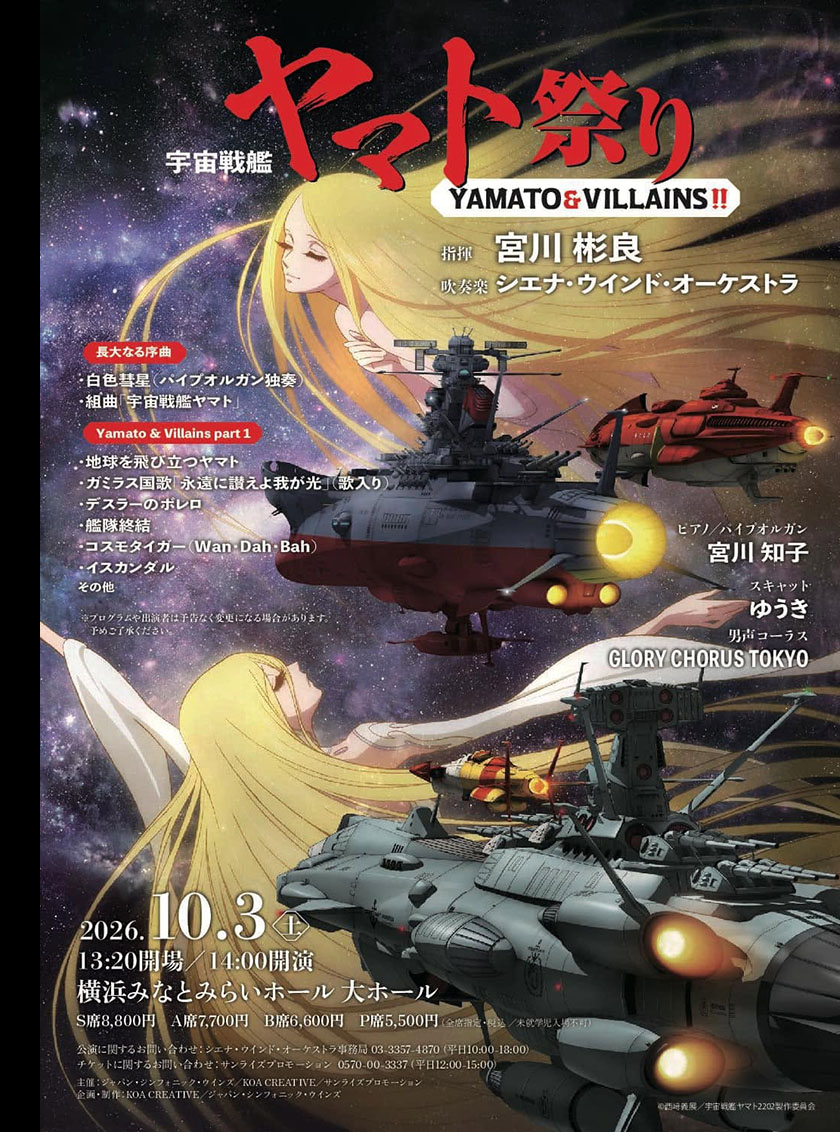
Comments posted October 3 on Twitter by M.T
(See them here)
Siena’s Yamato & VILLAINS!! was absolutely fantastic! The sheer power, rivaling even Shion’s performances, combined with such rock-solid, consistent playing, was truly impressive!
As Akira-san mentioned, the deep, rumbling bass from the pipe organ during White Comet was incredible! The sound, in its entirety, resonated with a raw, intense energy throughout the hall. It felt like the most ominous version of White Comet I’ve ever heard. Perhaps this is the result of some masterful sound selection?
I also really loved the tempo and the way the pauses between phrases were handled! During the intermission, Tomoko-san mentioned that she still can’t manage the control panel levers, used to select the organ’s timbres, all by herself. however, it seems to me that she has truly mastered the art of playing the pipe organ itself!
The 12th track, Wings ~Returning Here, combines the melody from Wings with the “Uchu no Kanata…” and “Ginga o Hanare…” sections from Sorrowful Yamato.” Since the starting pitches of the swapped segments match perfectly, the transition is completely seamless.
I was so happy to see Dogfight on the setlist! It’s my favorite new piece from Yamato 2202. Both this track and Endless Battle always bring the scenes from the show to mind, and no matter how many times I hear them, they never fail to bring tears to my eyes.
The 19th track, the final piece listed in the program, is titled Love. It seems to be based on the “Finale” that plays at the end of Episode 25 of Yamato 2202, but it featured an arrangement I hadn’t heard before. (Though, it’s possible I just don’t remember.) The beautiful melody brought tears to my eyes once again!
The final piece of the main program was Love Still Shines (not listed in the program). Yuuki-san’s beautiful voice resonated throughout the hall! The melodic lines, which Akira-san is so particular about, were absolutely wonderful!
For the encore, we had the now-staple Scarlet Scarf (from the Symphonic Suite) and Space Battleship Yamato. We were free to listen, sing along silently, or sing out loud, I chose to sing out loud! It was the perfect way to wrap things up!
When Akira-san remarked, “Everyone knows Space Battleship Yamato because brass bands have kept it alive by continuing to perform it,” I found myself nodding along in agreement. After all, it’s still being played by high school brass bands and the like today.
For this concert, I sat in the 8th row, a bit further back than last time, and it offered a great balance. I could clearly distinguish the instrument placement through the direct sound, while also enjoying the natural resonance of the hall. It was also wonderful that the amplified vocals came through so beautifully.
Video content
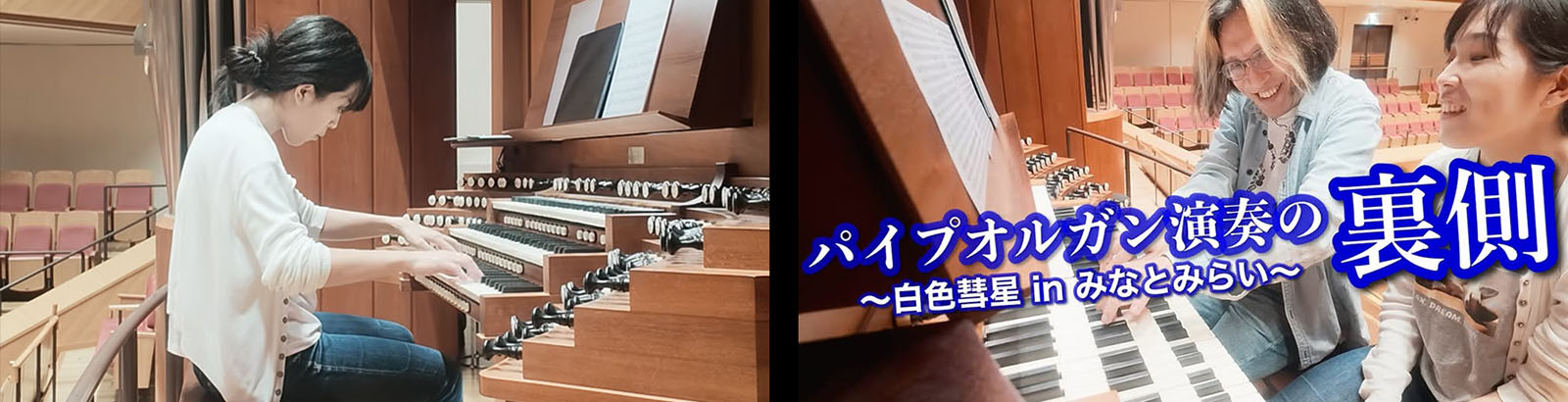
See it here
Chiko’s description: Here’s a look at the process of crafting the sounds for The White Comet on “Lucy,” the pipe organ at Yokohama Minato Mirai Hall, in preparation for the Yamato Festival. When we performed at The Symphony Hall in Osaka this past April, we didn’t change the timbre by pressing buttons during the performance, but this time, we actually played using four different timbres! It reaffirmed for me that selecting and combining sounds one by one is one of the fascinating aspects of playing the pipe organ.
A huge thank you to Professor Gaku Kondo for his cooperation, and to everyone at Minato Mirai Hall. I was nervous, but it was so much fun. Lucy sounded amazing. I hope I get to play it again someday.
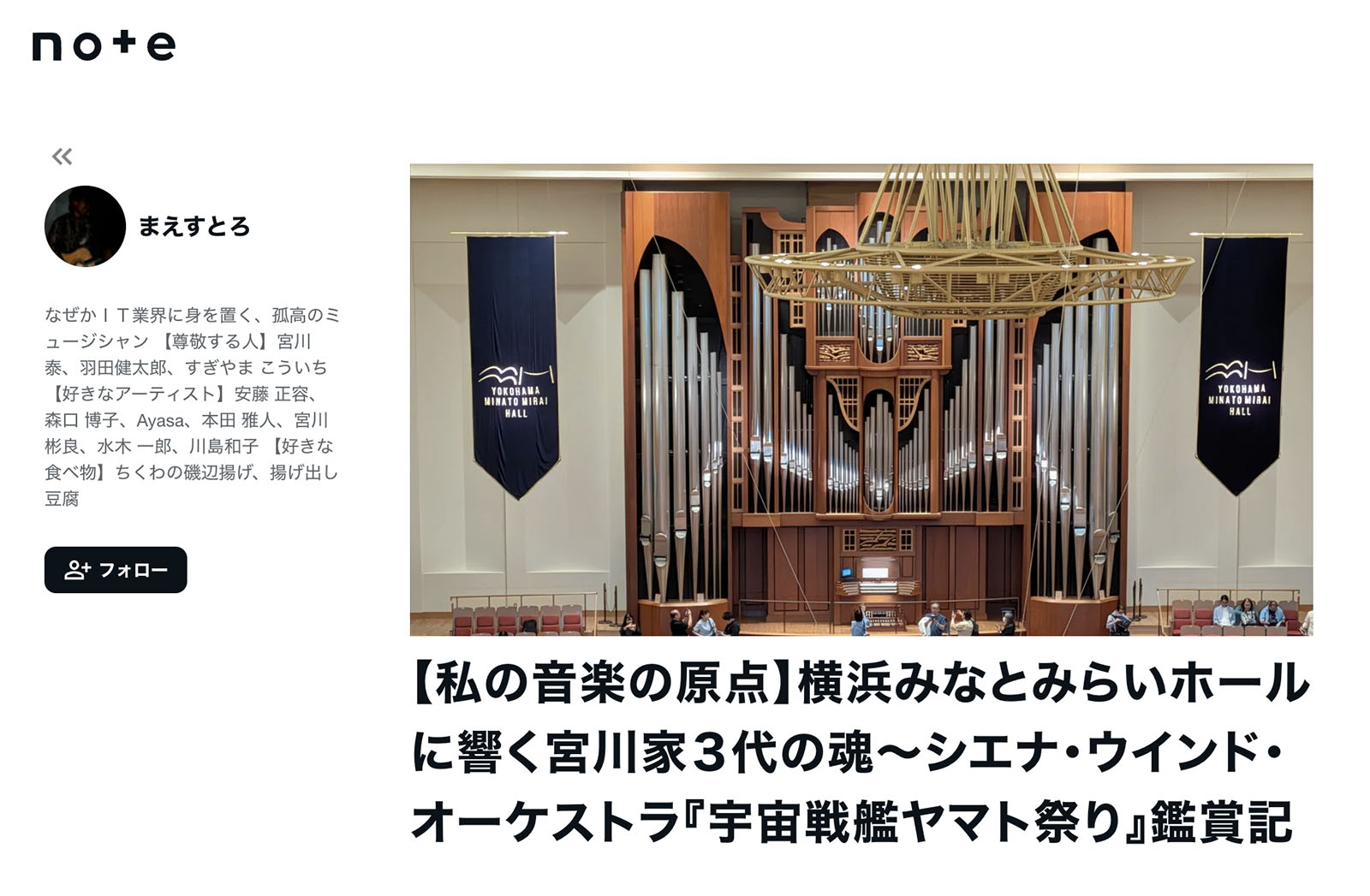
The Origins of My Music
The Spirit of Three Generations of the Miyagawa Family Resonating at Yokohama Minato Mirai Hall: A Review of the Siena Wind Orchestra’s “Space Battleship Yamato Festival”
Published at NOTE blog, October 3, 2026. See the original post here
by Maestro
A solitary musician who, for some reason, finds himself in the IT industry. People I respect: Hiroshi Miyagawa, Kentaro Haneda, Koichi Sugiyama. Favorite artists: Masahiro Ando, Hiroko Moriguchi, Ayasa, Masato Honda, Akira Miyagawa, Ichiro Mizuki, Kazuko Kawashima. Favorite foods: Chikuwa (fish cake) fried in seaweed batter (isobe-age), agedashi-dofu (deep-fried tofu).
The roots of my music and my way of thinking undoubtedly lie in Space Battleship Yamato.
Hiroshi Miyagawa and Kentaro Haneda are the musicians I have always cited as the ones I respect most in my life. As an elementary school student, being immersed in the grand, soul-stirring soundtracks they wove together was what first awakened me to “the power of music.” It was the very beginning of my lifelong journey of creating and loving music.
Then came the “Space Battleship Yamato Festival: Yamato & VILLAINS!!”, a performance featuring Akira Miyagawa, who carries the DNA of Hiroshi Miyagawa, alongside the Siena Wind Orchestra, one of Japan’s premier wind ensembles. I secured my tickets the moment the first advance sale opened on June 8th, and after four long months of eager anticipation, the day finally arrived.
The venue was Yokohama Minato Mirai Hall, a place I was visiting for the first time. I had only one goal in mind for this event, to be immersed in a live performance of White Comet played on “Lucy”, a magnificent, top-tier pipe organ boasting over 4,600 pipes that towers at the front of the hall.
Ever since I first encountered the piece on screen, I had vowed to myself: “If it’s ever performed nearby, I must hear it live, no matter what.” Knowing for certain that this piece would move me to tears, and wanting to fully absorb the acoustic energy of this colossal instrument throughout the entire space, I deliberately chose a seat in the very last row of the third tier, near the center.
The deep, resonant bass of the pipe organ filled the hall, bouncing off the ceiling and side walls before reaching the very back of the highest tier. With a panoramic view of the hall spread out below, completely unobstructed, my choice of seat proved to be the perfect decision.
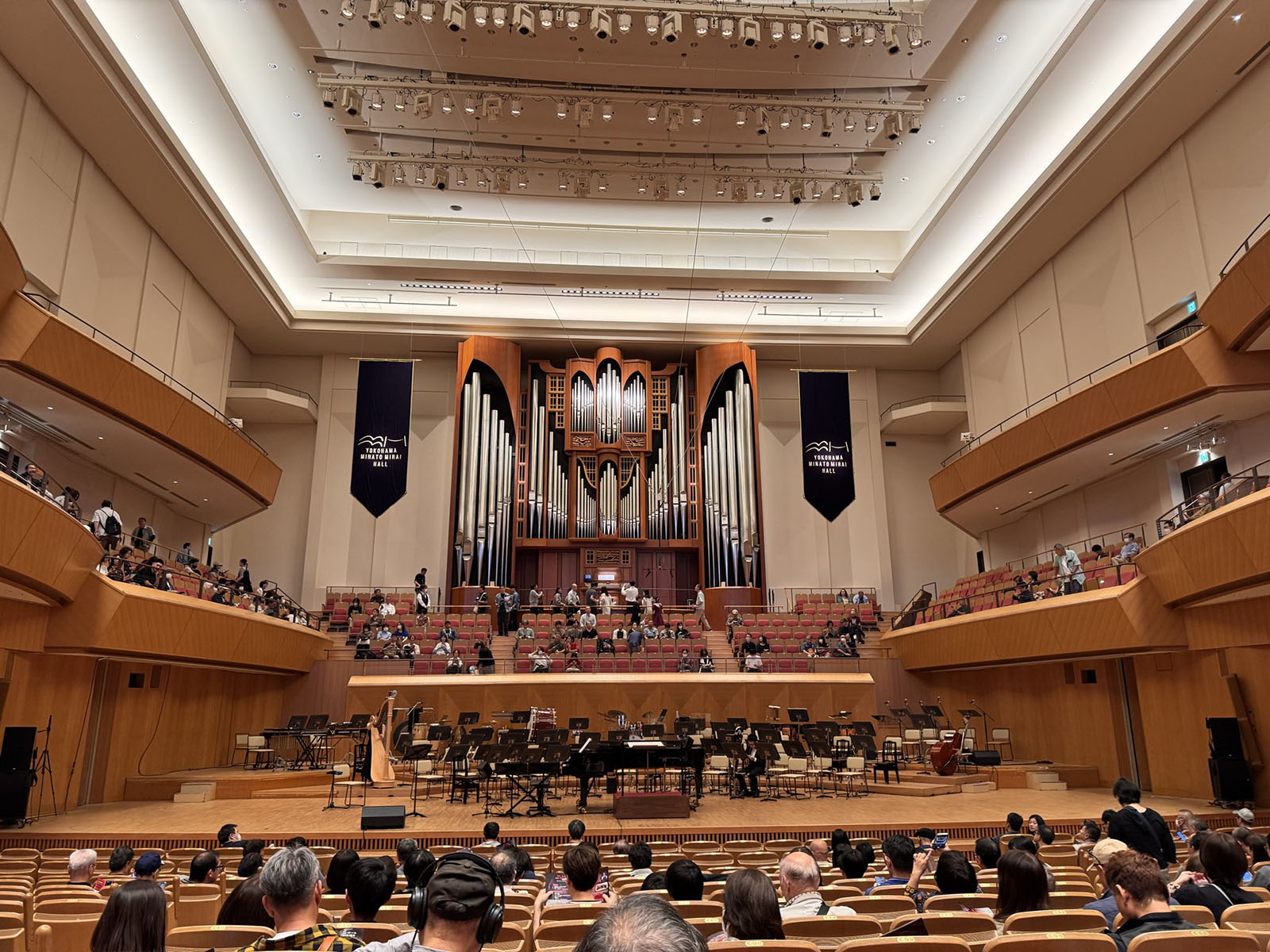
Photo posted on Twitter by mtama315
The floodgates opened at the “third note”, a miracle wrought by three generations of the Miyagawa family
The program began with a grand, sweeping overture, followed by a solo performance of “White Comet” by Tomoko “Chiko” Miyagawa.
The first and second notes pierced the silence, leaving me breathless. Then came the third note.
A thunderous, subterranean bass, unleashed from the pedalboard, made the floor and the very air in the back row vibrate, striking me to my core. In that instant, I could no longer hold back my tears.
All the longing I had harbored for the past four months came rushing back, along with the memory of how this music had struck my soul when I was just a boy. There was the heavy, ominous swell of counterpoint, reminiscent of the structural beauty of Bach, and the profound weight of a musical legacy passed down from Hiroshi to Akira, and now to Tomoko. Bypassing all logic and rational thought, every cell in my body resonated with the vibrations in the air, moving me to tears. As my vision blurred, the organ’s thunderous roar surged into the Space Battleship Yamato suite, a torrential, explosive entrance by the robust brass section of the Siena Wind Orchestra. This is the true power of live music.
From an “Impossible Demand” to a “Voluntary Challenge”, A Legacy of Spirit and Ambition
During the interlude, Akira Miyagawa and his daughter Tomoko, who performed on the organ and piano, shared a heartwarming exchange.
Akira asked, “What made you decide to play the pipe organ?” He recounted a famous anecdote from his own high school days: his father, the composer Hiroshi Miyagawa, had casually asked, “You can play the organ, right?”, only for Akira to discover, to his horror, that it was a massive, full-scale pipe organ with a pedalboard. It had been a living nightmare.
Tomoko’s reply was simple: “I’d always participated on the piano, but I thought the pipe organ looked cool, so I volunteered.”
The audience erupted in laughter, but I found myself deeply moved. The “trauma-inducing, impossible demand” of the father’s generation had evolved, in the daughter’s, into a gesture of pure respect and a bold, self-initiated challenge. While this was Tomoko’s first time performing on the pipe organ with the Siena Wind Orchestra, she followed in the formidable footsteps of her grandfather and father, and stepped forward of her own accord to master that colossal instrument, affectionately nicknamed “Lucy.” As a fellow musician, I offer her a standing ovation for her remarkable spirit.
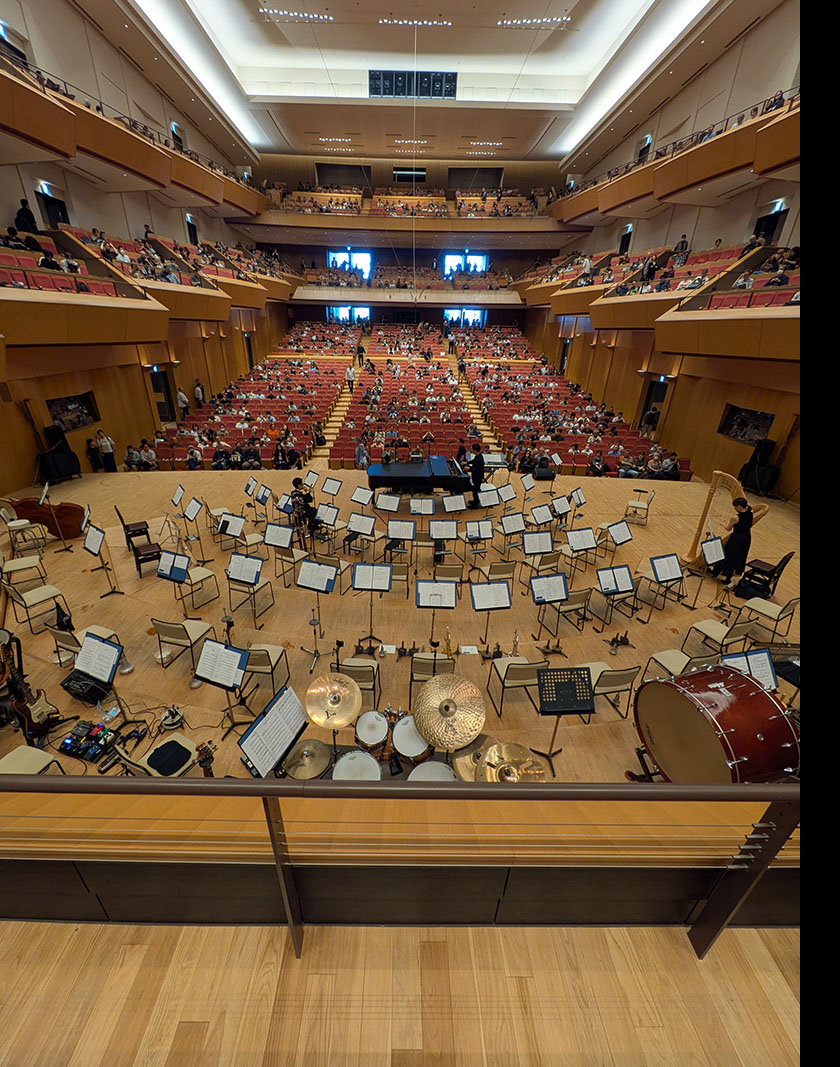
Photo posted on Twitter by https://x.com/YtHOw1R1i1PqQxF
A Relic of the Showa Era: The “Mad” Piano That Dominated the Hall in Goruba
In this concert, the piece that struck me with an intensity rivaling that of The White Comet was Automated Planet Goruba from The New Voyage.
It is a 100% pure example of the Showa-era sound of composer Hiroshi Miyagawa, a piece that has remained virtually untouched even in recent remakes. And the undisputed star of this challenging composition is the piano. Tomoko-san unleashed a barrage of cold, maddeningly repetitive low notes and razor-sharp passages. The performance captured both the overwhelming, inscrutable mass of that dark fortress and the extreme, desperate tension faced by the combined Yamato and Dessler fleets.
Her virtuosity, honed at the Conservatoire National Superieur de Musique et de Danse de Lyon, cut through the roaring brass, filling the entire hall. While the organ represented “stillness and intimidation,” the piano embodied “motion and madness.” This explosive moment was, without a doubt, the absolute highlight of the entire concert.
The Satisfaction of Experiencing Live Sound, And “My Personal Yamato Aesthetic”
Also shining in this performance were Yuuki, who provided vocals and scat singing, and the male chorus group GLORY CHORUS TOKYO, both of whom delivered truly passionate performances.
While the mix in the streamed audio made the vocals stand out a bit too much, hearing it live in an acoustic space revealed a different reality: the voices blended beautifully with the rich, dense resonance of the brass instruments, creating a magnificent ensemble. It was a wonderful experience, one that could only be fully appreciated by being there in person.
And yet, as an artist who loves Yamato and loves music, there is a line I simply cannot cross.
Take the scat singing, for instance. Yuuki-san’s performance was superb. But for me, the ethereal, otherworldly sound of Kazuko Kawashima is simply too monumental, it is truly one-of-a-kind. That sound, imbued with such profound melancholy, crystalline clarity, and the very essence of cosmic sorrow, transcends the limitations of human vocal cords. it exists on an absolute plane of its own. Hearing this live only served to reaffirm that truth.
And then, there is Cosmo Tiger (Wan-Dah-Bah). The power of the chorus in a live setting was staggering…but, honestly, Cosmo Tiger has no need for the “Wan-Dah-Bah” vocal motif!
The true essence of that piece lies in the sharp, incisive bite of the brass section and the rugged stoicism of the men gripping their control sticks in the vast, unforgiving reaches of space.
What I envision is not some female character from a remake. It is the sight of Yamamoto, his face partially obscured by long bangs, his stoic figure piloting his craft into the void, never to return. (To be frank, the character designs in the remake simply do not resonate with my sensibilities. They lack the fluid, graceful lines of Leiji Matsumoto’s art and the melancholic, elegant beauty of his female characters.)
In a battlefield where men burn their lives away in such a raw, gritty struggle, there is no place for the soft, human quality of a singing voice. Cosmo Tiger only truly comes alive when it cuts through the darkness of space with nothing but sharp, piercing instrumental sound.
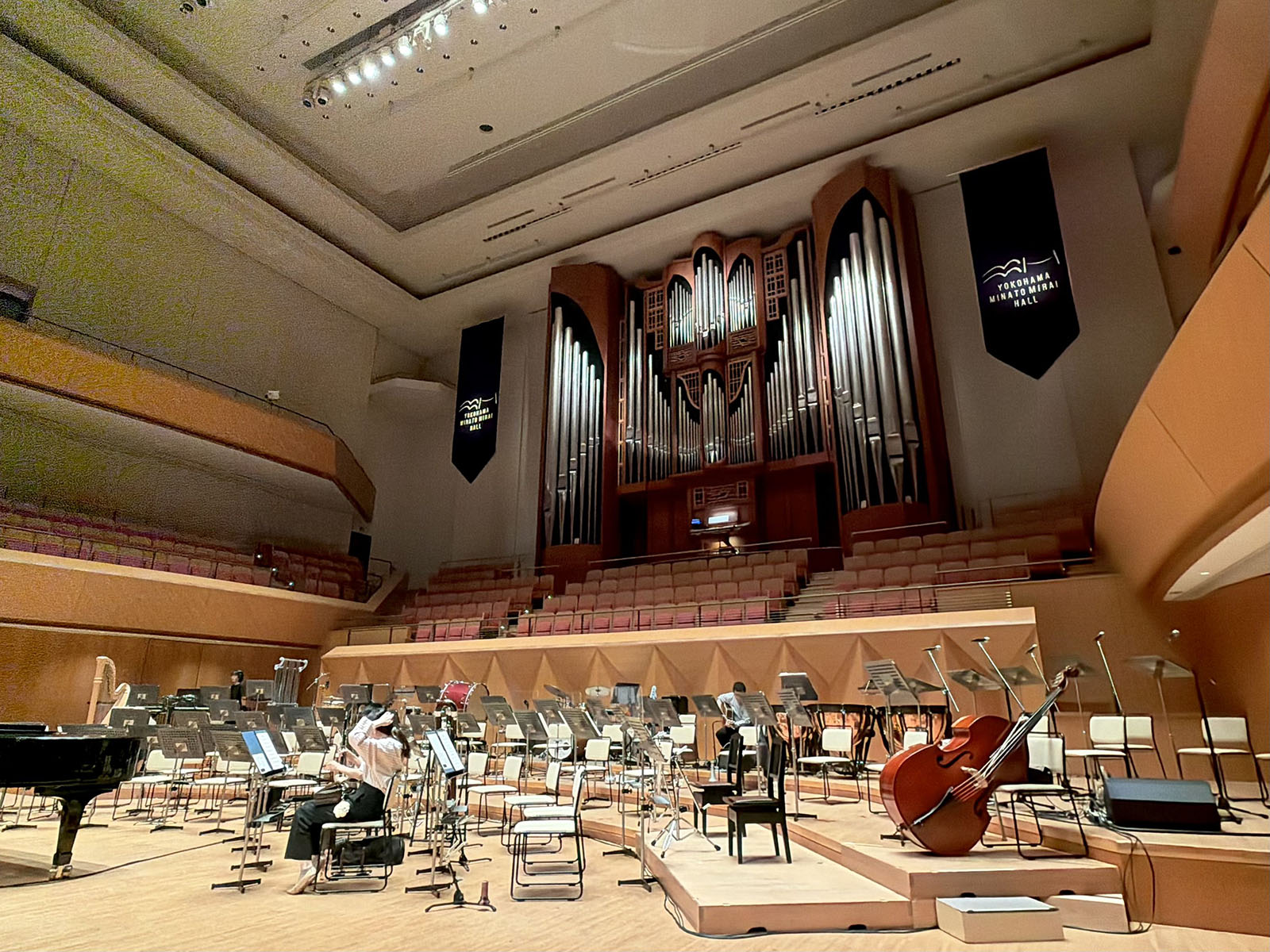
Photo posted on Twitter by Sota Watanabe (guitarist)
The Delightful “Akira-style” Encore, and the Final Punchline
Following an intense main program, the encore began. Addressing the customary ritual in classical concerts, where the conductor repeatedly leaves and returns to the stage, Akira-san declared, “Usually, the conductor would go offstage and come back on, but let’s skip that!” His lighthearted, signature way of poking fun at rigid, formal conventions drew both applause and uproarious laughter from the audience.
The pieces performed were Scarlet Scarf and the main theme, Space Battleship Yamato. The powerful, commanding vocals from the soloist of GLORY CHORUS TOKYO were truly magnificent. Yet, the moment the song ended, I found myself chuckling and whispering:
“Wow, that’s incredibly skillful, truly impressive. But…it’s just not quite Isao Sasaki, is it? (Haha!)”
That deep, resonant baritone voice of Isao Sasaki, which vibrates to the very core of one’s being, along with his signature, deliberate sense of timing…for those of us from the generation baptized by Yamato, the longing to hear that specific voice is simply an irresistible, ingrained reflex.
In Closing
Clutching a ticket I’d held onto for four months, I sat in the very last row of the third-floor balcony, letting the waves of the “Miyagawa Sound” wash over me. It was an incredibly rich, two-hour experience, one that defies simple description, filled with tears, laughter, and internal quips, as I witnessed the legacy of the Miyagawa family being passed down through three generations.
The world of Yamato taught me that even one’s enemies possess their own sense of justice and their own prayers for peace. And then, there is the grand, sweeping score by Hiroshi Miyagawa. It is precisely because of that formative, foundational experience that I have the sensibilities, and the music, that define who I am today. I would like to express my heartfelt respect and deepest gratitude to the Siena Wind Orchestra, as well as to Akira Miyagawa and Tomoko Miyagawa, for their truly magnificent performance.
Space Battleship Yamato Festival (Yamato & VILLAINS!!) – Siena Wind Orchestra & Akira Miyagawa
Published at NOTE blog, October 4, 2026. See the original post here
by Meisei Mizuno
I love history and travel. While I’ve always felt a deep personal connection to the late Heian and Kamakura periods, I’ve recently become fascinated by the Bakumatsu and Meiji eras. I enjoy traveling both within Japan and abroad.
Setlist
Grand Overture
The White Comet (Pipe Organ Solo)
Space Battleship Yamato Suite
Part 1
Yamato Departs Earth
Desler Appears
National Anthem of the Galman-Garmillas Empire (with vocals)
Dessler’s Bolero
The Fleet Assembles
Cosmo Tiger (Wan-Dha-Bha)
Iscandar
The White Comet (Dedicated to Keith Emerson)
Great Emperor Zordar
Wings ~Returning Here
Dogfight
Endless Battle
Yamato Into the Vortex
Part 3
Automated Planet Goruba
Dark Nebula Empire
Parting
Love
Love Still Shines (feat. Yuuki)
Encore
Scarlet Scarf
Space Battleship Yamato (Sing-along & Clapping)
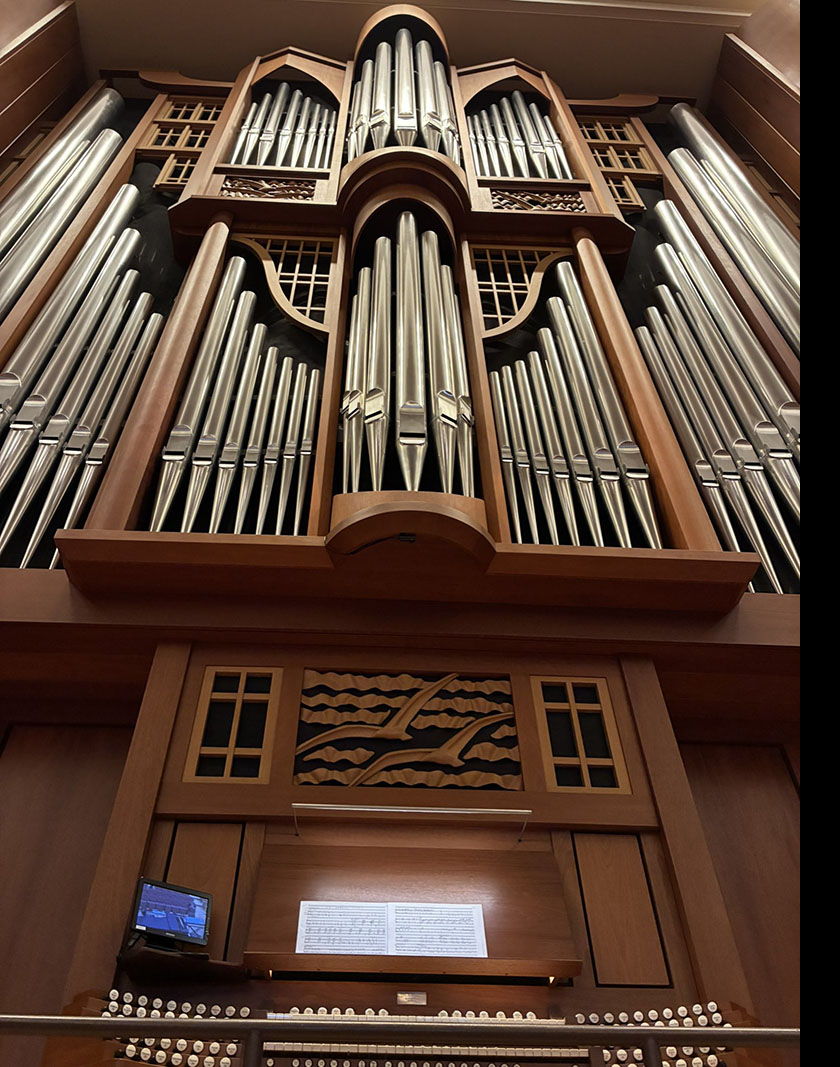
Photo posted on Twitter by Mat Hama
Overall Thoughts
This was the second time I’ve heard The White Comet performed on a pipe organ, the first being at an event at NHK Hall. The tone was bold and had a certain rigidity to it, which felt perfectly suited to a science-fiction theme. The unique character of the pipe organ really stood out.
As Akira Miyagawa noted, the “Grand Overture” alone encapsulates the entire musical world of Space Battleship Yamato. The pipe organ’s rendition of White Comet was striking, balancing immense sound pressure with intricate, Baroque-style melodic passages. Then came the Space Battleship Yamato Suite, beginning with that evocative vocal. While the battle themes, especially the launch sequences, are thrilling, the beautiful melody of Great Love is truly moving.
In orchestral or concert band arrangements, the sweeping, expansive melodic lines, often carried by violins in a full orchestra, are frequently assigned to the flute or clarinet. In this particular ensemble, I found myself focusing on the clarinet, which provided both rhythmic drive and a foundational support for the various melodies. Perhaps because I once played the instrument myself, I found myself rooting for the clarinet section, by the time they reached Dogfight, I was practically clenching my fists in encouragement!
The sequence of Dogfight, Endless Battle, and Into the Vortex was, quite simply, heart-stirring. By the final piece, Love Still Shines, I was moved to tears.
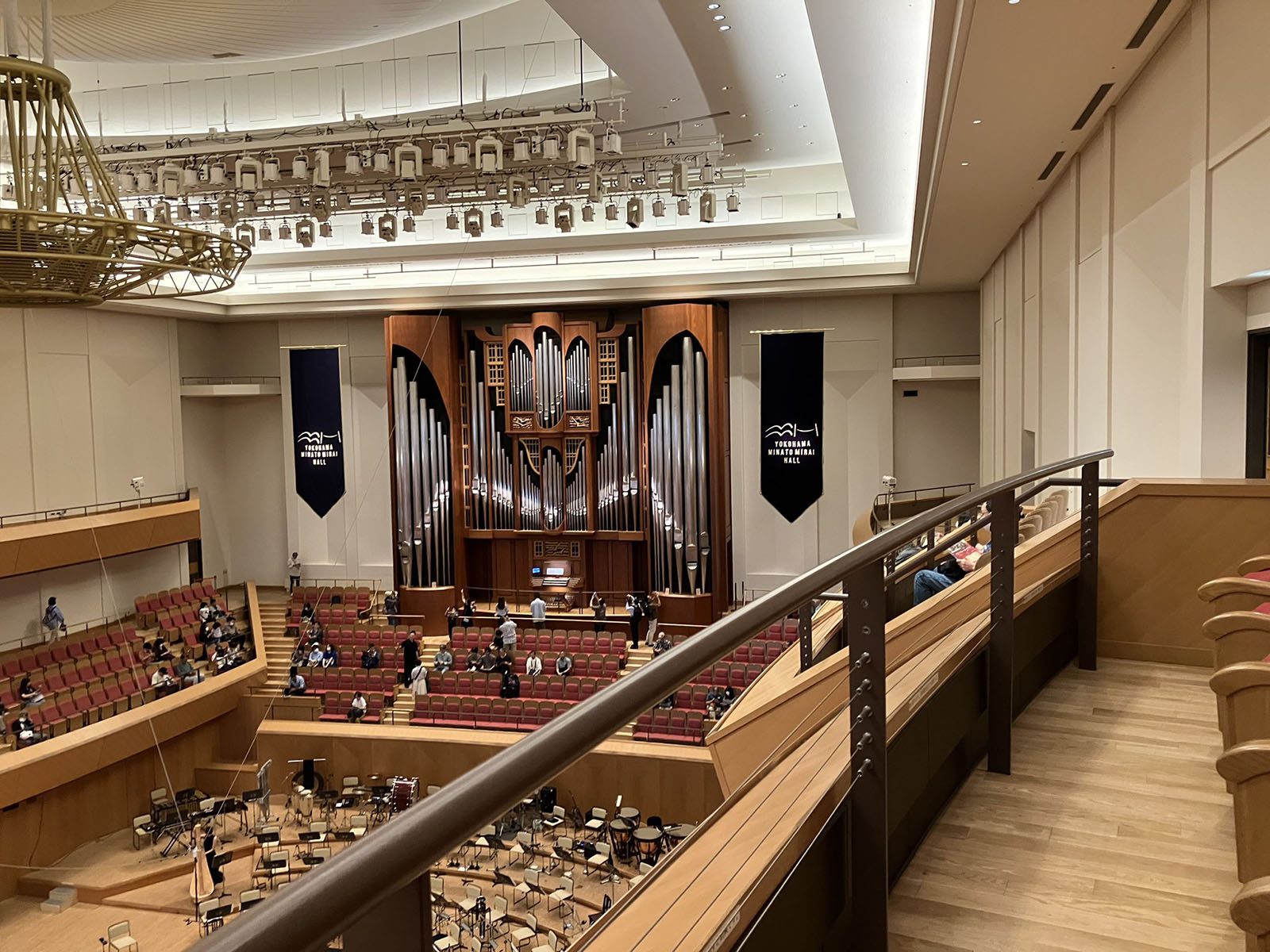
Photo posted on Twitter by TTi5_XP
Memorable Moments and Remarks
Discussing film music and melody, Akira Miyagawa echoed the sentiments of his father, Hiroshi Miyagawa, repeatedly emphasizing that “the music of Yamato is, above all, defined by its melody.” The power of the main theme, a song known to anyone with a background in music, was palpable in the electric atmosphere of the encore. In fact, I recall an orchestra once playing Space Battleship Yamato in their dressing room after a concert, simply because the energy was still running high. It’s a testament to the song’s strength that it can be performed spontaneously, without sheet music, by brass bands and various other ensembles.
It became clear to me that the strength of these melodies, capable of supporting a wide array of variations, isn’t limited to the main theme. it’s equally present in lyrical, melodic pieces like Iscandar and Love. In White Comet (Dedicated to Keith Emerson),” Tomoko Miyagawa plays the pipe organ, while Akira Miyagawa handles the keyboards. Watching them perform, simultaneously playing and conducting, I couldn’t help but be reminded of Chiaki-senpai from [the anime series] Nodame Cantabile.
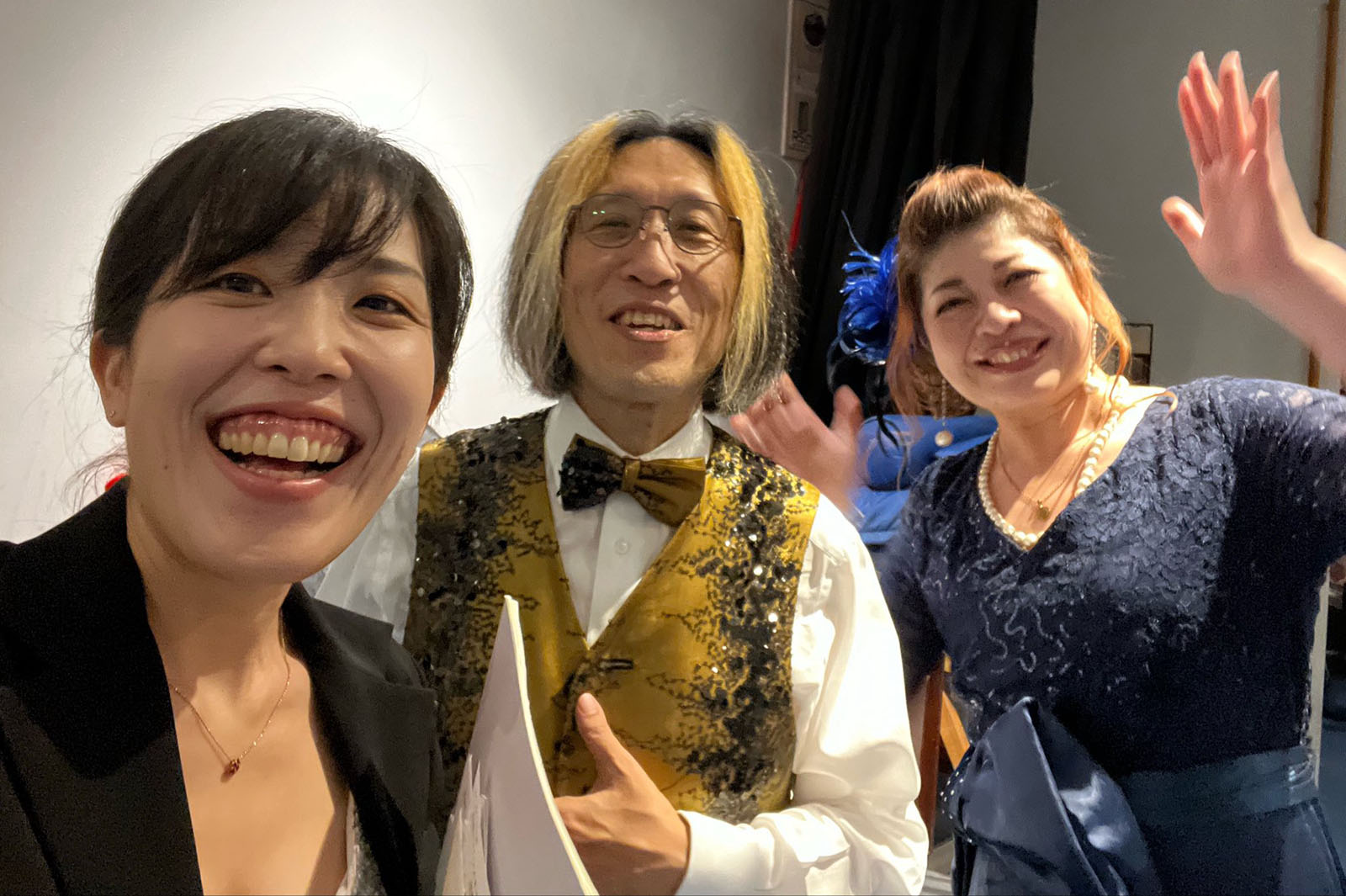
L to R: Tomoko “Chiko” Miyagawa, Akira Miyagawa, Yuuki (vocalist). Photo posted on Twitter by Chiko Miyagawa
Yamato Festival at Yokohama Minato Mirai Hall
Published at the blog of vocalist Yuuki, October 5, 2026. See the original post here
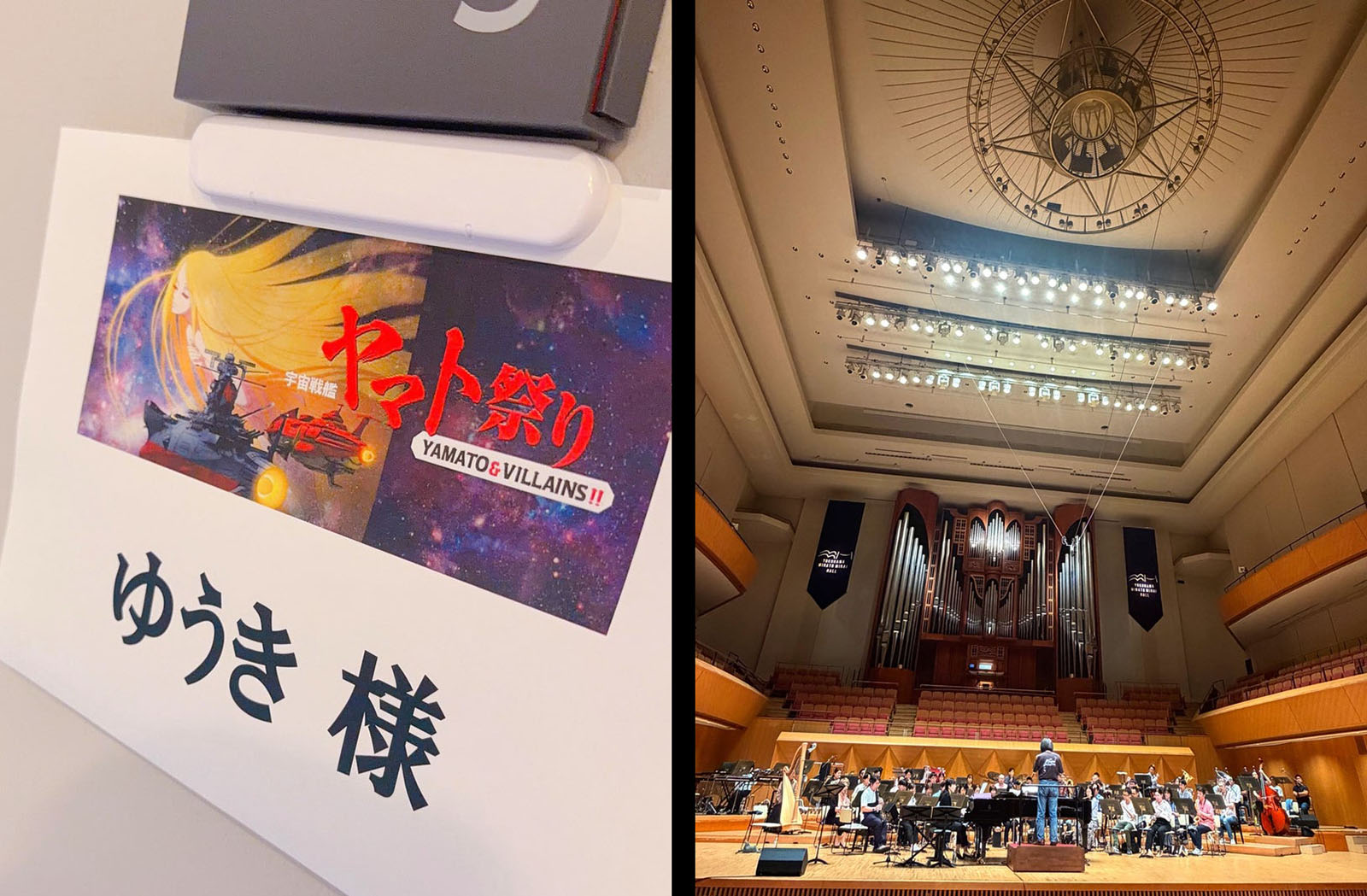
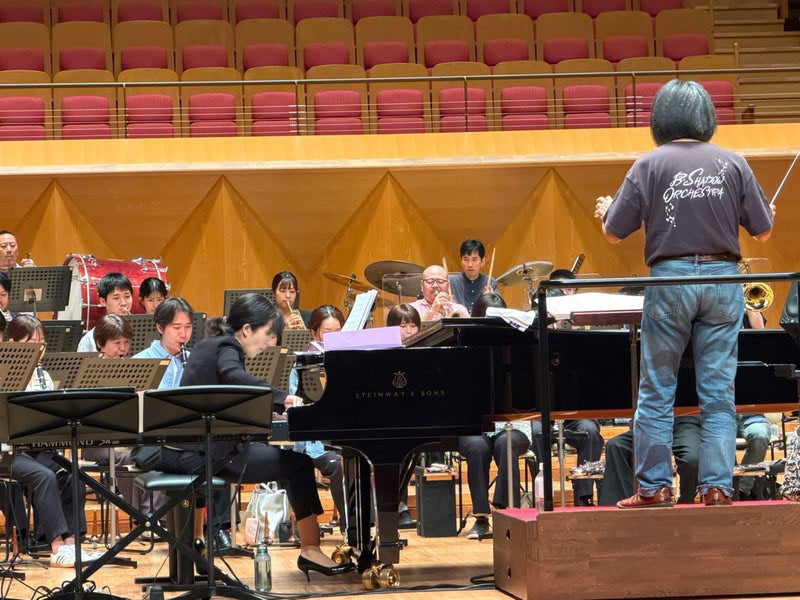
L: On the door of my dressing room / R: Rehearsal session
Hi everyone, it’s Yuuki! First off, let’s talk about Saturday’s Space Battleship Yamato Festival performance!
It was a beautiful, clear autumn day in Yokohama Minato Mirai. Since it was Saturday, the area was already bustling with people as I made my way to Minato Mirai Hall. This was my first time visiting the main hall at Minato Mirai Hall.
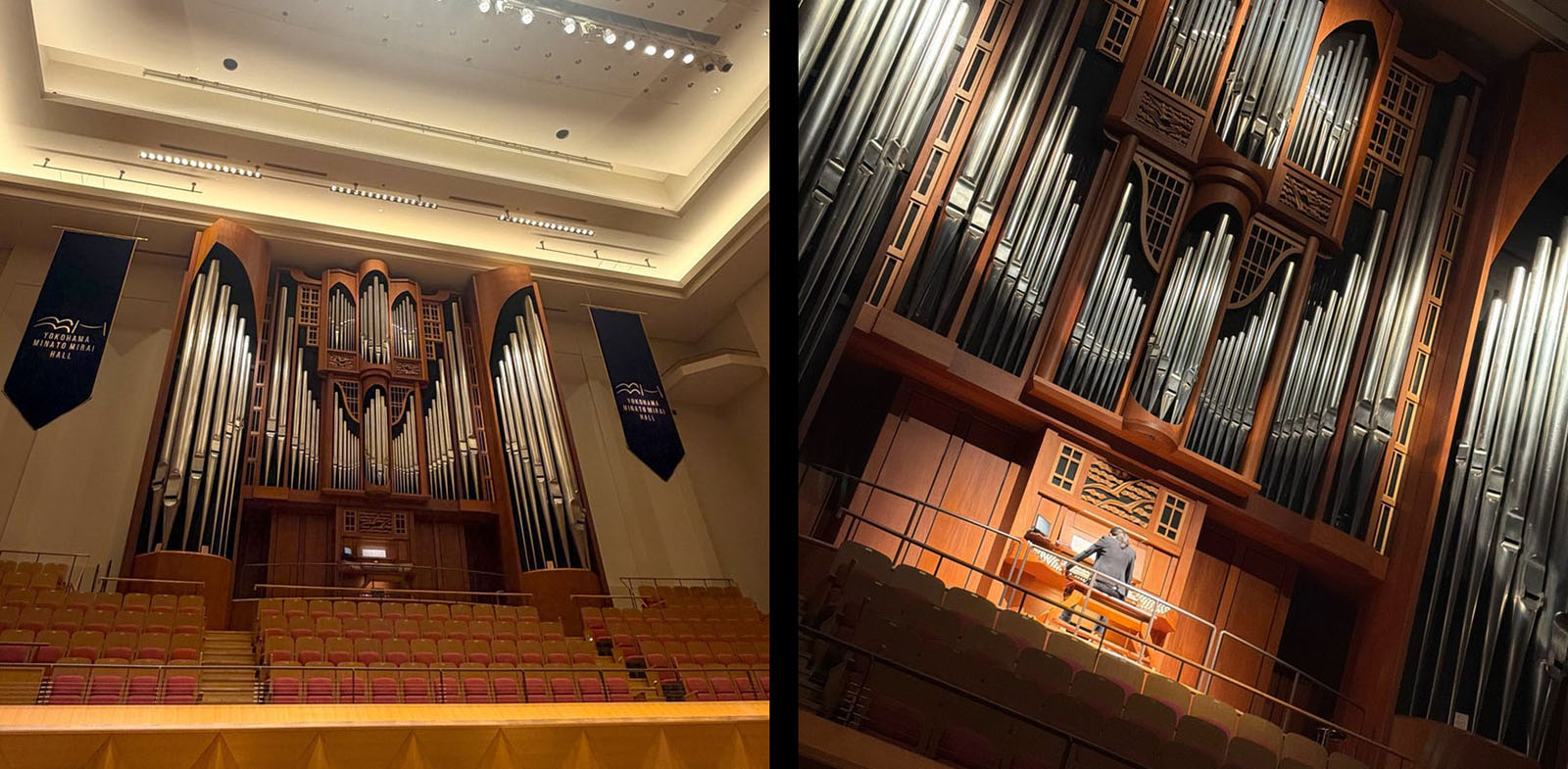
Given that it was a Yamato concert, I had a hunch there might be a pipe organ, and sure enough, there was a magnificent one! It even has a nickname: “Lucy.” The name suits its brilliant, radiant tone perfectly. It’s said that the name comes from the Latin word “lux,” meaning “light.” This organ serves as the symbol of the hall and is capable of producing a vast array of different tones.
Tomoko Miyagawa sat down to play it this time. Seeing someone seated there really gives you a sense of just how massive the instrument is, doesn’t it? When you stop to think that sound is produced by traveling through each one of these incredibly long pipes, it’s truly an extraordinary instrument!
For the Yamato Festival performances, Akira Miyagawa conducts while Tomoko Miyagawa handles the piano and keyboards. Being able to witness this father-daughter collaboration up close is such a joy, it’s truly moving. Also, the way Tomoko plays is so cool and commanding, I find myself completely captivated!
I wonder how many times I’ve performed in these Yamato Festival concerts with the Siena Wind Orchestra now? I’ve been involved since the very first Yamato & VILLAINS show, providing scat vocals. Even as the program has evolved over time, every single performance has been incredibly passionate and thrilling.
I love every piece they play, there are so many moments that resonate with me. You can feel a story unfolding within the music. you can practically see the scenes playing out. Every single piece is just awe-inspiring.
As for the music of Yamato, I would like to express my renewed respect for Hiroshi-san and Akira-san.
The way each instrument’s unique timbre is utilized across the various pieces is simply magnificent. Once again, I found myself making new discoveries, realizing, “Oh, so that’s how this instrument was being played here!” which brought me such joy.
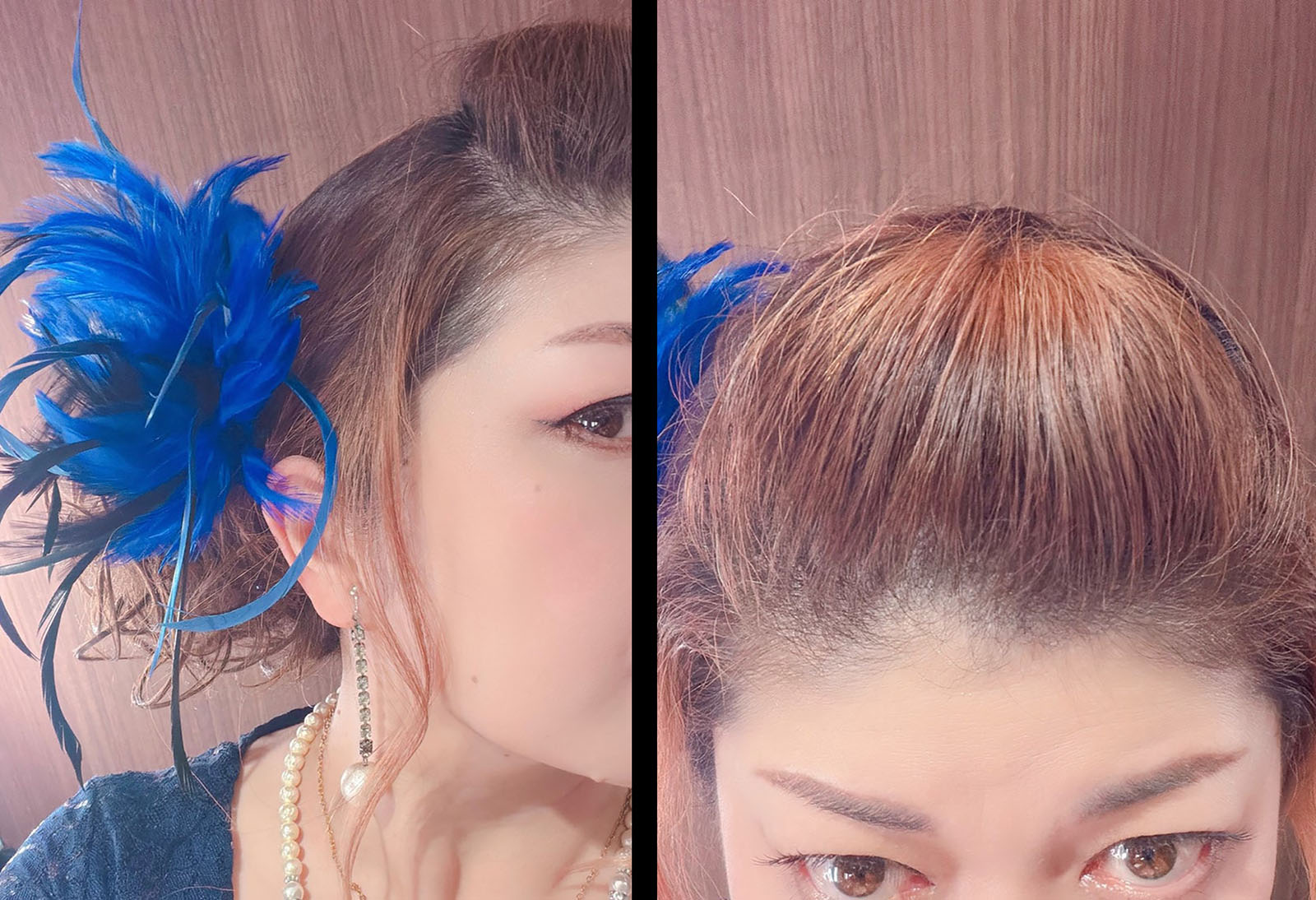
For this Yamato concert, I wore my signature black-and-blue corsage. I had the pleasure of singing three movements from the suite in the first half, providing scat vocals for three pieces in the second half, and performing the song Love Still Shines.
While scat singing involves no lyrics, consisting only of sounds like “Ah~” or “Ha~”, I approach each vocalization with specific imagery and meaning in mind. For instance, perhaps imagining the vastness of space unfolding before me, or singing as if to gently embrace someone I hold dear, or capturing the cold, detached quality that can exist within beauty, or even tenderly cradling a newly sprouted life. It really varies quite a bit!
As for Love Still Shines, both the lyrics and the melody are so beautiful. the more I sing it, the more I fall in love with it. It’s a profound piece, where every single word in the lyrics invites deep reflection. In a way, I feel that the entire essence of the song is encapsulated in its title. I am truly happy and grateful to have had the opportunity to sing this piece.
Thank you so much for letting me be a part of such a wonderful concert!