
Thoughts after watching Episode 8
See the original blog post here
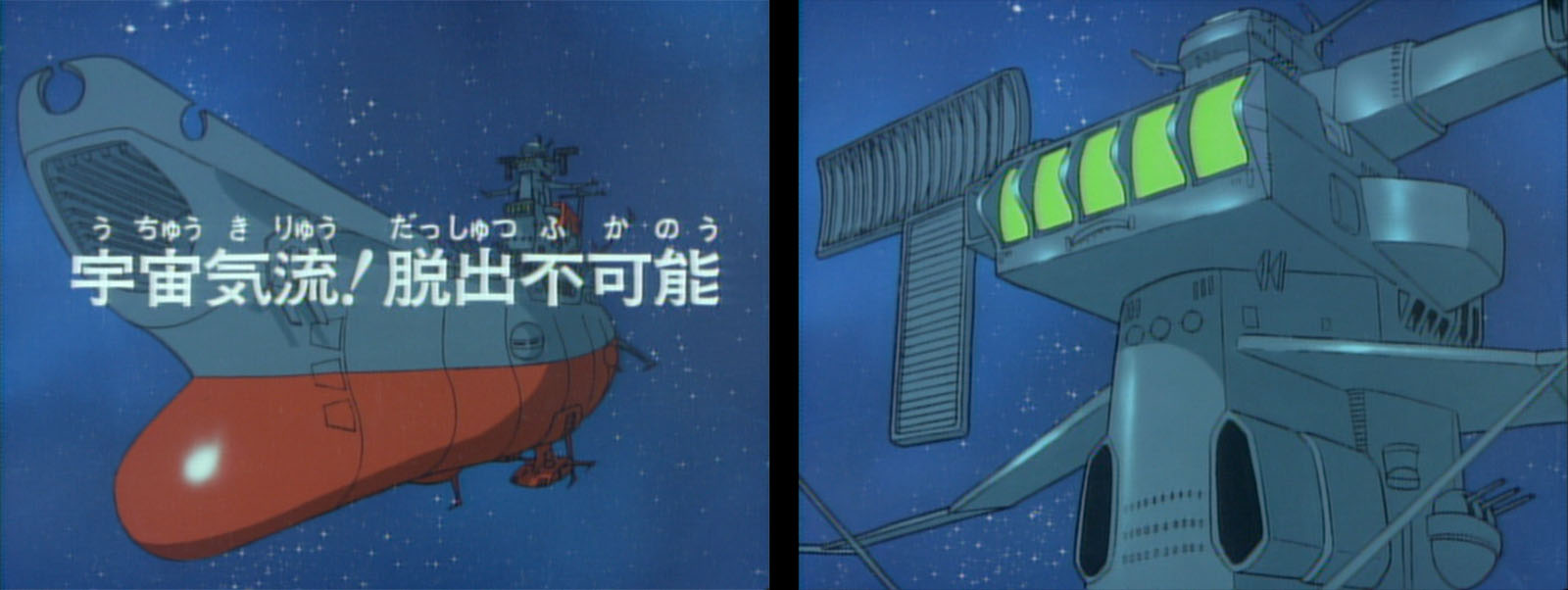
Episode 8 illustrates the lesson that “the more you want to believe a piece of information, the more essential it is to verify it.”
Falling into a trap set by Goland, who fakes the voice of Teresa, Yamato finds itself in the “Sargasso,” a graveyard in space where time accelerates. As the crew faces the terrifying prospect of rapid aging and being reduced to skeletons, a genuine voice, emanating from a dimensional rift at the 12 o’clock position, reveals a path to escape.
This article explores why Goland dismisses Dessler’s warning, what the accelerated passage of time signifies regarding “remaining lifespan,” and how Yamato‘s crew manages to identify the false signal and regains control of the situation.
I am Kenichi, a 62-year-old resident of Sapporo with 32 years of field experience in the LPG industry, and I will analyze the importance of not accepting information at face value, drawing upon my own professional perspective.
Synopsis
Leaving the Solar System in Pursuit of the Message Source
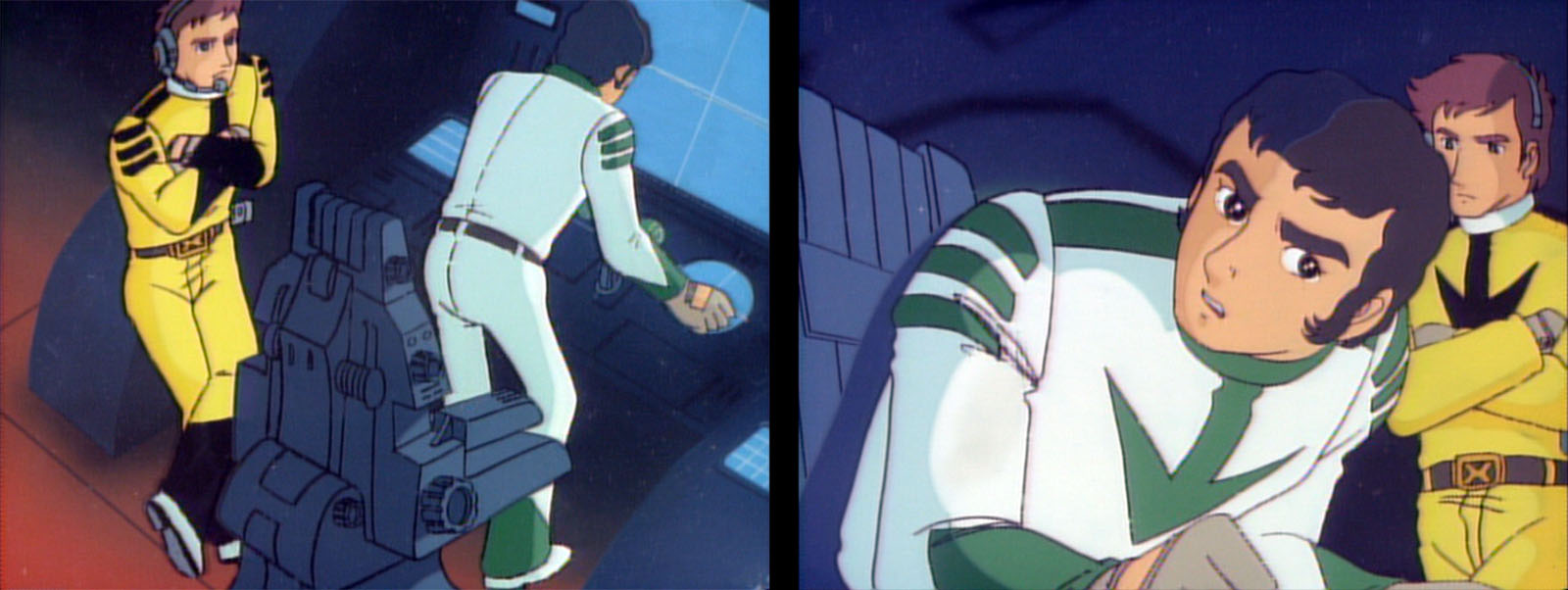
Yamato has finally ventured beyond the solar system. Having emerged into the vast wilderness of space, Yamato’s navigation officer, Daisuke Shima, verifies the direction from which the messages from Teresa have been arriving.
Although direct communication attempts failed, the persistent efforts to reach out have allowed the crew to pinpoint the trajectory with considerable precision. At this very moment, the calculated bearing aligns with the source of the messages. The White Comet is currently in this vicinity, steadily drawing closer to the galaxy.
Just then, another message comes through.
Confusion Among Aihara and Ota, and a Short Warp
Aihara, the communications officer, struggles to establish a response, drawing complaints from the other crew members. Nevertheless, they manage to secure key data: the source is at a bearing of 3 o’clock (horizontal), at a distance of 120,000 space-kilometers, with three obstacles lying along the path.
Ota plots the course, and the helm is turned hard to starboard. At 11:00 AM (space time), Yamato prepares to execute a short-range warp.
Acting on the suspicion of Susumu Kodai, who suspects the presence of a “cosmic current”, the crew confirms the Wave-Motion Engine is functioning normally and engages the automatic warp system. As Hajime Saito puts on a brave face, declaring that “a warp or two is nothing to be afraid of,” the countdown proceeds.
Swept Away by a Cosmic Current Immediately After the Warp
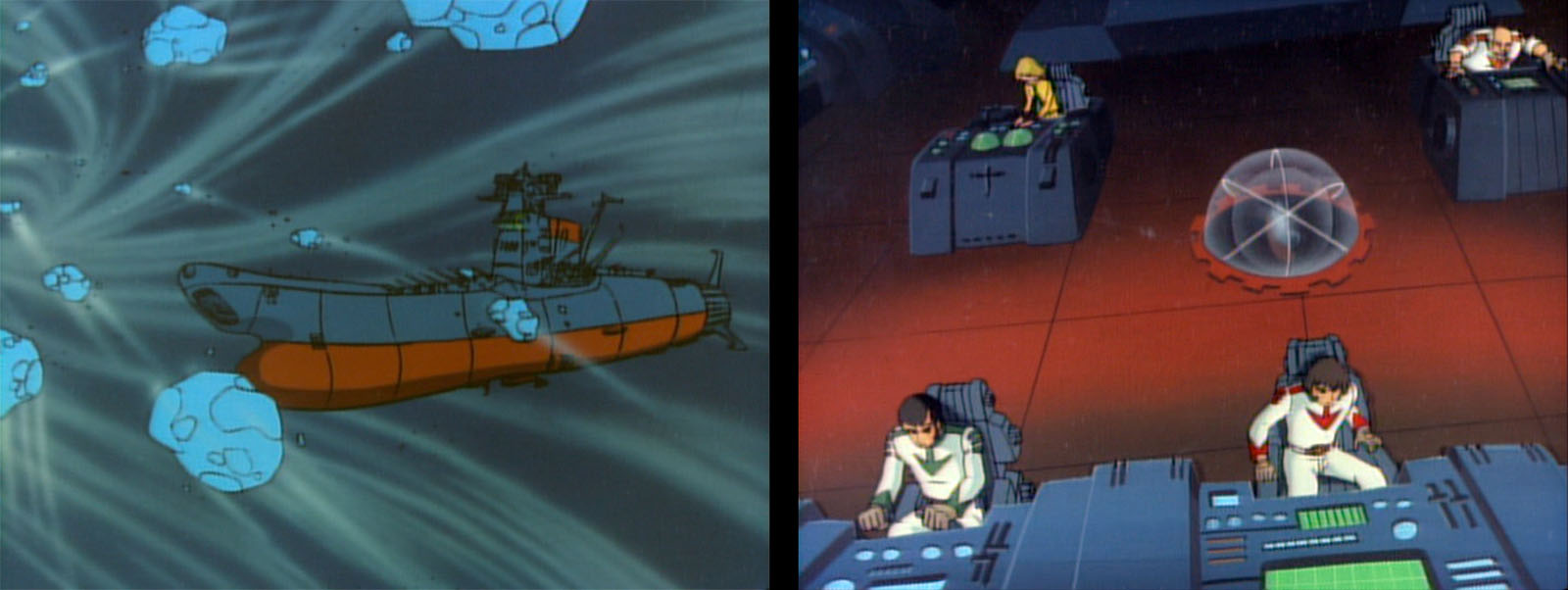
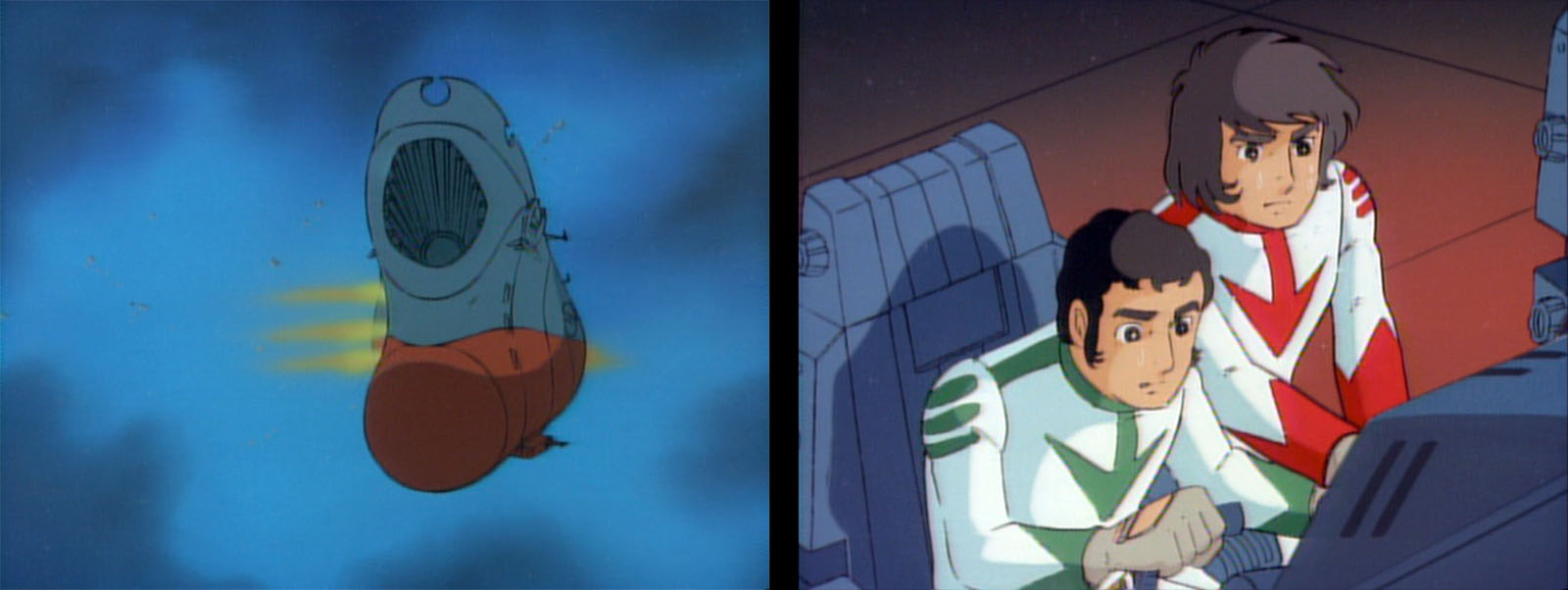
The moment the warp concludes, Yamato is caught in a powerful cosmic current. Shima attempts to correct the course, but Kodai, reasoning that there is no turning back now, decides to press forward toward the source of the messages.
He orders Chief Engineer Tokugawa to amplify the energy, pushing the output to its maximum. Before long, another message arrives, though Kodai finds its tone strangely theatrical. The source is located 7,000 space-kilometers upstream. Just as Shima attempts to break through at maximum thrust, another vessel, carried along by the current, crosses their field of vision.
Lured into the Sargasso Graveyard
An anomalous space appears ahead. Sanada switches the video panel to reveal that it is the Sargasso, a graveyard in space.
Admiral Goland has positioned his fleet outside the cosmic currents, intending to fire missiles through a dimensional rift once Yamato becomes trapped in the graveyard. Yamato is already being drawn into the Sargasso. Shima attempts to resist by pushing the engines to full power, but the ship is inexorably pulled back in.
Tensions rise between Aihara and the Navigation Officer. Shima expresses frustration, lamenting, “Damn it, they tricked me,” to which Aihara retorts that he should have just left the communications to him. Kodai takes responsibility for the error in judgment.
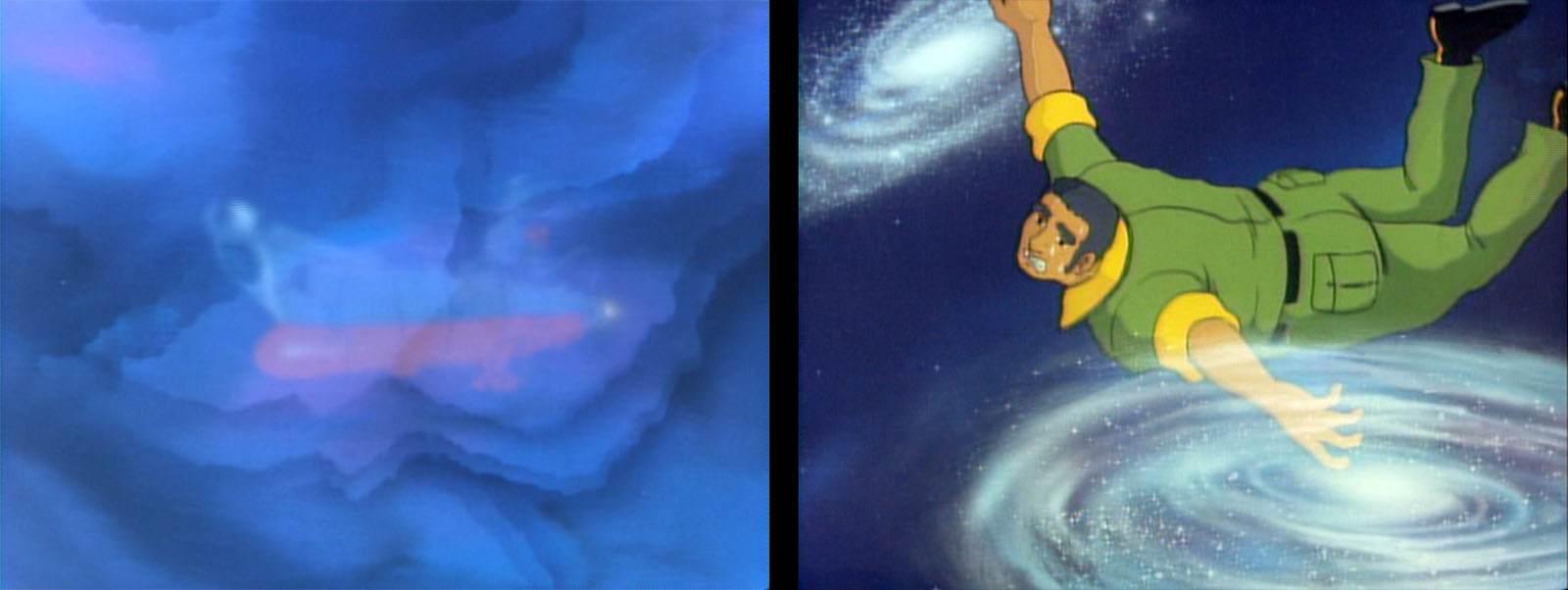
The Sargasso, described as a type of moving black hole, is a terrifying region that uses super-gravity to draw in everything that approaches, crushing any matter within it.
Dr. Sado’s “Rest Room” and Sanada’s Discovery of Accelerated Time
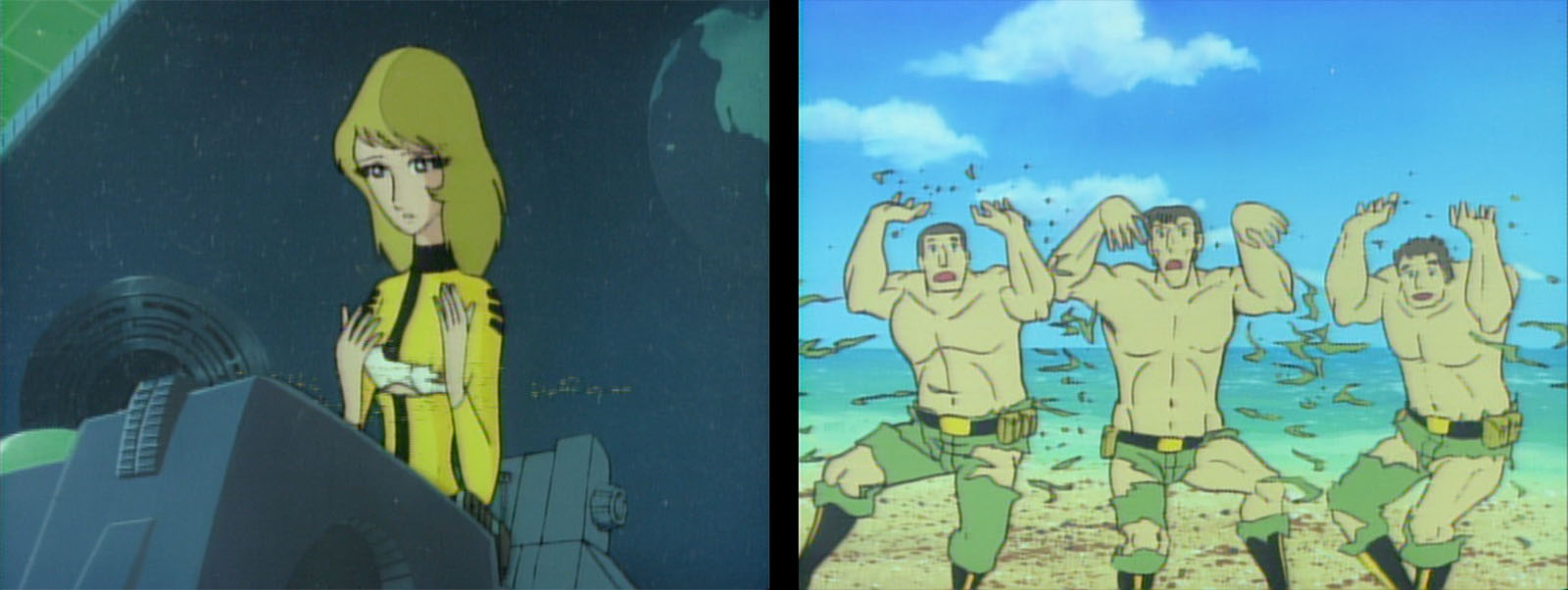
As the Space Cavalry, including Saito, falls into a state of confusion, Dr. Sado barks, “You guys are far too noisy!” and herds them into a room designed to help them calm down. It is a space intended to help crew members recover from the exhaustion of a long voyage through space. Sado himself mutters that he never expected to have to use it so soon after setting off.
Meanwhile, elsewhere on the ship, Sanada notices something amiss. The uniforms worn by Yuki Mori and Sanada himself appear noticeably worn and aged. Time is passing at an abnormally rapid rate. The realization that, if they do not escape quickly, not only their clothing but their very bodies will age, eventually leaving nothing but bleached bones, sends a chill through the entire ship.
As enemy fire continues from an unknown origin, Yuki desperately searches for an escape route. Suddenly, her “extra-dimensional radar” picks up a signal.
A Rift at 12 O’Clock, an Escape, and the First Contact with Teresa
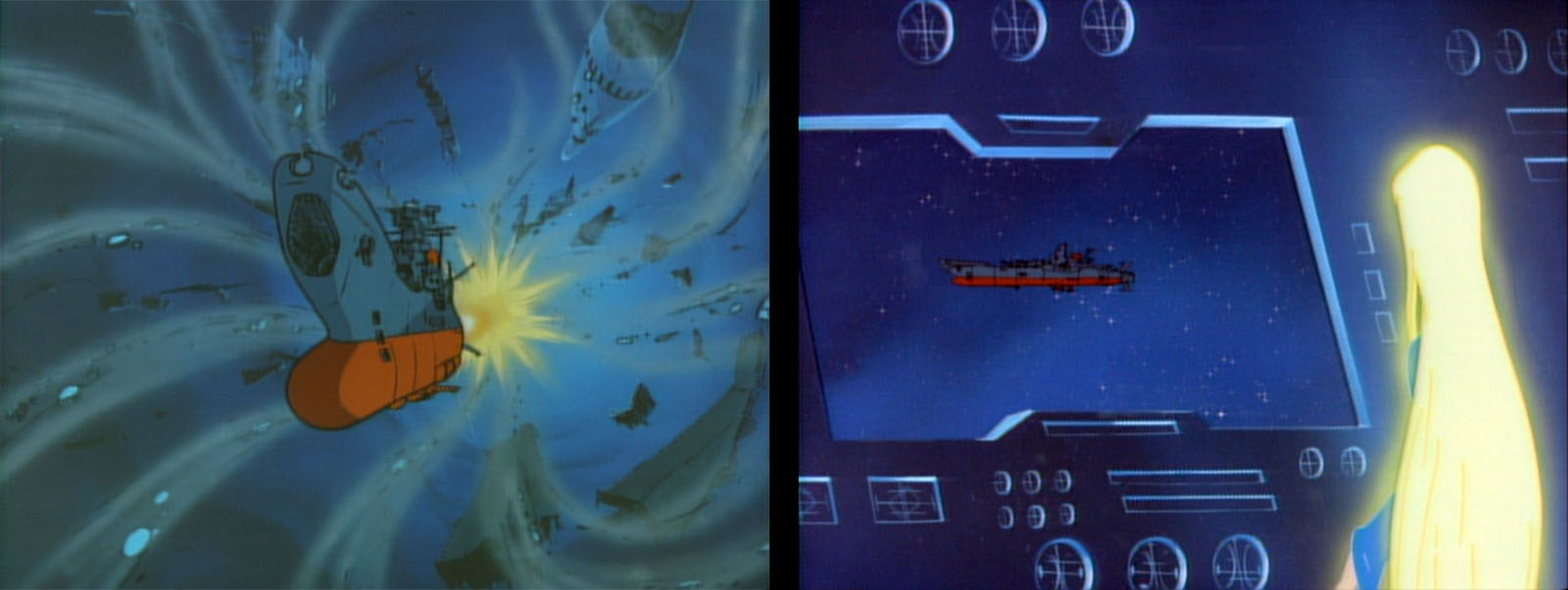
Kodai reacts to Yuki’s report. “The 12 o’clock position? That must be the real message!”
From beyond the rift, a voice reaches out to those in the time trap: “Believe in me, hurry!”
Kodai decides to plunge into the rift, while Dr. Sado, though concerned for the crew’s physical well-being, urges them to hasten their preparations for departure. Repairs to the ventilation system are completed, and auxiliary engine power is brought online.
Shima issues commands in a calm, steady voice. Internal pressure in the Wave-Motion Engine rises, energy levels reach 100%, and the engine is ignited. Yamato breaks through toward the 12 o’clock position, firing its main guns as it escapes the Sargasso. Goland restrains a subordinate who urges an all-out attack, remarking simply, “This is merely a preliminary skirmish.”
Following the escape, a formal transmission arrives from Teresa: “I am Teresa. Teresa of Telezart.”
Kodai and Shima lean forward, but just as they attempt to ask for clarification regarding the message, powerful interference cuts in once again. Kodai instructs Shima to adjust the course, and Yamato turns toward Telezart.
A Former Field Engineer’s Take: 3 Highlights from Episode 8
Three things in this episode really caught my eye.
Highlight 1: Goland’s Pride, Defying Leader Dessler’s Warning
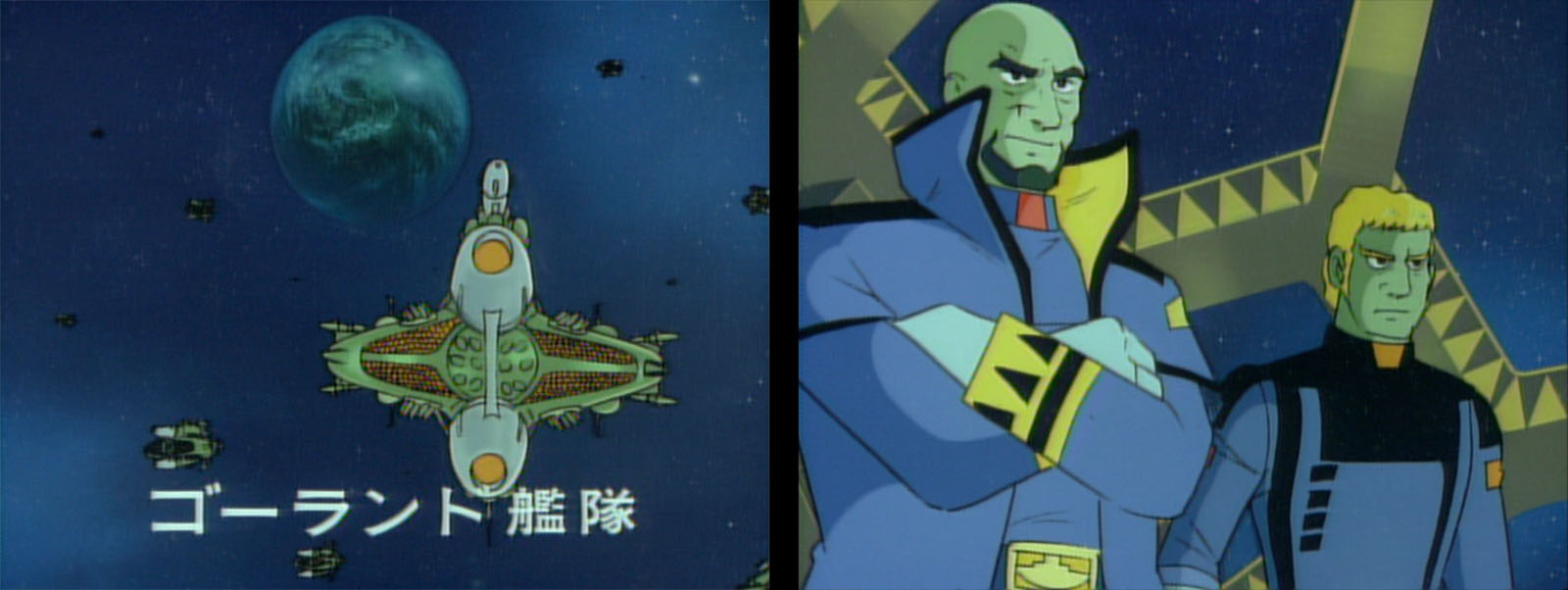
When Leader Dessler, acting on orders from Great Emperor Zordar, attempts to take overall command, Goland pushes back directly, insisting, “Leave this to me. I am a true-born son of the Comet Empire.” It is a clash of pride and past grievances, the very beginning of the trap.
Highlight 2: Time Acceleration in the Sargasso, The Decay of Crew Uniforms
Sanada warns that remaining trapped in this space will cause clothing to rot, followed by the rapid aging of the human body until only bones remain. It is one of the most chilling sequences in the entire series, a visceral, visual representation of one’s “remaining lifespan” ticking away.
Highlight 3: The real voice of Teresa, arriving from a rift at the 12 o’clock position
While a fake message, purportedly from the 3 o’clock direction, serves as a distraction, Yuki’s “extra-dimensional radar” detects a rift at the 12 o’clock position. This is the climax of the episode: seizing the genuine signal from within the trap.

A defining line from this episode
“Damn it…they tricked even me.” These words are uttered by Shima immediately after Yamato is pulled into the Sargasso.
Realizing that the message, which had specified the 3 o’clock direction and even accounted for obstacles along the way, was a fabrication, he acknowledges his own error in judgment as the ship’s navigation officer.
The episode is underscored by his deep regret: he should have been more skeptical of the very signal he so desperately wanted to believe.
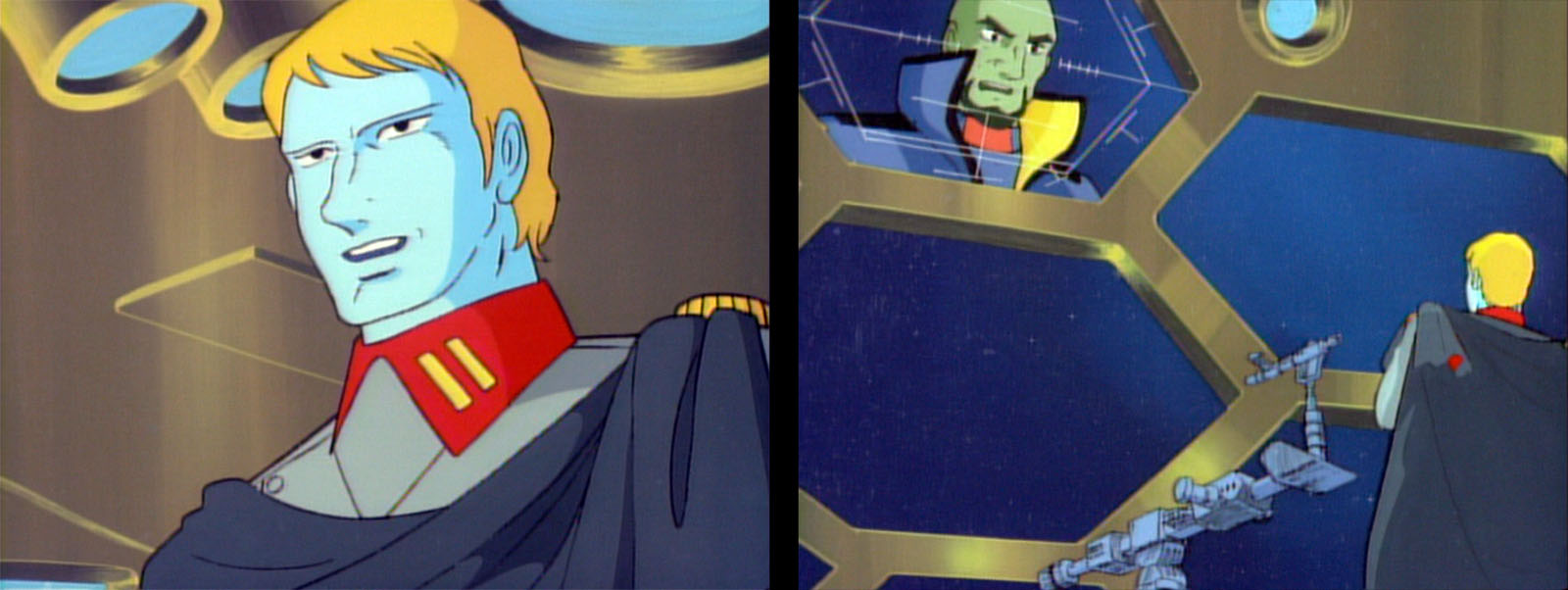
Why did Goland ignore Dessler’s warning?
Goland’s rejection of Dessler’s command stems from a combination of his pride as a homegrown officer of the Comet Empire and his deep-seated distrust of Dessler, the leader of the defeated Gamilas. Yet, this very pride leads him to adopt a strategy that lacks the necessary meticulousness.
By order of Great Emperor Zordar, command of operations in the Telezart sector has been entrusted to Leader Dessler. Nevertheless, Goland takes it upon himself to initiate an operation to intercept Yamato.
Dessler issues a sharp warning via communication link: “To win a battle, one must follow the commander’s orders with absolute, unwavering precision.”
Goland’s reply is cold: “And yet, you still lost.”
He insists that the task be left to him, a true-born officer of the Comet Empire. He demands that Dessler refrain from unnecessary interference, arguing that by drawing the enemy in, following a carefully laid-out strategy, he can lure them close enough to destroy them.
For 32 years, I oversaw the receipt of LPG from tanker trucks in the field. The first step in the receiving process is to verify that the shipment matches the accompanying documentation. Even if someone says, “It’s fine, it’s the same as always,” I won’t lift a finger until I’ve cross-checked the figures on the paperwork against the tank’s liquid level and pressure gauges. In fact, there have been three occasions where the type or weight of the LPG delivered did not match the documentation.
What Admiral Goland did was carry out a receiving process while skipping this vital verification step. His pride, rooted in his status as a career officer of the Comet Empire, led him to reject a direct order from his superior to perform these checks. While pride can be a form of “equipment” for an officer, it can never serve as a substitute for actual instruments.
Because Dessler has experienced failure, he understands the true weight of command. Because Goland has never known defeat, he fails to grasp the value of that same command.
Have you ever dismissed advice from someone with more experience by telling yourself, “They’re just old-fashioned”? That piece of advice might well have been the equivalent of verifying the paperwork.

The time acceleration within the Sargasso, a stark reminder of one’s “remaining lifespan.”
Inside the Sargasso, time flows at an abnormally rapid rate, causing uniforms to decay and fall apart.
Sanada’s warning, that leaving things as they are would lead to rapid physical aging and, eventually, the reduction of one’s body to a skeleton, makes the “remaining lifespan” a visible, tangible reality.
“How terrible… look at the uniforms.”
Through Yuki Mori’s voice, the viewer’s attention is drawn first to the deterioration of the fabric. Sanada then confirms that time is passing at an abnormally accelerated rate.
What makes this directorial choice so brilliant is how it shifts the source of terror from an abstract, invisible “super-gravity” to the tangible, visible reality of aging. While it is difficult to truly fathom the crushing force of a black hole’s gravity, the sight of a frayed cuff is something anyone can instantly grasp.
Saito attempts to lighten the mood with a quip, “Leave it to Yamato, even our fashion changes to suit the occasion!”, but this attempt at levity only serves to underscore the underlying horror.
The depiction of time acceleration functions in the following ways:
A Visualized Crisis: The degradation of the fabric serves as a clear, visceral metaphor for the “quickening” of one’s own lifespan.
A Hard Deadline for Escape: The focus shifts from the merits of a particular escape plan to the urgent question of whether there is enough time to execute it.
Justification for a Commander’s Impatience: It provides a rationale for why Kodai cannot afford the luxury of hesitation when deciding to push forward.
In practical, hands-on work, a similar logic applies. If you leave a gas cylinder with some residual pressure, seasonal temperature fluctuations can cause that pressure to drop far faster than you might expect. Even if the gauge appears unchanged at a glance, checking it again a week later reveals a clear, noticeable difference.
Those with extensive field experience share a common understanding: time is always taking something away from you.
The sight of uniforms decaying within the Sargasso is, in my view, a masterful, animated amplification of that very real-world intuition. Life is slipping away. By acknowledging this stark fact, one can then take the necessary next step. Sanada’s calm warning is not intended to stoke fear, but rather to serve as a flare, a signal to hasten the decision-making process.
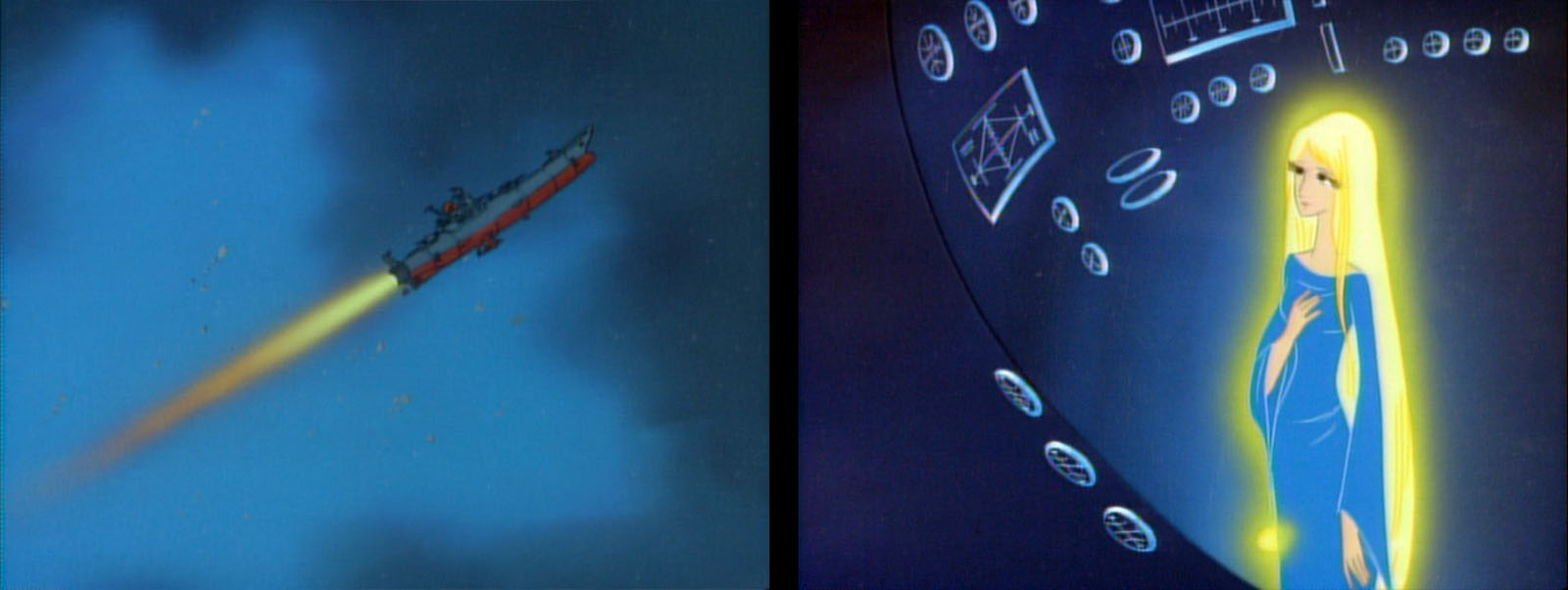
A Rift at 12 O’Clock, Navigational Tactics to Discern a Genuine Signal Amidst a Trap
Beyond the reach of the deceptive messages arriving from the 3 o’clock position, Yuki’s trans-dimensional radar detected a rift at 12 o’clock. The true signal only emerges when multiple sources are cross-referenced, this is the navigational strategy employed in this instance.
Tasked with finding an exit, Yuki notices a reading on the trans-dimensional radar, even amidst a total communications blackout.
Upon her remark, “It’s coming from the 12 o’clock position,” Kodai reacts immediately.
“12 o’clock? That must be the real message.”
He instantly distinguishes the signal from the 3 o’clock position, a ruse designed to lure them into a trap, from the one at 12 o’clock, which he identifies as the true voice of Teresa.
A voice reaches them from beyond the rift: “You, who dwell in the three-dimensional world, please trust me, and hurry!”
Yamato shifts its heading and begins preparations to reignite its Wave-Motion Engine. The crew repairs the damaged ventilation system and engages the auxiliary engine power.
Following Shima’s command, Ota initiates the sequence: internal pressure in the Wave Motion Engine rises, energy reaches 100% capacity, and the engine ignites. Yamato surges toward the 12 o’clock position, firing its main cannons as it breaks through.
In my own line of work, this is akin to verifying a tanker truck’s authenticity by cross-referencing three separate data points: the receiving manifest, the liquid level gauge, and the pressure gauge. Relying on only one instrument could lead to overlooking a malfunction or an incorrect piping connection.
Only by layering measurements based on different principles can one confirm that a received signal is truly authentic. Yuki’s interdimensional radar served precisely as that “measurement based on a different principle.”
Once the genuine article is identified, the only thing left to do is to steer the ship, without hesitation. Kodai’s rapid decision-making stems from his realization that taking extra time to gather more information would only further deplete their remaining time, their “remaining life.”
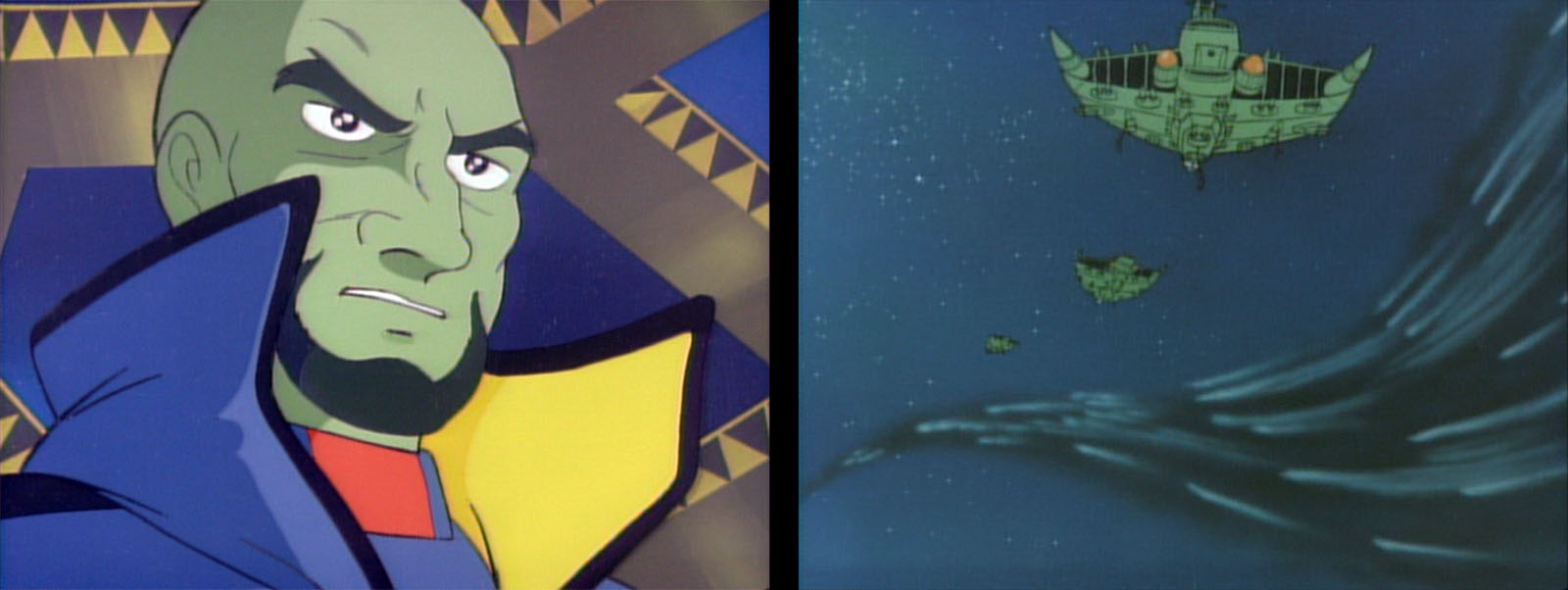
The True Terror Lurking Behind a “Mere Preliminary Test”
Immediately after Yamato makes a desperate escape, Goland, holding back his full-scale assault, dismisses the encounter as “a mere preliminary test.” This glimpse reveals the immense depth of the Comet Empire’s military strength.
Right after the escape, a subordinate suggests, “Let’s launch an all-out attack and settle this.” Goland stops him.
“This is just a preliminary test. there is no need to rush.”
This single remark forces the viewer to imagine the sheer scale of the forces waiting ahead of the planet Telezart.
Lying in wait before Yamato is a multi-layered defense, including:
Admiral Goland’s missile fleet: Positioned in front of Telezart, the very force that set this trap.
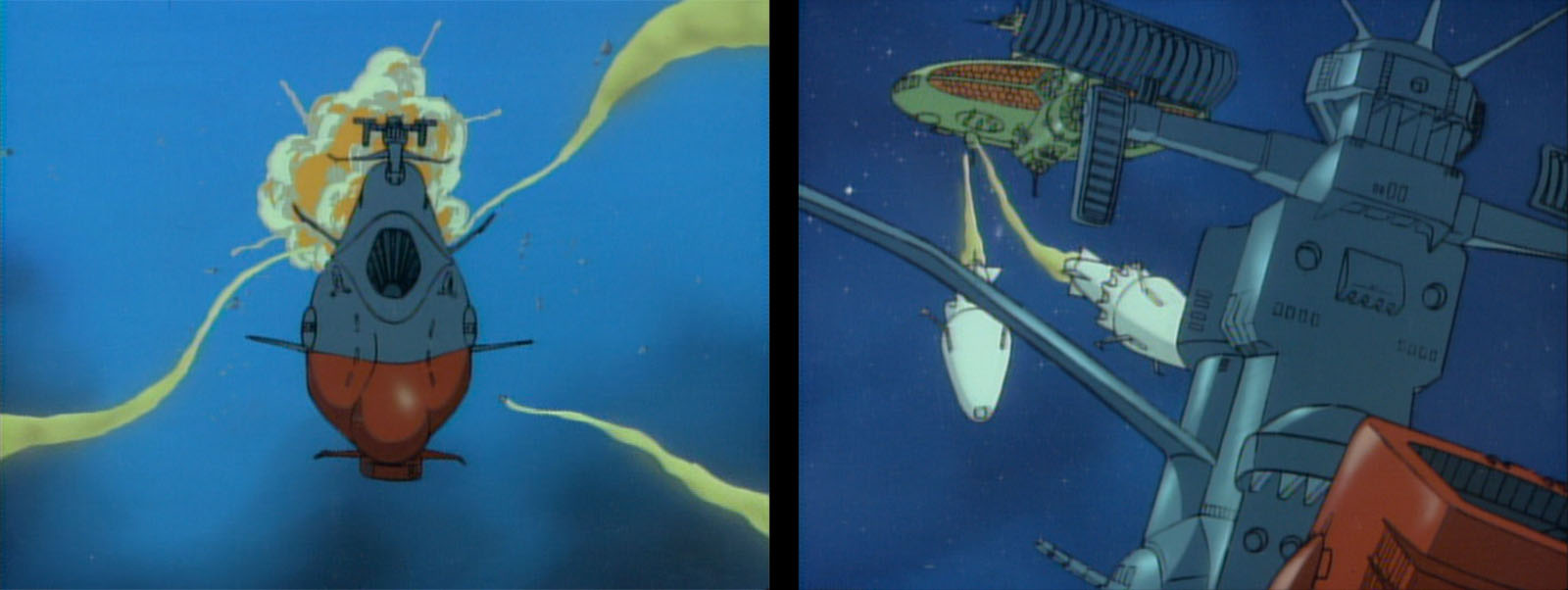
General Zabaibal’s armored division: A heavily equipped rear guard stationed at the planet Telezart.
The remnant fleet under Supreme Leader Dessler: Positioned further back, this force has absorbed the remnants of the former Gamilas military.
The main Earth-bound fleet under Admiral Baruze: A massive armada approaching from the direction of Sirius and Procyon, targeting Earth itself.
The White Comet, led by Great Emperor Zordar: An immense, overwhelming force heading straight for the Milky Way galaxy.
While the escape itself might be considered a victory, a broader view of the board reveals that only the first move has been made. The escape toward the 12 o’clock position, achieved by Yamato at the cost of its remaining vitality, is merely the first step on a long, arduous climb.
In any war narrative, there are few lines more chilling than being told, “The enemy is not yet using their full strength.” This single remark confirms that, in the episodes to come, this multi-layered defense will gradually reveal its true, lethal fangs.
Have you ever overcome a major challenge in your own work or personal life, only to be told, “That was just the prelude”? Before you rush to celebrate, it is worth taking a moment to re-examine the board.
Conclusion
Episode 8 illustrates the importance of not taking incoming signals at face value. The narrative unfolds in three stages: a trap, the acceleration of time, and the discovery of a genuine communication. Because Goland’s pride led to a lack of meticulousness, Yamato was able to adjust its course and break free.
Discerning a true voice is not a matter of how much one hesitates or agonizes. it is a matter of how quickly one can employ alternative methods of measurement.
Only after the escape is successful does a formal introduction arrive from Teresa:
“I am Teresa. Teresa of Telezart.”
This brief self-introduction opens the gateway to the story that follows.
Postscript
It is 2:00 AM. In my living room in Sapporo. The only sounds are the steady breathing of my mother as she sleeps and the occasional rustle of my sister shifting in her bed. The breeze drifting in through the screen door has shed the humid weight of summer, replaced now by the crisp, dry scent of early autumn.
To my ears, the scene where Yamato reignites its Wave-Motion Engine to escape sounds exactly like the commands given when receiving a tanker truck after a night shift: Pressure rising, filling gauge, ignition sequence. Follow the proper order, and what is inherently dangerous becomes a manageable tool.
Watching the depiction of the Sargasso, a place where time accelerates abnormally, reminds me of days spent caregiving, when I’d lose track of the clock. Suddenly, I’d realize the sun was already setting, and a wave of panic would wash over me: I haven’t managed to get anything done yet. For all of us, the remaining measure of our own lives ticks away, little by little, every single day.
That is precisely why I never want to lose two things: the habit of questioning the signals we receive, and the ability to steer the helm without a moment’s hesitation. I hope this installment serves as a brief, refreshing breath for you, too.

An Old Man’s Musings
Back when I was still working, the protocol for receiving a tanker truck was strict: “Read the manifest first, then check the gauges.”
Even if someone urged, “Hurry up and purge the line!” we wouldn’t lift a finger until the manifest and the gauges had been cross-checked.
This wasn’t just empty formalism. it was a sequence designed to prevent accidents. Goland tried to bypass this established procedure, insisting, “I’m a homegrown veteran, I don’t need to follow the rules.”
Dessler, by contrast, sought to adhere to the proper sequence. In the end, a trap was set, but because it lacked meticulous planning, it left Yamato with an opening to escape.
I am typing this late at night, while caring for my mother and sister. My niece frequently stops by to check on us, and each time, she leaves behind barley tea and sliced fruit in the refrigerator. My daily life is sustained by this “sequence”, these small, thoughtful gestures left behind by someone else.
Surely, there is at least one such “sequence” in your own life, too, something someone else has quietly left behind for you.