Toyoo Ashida vs Noboru Ishiguro
Trends in anime fans that have changed over the past year
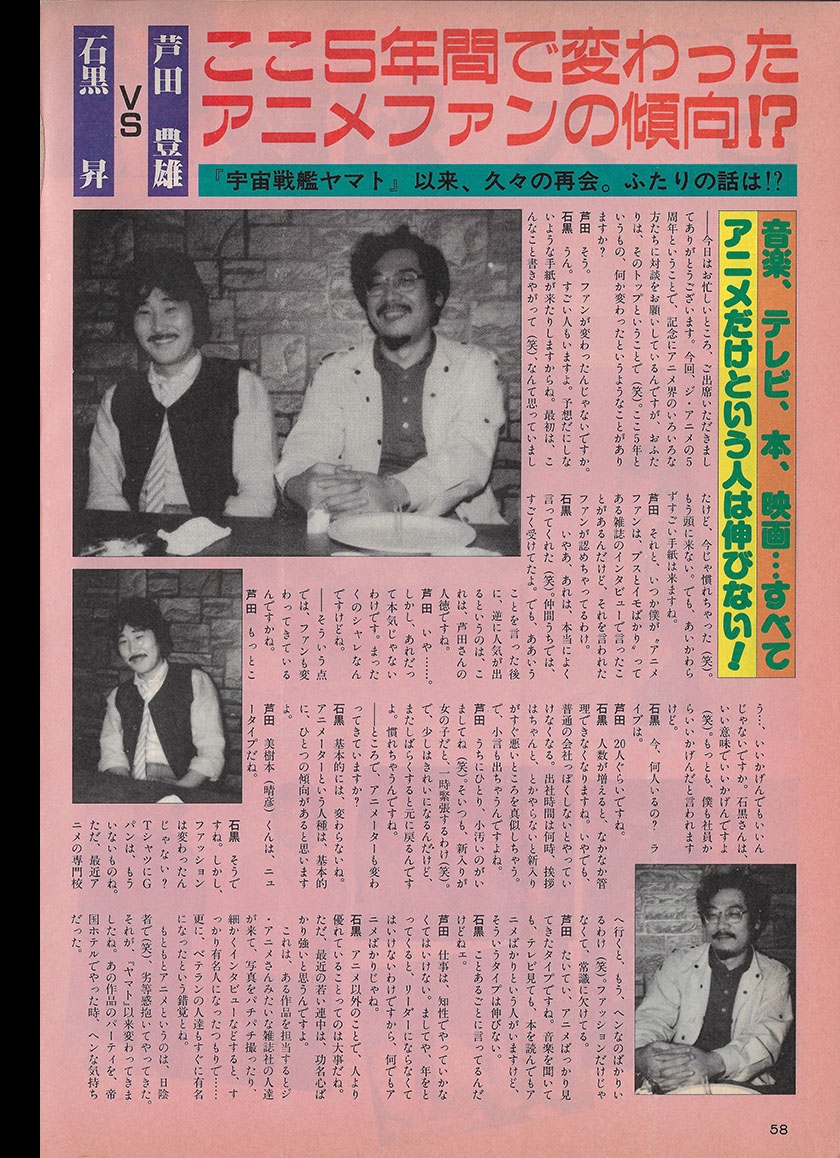
It’s been a long time since they last met on Space Battleship Yamato. What will they talk about?
Noboru Ishiguro
Studio Artland president, Director
He was passionate about anime since he was in university. He used to visit Mushi productions at the time they were producing Astro Boy. Since then, he has worked on everything from animation to directing, and is currently working on the video Megazone 23.
Toyoo Ashida
Studio Live president, illustrator
Since Minky Momo, the number of fans of all she does, characters has increased dramatically. Since then, he has created popular characters in Vifam and Galatt. He also worked on the direction of fist of the Northstar.
People who only watch anime for music, TV, books, and movies won’t grow!
Interviewer: thank you for taking time out of your busy schedules today. To commemorate the fifth anniversary of The Anime, we’ve asked various people from the anime industry to participate in a dialogue, and you two are at the top of that list. Have you noticed anything changing in the last five years?
Ashida: Yes. I think the fans have changed.
Ishiguro: Yes. There are some strange people out there. We get letters that we never expected. At first, I was like, “How dare they write something like this?” (Laughs) but I’ve gotten used to it now. I don’t get upset anymore. But I still get some pretty crazy letters.
Ashida: also, I once said in an interview for a magazine, “Anime fans are all ugly and unsophisticated,” and the fans I said it to actually agreed.
Ishiguro: Yeah, that was quite a thing to say. (Laughs) It was a big hit among our group. But for someone to become even more popular after saying something like that is a testament to your character.
Ashida: Well… That wasn’t serious. It was just a joke.
Interviewer: In that respect, I guess the fans are changing, too.
Ashida: I think it’s OK to be a little haphazard. You’re haphazard in a good way. (Laughs) although my employees tell me I’m haphazard too.
Ishiguro: How many people are there now at your studio?
Ashida: About 20 people.
Ishiguro: When the number of people increases, it becomes difficult to manage them all. But then again, you can’t get by unless you act like a normal company. If you don’t set a specific time for coming to work and make sure everyone greets each other properly, new employees will quickly start imitating bad habits. And then I end up nagging them.
Ashida: We have one rather scruffy one in our household. (Laughs) He gets nervous for a while when a new girl comes along. He cleans up a bit, though. Then it goes back to normal. You get used to it.
Interviewer: By the way, have animators changed as well?
Ishiguro: Basically, nothing has changed with them. I think animators, as a group, generally share one characteristic.
Ashida: Haruhiko Mikimoto is a new type.
Ishiguro: That’s true. But fashion has changed, hasn’t it? You don’t see them in kids’ clothes anymore. However, recently, I’ve noticed that when you go to anime vocational schools, it’s full of weirdos. (Laughs) Not just in their fashion sense, but they lack common sense.
Ashida: The type of person that usually only watches anime or only listens to music or only reads books, these types of people don’t grow. Mr. Ishiguro says this all the time, you know. This work requires intellect. Especially as you get older, you have to become a leader, so you can’t just rely on anime for everything
Ishiguro: It’s important to be better at something than others, outside of anime. However, I think young people these days are just too driven by ambition. When you’re in charge of a project, people from magazines like The Anime come and take lots of pictures and conduct detailed interviews, and you start to feel like you’ve become a celebrity. Furthermore, there’s the illusion even among even veterans that you become famous.
Originally, anime was something of a fringe industry, and I felt inferior while working on it. But that started to change after Yamato. When we had a party for that show at the Imperial Hotel, I got a strange feeling.
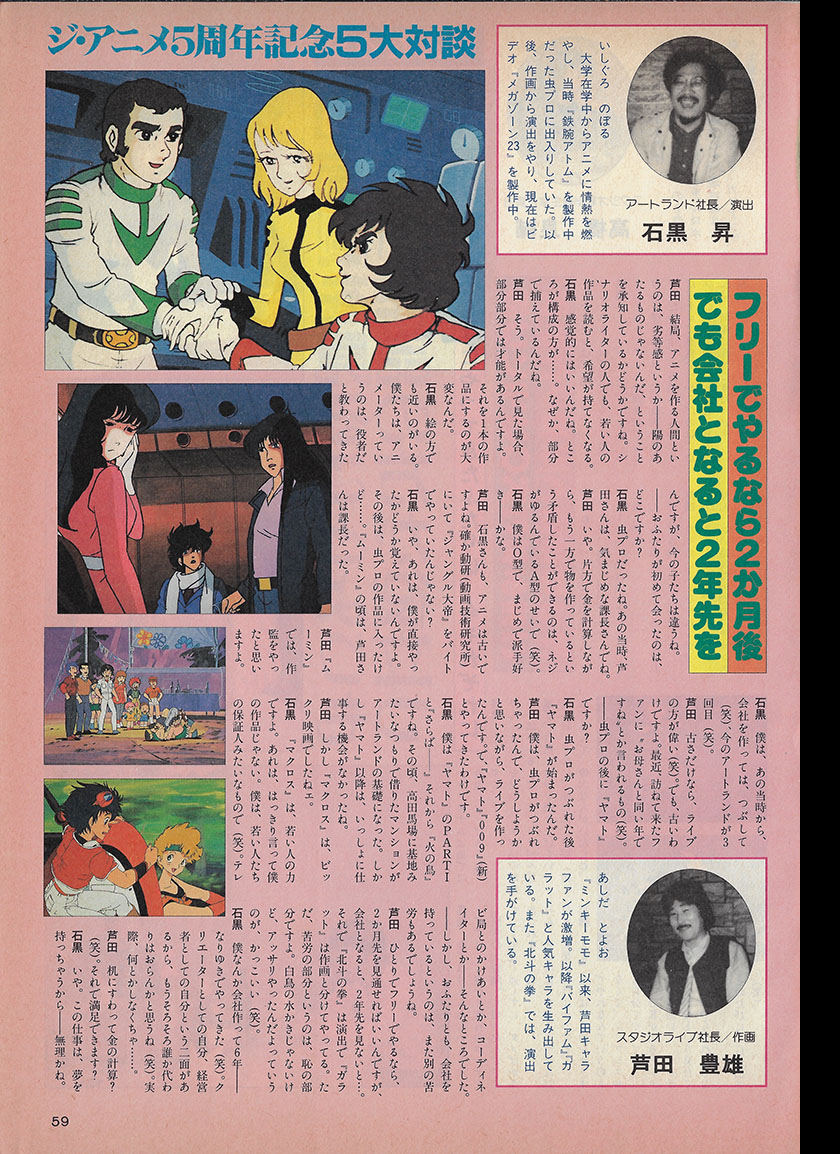
When freelancing, it’s two months at a time. But when it comes to a company, you need to think two years ahead.
Ashida: In the end, it comes down to whether or not people who make anime have an inferiority complex. They’re aware that they’re not in the spotlight. Even among script writers, reading the work of young people makes me lose all hope.
Ishiguro: Intuitively, it’s good. But the structure…for some reason, it only focuses on certain parts.
Ashida: That’s right. When you look at it as a whole, you can’t just have talent in certain areas. It’s important to make an entire product, not just one piece of it.
Ishiguro: There’s something similar in the art world, as well. We were taught that animators are like actors, but kids these days don’t see it that way.
Interviewer: Where did you first meet?
Ishiguro: It was at Mushi Productions, right? Back then, Ashida was a very serious section chief.
Ashida: No, the fact that I can do contradictory things like calculating money on one hand and making things on the other is because I’m a Type A personality with loose screws. (Laughs)
Ishiguro: I’m blood type O, and I’m serious, but I like flashy things, I guess.
Interviewer: You’re also both old anime fans, aren’t you? Didn’t you work on Kimba as a part-time job?
Ishiguro: I don’t remember if I did that directly or not. I started working on projects for Mushi after that, but during the time of Moomin, Ashida was a section chief.
Ashida: I think I worked as an animation Director on Moomin.
Ishiguro: Back then, I started companies and then shut them down, and Artland is my third. (Laughs)
Ashida: If we’re just talking about age, then Studio Live is superior. (Laughs) But we’re getting old, you know. Lately fans who come to see me say things like, “You’re the same age as my mother.” (Laughs)
Interviewer: After Mushi Productions, you both went on to make Yamato.
Ishiguro: Yamato started after Mushi Pro went bankrupt.
Ashida: I was wondering what to do when that happened, so I started Studio Live. I’d been keeping an eye on Yamato and 009.
Ishiguro: for me, it was Yamato Part 1, Farewell to Yamato, and Phoenix. Around that time, the apartment I rented in Takadanobaba, which I intended to be like a base, became the foundation for Artland. However, after Yamato, we didn’t have the opportunity to work together again.
Ashida: but Macross was a really surprising move, wasn’t it?
Ishiguro: Macross is a product of the power of young people. To be honest, it’s not really my work. I’m more like a co-signer for the young people. (Laughs) It was things like dealing with TV stations and acting as a coordinator. Having your own company comes with its own set of challenges.
Ashida: if I were working freelance on my own, I could look two months ahead, but when you’re running a company, you have to look two years ahead. That’s why I’m directing on Fist of the North Star and animating on Galatt. The hardships I’ve faced are the embarrassing parts. It’s cool to be able to say that I did it effortlessly. (Laughs)
Ishiguro: I’ve just been running my company for six years, kind of by chance. I have two sides to me: that of a creator and that of a manager, so I’m starting to think there must be someone to take my place. I really need to do something about it.
Ashida: Sitting at your desk and counting money? Are you satisfied with that? (Laughs)
Ishiguro: This job makes you dream, so maybe it’s possible.
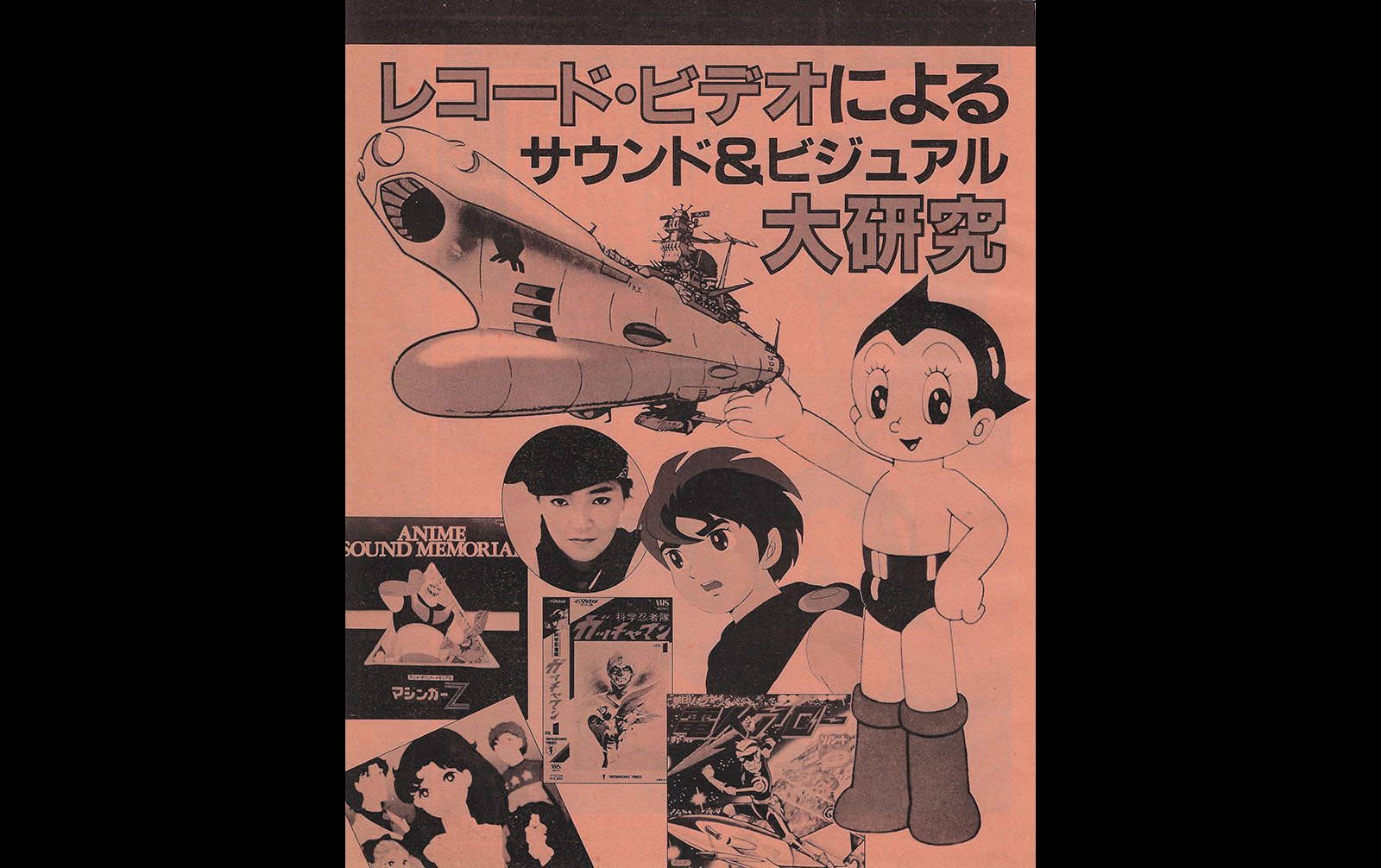
Sound and Visuals through Records and Videos, Big Research
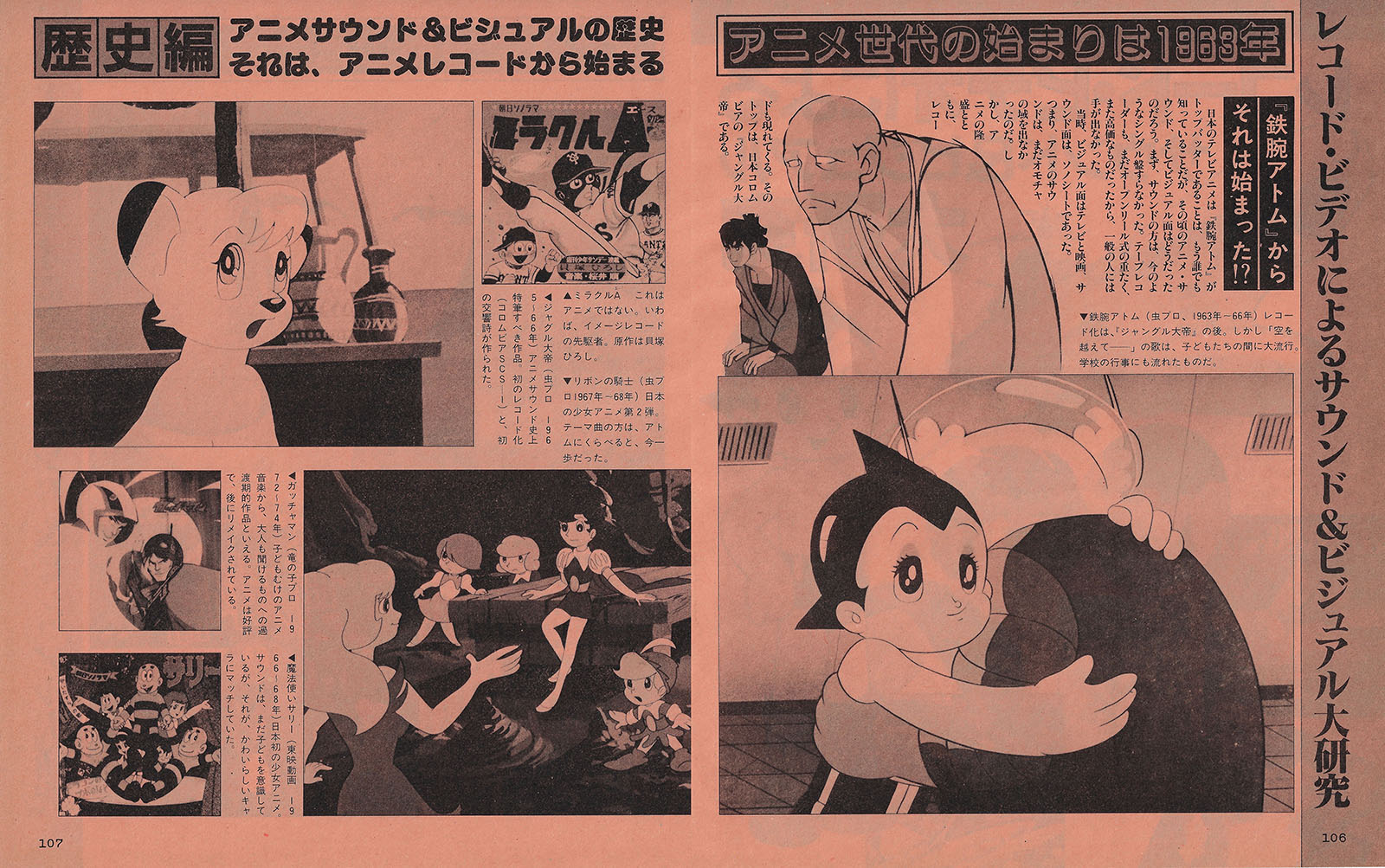
The history of anime sound and visuals began with anime records
The anime generation began in 1963
It began with Astro Boy
Everyone knows that Astro Boy was the leading anime of that zera. The sound was like today’s sound, but there weren’t even any single records yet, only heavy open-reel tapes. And they were expensive, so ordinary people couldn’t afford them. The only other format available was a flexi-disc. In other words, anime sound was still in the realm of toys. But with the rise of anime, records also appeared.
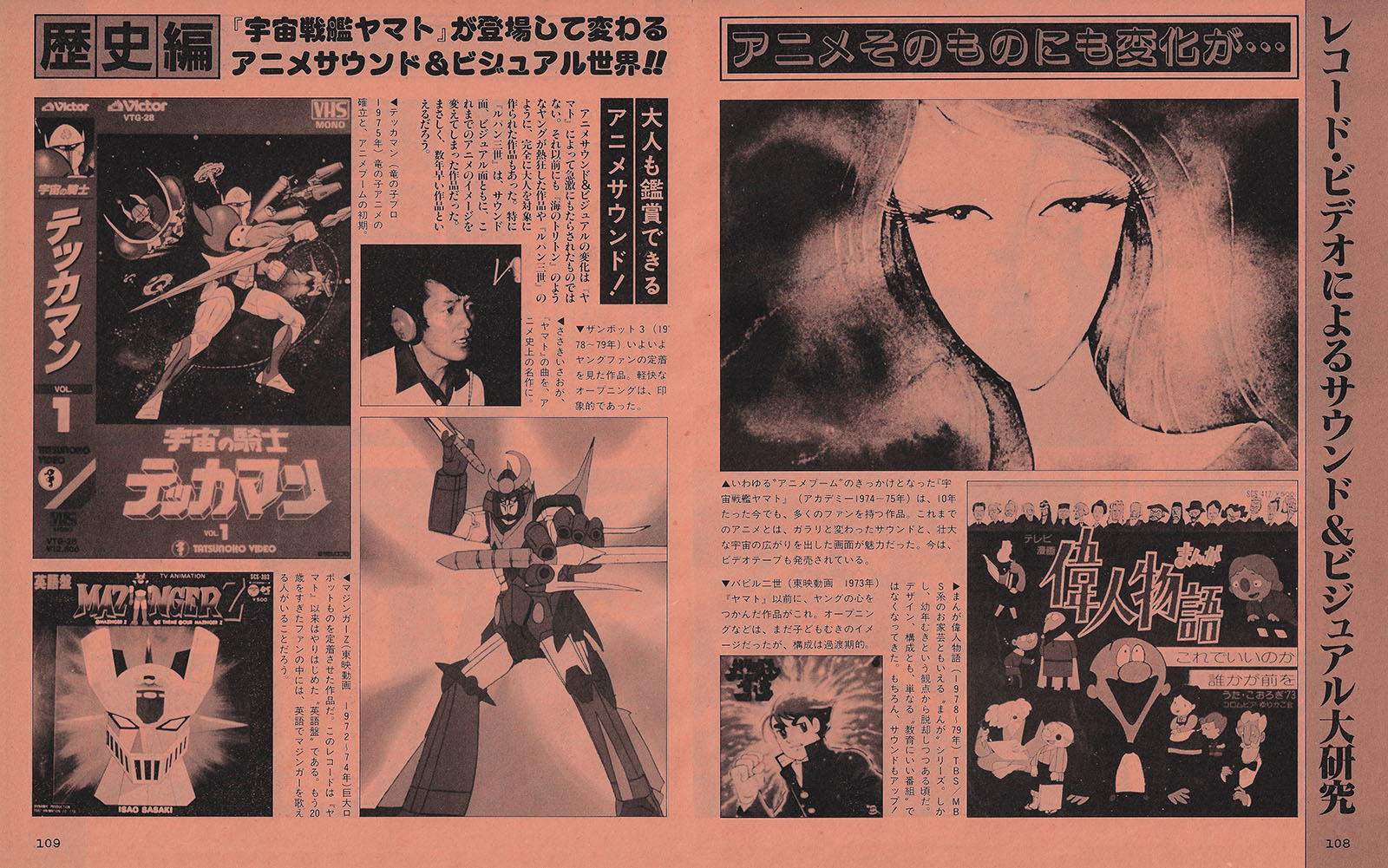
The appearance of Space Battleship Yamato changes things
Space Battleship Yamato, which sparked the so-called anime boom, is a work that still has many fans even ten years later. Its appeal lay in its sound, which was drastically different from previous anime, and its visuals that depicted the vastness of space. It is now available on videotape.
Adults can also perceive anime sound!
The shift in anime sound and visuals wasn’t brought about abruptly by Yamato. Prior to that, there were works like Triton of the Sea, which captivated young audiences, and Lupin III, which was clearly aimed at adults. Lupin in particular completely changed the image of anime in terms of both sound and visuals. This work was truly ahead of its time by several years.
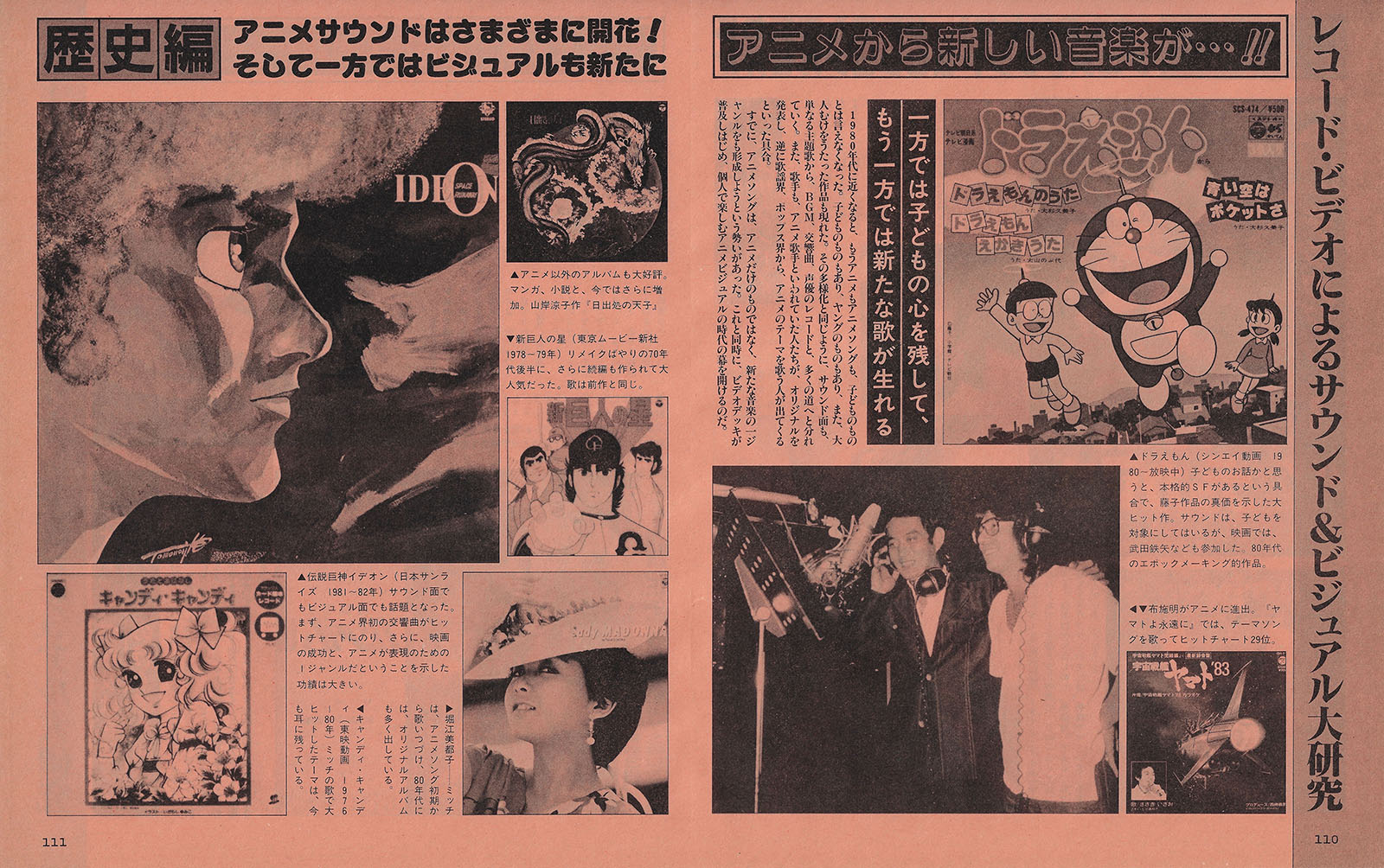
There were various blossoms, and the visuals were also new
On one hand, the childlike spirit was left behind. Meanwhile, New songs were born.
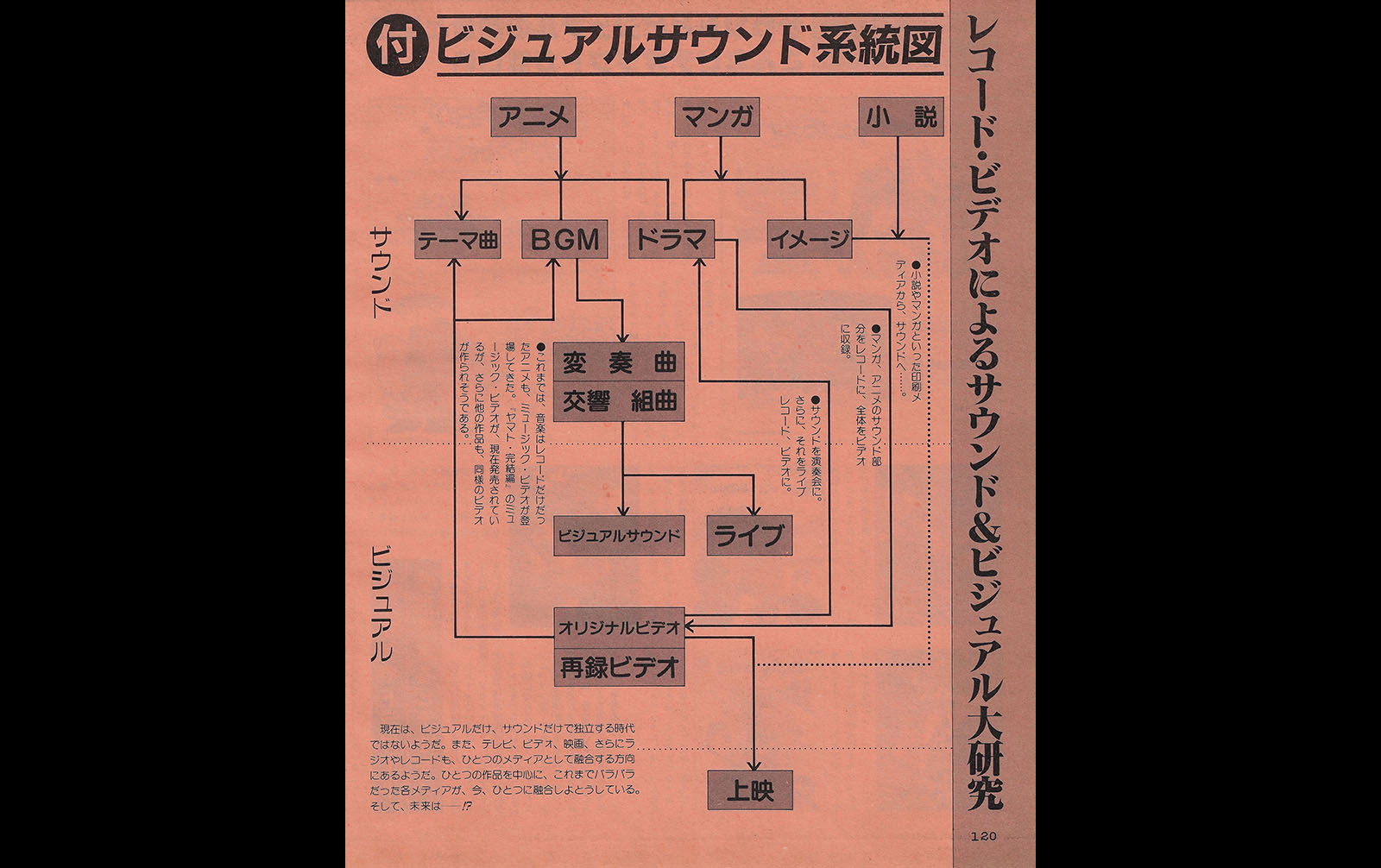
As the 1980s approached, anime and anime songs could no longer be considered solely for children. There were works for children, works for a young people, and even works aimed at adults. Just as this diversification occurred, the sound also branched out into many directions, from simple theme songs to background music, symphonies, and records by voice actors. Furthermore, singers who were previously known only as anime singers began releasing original songs, and conversely, singers from the folk and pop music world began singing anime themes.
Anime songs were already gaining momentum, threatening to become a new genre of music, beyond just anime. Simultaneously, video recorders began to spread, ushering in an era of personal enjoyment of anime visuals.
Akira Fuse ventured into anime. He sang the theme song for Be Forever Yamato, which reached 29th place on the hit charts.
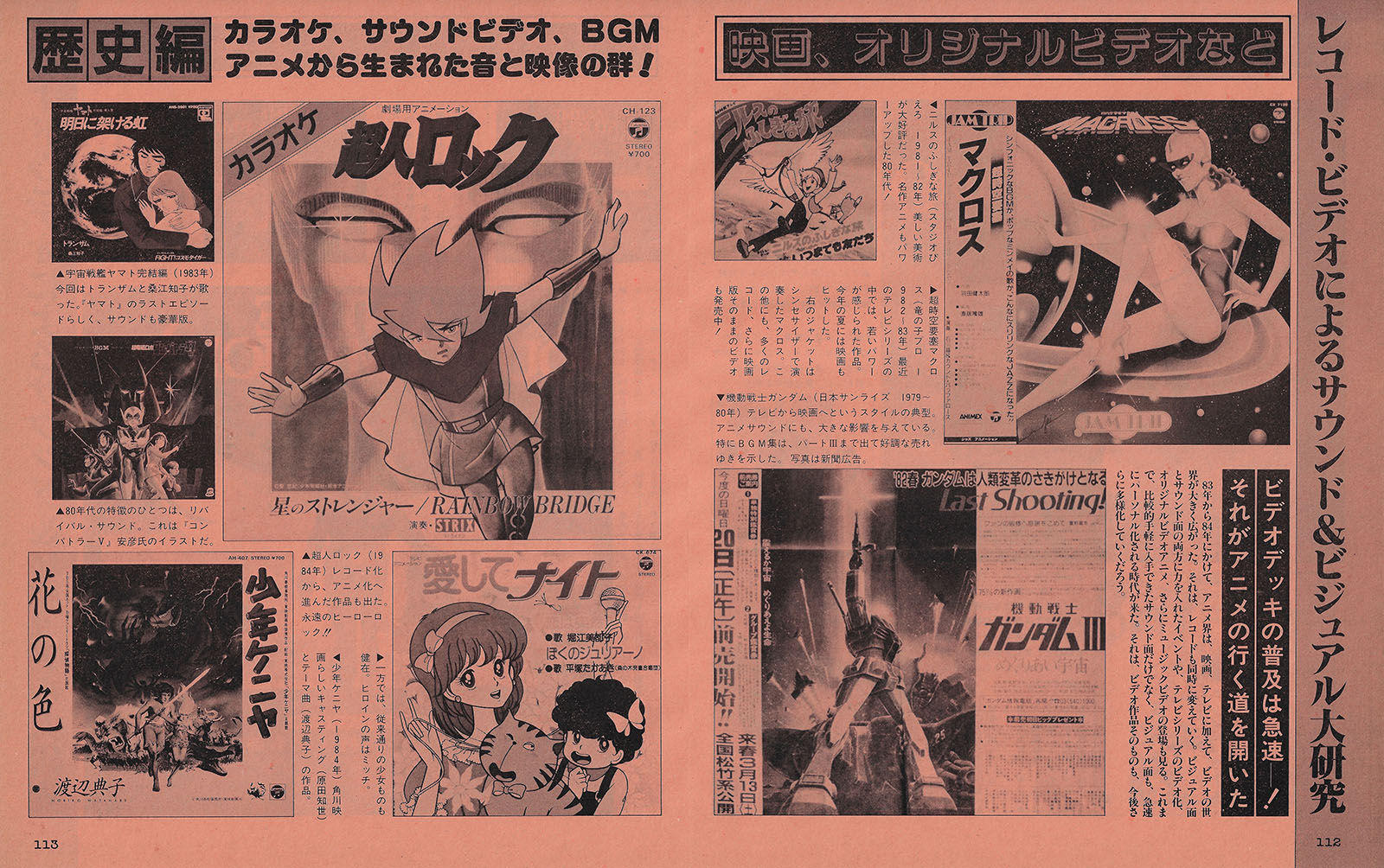
Karaoke, sound, videos, background music – a collection of sounds and images born from anime!
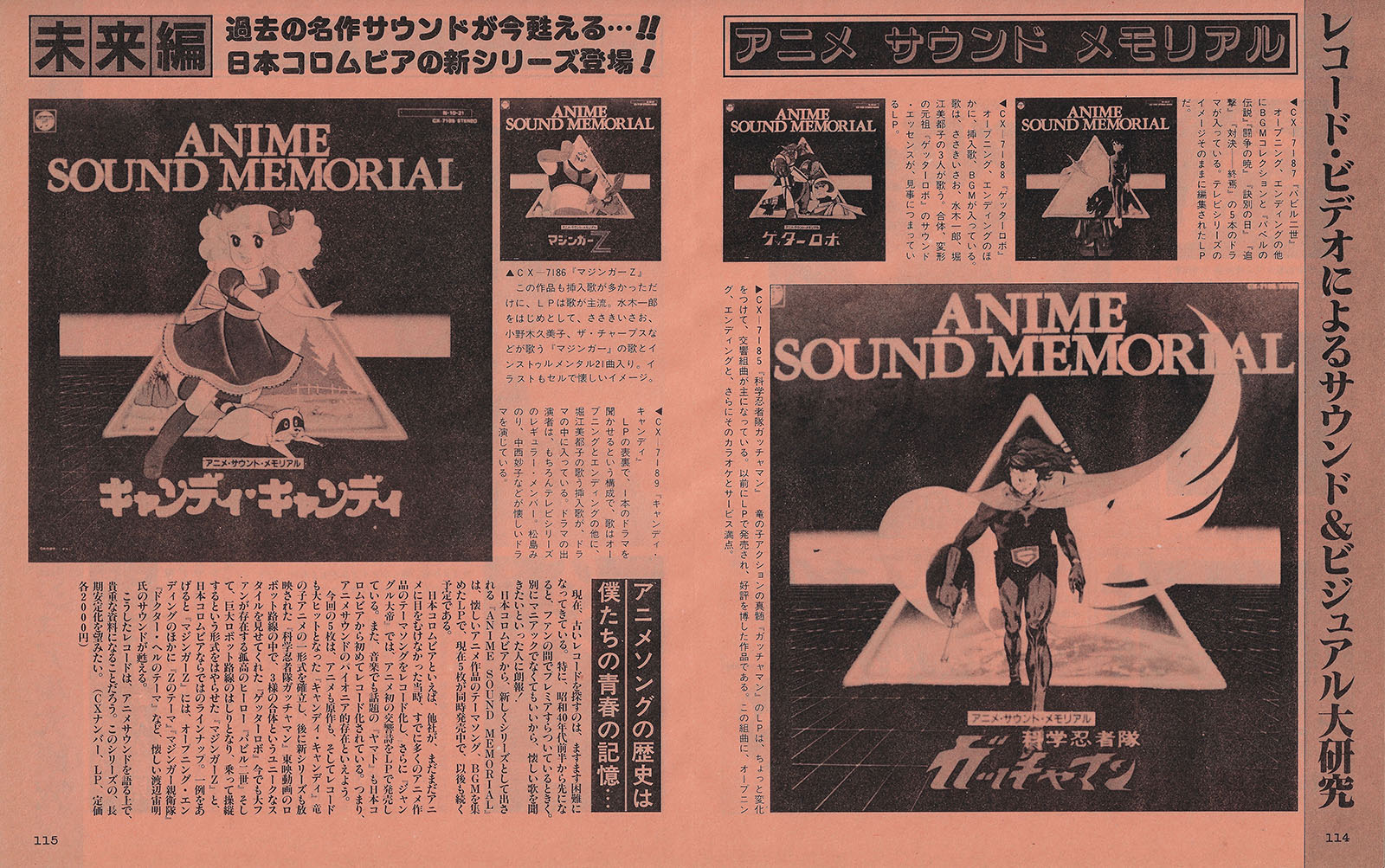
Classic sounds from the past are revived! A new series from Nippon Columbia is here!
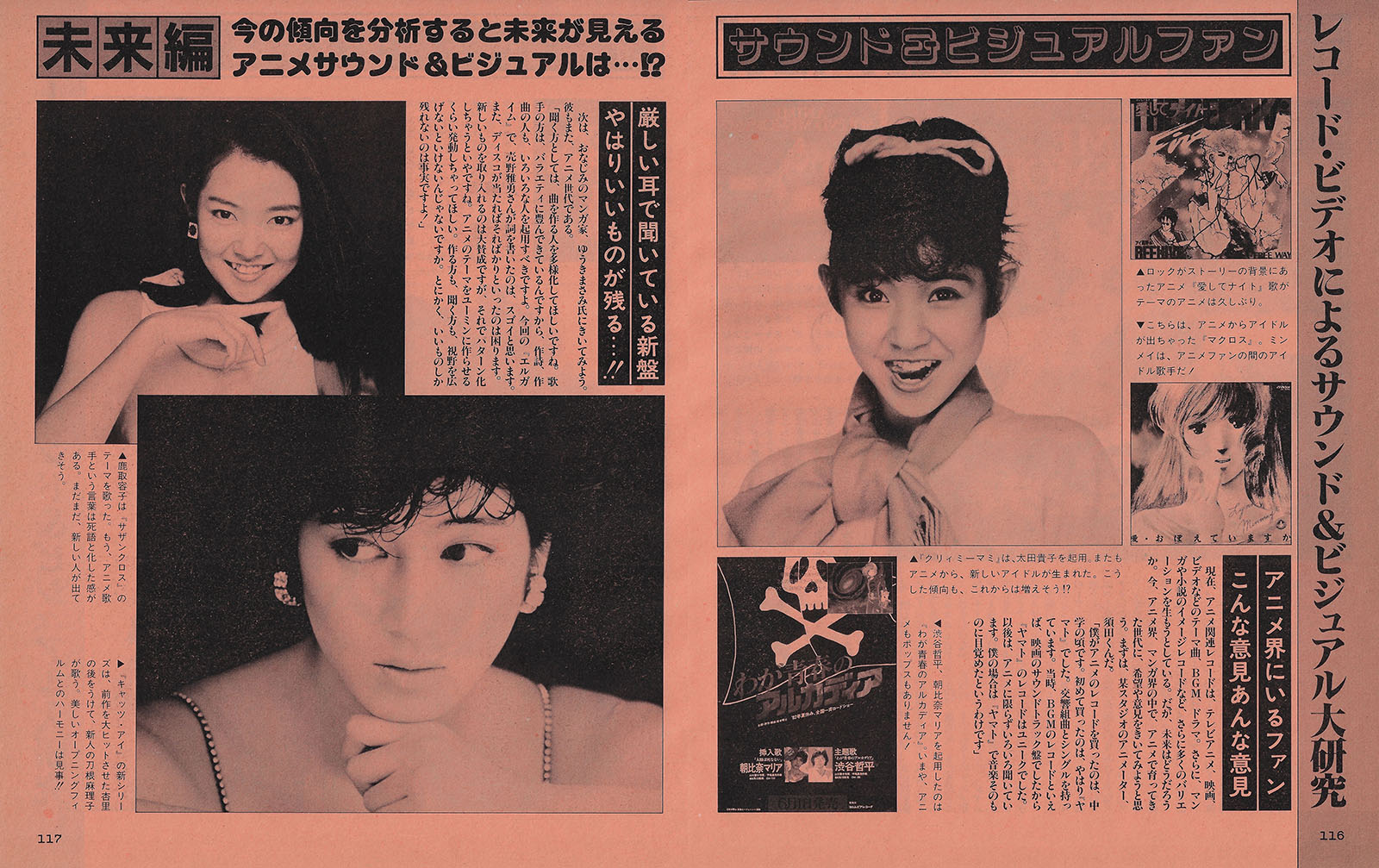
Analyzing current trends reveals the future of anime sound and visuals…!?
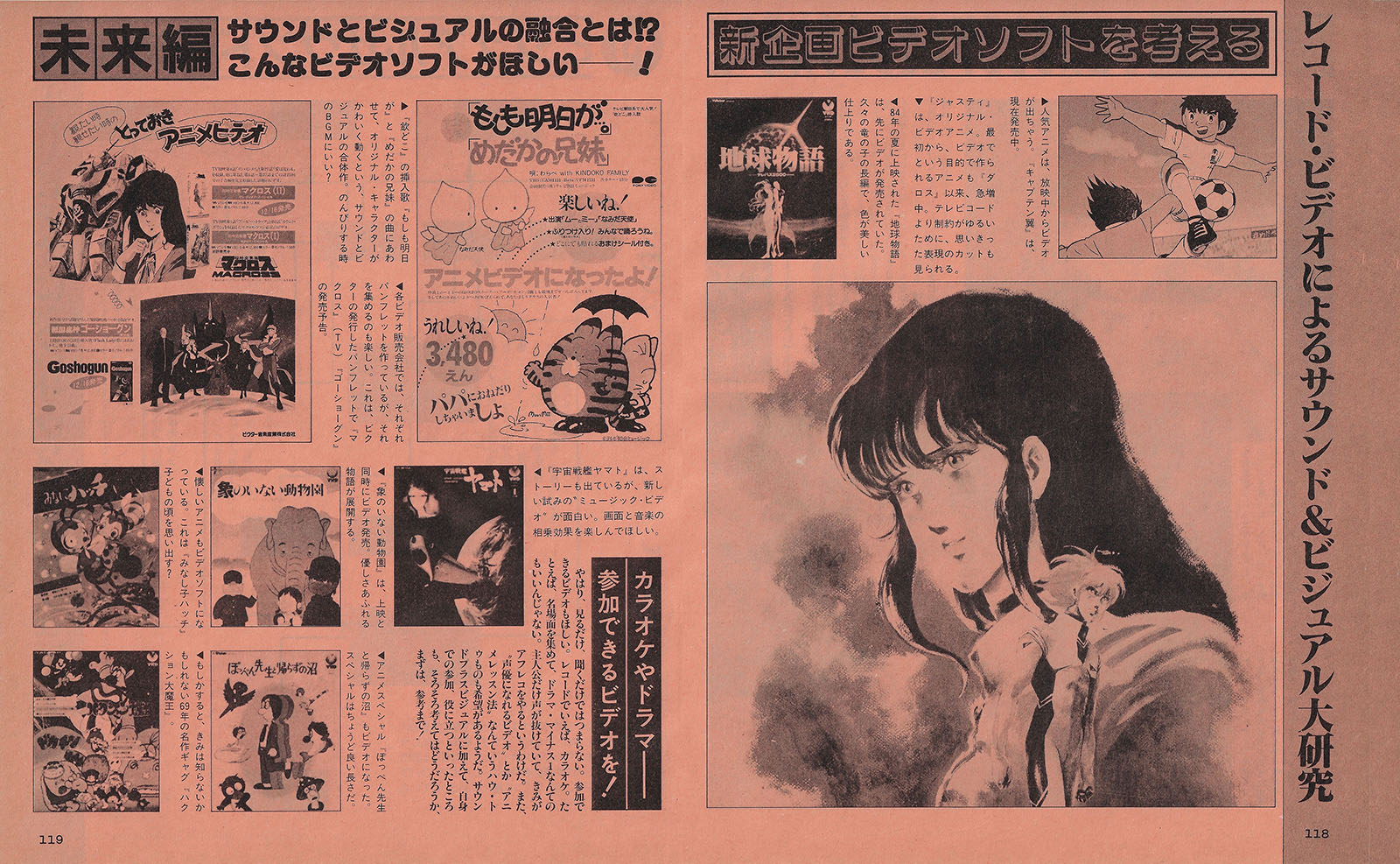
What is the fusion of sound and visuals?
While the story of space battleship, Yamato is certainly compelling, the innovative music video is particularly interesting. We hope you enjoyed the synergistic effect between the visuals and the music.