
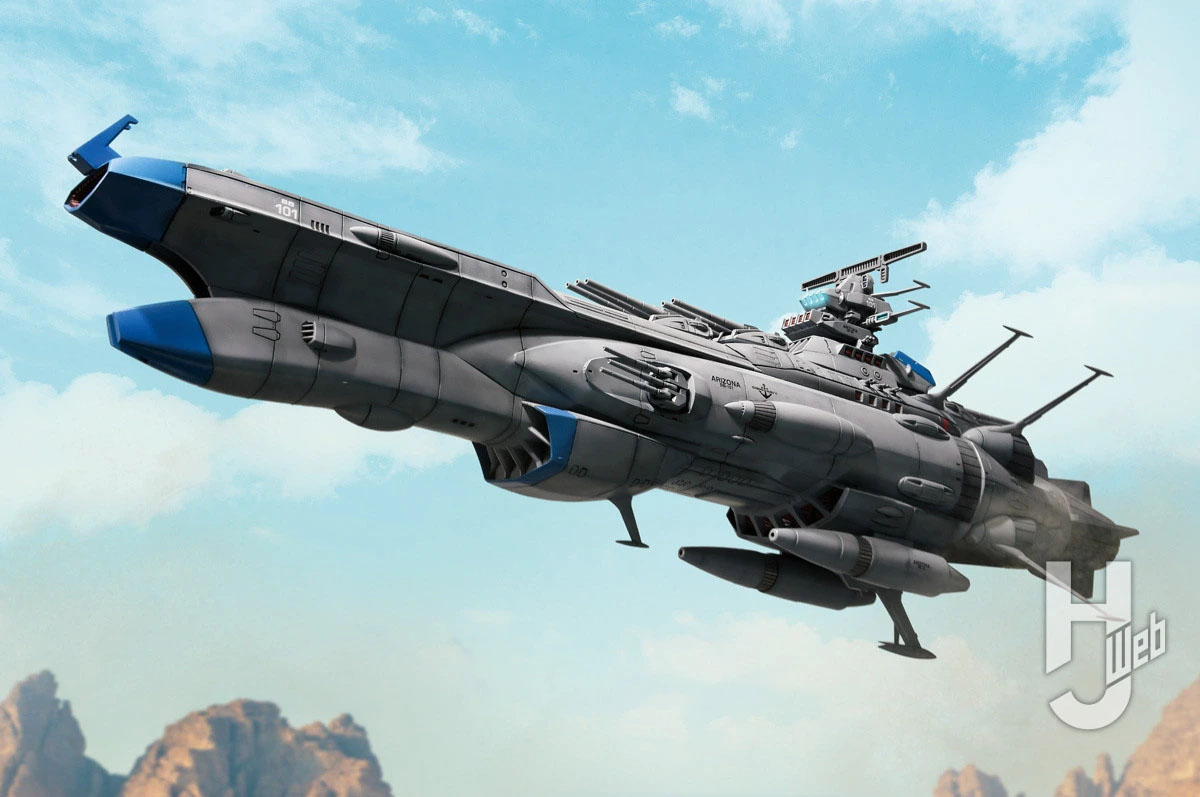
From Yamato 2199 to REBEL 3199, a series explaining the mechanics of battleships and other vessels appearing in the Space Battleship Yamato remake series. The 21st installment focuses on the Shalbart-class space battleship, left behind by the ancient Iscandar people. Named after Saint Shalbart, a figure in Galman mythology, this still mysterious space battleship will be examined.
Explanation: Yuka Minagawa
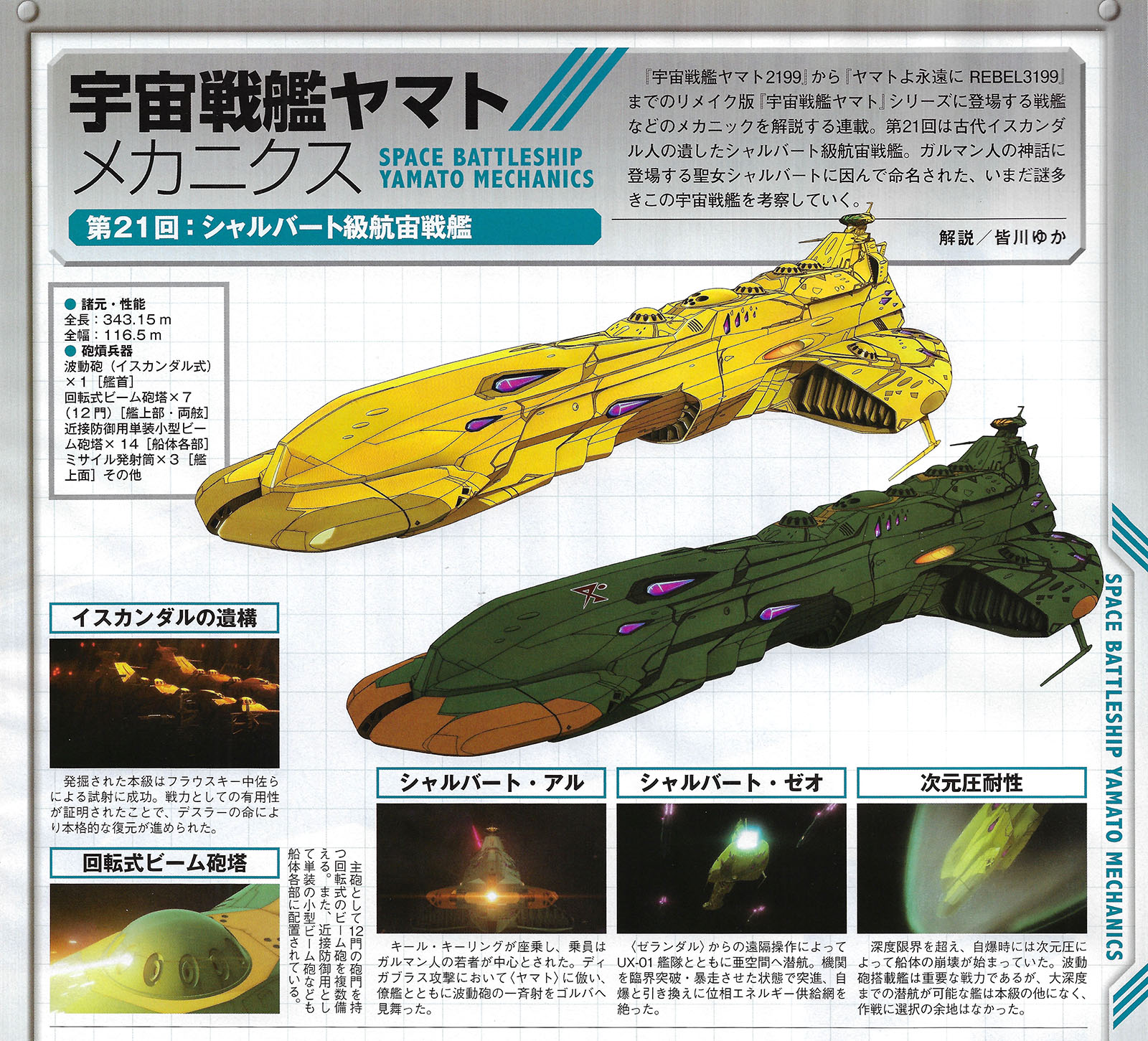
● Specifications & Performance
Total length: 343.15 m
Total width: 116.5 m
● Armament
Wave-Motion Gun (Iscandar type) X 1 (bow)
Rotating beam turret X 7 (12 guns, upper part of the ship, both sides)
Close-in single-mount small beam turret X 14 (various parts of the hull)
Missile launcher X 3 (upper surface)
Others
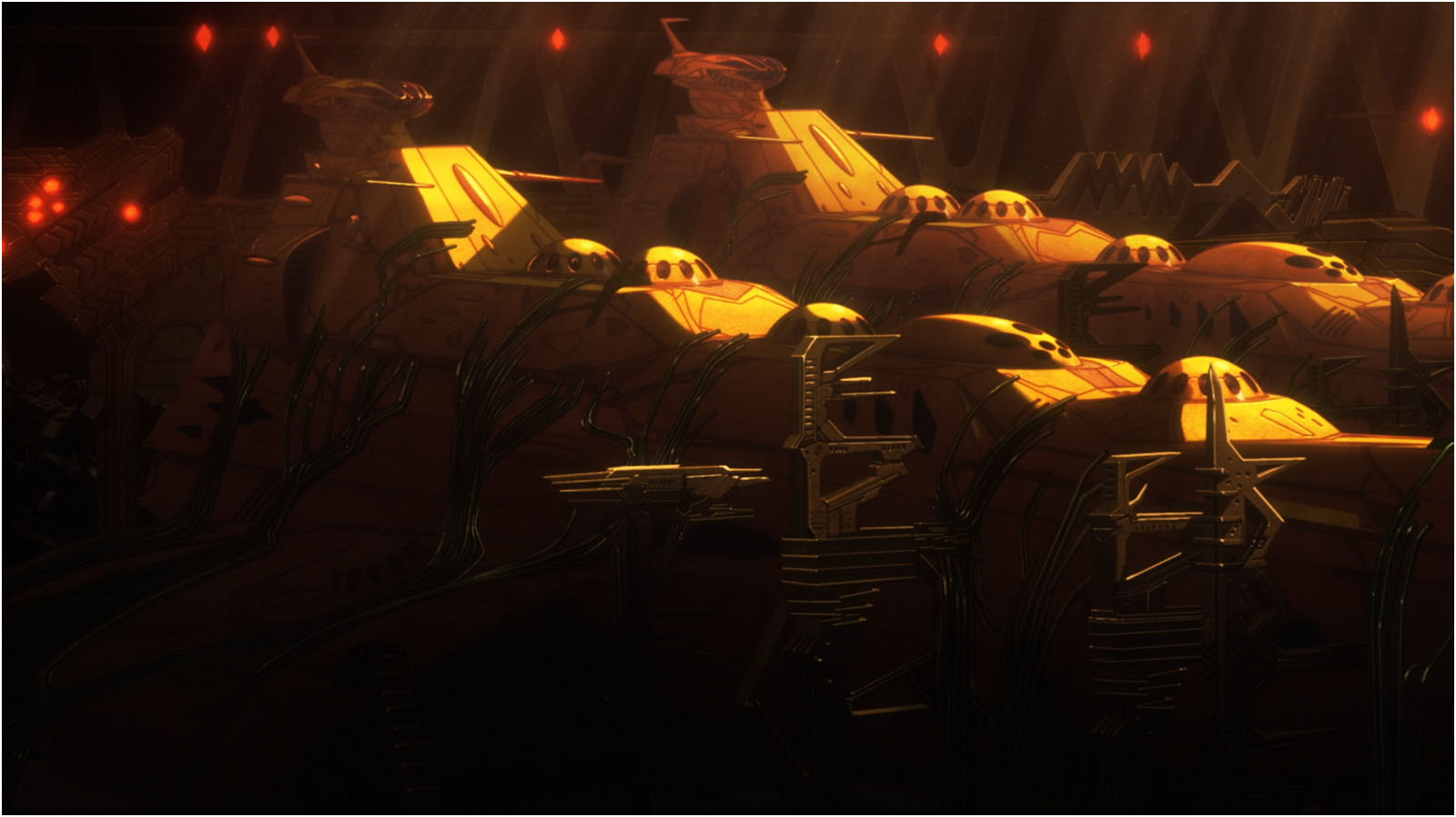
Ruins of Iscandar
The excavated ship underwent successful test firing by Lieutenant Colonel Frausky and others. Having proven its usefulness as a combat weapon, a full scale restoration was ordered by Dessler.
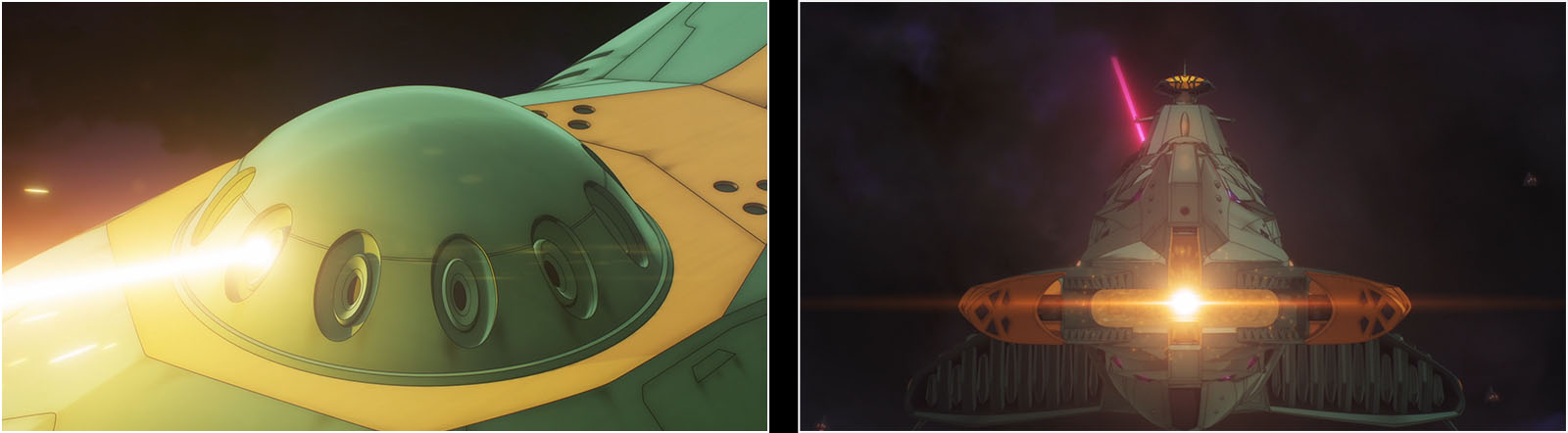
Rotating beam turret
It is equipped with various single-mounted small beam cannons located on different parts of the hull. In addition, it has multiple rotating beam cannons for close range, defense, and 12 main guns.
Shalbart Aru
Kel Keeling was on board, and the crew consisted mainly of young Galmans. Following the example of Yamato, it unleashed a simultaneous barrage of Wave-Motion Guns at a Goruba along with its sister ships during the attack on Digablas.
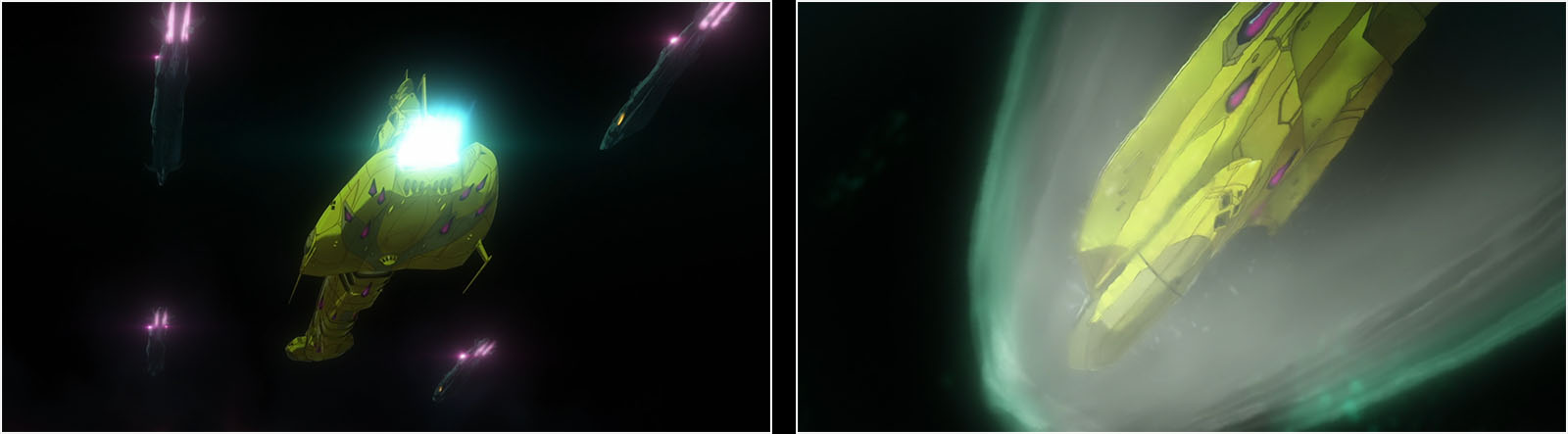
Shalbart Zeo
Remotely controlled from the Zelandal, it submerged into subspace along with the UX-01 fleet. With its engines exceeding criticality and running out of control, it charged forward, severing the phase energy supply network in exchange for self-destruction.
Dimensional pressure resistance
Having exceeded its depth limit, the ship’s hull began to disintegrate due to dimensional pressure upon self-destruction. While ships equipped with Wave-Motion Guns are an important force, no other class of ship was capable of diving to such great depths, leaving no other option in the operation.
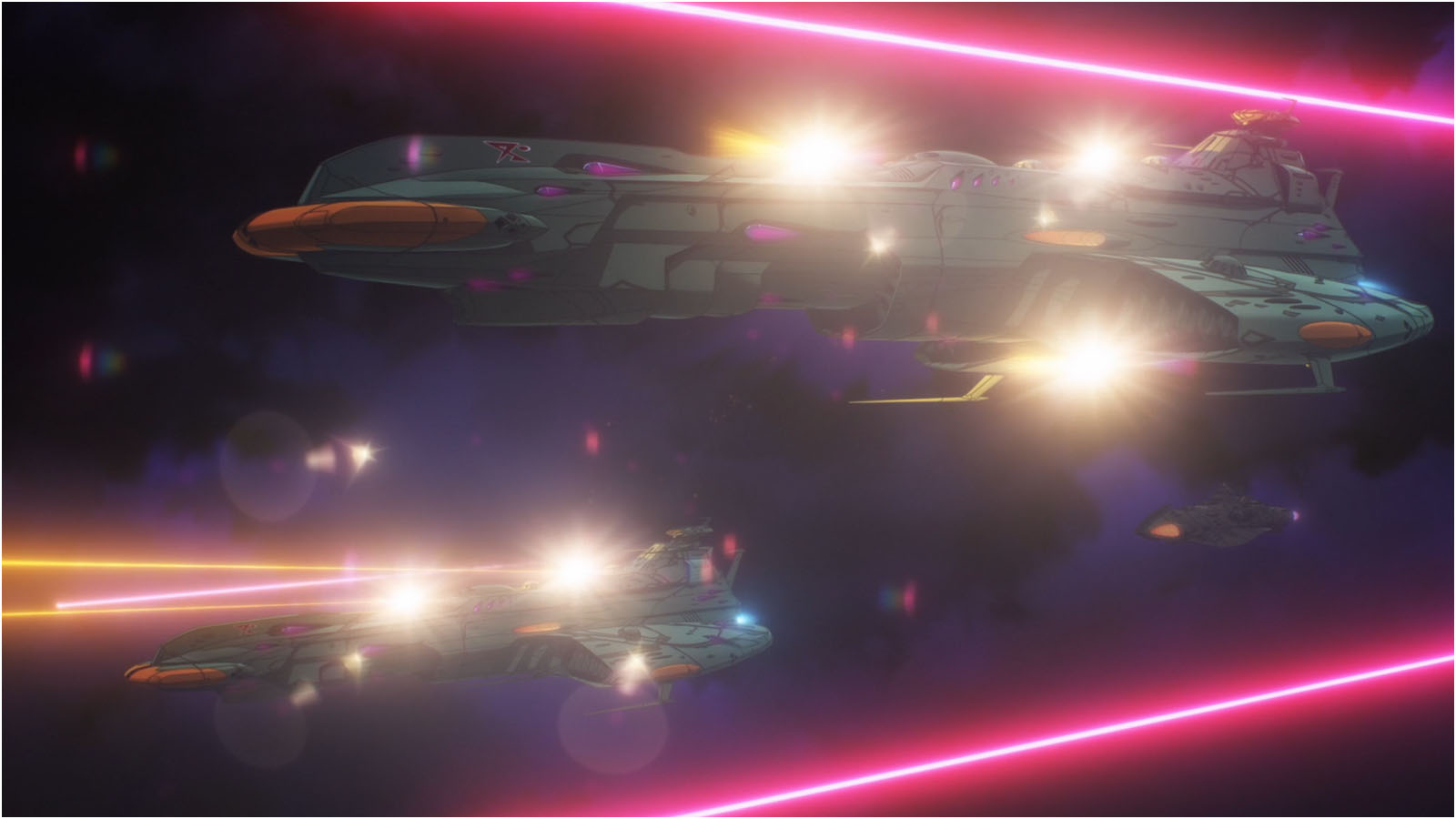
Following the liberation of the Galman by Abelt Dessler, the Garmillas settlement and subsequent exploration of underground resources uncovered the remains of Iscandar, which once ruled this land. These remains were found not only in the Galman‘s sacred sites, but also throughout the planet, yielding over 100 space battleships in total. These were believed to be the “legacy of Iscandar,“ which had once rained Wave-Motion gunfire on countless planets, transforming them into elements of life. The ship class was named after Saint Shalbart, a figure in Galman mythology, and was classified as a space battleship, according to the Garmillas fleet classification.
This class of ship originates from the Iscandar civilization, and uses a Wave-Motion Engine (Geshtam Engine) as its main power source, which generates energy by deploying excess dimensions. Although the principle of the engine itself is the same as that of Garmillas and Earth technology, the Wave-Motion Core had been removed when it was discovered, and the Garmillas-made core that was installed did not work. It was only by responding to Yamato‘s genuine Wave-Motion Core that it was able to activate.
Like Garmillas and Earth ships, it is capable of warp drive and intergalactic travel using its Wave-Motion Engine. Although it cannot perform dimensional submersion on its own, it possesses dimensional pressure resistance that can withstand some space depths greater than that of the Zelandal-class attack dimensional submarine.
Furthermore, perhaps because they were built based on lost Iscandar technology, the engines of this class of ship are more susceptible to phase energy fluctuations than those of Earth or Garmillas vessels, making them prone to power reduction.
In addition to conventional thrusters, attitude control utilizes the unique “crystal thruster” of this class of ship. Unlike conventional thrusters, these thrusters generate an energy field around crystals placed throughout the hull. The crystals are fixed in a floating position. They are also used in combat maneuvers, providing a level of maneuverability unmatched by existing Garmillas ships. However, aside from the fact that the main engines and energy supply are linked, the principle behind them remains unknown.
The most distinctive feature of its artillery is the bow-mounted gun, which is directly connected to the engine. It has a mechanism that causes the bow to unfold and the muzzle to appear, and like the Wave-Motion Gun (Dessler Cannon), it creates a chain reaction of extra dimensions along the firing axis. Its power is also equivalent, but it has been confirmed that the crystal thrusters at the bow activate when firing to draw energy from the surrounding space, suggesting that it operates on a slightly different principle than the Wave-Motion Guns of Earth and Garmillas.
At the time of excavation, the hull was a golden color known as “Iscandar gold,“ like other Iscandar vessels. Once operational with a Garmillas-made core, it departed from planet Gilman as part of a fleet under the command of Kel Keeling. It underwent modifications for fleet operation, including repainting in a green-based national defense color, application of identification markings (except for Shalbart Zeo) and installation of navigation lights. Subsequently, four of the ships joined the fleet participating in the operation to capture the intermediate supply base Digablas and headed toward the Ganel nebula where the enemy base was located.
At this stage, only a small number of these ships has been deployed in actual combat. However, for the exhausted Galman-Garmillas, these Wave-Motion Gun ships represent a formidable force, and it is easy to imagine that they will soon be deployed to various fronts.
More pages from Hobby Japan no.686 (August 2026 issue):
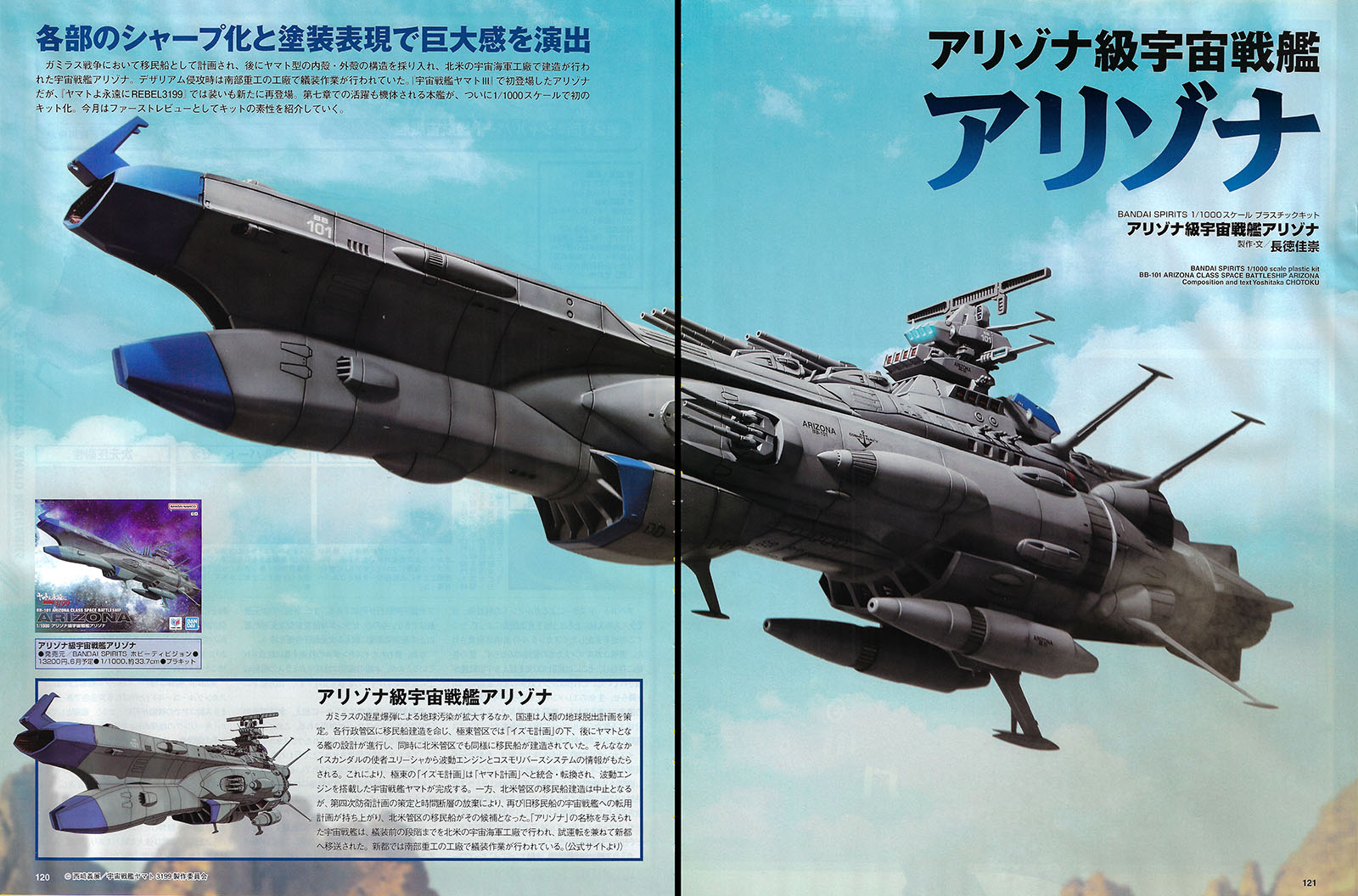
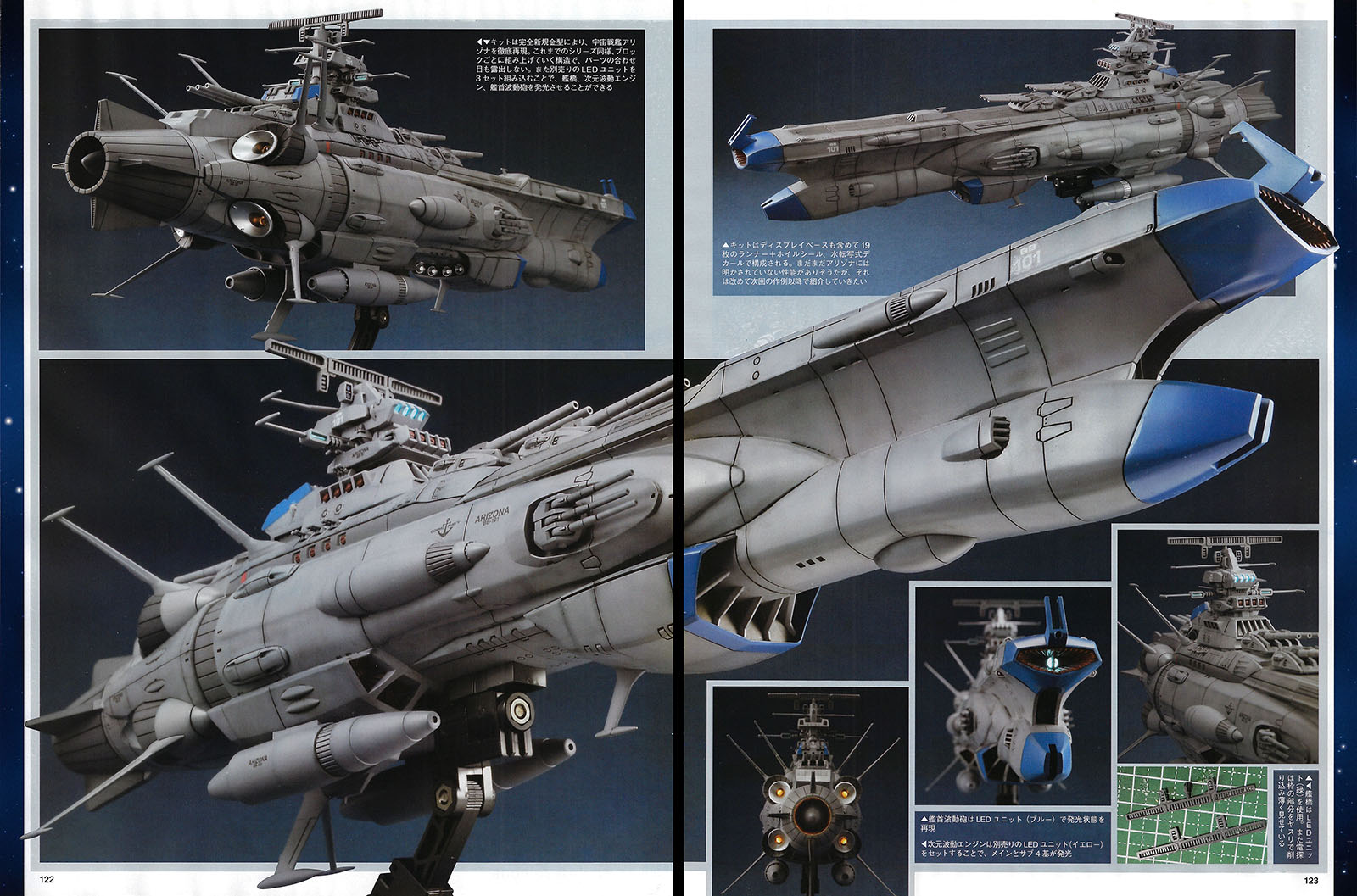
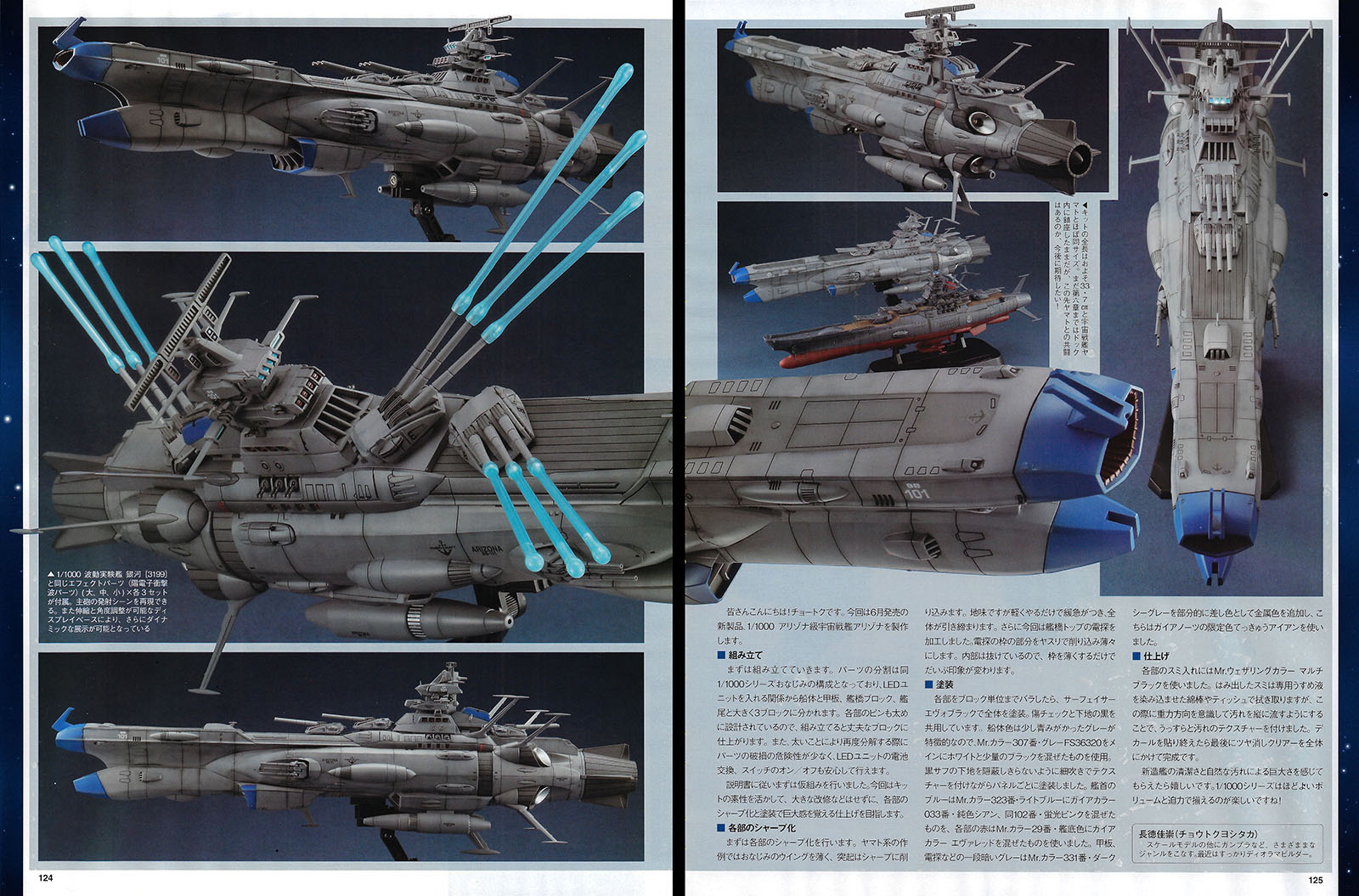
See the online version of this 6-page article at Hobby Japan Web here
It would be really funny if there WERE running lights, they just couldn’t find the on button.