
Interview segment from Hobby Japan Vintage Vol. 14 (the Yamato issue, March 2026)
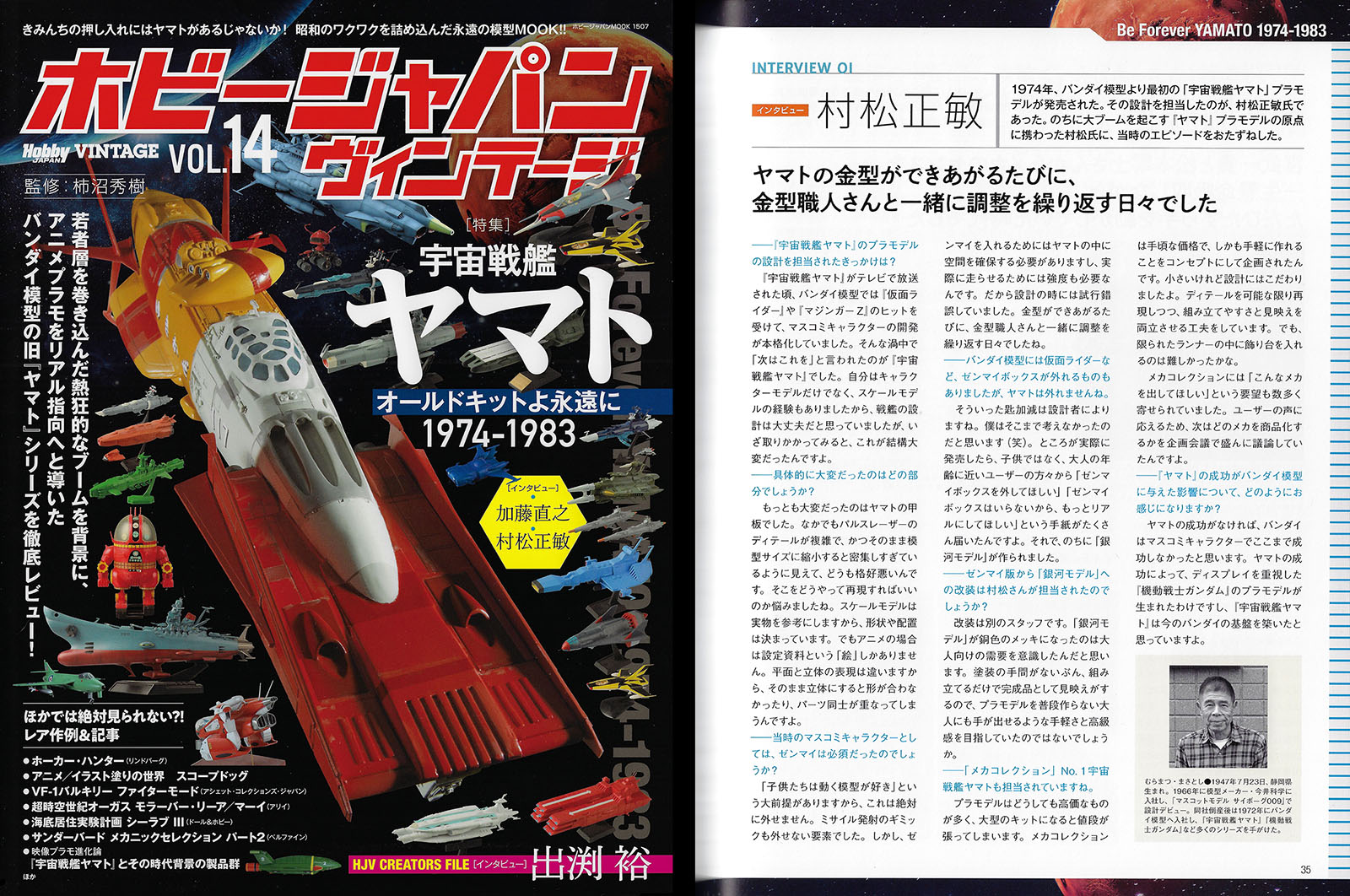
Every time a mold for Yamato was completed, I spent my days repeatedly making adjustments with the mold makers
What led you to be in charge of designing the plastic models for Space Battleship Yamato?
Around the time Yamato was airing on television, Bandai Models was seriously developing media characters, following the success of Kamen Rider and Mazinger Z. In the midst of all that, I was asked to “do this next,” and that’s how Space Battleship Yamato came about. I had experience not only with character models, but also with scale models, so I thought I could handle designing a battleship. But when I actually started working on it, it turned out to be quite difficult.
What was the most challenging part?
The most challenging part was the deck of Yamato. In particular, the pulse lasers had complex details, and if you scaled them down to model size as they were, they were too crowded and just didn’t look good. I struggled with how to reproduce that. Scale models are based on the real thing, so the shape and placement are fixed. But in the case of anime, all you have are “pictures” in the form of design materials. 2-dimensional and 3-dimensional representations are different, so if you just make it 3-dimensional as is, the shapes won’t match, or the parts will overlap.
Was a wind-up toy a must-have for a media character at that time?
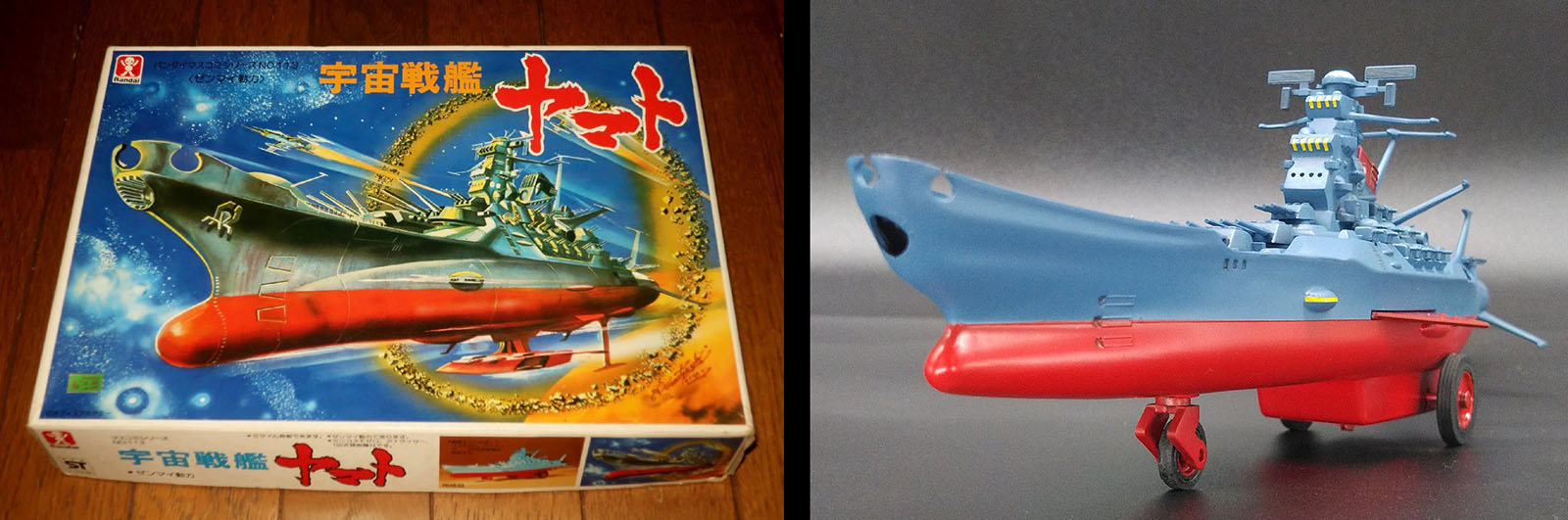
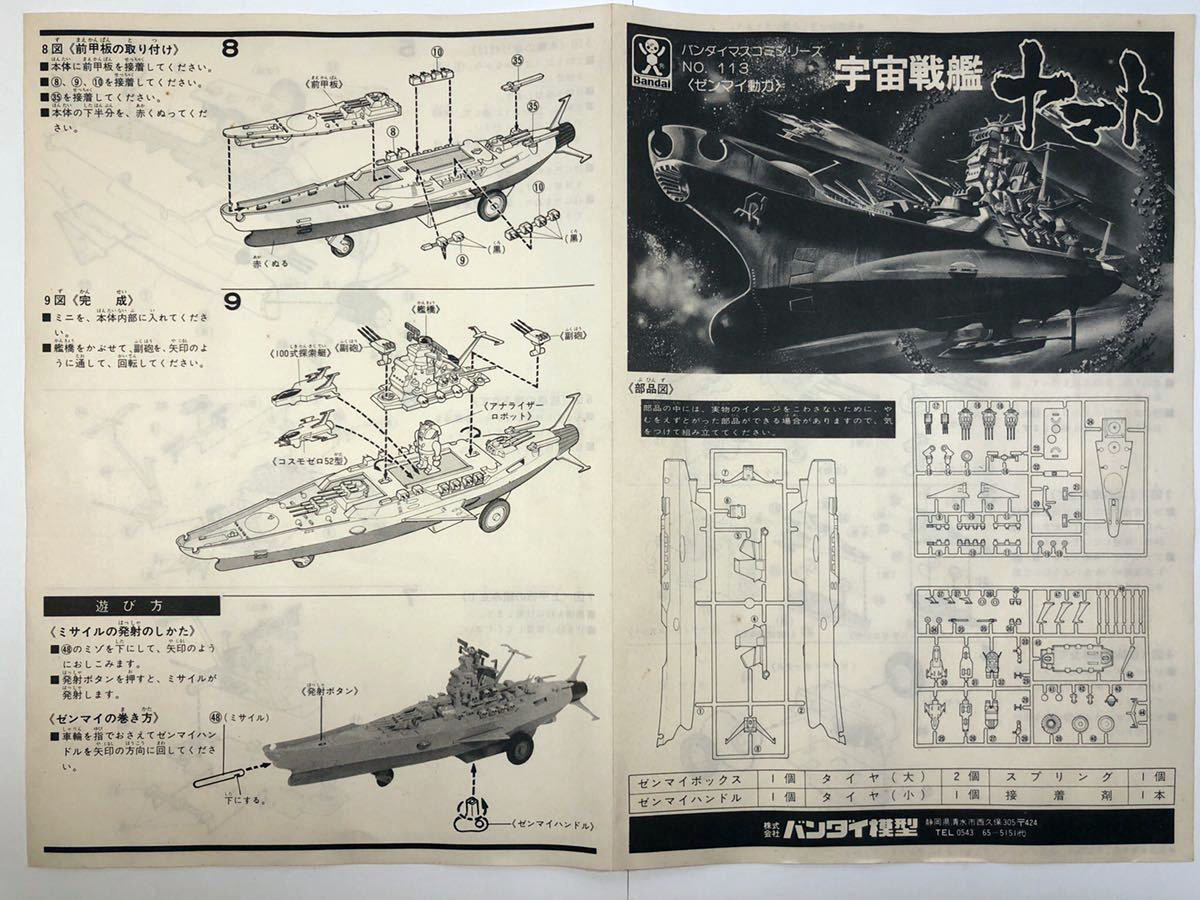
The fundamental premise was that “children love moving models,” so this was absolutely essential. The missile-launching gimmick was also an indispensable element. However, in order to put in the spring mechanism, we needed to secure space inside the hull, and it also needed to be strong enough to actually run. So we went through a lot of trial and error during the design phase. Every time a mold was completed, we spent our days repeatedly making adjustments with the mold makers.
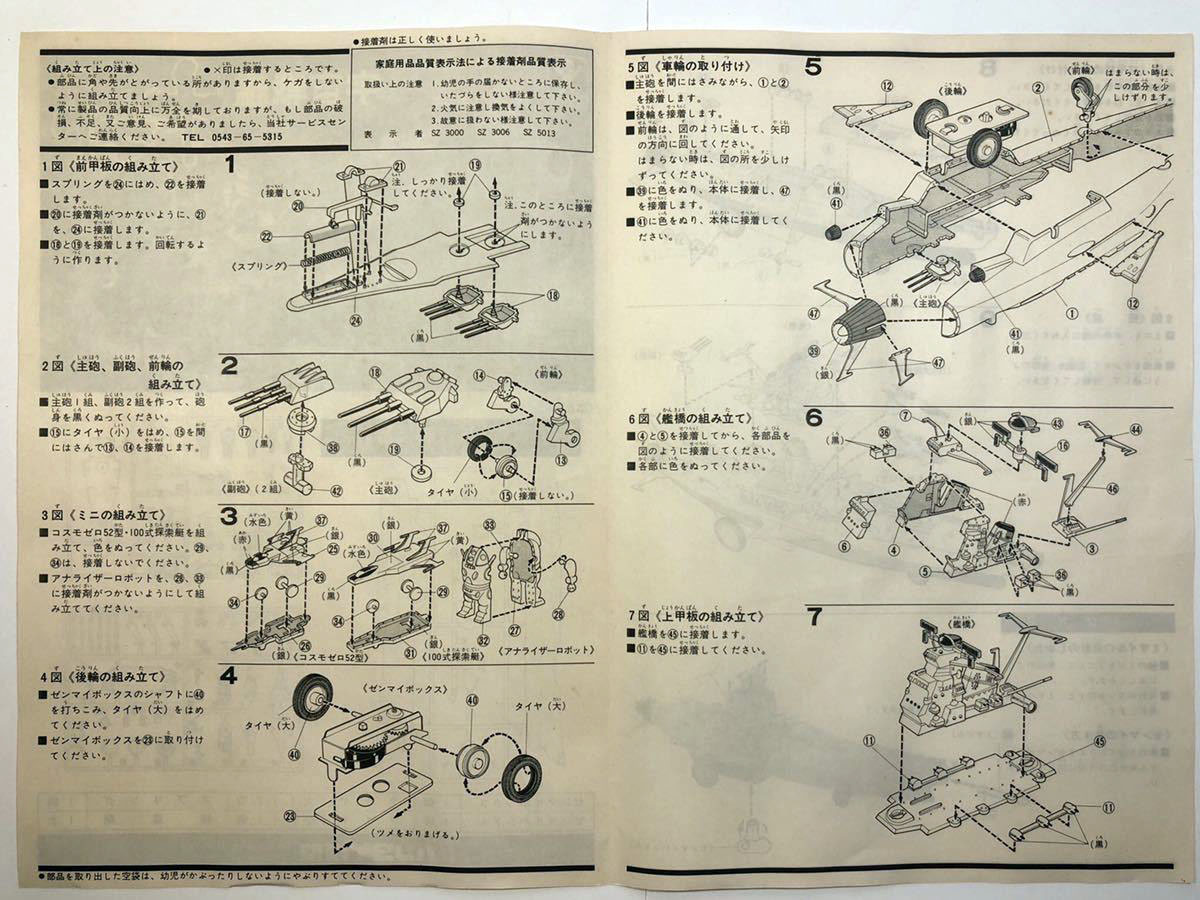
Bandai kits, such as Kamen Rider, had removable wind-up boxes, but you couldn’t remove the one in Yamato.
That kind of fine-tuning depended on the designer. I don’t think I thought that far ahead. (Laughs) But when it was actually released, we received a lot of letters. Not from children, but from users closer to adult age saying things like, “please remove the spring box,” and “we don’t need the spring box, please make it more realistic.” That’s how the “Galaxy Model” was later created.
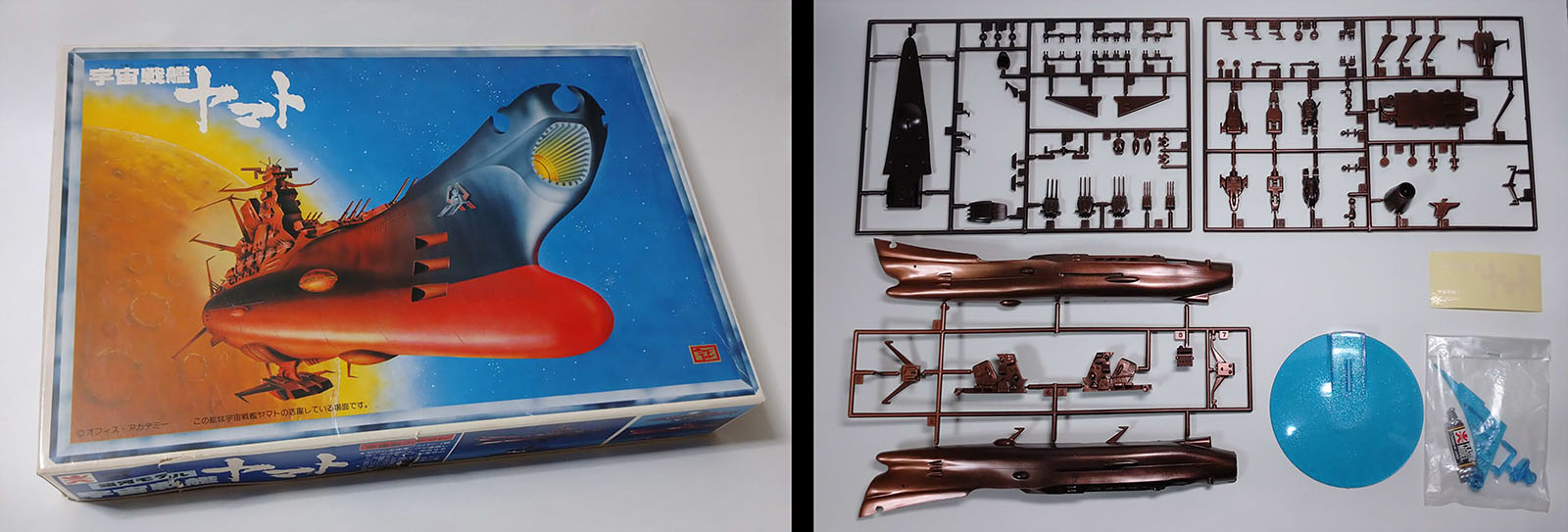
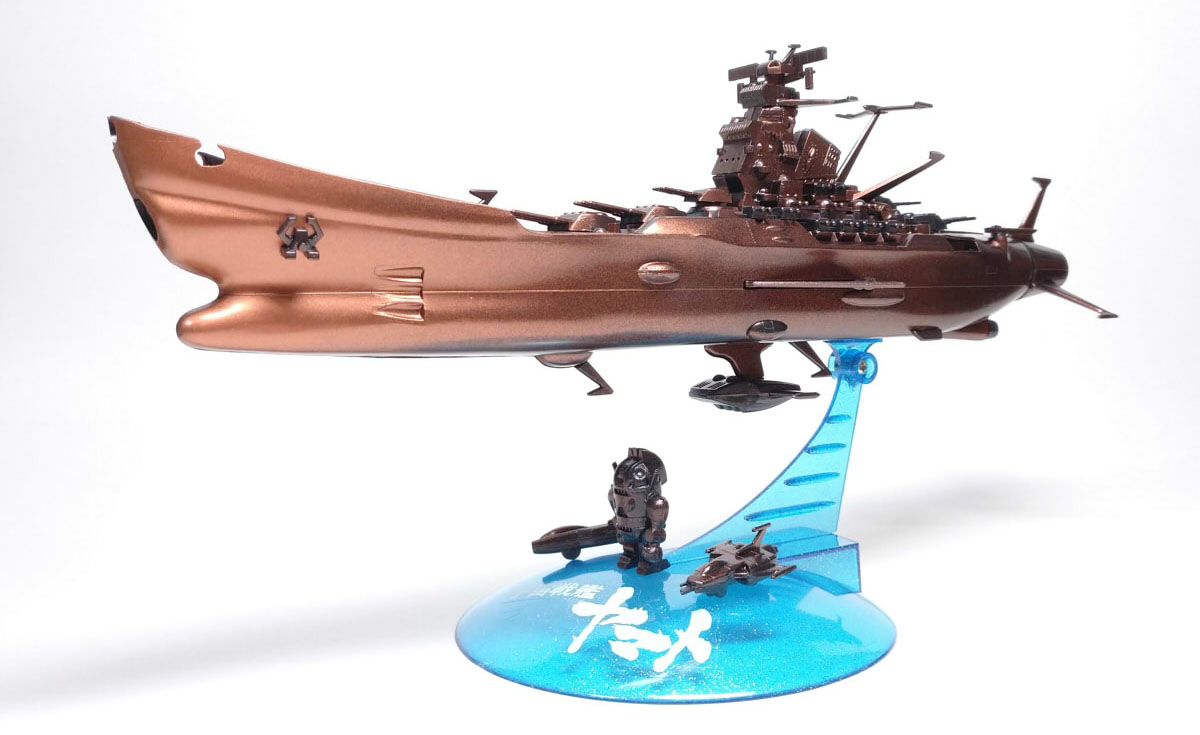
Were you in charge of the conversion from the wind up version to the “Galaxy Model”?
The renovation was handled by different staff. I think the change to copper plating for the “Galaxy Model” was done with adult demand in mind. Since there was no need for painting, it looked good as a finished product, just by assembling it. I think they aimed for both accessibility and a sense of luxury that would appeal to adults who didn’t usually build plastic models.
You also worked on the Mecha Collection No. 1 Yamato, right?
Plastic model kids tended to be expensive, and larger kits could be quite pricey. The Mecha Collection was planned with the concept of being affordable and easy to build. They were small, but we put a lot of effort into the design. We tried to reproduce the details as much as possible, while balancing ease of assembly and appearance. However, it was difficult to fit a display stand into the limited number of runners.
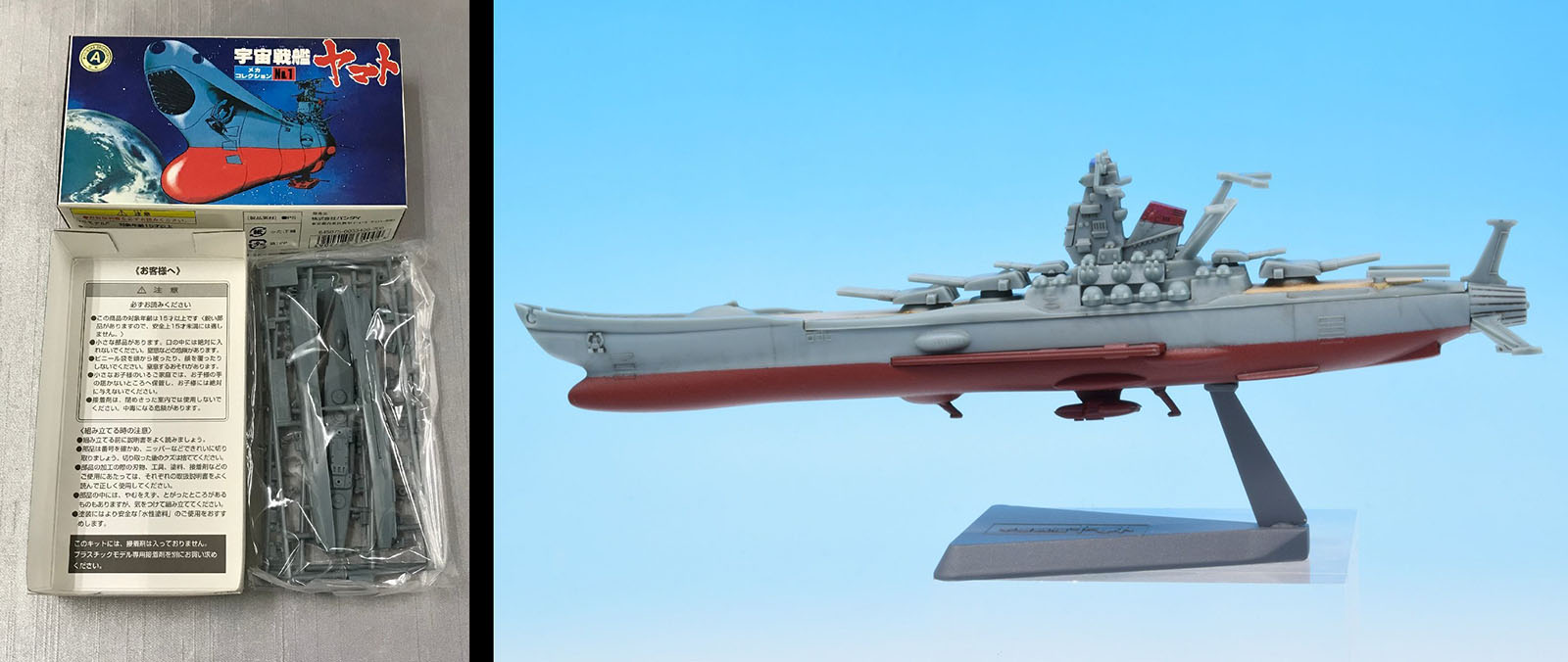
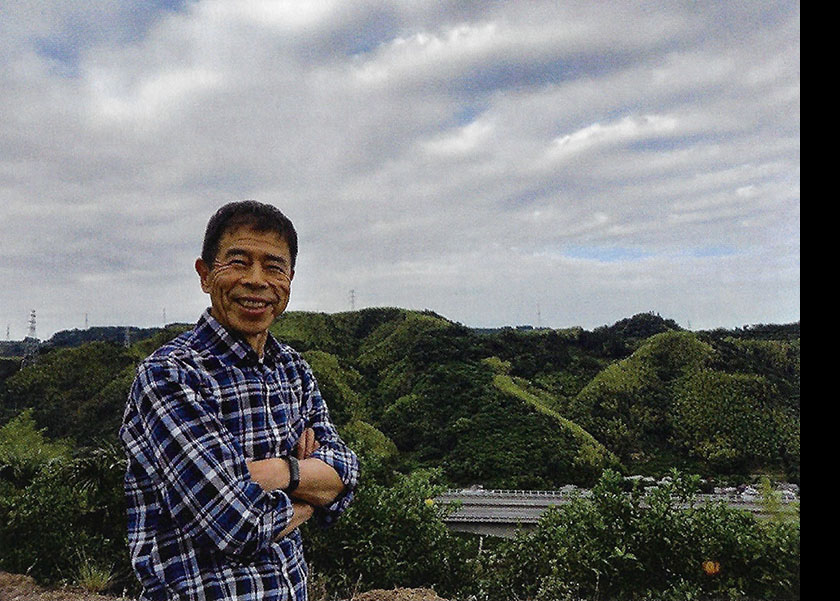
Photo taken in 2021
We received many requests for the Mecha Collection, such as, “we want you to release this mecha.” In order to respond to user feedback, we had many discussions in our planning meetings about which mecha to commercialized next.
What are your thoughts about the impact of Yamato‘s success on Bandai Models?
Without Yamato, I don’t think we would have achieved this level of success with media characters. The success of Yamato led to the creation of Mobile Suit Gundam models, which emphasized display, and I believe Yamato laid the foundation for Bandai as it is today.