
Photo posted on Twitter by Koyuki21780707
Director of Photography Daisuke Horino: What Exactly Is “Photography” in Animation?
Surprising Craftsmanship Revealed, Including a “Supreme” Scene
Published at Mantan Web, March 17, 2026. See the original post here
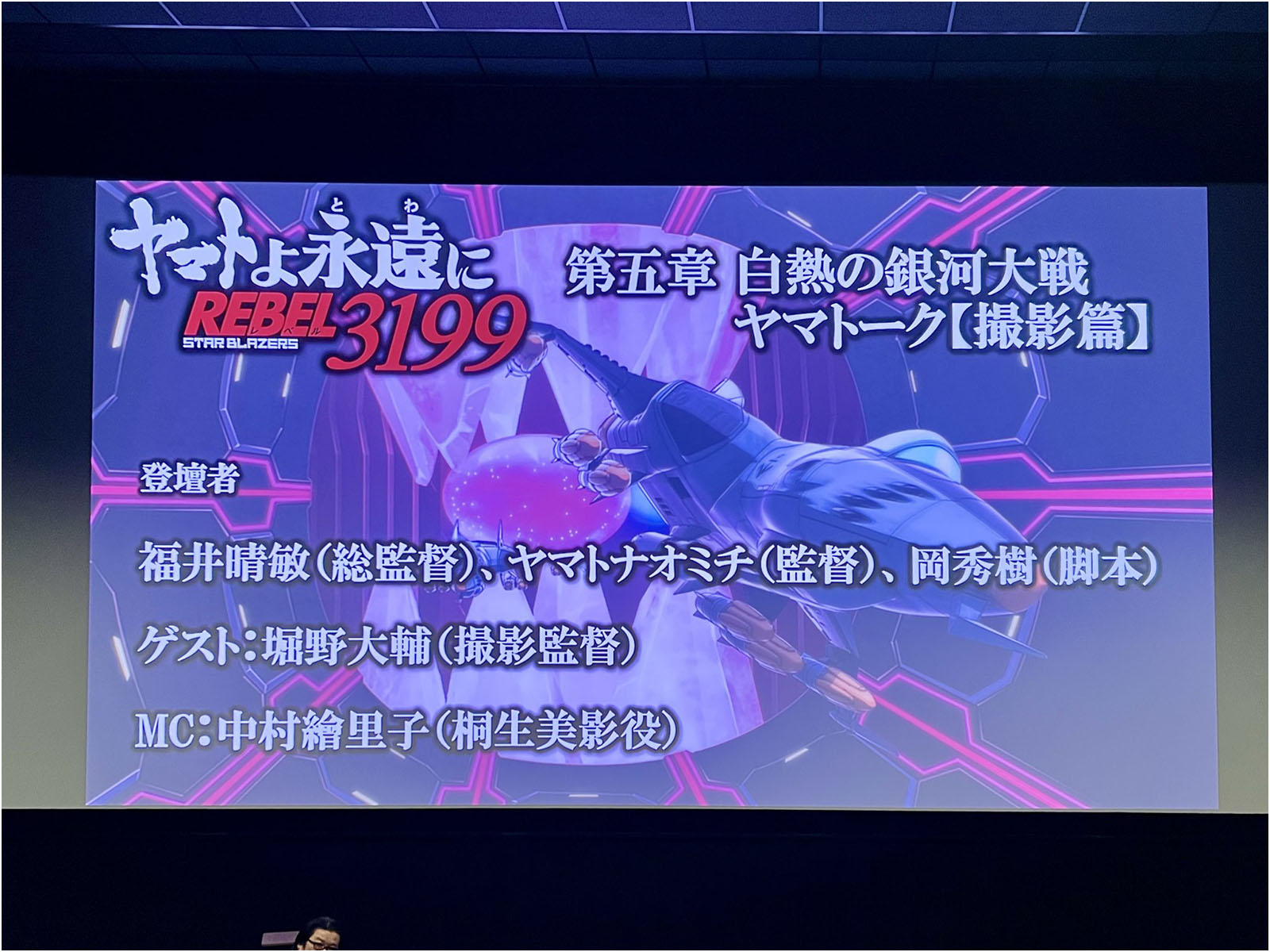
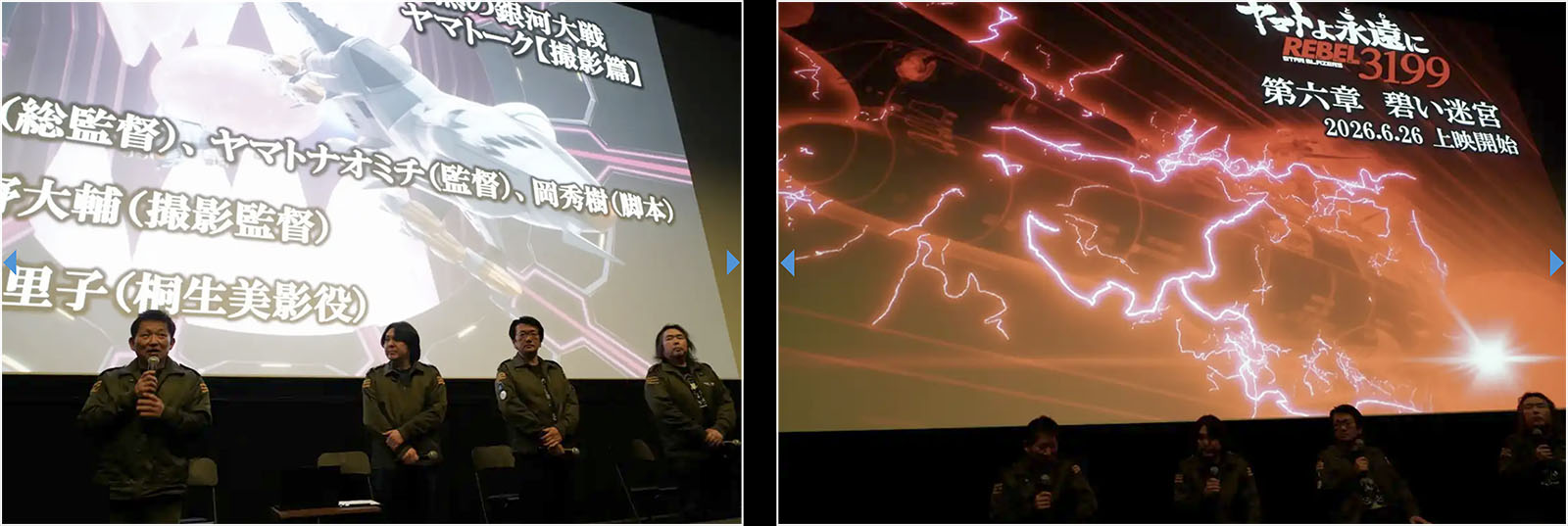
On March 17, a screening event titled “Yamatalk Photography Edition” was held at Shinjuku Piccadilly (Shinjuku Ward, Tokyo). In addition to General Director Harutoshi Fukui, Director Naomichi Yamato, Screenwriter Hideki Oka, and voice actress Eriko Nakamura (who plays Mikage Kiryu), Director of Photography Daisuke Horino appeared as a special guest to provide a detailed explanation of the “photography” process behind Yamato 3199.
In animation production, “photography” is a crucial stage that serves as the final step in creating the visuals.
Horino noted, “I’ve been working in photography for about 25 years. I became a Director of Photography about 15 years ago.” Although the field has since transitioned to digital workflows, he also has experience in the analog era, recalling, “I used to be the guy in charge of handing off the actual animation cels.”
According to Horino, photography is “the process of compositing various assets, such as characters, mecha, effects, and backgrounds, to create the final moving image.” He illustrated this process using a specific example: the scene where Yuki Mori and Alphon walk through a raging fire. He revealed some of the intricate craftsmanship involved, detailing steps such as: compositing the background and character assets, creating a sense of depth by blurring the background, adding highlights to the eyes and the glow of the flames, blending the characters seamlessly into the background, adding flying sparks, simulating the shimmering distortion of intense heat, adjusting the contrast, and adding final lighting touches.
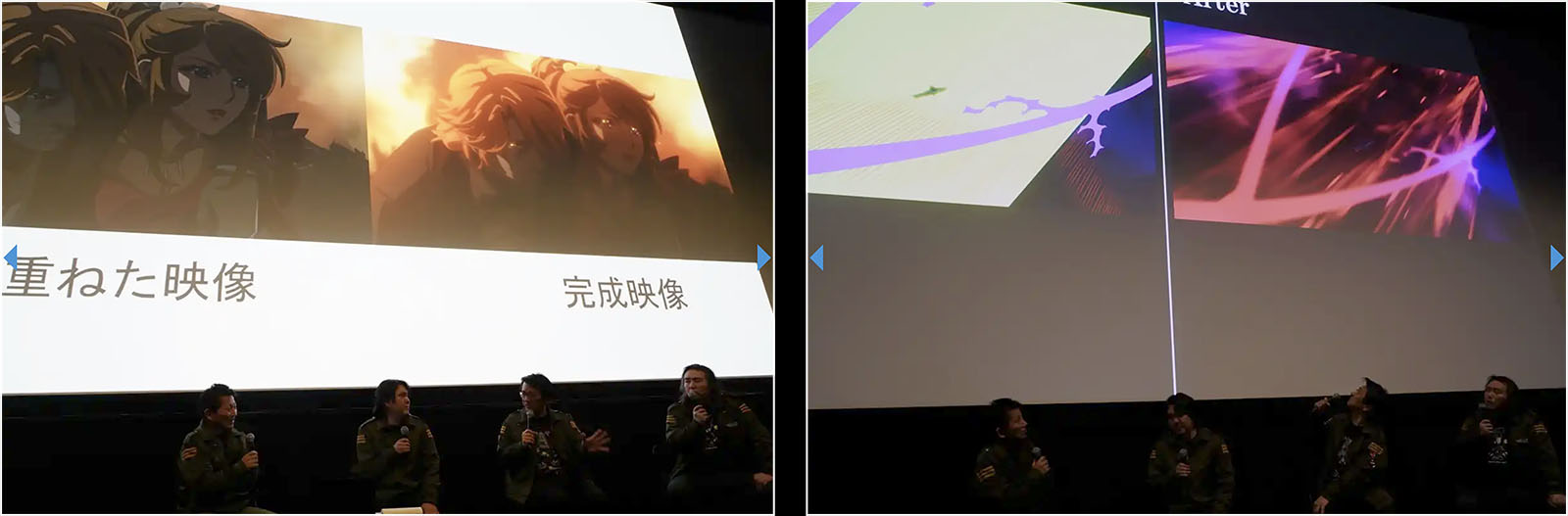
“Sometimes, to add dynamic contrast to the work, we deliberately pull back on certain elements to make others stand out more effectively. If we went all-out on every single detail, it would be too much, like a meal that sits too heavy in your stomach, so we engage in ongoing discussions with the director to determine the right approach.”
Mr. Horino also worked on Yamato 2202, and noted that each project has its own distinct tendencies: “For 2202, the focus was on showcasing the characters, so I tried to ensure that the visuals didn’t get in their way. for 3199, however, the emphasis is often on making things look beautiful and spectacular.”
Regarding the specific production processes unique to the Space Battleship Yamato franchise, he added, “Since CG plays a significant role, I work in close consultation with the CG director.”
Mr. Horino singled out the scene in Chapter 5, where Yamato flies over Tokyo, as a “supreme” cut.
“I received a specific request: ‘I want this to look like summer,'” he recalled, explaining how he incorporated lighting effects and other visual cues to achieve that atmosphere. Mr. Oka praised the result, remarking, “It feels so vivid that you can almost hear the cicadas chirping. It appeals directly to the senses with striking realism, it truly evokes that ‘summertime’ feeling.”
Mr. Fukui expressed his deep trust in Mr. Horino, noting, “He’s always there to help us out.” For his part, Mr. Horino described his creative process as a constant cycle of trial and error: “I’m always thinking about how I can delight or surprise him. That approach makes the work truly enjoyable.” Mr. Oka added, “From Chapter 6 onward, we’ll be depicting various elements drawn from the original source material. I’m really looking forward to seeing how those elements are polished and updated for a modern anime audience.”
Yamato 3199 is a reimagining of the original works Be Forever Yamato and Space Battleship Yamato III, reconstructed with a fresh interpretation. The series consists of seven chapters in total. Chapter 6, titled The Azure Labyrinth, is scheduled to begin theatrical screenings on June 26.
Is It a Remake or a Reboot? Starting from 2199
When asked by Mr. Horino, “How exactly are the scripts for 3199 created?,” Mr. Fukui began his response by musing, “There are ‘remakes’ and there are ‘reboots’, I wonder what the difference really is…”
Space Battleship Yamato is a masterpiece that has been cherished for over half a century. It profoundly altered the course of Japanese anime history. Yamato 3199 is a reconstruction of the original works Be Forever Yamato and Yamato III, reinterpreted through a fresh new lens.
“I’ve actually started to think that this might be more of a ‘reboot’ than a remake,” Mr. Fukui remarked. “My conscious aim is to rebuild the series while preserving the integrity of its worldview and individual characters. There are certain iconic scenes and mecha designs that I absolutely intend to include, and I’m prepared to take whatever narrative detours are necessary to make that happen.”
Mr. Oka shared his thoughts, stating, “Director Yutaka Izubuchi’s 2199 serves as our starting point. 2199 brought about a complete revitalization of the series. Building upon the brilliant innovations introduced in 2199, we have been striving tirelessly to develop our own approach. While some elements are born of intuition, we recognize the absolute necessity of faithfully upholding the established rules and nuances of 2199.”
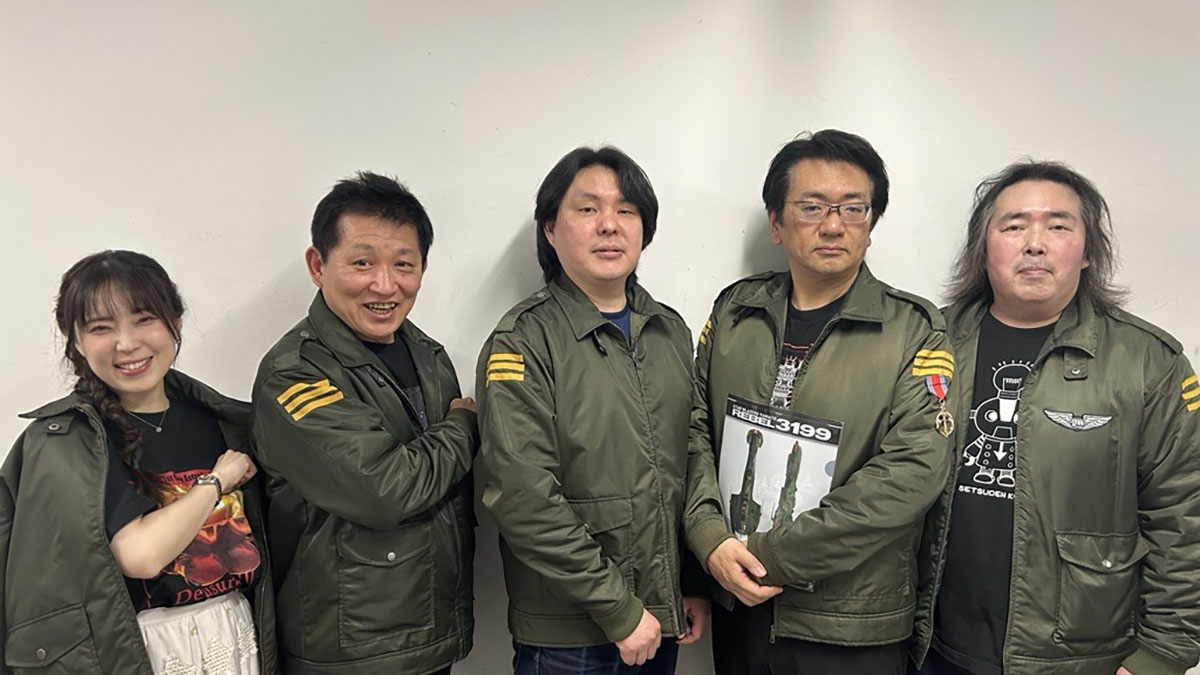
Backstage at the Shinjuku Piccadilly, photo posted on Twitter by the Yamato Production Committee
L to R: Eriko Nakamura, Hideki Oka, Daisuke Horino, Namoichi Yamato, Harutoshi Fukui