
Thoughts after watching Episode 5
See the original blog post here
Sapporo at midnight: falling snow and Space Battleship Yamato. Was our work, in the end, a form of “prayer”?
It is past 2:00 AM on the outskirts of Sapporo. Outside the window, snow is falling softly and piling up, while inside the faint sound of the heater echoes in the air. I glance over and notice that the red indicator light has begun to blink,signaling the need for a refill. Just a little while longer…
I want to remain immersed in this silence, and in the lingering afterglow of Space Battleship Yamato, which I was watching just moments ago, so I keep putting off the task of heaving myself up from my seat.
For 32 years, I worked as a field engineer, covered in oil and grime. Now that I have retired from the front lines, I dabble in writing, attempting to capture the subtle nuances of late-night anime like this.
When I re-watch Yamato, a series I was once obsessed with, from the perspective of a man now past sixty, I can hear the “rhythm of the worksite” that was invisible to me back then. Today, I would like to write about the “soul of the engineer” that lies beneath that story; a spirit that cannot be fully explained by mere efficiency or logic alone.
Key Points Summary
• The Wave-Motion Gun is not merely a “weapon,” but a symbol of on-the-spot judgment.
• Shiro Sanada’s phrase, “Just a little longer,” represents a technician’s silent prayer.
• The very “noise” that efficiency-driven processes have sought to eliminate is, in fact, the essence that underpins human judgment.
The Weight of “Decision-Making” — A Burden Only Those on the Front Lines Can Truly Describe
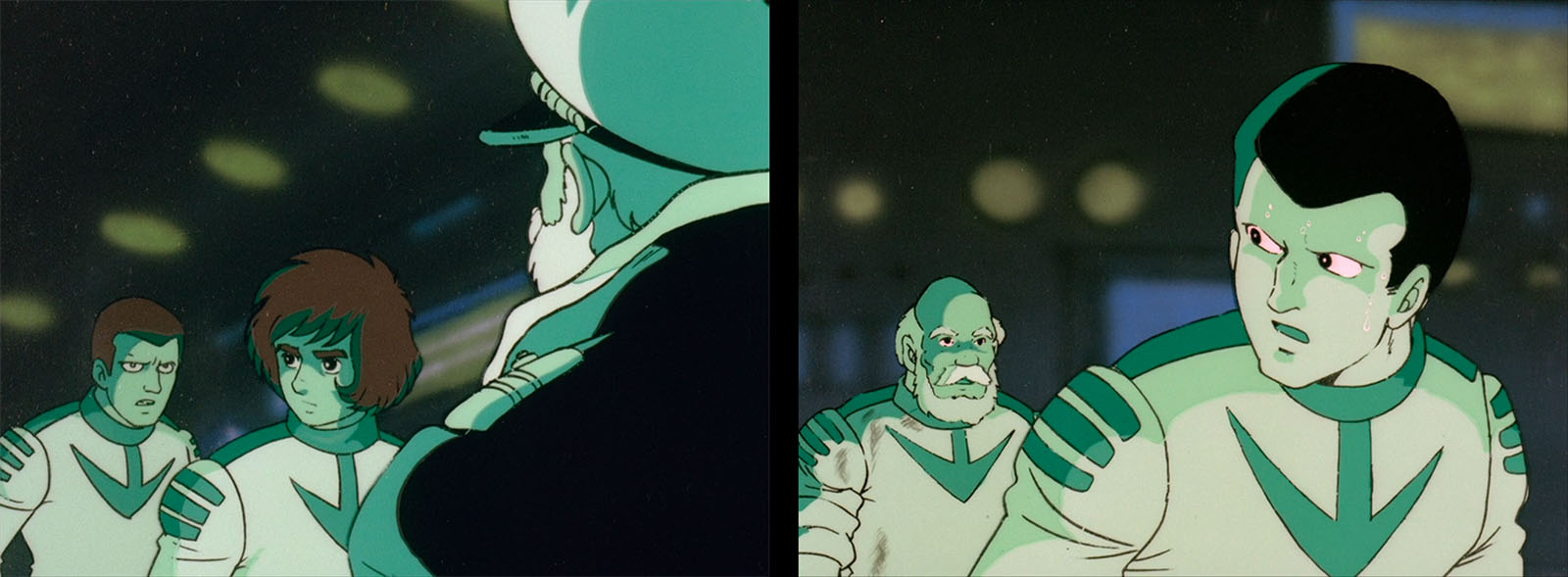
“Using a weapon that hasn’t even been tested is dangerous.” I understand Sanada’s words all too well. They hit painfully close to home. Out in the field, even using a single component of unknown origin is a total gamble. Yet, Captain Okita steeled himself, declaring: “If we can’t do it now, we won’t be able to do it later, either.”
I once took a similar risk. Standing before a plant where a shutdown would mean losses in the hundreds of millions, I pushed through a bypass operation that went completely against the manual. I still remember the clammy, cold sweat trickling down my back in that moment, and the parching thirst in my throat that even a stiff shot of shochu couldn’t quench…
I simply don’t want anyone who hasn’t experienced the sheer weight of that kind of ‘decision’ to presume to speak about Yamato.
Highlights of This Article
Repair Scenes That Resonate with a Field Engineer’s “Muscle Memory”
Only an author who has personally known the agony of turning bolts during freezing outdoor work can truly articulate the extreme “prayer” and “pride” embedded in Shiro Sanada’s plea: “Just a little longer.” Through the lens of the anime’s portrayal, the author articulates the lingering ache in his fingertips and the immense gravity of performing work under extreme, life-or-death conditions.
The Pinnacle of the Artisan Spirit Embodied in “Shiro Sanada’s” Way of Life
Why does this technical officer, who appears cold and dispassionate on the surface, insist on describing himself as nothing more than a “machine”? We decode the true nature of his resolve, representing the absolute pinnacle of the craftsman’s spirit.
A deep analysis from the perspective of a fellow engineer of the “quiet passion” lying beneath his seemingly cold, mechanical exterior: the act of suppressing one’s own emotions solely to ensure a job is completed.
Captain Okita’s “Steely Resolve” — Transcending Data and Logic
Presenting a truth possessed only by leaders who have survived countless trials by fire, the truth lying behind his seemingly reckless decision: “If it’s impossible now, it will be impossible later.” How can the act of “steely resolve” that transcends mere data and logic become the only correct answer when facing a crisis in the field? We explore the very core of true leadership.
The “Awareness of Power” and Terror Evoked by the Wave-Motion Gun’s Might
Through the heavy “silence” that follows overwhelming destruction, we reaffirm responsibility for the power we wield, a sense of duty that modern society, in its relentless pursuit of efficiency and convenience, is gradually losing.
“Human Noise” — The Essence That AI Cannot Replicate
This unique technical philosophy argues that the gritty, human “fluctuations,” elements that cannot be neatly calculated by a system, are precisely what breathe life and soul into a vessel of steel. It is not AI or automated systems, but rather those elements that cannot be neatly quantified that truly breathe life and soul into the machinery: human impatience, intuition, and pride.
Shiro Sanada’s “Just a Little Longer” – Trembling Fingertips
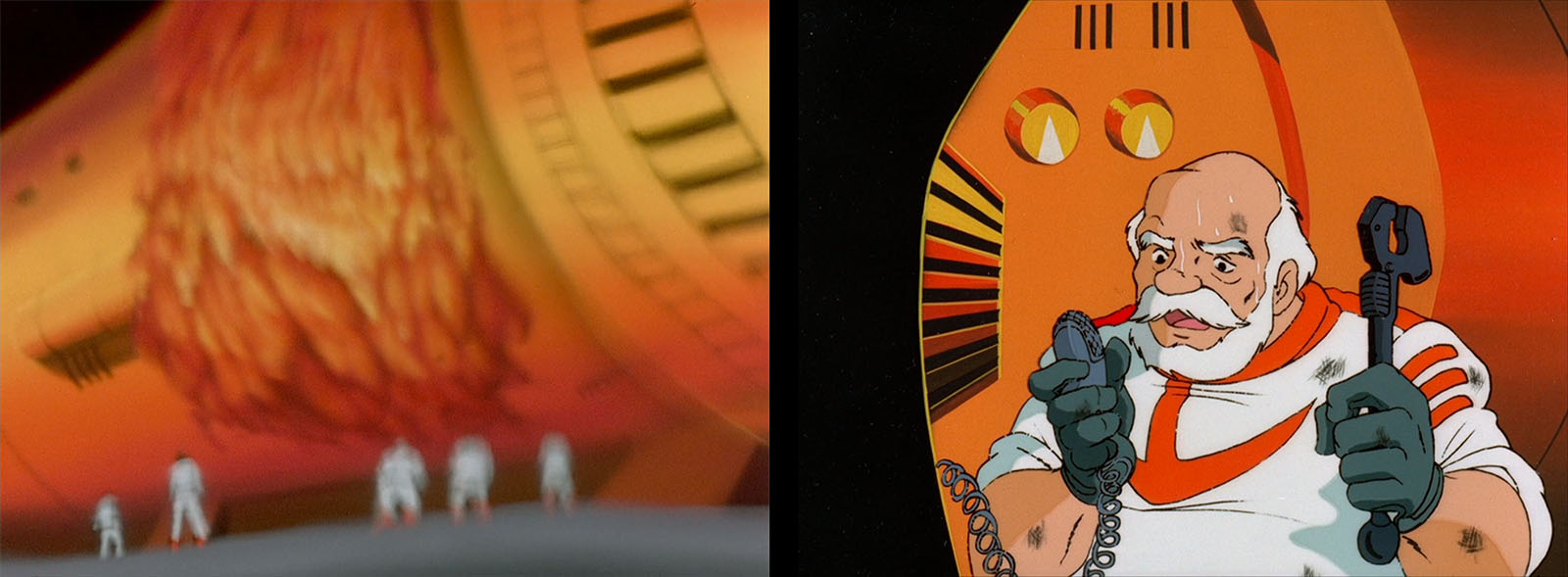
Let’s start with the scene involving the repair of the energy conduction pipe on the floating continent. Whenever I watch that, my fingertips, which earned my living as an engineer for 32 years, begin to ache in a peculiar way.
That agony of turning a bolt during freezing outdoor work, with fingers that have gone completely numb. The sheer weight of those words when Sanada says, “Please wait just a little longer.” That is not merely an attempt to stall for time.
It is, in fact, a form of “prayer.” One that can only be uttered by a human being caught in the ultimate bind: torn between deadlines and safety, and facing the stark reality that “if I fail here, everyone dies.” With today’s AI and efficiency-driven systems, one could likely instantly generate the “repair procedure with the highest probability of success.” Yet, the reality of the workplace is not something that can be resolved so neatly.
In that reality, there is invariably a blend of frustrated clicks of the tongue, trembling hands, the intuition honed over years of experience, and that small, stubborn pride that asks: “If I don’t do it, who will?”
Based on my own experience in the field, I can assert with confidence that it is precisely this “noise” – this human element – that breathes life into Yamato, a mere mass of machinery.
A 60-Something’s Perspective: How to View a Character’s “Resolve”
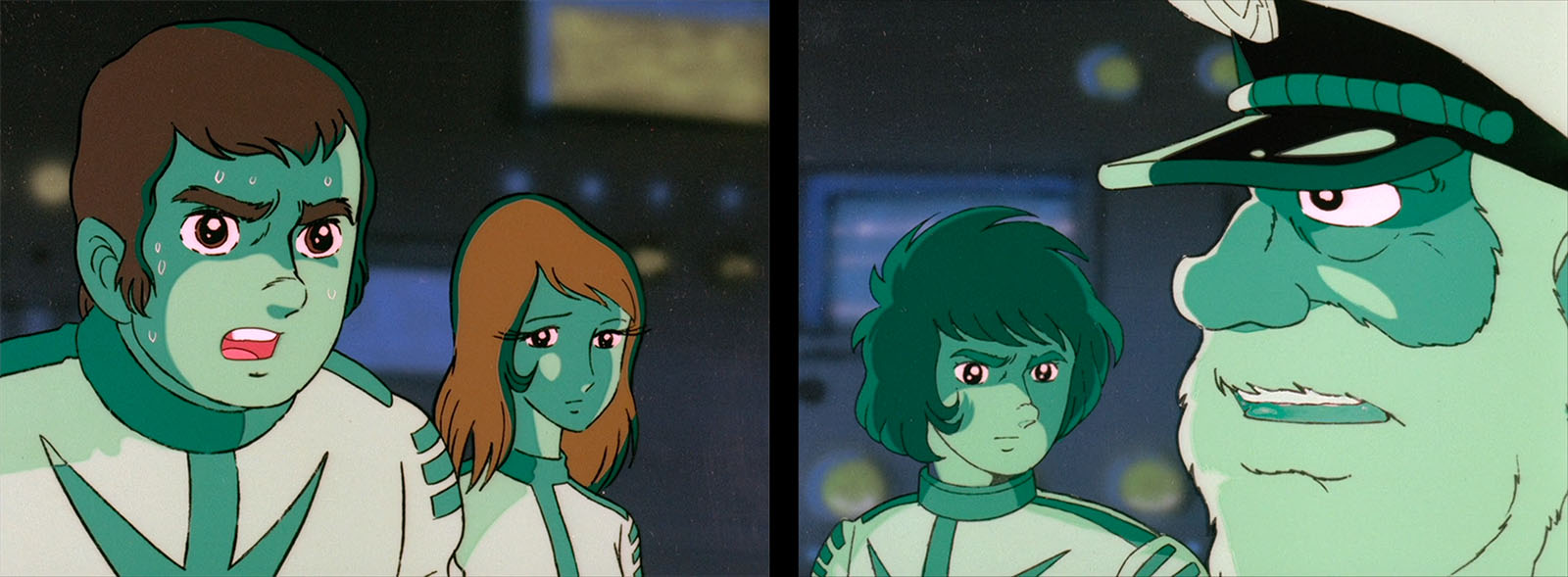
Here, from the viewpoint of a contemporary who has lived through the same era, I would like to delve a little deeper into the actions of the Yamato crew members by examining their psychology.
Juzo Okita
Chief Engineer Tokugawa says: “If it can’t be done now, doing it later won’t make any difference.” At first glance, this may seem like reckless, purely spiritual rhetoric. However, it represents a form of “resolve” that transcends mere data, possessed only by a leader who has survived countless crises in the field. Anyone who truly understands the realities of the workplace knows that there are moments when such an irrational decision becomes the only correct answer.
Shiro Sanada
He is not suppressing his emotions. Rather, he wears a mask of cold detachment simply because he knows that if he were to let his emotions erupt, he would be unable to do his job. The pathos inherent in his assertion that he is merely a “machine” represents the very pinnacle of the true craftsman’s spirit. I wish to convey this “quiet passion” to the young engineers of today.
Susumu Kodai
The impatience and sense of justice born of youth. Watching him feels like looking back at my younger self; at once slightly embarrassing, yet also dazzlingly bright. The scene where he recoils in terror at the destructive power of the Wave-Motion Gun represents the moment he realizes that technology can transform into violence. Any engineer who lacks this critical self-awareness is bound, sooner or later, to cause harm to others in the workplace.
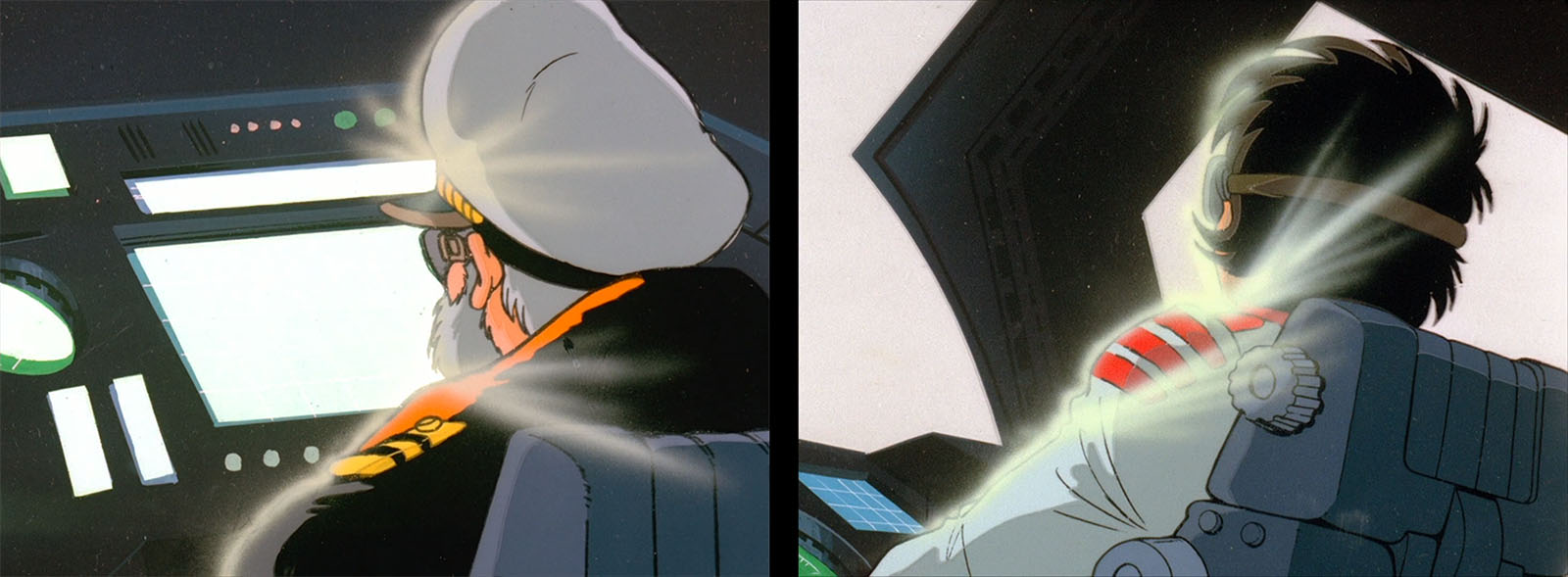
The Silence after the Wave-Motion Gun Reveals “The Price of Power”
When the floating continent was shattered and the Gamilas base was obliterated, the atmosphere enveloping Yamato’s bridge was not one of jubilation, but rather a heavy, oppressive silence.
I feel that within this silence lies a lesson that we in the modern world ought to heed. What have we lost in exchange for the convenience of being able to solve any problem with the mere push of a button? When humans forget the terror that accompanies the wielding of overwhelming power, they cease to think.
“Why is this power being used?”
“What will be lost as a result?”
What lies at the end of baseless self-confidence, or the relentless pursuit of efficiency for its own sake, is nothing but destruction. Throughout my career, I’ve witnessed time and again how “efficiency measures implemented with the best of intentions” serve only to erode the intuition and traditions of the craftsmen on the front lines. That sense of loss bears a striking resemblance to the inconsolable melancholy that permeates the series’ ending theme, The Scarlet Scarf.
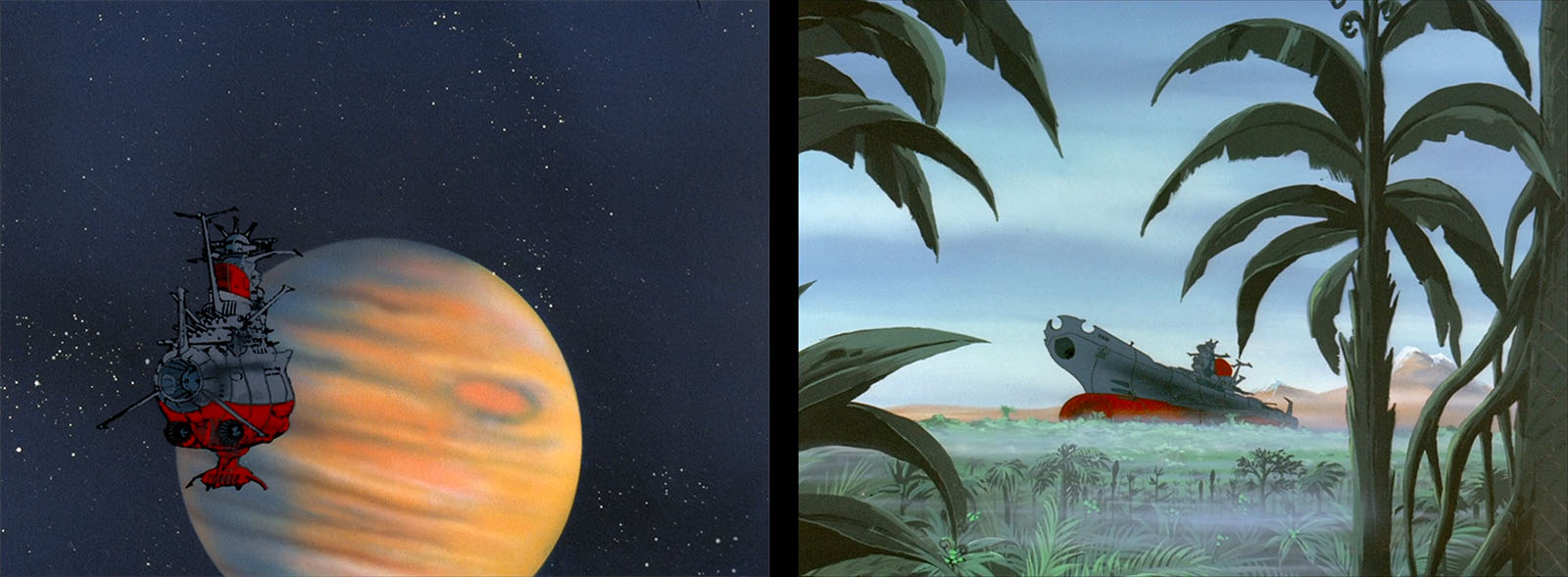
Episode Summary
One Year Remaining Until Human Extinction
The year is 2199 AD. Earth stands on the brink of annihilation, ravaged by the radiation from “planet bombs” launched by the Gamilas Empire. Humanity has only one year left. Their sole beacon of hope lies 148,000 light-years away, on the planet Iscandar: a “Radiation Removal Device.”
After succeeding in the very first “warp test” in human history, Yamato warps again to the Jovian sphere. However, the strain of this forceful dimensional leap causes cracks to form in the hull. Yamato is thus compelled to continue its voyage in a compromised, less-than-optimal condition.
Jupiter’s Trap and a Crash-Landing on the Floating Continent
While navigating the vicinity of Jupiter, Yamato is struck by an unforeseen crisis. The colossal planet Jupiter’s immense gravitational field, combined with engine malfunctions, proves too great a challenge. Despite Daisuke Shima’s desperate efforts at the helm, Yamato is inexorably dragged down into a turbulent sea of methane, swirling with clouds of ammonia.
There, they encounter a colossal floating continent, a landmass roughly the size of Australia, suspended amidst the methane clouds. Captain Juzo Okita decides to execute a forced landing on this continent to prioritize the repair of the energy conduction pipes. However, the location turns out to be a Gamilas Frontline Base, a territory falling under the jurisdiction of Commander Schulz.
The Ultimate Choice: Wave-Motion Gun—Fire!
As Yamato races to complete repairs, a fierce assault by Gamilas forces begins. Susumu Kodai attempts to counterattack in a fighter jet, but the situation deteriorates with every passing moment. Although repairs are completed and the ship successfully lifts off, the crew discovers that the floating continent itself is actually a Gamilas base. At this critical juncture, Captain Okita makes a momentous decision.
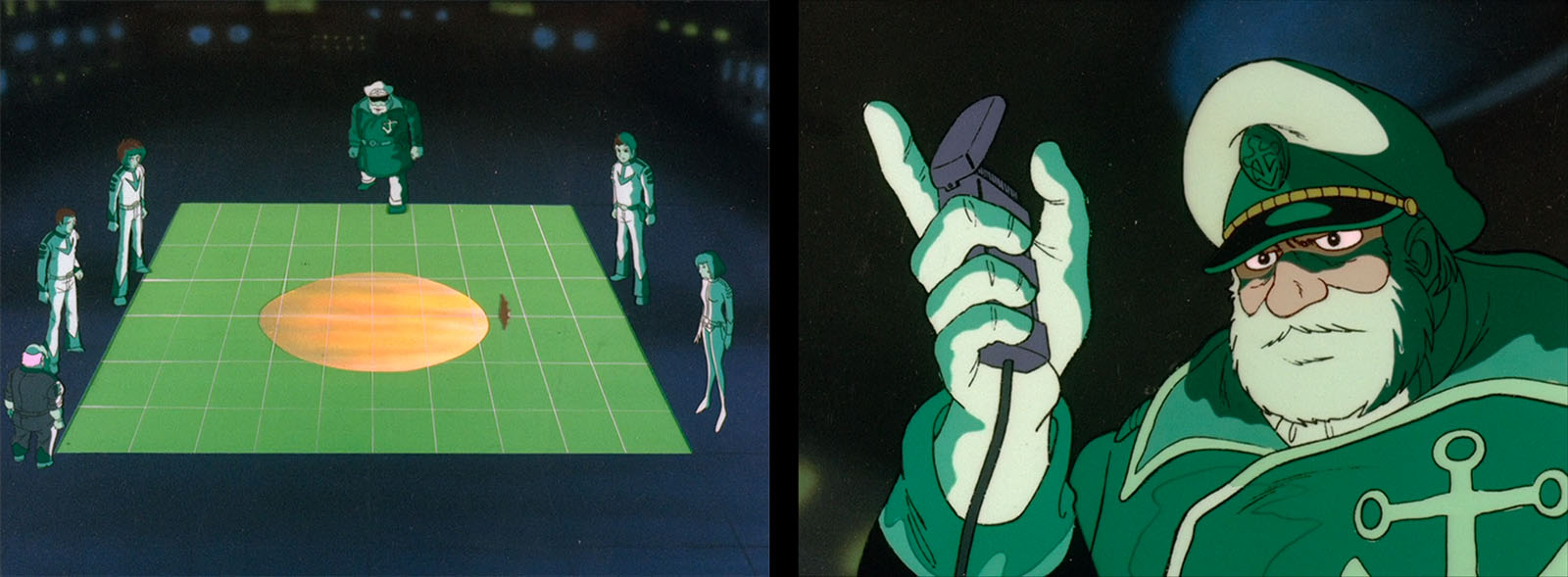
That decision is to deploy the Wave-Motion Gun, which has never before undergone a test firing. Shiro Sanada expresses grave concern, warning, “A weapon that hasn’t been tested is too dangerous.” Yet, Okita responds with unwavering resolve: “If it fails us now, it will fail us later just the same. Every single test Yamato requires must be conducted right here, right now.”
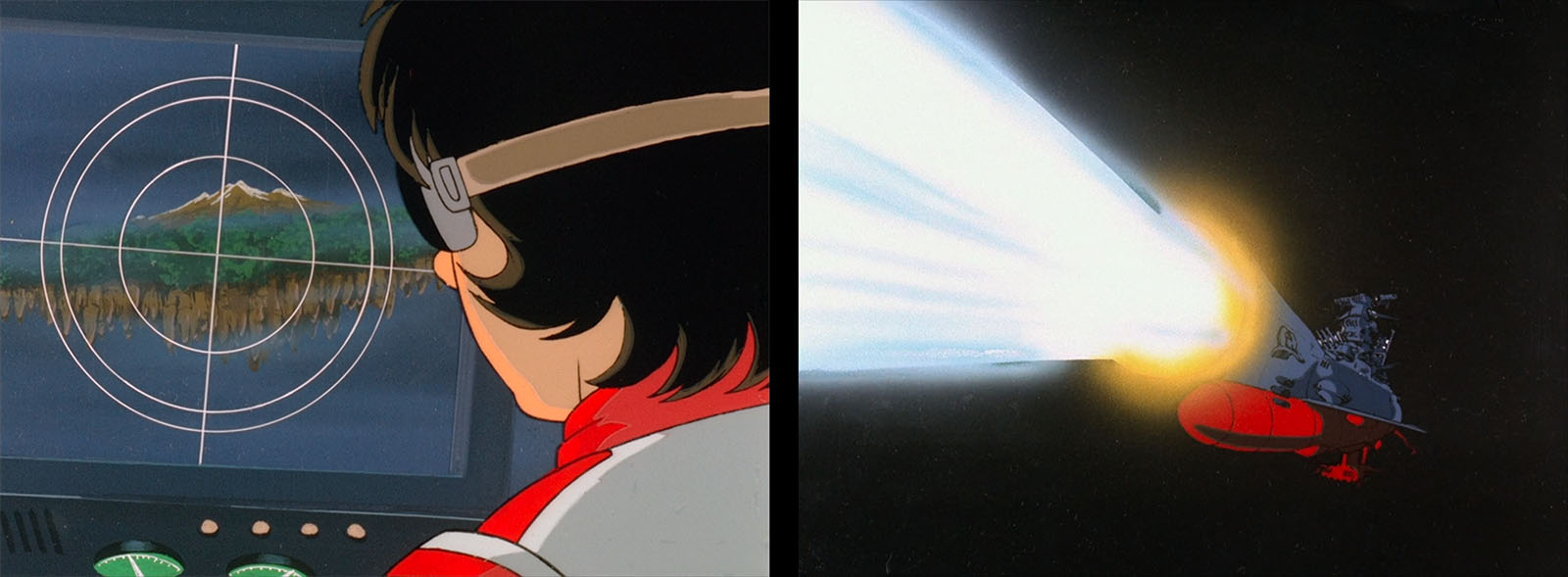
The Light of Destruction and the Remaining Challenges
The targeting scope locks onto the floating continent. Kodai’s finger settles on the trigger, and the countdown of destiny begins. “3… 2… 1… Fire!” The single beam of light unleashed in that instant completely engulfs the floating continent. Amidst a fiery explosion, the continent itself vanishes, and the Gamilas base is utterly annihilated. Far from rejoicing at its terrifying power, the crew members are struck with horror.
“We were only supposed to destroy the Gamilon base…”
Leaving Home, Bound for Iscandar
Yamato escapes Jupiter’s gravitational sphere. Behind it, nothing remains of the place where a continent once stood, only a void. Yet, there is no time to indulge in sentimentality. A journey of 148,000 light-years has only just begun. There are 361 days left until the destruction of Earth. To save the planet where their loved ones await, Yamato once again sets sail into the pitch-black depths of the cosmos.
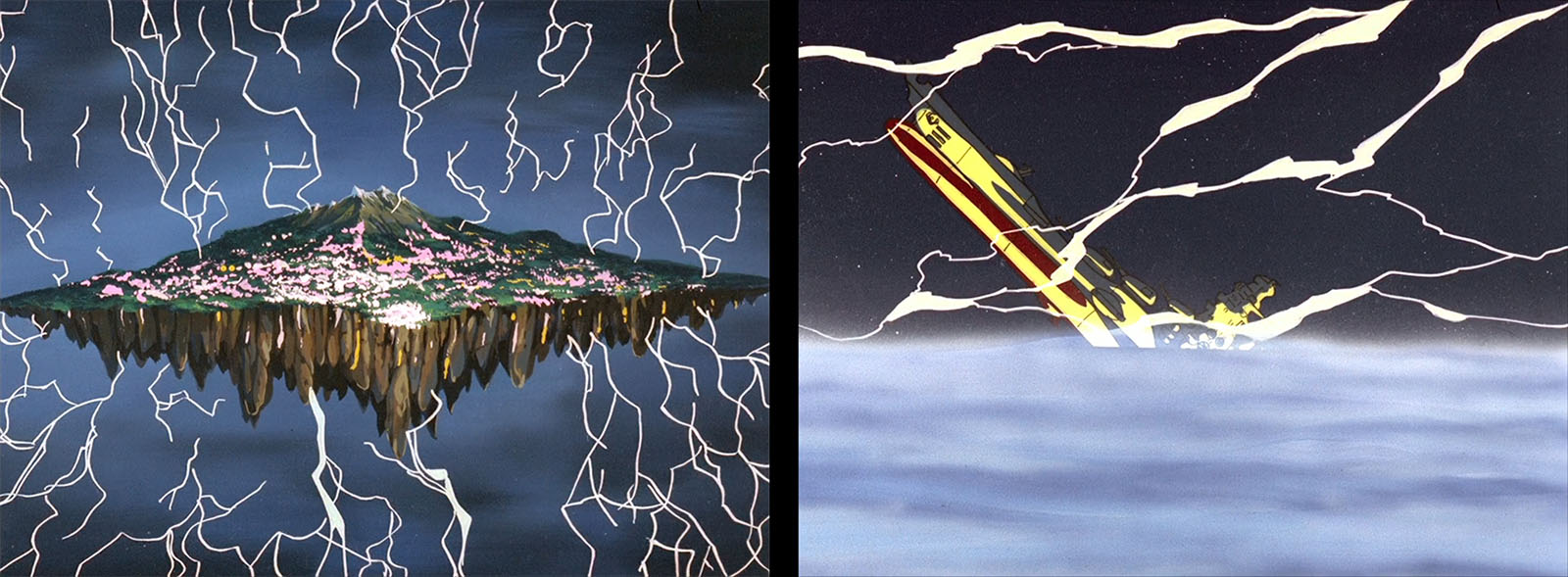
A Technician’s Philosophy of Life
Having spent 32 years facing down rusted bolts in the bitter cold of Sapporo, I know this much: no matter how sophisticated a machine may be, if you neglect its maintenance, an invisible “distortion” will inevitably arise, one that will eventually lead to a catastrophic breakdown. As a humble technician who has lost all sensation in his fingertips on minus-20-degree worksites, and who has listened to the very metal itself scream in protest, let me tell you this: the modern world is far too obsessed with rushing toward “correct answers” and “efficiency.”
The real world of the worksite rarely operates strictly according to the manual. And human beings are creatures that simply cannot be reduced to cold logic. Are you, perhaps, ignoring the faint creaking sounds coming from deep within your own heart, leaving them unattended, much like a kerosene heater that has run out of fuel? If you force yourself to keep running despite the strain, the engine of your heart will eventually seize up completely. Stop trying to laugh it off, telling yourself, “That’s just how it is” as you hide the fact that you’ve been worn down and battered by the rough seas of work and the world at large.
We are not machines. We are living beings; flesh and blood, imperfect, and in need of care. Just as one might gently warm up frozen pipes on a winter night, I urge you to face the small wounds forming within yourself, rather than simply ignoring them. Have you recently carefully mended your own flaws, either for someone else or by yourself?

Finally, what I want to convey: Cherish your unresolved feelings
Late at night in Sapporo, the smell of snow creeps in through the cracks in the room. It’s really about time to fill the heater with kerosene. Tomorrow, another harsh winter day will begin.
AI can give you answers, but it can’t stir your heart. If you’re tired of today’s efficiency-driven society and the constant demand for “correct answers,” put down your smartphone for a moment and watch Yamato late at night.
There, you’ll find a “human passion” that cannot be explained by logic. You’ll see men who are clumsy and down-to-earth, but risk their lives for their work.
I didn’t write this because “I thought about it.” I had to write it because the weight of the years I’ve poured into every bolt and pipe on site resonated with the story of Yamato.
Thank you for reading this old man’s ramblings to the end. It’s getting cold at night. Make sure you stay warm and don’t catch a cold.
I made a song based on this article. I wrote the lyrics using DeepL. I can’t speak English. Please forgive me if there are any mistakes…

Summary of Related Items
1. Main Characters
Juzo Okita: The first captain of Yamato. A leader possessing both sternness and compassion. His line, “Earth… everything is so nostalgic,” is extremely famous.
Shiro Sanada: Chief Engineer and Deputy Chief. A “model engineer” with a passionate heart hidden beneath a thorough rationalism. In the 2199 version, he is portrayed with more humanity.
Susumu Kodai: Chief Tactical Officer. A young man who, while grappling with the internal conflicts of youth, grows into the “spearhead” of Yamato.
2. Soul-Stirring Masterpieces (Theme Songs & Insert Songs)
Space Battleship Yamato: The timeless opening theme performed by Isao Sasaki.
The Scarlet Scarf: A masterpiece imbued with the melancholy of men setting out on a journey and their thoughts toward those left behind.
The Infinite Universe: An evocative piece of background music that captures both the solitude and the grandeur of the cosmos.
3. The Roots of Production
Yoshinobu Nishizaki: The producer who brought Space Battleship Yamato to the world.
Leiji Matsumoto: The master creator who established the series’ distinctive mechanical designs and worldview.
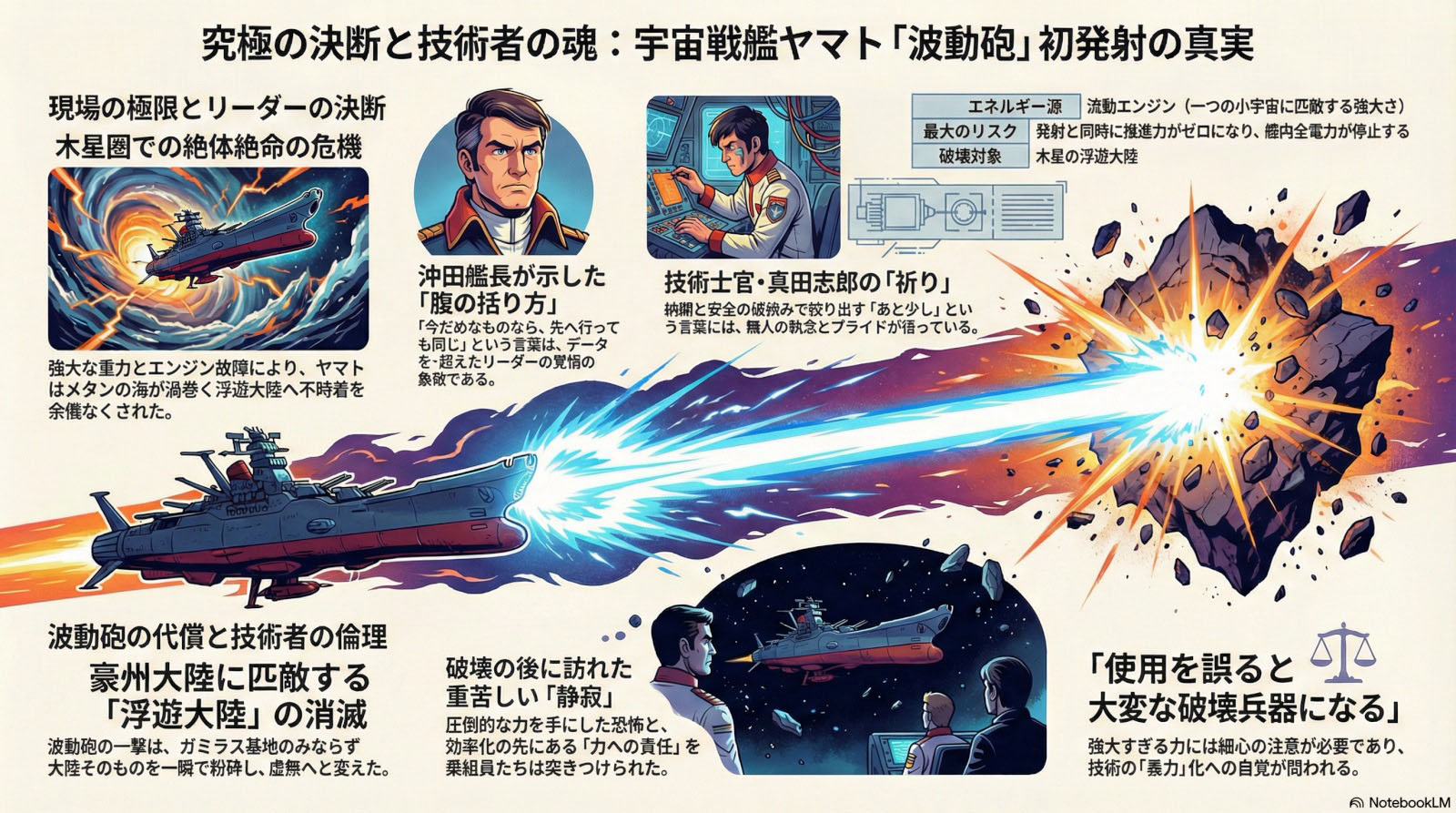
An analysis of the energy-charging process for the Yamato’s primary weapon, the Wave-Motion Gun, and the overwhelming destructive power capable of shattering a floating continent in a single blast. This infographic summarizes the ethical conflicts faced by engineers and commanders regarding the power brought about by scientific advancement. A power that, if misused, invites destruction.
Thank you for reading to the end.