
Live-action Space Battleship Yamato Review
Re-watching the live-action version starring Takuya Kimura and understanding why opinions were divided
See the original post here
A little while ago, in October 2024, news broke that Hideaki Anno had been granted the rights to produce a new Space Battleship Yamato anime. The moment I heard this news, my memory naturally went back to a certain film: the 2010 live-action version of Yamato, starring Takuya Kimura. I remember this film causing a big stir when it was released. However, the reviews were harsh, and criticism outweighed praise.
Prompted by Anno’s new project announcement, I re-watched this live-action version. I thought that my impression might change over time. However, the sense of unease I felt while watching the film was, unfortunately, not significantly different from my memories of it.
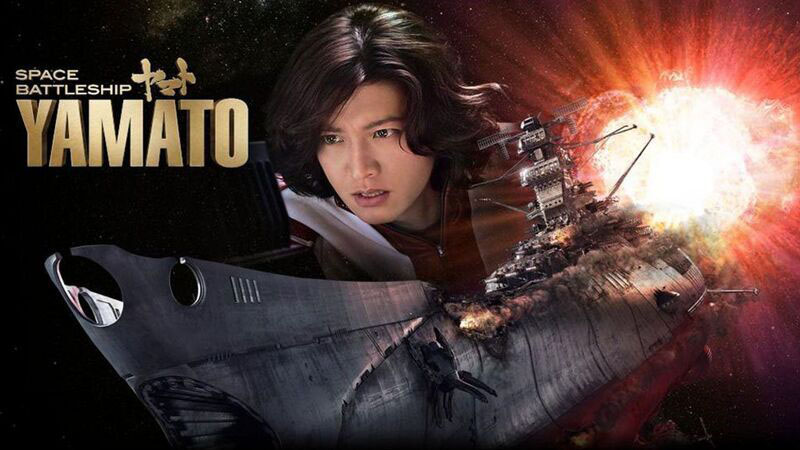
How much alteration is acceptable? The distance from the original work
First, we must address the issue of “alteration.” This is unavoidable when discussing the live-action Yamato.
As a side note, the fact that Studio Khara, led by Hideaki Anno, has acquired the rights to produce a Yamato anime is likely a source of hope for many fans. Production is scheduled for 2025 and beyond, and the plan seems to be entering a realistic stage. Anno has publicly stated that he is a fan of Yamato. He has also said it is a work that has influenced his life. Therefore, expectations naturally rise regarding his approach.
That’s why, looking back at the live-action Yamato, I feel a strong sense of unease regarding its distance from the original.
Space Battleship Yamato is a masterpiece of Japanese science-fiction anime that Japan can be proud of. Among Leiji Matsumoto’s works, it is considered on par with Galaxy Express 999. Especially for viewers 50 and older, it’s more than just an anime. This is a work that deeply influenced the formation of my values and emotions, a kind of formative experience for me.
Given that they were adapting such a significant work into a live-action film, the production team must have approached it with considerable determination. I want to believe that. However, the shock I felt when I first saw the finished film was immense. Even after rewatching it, that impression remains largely unchanged.
Due to the nature of film, the running time is limited to approximately two hours. It’s impossible to fit an entire television series into that time. Although, recently, longer films have become more common. I understand that selection and restructuring are necessary. I’m not trying to deny the changes themselves. The problem is whether those changes served to enhance the story.

In this film, the changes to the characters are particularly noticeable. In the original, Yuki Mori was practically the only female character. In the live-action version, several characters have been gender-swapped. Considering modern values and the need for visual appeal, this can’t be entirely dismissed. In fact, in remakes since Yamato 2199, the number of female characters has naturally increased.
However, what about the live-action Yuki Mori? The concept of her being the ace pilot of the Black Tiger squadron is bold. However, the role she played as a spiritual pillar in the original is almost completely absent. It feels less like a reinterpretation and more like a complete transformation into a different character.
There are also problems with the battle scenes. The lack of tension prevents Captain Okita’s greatness from being conveyed. In the original, the weight of his character came from his leadership of the ship while facing imminent death. In the live-action version, that crucial moment is not adequately depicted before he collapses.
Furthermore, the concept of the Gamilas is difficult to understand. By making them an abstract entity, a collective consciousness, their identity as an enemy becomes ambiguous. The weight of the despair that Yamato faces is also diminished. Overall, it’s difficult to feel any respect for the original work in this film.

For whom was Yamato made?
Next, I want to consider who this live-action Yamato was made for. This is a major question that permeates the entire work. What if this film had been made for fans who have loved Yamato for many years? The fundamental settings and worldview of the story should have been treated as shared knowledge that needed no explanation. I think they could have introduced new elements through the details of the direction. But the core elements needed to be preserved.
On the other hand, if the film was intended for a new audience, there were other options. They could have chosen to make an original sci-fi film without using the Yamato name. That would have given them more creative freedom.
However, the live-action version failed to commit to either approach. While using the Yamato name, it significantly altered the settings and character portrayals. As a result, it seems to have disappointed the most passionate fans. It also failed to strongly resonate with new audiences. This is a great pity.
Given the weight of the Yamato legacy, two things were necessary: the courage to change and the resolve to preserve. This film misjudged that balance. Yamato is not just a story. It’s a collection of memories and emotions shared across generations. The moment that weight is disregarded, the film loses its connection with the audience.
The Light and Shadow of a Star: Takuya Kimura
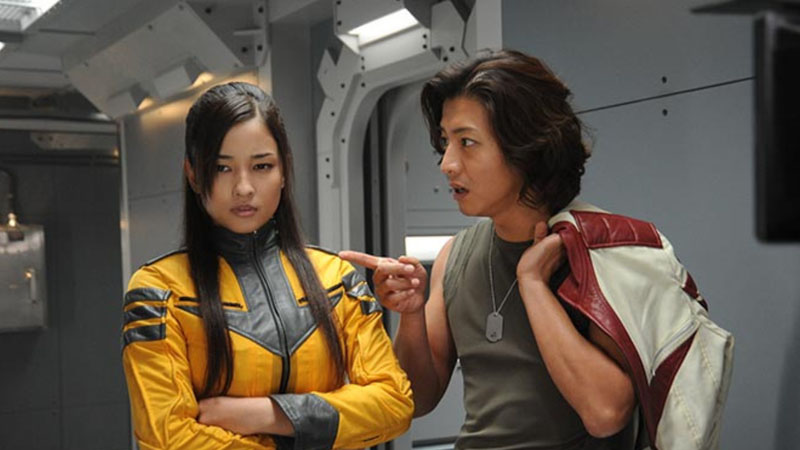
And finally, we must address the presence of Takuya Kimura. For better or worse, his presence is overwhelming. No matter what film he’s in, the impression that “Takuya Kimura is there” never disappears. This isn’t a matter of acting ability. It’s the fate of being a star.
The same was true in the live-action Yamato. Susumu Kodai was less Susumu Kodai and more “Kimtak” himself. Instead of embodying the original character, Takuya Kimura’s presence seemed to overshadow the role. For Kimtak fans, this might have been a very appealing film. In fact, if viewed as “a film starring Takuya Kimura,” it probably provides a certain level of satisfaction. However, Yamato is fundamentally an ensemble drama. When the presence of a single star is too prominent, the balance of the story is disrupted.
For long-time Yamato fans, that overwhelming presence became a factor that hindered immersion. This is not the personal responsibility of Takuya Kimura. It was a decision made by the production team who chose that structure. As a result, this film was placed in a difficult position. It alienated Yamato fans, and as a Takuya Kimura film, it received mixed reviews. This ambiguity further intensified the criticism.
In Conclusion
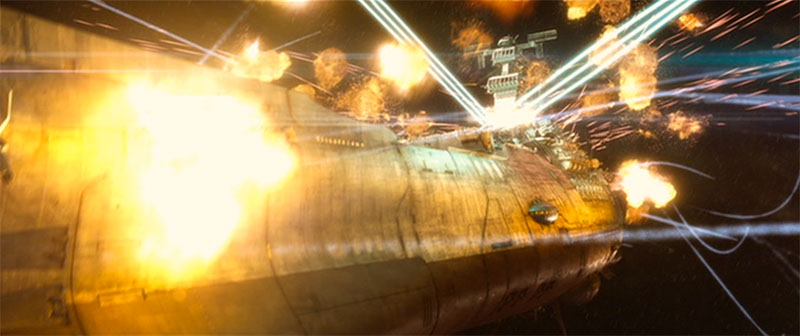
The live-action Space Battleship Yamato was undoubtedly a challenging endeavor. It featured technical innovations and a deliberate focus on its star. I don’t believe these efforts were meaningless.
However, considering the weight of history and emotion that the Yamato series carries, I have to say that its handling lacked caution. That’s why there are high expectations for the new anime series by Hideaki Anno. Perhaps a creator with a deep understanding and love for the work will finally send Yamato into the future in its true form.
The live-action Yamato, including its failures, was a lesson for moving forward. Considering that, this film is also a part of Yamato‘s history. Movies are wonderful, aren’t they?