
“During the final check, I tend to pile on quite a few effects myself.”
Tadasuke Ueji, CG Director
Profile
Born in Mie Prefecture. CG designer. Participated in works including Full Metal Panic! Invisible Victory, Tiger & Bunny 2, Code Geass: Lelouch of the Resurrection, and the Mobile Suit Gundam The Origin series. Joined the Yamato remake series as CG technical chief for Yamato 2199, then as CG director for the subsequent Ark of the Stars. Returned starting with Age of Yamato, leading to this project.
Interviewer: First, could you tell us about your involvement with the remake series?
Ueji: My involvement began with Yamato 2199. I didn’t participate in 2202 or 2205, but I assisted with the new parts for the compilation film Age of Yamato. After that was completed, I was approached about joining 3199.
Interviewer: What is the actual workflow for your work?
Ueji: First, I meet with Director Naomichi Yamato. There, I receive the general direction and requests for what kind of visuals are desired. Based on that, I build the visuals largely following the storyboards. Once a rough draft is ready, I show it to Executive Director Harutoshi Fukui.
Interviewer: How do you materialize the unique imagery possible with CG?
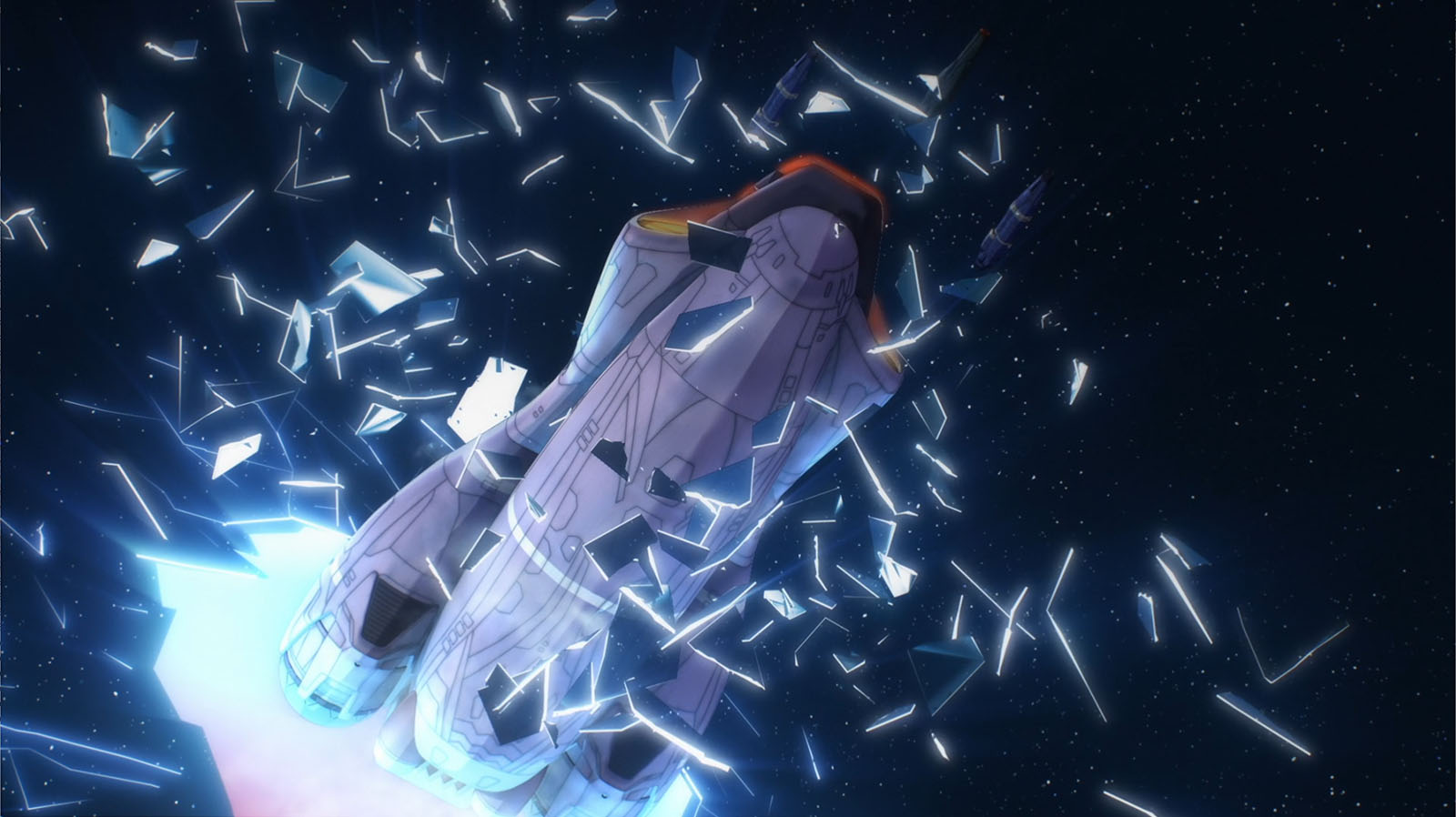
Ueji: During the CG production meetings, we share a general vision like, “Let’s go for this kind of feel,” within the CG team. From there, we discuss what’s technically feasible and what isn’t, then actually produce the shot and get Director Yamato’s approval. Sometimes, if the storyboard is too detailed, it can be difficult to handle in CG. In fact, vague or ambiguous instructions can sometimes lead to creating more CG-specific effects. The depiction of the full-sphere radar room was created by extracting elements suitable for CG and adding effects. Conversely, for overly complex elements, we sometimes request concept art. For this project, Bolar’s warp was unique, so we had a very rough image drawn.
Interviewer: What kind of work does the CG team handle?
Ueji: Broadly speaking, there are two main areas: Yamato and mecha combat scenes, and 3D layouts. We also occasionally handle shots with irregular shapes for parts that are difficult to animate.
Interviewer: What is 3D layout?
Ueji: The most straightforward example is the first bridge. Since it has a complex shape, we first create guideline art as a 3D layout. This serves as the basis for the animation and background painting. While no 3D elements remain in the final image, it serves as the foundational framework. Also, the bridge has about 100 monitor screens of various sizes. Manually placing each screen individually during filming is impractical, so we first create a 3D layout and then write a script to automatically place them. That’s why the 3D layout is necessary. Incidentally, the monitors themselves are created by a separate digital team called the “Monitor Team.” Even seemingly simple shots of the main bridge use a hybrid composition of 3D and hand-drawn animation. Honestly, I wanted to decline the 3D layout because it doubles the workload. (Laughs)
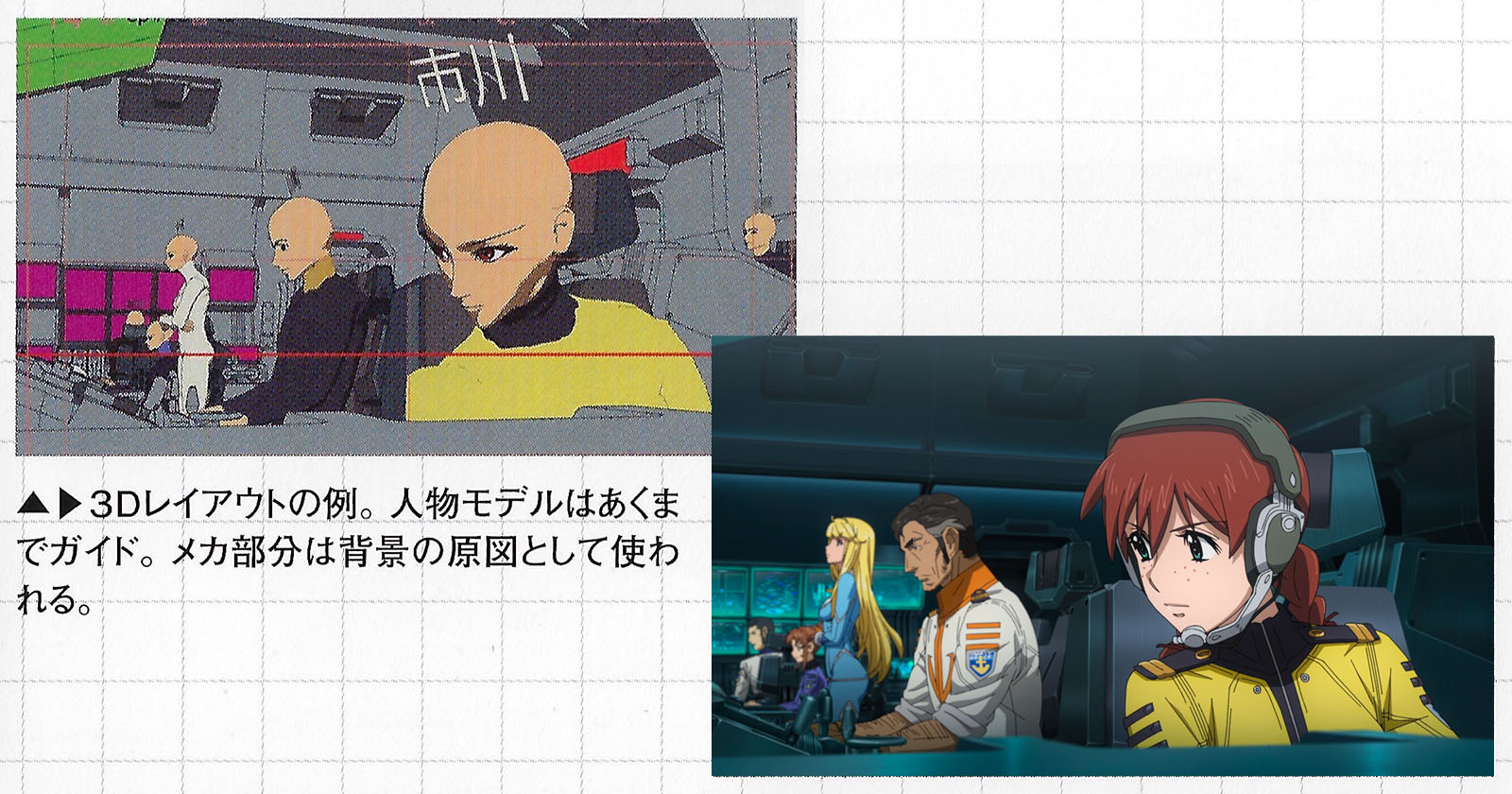
Example of 3D layout. Character models serve only as guides. Mecha parts are used as background reference art.
Interviewer: I think another unique feature is that the anime features a battleship as the main character.
Ueji: Since one studio alone couldn’t handle all the CG, we outsourced to multiple companies and individuals. The tough part was adding “weight” to the assets they delivered. Adding weight alone is manageable, but when you have art backgrounds and hand-drawn animation, trying to blend 2D space with 3D suddenly becomes much harder. The starry space backgrounds are the easiest to work with. (Laughs) While 2199 had many such scenes, 3199 features more complex backgrounds like cloudscapes, galactic backgrounds, and Earth-side settings, making it quite challenging.
Interviewer: I hear the escape scene aboard the Cosmo Hound in Chapter 1, which Director Fukui was particularly focused on, was also very difficult.
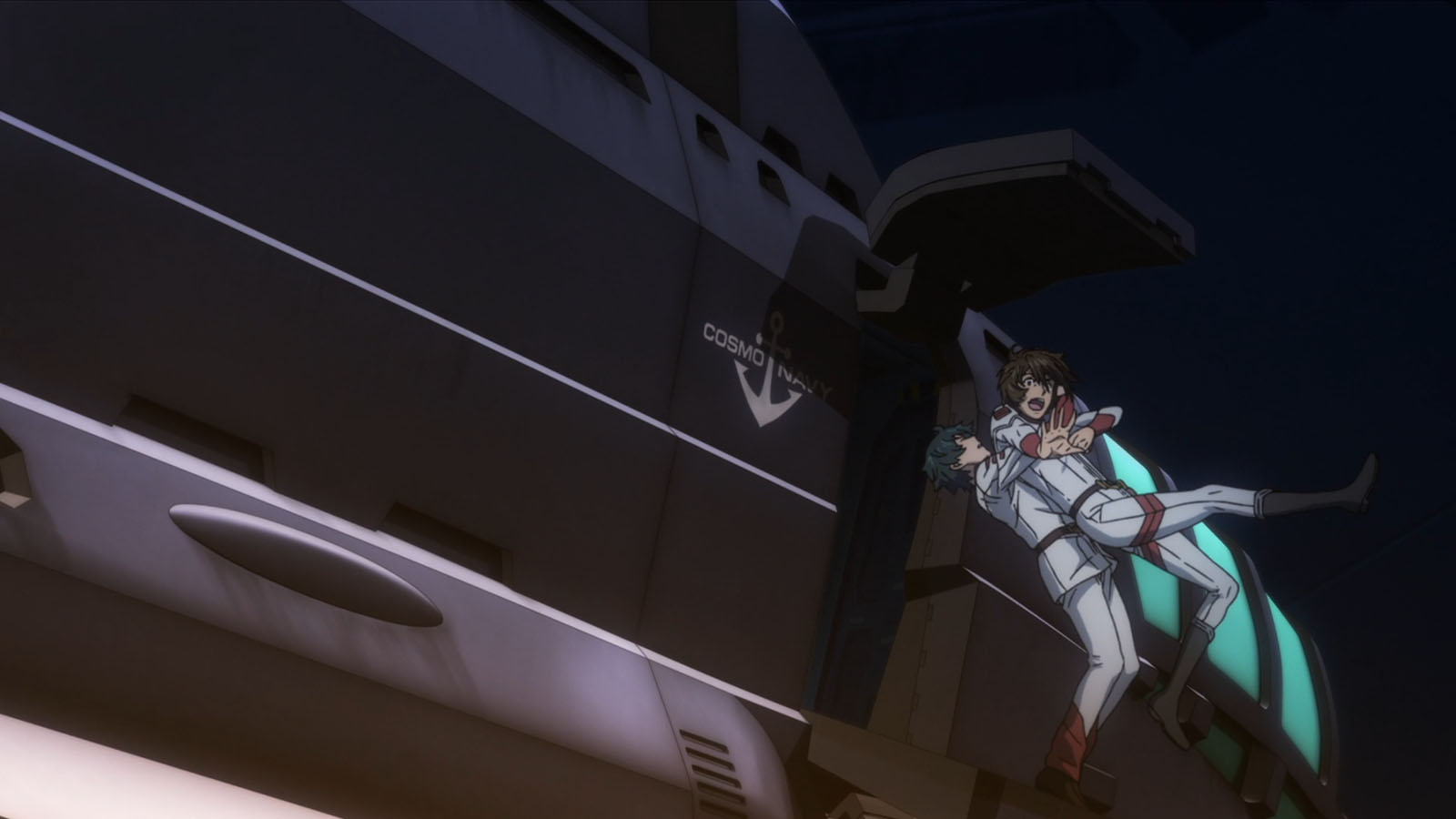
Ueji: It was a tough shot, with the Cosmo Hound ascending as the crew leaned out. All the characters were drawn as original art at the same scale, then digitally composited to ensure their positions didn’t shift. For hybrid shots combining animation and CG, we confirm everything during initial meetings with Director Yamato.
Interviewer: How was the mecha modeling handled for this work?
Ueji: The main modeling is done in-house. Since each designer has a different drawing style and direction, we adopted a three-pronged approach tailored to each one.
Interviewer: How do you handle mecha that reappears from past works?
Ueji: If the 3D software was consistent, we could reuse all the past assets. But for the remake series, the software changes each time. For example, if we tried to bring in Yamato itself from 2205, only the shape would transfer. All the internal data would be lost. So, we based it on the Yamato from 2199, which used the same software, and modified it to match the differences in 2205. That was more efficient.
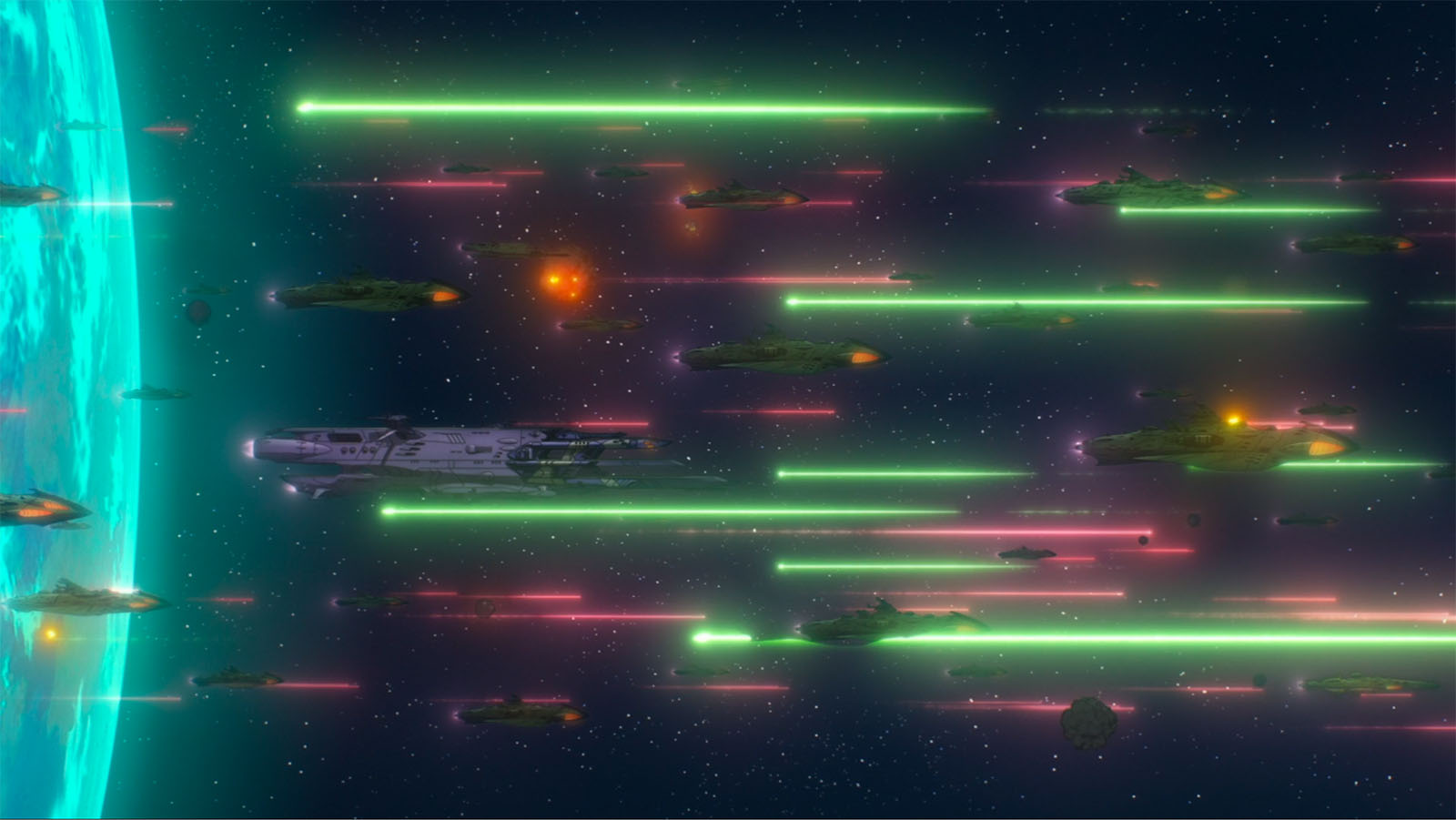
For usable assets, we refined the 2199 data for 3199. The old Garmillas mecha appearing in Chapter 4 used 2199 assets, which made things a bit easier. The Lambea Kai was also recreated by transplanting only the weapon unit data from 2205 onto the 2199 hull. For effects, we used those from 2199 where possible, but effects introduced after 2202 were recreated to match the visual style. Warp effects are also different for each faction, which was quite challenging.
Interviewer: I hear the designer personally handled the additional artwork for the detail-up this time.
Ueji: During the storyboard phase, I discuss things with Director Yamato like, “This shot is close-up, so let’s detail it up,” or “This shot isn’t necessary.” Personally, I also want to see the designer’s detail-up work, so I make lots of requests, even if they might be rejected. (Laughs)
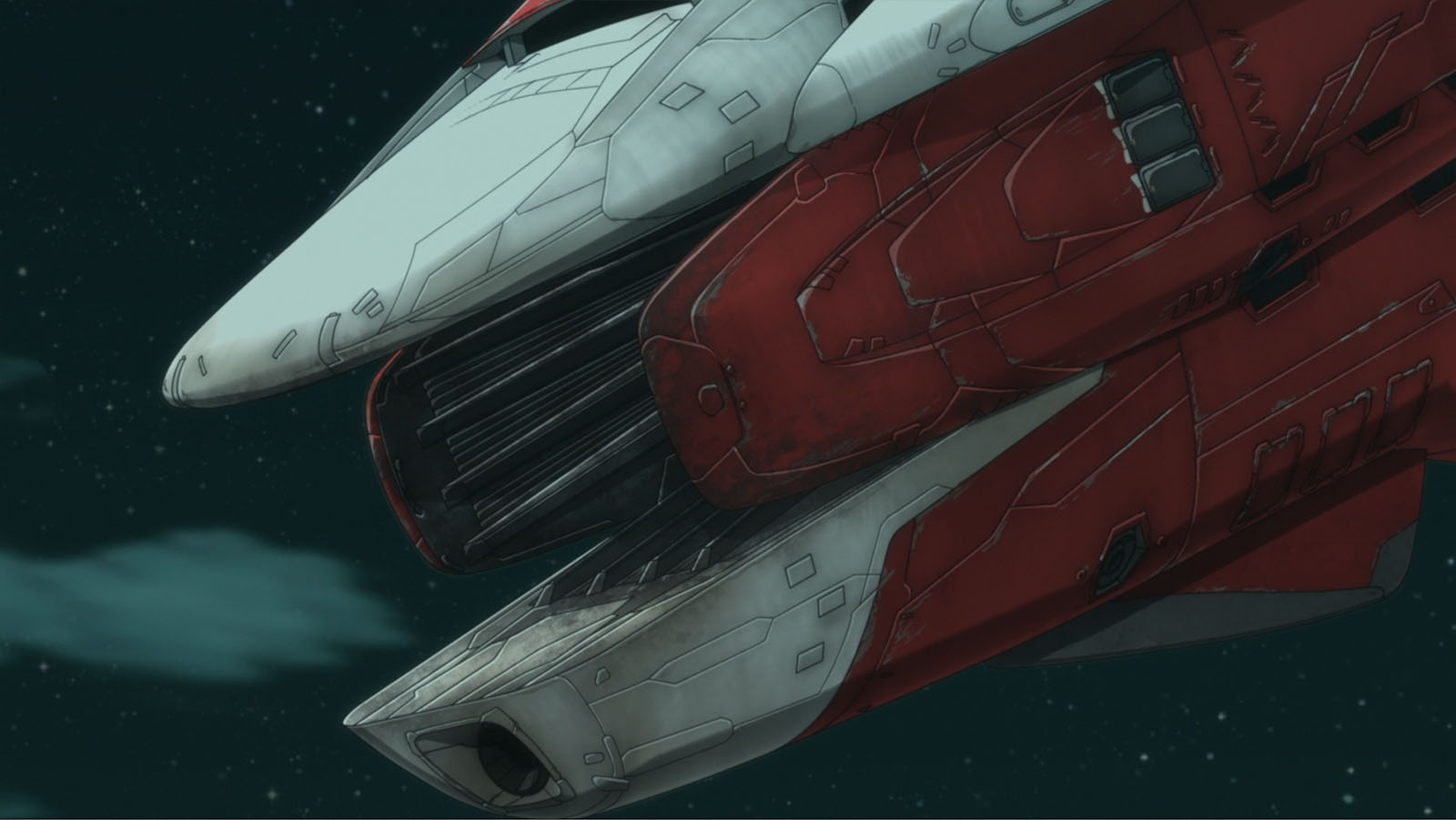
Example of detail-up work. Additional details and weathering effects have been added to the bow of the Ra-Jendora.
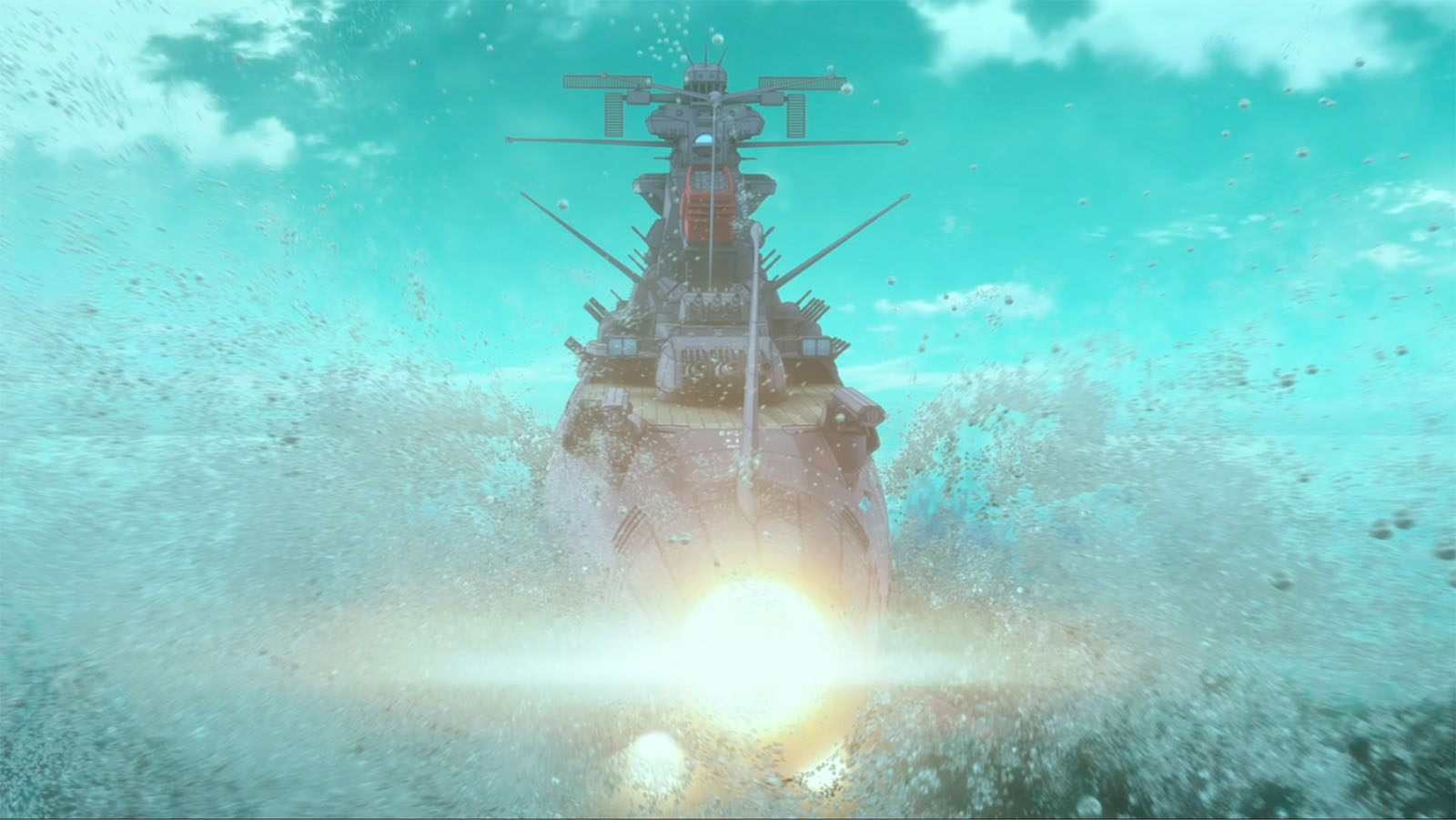
The landing scene on Galman in Chapter 4, featuring the water spray effects that Mr. Ueji found most challenging.
Interviewer: Is there a shot from Chapter 4 that left an impression on you?
Ueji: The scene where Yamato lands on Galman. Splashing water is the most challenging part for CG. Lately, I’ve been working on water effects nonstop. (Laughs) I even work at home, and for the landing scene, I left my rendering PC running for two straight days. Yamato is a battleship after all, so we really poured effort into the landing scene. Personally, I think it’s a shot where the ship truly shines as a battleship.
Interviewer: What does your work as CG director entail?
Ueji: I handle the final adjustments to ensure consistency across all shots. If one studio could produce everything, we could maintain a unified style from the start. But since we outsource to various places, I need to harmonize the results. It’s perhaps akin to the role of chief animation director in traditional animation.
Interviewer: When reviewing submitted shots, do you ever get pleasantly surprised?
Ueji: When the finished product exceeds my expectations, it’s definitely a joyful moment. It makes me want to work with that artist again next time.
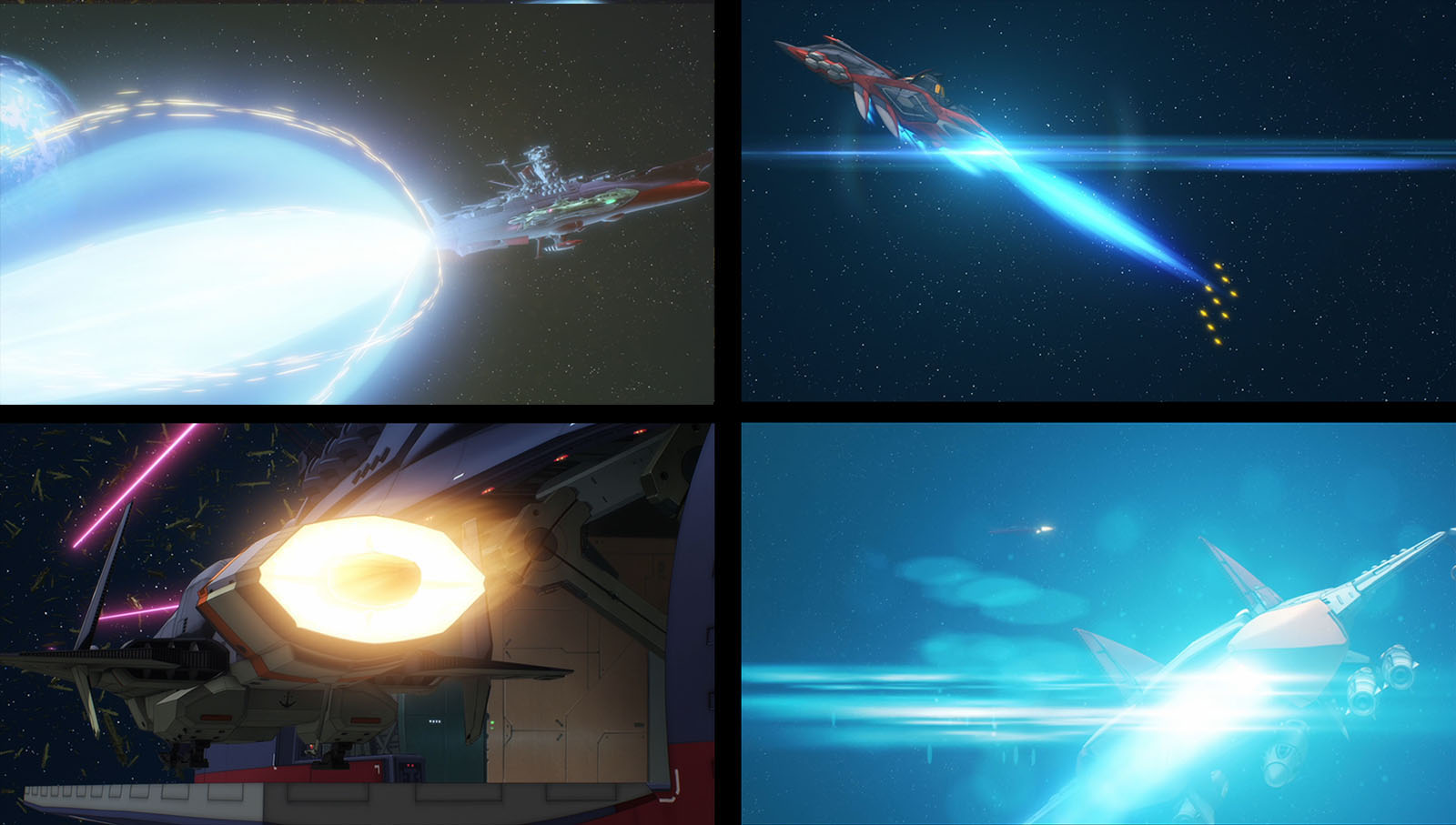
Interviewer: Starting around Chapter 3, the thruster blasts from Yamato and the Cosmo Tiger II seemed more prominent. Why is that?
Ueji: Personally, I didn’t intend to change anything significantly from 2199. However, when checking the footage that comes in, I do sometimes give instructions like, “Please add the thruster blasts.” For Yamato, adding the thruster effects while keeping the main body relatively still creates a sense of “weight.” Furthermore, during the final check, I personally add quite a bit of extra effects. I add sparks, add smoke, add light to the screen. After adding these kinds of effects, I hand it over to the cinematographer, and the directors confirm it during the all-rush screening and give the OK. This system really came together starting in the latter half of Chapter 2. That’s why Chapters 3 and 4 are quite dazzling. (Laughs)
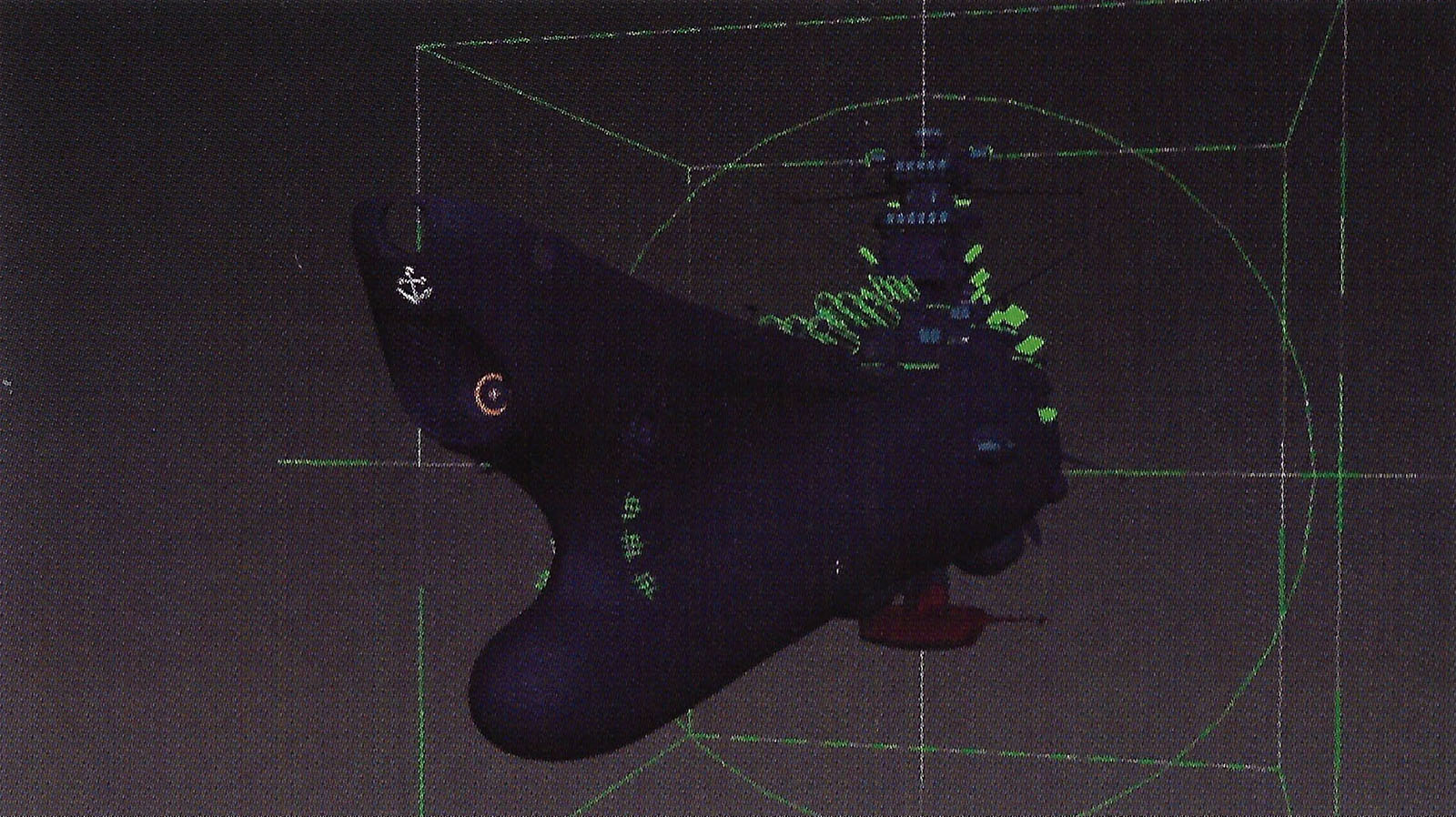
Yamato’s rigging (mechanisms to animate the CG model). All green sections incorporate movable parts.
Interviewer: Please share your impressions of 3199.
Ueji: It definitely has that Fukui-esque feel, emphasizing story. 2199 had a foundational narrative and felt more setting-focused.
Actually, the CG work was a bit easier this time because Yamato wasn’t damaged. In 2199, it was constantly being hit, so we needed a damaged Yamato model every single time. That meant managing dozens of Yamato models across multiple episodes. Without that in 3199, we could focus our energy elsewhere. We gained the leeway to be more creative with effects and presentation. In that sense too, I think it’s become a different kind of work from 2199.
Interviewer: Finally, could you share what you find appealing about the Yamato series?
Ueji: Generationally, I’m outside the core audience, so before working on 2199, I only knew the name of the original work. But the passion of everyone involved, starting with (Chief Director) Yutaka Izubuchi, was truly incredible. It was pure pressure. (Laughs) From there, as I watched the original and talked with the staff, I focused on delivering what they wanted. There are dedicated fans, so I didn’t want to disappoint them. I’ve held that feeling since 2199.
3199 has the best CGI in the series
Did you see the premiere of 2199 back in April 2012 just like you did with 3199?
No, but I went a month later to attend a fan convention called Yamato Party.
Nice that sounds fun