
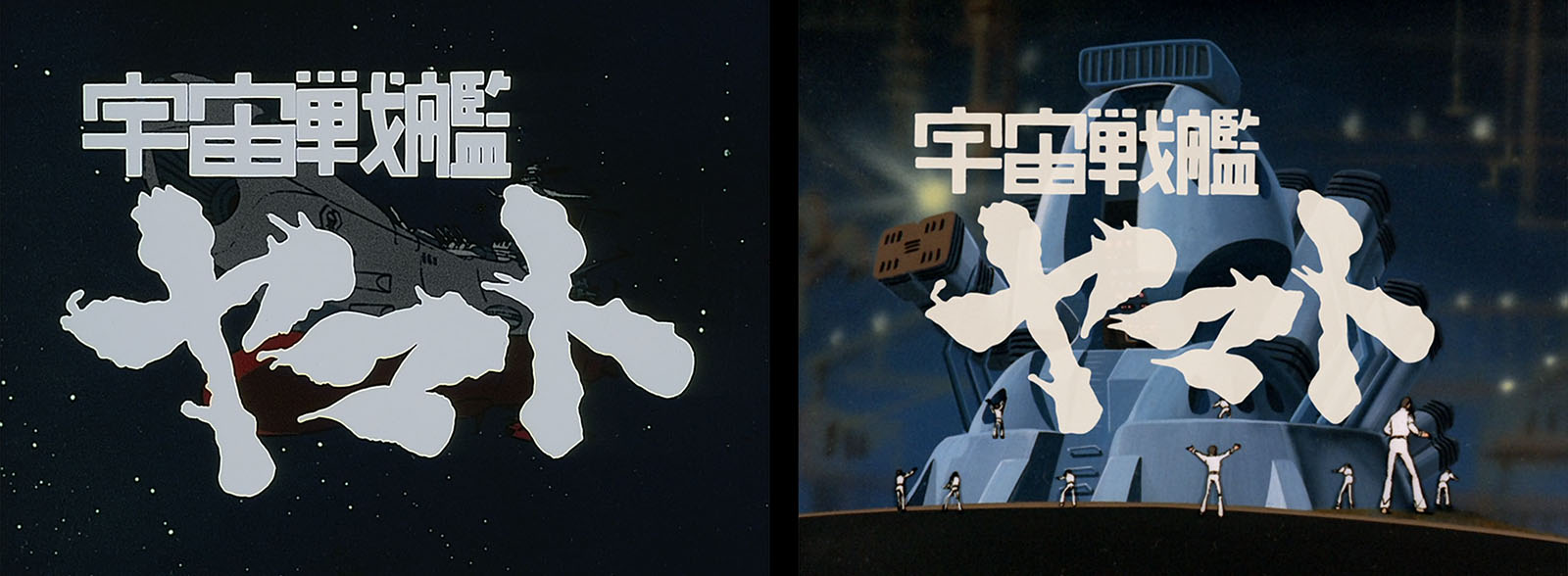
There was no opening title
Hikawa: Going back to the broadcast era, Yamato had a serialization in Bouken Oh, but it was completely original, right? What about that?
Anno: The Bouken Oh serialization couldn’t keep up with the TV story development, so it started trailing behind around the third installment.
Hikawa: Exactly. The TV version completely overtook it partway through. So, every single week, a completely unknown story and characters would appear.
Anno: There were no previews either. So every week, I’d wonder what would happen next and look forward to it.
Hikawa: How long did you think it would run?
Anno: Back then, most shows ran for four quarters, so I figured maybe a year. I never thought it would end after just six months.
Hikawa: So it was like suddenly seeing [End] in the TV listings?
Anno: Yeah, I was like, “Huh? The final episode?” But the other show in the time slot, Monkey Army, also ran for six months.
Hikawa: The TV version of Japan Sinks ended at the same time, right?
Anno: Yeah, Japan Sinks also ran for six months, so I thought, “Oh, they’re all ending at once”. (Laughs)
Hikawa: That’s exactly right. The October season shows back then, like Kamen Rider Amazon and Hurricane Polymer, were all two-arc series.
Anno: 1974 was full of two-arc shows. Another thing that surprised me watching Yamato live was that Episode 22 skipped the opening.
Hikawa: Right. They skipped it and went straight to the recap.
Anno: I’d always assumed openings were standard, so that was a shock. The finale (Episode 26) didn’t have one either.
Hikawa: Episode 26 just suddenly showed them assembling the Cosmo Cleaner D.
Anno: Episode 22 was fine because the title appeared at the start. But the finale showed the Cosmo Cleaner assembly, and right at the very end, it’s up. That coolness still gives me chills. Turns out you don’t need an opening.
Hikawa: A lot of late-night anime these days skip the opening in Episode 1. Was this the original?
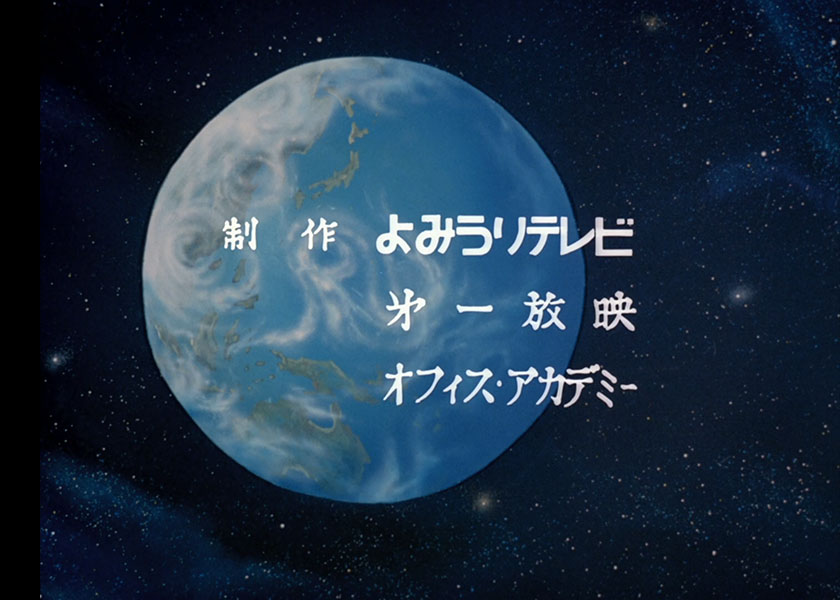
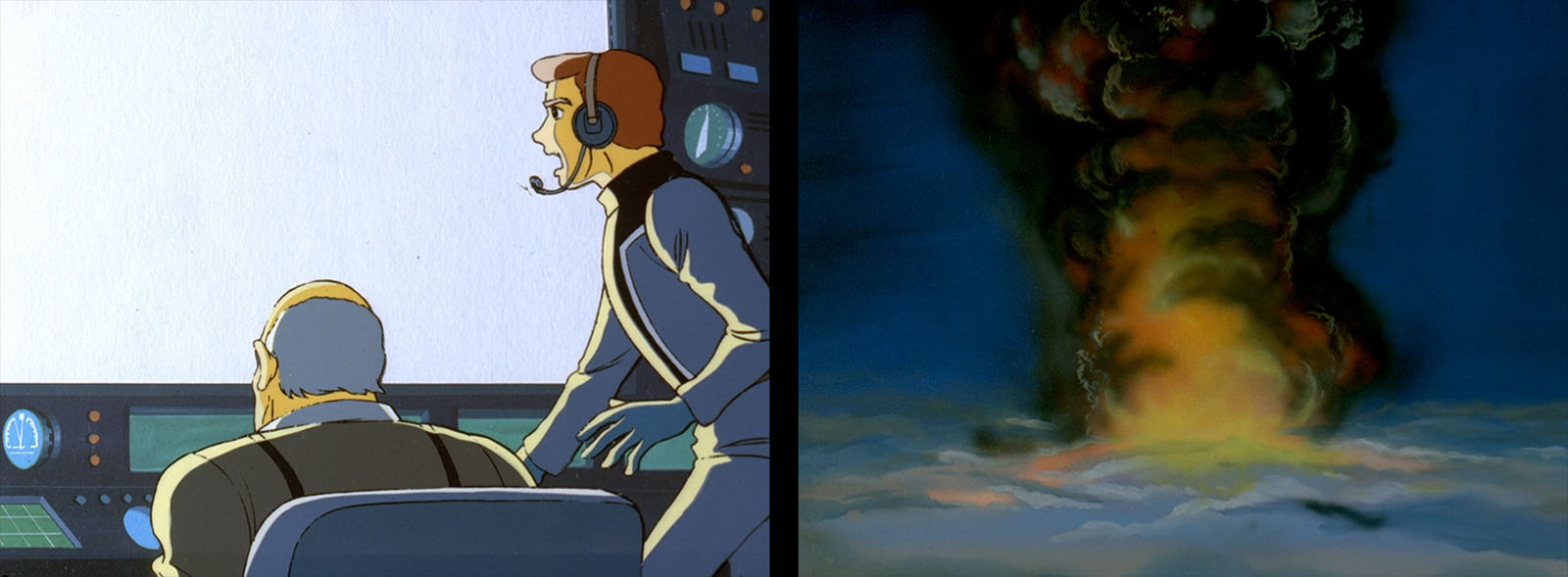
Last image from the final episode
Anno: Probably. Sometimes they cut the opening to adjust for a longer running length, but I think there are also cases where the opening title just wasn’t ready in time for the premiere. With Yamato, by the final episode, there wasn’t even an ending. Just text and sound effects, no dialogue or song. That was incredibly innovative, cool, and had this stoic, mature feel to the direction that was fantastic. I heard later they got scolded by the network.
Hikawa: Really?. (Laughs) The network was like, “Follow the format!”
Anno: Yeah, right?. (Laughs)
Hikawa: Back then, if you did something like that, the TV stations would immediately get calls saying “How dare you!” So it really was quite special in many ways.
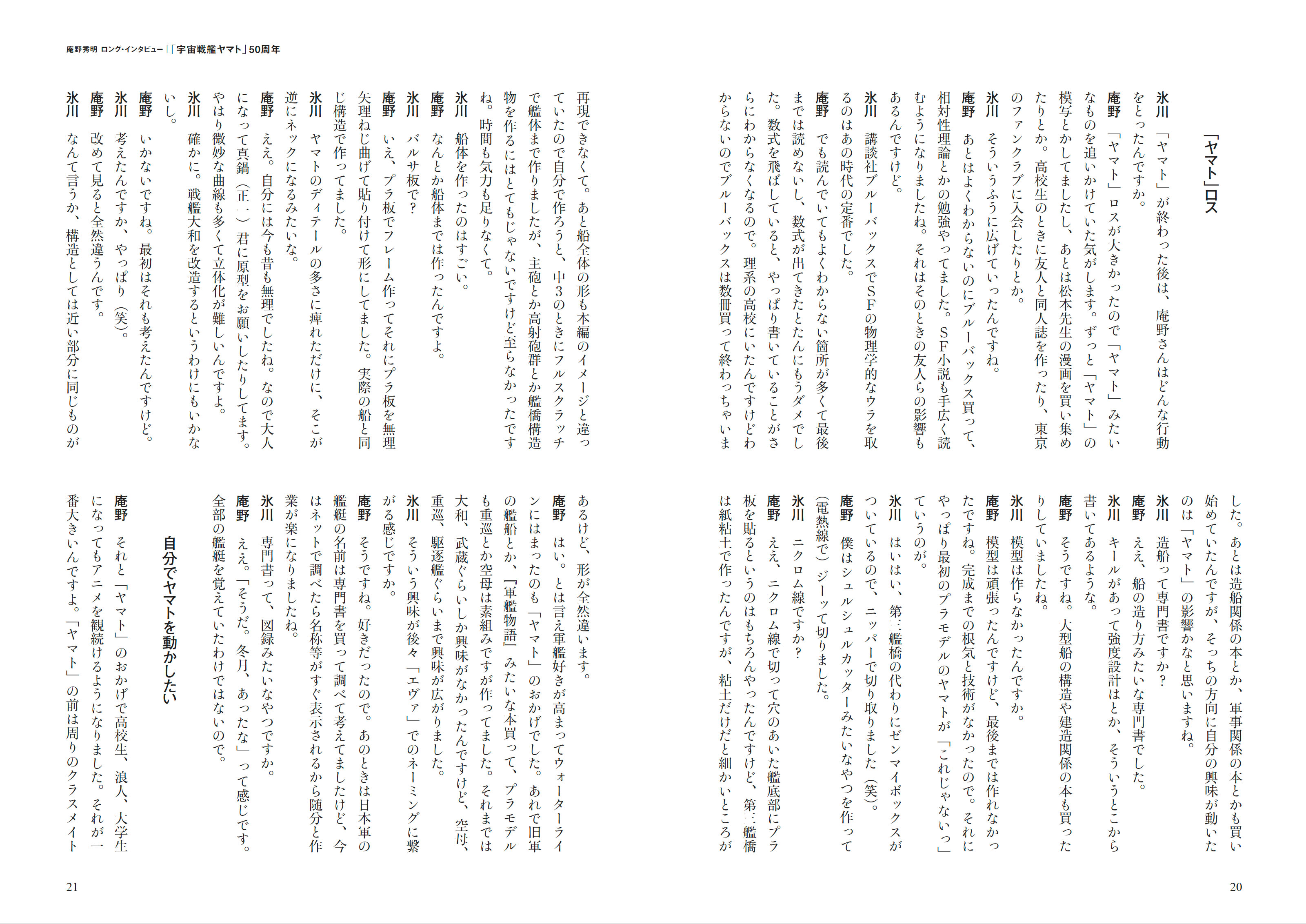
Yamato Loss
Hikawa: After Yamato ended, what did you do?
Anno: I was so devastated by Yamato ending that I think I just chased after things like Yamato. I kept copying Yamato designs, and I also started buying up all of Matsumoto’s manga. In high school, I made doujinshis [fanzines] with friends and joined a fan club in Tokyo.
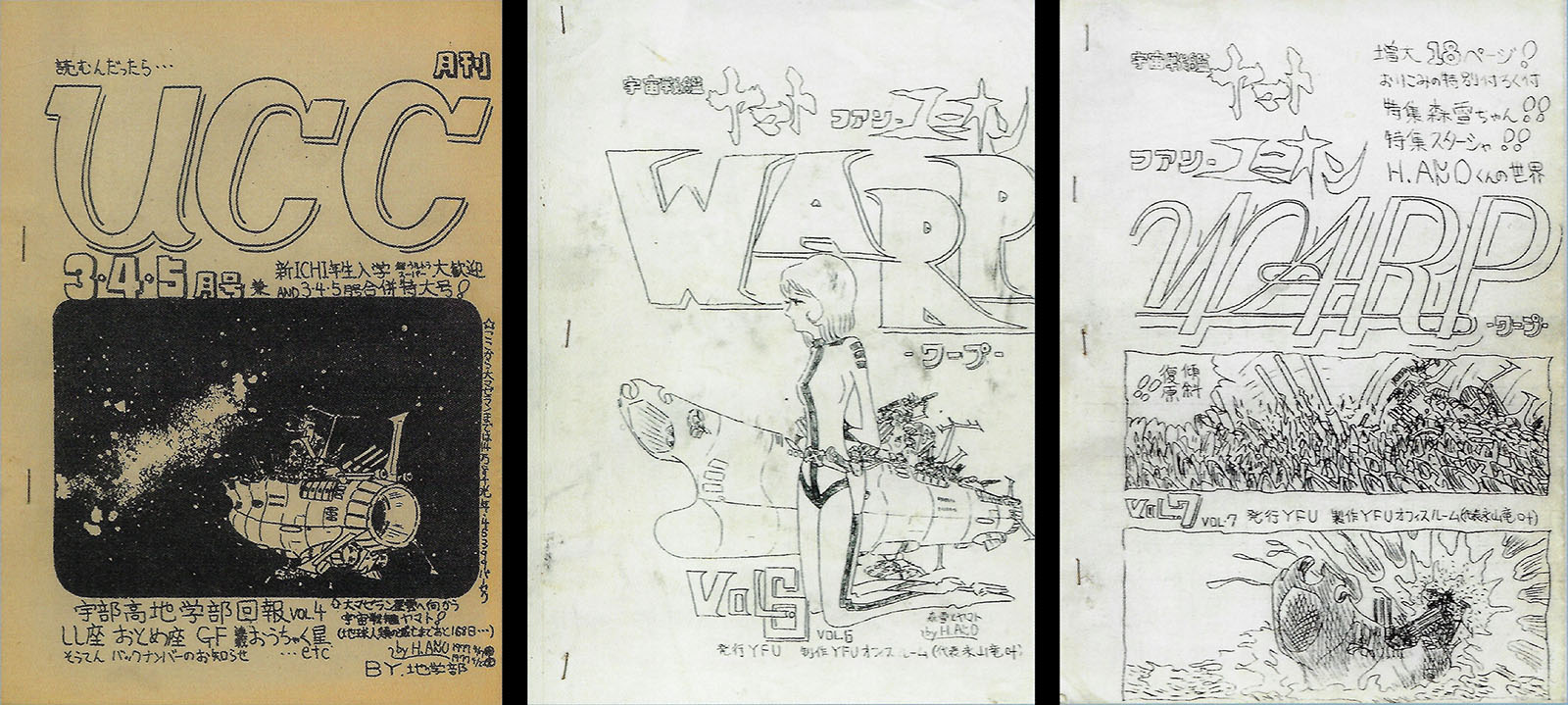
Hikawa: So you expanded your interests that way.
Anno: I also bought science books even though I didn’t really understand them, studying things like relativity theory. I started reading a wide range of SF novels too. That was partly influenced by my friends at the time.
Hikawa: Using books to explore the physics behind SF was a classic thing to do back then.
Anno: But there were so many parts I didn’t understand while reading them, I couldn’t finish them. As soon as equations appeared, I was done for. Skipping the equations just made the rest even harder to follow. I went to a science-focused high school, but I couldn’t grasp it, so I bought a few books and gave up. I also started buying books on shipbuilding and military topics. I think my interest shifting in that direction was influenced by Yamato.
Hikawa: Shipbuilding – were those specialized books?
Anno: Yeah, they were specialized books on things like how to build ships.
Hikawa: The kind that start with the keel and structural design and such?
Anno: Right. I also bought books on the structure and construction of large ships.
Hikawa: Did you build models?
Anno: I tried hard with the models, but I never finished one. I lacked the patience and skill to complete them. Plus, that first Yamato plastic model just felt like “This isn’t it!”
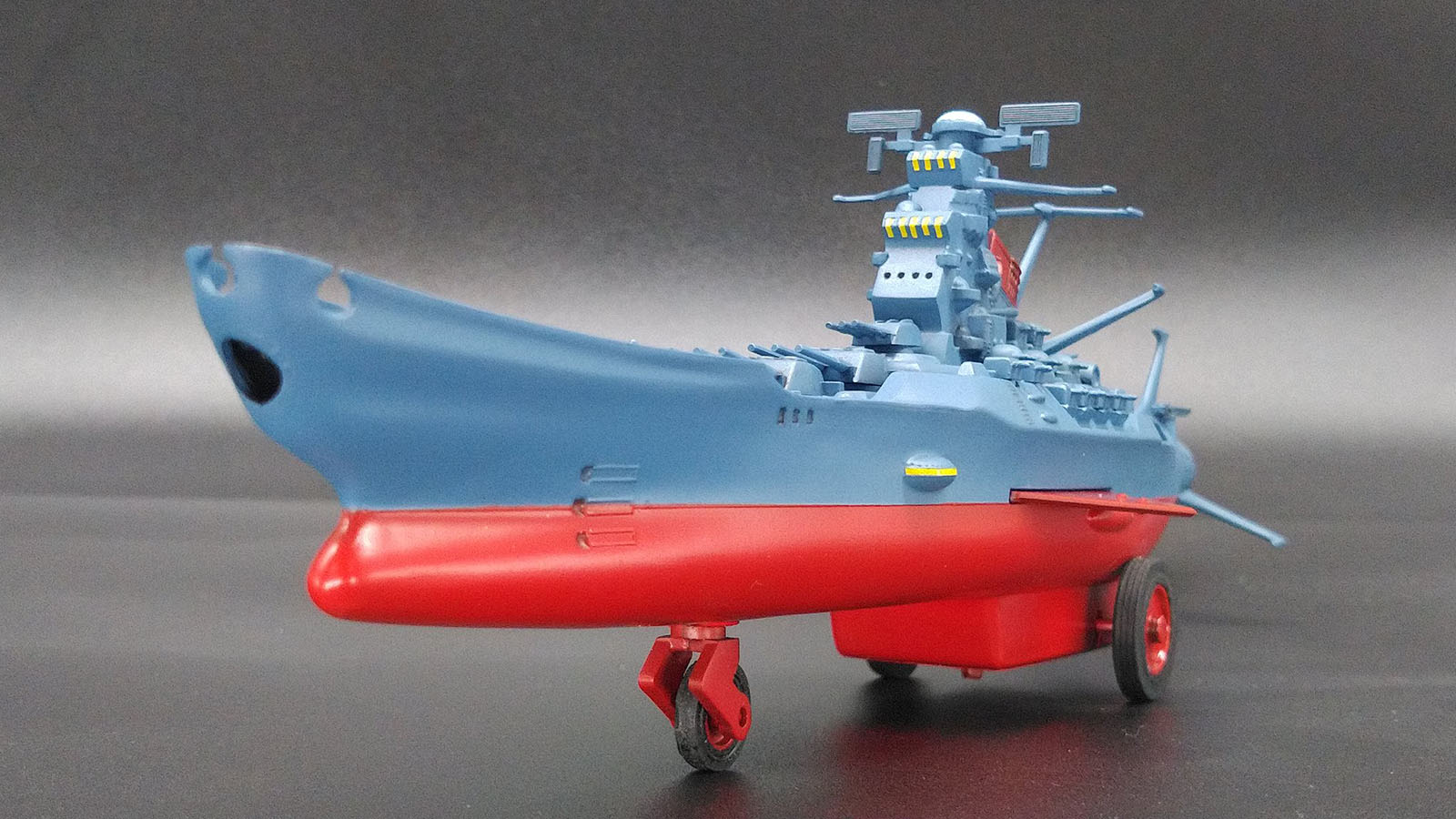
Hikawa: Yeah, yeah. It had a windup box instead of the third bridge, so I cut it off with nippers. (Laughs)
Anno: I made something like a swirl cutter and cut it off (using an electric wire).
Hikawa: Nichrome wire?
Anno: Yeah, I cut it with nichrome wire and of course attached plastic to the hull bottom where the hole was. I made the third bridge out of clay, but clay alone couldn’t reproduce the fine details. Plus, the overall shape of the ship didn’t match the image from the movie, so I decided to build it myself. In ninth grade, I built the hull from scratch, but I was nowhere near capable of making the main guns, anti-aircraft gun clusters, or the bridge structures. I just didn’t have enough time or energy.
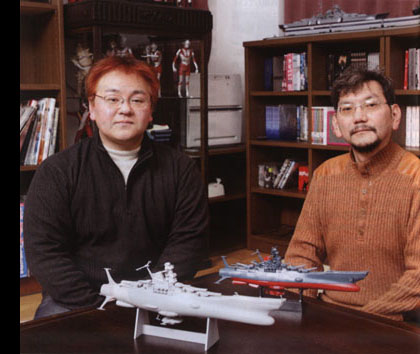
Hikawa: Building the hull itself is impressive.
Anno: I somehow managed to build the hull.
Hikawa: With balsa wood?
Anno: No, I made a frame with plastic sheets and then forcibly bent and attached plastic to it to shape it. I built it with the same structure as the actual ship.
Hikawa: Given how blown away I was by the Yamato‘s level of detail, that part ended up being the bottleneck instead.
Anno: Yeah. It was beyond me then and it still is now. That’s why as an adult, I asked Shoichi Manabe to make the prototype. There are just so many subtle curves, making it really hard to model in 3D.
Hikawa: True. You can’t exactly modify a battleship Yamato kit, either.
Anno: No way. I did consider that initially, though.
Hikawa: You did? I knew it. (Laughs)
Anno: Looking at it now, it’s completely different.
Hikawa: How to put it…structurally, similar parts exist in close areas, but the shapes are entirely different.
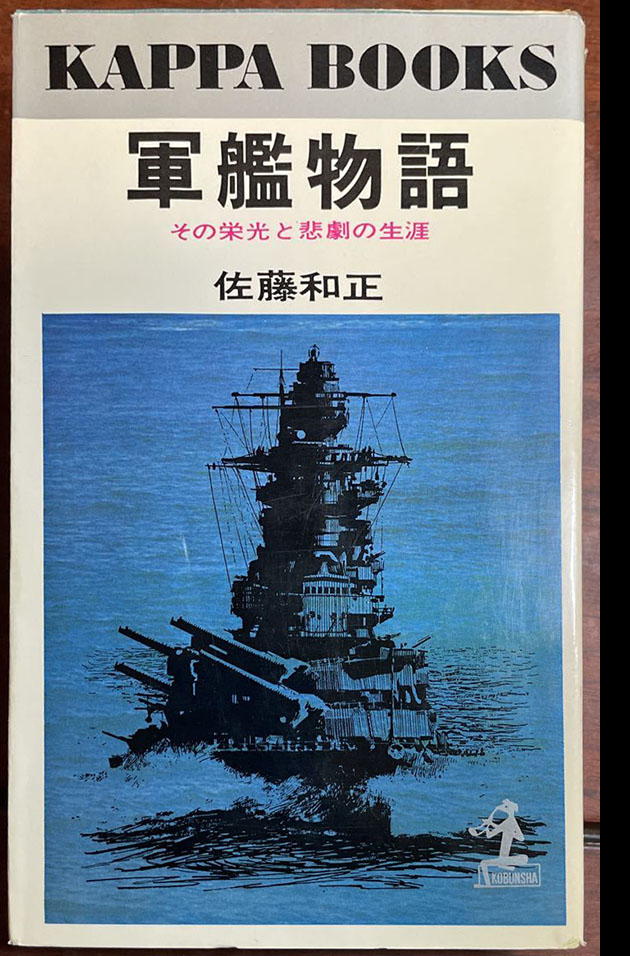
Anno: Right. That said, my growing love for warships and getting hooked on waterline models was thanks to Yamato. That got me buying books on old Japanese naval vessels, like The Story of Warships [left] and I built plastic models. Heavy cruisers and carriers, though just out of the box. Before that, I was only interested in Yamato and Musashi, but my interest expanded to carriers, heavy cruisers, and destroyers.
Hikawa: Did that interest later influence the naming in Evangelion?
Anno: Yeah, I loved it. Back then, I’d buy specialized books to research and decide on names for Imperial Japanese Navy vessels, but now you can just look them up online and get the names instantly, so it’s much easier.
Hikawa: Specialized books, like illustrated catalogs?
Anno: Yeah. Like, “Oh right, Fuyutsuki, that one.” I didn’t remember every single ship.
I wanted to command Yamato myself
Anno: And thanks to Yamato, I kept watching anime even through high school, my gap year, and college. That was the biggest factor. Before Yamato, my classmates were thinking things like, “Maybe it’s time to graduate from TV anime.” Sure, some friends watched Casshan in 7th grade, but by 8th grade, the number of people watching TV anime dropped dramatically.
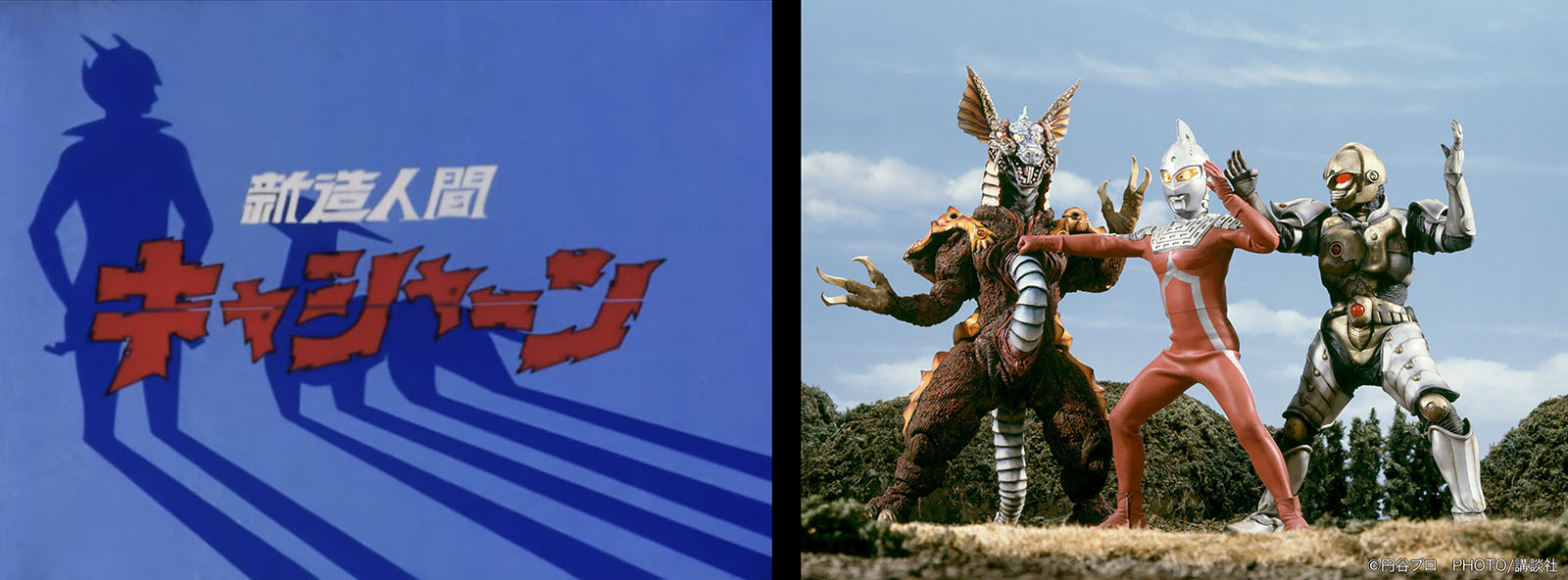
Hikawa: That’s 14 years old, after all.
Anno: Talking about TV anime with others just led to increasingly mismatched conversations. Out of my entire grade, only three people watched Yamato and could discuss it. Yet I kept watching it precisely because it was Yamato. It was worthy of what we’d now call evangelism.
As I mentioned earlier, one great thing about Yamato was that it wasn’t childish. Middle school boys our age could watch it without feeling embarrassed. The work had pride, and being able to maintain that pride when recommending it was huge.
Hikawa: Yeah, I definitely felt that too.
Anno: I think Ultra Seven, which Mamoru Oshii also watched in real time, was equally worthy. It didn’t feature many children either. Even when children appeared, Shinichi-kun used them skillfully, right?
Interviewer: Like in Episode 42, The Messenger of Nonmaruto, right?
Anno: It wasn’t as childish as Ultraman, and there were plenty of episodes of Seven and Return of Ultraman that teens could watch just fine. That aspect really matters. That said, it’s impressive that Oshii-san, who was older at the time, was watching kids’ shows. Even when acquaintances told him “Gundam is just robots piloted by kids,” he could say, “No, no, it’s Mobile Suits.” It was great that it could be recommended to friends, not just middle and high schoolers, but college students too. And The Great Zubat was another one college students could recommend without issue.
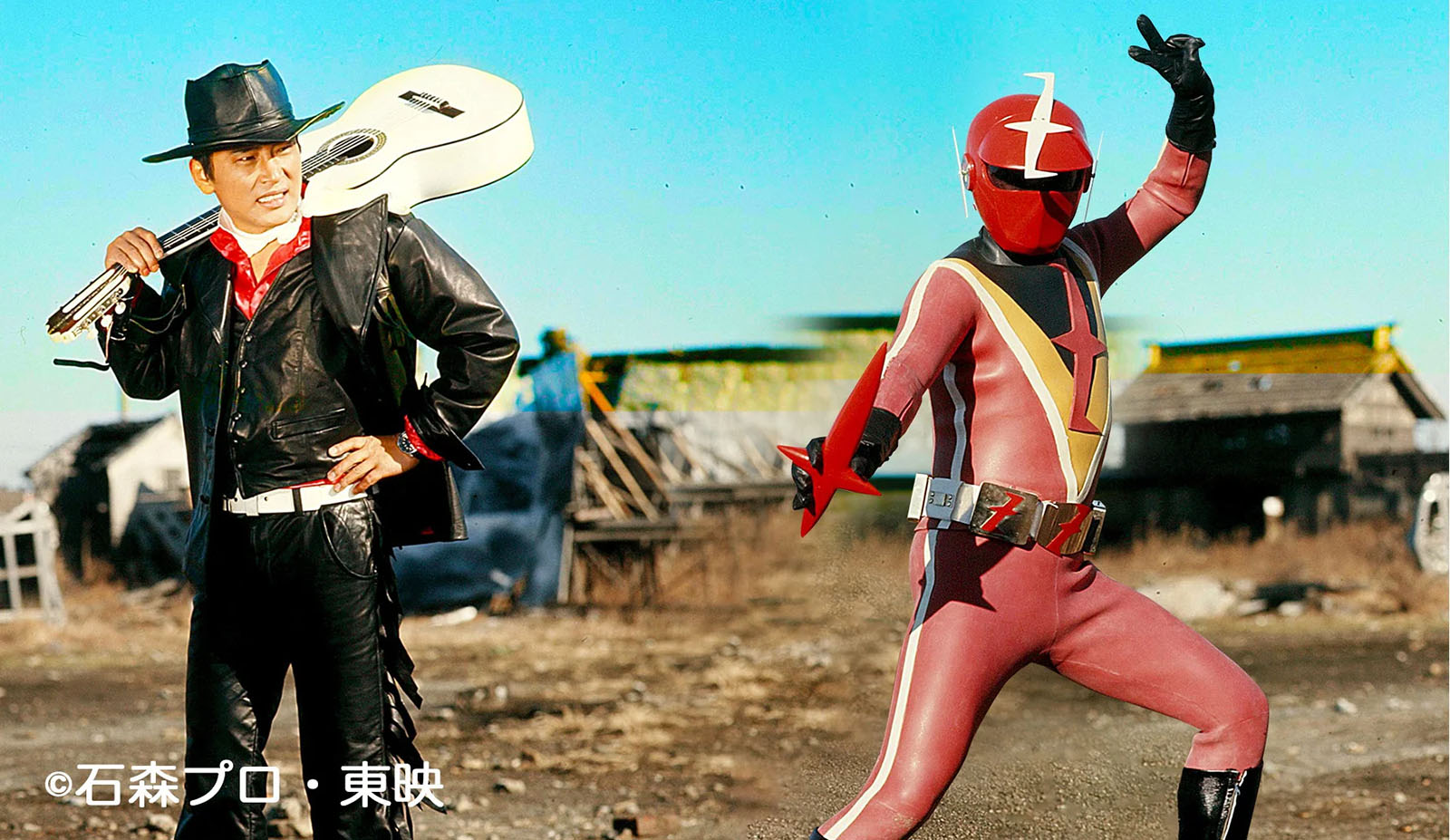
Hikawa: The Great Zubat?
Anno: Zbat isn’t something college students would be embarrassed to watch.
Hikawa: Because the enemies aren’t cyborgs or monsters, they’re just villains and their bodyguards.
Interviewer: It seems college students were actually a big part of the audience.
Anno: The fact the enemies were large-scale yakuza groups gave it a strange realism. Plus, kids would just get blown up without much fuss.
Interviewer: Like blowing up a hut with kids inside using propane gas, suddenly blowing up kids on a boat, or trying to shoot them.
Anno: That kind of depiction would be quite difficult today. Nowadays, they have big cement explosions that would be hard to pull off back then, and the visuals are flashy and great. I also liked watching the Time Bokan series, but I didn’t really recommend it to people. It was more of a personal taste. What I did recommend to others was Future Boy Conan. Back then, just the fact it was an NHK program was enough to get people to watch it.
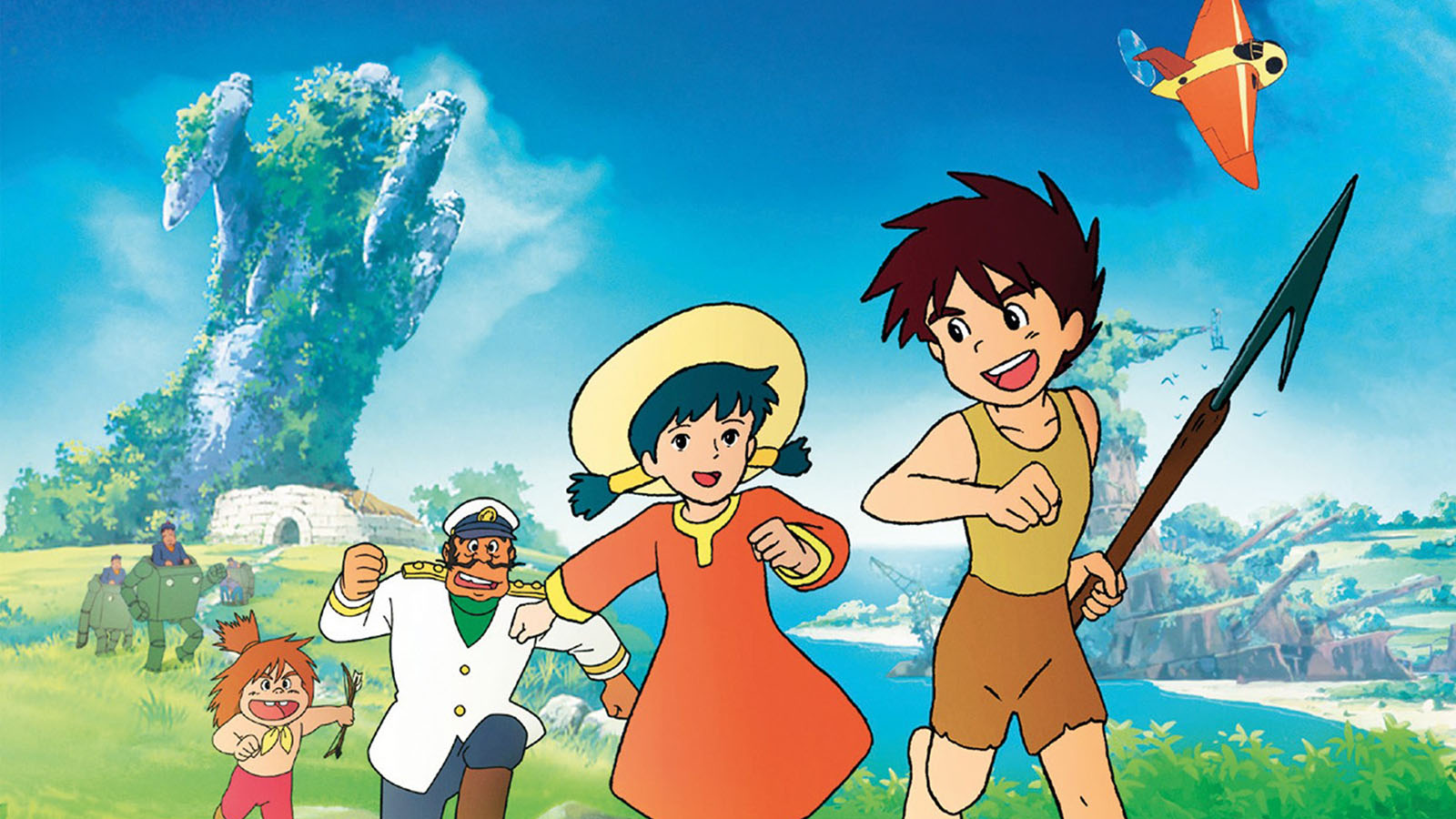
Hikawa: That’s quite the endorsement. Another thing I’d like to ask about is the Yamato animation you made yourself.
Anno: It’s about five seconds of film I shot with an 8mm camera when I was in my second year of high school.
Hikawa: It had been quite a while since the TV broadcast ended.
Anno: It had. Around my second year of high school, we became able to handle cel animation ourselves. I became the art club president, so I could use the art club’s budget directly. I appealed to the student council to get the art club’s cultural festival budget increased, and I poured all of it into cel animation. Cels, cel paints, and such were far beyond what a high schooler’s allowance could buy, so I used the art club funds to purchase them. Since it was an art club activity, the members painted the cels for me, which was really helpful.
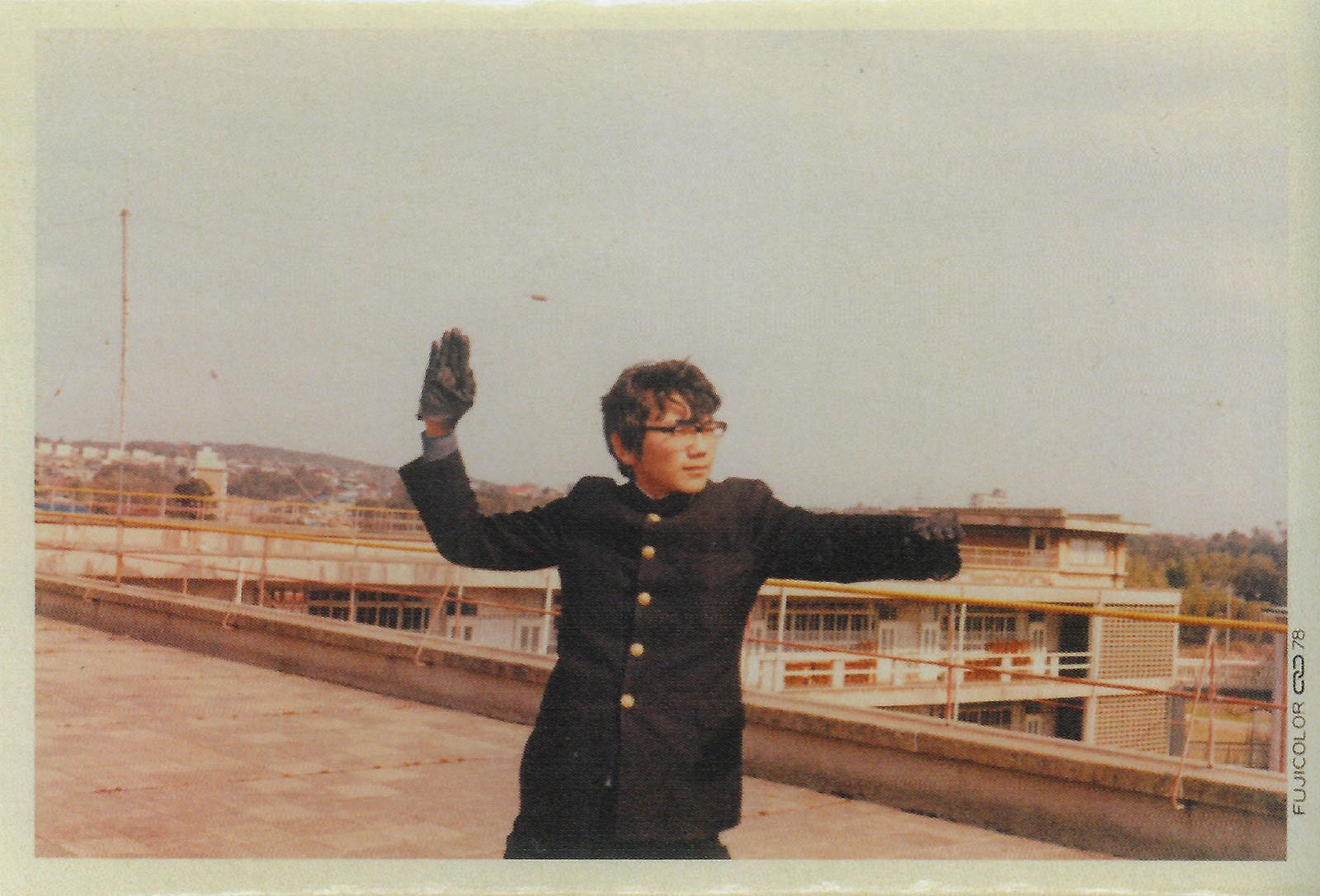
Filming Nakamu Rider, 1978
Even so, I used every last yen of my saved allowance to buy the 8mm film, development costs, camera equipment, and editing gear. For Nakamu Rider, which we made for the festival, the club funds covered the film and development costs, but everything else came out of my own pocket. I poured all my allowance into it, and that’s how I learned about independent filmmaking. If it wasn’t for Yamato, I don’t think I’d ever have had the idea to make my own anime. That desire to draw and animate Yamato myself is really my origin point, my motivation.
Hikawa: So, what was it like actually drawing Yamato yourself? Moving it around?
Anno: Man, it’s got a lot of lines.
Hikawa: And when you animate all those lines, you have to trace every single one.
Anno: I did it by drawing the entire sequence at once. I hadn’t studied animation or anything like that. I was completely self-taught. All I knew was to draw the black lines directly on the cels with a pen and then paint the colors from behind. I’d seen books mentioning things like light boxes, but I couldn’t afford one.
Hikawa: So you drew the lines directly on the cels without sketching on paper first?
Anno: When you draw on paper, you need light to see the lines through, but with cels, you can just layer them and draw directly on top without any preparation. Drawing directly on the cel without a preliminary sketch meant you didn’t need a light table. I thought that was a huge invention. So I’d draw something on one cel, then layer the next cel on top and draw on that. The first animation I did that way was of Yamato flying, gradually coming forward. The part where it moves forward while getting bigger? Well, drawing it gradually became a hassle, and I thought, “Ah, if I make it bigger, I’ll have fewer lines to draw,” and “Ah, if it comes closer, it’ll be easier”. (Laughs) I actually wanted to have it rotate and stuff like that.
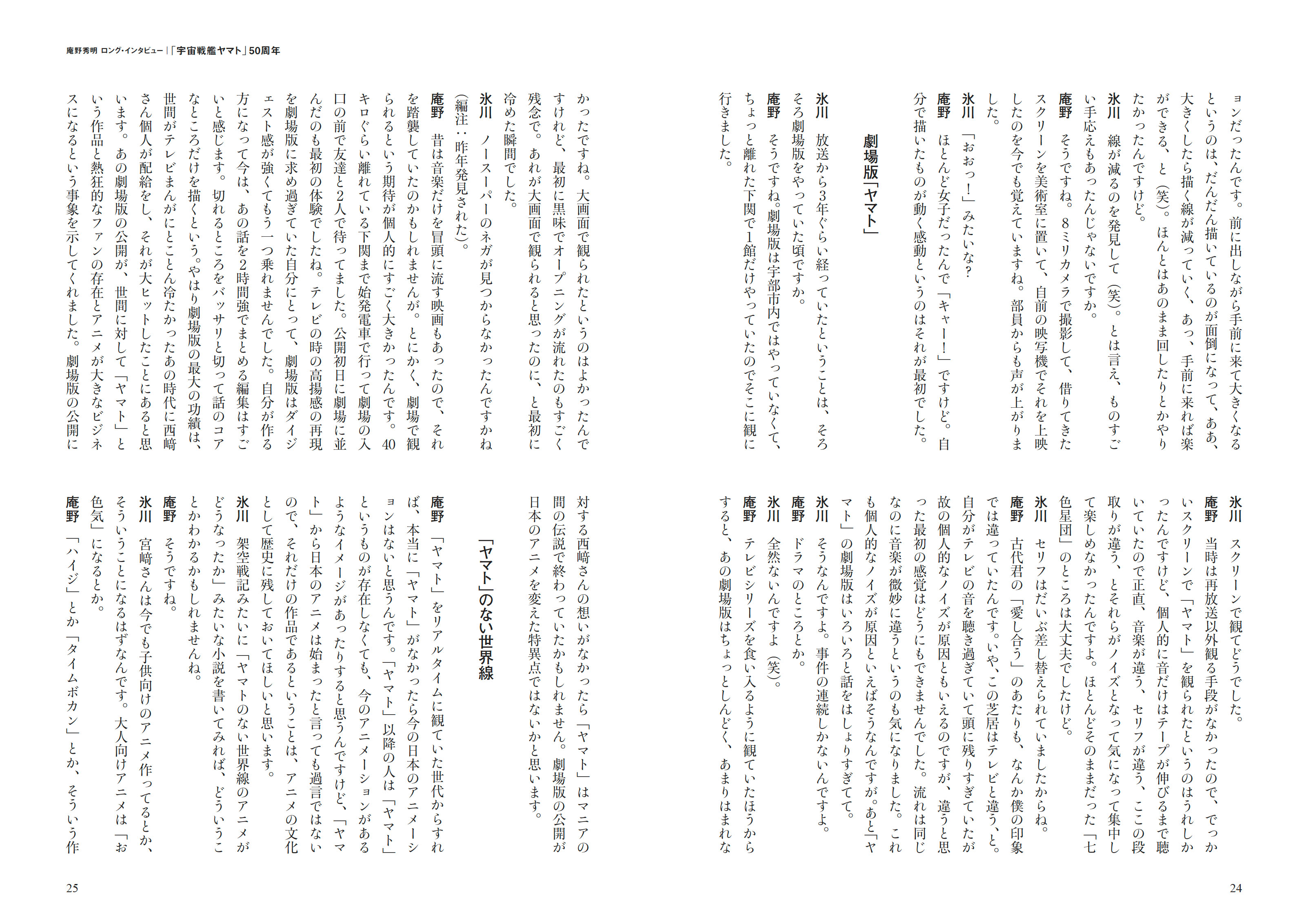
Hikawa: Discovering that it reduced the lines. (Laughs) Still, it must have felt incredibly rewarding, right?
Anno: Yeah. I still remember shooting it with an 8mm camera, setting up a borrowed screen in the art room, and projecting it with our own projector. The club members reacted too.
Hikawa: Like, “Whoah!”?
Anno: Since it was mostly girls, it was more like “Eeek!” But that was my first time feeling the thrill of seeing something I drew actually move.
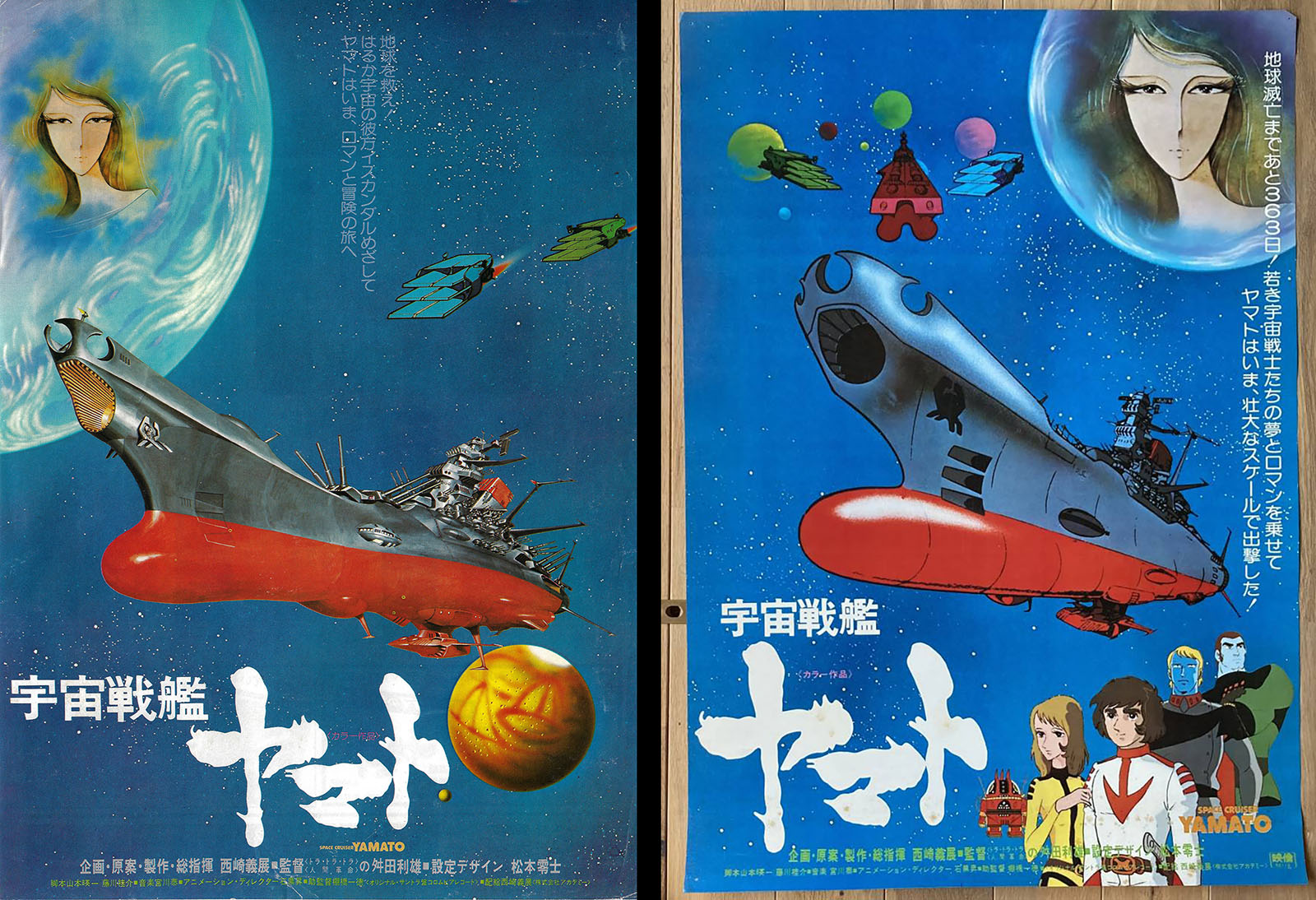
Yamato Theatrical Version
Hikawa: That was about three years after the broadcast? That must have been around the time the theatrical version was out.
Anno: Right. The theatrical version wasn’t showing in Ube City itself. Only one theater in nearby Shimonoseki was screening it, so I went there to see it.
Hikawa: What was it like seeing it on the big screen?
Anno: Back then, reruns were the only way to watch it, so seeing Yamato on a huge screen was exciting. But personally, I’d listened to the soundtrack on tape until it stretched out, so honestly, the different music, different lines, different pacing — all that felt like noise. It bothered me and I couldn’t concentrate and enjoy it. The Rainbow Star Cluster part was mostly unchanged, so that was fine.
Hikawa: The lines were replaced quite a bit, after all.
Anno: The part where Kodai says “We should love each other” also felt different to me. I mean, this performance was different from the TV version. You could say it was personal noise caused by me listening to the TV audio too much and having it stuck in my head, but I couldn’t shake that initial feeling that it was different. Even though the flow was the same, the music being subtly different bothered me too. You could say that was also caused by personal noise. Plus, the movie version skipped over so much of the story.
Hikawa: Exactly. It’s just a series of incidents.
Anno: With none of the dramatic parts.
Hikawa: There’s none of that at all. (Laughs)
Anno: Coming from someone who watched the TV series intently, that movie version was a bit tough to get into and I couldn’t really immerse myself. Seeing it on the big screen was great, but the opening sequence starting with a black screen was really disappointing. I was so looking forward to seeing it on the big screen, and that was the moment I felt my excitement drop.
Hikawa: Maybe they couldn’t find the negative for the opening sequence (Editor’s note: It was discovered last year).
Anno: Back in the day, some movies would just play music at the beginning, so maybe they were following that tradition. Anyway, my personal expectations for seeing it in theaters were incredibly high. I took the first train to Shimonoseki, about 40 kilometers away, and waited with a friend right in front of the theater entrance. It was my first time lining up at a theater on opening day. For me, who was expecting the movie version to recreate the excitement I felt watching it on TV, the theatrical cut felt too much like a digest version, and I just couldn’t get into it.
Now that I’m on the production side, I truly appreciate the editing that condensed that story into just over two hours. Cutting away everything non-essential to focus solely on the core narrative. I believe the film version’s greatest achievement was that, in an era when society was utterly cold toward TV anime, Mr. Nishizaki personally handled its distribution, and it became a massive hit. The theatrical release demonstrated to the world the existence of Yamato, its passionate fanbase, and the potential for anime to become a major business. Without Mr. Nishizaki’s determination to release the theatrical version, Yamato might have remained a legend confined to enthusiasts. I believe the theatrical release was a singularity that changed Japanese animation.
A World Without Yamato
Anno: For those of us who watched Yamato in real time, I truly believe Japanese animation as we know it today wouldn’t exist without Yamato. People who came after Yamato might imagine current animation existing even without it, but it’s no exaggeration to say Japanese anime began with Yamato. It’s a work of that magnitude, and I hope it remains preserved in animation history as part of its cultural legacy.
Hikawa: Maybe if someone wrote a novel like an alternate history, exploring what anime would be like in a world without Yamato, it would help illustrate that point.
Anno: That’s true.
Hikawa: Miyazaki would probably still be making kids’ anime, or something like that. Adult anime would just become all about “sex appeal.”
Anno: Works like Heidi or Time Bokan might have remained, and that could have been the end of it. Or it might have appeared much later. The key person there is definitely Yoshiyuki Tomino, right?
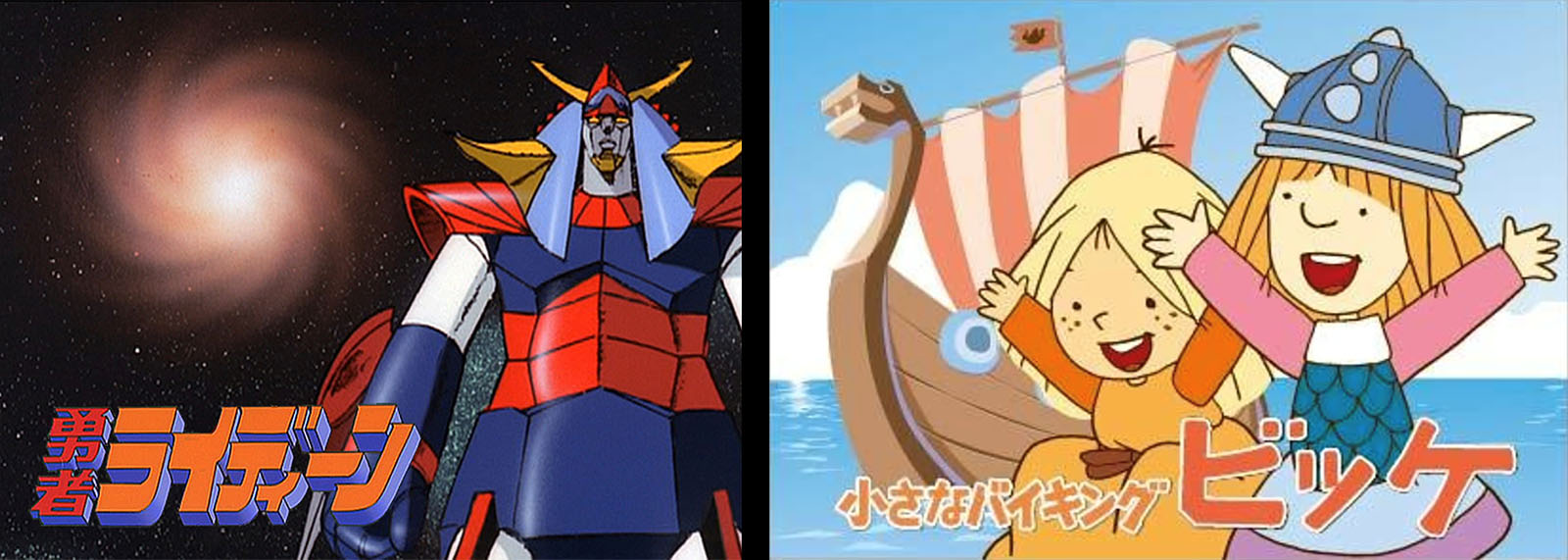
Hikawa: Right after Director Tomino took on Brave Raideen, he was asked to be chief director for Little Viking Bikke. If those roles had just been swapped around, history would have changed drastically.
Anno: Tomino was anti-Yamato, so without Yamato, I don’t think he would have made robot shows like Gundam.
Hikawa: He said Yamato was his imaginary enemy, right?
Anno: Yes. Instead of making Gundam, which was explicitly about defeating Yamato, he might have focused on classic stories and toy-oriented combination robot shows.
Hikawa: Or what about Mamoru Oshii?
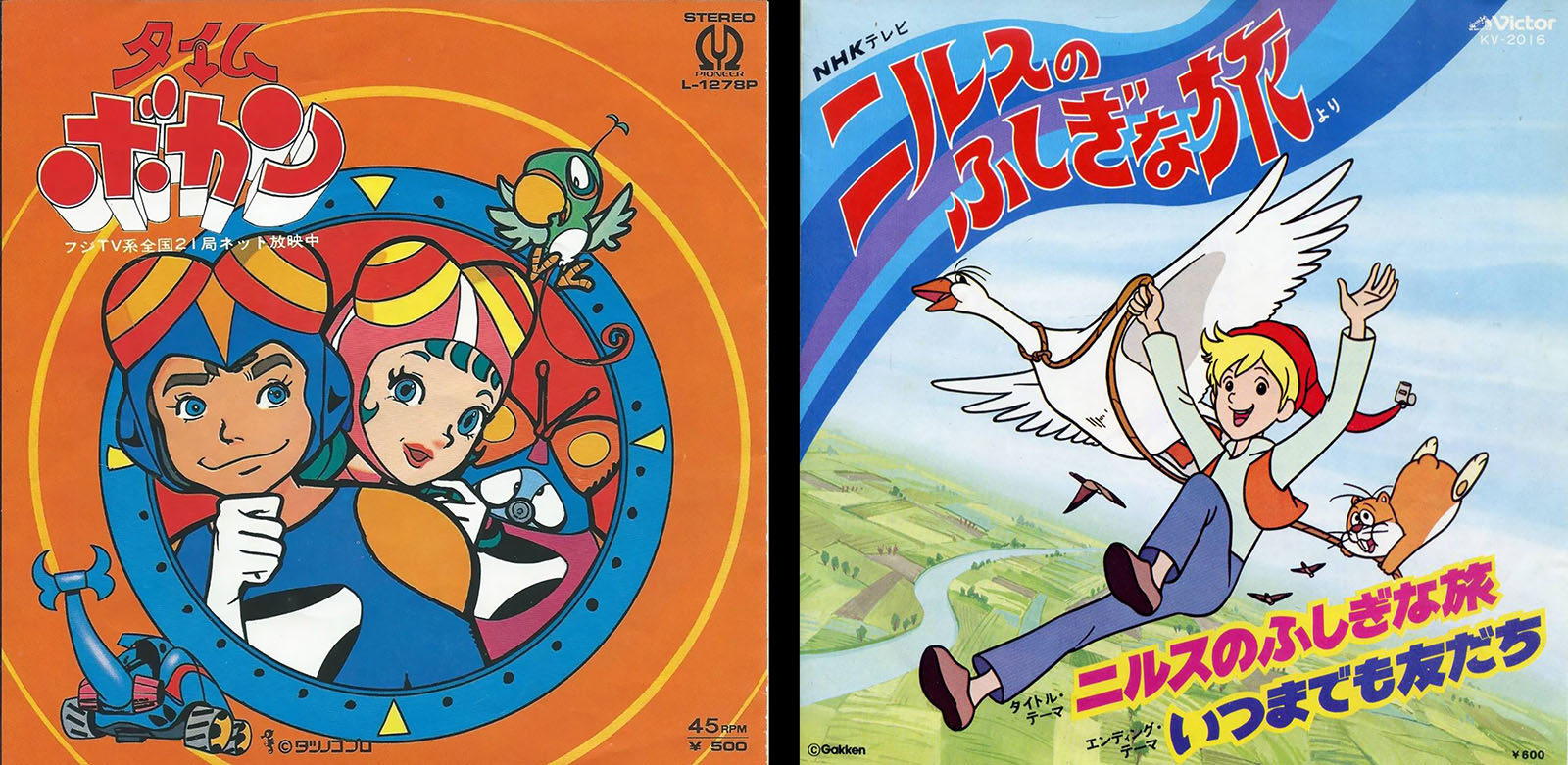
Anno: Oshii-san…I think he was involved with the Time Bokan series and Nils’ Wonderful Journey, but after that, I’m not sure. He might have left anime altogether pretty early on.
Hikawa: It probably would have just become all “classic masterpieces” when you talk about Japanese anime.
Anno: If the anime boom after Yamato hadn’t happened in the 80s, we wouldn’t even know if manga-based series like Urusei Yatsura or Touch would have been adapted into TV anime.
Hikawa: How do you view Star Wars?
Anno: Star Wars and Yamato…
Hikawa: The staff definitely watched it before making their own stuff. (Laughs)
Anno: Without Yamato, who knows if Star Wars would have turned out the way it did. And Evangelion definitely wouldn’t exist. I wouldn’t have been making anime.
Hikawa: I think the Yamato movie, although it may not be the best way to put it, brought together a lot of adults who were sensitive to the smell of money. In other words, it showed that it could be a business, which proved hugely significant later.
Anno: That’s right. I think Yamato was the first to openly demonstrate to the world that “anime can make money.” Back then, even newspapers and weekly magazines picked it up and made a big fuss about it. Whether now or then, public interest boils down to economic impact. The numbers. The same goes for Gundam. If Gundam hadn’t shown the world through Gunpla [model kits] that animation could still make money after TV broadcasts ended, I don’t think animation would have become as widespread as it is today.
Hikawa: Also, with the Yamato theatrical version, going to the theater and seeing all the postcards and merchandise available was something Yamato really changed.

Anno: I bought all the early Yamato goods. The gum, the cards, everything.
Hikawa: During the broadcast?
Anno: Yes, starting during the broadcast. That was about all the reference material you could get in the provinces back then. The cards were especially good.
Hikawa: The mini cards (from Amada Printing’s candy shop products). Those were precious scene photos for the time.
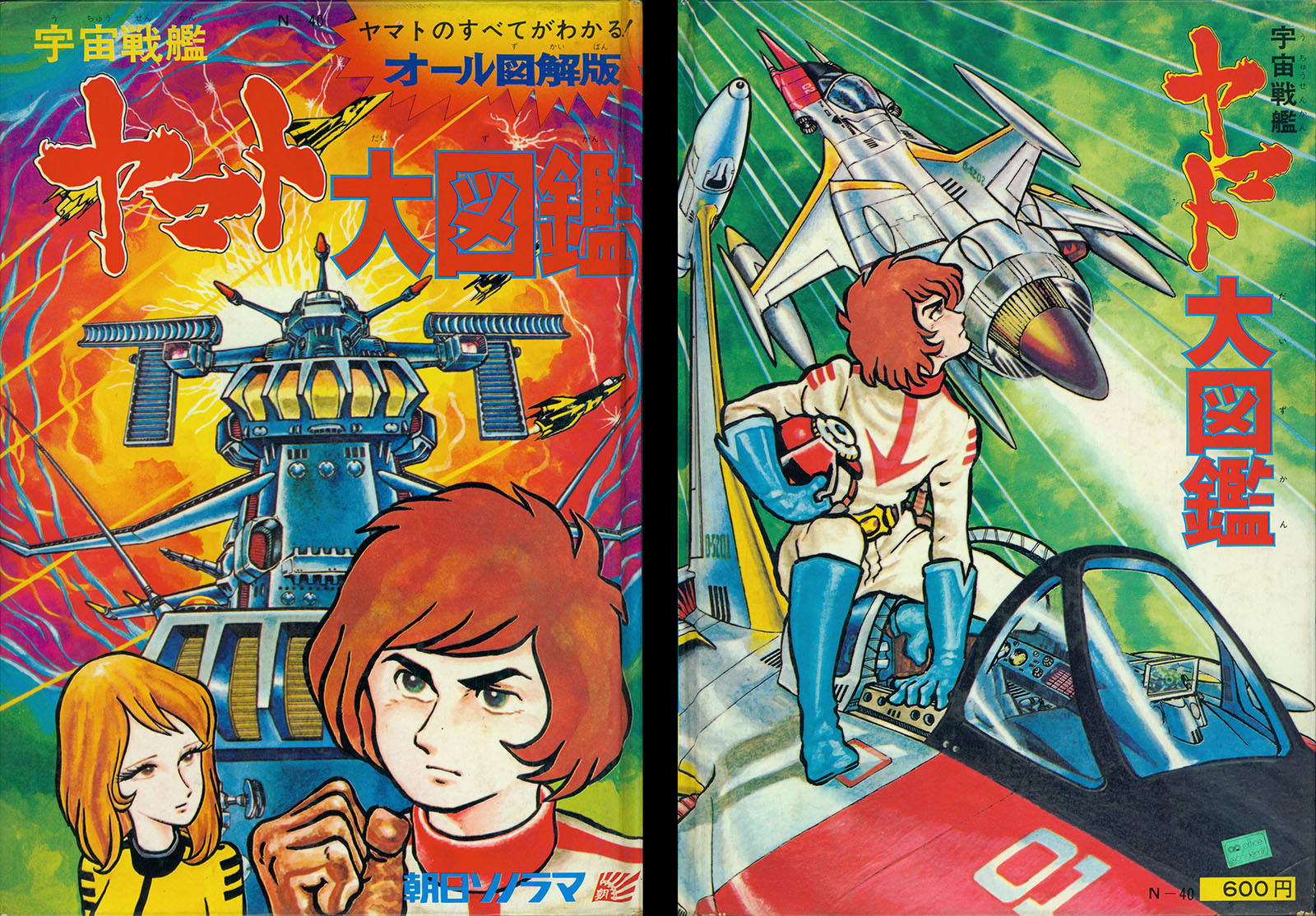
Anno: Back then, we hadn’t even gotten to the point of filming the TV screen with cameras. I found the Space Battleship Yamato Big Picture Book at a bookstore on my way home from school and bought it overjoyed. It was so rich in reference material I looked through it so many times the pages fell out. (See this book from cover to cover here.)
And the fan community, the fandom, really expanded and grew into a nationwide network starting with Yamato. I think fan activities for Cyborg 009, Triton of the Sea, and tokusatsu existed before, but the proliferation of fanzines, the nationwide spread of anime fans banding together, and the systematic use of fans for promotion all started with Yamato, right?
Hikawa: Mr. Nishizaki had a real business sense for that sort of thing.
Anno: Mobilizing nationwide Yamato fan clubs on command was incredible. Buying doujinshi came with TV screen photos. They were monochrome with scan lines making them blurry, but just seeing “Ah, Yamato is in this” was precious. Expanding fan activities was also Yamato‘s achievement.
Hikawa: It wasn’t just about feeling satisfied once the show ended. They made sure it wouldn’t fade away.

Anno: Yamato was also the first to provide a place where fans could continue loving the work even after the show ended. I joined my first fan club. I also started buying Fantoche (a quarterly animation magazine launched in ’75). Back then, before Animage existed, Fantoche was the only dedicated anime magazine.
Hikawa: It featured Yamato photos too.
Anno: I also bought Animation (a bimonthly supplement to Picture Book magazine by Subaru Shobo). Seeing Miyazaki-san’s running technique explanations in there – like, “Ah, that’s how you draw it!” – was incredibly educational.
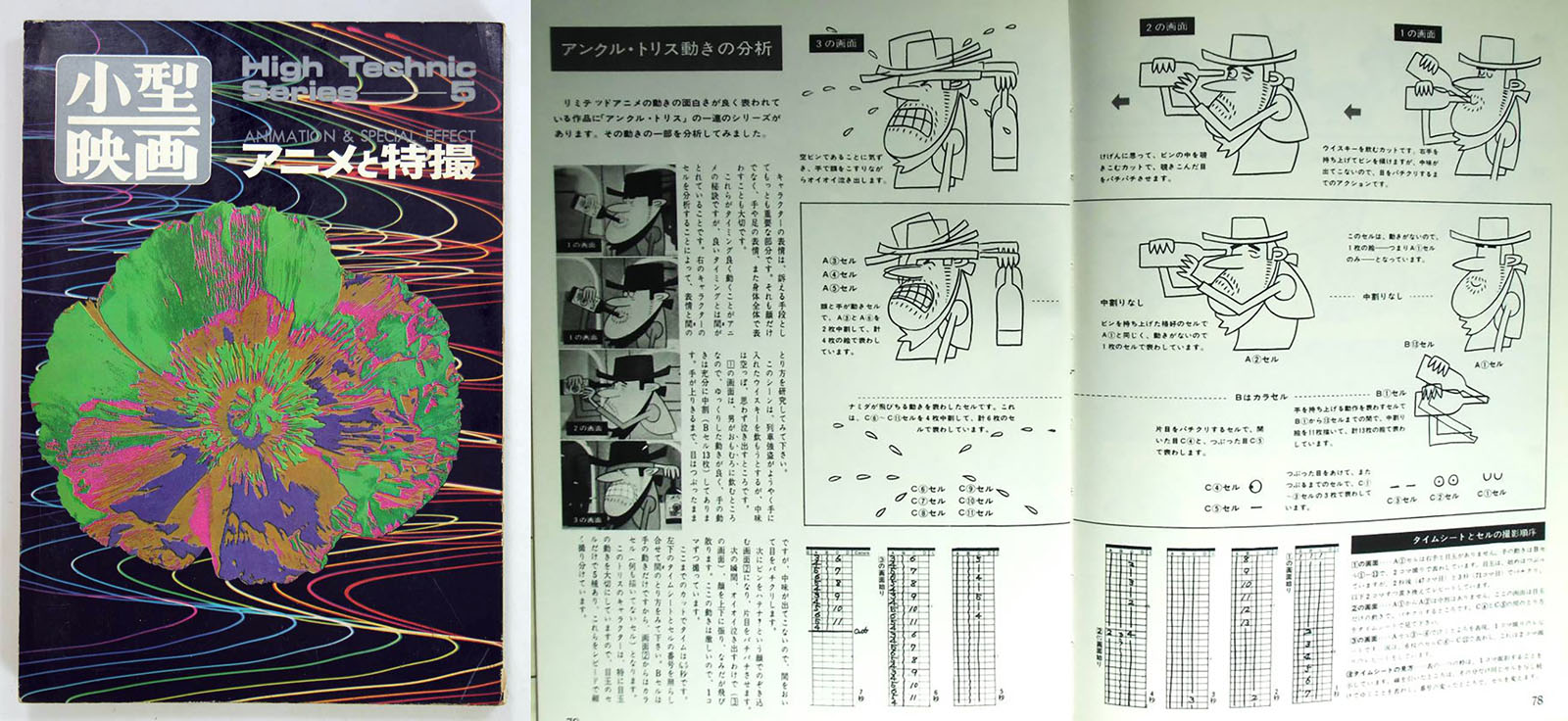
Up until then, the only anime books available were things like Small-Scale Film, Anime and Tokusatsu (Genkosha, an amateur guide for 8mm film), so suddenly finding practical techniques written down was incredibly educational. Though, personally, I didn’t draw much ‘running’ myself. (Laughs)
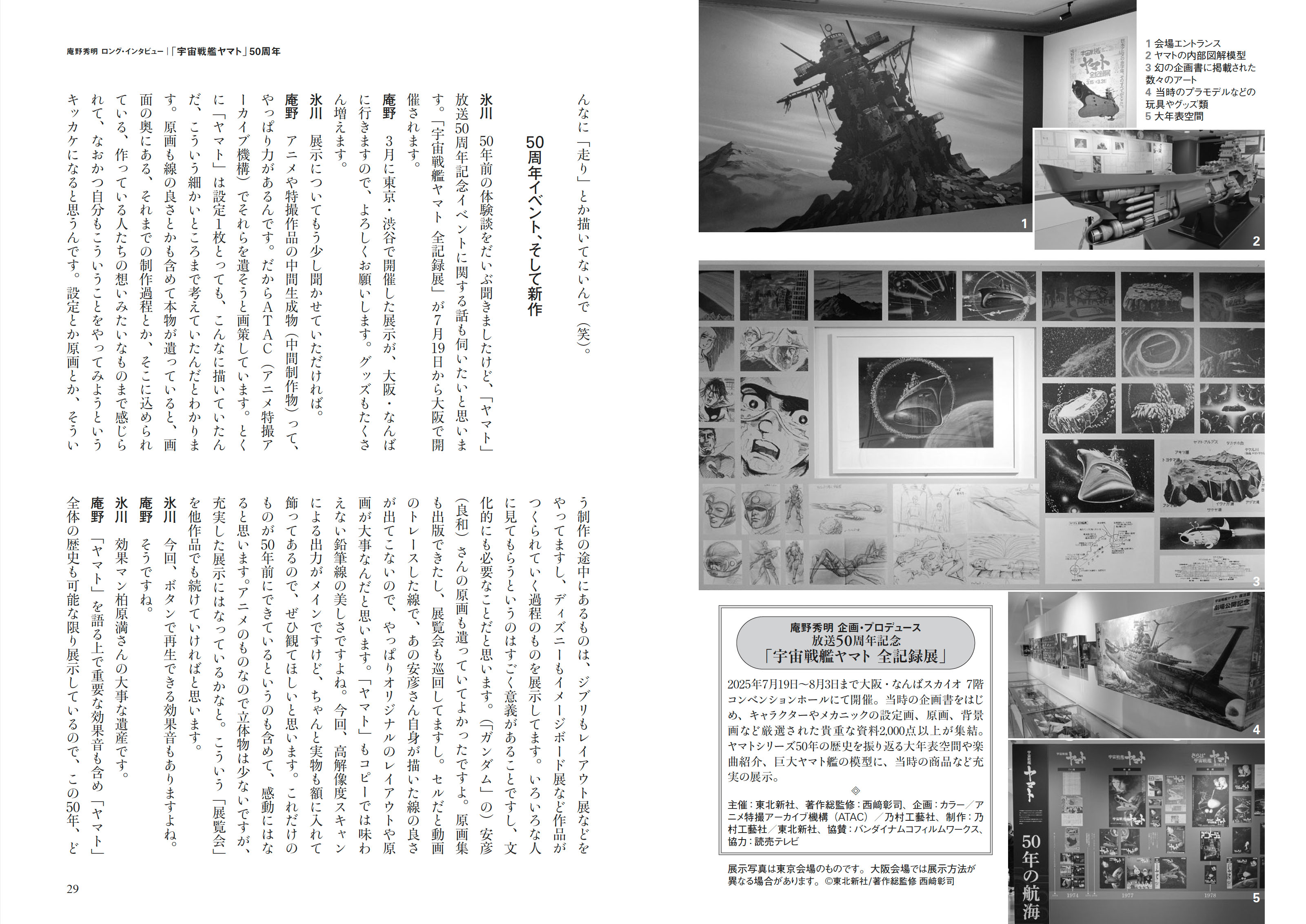
Space Battleship Yamato: Complete Records Exhibition, 50th Anniversary Commemoration
Planning & Production by Hideaki Anno
To be held July 19 – August 3, 2025 at Namba SkyO Convention Hall, 7th Floor, Osaka. Over 2,000 carefully selected valuable materials gathered, including the original proposal documents, character and mecha design drawings, original artwork, and background art. Features a grand timeline section reflecting on 50 years of Yamato series history, music introductions, a giant Yamato model, and products from the era.
Exhibition photos are from the Tokyo venue. Display methods may differ at the Osaka venue.
1 Venue Entrance
2 Yamato Internal Diagram Model
3 Artwork Featured in the Phantom Proposal Document
4 Toys and Goods from the Era, Including Plastic Models
5 Chronological Timeline Space
Organized by: Tohokushinsha Film Corporation
Chief Copyright Supervisor: Shoji Nishizaki
Planning: Studio Khara / Anime & Tokusatsu Archive Center (ATAC) / Nomura Kogei Co., Ltd.
Production: Nomura Kogei Co., Ltd. / Tohokushinsha Film Corporation
Sponsored by: Bandai Namco Filmworks
Cooperation: Yomiuri TV
50th Anniversary Event and the New Work
Hikawa: We’ve heard quite a bit about your experiences 50 years ago, but I’d also like to hear about the events for the 50th anniversary of Yamato broadcasts. The Space Battleship Yamato Complete Records Exhibition will be held in Osaka starting July 19th.
Anno: The exhibition we held in Shibuya, Tokyo in March is moving to Namba, Osaka, so please come check it out. We’ll also have a lot more merchandise.
Hikawa: Could you tell us a bit more about the exhibition?
Anno: Intermediate production materials from anime and tokusatsu works really hold power. That’s why we’re working through ATAC (Anime & Tokusatsu Archive Center) to preserve them. Especially with Yamato, even just looking at a single setting sheet, you realize how much was drawn, how much thought went into these fine details. When genuine original artwork, including the quality of the lines, is preserved, you can sense the production process behind the scenes, the passion poured into it by the creators, and it becomes a catalyst for thinking, ‘I want to try something like this too.’
Studios like Ghibli hold layout exhibitions, and Disney displays concept art boards. They showcase the process of how works are created. Showing these to many people is incredibly meaningful and culturally necessary. It’s wonderful that Mr. Yasuhiko’s original artwork has been preserved. We’ve been able to publish art books, and exhibitions are touring. With cels, you only see the traced lines from the animation, not the beauty of the lines Mr. Yasuhiko himself drew. That’s why the original layouts and artwork are so important. The beauty of the pencil lines in Yamato is something you can’t experience with copies.
While the main output this time is from high-resolution scans, some actual originals are also framed and displayed, so I really hope people come to see them. Seeing that all this was created 50 years ago is truly moving. Since it’s anime, there aren’t many three-dimensional objects, but I think it’s a substantial exhibition. I hope we can continue holding these kinds of exhibitions for other works as well.
Hikawa: There are also sound effects you can play with buttons, right?
Anno: That’s right.
Hikawa: They’re an important legacy from sound effects artist Mitsuru Kashiwabara.
Anno: We’ve displayed as much of Yamato‘s entire history as possible, including essential sound effects. So I think it’s an easy-to-understand, accessible exhibition that allows you to look back on the past 50 years and see what happened. I really hope you’ll come see it.
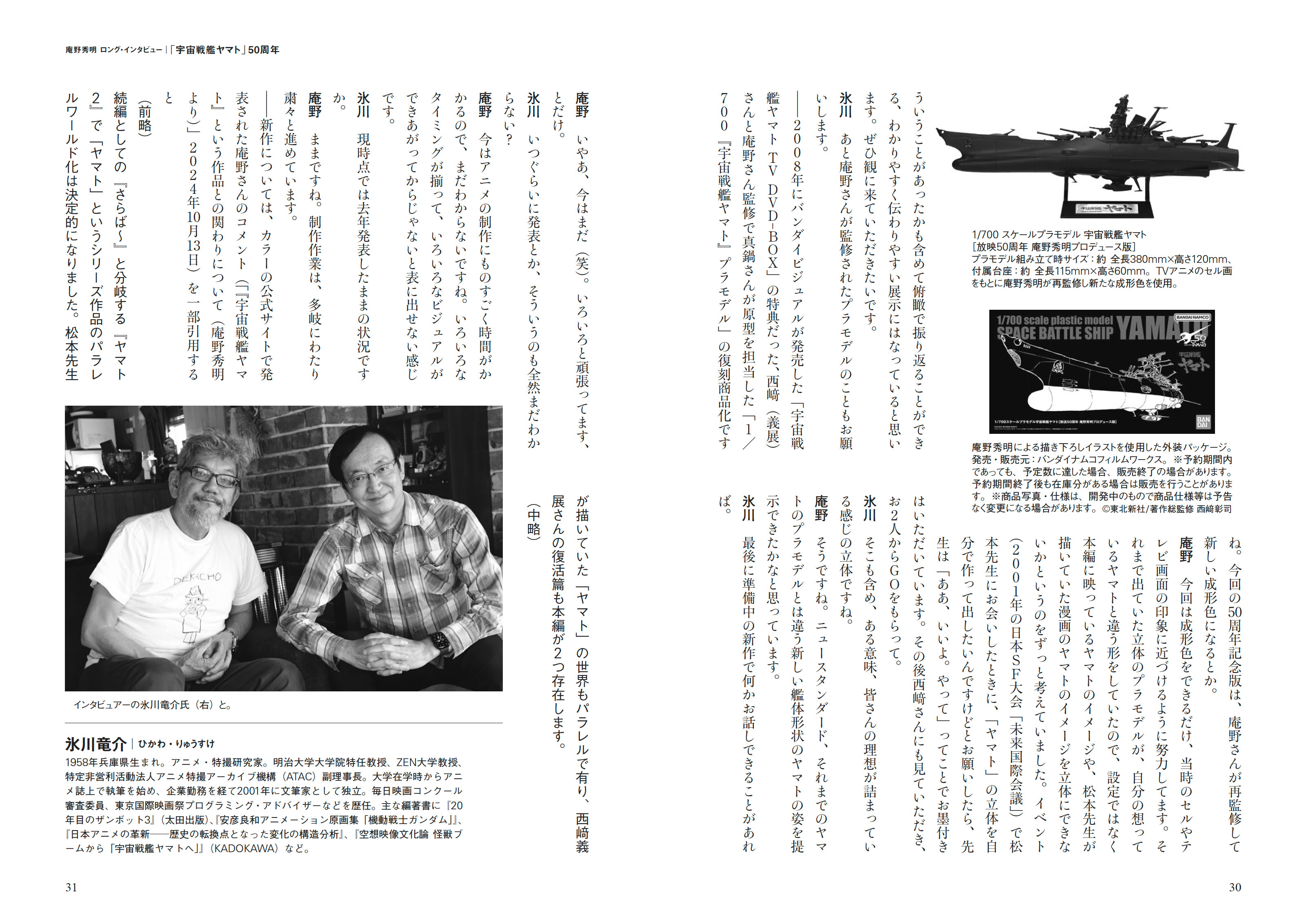
Photo caption: Hideaki Anno (L) with Interviewer Ryusuke Hikawa (R)
Hikawa: Also, please tell us about the plastic model you supervised.
Interviewer: You mean the re-release of the 1/700 Yamato plastic model? It was originally a bonus for the Yamato TV DVD box released by Bandai Visual in 2008. It was supervised by Mr. Nishizaki and Mr. Anno, with Mr. Manabe handling the prototype. This 50th anniversary edition is being re-supervised by Mr. Anno and will feature new molded colors, correct?
Anno: This time, we’re striving to make the molded colors as close as possible to the impression of the original cels and TV image. Previous models didn’t match the Yamato I envisioned. I’d always wondered if we could create a 3D model based not on the design specs, but on the actual image of the Yamato shown in the series, or the Yamato depicted in Mr. Matsumoto’s manga. When I met Mr. Matsumoto at an event (the 2001 Japan SF Convention “Future International Conference”), I told him, “I want to make and release a Yamato model myself.” He said, “Oh, sure. Go for it,” giving me his blessing. After that, I also showed it to Mr. Nishizaki, and I got the green light from both of them.
Hikawa: In that sense too, it feels like a model packed with everyone’s ideals.
Anno: Yes. I think we were able to present a new Yamato with a new hull shape, a new standard different from previous models.
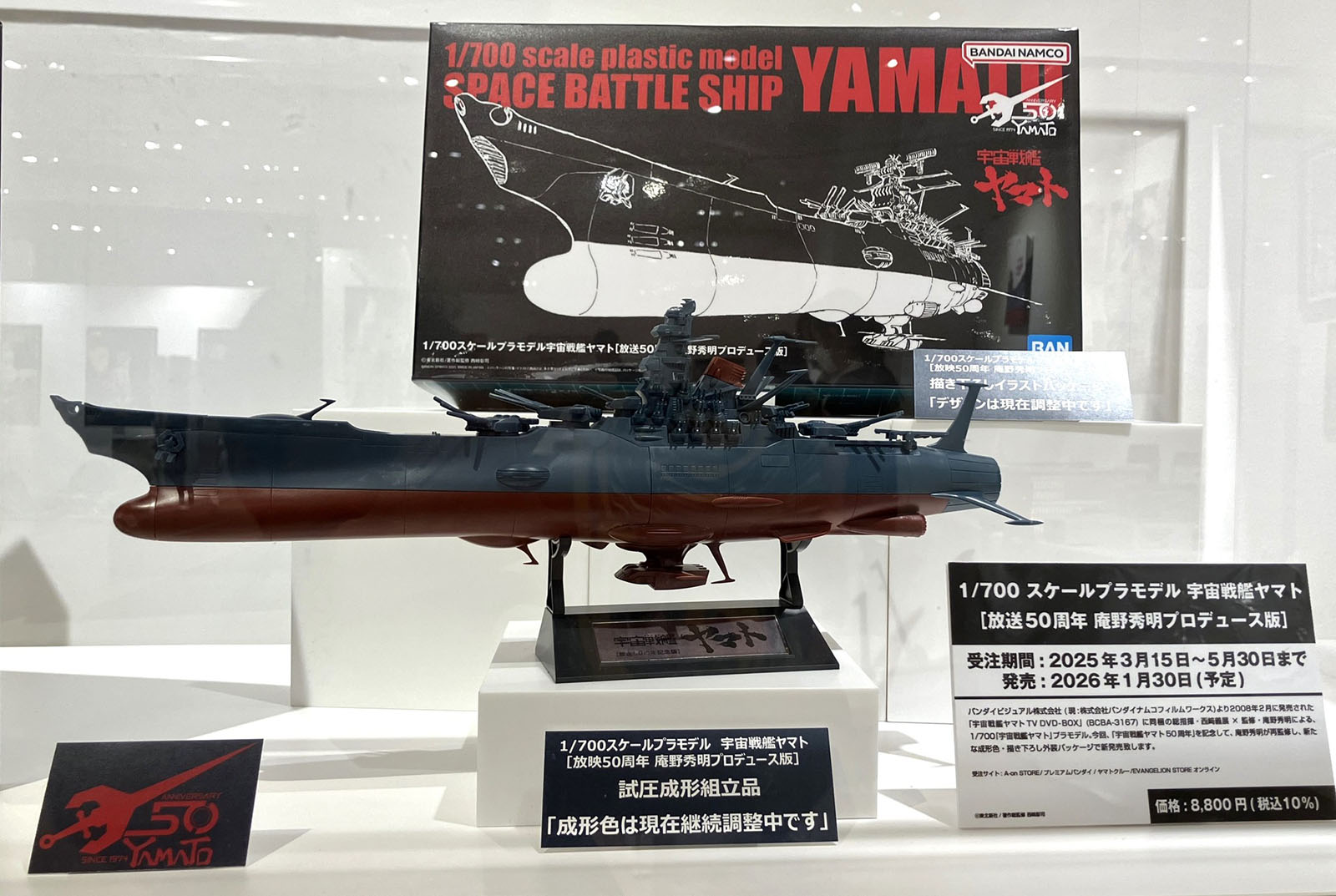
1/700 Scale Plastic Model Space Battleship Yamato [50th Anniversary Hideaki Anno Produced Edition]. Assembled Size: Approx. 380mm length × 120mm height. Included Base: Approx. 115mm length × 60mm height. Based on TV anime cels, re-supervised by Hideaki Anno with new molded colors. Outer packaging features an original illustration by Hideaki Anno. Manufacturer/Distributor: Bandai Namco Filmworks.
Hikawa: Finally, is there anything you can share about the new work currently in preparation?
Anno: Well, not yet. (Laughs) All I can say is we’re working hard on various things.
Hikawa: So you have no idea when an announcement might come or anything like that?
Anno: Right now, anime production takes an enormous amount of time, so it’s still unclear. It feels like we can’t go public until various timings align and various visuals are complete.
Hikawa: So at this point, it’s still the same situation as when you announced it last year?
Anno: That’s right. Production work is steadily progressing across multiple fronts.
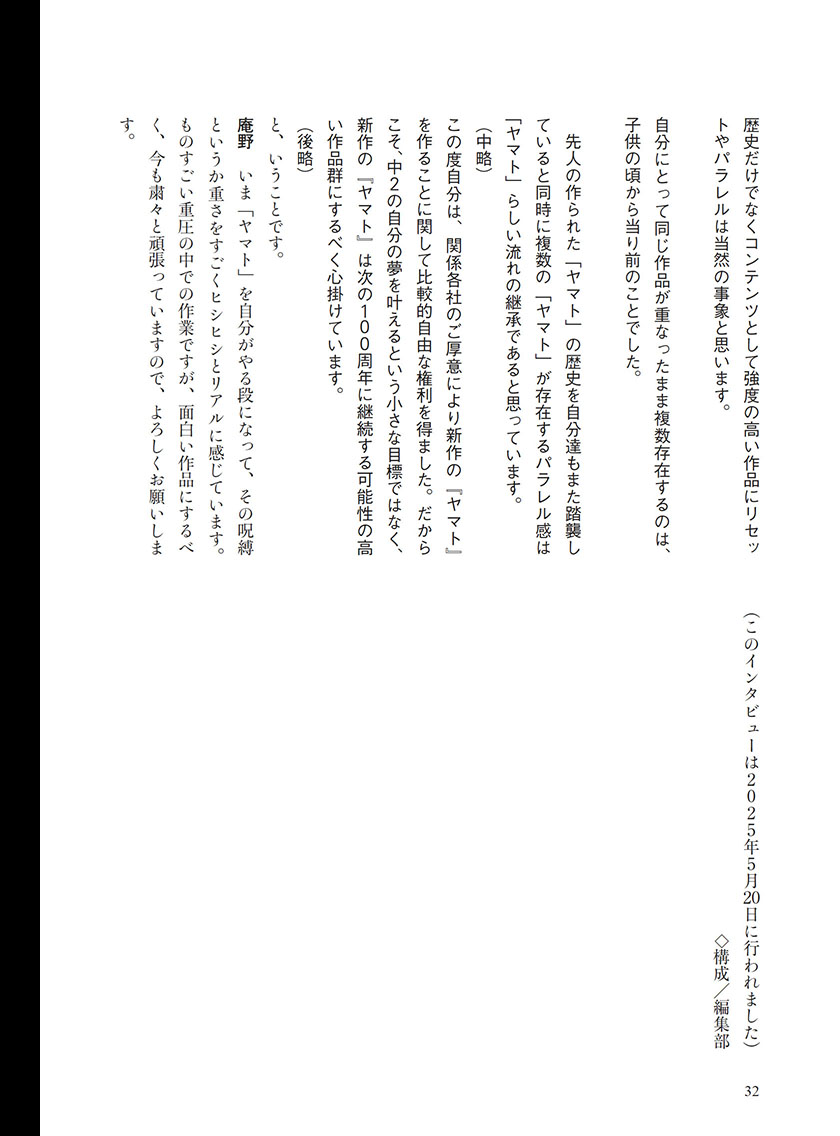
Interviewer: Regarding the new work, to partially quote Mr. Anno’s comment published on the official Studio Khara website from October 13, 2024:
The parallel world nature of the Yamato series became definitive with the sequel Farewell… and the divergent Yamato 2. The world of Yamato depicted by Mr. Matsumoto also exists as a parallel, and Mr. Nishizaki’s revival story has two main narratives.
Resets and parallels are natural occurrences for works with such strong content, not just history. For me, the existence of multiple overlapping versions of the same work has been a given since childhood. I believe that while we follow the history of Yamato created by our predecessors, the sense of multiple Yamatos existing in parallel is a continuation of the quintessential Yamato tradition.
This time, thanks to the kindness of the involved companies, I’ve gained relatively free rights regarding the creation of the new Yamato. Precisely because of this, my goal isn’t merely the small dream of fulfilling my middle school self’s ambition. Instead, I’m striving to make this new Yamato a work with high potential to continue to the 100th anniversary.
Anno: Now that I’m the one making Yamato, I keenly feel its curse, or rather, its immense weight. It’s being done under tremendous pressure, but I’m diligently striving to make it an interesting work. Thank you for your continued support.
Wow what an amazing interview. I absolutely enjoyed it and it’s crazy that a lot of his elementary and junior high teachers were wounded WW2 veterans. It’s no surprise that Yamato is his biggest influence because it was the basically the first TV anime to be overall adult oriented and sophisticated. Even my co worker who’s older than my dad told me that it was nothing like what you see in American cartoon when the original first came out. If Anno successfully makes it super popular worldwide and inspired people making more Yamato series in decades to come, it’ll be so awesome. I hope someone makes a Akira Yamamoto(2199 version) spin off or actual series. I’m hoping for more Yamato both remake series and others.
This interview also part of my inspiration because it makes me want to make my own company and do my own anime series with Akira Yamamoto, Melda Dietz and Sasha Iscandar.