
Thoughts after watching Episode 1
See the original blog post here
It is past ten o’clock at night, and the wind has finally begun to settle down.
With a glass of chilled barley tea in hand and the breeze of an electric fan washing over me, I am sitting at my computer once again tonight. A thin wisp of smoke from a mosquito coil rises in the corner of the room.
Welcome to “Showa Dad’s Yamato,” a blog brought to you by me, Kenichi, born in 1964.
This time, I want to take a deep dive into the first episode of the sequel to a sci-fi anime masterpiece that stirred my heart during my boyhood, sharing my thoughts and analysis. If you simply want a quick summary of the plot, feel free to skip ahead to the latter part of the article, where I have laid it out chronologically.
To begin, I will share my perspective as a former worker who spent years in the field, handling LPG and petroleum facilities, listening intently to the sounds of valves.
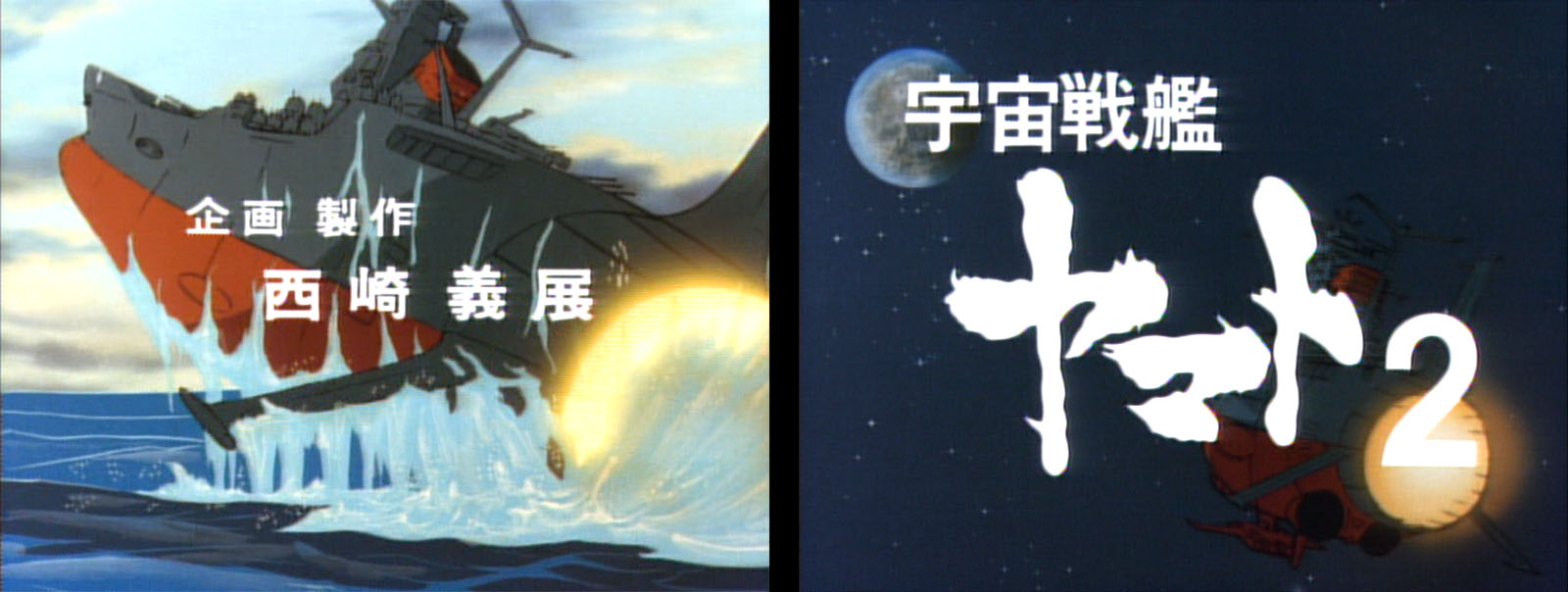
The fervor of the Showa era and the friction between the old and the new. A night when rough-hewn men take to the skies of space.
While Earth enjoyed a glamorous recovery, Yamato was relegated to the frontier as an obsolete vessel. A confrontation with the state-of-the-art Andromeda symbolizing the drive for efficiency, the return of the arch-nemesis Dessler, and a mysterious transmission from the planet Telezart.
Episode 1 encapsulates the “stubborn pride” of men standing at a turning point in history.
What this article covers
● Why Yamato was relegated to the frontier
The isolation of a heroic ship treated coldly as an obsolete relic amidst Earth’s glamorous recovery.
● The threat of the Comet Empire and the tenacity of the arch-nemesis Dessler
The significance of a new enemy with overwhelming power and the return of a villain with a human heart.
● The brilliant direction behind the near-miss with Andromeda
How the visual storytelling captured the confrontation with the massive ship that embodies the push for efficiency.
Why discuss a Showa-era anime now? This is because, in an era where AI and automation are advancing and the intuition and experience gained on the job are quickly dismissed as “inefficient,” we need the “passion” of men who hold fast to their pride, even if they are laughed at for being old-fashioned.
By reading this article, I hope you will find empathy, realizing that the friction between the old and the new, and the struggles you face in the field amidst a rapidly changing society, are far from meaningless, and gain the quiet energy needed to step forward into tomorrow.
An Analysis of Space Battleship Yamato 2, Episode 1
The visual direction of the first episode quietly yet clearly portrays the conflict between “an outdated hero” and “a new era driven by efficiency.”
I’d like to share my thoughts and feelings about the story just as they come to mind.
The Glamorous Reconstruction of Earth and the Sorrow Lurking in Perimeter Missions
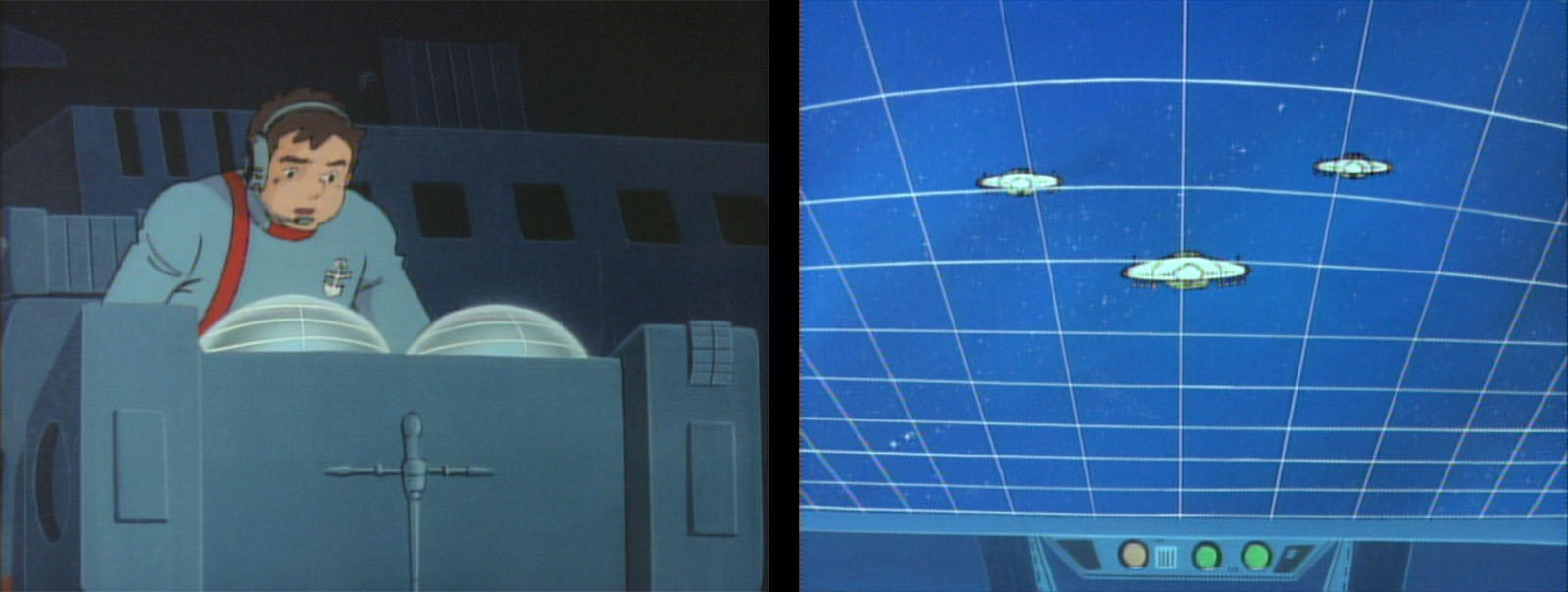
There is a scene I cannot forget. It is the moment when the ship’s aging radar fails to fully track the enemy’s rapid movements. Static streaks across the bridge’s panels, and the operator’s reaction is delayed by a split second. In that sequence, the direction deliberately slows the visual pacing and has the crew’s gazes waver ever so slightly, conveying Yamato’s “obsolescence” through visuals alone, without relying on dialogue.
Following the harrowing war, Earth achieved a miraculous recovery. People have returned from underground cities to the surface, displaying a vitality reminiscent of the era of rapid economic growth. Yet, behind this prosperity, which borders on a dangerous complacency, the once-heroic ship has been relegated to a mission that amounts to a de facto demotion.
Forgotten amidst the glamorous reconstruction at the center, they endure unreasonable hardships in a brutal operational environment, left to grapple with a profound sense of isolation.
Anyone who has ever toiled in the scorching heat, covered in sweat and grease while harboring resentment toward the higher-ups who remain cool and unbothered, would surely understand this sorrow all too well. Having spent years listening to the sounds of machinery myself, I could not view their plight as merely someone else’s problem.
The sterile word “efficiency” clings to the back of one’s neck like a tepid night breeze.
The Comet Empire’s Overwhelming Might and the Significance of Dessler’s Return
Yet, a new threat is quietly creeping up on this Earth, which is currently basking in a festive mood.
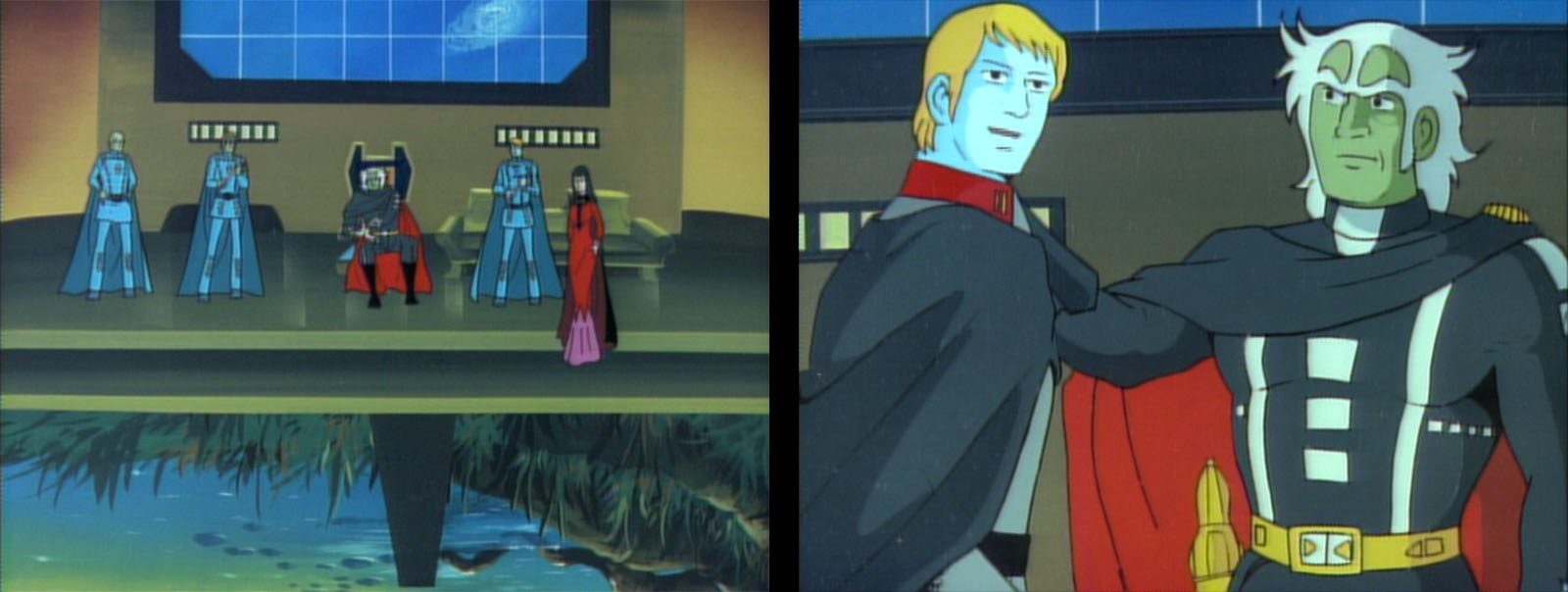
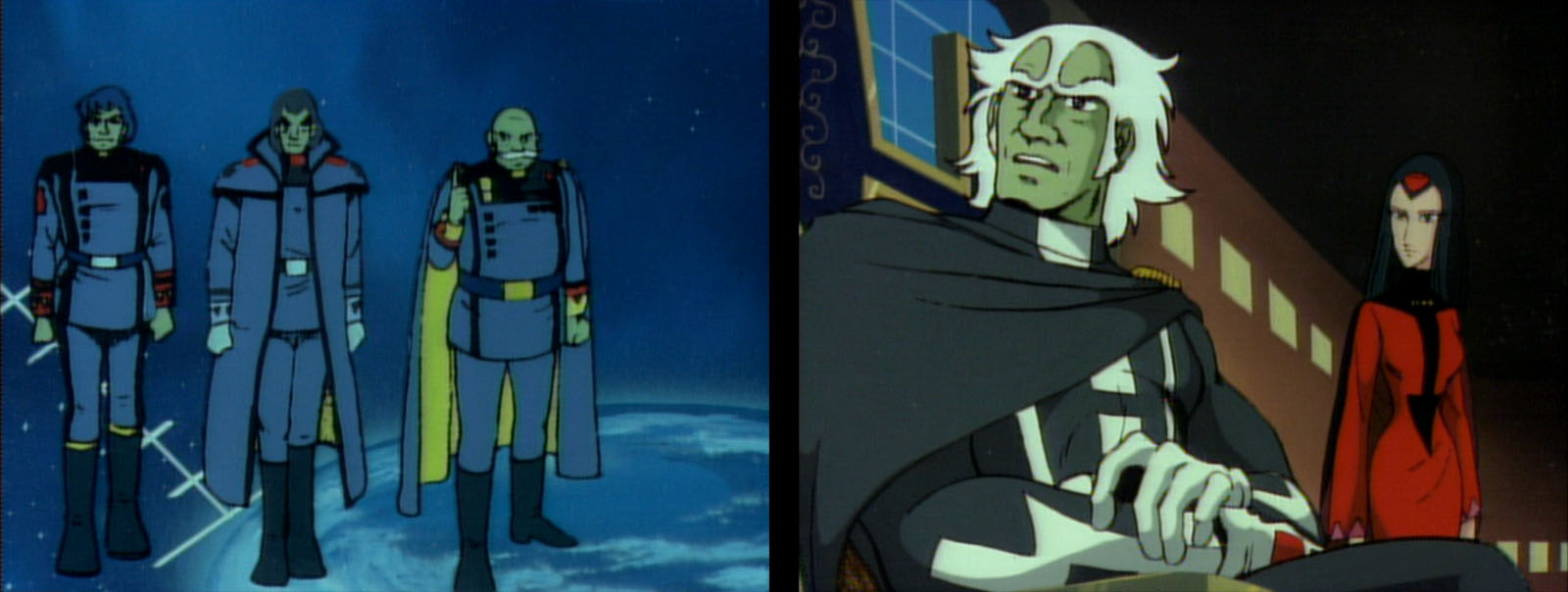
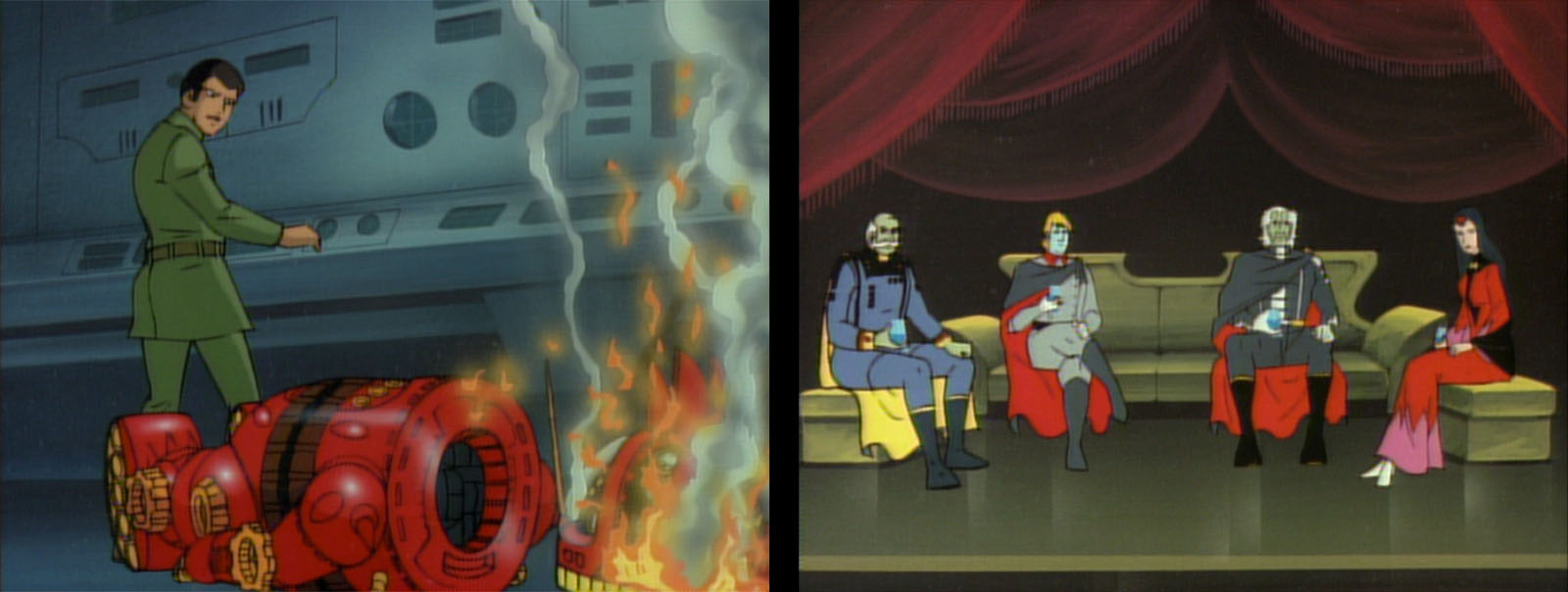
What makes the introduction of the enemy forces so striking is the contrast between the composition, looking up at Great Emperor Zordar’s throne from below, and the cold, detached tone with which Prime Minister Sabera calmly explains the fleet deployment. The directorial choice to convey overwhelming military might through “silence” reflects the meticulous craftsmanship typical of 1970s anime.
The Comet Empire boasts immense military power, with forces such as the Baruze Combined Fleet, the Goland Fleet, and General Zabaibal, who commands ground operations, standing in reserve, all under the watchful eye of Prime Minister Sabera.
The dynamic between despair and hope, as the now-outdated Yamato prepares to face this force, is utterly compelling.
Also essential is the return of the arch-nemesis, Dessler. His resurrection likely stems from more than just a simple hatred for Earth. It is driven by a sense of purpose and an obsession: a desire to personally defeat the one who shattered his pride.
There also appears to be a sense of indebtedness toward Emperor Zordar, who took him in after he had been a defeated general.This man possesses a passionate, human warmth, something never found in run-of-the-mill villains. It is a troublesome thing, an enemy one cannot bring oneself to hate.
This clumsy, raw emotion feels somewhat reminiscent of the blue-collar work ethic of the Showa era.
A message from Teresa and a near-miss with Andromeda (the episode’s biggest highlight)
The message received from the mysterious woman, Teresa, likely serves as a crucial piece of foreshadowing that will shape future events. The depth of the sci-fi concept involving antimatter strongly satisfies the intellectual curiosity I possess as an adult.
And the moment that provided the greatest highlight and sense of catharsis was the near-miss with Andromeda. Visually, this was the scene where the most effort went into the composition, so I would like to examine it in a bit more detail.
▼ Conveying the Size Difference Between the Two Ships
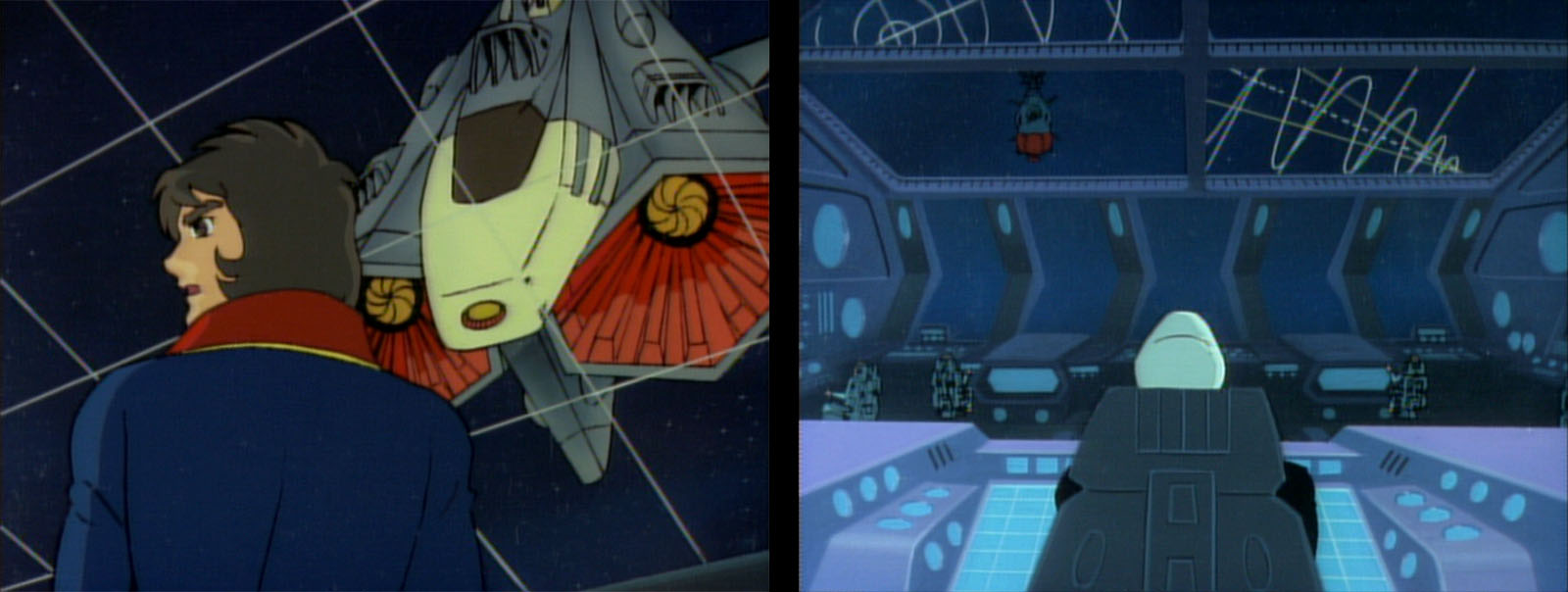
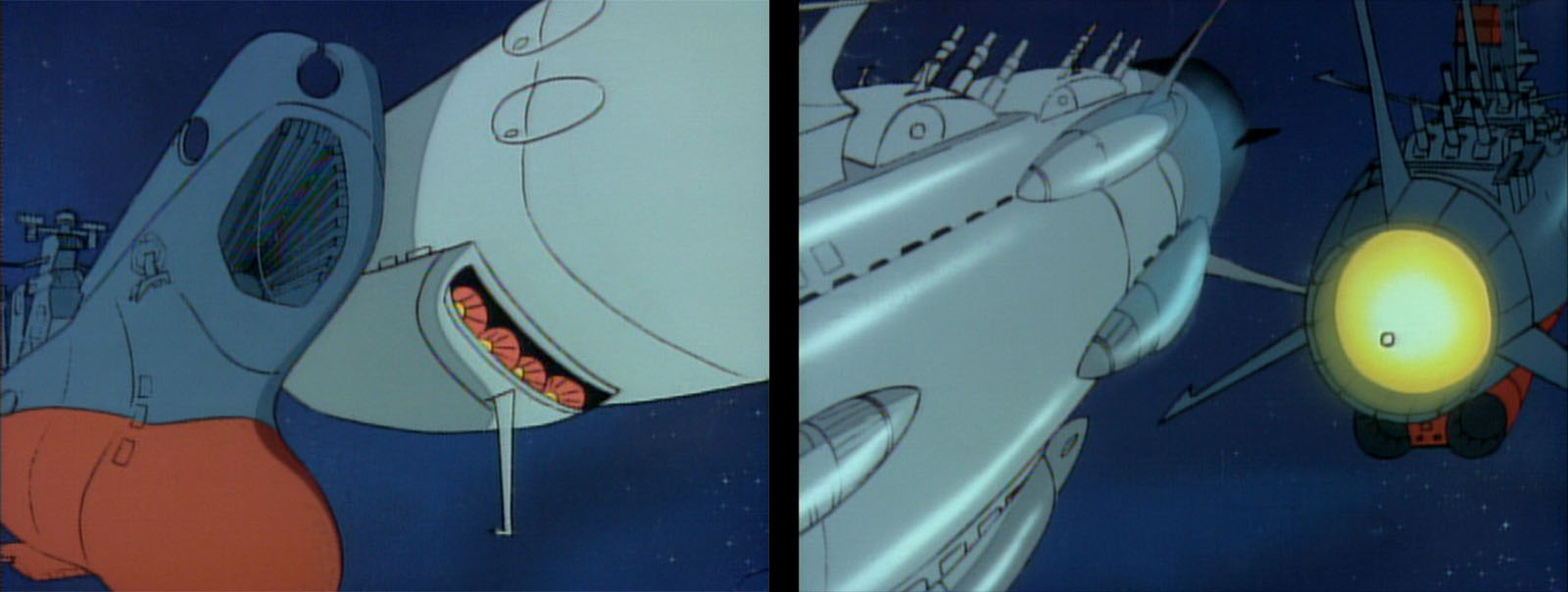
The moment Andromeda first appears on screen, the camera captures its massive hull from a low angle, viewed through the windows of Yamato‘s bridge. Its imposing presence extends beyond the top edge of the frame, making Yamato‘s bridge crew appear tiny by comparison. A crew member’s remark, “It’s huge”, resonates less like a line of dialogue and more like an involuntary sigh.
▼ Pacing of the Shots
As the two space battleships rapidly approach one another, tension on the alarm-filled bridge spikes instantly. The cuts become progressively shorter and the editing faster.
Andromeda‘s bridge → Yamato‘s bridge → Radar screen showing the distance → Close-up of Kodai’s face.
These four shots cycle rapidly, causing the viewer’s own heart rate to rise in sync.
▼ Kodai’s Expression and Tone of Voice
When Kodai orders, “Full speed ahead,” he does not shout. Instead, he keeps his voice low and controlled.
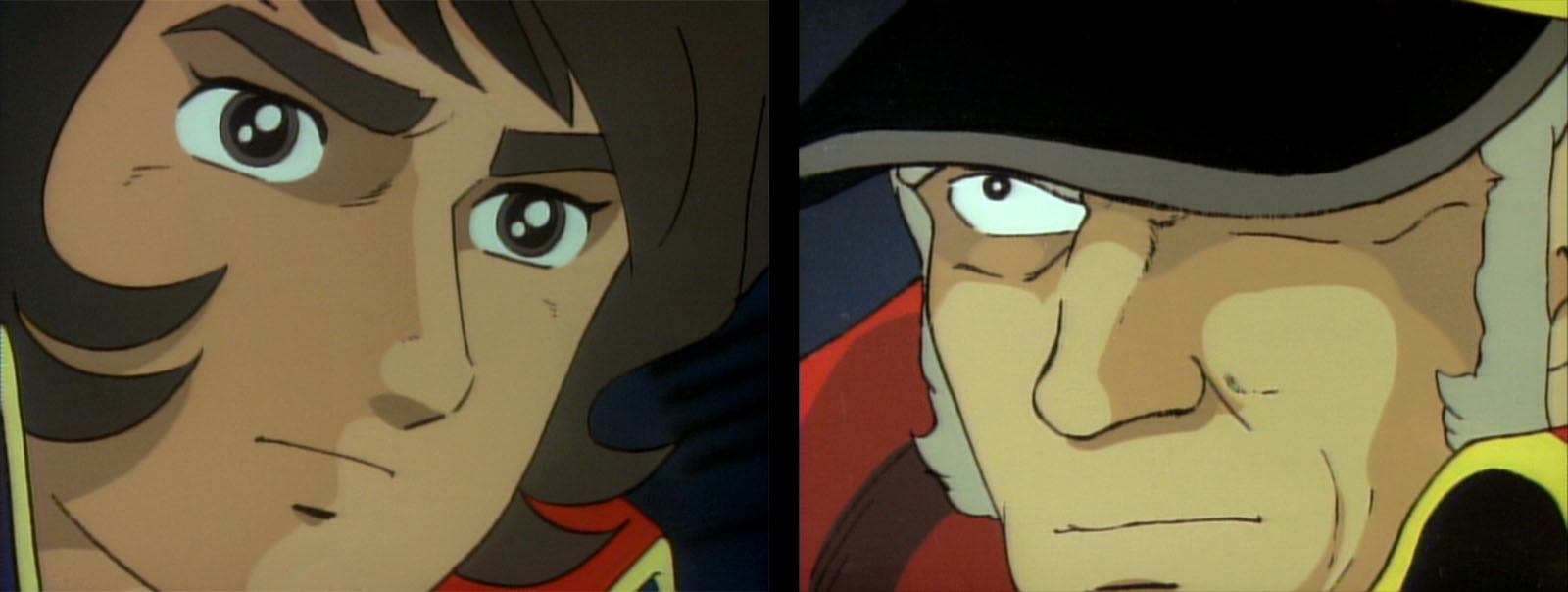
In the close-up, his brow remains motionless, yet his eyes burn with intensity. The director’s skill shines in the choice to express his stubbornness through “quietude” rather than loud shouting.
Kodai stands his ground, insisting on prioritizing their return journey, while the massive opposing ship coldly signals its refusal to alter course. In a “game of chicken” that threatens imminent catastrophe, Kodai stubbornly sticks to his convictions and orders the ship to press straight ahead.
“You aren’t actually here, are you?” I found myself muttering at the screen, my words fueled by frustration toward a blind faith in systems that lack an understanding of the reality on the ground. The stubbornness of the young may be precarious, but that very obstinacy will become their greatest weapon once they truly understand what it is they must protect.
Summary: A quiet act of defiance against a society obsessed with finding the “right answer” immediately
It is a clash of wills: the arrogant, state-of-the-art warship versus Yamato, which clings to its long-standing traditions and honor even as it is mocked as obsolete. This stifling conflict encapsulates the inner friction people feel as the times inevitably change.
We live in an age where wisdom is defined by having AI summarize things in three lines and finding the quickest path to the “right answer.” Practical intuition and experiences that seem like “taking the long way around” are the first things to be dismissed as inefficient. That is precisely why revisiting the first episode of Yamato 2 is so valuable today.
There are things that fade from view under the banner of efficiency, an awkward stubbornness, principles one refuses to compromise, and the intuition ingrained in one’s body through hands-on experience. These 22 minutes serve as a quiet assertion that such things are “not dead yet.”
Even at LPG and petroleum facilities, traditional intuition and manual work methods steadily vanished as systems became increasingly automated.
Where there is a beginning, there is an end. The world has become more convenient, and efficiency is prioritized above all else. Yet, the heat radiating from an almost clumsy stubbornness is something we should never lose, no matter the era.
We live in modern times, on the verge of being swallowed by the wave of efficiency.
The sweat we shed on the job and the pride we upheld while enduring unreasonable hardships are not merely obsolete junk.
I hope that as you witness these men, gritty and unrefined, sticking to their convictions, you will see your own journey reflected in theirs and feel a quiet sense of pride.
Does that heat still burn within you, too?
Episode 1 Synopsis
The Bottom Line: Earth is giddy with reconstruction, the Comet Empire is quietly closing in, and Yamato is being treated with cold indifference. This episode serves as the prologue to the entire series, instantly establishing the starkly different mindsets of the three parties involved.
A.D. 2201, Earth’s Reconstruction
Earth, once devastated by the life-or-death struggle against Gamilas, has achieved a remarkable recovery. Countless bases have been constructed across the planets of the Solar System, and resource development is proceeding at a rapid pace.
Humanity is enjoying unprecedented prosperity, to the point where the war against Gamilas is described as merely a “fleeting moment of chaos within the grand flow of cosmic time.”
Far Across the Cosmos: The Shadowy Maneuvers of the Comet Empire Gatlantis
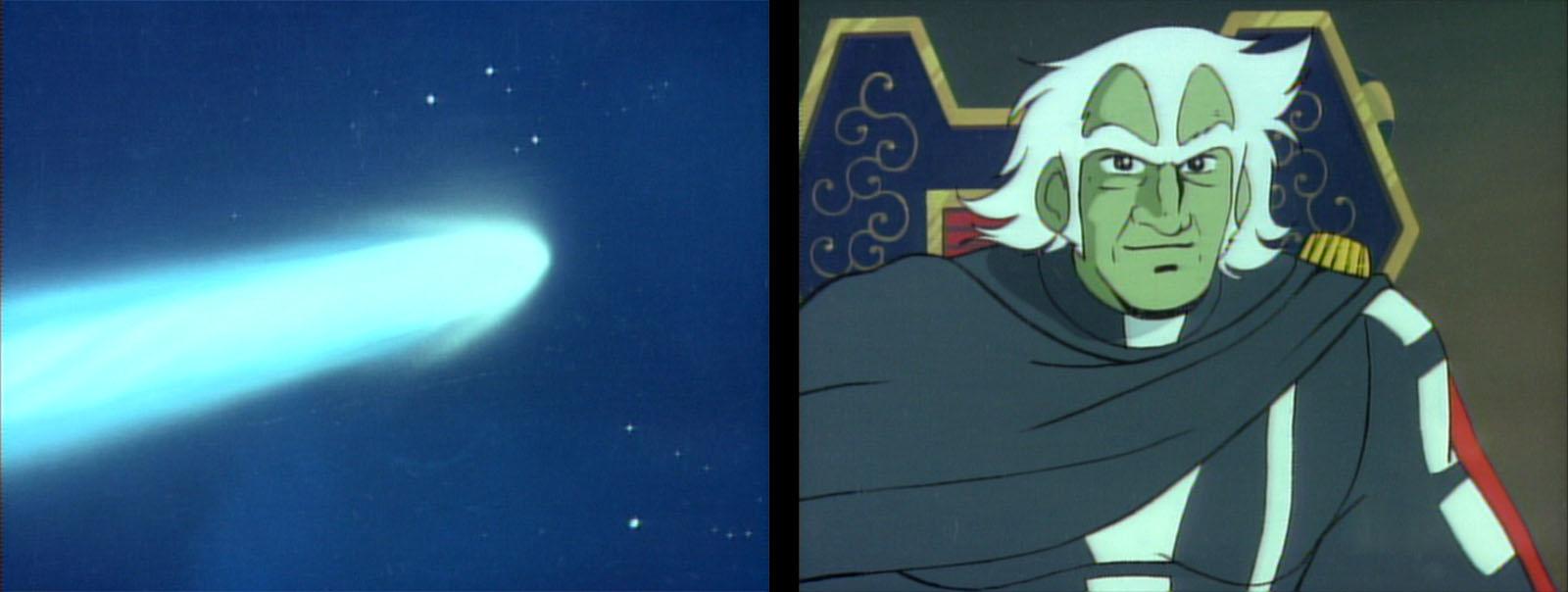
Yet, at that very moment, in the far reaches of space, a white comet accompanied by a vast fleet of warships is silently ravaging the stars in its path.
Its true nature is far from that of an ordinary celestial body. It is an artificial fortress, the Comet Empire Gatlantis, bristling with powerful weaponry and containing an entire city within itself.
They ruthlessly crush any worlds that stand in their way, while conquering planets of value and enslaving their inhabitants. Lying in the path of their advance, as they sought to claim the entire universe, is Earth’s Solar System.
Great Emperor Zordar declares that Earth, the third planet, teeming with life, is the “perfect world for a respite,” and vows to use its billions of human inhabitants as slaves to serve as the foundation for his universal dominion.
The Full Scope of the Earth Invasion Fleet and Dessler’s Arrival
Standing at the Great Emperor’s side, Prime Minister Sabera calmly outlines the battle formation for the invasion of Earth.
The main force, Baruze’s Allied Fleet, is deployed toward the Sirius sector, while the Nagumo Fleet is positioned toward the Procyon sector. At the very vanguard lies the Nasca Mobile Strike Force, which has infiltrated the frontier zones on the Solar System’s periphery to gather intelligence and sow discord among the populace. The Goland fleet stands in reserve at the rear, and General Zabaibal’s armored assault corps is ready for ground combat, a posture of total preparedness.
Joining them is Dessler, burning with a desire for revenge against Yamato, the ship that once defeated Gamilas single-handedly.
“Defeating Yamato is my reason for living, and it will also serve to repay the Great Emperor who forged a bond of friendship with me.” His words reveal an obsession that transcends mere hatred for Earth, alongside a clumsy, heartfelt loyalty to the Great Emperor who took him in.
Returning from Frontier Patrol Duty, Yamato’s Cold Reception
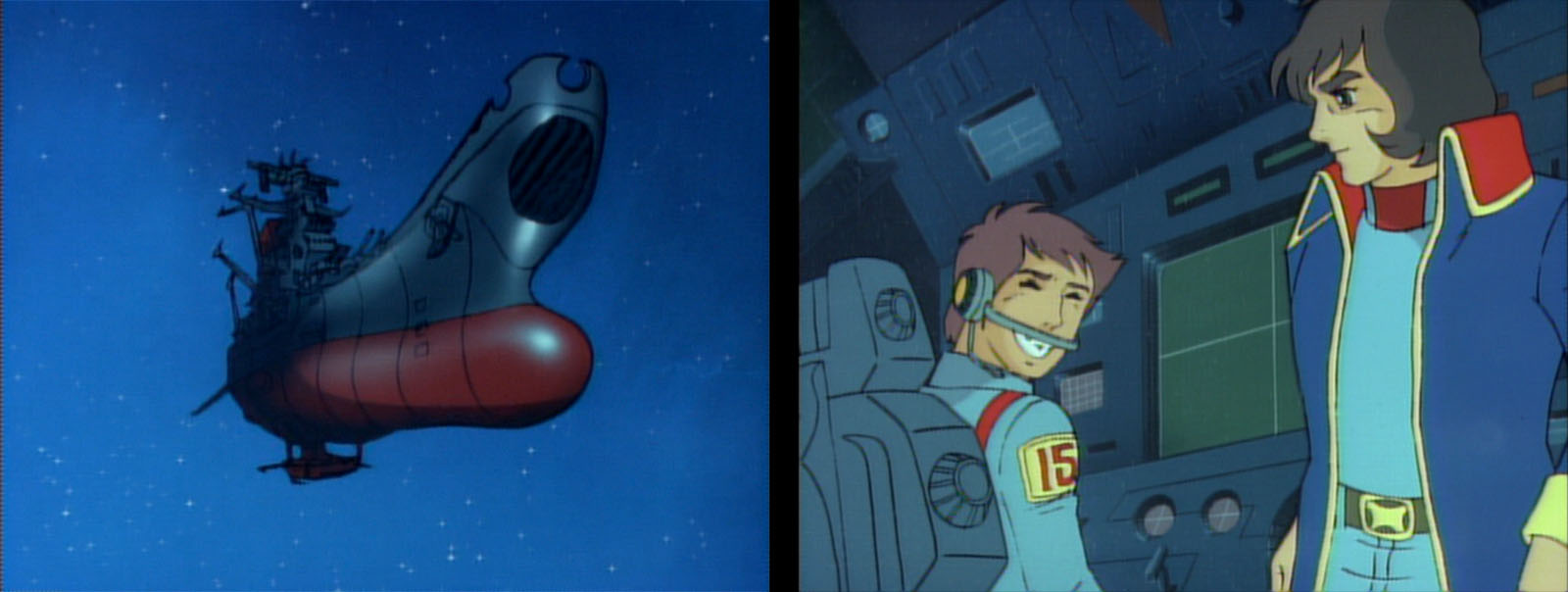
The Space Battleship Yamato, once the savior that rescued Earth from despair, is now being treated with indifference, relegated to serving as the flagship of the Solar System Outer Rim Fleet’s 3rd Escort Squadron.
Under the command of Acting Captain Susumu Kodai, the ship is currently on its way back to Earth after completing a grueling year-long tour of frontier patrol duty. Arrival at Earth is scheduled for October 10th, around 3:00 PM.
Kodai orders Aihara, the communications officer, to transmit a report to Earth Defense Force Headquarters, but Aihara teases him, asking, “Isn’t there someone else important you should be reporting to?”
Kodai has a girlfriend waiting for his return at the Central Hospital. With their return to Earth finally in sight, the crew’s expressions soften just a little.
Unidentified Flying Object, Attack by the Nasca Strike Force
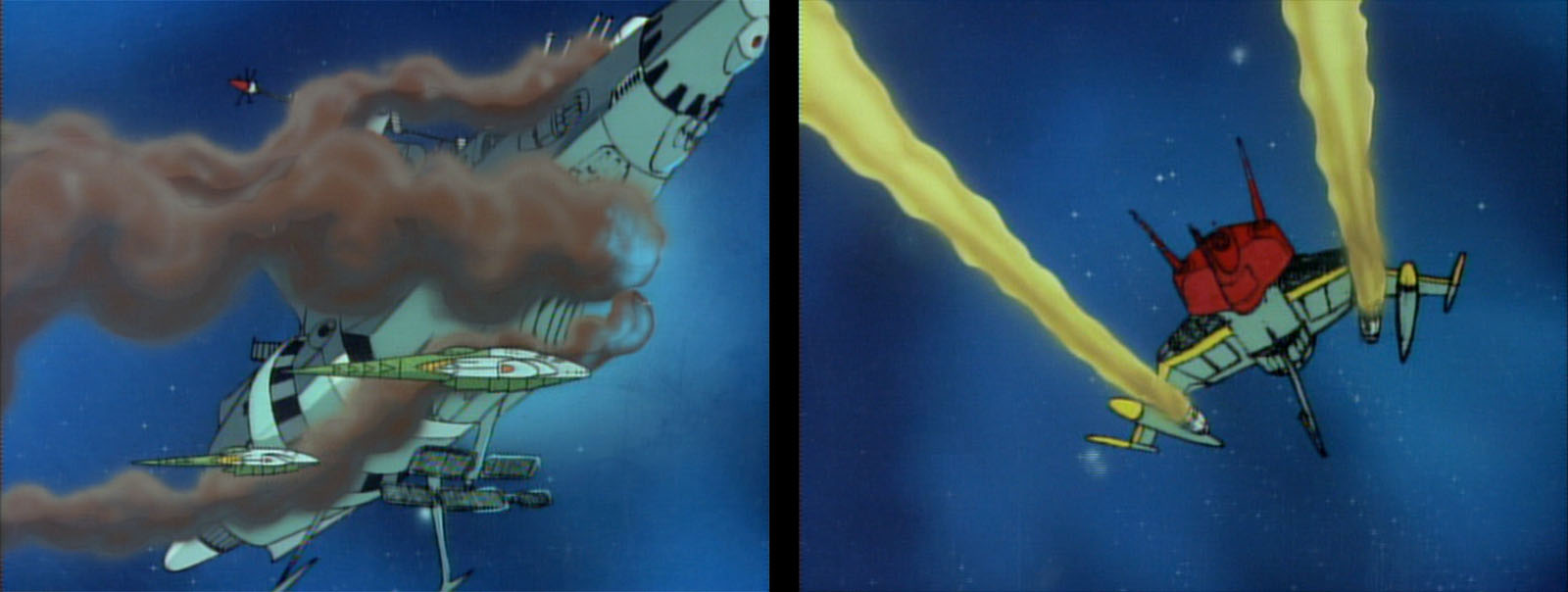
During the return voyage, the fleet detects an unidentified flying object at the six-o’clock position, an object that does not appear in any database.
At first, they dismiss it, wondering if it might be a lost space hospital ship, but the object begins tailing Yamato‘s fleet at an extraordinary speed of 21 space-knots. Their nationality and identification numbers remain unknown.
Kodai orders Aihara to establish emergency contact with Earth Defense Force Headquarters, but there is no response. This force turns out to be the Comet Empire’s vanguard, later identified as the Nasca Strike Force.
Facing an enemy with mobility far superior to Yamato‘s, the ship’s outdated radar cannot even properly track them, and the destroyer at the rear of the formation is struck by a missile.
“Such incredible speed…” A wave of agitation sweeps through the bridge.
Yamato is left completely helpless, unable to mount a counterattack and forced to endure the enemy’s relentless harassment.
A Mysterious, Powerful Signal: A Message from Planet Telezart
Meanwhile, at Earth’s Technical Bureau, an unusual surge of incoming energy from deep space causes the internal circuits of Analyzer, Sanada’s robotic assistant, to burn out and erupt in flames.
The energy is so potent that it autonomously activates the most powerful machine on Earth, a system so massive that the Bureau Chief orders its power circuits completely severed to ensure safety. Safety indicators spike beyond 100%, and the communication equipment malfunctioned.
Nevertheless, a significant amount of audio data remains stored in the system’s memory. It is believed that once the power circuits are repaired, the message can be played back in a language Earth can understand.
The signal originated from Planet Telezart, a world composed of antimatter. Its sender is a mysterious woman named Teresa.
The Comet Empire also views this transmission with caution, recognizing it as something that cannot be ignored. Prime Minister Sabera advises, “She is a woman who wields antimatter; leaving her alone would be unwise.”
However, both Emperor Zordar and Dessler dismiss the concern, saying, “Leave her be. Once Earth receives Telezart’s message, they will surely mobilize, and Yamato will lead the charge.”
They seem to be looking forward to the unfolding events.
Approaching Earth: Encounter with the Cutting-Edge Andromeda
Just as Yamato finally comes within sight of Earth, an unfamiliar, massive warship enters its flight path.
Upon switching the view to the video panel, the crew discovers it is Andromeda, the Earth Defense Fleet’s new flagship, undergoing sea trials. Its imposing presence leaves the crew breathless; “It’s huge,” they murmur.
Kodai demands a course change, citing space navigation regulations regarding the right-of-way for inbound ships, but Andromeda stubbornly refuses to yield.
“Whether it’s the Earth Defense Fleet’s flagship or not, we cannot alter navigation protocols. Tell them to move,” Kodai orders decisively.
Neither ship gives an inch, and both continue to charge straight ahead. Even when warned, “We’re going to collide,” Kodai commands, “Keep moving straight.”
The two ships pass each other with a margin so narrow it nearly spells disaster.
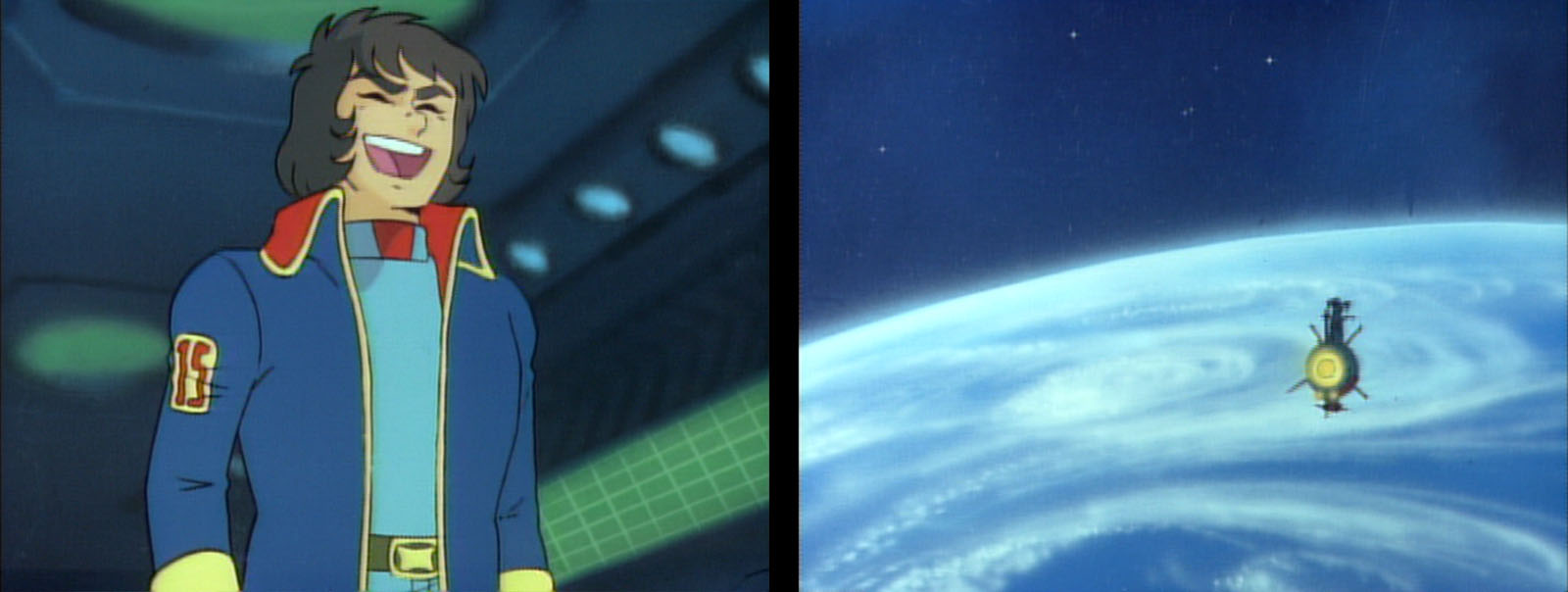
“Stubborn fool,” Andromeda‘s captain mutters, while Kodai flashes a bold, fearless smile.
Having completed its patrol of the outer solar system, Yamato is now returning to Earth. Yet, no one knows what lies ahead on their journey.
Which scene stirred your heart the most? Perhaps it was the nail-biting near-miss with Andromeda, the moment Dessler’s return awakened old memories, or the mysterious transmission from Teresa that left you eager to see what would happen next.
Postscript: A Summer Night in Sapporo
Even amidst days consumed by heat and trivial tasks, I refuse to give up the time I spend writing like this.
July has arrived in Sapporo, bringing continued heat. Even as I write to the sound of my mother’s breathing, the sweltering weather makes it difficult to maintain my concentration. On top of that, I’ve been juggling a miscellaneous blog and a Codex project, so things have been incredibly hectic lately.
Yet, there is something truly special about the time spent writing amidst this quiet, a stillness that settles in like the calm after a festival.
Next time, I will continue to carefully unravel the story of Yamato from the perspective of a former crew member who sweated alongside the team back in the Showa era. I would be delighted if you could help to convey this earnest, if slightly clumsy, passion to others who walked through that same era.
Until we meet again on the next voyage.