
As summer gave way to fall, Yoshinobu Nishizaki’s West Cape Corporation had its hands full with preparations for the theatrical comeback of Final Yamato under the banner “Encore Final Roadshow.” The media had been given all the details in a September press conference, which led to one last rush of coverage in October. When the upgraded 70mm film arrived in November, it sounded the perfect closing note (in multi-channel stereo) on the production years.
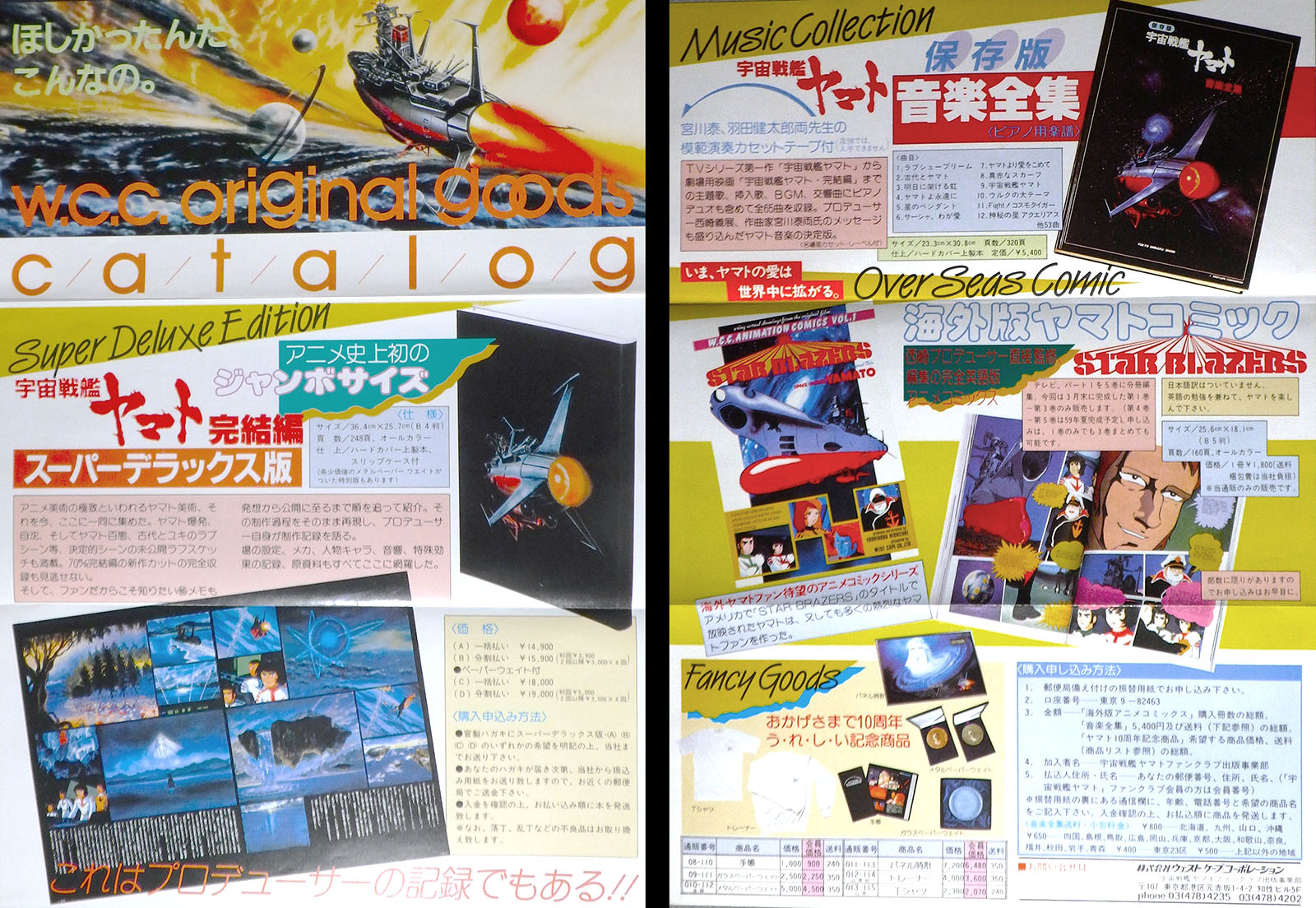
Since this would be the last opportunity (at least for a while) to command the attention of fandom at large, the West Cape promo machine rolled out this new product flyer with the headline, “I’ve always wanted something like this.”
The front (left) was devoted to the upcoming Final Yamato hardcover book, while the back (right) covered the Complete Music Works book published in August. Right below that was something new and surprising: the first announcement of English-language Star Blazers “animation comics” to be published in 1984. At the bottom was a set of additional products available through the fan club.
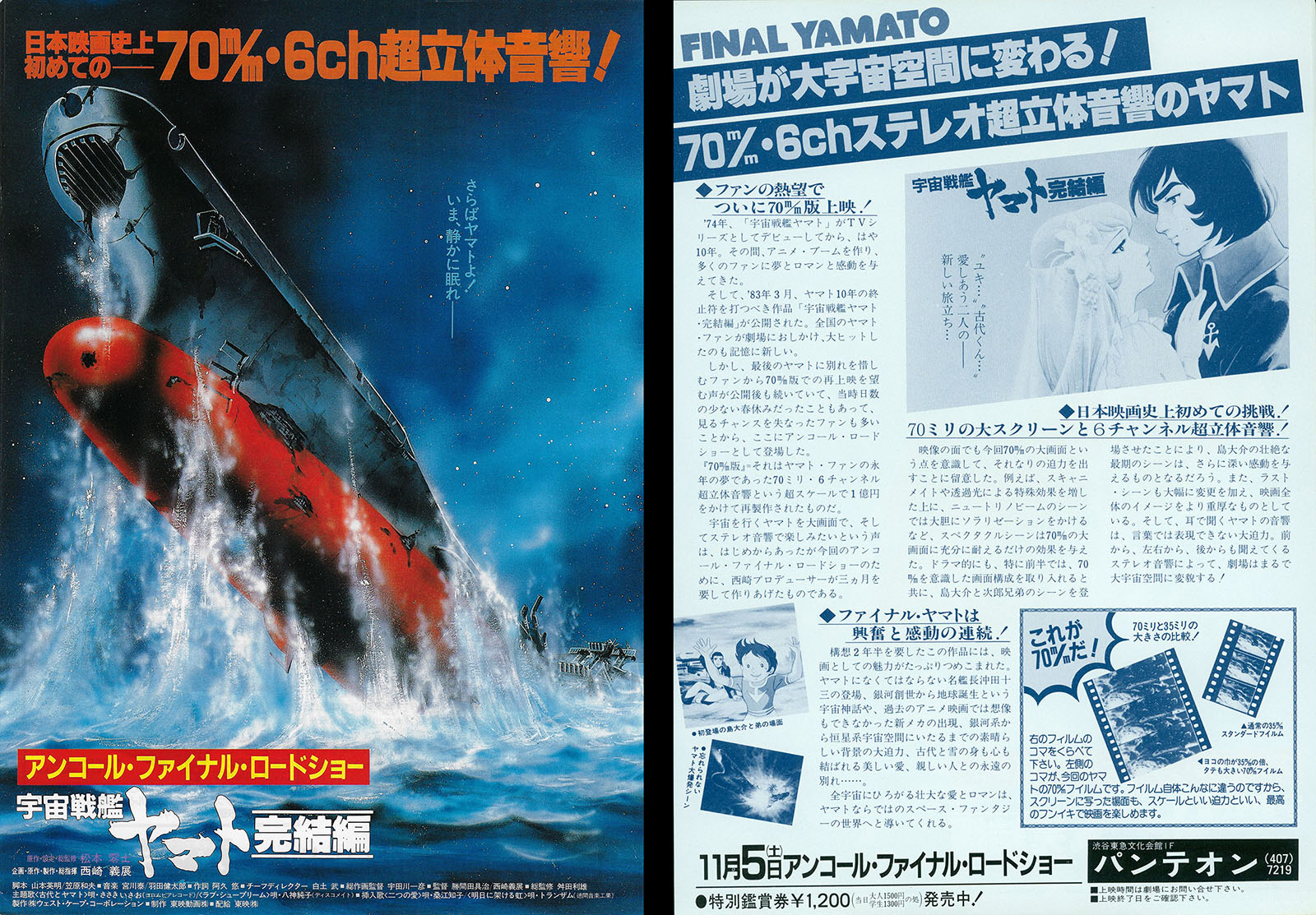
Around this time, a fresh flyer appeared in theaters with a new poster image. The text highlighted the Final Yamato upgrades, primarily the larger film size and 6-channel stereo sound. Both would be a first in anime history.
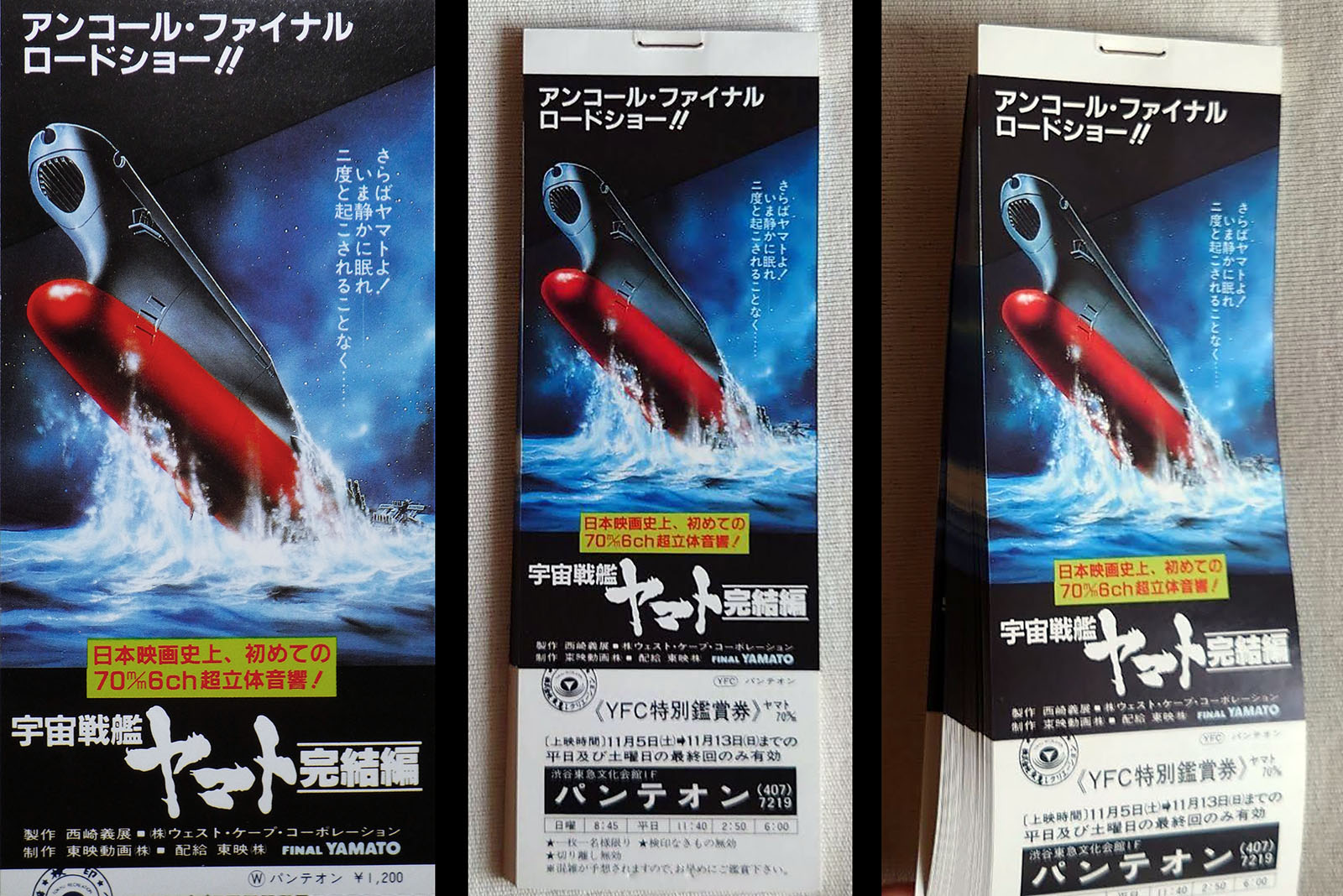
Since this would not be a nationwide release (premiering only in Tokyo), it wasn’t practical to create a new trailer, but another item on the scavenger list was this small “tear sheet” flyer from the Shibuya Pantheon featuring its own artwork.
With all this as a backdrop, let’s dive into October…
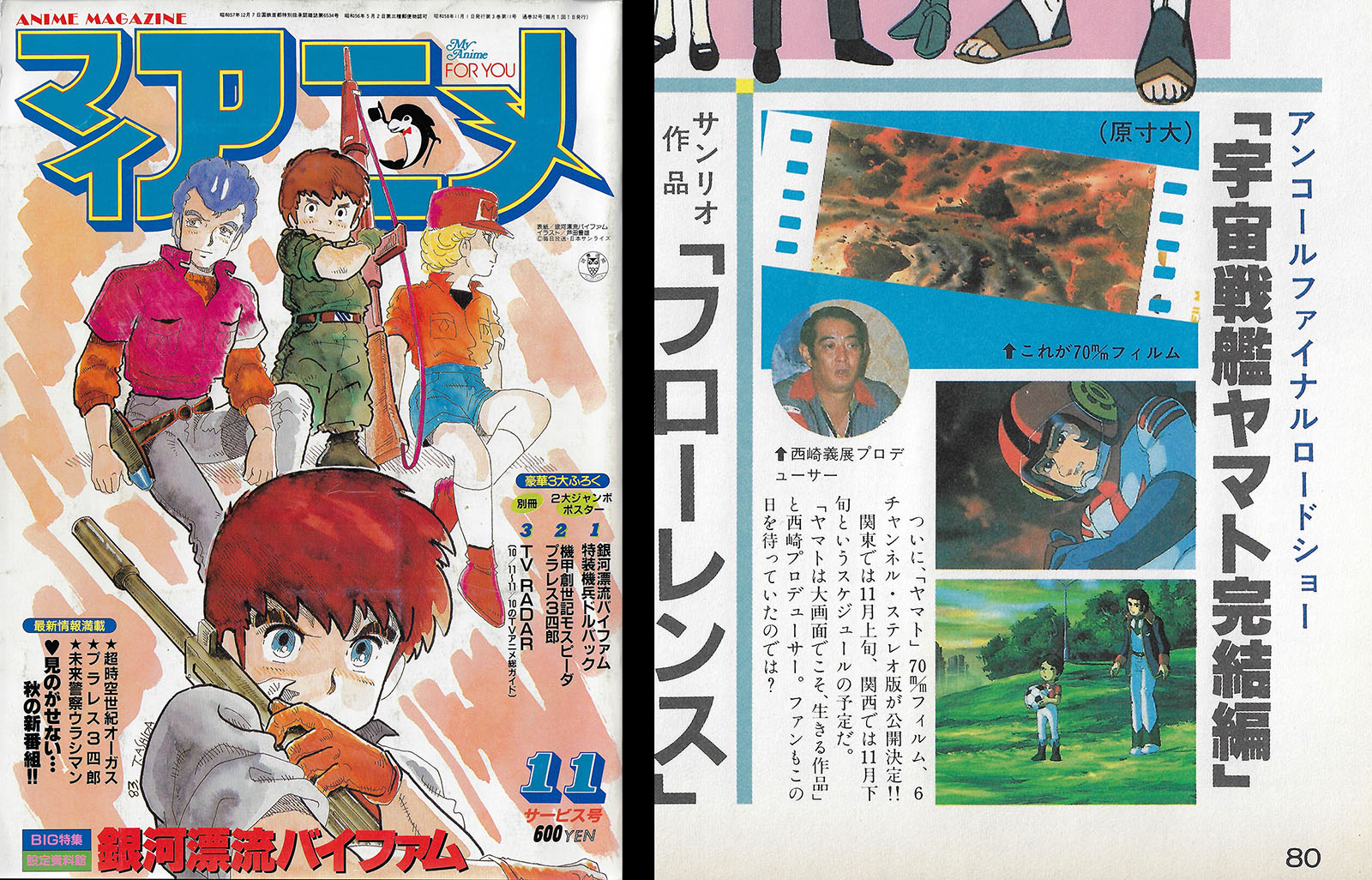
October 10: My Anime, November issue
My Anime made room for a quarter-page blurb with the following text:
A 70mm, 6-channel stereo version of Final Yamato will finally be released! The schedule is planned to coincide with the peak season; early November in the Kanto region [Tokyo], and late November in the Kanto region [Osaka]. Producer Nishizaki said, “Yamato is a work that truly comes alive on the big screen.” Were they waiting for this day?
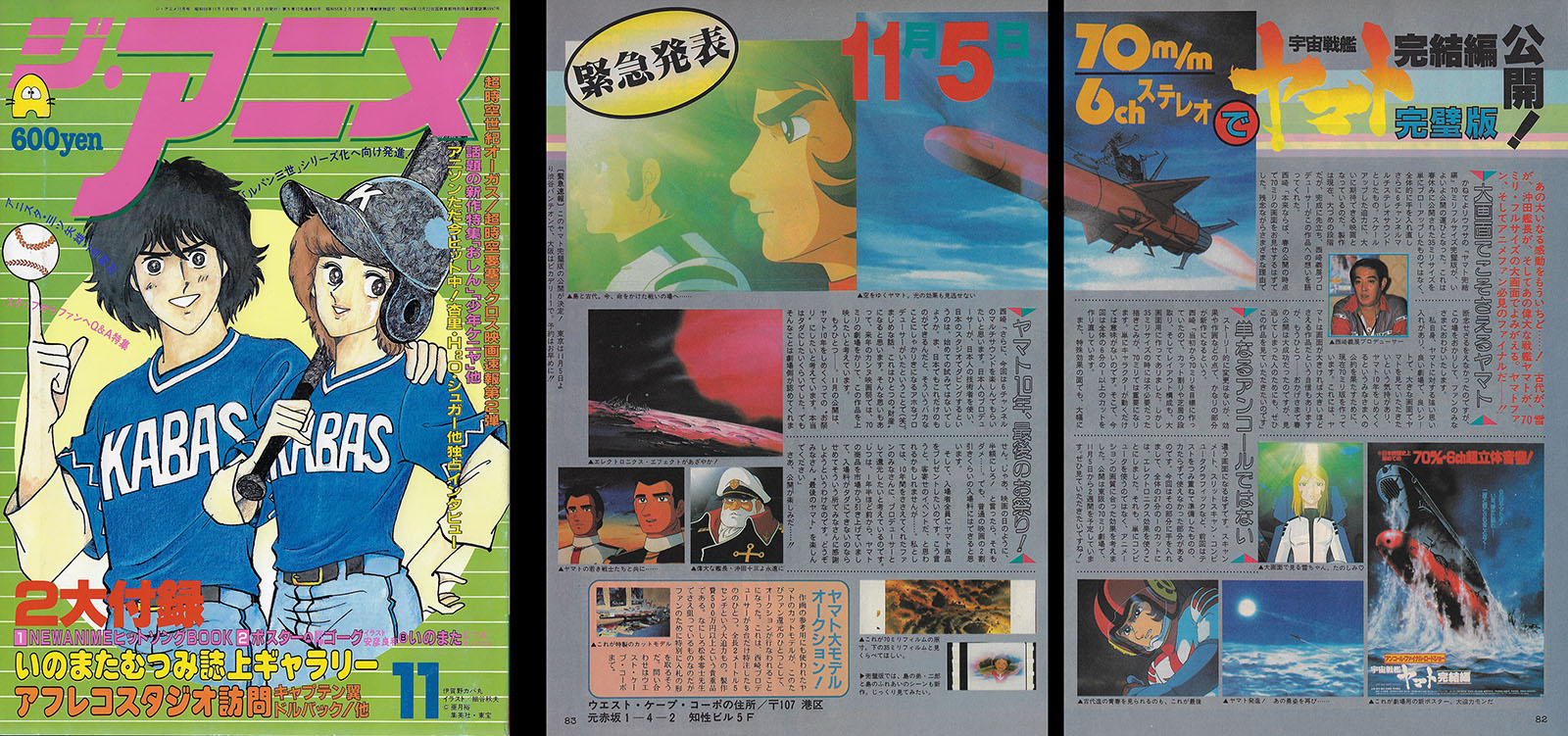
October 10: The Anime, November issue
The Anime was more generous with a 2-page article that quoted Nishizaki’s words from the September press conference and also announced a special auction that would take place in connection with the premiere. The prize was a grand one indeed.
Read the article here
Another feature in The Anime was an interview with three musicians, asking each of them to talk about a close friend. Hiroshi Miyagawa was one of the three, and he talked about the exploits of his composing partner Kentaro Haneda. He dropped a mention that he was starting on an all-Yamato classical symphony and said, “It’s going to be a lot of work.” We would all found out how much the following year.
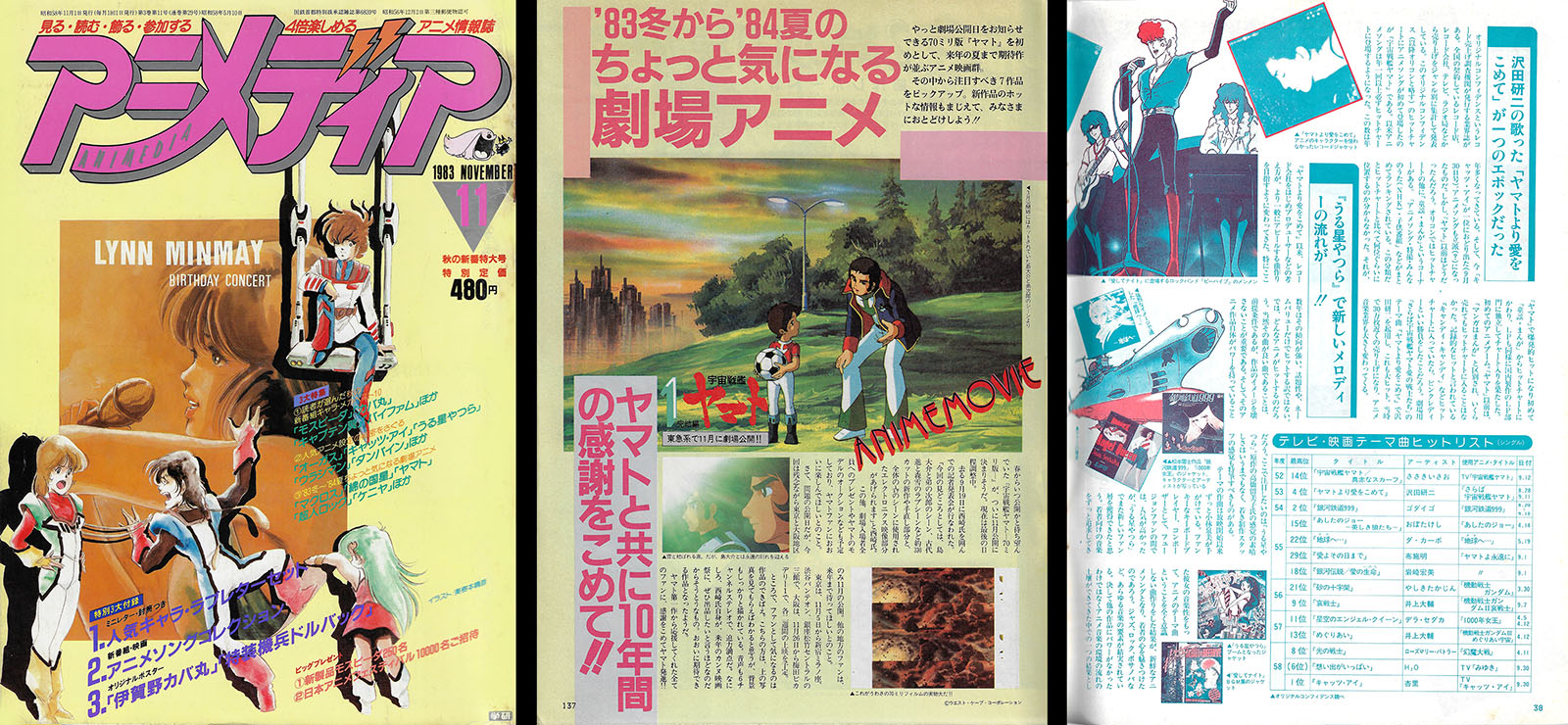
October 10: Animedia, November issue
Animedia listed Final Yamato as the first in a wave of films to watch for into the next year. Elsewhere in the magazine was an article on the incursion of anime themes into the mainstream pop charts with Yamato songs leading the charge.
Read these articles here
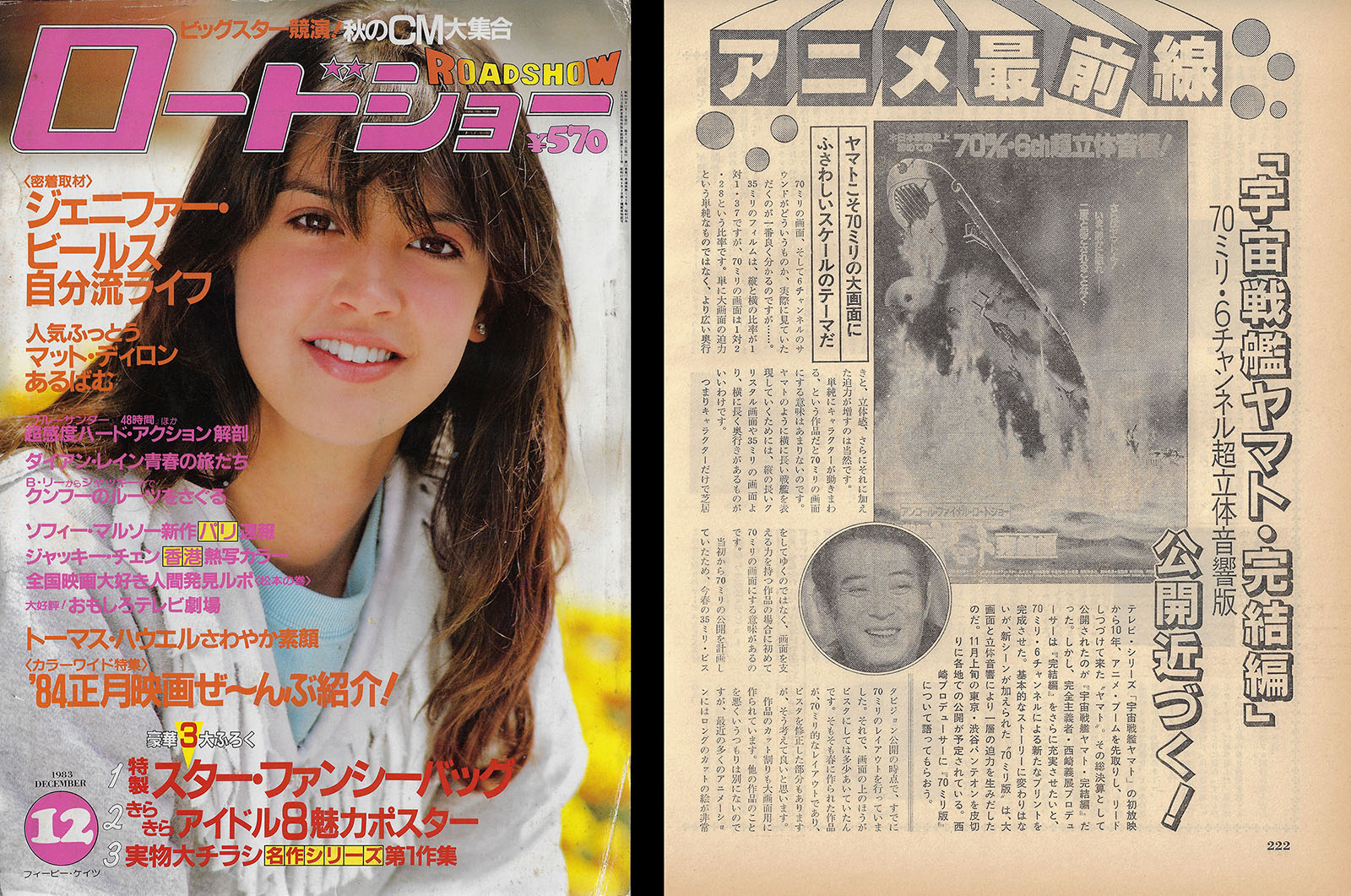
October 21: Roadshow, December issue
This magazine offered the most in-depth coverage of the month in a 3-page Anime Frontline article that gave Yoshinobu Nishizaki the floor. In it, he went into great detail on the technical strides made for Final Yamato and his personal plans for the next year. Also, more light was shed on the special auction and other gifts that would be available to fans at the premiere.
Read the article here
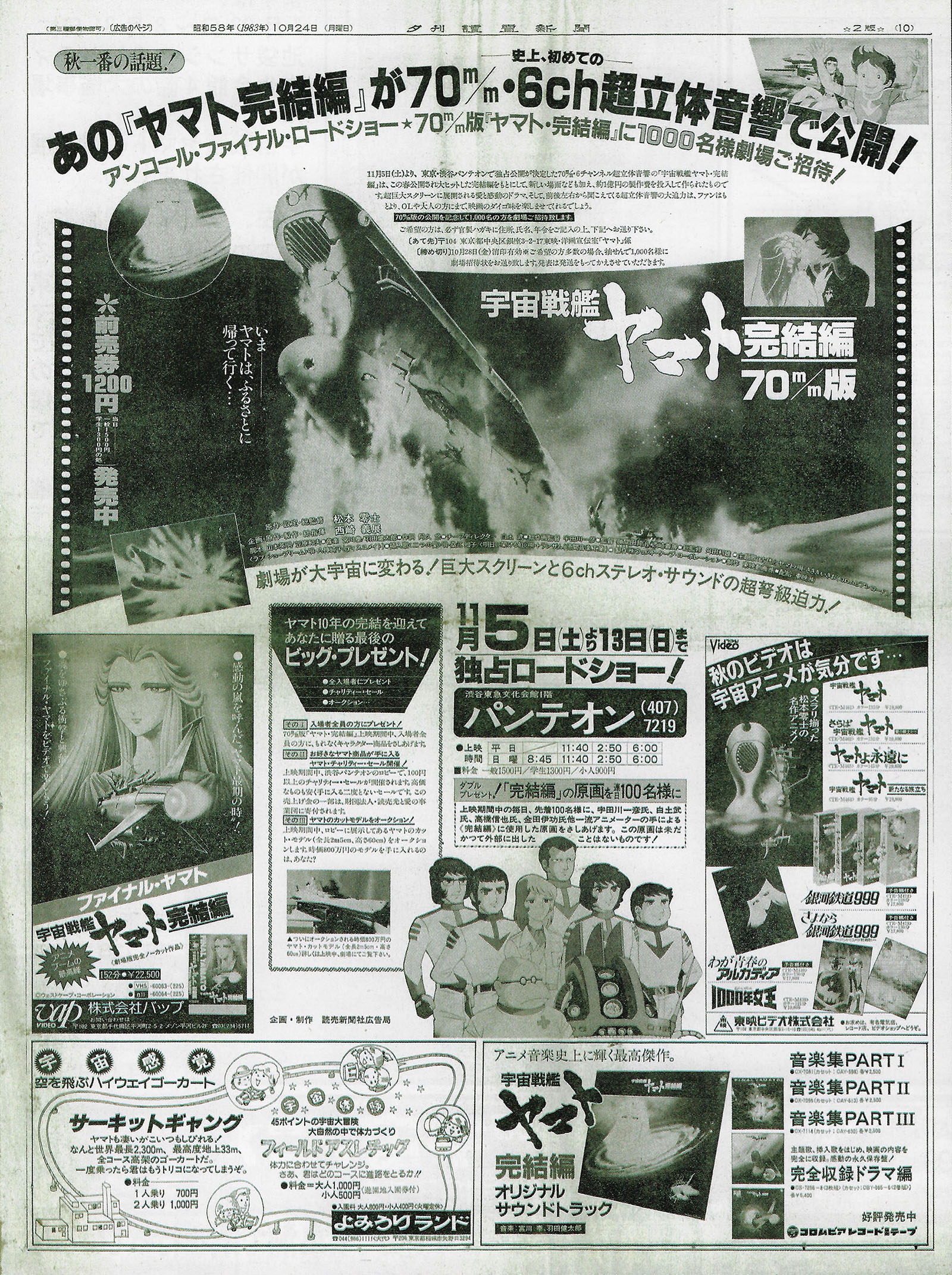
October 24 Yomiuri Shimbun [newspaper]
With just under two weeks to go, this full-page ad summarized all the key points of the film, focused on the premiere event at the Shibuya Pantheon theater. Advance tickets were promoted for the price of 1200 yen. The lower half contained insets for Yamato products: VAP’s Final Yamato video tape on the left, Toei’s tapes on the right, and Columbia soundtrack albums at lower right. The inset at lower left was an ad for a theme park called Yomiuri Land (which still exists).
The main text reads as follows:
For the first time in history
Space Battleship Yamato, The Final Chapter is being re-released in 70mm, 6-channel immersive sound!
Encore Final Roadshow, 70mm Yamato Final Chapter, 1000 people are invited to see it!
Space Battleship Yamato, The Final Chapter, featuring 70mm, 6-channel ultra-realistic immersive sound, will have its exclusive theatrical release at the Shibuya Pantheon in Tokyo starting November 5th (Saturday). Based on the highly successful Final Chapter released in the spring, this version includes new scenes and was produced with a budget of approximately 100 million yen. The drama of love and emotion unfolding on the gigantic screen, along with the overwhelming power of the ultra-realistic immersive sound coming from all directions, is sure to delight not only fans but also adults alike, giving them a taste of cinematic excitement.
To celebrate the release of the 70mm complete version, we will be inviting 1,000 people to the theater. If you wish to participate, please send your name, address, and age on a postcard to the address below. 1,000 people will be selected by lottery to receive a theater invitation. Winners will be notified by mail.
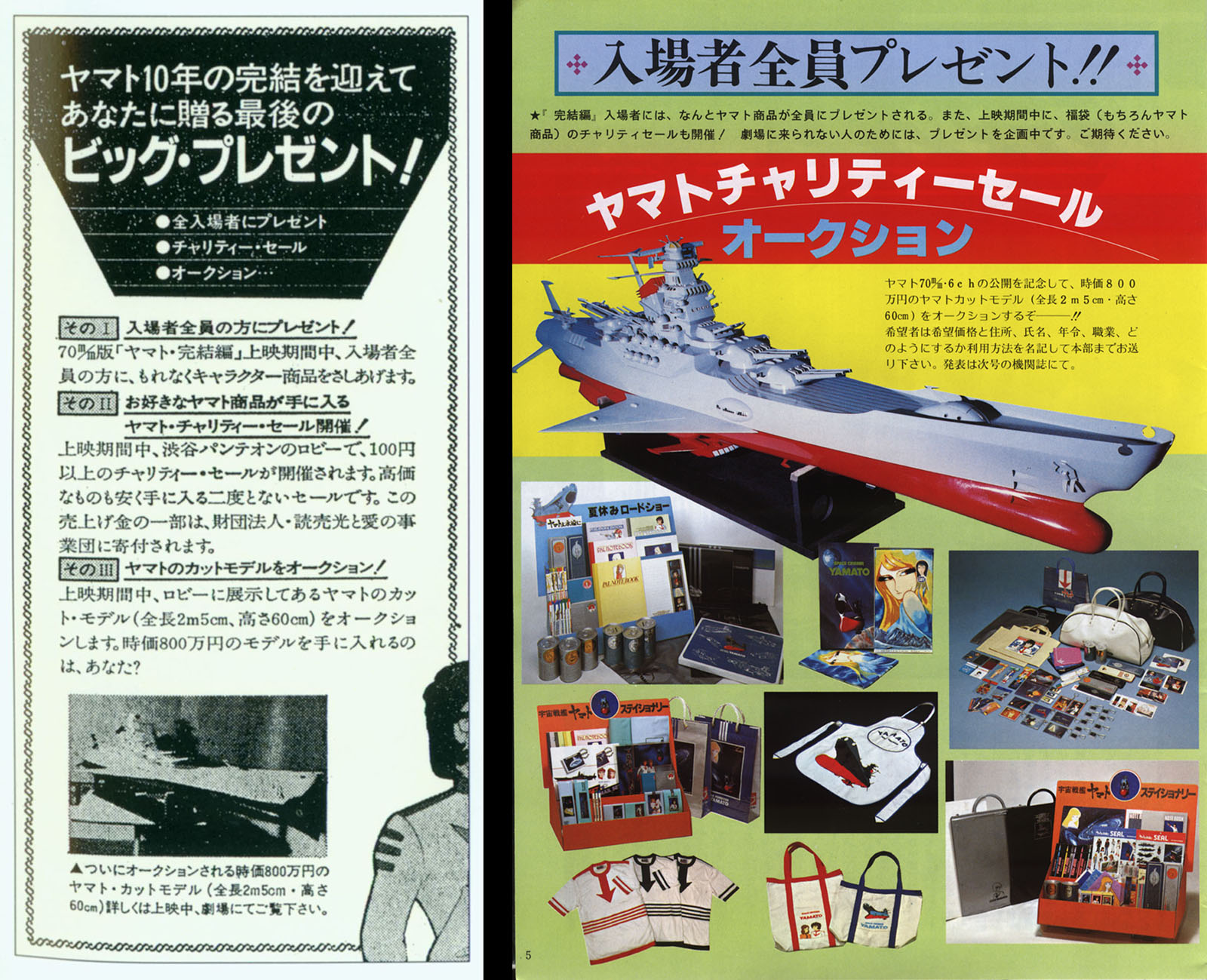
The “big present” campaign (above left) was explained thusly:
The final gift for you as Yamato reaches its 10-year conclusion
BIG PRESENT!
•presents for all attendees
•charity sale
•auction
Part 1: A gift for everyone who attends!
During the theatrical run of the new 70mm Yamato, The Final Chapter, all moviegoers will receive character merchandise as a gift.
Part 2: Get your favorite Yamato products – Yamato charity sale is happening!
During the film’s run, a charity sale will be held in the lobby of the Shibuya Pantheon, with purchases starting at 100 yen. This is a once-in-a-lifetime sale where even expensive items can be found at a bargain price. A portion of the proceeds will be donated to the Yomiuri Light and Humanity Association (a medical foundation).
Part 3: A Yamato cutaway model is up for auction!
During the film’s run, we’ll be auctioning off a cutaway model of Yamato (2.05m long, 60cm high) displayed in the lobby. Who will win this model worth 8 million yen?
The color image (above right) was a page from issue 35 of the Yamato Fan Club magazine, promoting the same event with essentially the same text. It pictured some products that would be available, a few of which went all the way back to 1977.
Regarding the model auction…
To commemorate the release, we’re auctioning off a Yamato cutaway model with a market value of 8 million yen!! Those interested should send their name, address, occupation, and desired price to fan club headquarters, and state how they intend to use it. The results will be announced in the next issue of the club magazine.
You may well ask, over 30 years later, who DID win that huge model worth 8 million yen? In a way, we all did. Keep reading…
October context
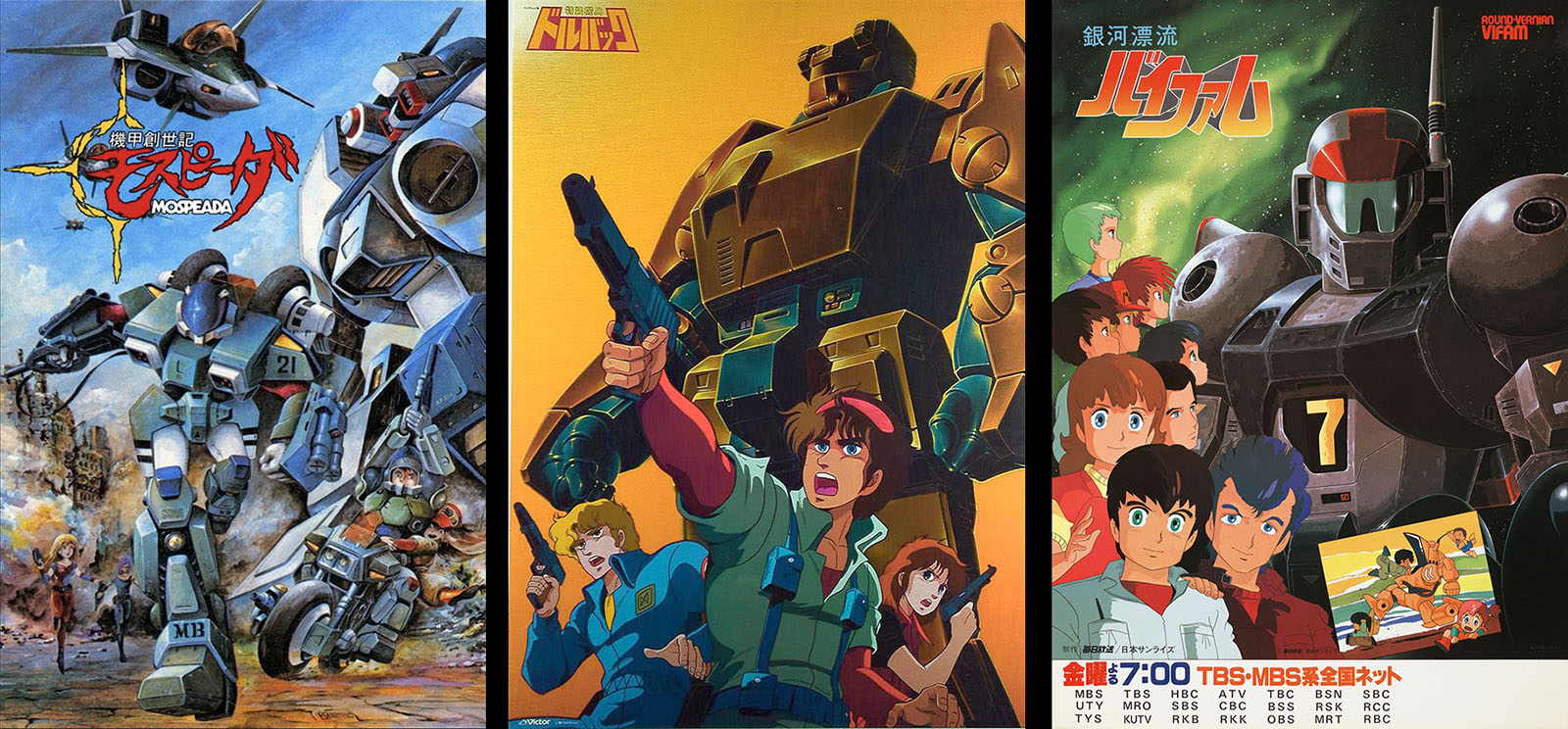
Three new SF anime series debuted on TV in October: Genesis Climber Mospeada on October 2, Special Armored Battalion Dorvack on October 7, and Galaxy Drifter Vifam on October 21. Click on each title for more info (a LOT more in the case of Mospeada and Vifam, which happen to be two of this editor’s favorites).
Anime magazines published in October

Nausicaa gets her second cover story on Animage as the movie goes into production for March ’84 release.

New TV series Galaxy Drifter Vifam gets two covers in its debut month. Animedia runs a Macross/Orguss crossover cover.
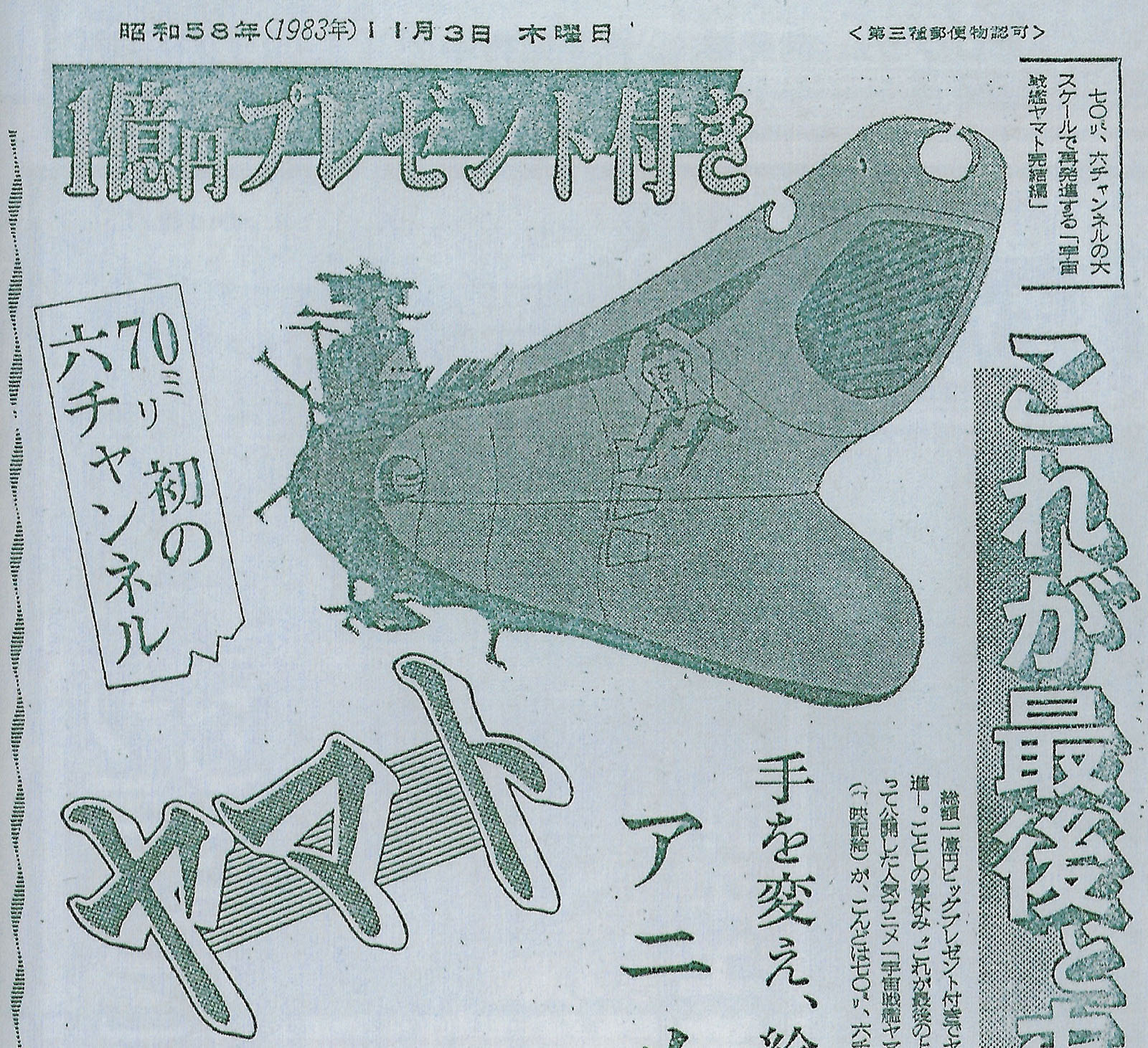
November 3: Sankei Sports newspaper
Just before the premiere, the last round of promo happened in newspapers, with this article from Sankei Sports as a sampler. The top headline read “A 100 Million Yen Present,” referring to the production budget of the film.
Read the article here
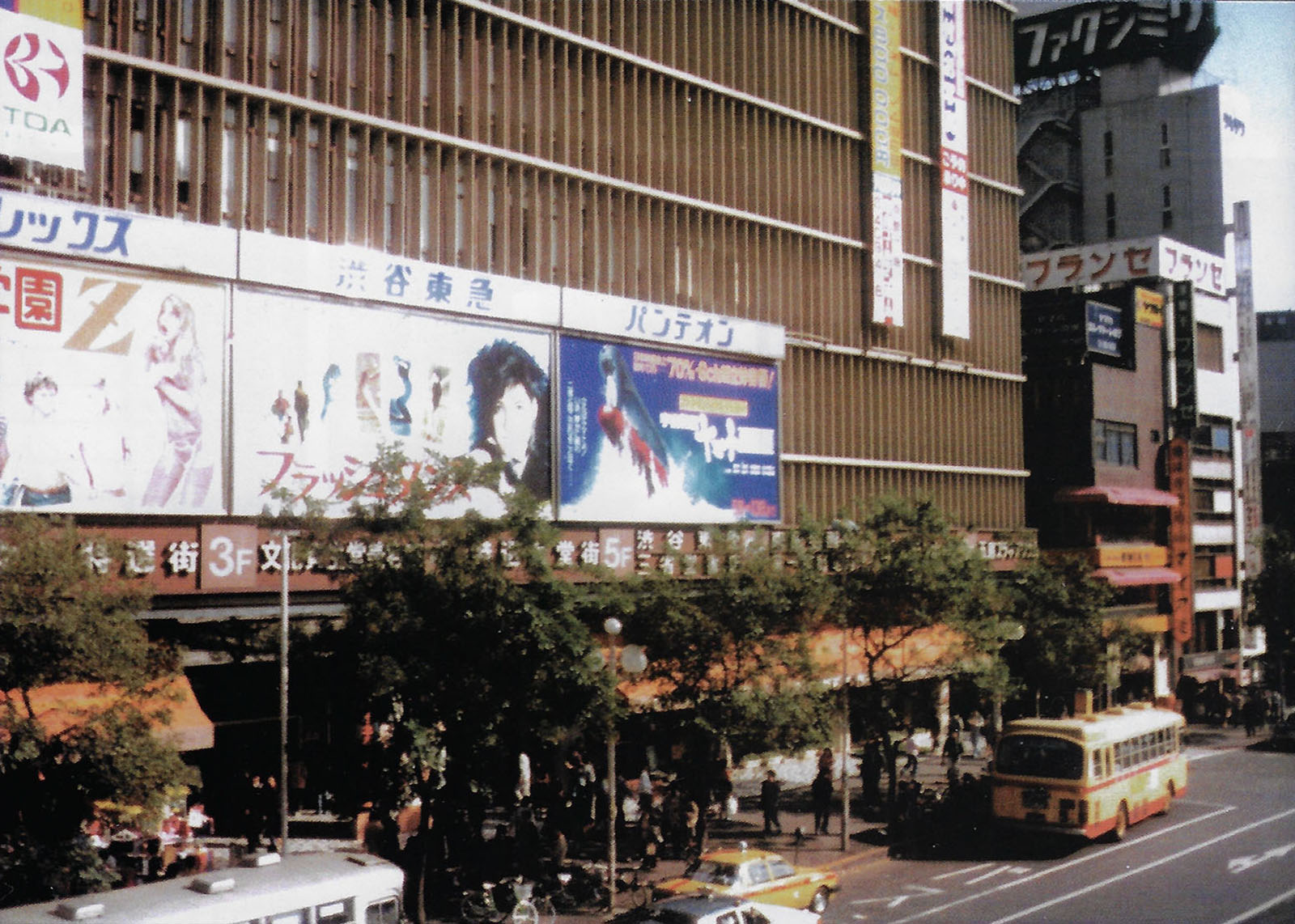
Shibuya Pantheon theater on opening day, photo by Toshinori Watanabe
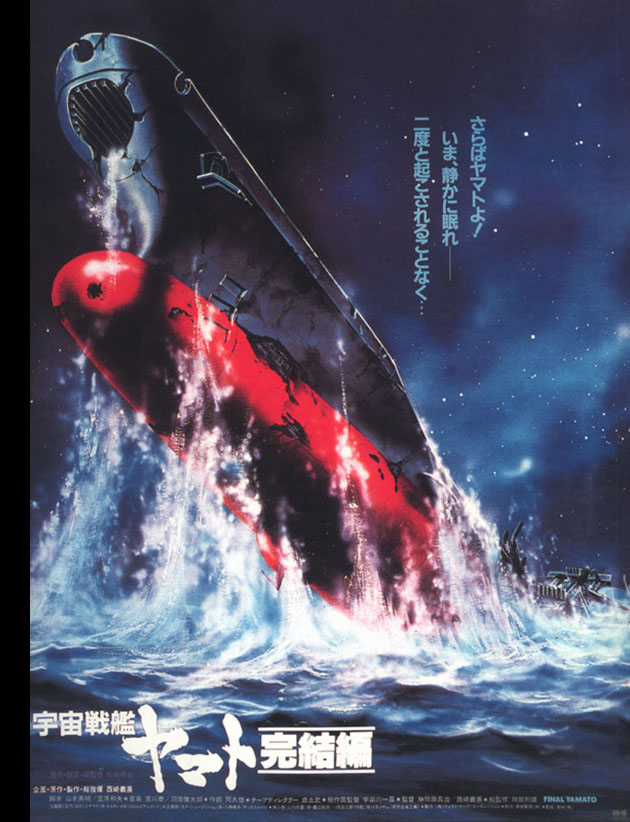
Caption: Farewell, Yamato! Sleep quietly now–never to reawaken
November 5: Final Yamato 70mm premiere
Three theaters opened the film in Tokyo: the Shinjuku Milano, Ginza Shochiku Central, and Shibuya Pantheon. For diehard fans, the Pantheon was the magnet since it hosted the charity sale.
The film itself lived up to all the hype. The picture was clearer and sharper, now reformatted from an aspect ratio of 3X4 to ultra widescreen. This did have the side effect of trimming art at the top and bottom of the frame (letterboxing), but since that was the plan from the beginning, most of the scenes were structured to allow for it.
So then why was a 3X4 picture produced at all? Because at the time it was deemed necessary for TV broadcast. The 3X4 version was preserved when VAP released it on home video while the original 35mm film was still in theaters. (Simultaneous access like this wouldn’t happen again until the dawn of the remake era.) Today, that’s the only 3X4 version we can get, since it never made the jump to another format.
There was a lot of revised animation, and the new scenes extended the running time by 12 minutes. This brought it to 2 hours and 43 minutes, giving it the record for longest anime feature film. It has only been surpassed by In This Corner (And Other Corners) of the World, which is five minutes longer.
If you’re curious about how exactly the two versions of the film compare to each other, click here for a scene by scene breakdown. You’re welcome.
As for the film’s box office performance, Kinejun magazine (No. 875, published Nov. 20) reported the following:
It got off to a strong start, drawing a total of 9,055 moviegoers and generating ¥11,235,400 in box office revenue over its first two days, a performance that clearly demonstrated the film’s enduring popularity.
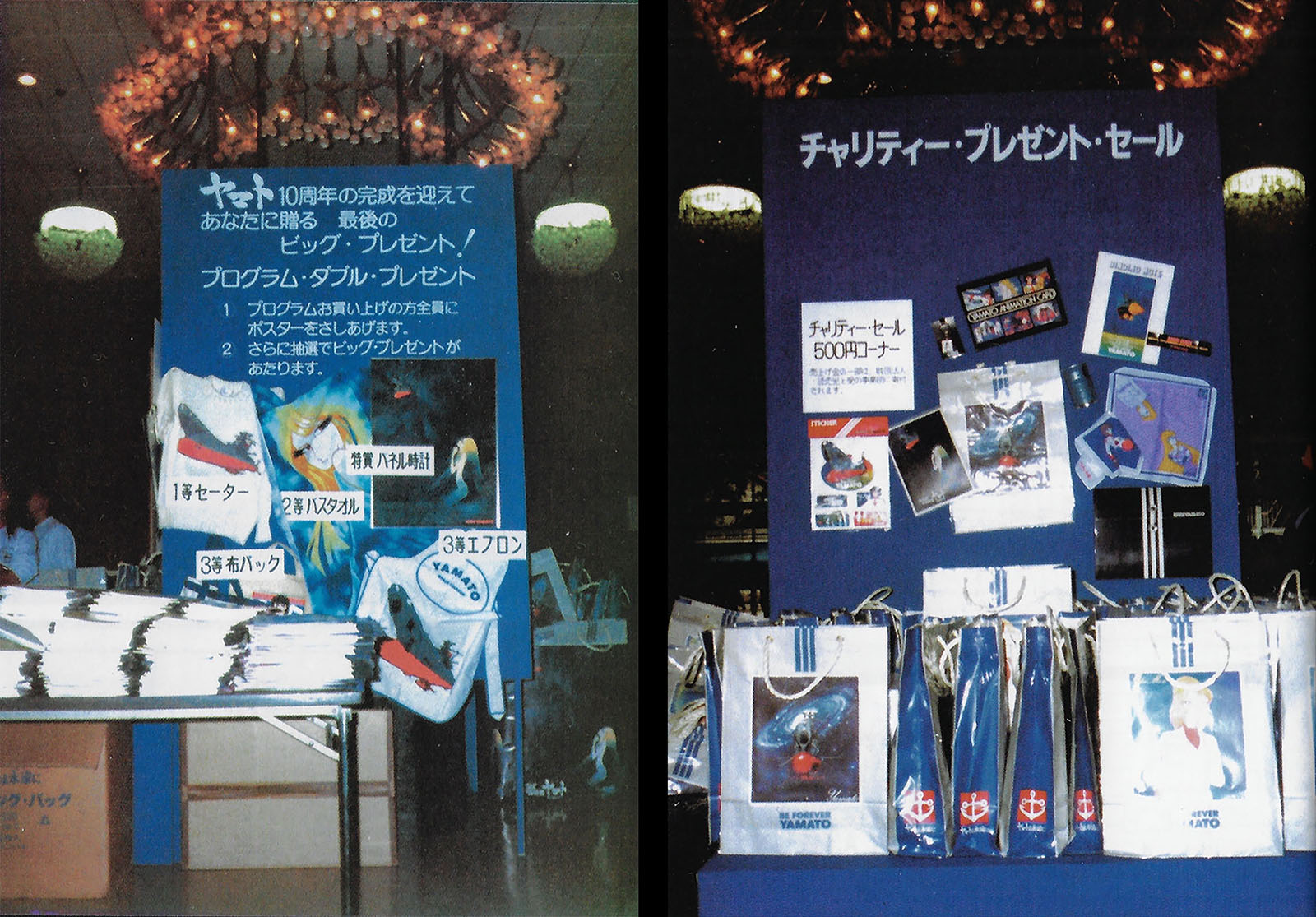
The Yamato fan club set up a table in the middle of the Pantheon lobby for the “charity present sale” with discounted products for ¥50, ¥100, and ¥500. The ¥500 variety pack came in a gift bag (shown above right).
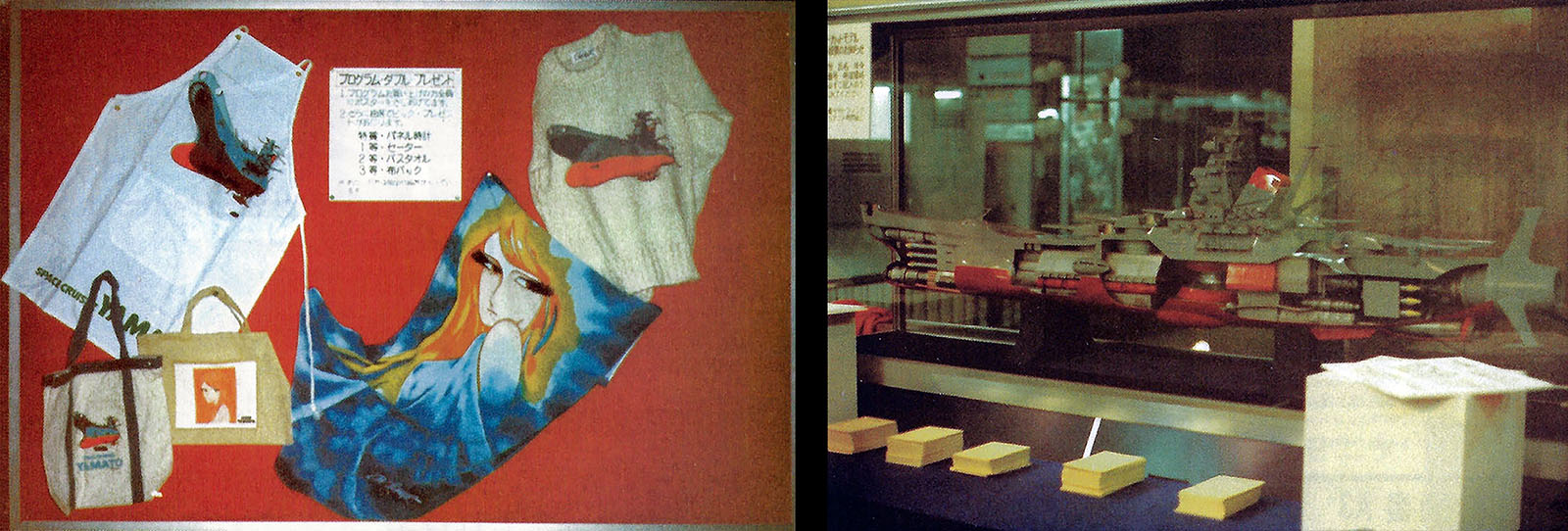
Another way to obtain merch was to buy the movie program book. If it came with a randomly-inserted voucher, you could win a tote bag, an apron, or a sweatshirt. Nearby could be found a display case showing the model that was up for auction. It was, in fact, the “Precision Cut Model” that had been designed as a promotional exhibit for Farewell to Yamato in 1978. A modified version was built for Be Forever in 1980. The 1978 version was offered here with bidding ballots lined up in front of the display case.
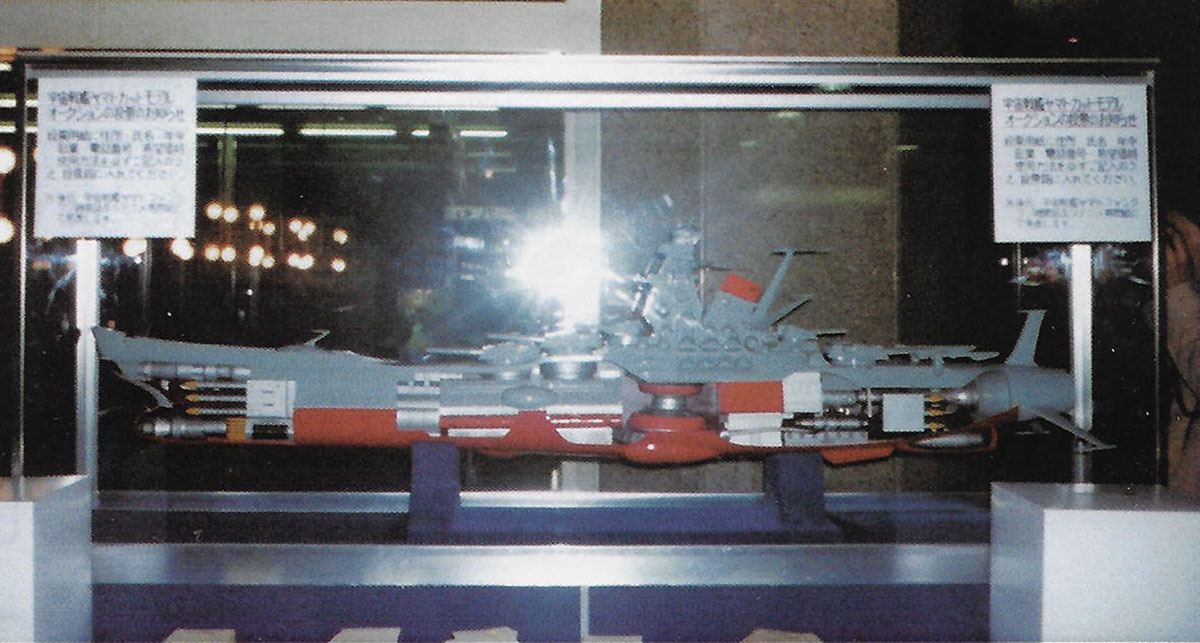
According to superfan Toshinori Watanabe, who participated in this event as a volunteer, the highest bid satisfied the minimum. BUT, remember that the bidder was required to state how they intended to use the model. The highest bidder stated that it would be kept for private viewing, which was disqualifying. Thus, West Cape Corporation retained both models with no winner.
Another way to look at this outcome is that we all won, because these fantastic models continued to appear for public viewing in various events, right up to the 50th Anniversary Exhibitions that began in 2025.
Trace the subsequent history of the Precision Cut Models in these articles:
Yamato Museum (2007) | 50th Anniversary in Tokyo (2025) | 50th Anniversary in Osaka

November 5: Final Yamato program book, second edition
The original program book from the March premiere was slightly reworked and reissued for the re-release. Page count and overall content were the same, but a previously blank page was filled with a primer on 70mm film, an interior foldout image was moved to the front cover and replaced with stills of new shots, and the back cover image was revised.
Revisit the first edition with text translations here
See both editions side by side here
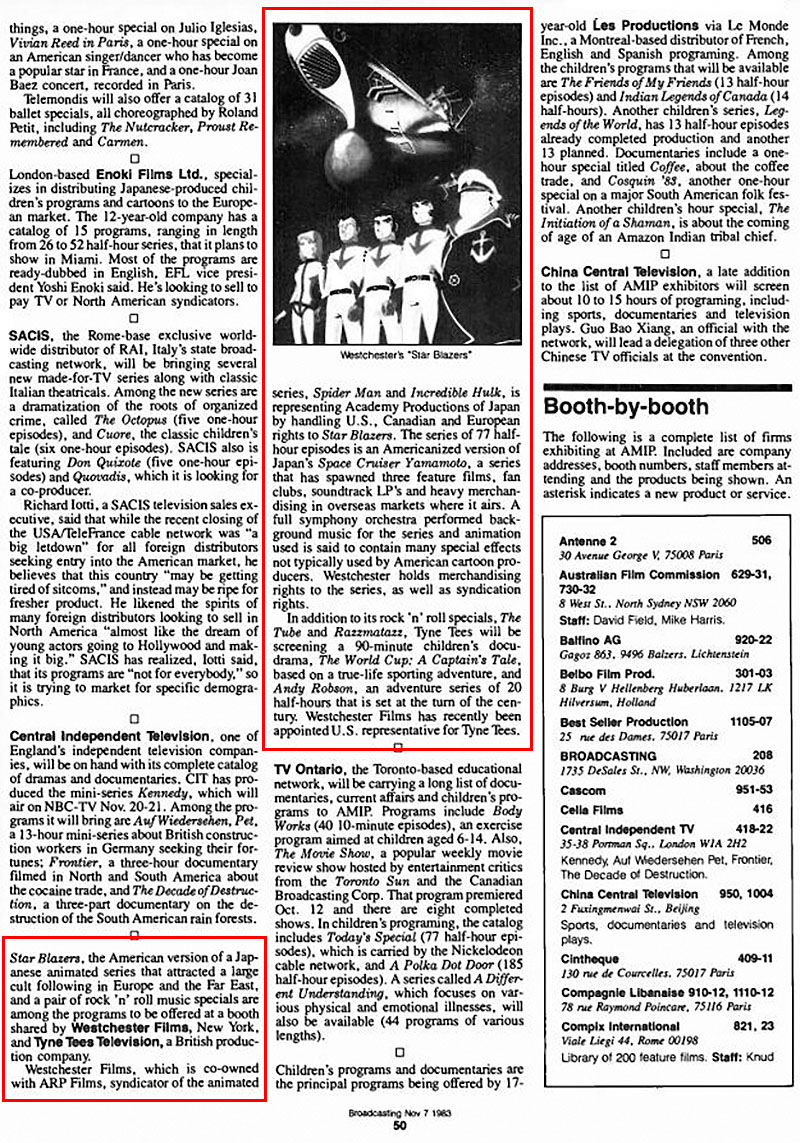
November 7: Broadcasting magazine
How was Star Blazers faring in the outside world at this time? One way to find out was to visit AMIP, the American Market for International Programs, a broadcasters trade show held in Miami Beach, Florida. Since it’s a bit late for us to do that, we can fall back on this article from Broadcasting magazine. The following text could be found in its profiles of AMIP exhibitors:
Star Blazers, the American version of a Japanese animated series that attracted a large cult following in Europe and the Far East, and a pair of rock’n’roll music specials, are among the programs to be offered at a booth shared by Westchester Films (New York) and Tyne Tees Television (a British production company).
Westchester Films, which is co-owned with ARMP Films, syndicator of the animated series Spider-Man and Incredible Hulk, is representing Academy Productions of Japan by handling US, Canadian, and European rights to Star Blazers. The series of 77 half-hour episodes is an Americanized version of Japan’s Space Cruiser Yamamoto, a series that has spawned three feature films, fan clubs, soundtrack LPs, and heavy merchandising in overseas markets where it airs. A full symphony orchestra performed background music for the series and its animation is said to contain many special effects not typically used by American cartoon producers. Westchester holds merchandising rights to the series, as well as syndication rights.
Obvious errors aside, it’s interesting to note the status of Star Blazers in the Westchester Films portfolio. The syndication package was indicated as 77 episodes rather than the original 52, even though Yamato III had not yet been adapted. This tells us that the attempts to raise production funds in 1981 were still ongoing. Most interestingly, it appears that Westchester was acting as a sales agent for West Cape Corporation in Canada and Europe. Their merchandising rights had yet to bear any fruit, however. And since their name would not appear on the forthcoming W.C.C. Animation Comics, they didn’t seem to have a role in that project either.
Westchester’s licensing tenure began in 1979 and would last through 1989, so they were now approaching the midpoint. We would hear more from them in the second half.
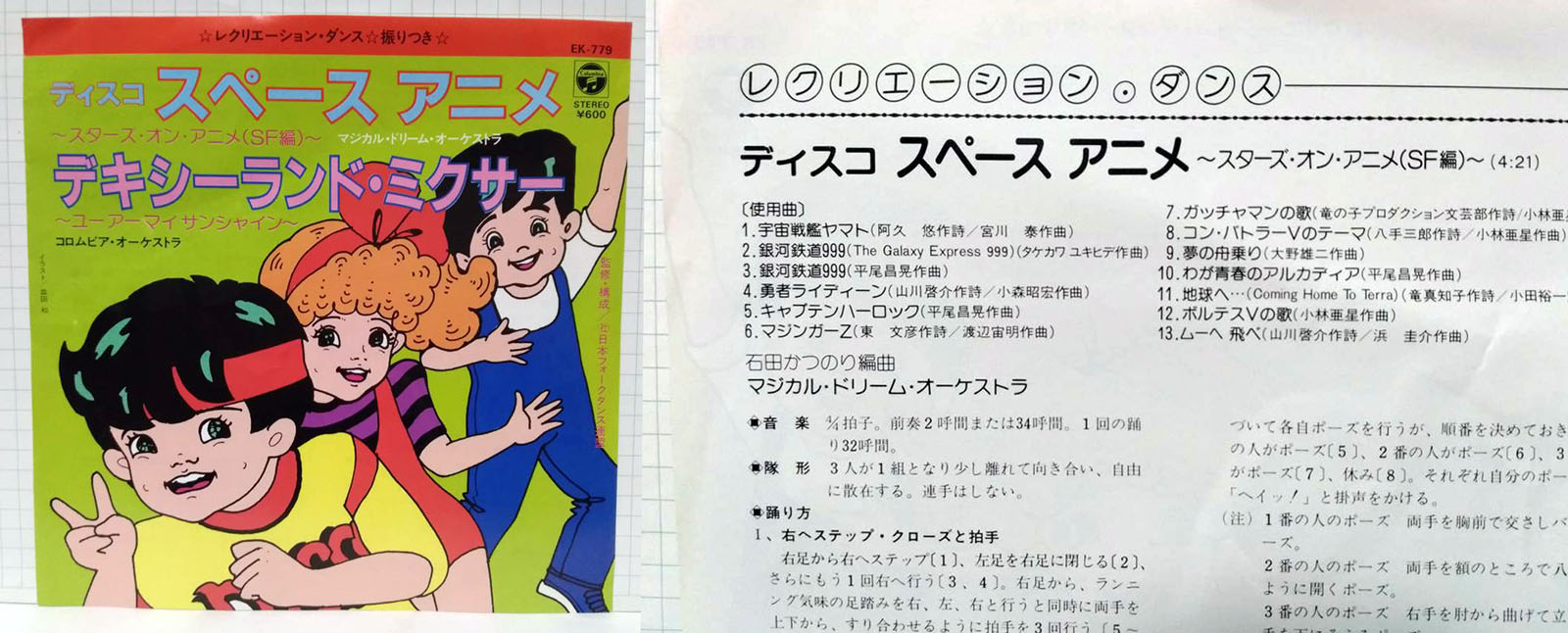
Also spotted in November: Disco Space Anime single
At the end of 1982, Columbia came up with another creative way to sell the same music again. Back then, it was part of a medley in Disco Space Anime, which filled up one side of a single and sampled Yamato along with Galaxy Express, Raideen, Captain Harlock, Mazinger Z, Gatchaman, Combattler V, and five other titles. A total of 13 samples crammed into just 4:21 was performed by the “Magical Dream Orchestra.” That track was reissued on the A-side of this new single. The B-side did the same with Dixieland tunes.
Listen to it on Youtube right now!
Anime magazines published in November

Orguss and Vifam each get another cover.

My Anime carries the first cover for the upcoming Macross movie (July ’84). OUT devotes its cover to Mospeada.
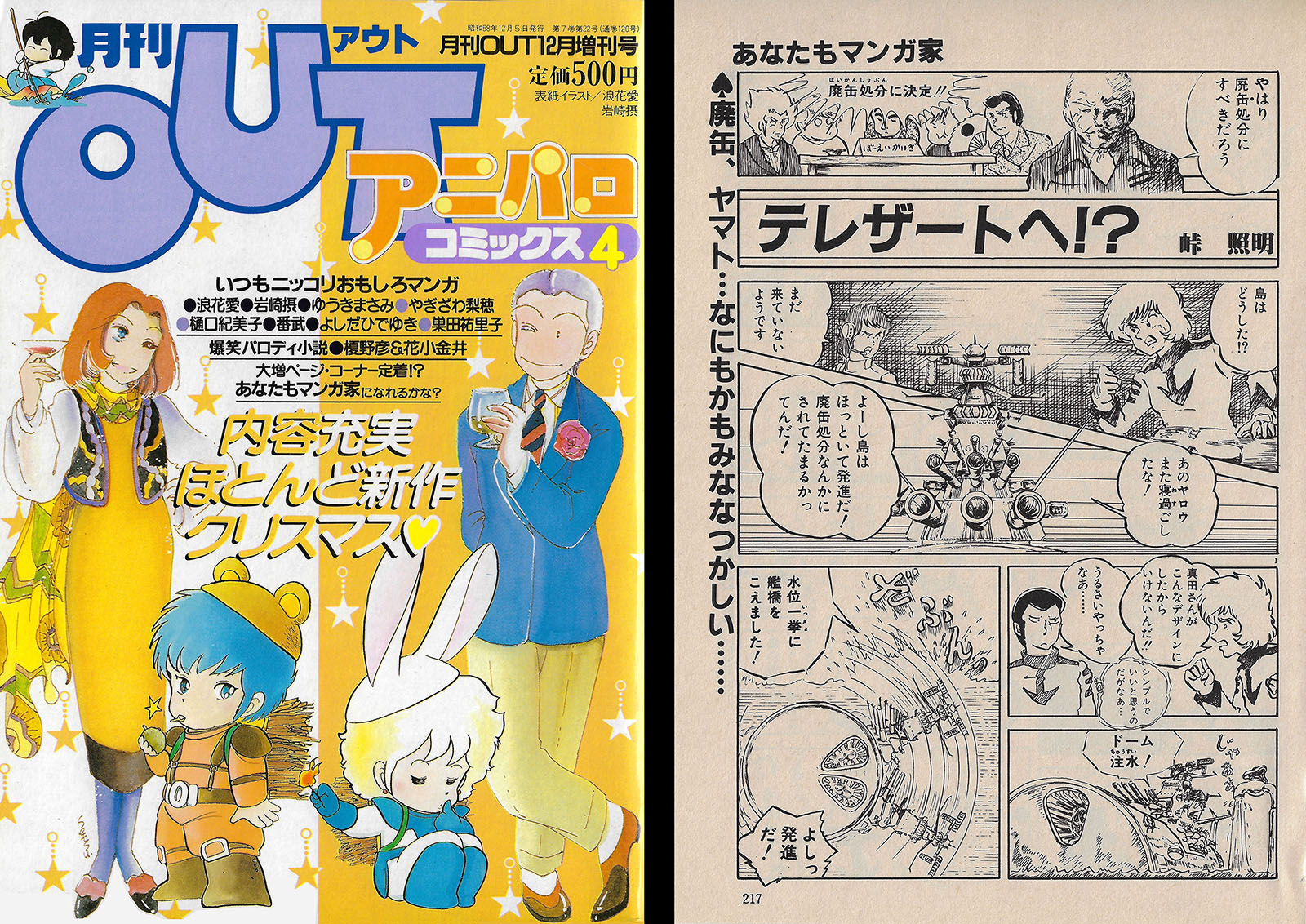
December 5: OUT Aniparo Comics Vol. 4
OUT magazine, which was closely tied into Yamato history, spawned a new digest-size spinoff titled Aniparo Comics (Aniparo = Anime Parody) in the summer of 1982. Published irregularly, it was a successful showcase for fan-made manga that lasted 54 volumes.
Volume 4 featured a 6-page Yamato parody that went all over the place for laughs and definitely found them. Read it in English here.

December 10: Final Yamato Super Deluxe hardcover book
West Cape’s masterful series of hardcover books culminated with the biggest of them all, a massive, 248-page full color 10.5″ x 14.5″ tome that was truly the last word on the movie, archiving material that started from the first story discussions and went all the way to the 70mm release.
See sample pages here
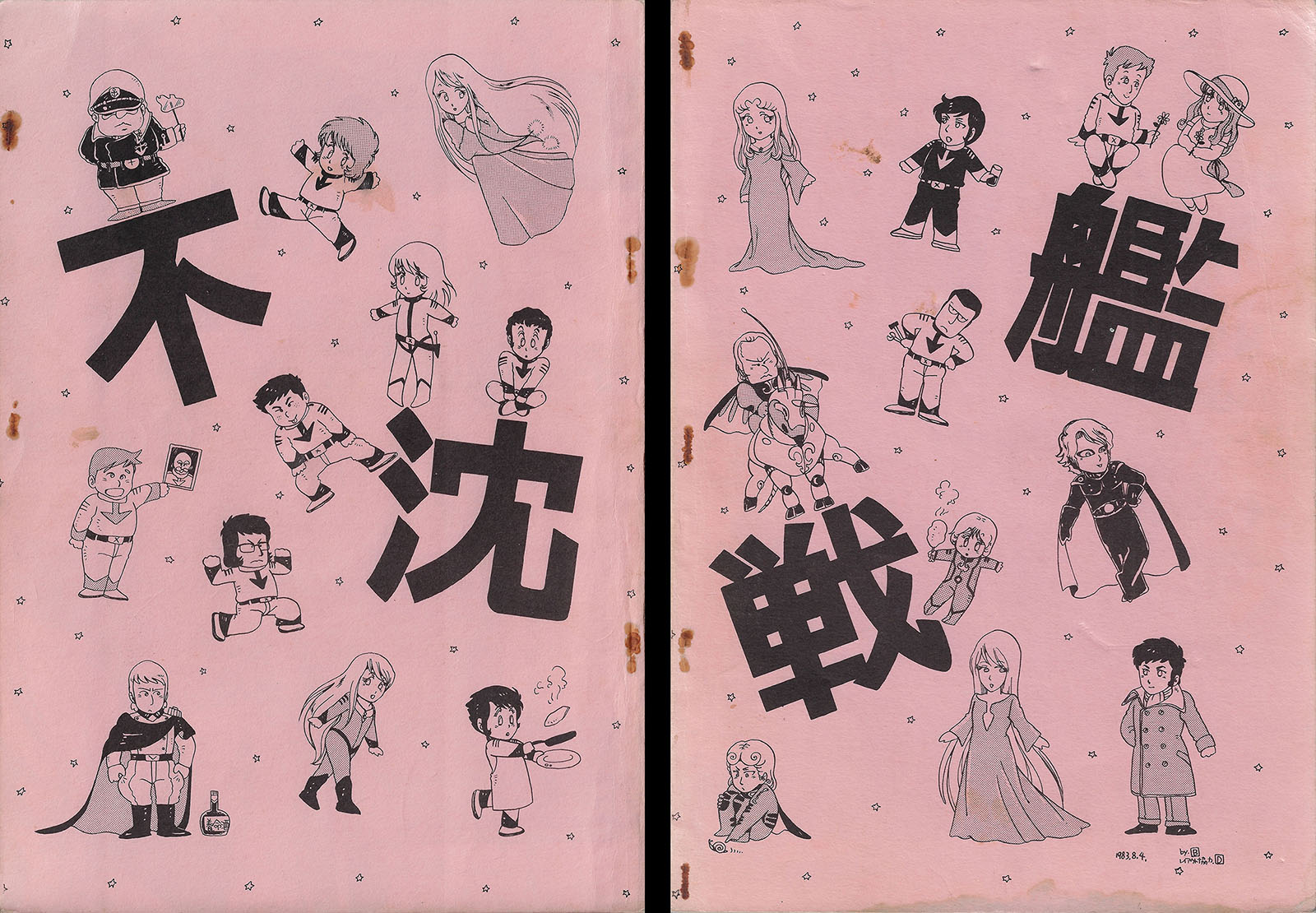
December 25: Unsinkable Battleship doujinshi
Unofficially, this was the last doujinshi (fanzine) of the original production years, a substantial 120-page collection of fan art, fanfic, parody manga, and even an interview with the voice actor for Lugal de Zahl. It was the work of three fans under the group name “Space Battleship Yamato Encouragement Association.”
As a representative sample of how far doujinshis had come, it could not have been more perfect. From the first cobbled-together collections of “rescued” production art to a target-rich fan playground, the evolution of doujinshis is an excellent lens on the evolution of the entire fan subculture that Yamato gave birth to.
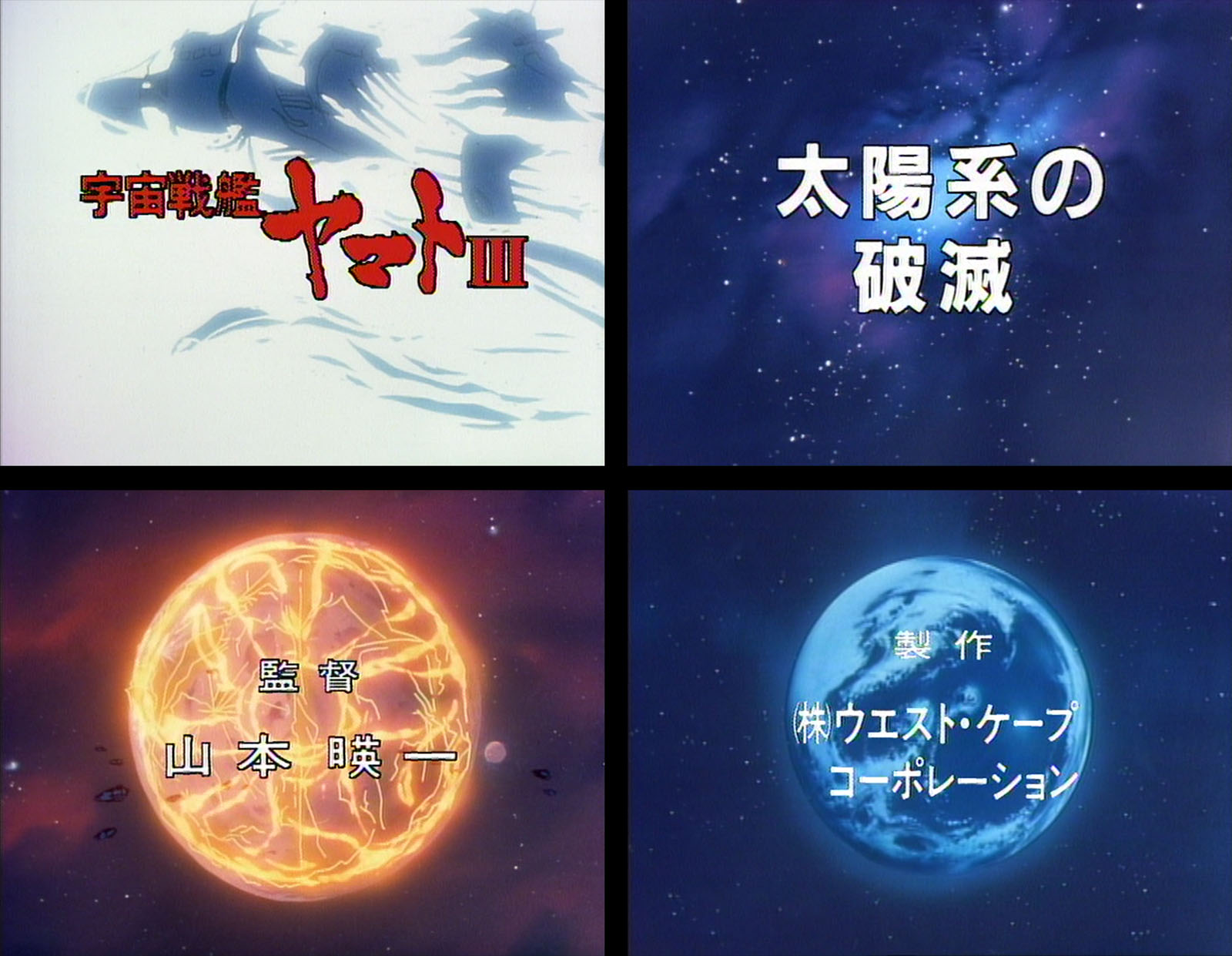
December 28: Yamato III compilation movie
If there could be just one unsung note left in the Yamato fugue, this was it: a compilation for Yamato III to match one made years earlier for Yamato 2. Destruction of the Solar System (which reused the title from Episode 1) ran 93 minutes and was broadcast on Nippon TV just before the end of the year. Like the Yamato 2 compilation, the editing was supervised by scriptwriter Eiichi Yamamoto.
The odd thing about this lesser-known project is that it had actually been made over two years earlier, but had not been seen by the public until now. However, they had heard it; the sound portion alone had been released in June 1981 as a 2-disc Yamato III drama album. As of now, there was a picture to go with it.
December context
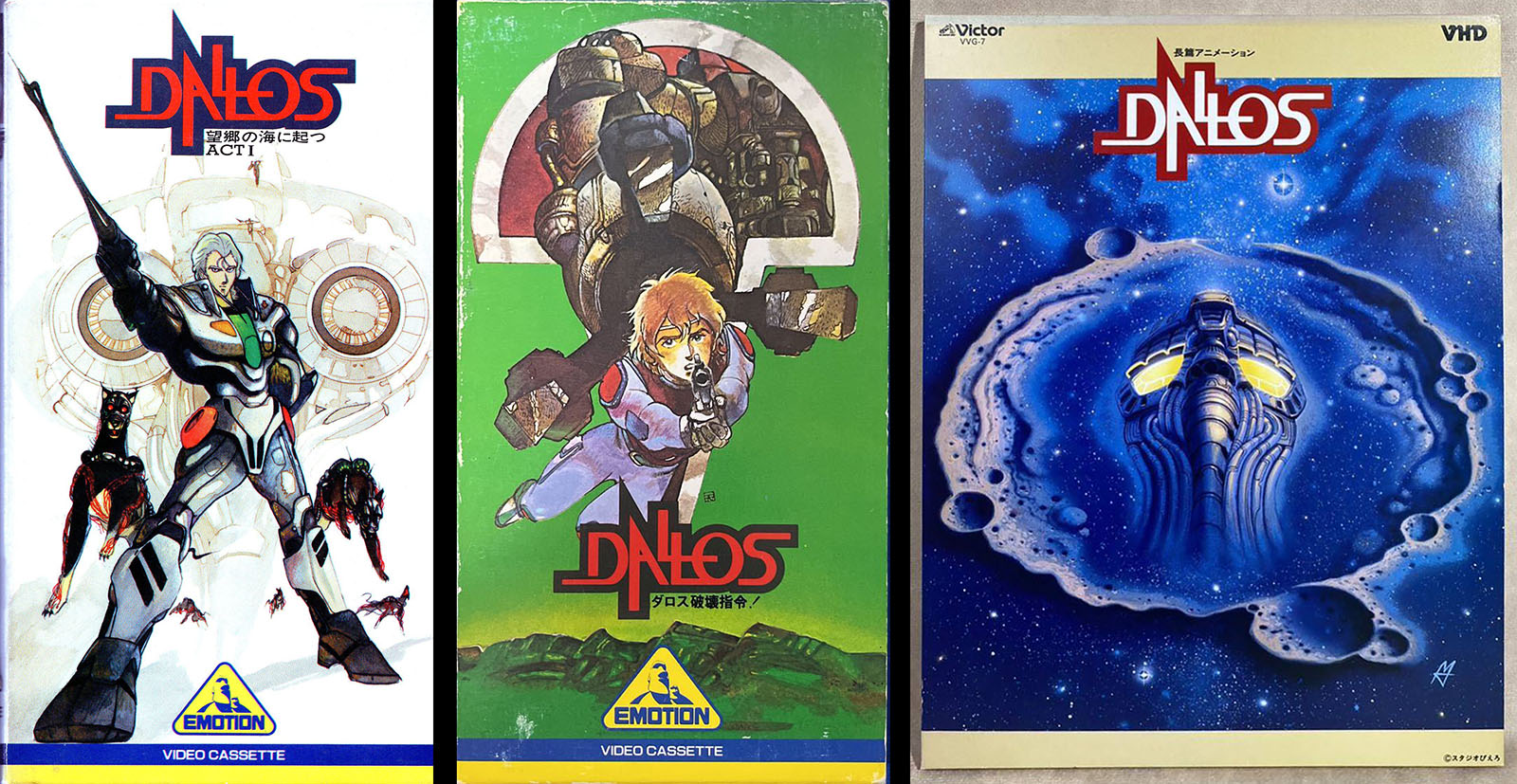
Yamato was one of the first anime titles to break ground in the home video sphere, but another SF title took the next big step forward. Volume 1 of Dallos, co-written by Hisayuki Toriumi and Mamoru Oshii, was released as the first OVA [Original Video Animation] on December 16. Also known as The Battle for Moon Station Dallos, three more volumes (and a special) would follow in the coming year. This work inaugurated an entire new marketplace to go where film and television could not.
Read more about Dallos here
Anime magazines published in December


Orguss grabs two more covers as the year ends. Others promote Vifam, Urashiman and the new TV series Famous Detective Holmes.
Also spotted in 1983
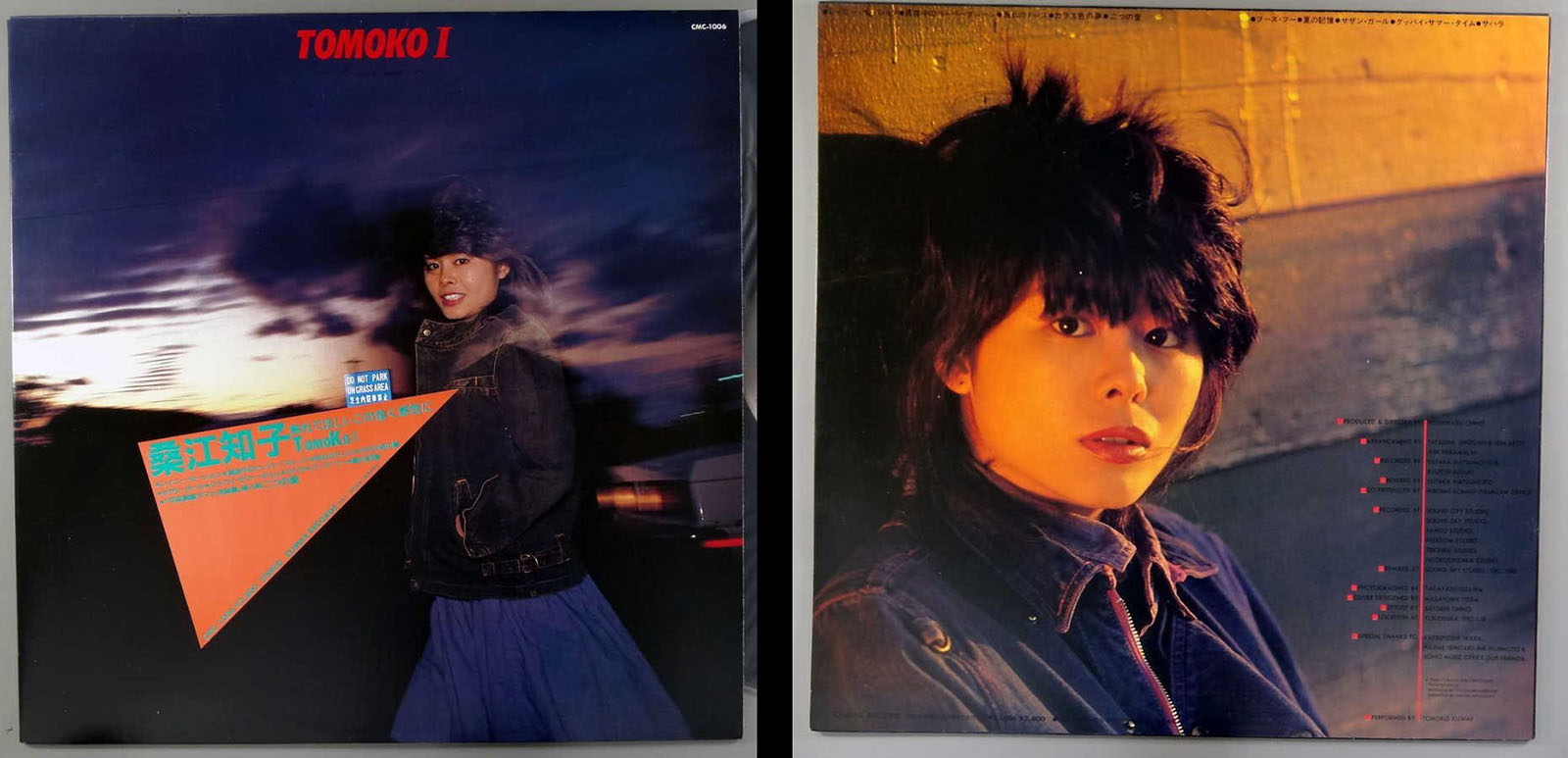
I Can’t Wait LP by Tomoko Kuwae
The exact release date for this one is elusive, but the first full-length LP from Tomoko Kuwae (ambitiously titled TOMOKO I) came out in 1983 and included her song from Final Yamato. Love of Two was the dramatic ballad heard while Yuki flies the unconscious Kodai back to the ship and reflects on the course their lives have taken. This album finally made it to CD in 2015.
Listen to the full album on Youtube here
Sheet Music roundup
Many sheet music books were covered in previous reports, but several more were published in 1983. With anime rising faster than ever, Tokyo Ongaku Shoin [Music Study] rolled out one collection after another. The following titles all contained Yamato compositions to perform at home…
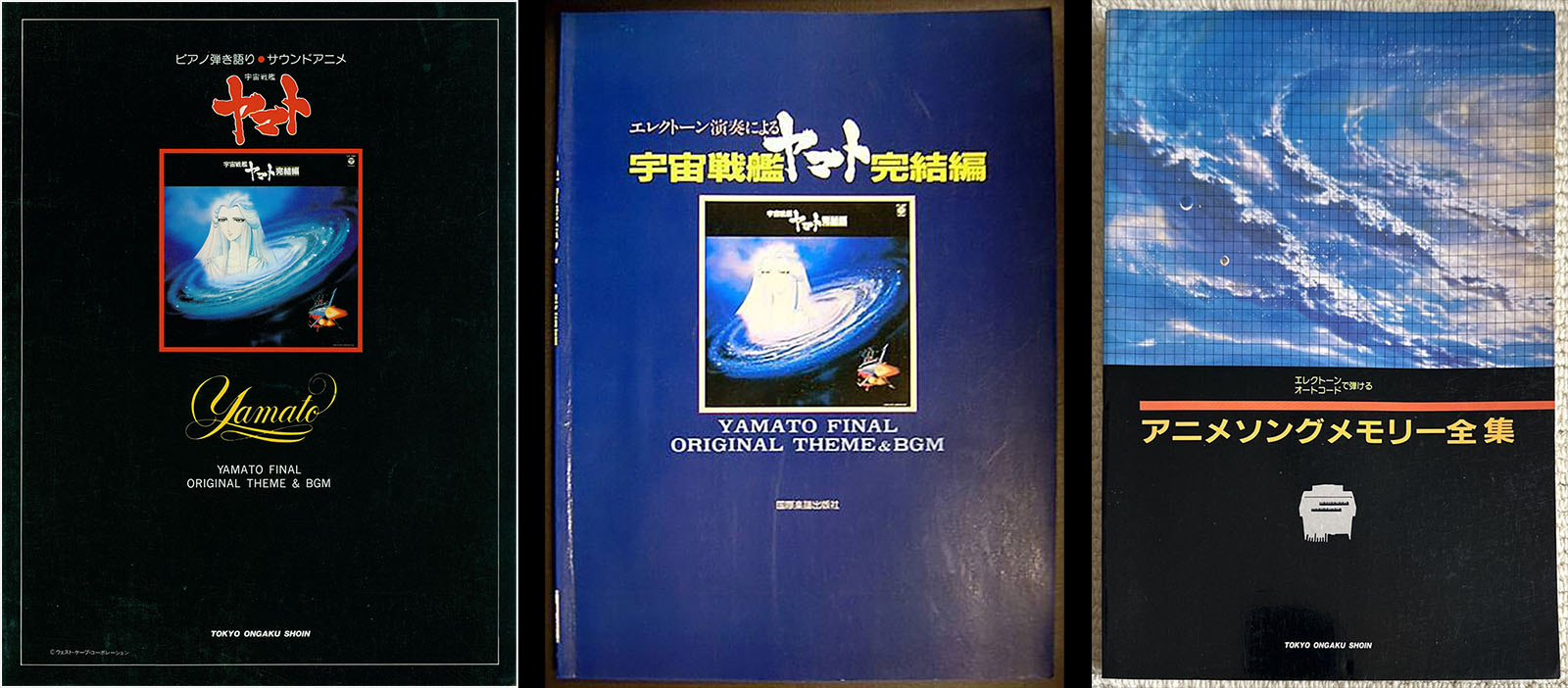
for piano
for Electone organ
for Electone organ
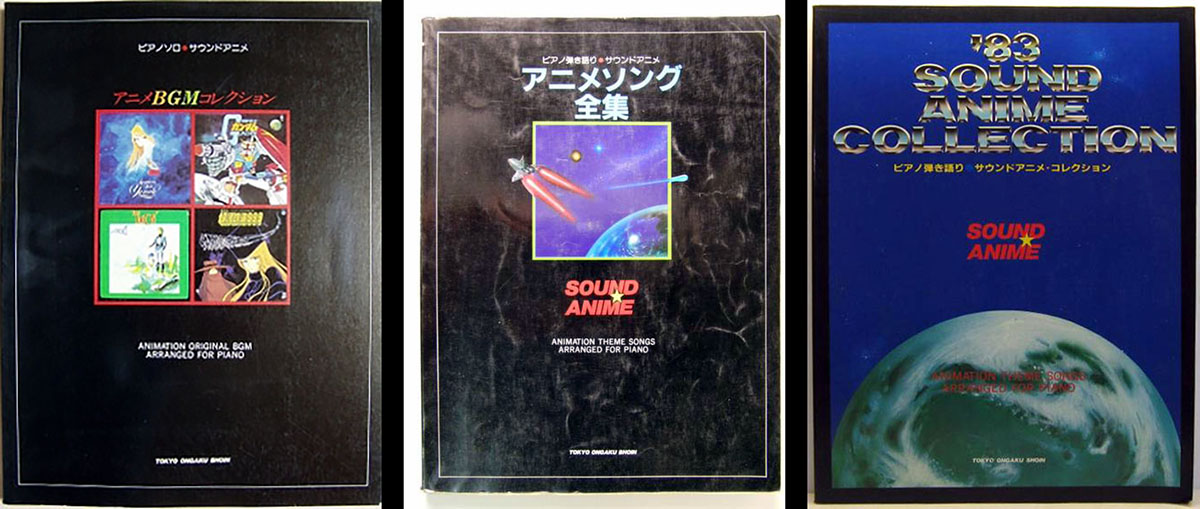
for solo piano, published in May
for piano, published in June
for piano
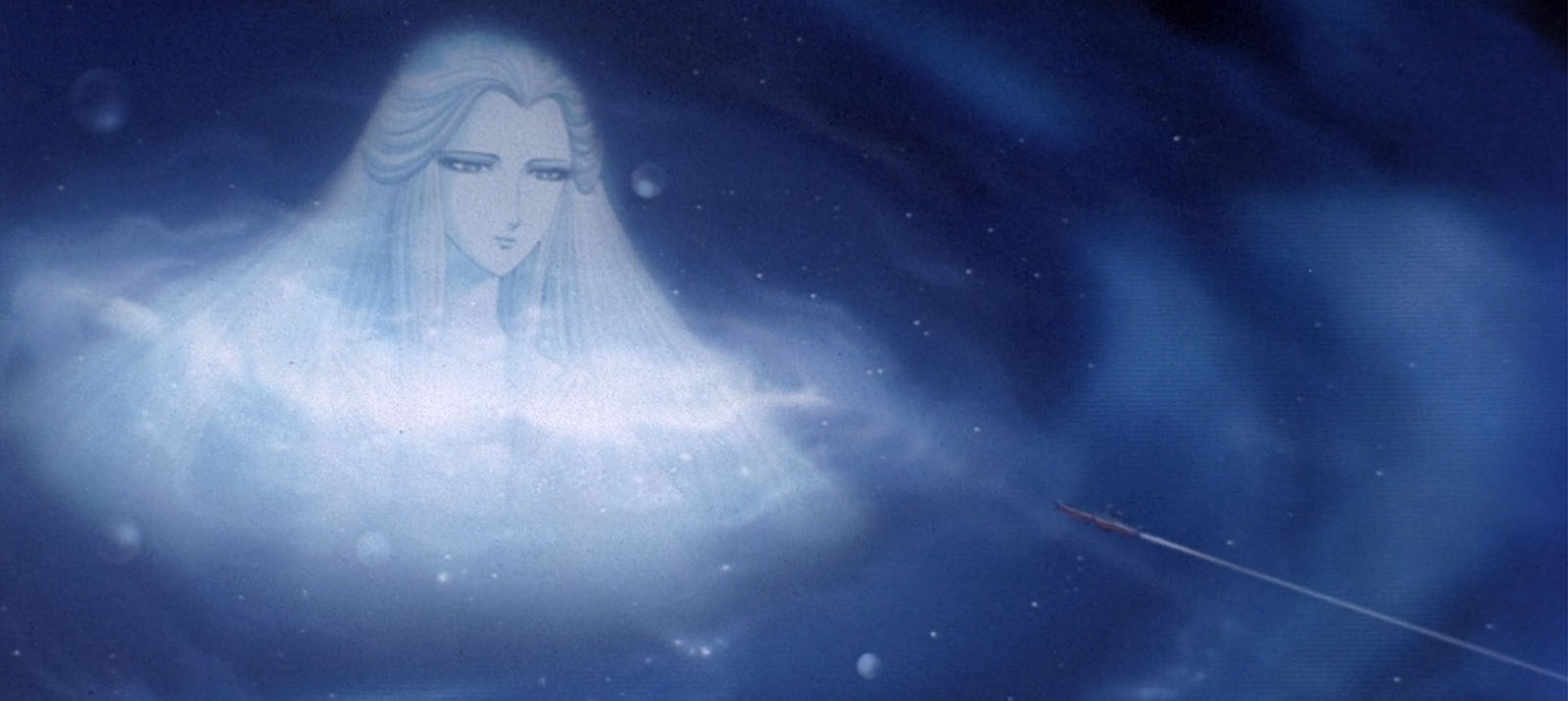
What’s Next
The end of 1983 brings us to the close of the Yamato production years and the conclusion of the Vintage Report series, a four-year mission (almost) to create the most comprehensive timeline possible of this fascinating subject.
Assembling it has been a true labor of love, taking me down twisty rabbit holes I didn’t know existed at the start, even after many years of research. More than once, I thought I’d reached an end point only to learn that it was instead a turning point. Sometimes new discoveries happened just in time to plug them into the flow. Other times they forced previous work to be restructured. But it was all about building something that had never been built before, so it was always an adventure.
Where do we go from here? Forward, of course! Back in 2009, I started an annual tradition of rounding up an entire year of news into a retrospective. That tradition continues today, as you can see here. But, of course, a lot of intervening years haven’t been given that treatment yet. Now that the Vintage Reports are finished, it’s time to fill that gap.
A fair amount of backlog from the production years has accumulated over the past few months, so we’ll take a look at that first. But as soon as it’s been woven into the tapestry, a new series of Annual Reports will begin with the year 1984 and make its way up to 2008. If you poke around here at Cosmo DNA, you’ll find plenty of data from that time frame. But trust me, there’s still a lot more to be learned about the greatest SF anime of them all!
– Tim Eldred, Cosmo DNA Editor
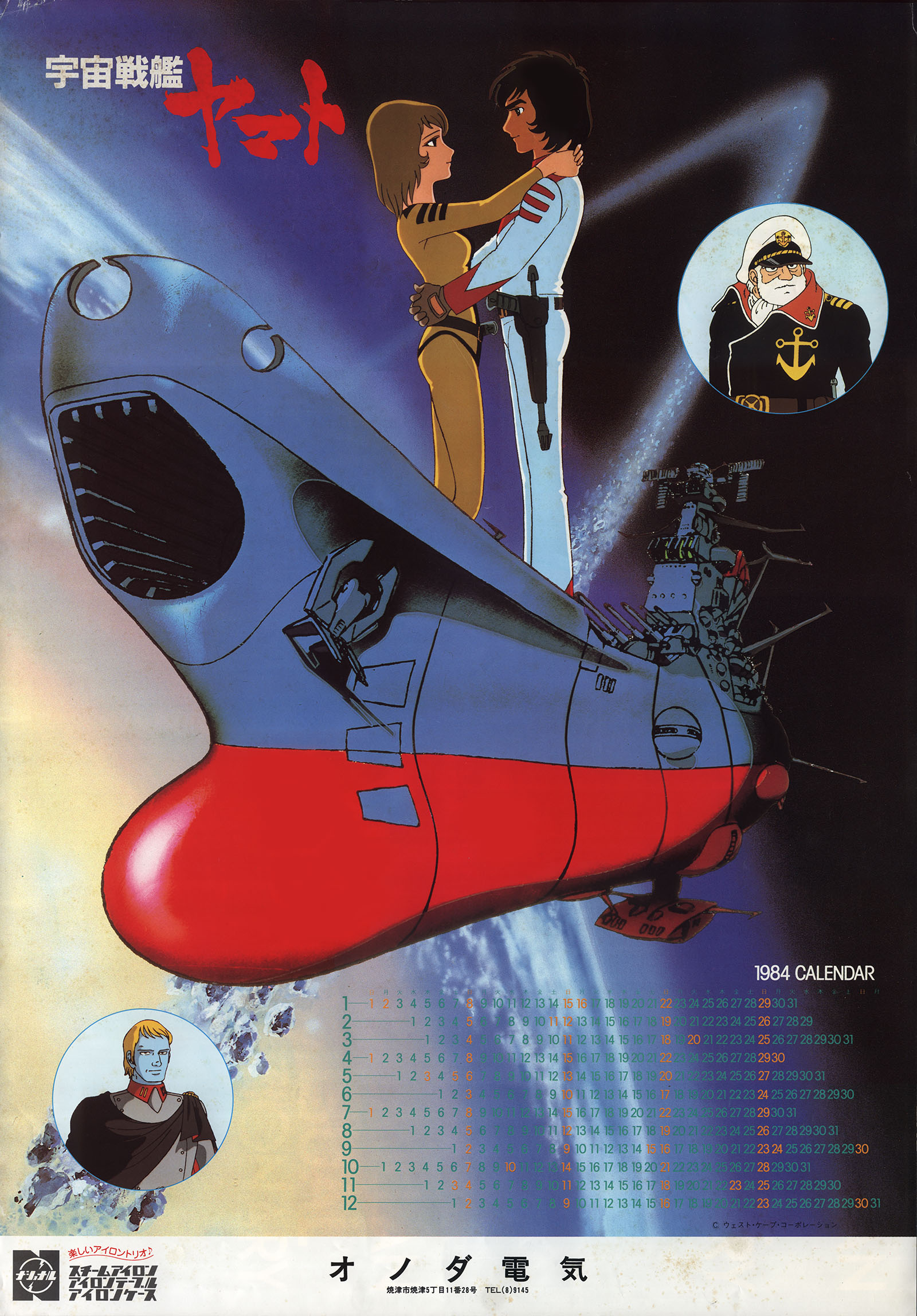
1984 calendar poster by Onoda Electric, manufacturer of fine steam irons (yes, really).
Special Acknowledgement
If you’ve ever wondered how so many obscure artifacts were found for the Vintage Reports, there are several answers. Diligence is the main one, daily scouring of online sources like Yahoo Japan Auctions. Another is multiple trips to Japan with a focus on mining second-hand stores. But in terms of deep research, it wouldn’t have been possible without the efforts of a Japanese superfan who shares my mission.
We’re very lucky to still share the planet with Toshinori Watanabe, who not only lived the experience in real time, but also held onto the documents and curated them for the sake of history. His efforts, sometimes in cooperation with others, led to the publication of the doujinshis shown below. By preserving history for all of us, they embody the original driving force behind Yamato fandom itself.
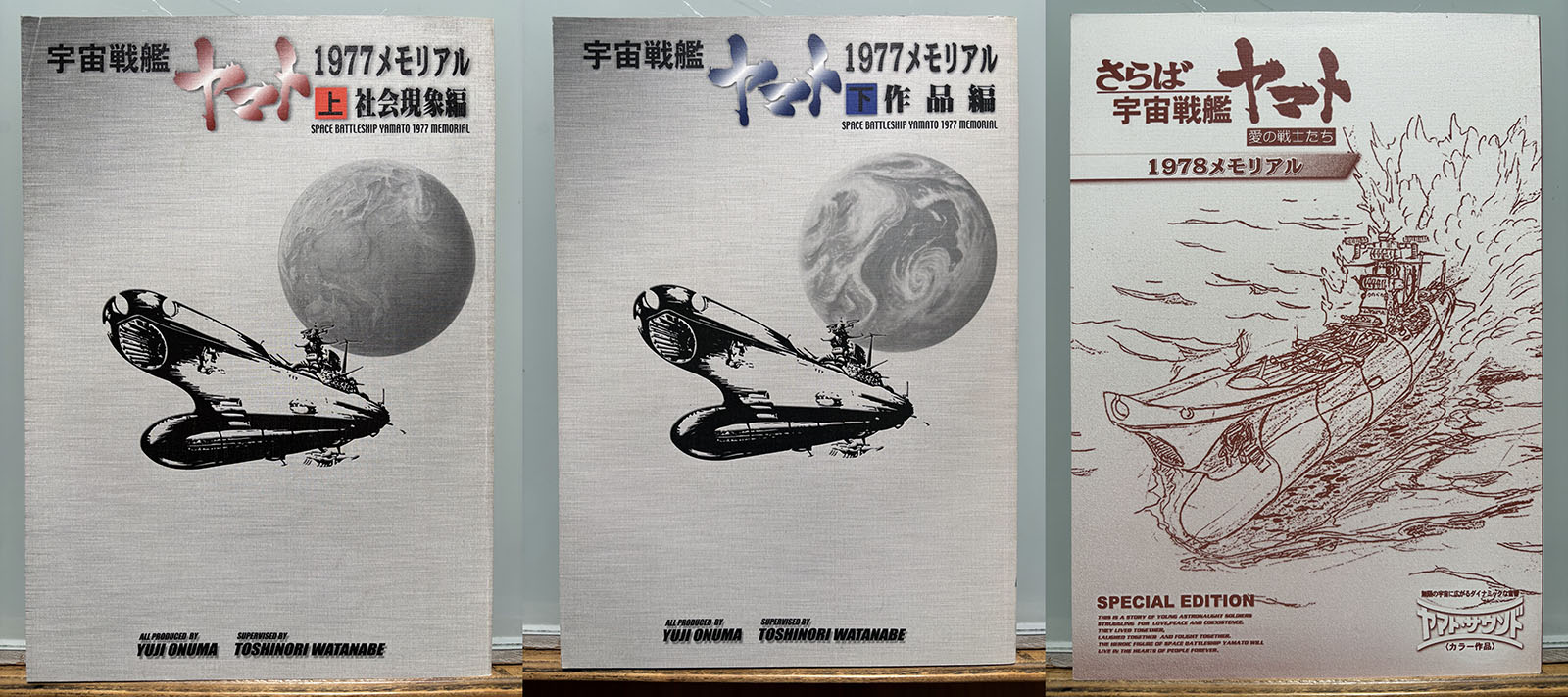
April 30, 2000
April 30, 2000
Feb 28, 2006
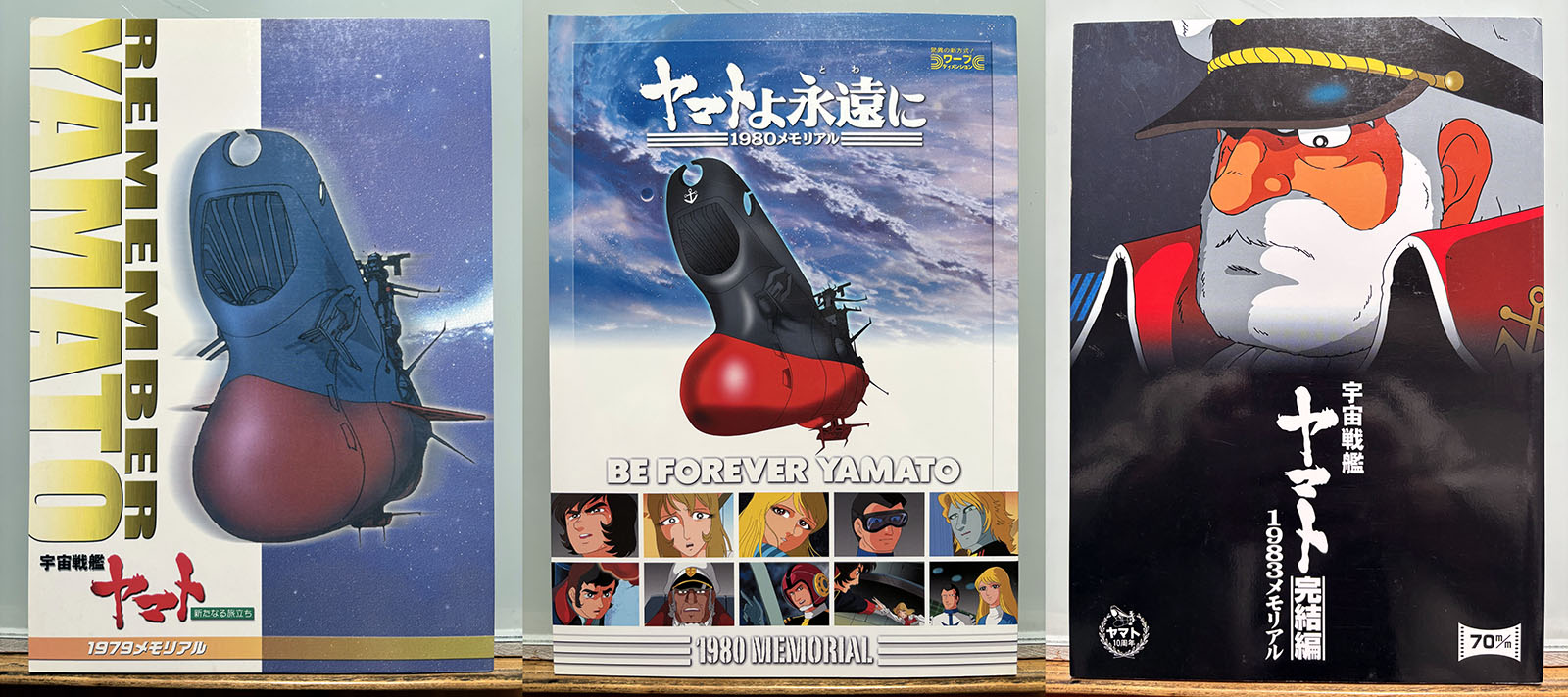
Sept 26, 2004
May 5, 2012
Dec 28, 2019
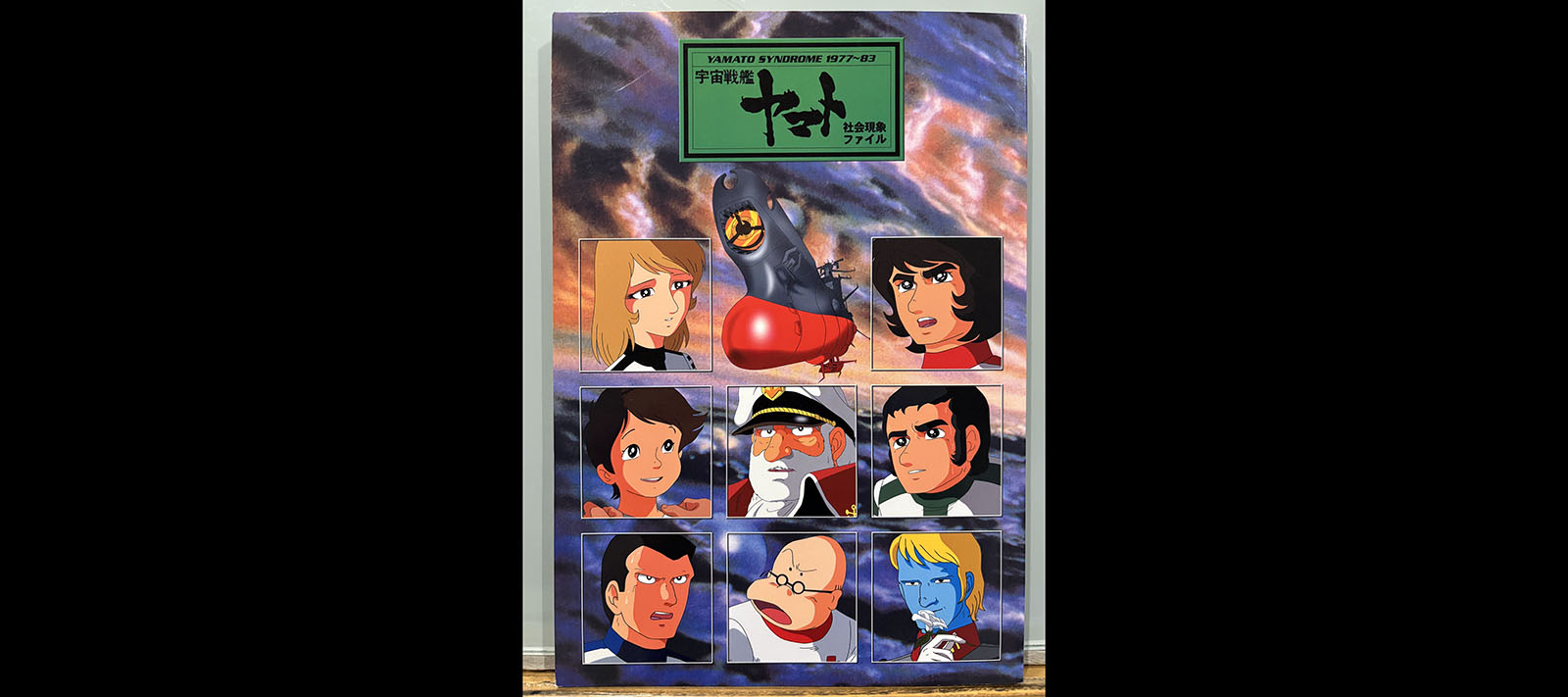
Social Phenomenon File
Dec 29, 2018
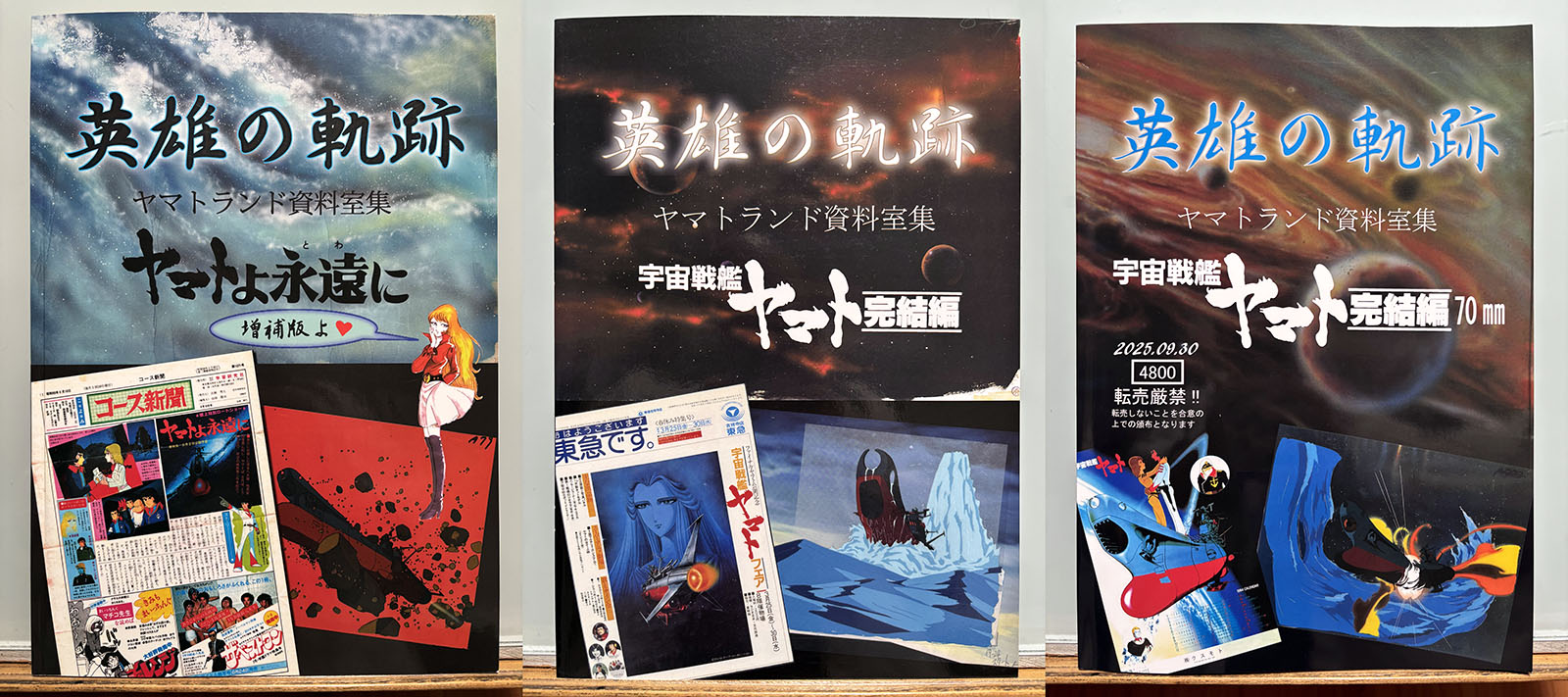
March 14, 2021
Dec 16, 2018
Sept 30, 2025
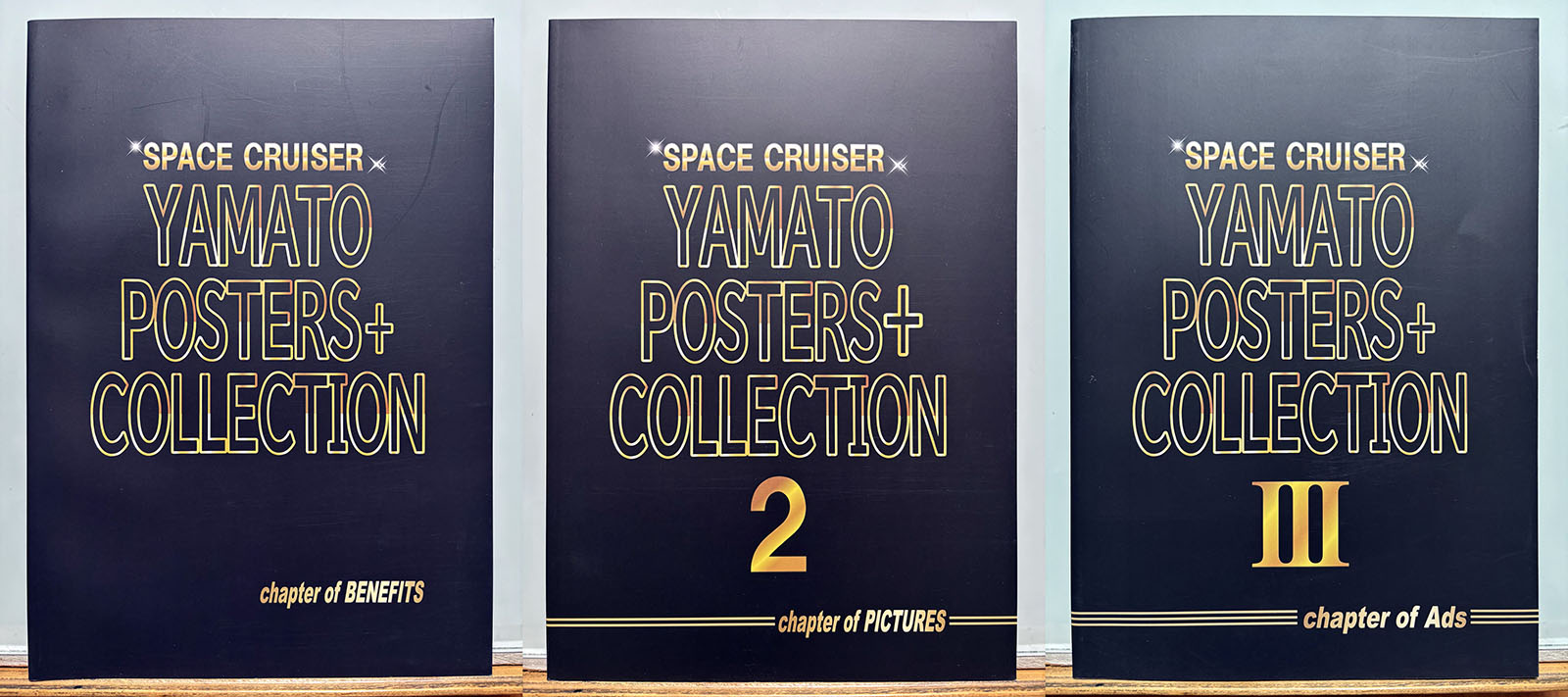
Aug 6, 2024
March 30, 2025
October 6, 2025

Lucky Special Bonus
Back in Yamatour 2019, a few of us were lucky enough to be invited to Toshihiro Watanabe’s personal Yamato lair and see some of his treasures with our own eyes. Click here to see what we saw!