Neppu [Hot Air] is a free monthly magazine published by Studio Ghibli that examines art and culture. Director Hideaki Anno has had a long history of involvement with Ghibli projects, which earned him 28 pages in the July 2025 issue. The subject was Yamato‘s 50th anniversary, which he publicly celebrated by producing the Complete Records Exhibition.
Here, Anno talks at length with fellow O.G. fan Ryusuke Hikawa about the early years of his devotion to Yamato and reflects on everything it led to, both personal and professional.
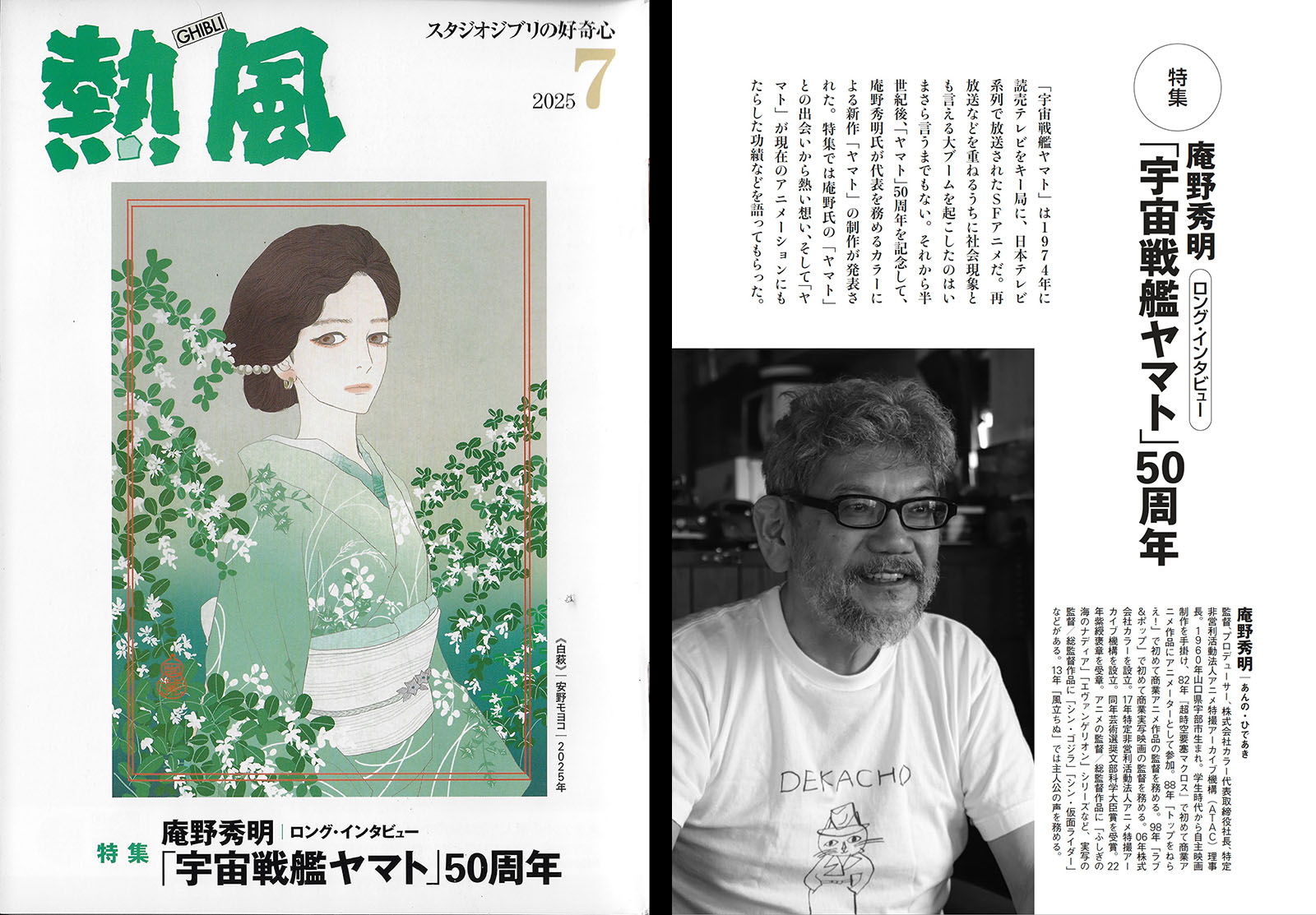
SPECIAL FEATURE
Hideaki Anno Long Interview
Space Battleship Yamato 50th Anniversary
Space Battleship Yamato is a science-fiction anime that aired in 1974 on the Nippon TV network, with Yomiuri TV as the key station. It goes without saying that repeated reruns sparked a massive boom that became a social phenomenon. Half a century later, to commemorate Yamato‘s 50th anniversary, the production of a new Yamato film by Studio Khara, headed by Hideaki Anno, was announced. In this feature, Anno discusses his first encounter with Yamato, his passionate feelings for it, and the contributions Yamato made to contemporary animation.
Hideaki Anno profile
Director, Producer, President and CEO of Khara Inc., Chairman of the Board of the Anime & Tokusatsu Archive Center (ATAC). Born in Ube City, Yamaguchi Prefecture in 1960. Began making independent films during his student years. First participated in a commercial anime production as an animator on Super Dimension Fortress Macross (1982). Made his directorial debut on a commercial anime with Gunbuster (1988). In 1998, he directed his first commercial live-action film, Love & Pop.
He established Khara Inc. in 2006. In 2017, he founded the Anime and Tokusatsu Archive Center (ATAC), a non-profit organization. That same year, he received the Minister of Education, Culture, Sports, Science and Technology Award for the Arts. In 2022, he received the Medal with Purple Ribbon. His directing/supervising credits include the anime series Nadia: The Secret of Blue Water and the Evangelion series, and live-action films such as Shin Godzilla and Shin Kamen Rider. In 2013, he voiced the main character in Studio Ghibli’s The Wind Rises.
Ryusuke Hikawa profile
Born in Hyogo Prefecture in 1958. Anime and tokusatsu researcher. Specially Appointed Professor at Meiji University Graduate School, Professor at ZEN University, Vice Chairman of the Board of Directors at the Anime and Tokusatsu Archive Center (ATAC). Began writing for anime magazines while in university. After working for a corporation, he became an independent writer in 2001. Has served as a judge for the Mainichi Film Award and as a Programming Advisor for the Tokyo International Film Festival.
Major publishing works include Zambot 3: 20 Years Later (Ota Publishing), Yoshikazu Yasuhiko Animation Original Art Collection: Mobile Suit Gundam, The Innovation of Japanese Animation: Structural Analysis of the Transformative Changes at Historical Turning Points, and Theory of Imaginary Visual Culture: From the Kaiju Boom to Space Battleship Yamato (KADOKAWA).
Without Yamato, I don’t think Japanese animation as we know it today would exist.
Yamato appeared suddenly, without precedent
With Space Battleship Yamato celebrating its 50th anniversary on October 6, 2024, and various commemorative projects underway, we wanted to hear extensively about Mr. Anno’s personal feelings toward Yamato. We asked Ryusuke Hikawa, a leading expert on Yamato and an anime/tokusatsu researcher, to participate.
(This interview was conducted on May 20, 2025)
Hikawa: I know you’ve spoken about this many times, but could you start again from your formative experience?
Anno: My first encounter with Yamato wasn’t on TV, but seeing Shonen Sunday [magazine from Shogakukan] at a used bookstore.
Hikawa: You mean the article in Shonen Sunday?
Anno: Exactly. On my way home from cram school, I happened to stop by a used bookstore that had the previous issue of Sunday. It had a two-color feature at the beginning. It was an illustration of Yamato‘s third bridge and the ship’s internal factory.
Hikawa: So they printed the design directly.
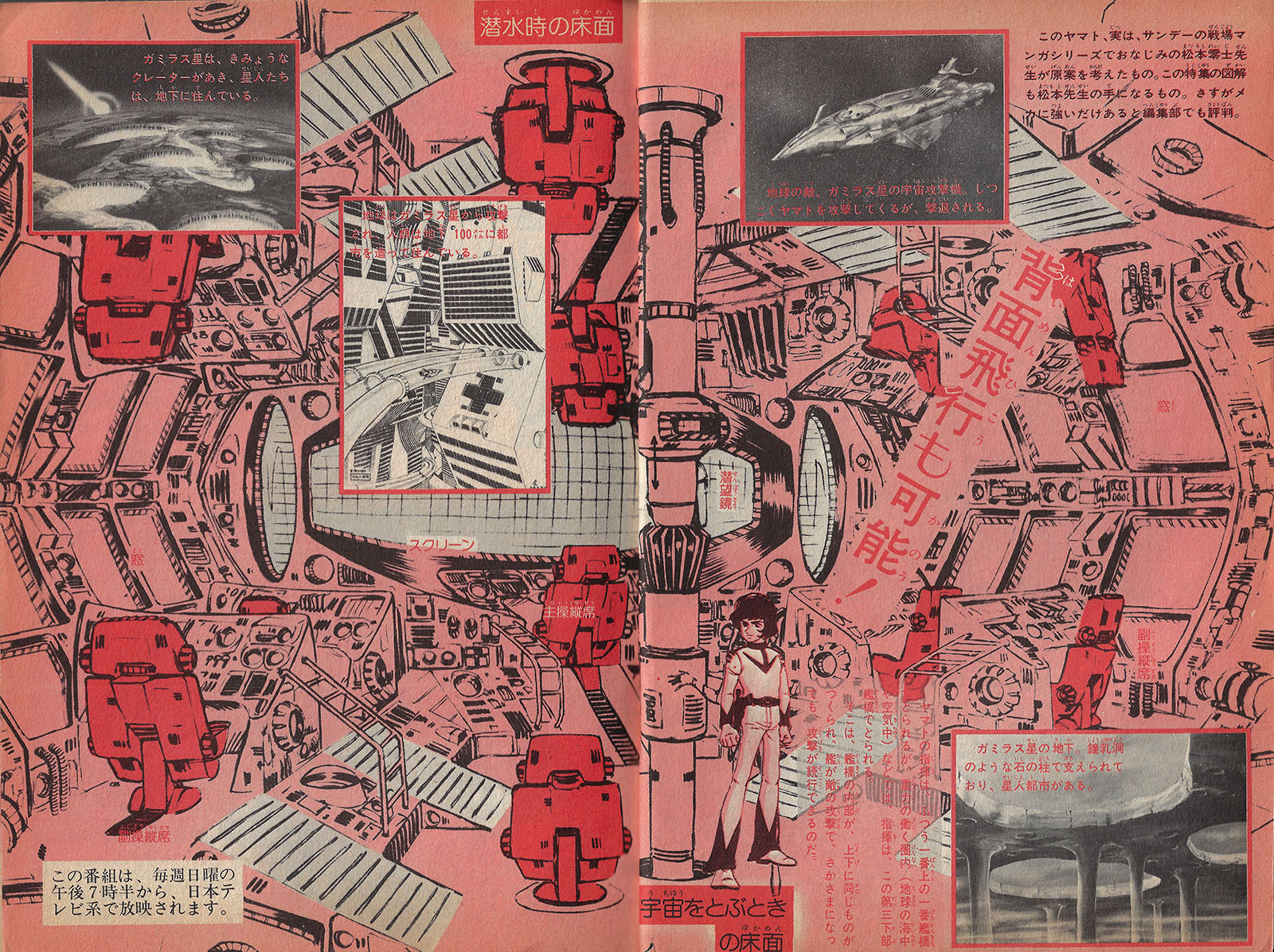
Anno: The moment I opened the page, I immediately recognized it as Leiji Matsumoto’s artwork (the designs were by Naoyuki Katoh). The shock was from realizing “Leiji Matsumoto’s artwork is becoming a TV anime.” Later, at my regular bookstore, I found Bouken Oh [Adventure King] magazine (Akita Shoten), which had the first chapter of Matsumoto-sensei’s Yamato manga. I thought, “I can’t just read this standing here,” so I bought the November issue with my meager allowance and started buying it every month after that.
I started watching the anime from Episode 2. I watched it on a black-and-white TV my parents kept because they thought it was a waste to throw it away. If they had gotten rid of it, we would’ve only been able to watch Heidi, Girl of the Alps at home. That means I wouldn’t have been able to watch Yamato in real time, and I probably wouldn’t be who I am today. From the moment I saw the opening, I was hooked. What you’d call “sinking into the swamp” nowadays.
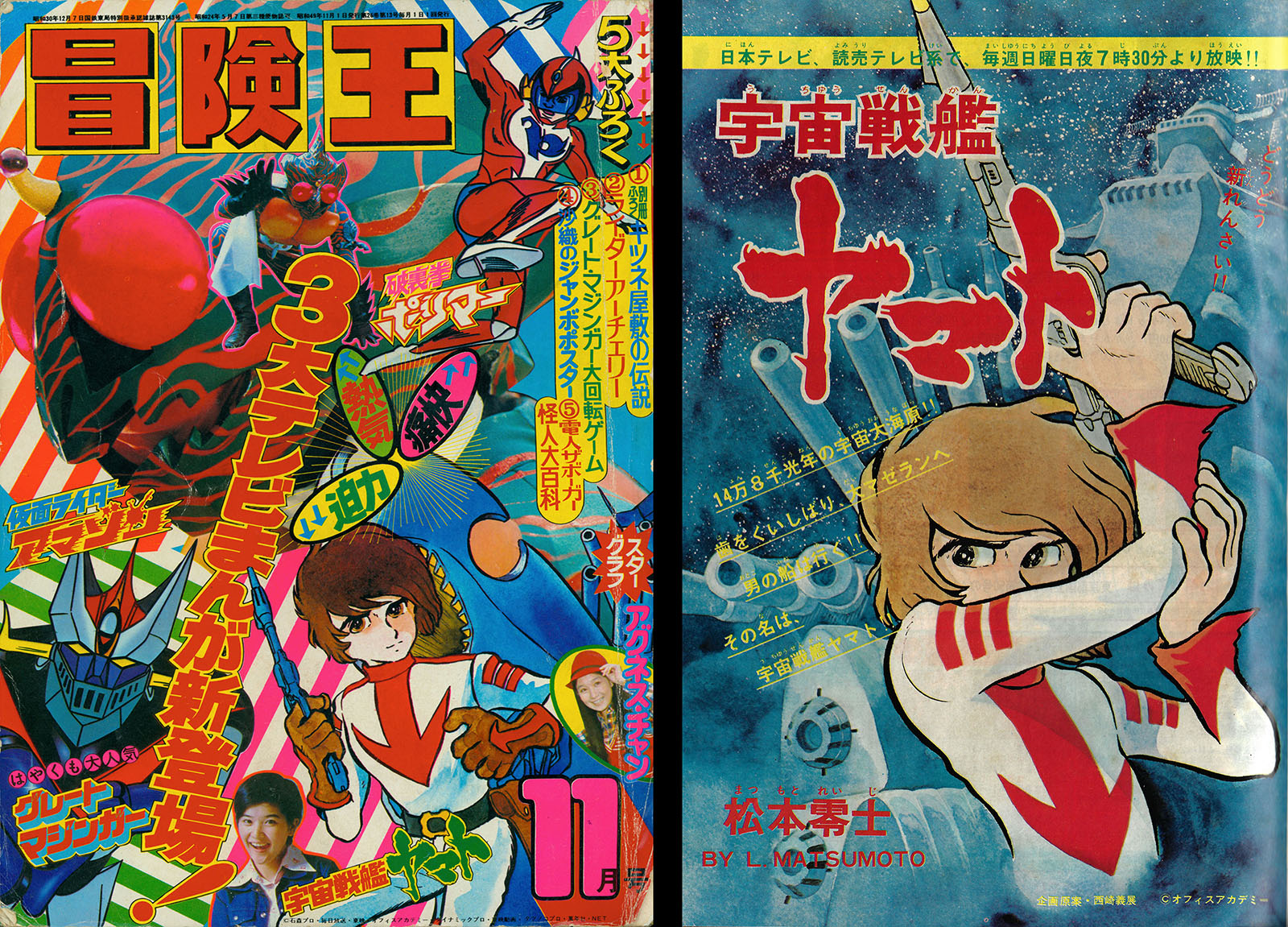
Hikawa: Bouken Oh did a full manga adaptation of the first TV episode, right?
Anno: Yeah. So, being able to watch the TV series starting from there was great, timing-wise, since the story flowed naturally. I actually saw the first TV episode during a rerun when I was in high school. When I first watched the second episode – I don’t know why – but I remember the music playing during the Battleship Yamato flashback scene was the [IJN anthem] Battleship March. Was it just the regional broadcasts that used it?
Hikawa: Back then, affiliate stations replaced it with a different song to avoid criticism of right-wing bias, but the local stations in the network probably broadcast the original version.
Anno: I’d never seen a TV anime that felt aimed at adults like Yamato. The fact that even my middle-school self could watch it without feeling embarrassed was huge. Tatsunoko Production had already done pretty hardcore sci-fi depictions in shows like Science Ninja Team Gatchaman and Casshan, but even in Casshan, there were episodes where a child guest star became the main character, so I thought, “Well, kids do appear.” And in Gatchaman, Jinpei is a kid, right? Even in stories about realistic ninja teams, you inevitably end up with one child member. Aokage in Akakage is like that, and Ultraman had Hoshino-kun.
Interviewer: It’s frustrating when the story is progressing realistically, but then a kid does something stupid, gets captured by the monster, and becomes a hostage.

Anno: I suppose because they’re all children’s shows, they feel they have to include at least one kid who serves as the viewers’ surrogate. But in Yamato, the only children were Jiro (Shima Daisuke’s younger brother) and Aiko, the granddaughter of Chief Tokugawa. Basically, only adults and young adults appeared. That realistic feel, where you wouldn’t be embarrassed recommending it to classmates, was great. Yamato‘s innovative, cool design and grand worldview also drew me in with its sci-fi sense of wonder.
Also, the meticulous detailing down to the smallest parts of Yamato‘s mecha and the various obsessive depictions were unlike anything I’d ever seen before. That feeling of seeing something unprecedented was similar to the shock I felt with Ultraman, so I think it was truly epoch-making. Yamato felt like it suddenly appeared out of nowhere, where nothing like it existed before. Mobile Suit Gundam emerged within the flow starting from the Tetsujin 28 epoch, then shifting to the next epoch with Mazinger Z which transformed giant robots into piloted mechs. It appeared ahead of the trend toward realism seen in shows like Combattler V or Zambot 3.. While Getter Robo is certainly epoch-making within its own niche, the one that truly defined an era for the general public was Gundam.
Hikawa: Each one broke new ground, but in the case of Yamato, it truly came from nothing.
Anno: Yamato feels like it suddenly emerged from nothing, without precedent. While war stories like Ketsudan or Zero-sen Hayato existed before, there was no work embodying the concept of a war story set in space. Yamato appeared so abruptly that it’s essentially a one-off. It’s built from elements or foundations that can’t be broken down. So even if you tried to reconstruct it, it would only become the same Yamato again. The expansive, interconnected worlds possible with Gundam simply didn’t exist for Yamato. It could only tell stories within a continuous world, linked as sequels.
Producer Yoshinobu Nishizaki also had a firm vision for the Yamato universe and a passionate attachment to the ship itself. That’s part of why I think Yamato is a unique anime. It’s undeniably a monumental achievement that it became the progenitor of the ongoing anime boom, profoundly transformed the animation industry afterward, and became a major business pillar. Realistically speaking, if Space Battleship Yamato hadn’t appeared at that stage, the history of animation today would be completely different. It would have been an entirely alternate timeline.
Hikawa: It might have just kept going in a childish direction.
Anno: Yes. I don’t think anime aimed at teens would have been made for a while. Of course, without Yamato, there would be no Gundam or Evangelion either. I think it’s perfectly fine to divide Japanese animation, including the very term “animation,” into “before Yamato” and “after Yamato.” Anime magazines were born because of Yamato too. Without Yamato, there wouldn’t have been Animage (Tokuma Shoten) either.

Cover of the inaugural issue of Animage. This monthly anime
magazine was launched by Tokuma Shoten on May 26, 1978.
Its creation was spurred by the massive success of
Terebiland‘s Yamato Roman Album, which quickly
capitalized on the Yamato boom and sold 400,000 copies.
Interviewer: Yamato was on the cover of the first issue of Animage.
Hikawa: So that means there wouldn’t have been Studio Ghibli either.
Anno: Without Animage, there wouldn’t have been Ghibli. If Animage hadn’t been launched, Toshio Suzuki would have stayed an editor at Terebiland (Tokuma Shoten) or Asagei (Asahi Geino, Tokuma Shoten). But since tokusatsu works like Godzilla and Ultraman existed, Fantastic Collection (Asahi Sonorama) might have survived.
Hikawa: Suzuki might have leaned more toward tokusatsu.
Anno: But I think the huge boom of Yamato actually pushed tokusatsu further into the background. After Mazinger Z took the spotlight for heroes and robots, the image of the so-called all-purpose battleship was supposed to be tokusatsu’s specialty, but Yamato went and depicted that too. Before that, when you said “mecha,” you meant tokusatsu: Ultra Hawk, ITC mecha, Mighty Jack, Toho tokusatsu mecha. Not anime. But Yamato‘s obsessive mecha depictions rewrote that.
Yamato was incredible not just for its staging, but for how much detail they put into the mecha’s presence back then. When I tried copying it myself, I was shocked. Like, “Whoa, I have to draw this many lines?” Even copying it takes time to complete. I think that’s part of what makes it completely different.
Hikawa: That’s right.
Anno: I think one of Yamato‘s great achievements was replacing the mecha that were the domain of tokusatsu with animation. To put it bluntly, it made anime omnipotent. It completely redefined mecha and characters for both teens and adults. Also, while Yamato was made by a studio connected to Mushi Production, the fact that they created a studio specifically to make Yamato was also new.
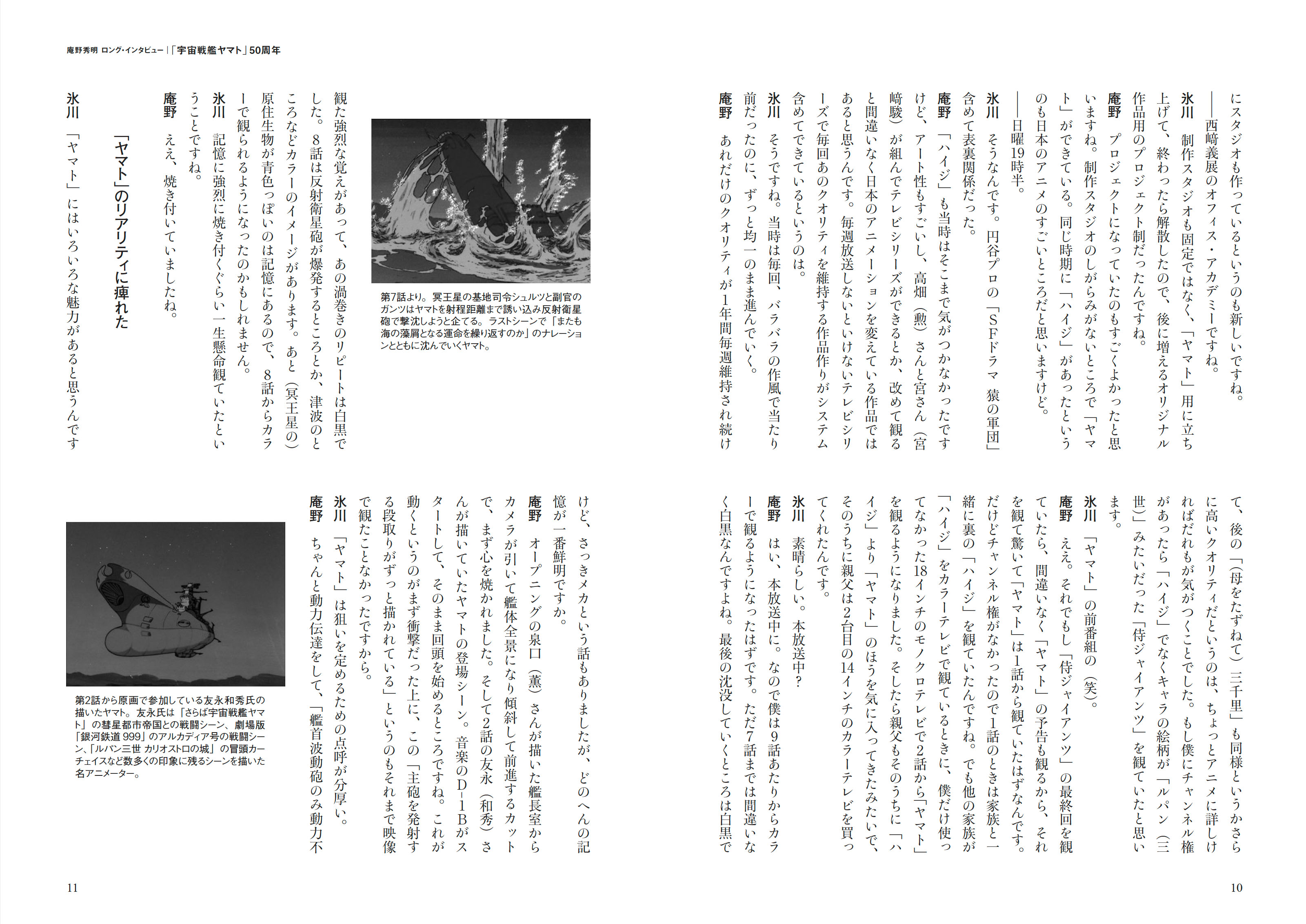
Interviewer: You mean Nishizaki’s Office Academy.
Hikawa: The production studio wasn’t permanent, either. They launched it specifically for Yamato and disbanded it afterward, so it set up a project-based system for the original works that would come later.
Anno: I think it was really great that it was project-based. Yamato was made without the constraints of a permanent production studio. The fact that Heidi was made around the same time is also a testament to the amazing nature of Japanese animation.
Interviewer: Sunday at 7:30 PM.
Hikawa: That’s right. It was a direct competitor to Tsuburaya Productions’ SF Drama Monkey Army.
Anno: Back then, I didn’t fully realize it with Heidi, but its artistic merit is incredible. And seeing it again, the fact that Isao Takahata and Hayao Miyazaki teamed up to create a TV series – it’s undeniably a work that changed Japanese animation. They built a system to consistently maintain that level of quality for a TV series that had to air weekly.
Hikawa: That’s right. Back then, it was common for each episode to have a different style, but this one kept a consistent level throughout.
Anno: That level of quality sustained weekly for a whole year, and later Three Thousand Miles to Mother maintained the same or even higher quality. Anyone even slightly familiar with anime would notice that. If I’d had control of the channel we watched, I probably wouldn’t have watched Heidi; I’d have watched Samurai Giants, which had character designs like Lupin III.
Hikawa: The show before Yamato. (Laughs)
Anno: Yeah. And if I had watched the final episode of Samurai Giants, I definitely would have seen the preview for Yamato. Seeing that would have shocked me, and I would have started watching Yamato from Episode 1. But I didn’t have control of the channel, so I was watching Heidi on the other channel with the family. But while the rest of the family watched Heidi on the color TV, I started watching Yamato from Episode 2 on the unused 18-inch black-and-white TV. Then, my dad seemed to start liking Yamato more than Heidi, and eventually, he bought us a second 14-inch color TV.
Hikawa: That’s amazing. During the original broadcast?
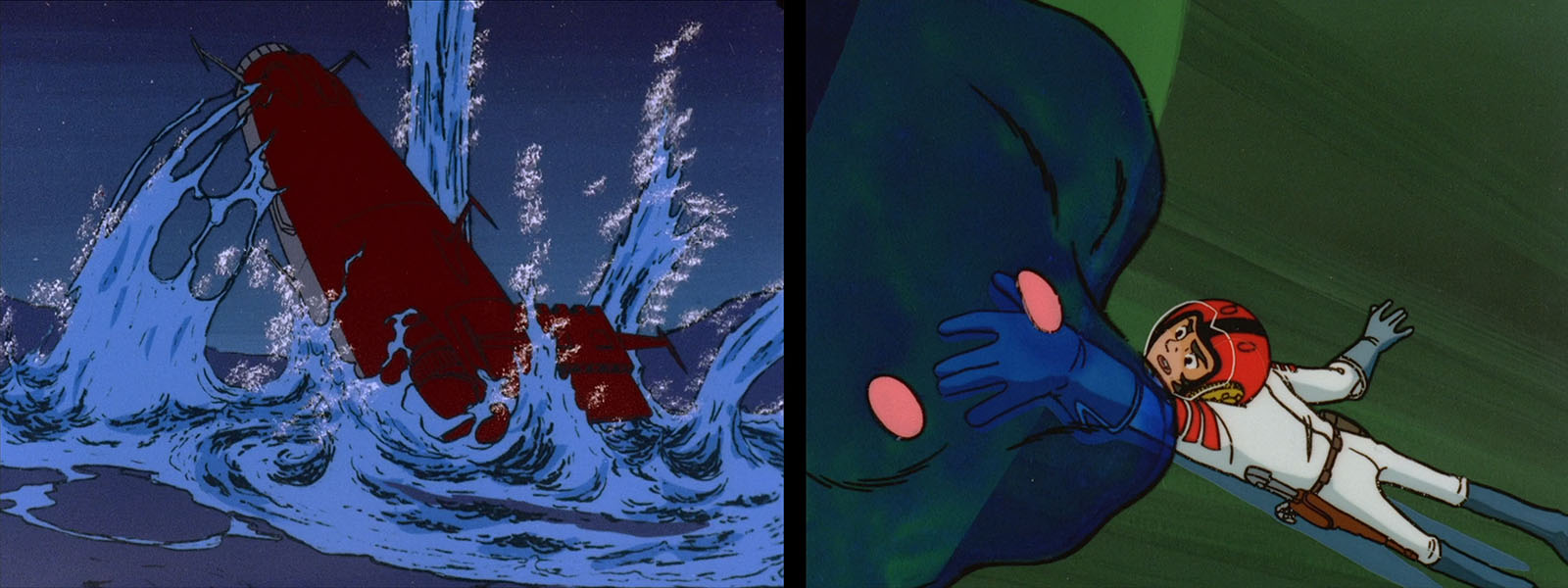
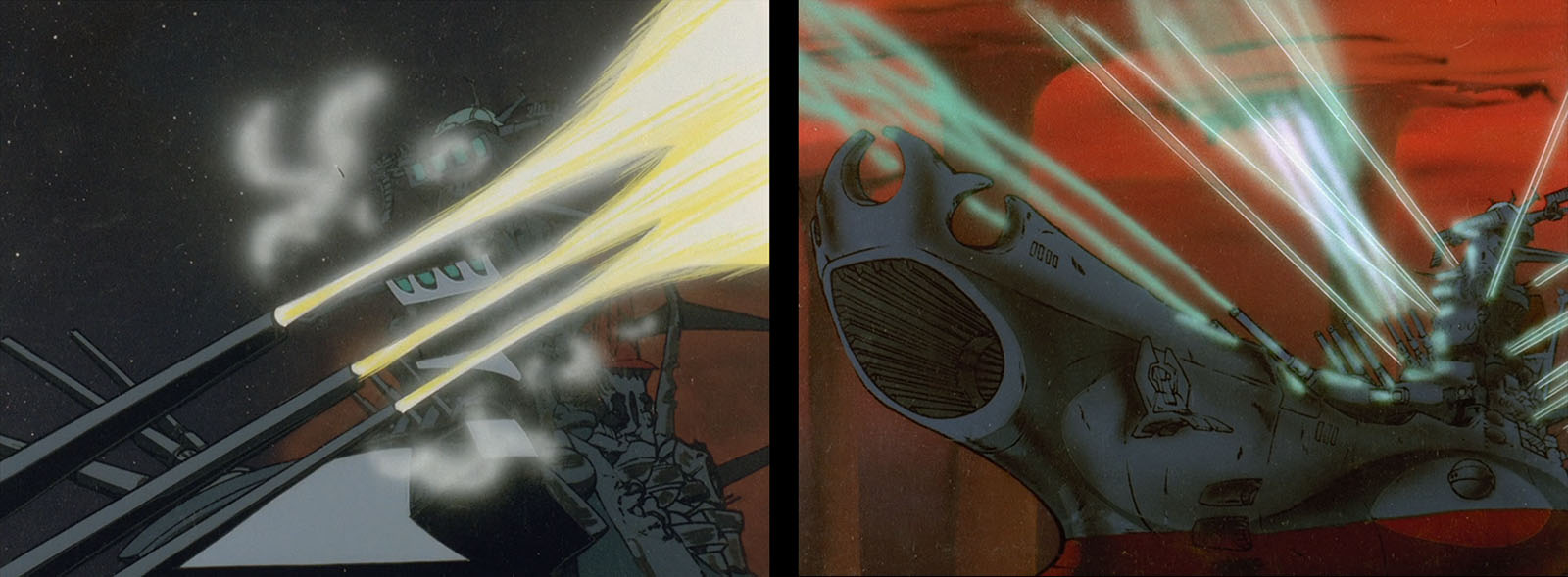
Left: From Episode 7. Commander Schulz of the Pluto base and his second-in-command, Gantz, lure Yamato within range of their reflective satellite cannon, plotting to sink it. In the final scene, Yamato sinks as the narration asks, “Must we repeat the fate of becoming seaweed once more?”
Anno: Yes. So I think I started watching in color around Episode 9. But up to Episode 7, it was definitely black and white. I have a vivid memory of seeing the final sinking scene in black and white, and that repeating vortex was black and white. Episode 8 has color images in my mind, like the reflection satellite cannon exploding, and the tsunami. Also, I remember the native creatures (on Pluto) being bluish, so maybe I started watching in color from Episode 8.
Hikawa: You were watching so intently that it burned itself into your memory.
Anno: Yeah, it really stuck.

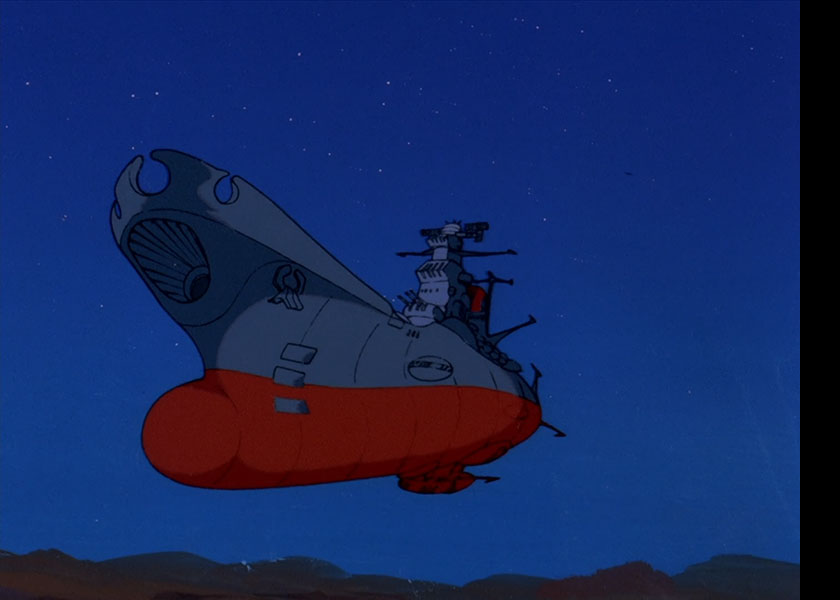
Yamato drawn by Kazuhide Tomonaga, who participated
as an animator from Episode 2. Tomonaga is a renowned
animator who created numerous memorable scenes,
including the battle with the Comet City Empire in
Farewell to Yamato, the Arcadia battle scenes in the
theatrical version of Galaxy Express 999, and the
opening car chase in Lupin III: Cagliostro Castle.
I was blown away by Yamato‘s realism
Hikawa: I think Yamato has many charms. We mentioned mecha earlier, but which parts do you remember most vividly?
Anno: First, I was captivated by the opening title; the camera pulls back from Captain’s Room (drawn by Kaoru Izumiguchi) to reveal the full ship, tilting as it advances.
Then there’s Yamato‘s entrance scene in Episode 2, drawn by Kazuhide Tomonaga. When the music D-1B starts and it begins turning right there. The fact that this actually moved was shocking enough, but also, the fact that the entire procedure for firing the main guns was depicted was something I’d never seen in a visual before.
Hikawa: Yamato has a very thorough roll call for targeting.
Anno: The script didn’t include that level of realism – like properly transmitting power, reporting “only the bow wave gun lacks power,” and showing that, oh, some guns can’t fire. I think Mr. Matsumoto added that detail when drawing the storyboards. I was blown away by his realism regarding the mecha. Also, the precision of the main guns rotating while moving their barrels independently, and the details like the numbers (on the gauges) aligning, but initially only the third turret’s numbers weren’t matching.
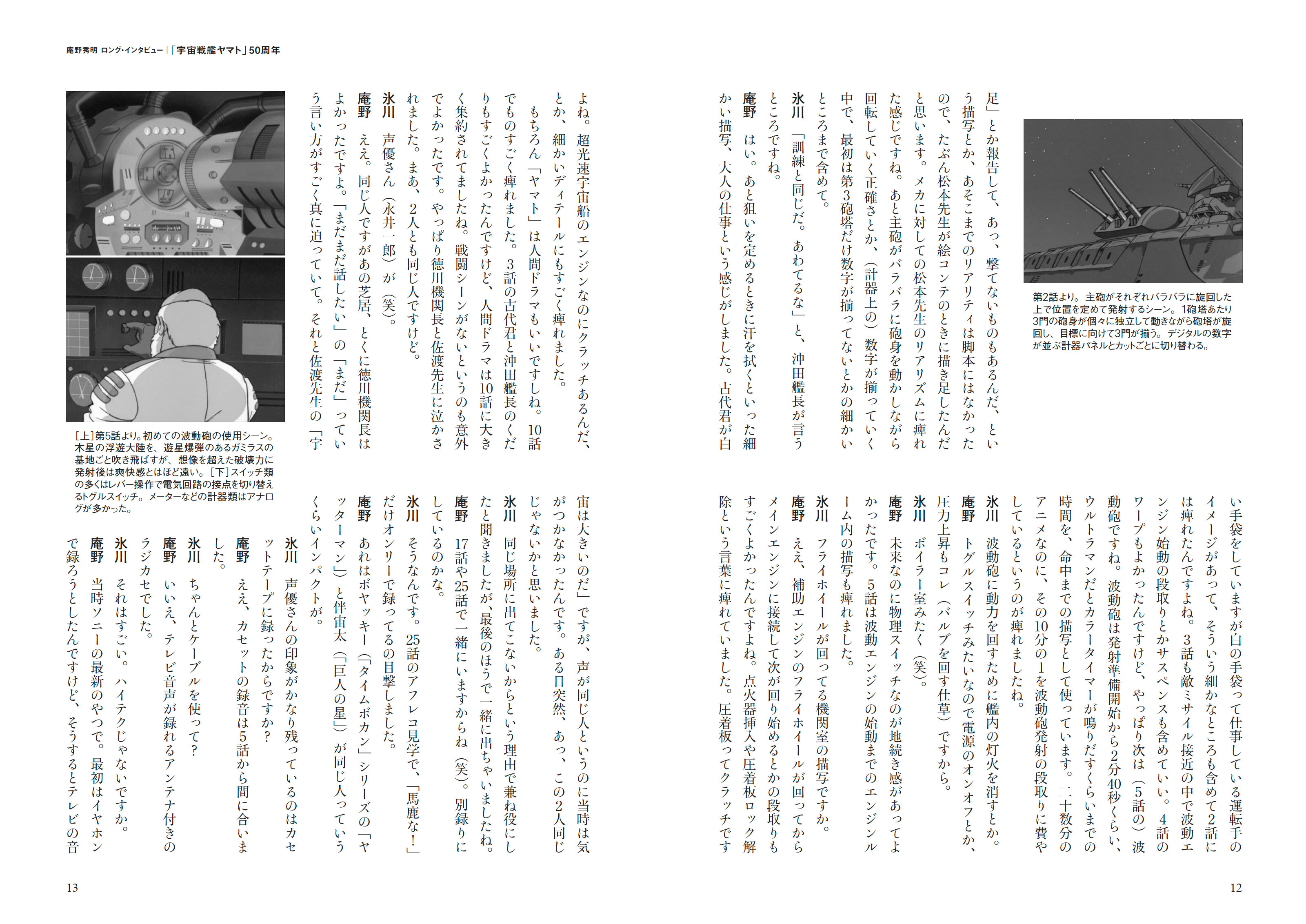

From Episode 2. A scene where the main guns each
rotate independently before locking onto position and
firing. Each turret has three barrels that move individually
while the turret rotates, aligning all three barrels
toward the target. This cuts back and forth with
the digital instrument panel displaying numbers.
Hikawa: That’s where Captain Okita says, “It’s just like training. Don’t panic.”
Anno: Yes. Also, the detailed depiction of wiping sweat while aiming – it felt like the work of adults. Kodai-kun wears white gloves, and white gloves evoke the image of a working driver. Including such small details, Episode 2 really blew me away.
Episode 3 is also great, with the suspense and the procedure for starting the Wave Engine while enemy missiles approach. The warp in Episode 4 was good too, but next up is definitely the Wave-Motion Gun (in Episode 5). The Wave-Motion Gun takes about 2 minutes and 40 seconds from start of firing preparations — roughly the time it takes for Ultraman‘s Color Timer to start beeping — and uses that entire span to depict the process leading up to impact. For a 20-something minute anime, dedicating a tenth of that runtime to the Wave-Motion Gun firing sequence was absolutely thrilling.
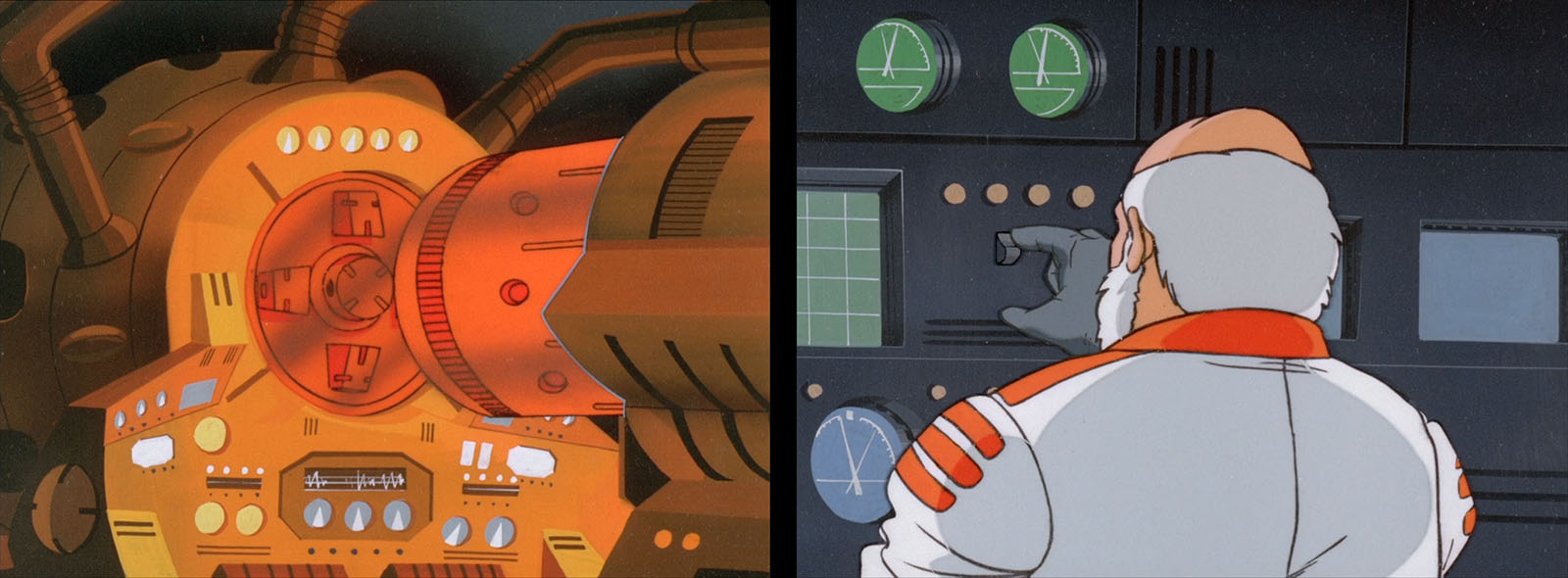
Left: From Episode 5. The first use of the Wave-Motion Gun. It obliterates Jupiter’s floating continent along with the Gamilas base containing the planet bomb, but the unimaginable destructive power leaves little sense of satisfaction after firing.
Right: Many switches were toggle switches operated by levers to switch electrical circuit contacts. Instruments like gauges were mostly analog.
Hikawa: Like turning off the ship’s lights to divert power to the Wave-Motion Gun.
Anno: Like toggle switches for power on/off, and pressure buildup is done with this (gesture of turning a valve).
Hikawa: Like a boiler room. (Laughs)
Anno: It’s the future, yet using physical switches gave it a grounded feel, which was great. Episode 5’s depiction inside the engine room leading up to the Wave Engine start-up was also thrilling.
Hikawa: You mean the scenes in the engine room with the flywheels spinning?
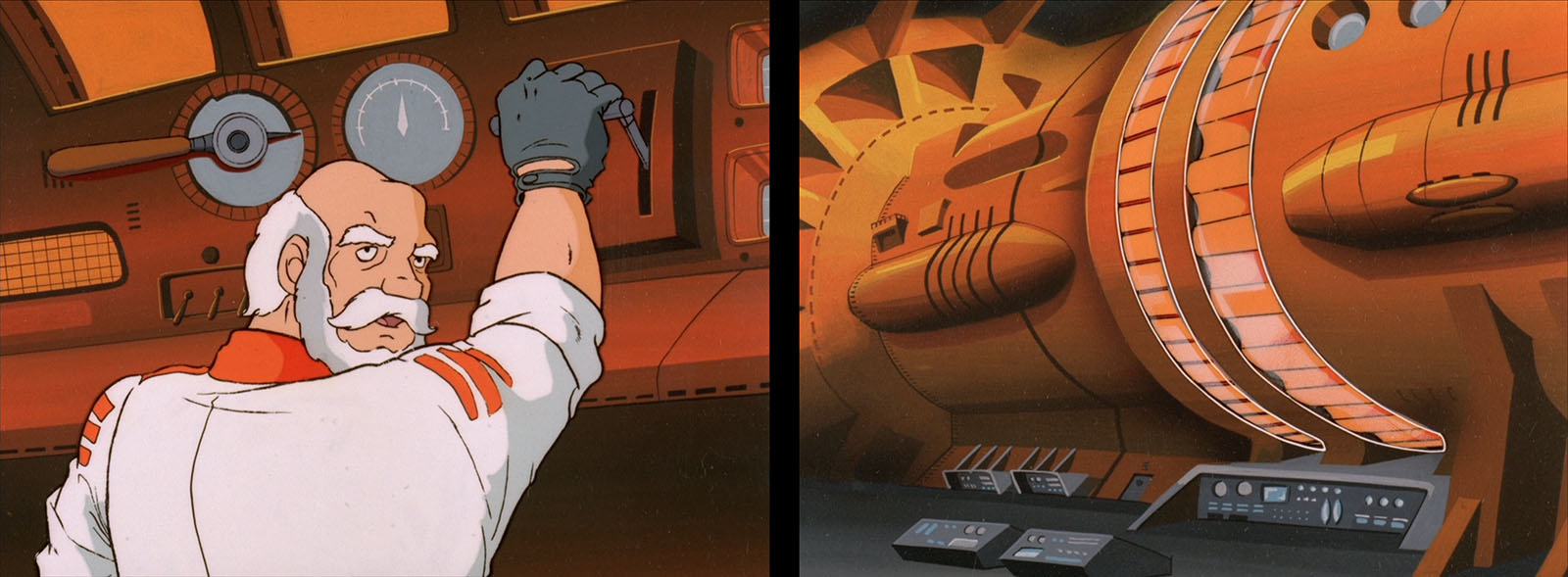
Anno: Yeah, the sequence was great — how the auxiliary engine’s flywheel spins first, then connects to the main engine, and the next one starts turning. Terms like “igniter insertion” and “clutch plate lock release” really got me. Clutch plates are clutches, right? The fact that a faster-than-light spaceship’s engine has a clutch — details like that blew my mind.
Of course, the human drama in Yamato is great too. Episode 10 really got to me. The scene with Kodai and Captain Okita in Episode 3 was also excellent, but the human drama was really concentrated in Episode 10. It was unexpectedly good that there was no combat scene. I definitely cried over Chief Engineer Tokugawa and Dr. Sado. Well, they’re both voiced by the same person.
Hikawa: The voice actor (Ichiro Nagai). (Laughs)

Anno: Yeah. Same person, but that performance, especially Chief Engineer Tokugawa, was great. The way he said “still” in “I still have so much to say” felt incredibly genuine. And Dr. Sado’s “The universe is vast,” but I didn’t realize at the time that it was the same voice actor. One day it suddenly hit me: “Wait, aren’t these two the same person?”
Hikawa: I heard they were dual roles because they didn’t appear in the same scenes, but they ended up appearing together toward the end, didn’t they?
Anno: They’re together in Episode 17 and Episode 25. (Laughs) I wonder if they recorded them separately.
Hikawa: That’s right. When I observed the post-recording for Episode 25, I witnessed them recording only the line “You idiot!”
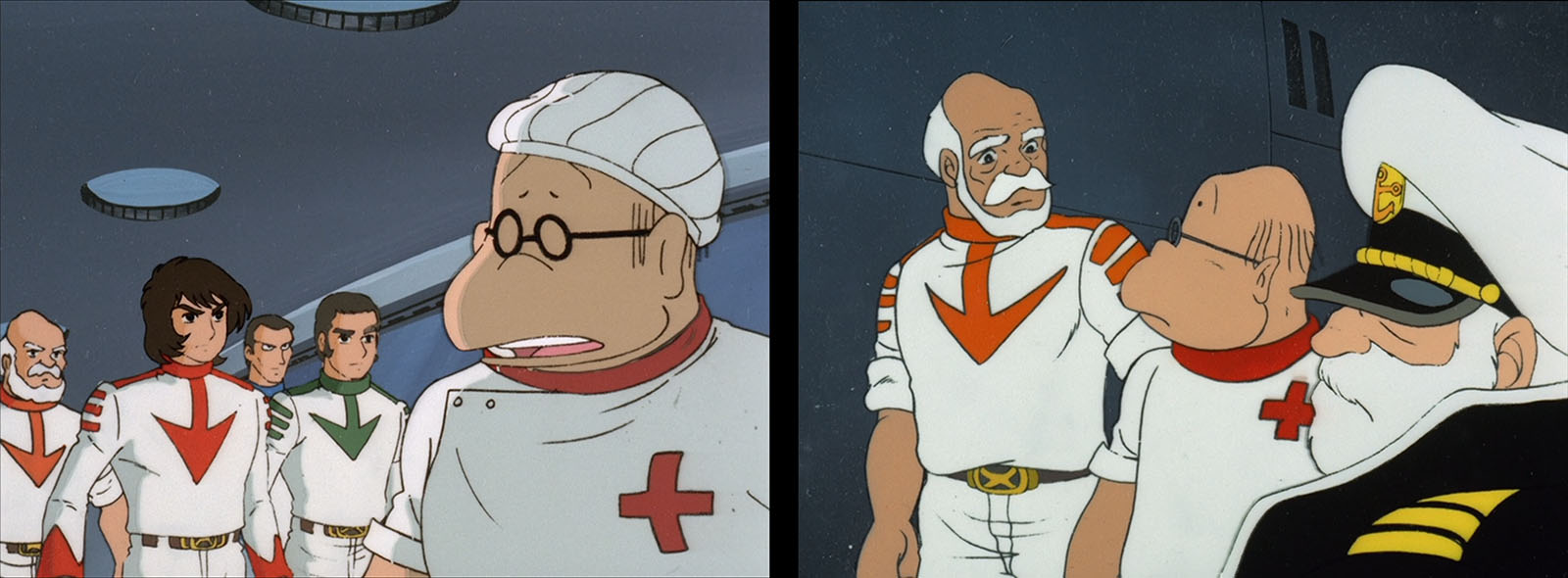
Anno: That was as impactful as realizing Boyacky (from the Time Bokan series’ Yatterman) and Ban Chūta (Star of the Giants) were the same person.
Hikawa: Did the voice actor’s impression stick with you so strongly because you recorded it on cassette tape?
Anno: Yes, the cassette recordings started from Episode 5.
Hikawa: Did you use a proper cable?
Anno: No, it was a radio cassette player with an antenna that could record TV audio.
Hikawa: That’s amazing. That’s high-tech!
Anno: It was Sony’s latest model at the time. At first, I tried recording with headphones, but then I couldn’t hear the TV sound, so that wouldn’t work. So, I told my parents I needed it for studying English and got them to buy me the radio cassette player.
Hikawa: That was the classic excuse back then. I used it too. (Laughs)
Anno: What I was listening to wasn’t English, but the sounds and dialogue from Yamato. But honestly, I feel it’s been more useful for my current work than English itself. I learned so much from the sounds of Yamato. I can write scripts using specialized terminology without stress now.
Hikawa: And the timing for music and effects.
Anno: That really stuck with me too. I think (Sound Director) Atsumi Tashiro’s work has deeply ingrained that sense of sound.
Hikawa: He did incredible work under such tight deadlines, where the visuals weren’t even ready for the ADR or dubbing.
Anno: Yamato was the first time I listened repeatedly enough to consciously notice things like how the background music was used or how sound effects were employed.
Hikawa: Like the planet bomb scenes — it was unique to use completely different female scat vocals for such flashy scenes.
Anno: Including that kind of unconventional musical approach, masterpieces often have exceptional music and sound effects too.
Hikawa: What about Hiroshi Miyagawa’s music?
Anno: It was fantastic, right? But when the LP came out, I bought it immediately with money I’d saved up. I’d convinced myself it was the soundtrack, never dreaming it was the drama version (with dialogue and sound effects). I remember the shock when I got home, dropped the needle, and realized, “I thought it was just the music, but it isn’t!” It took a long time for the original soundtrack album to come out, but when it did, I was genuinely thrilled. I heard later that Mr. Nishizaki was reluctant because he didn’t want people to hear it in mono. He insisted the music had to be in stereo.
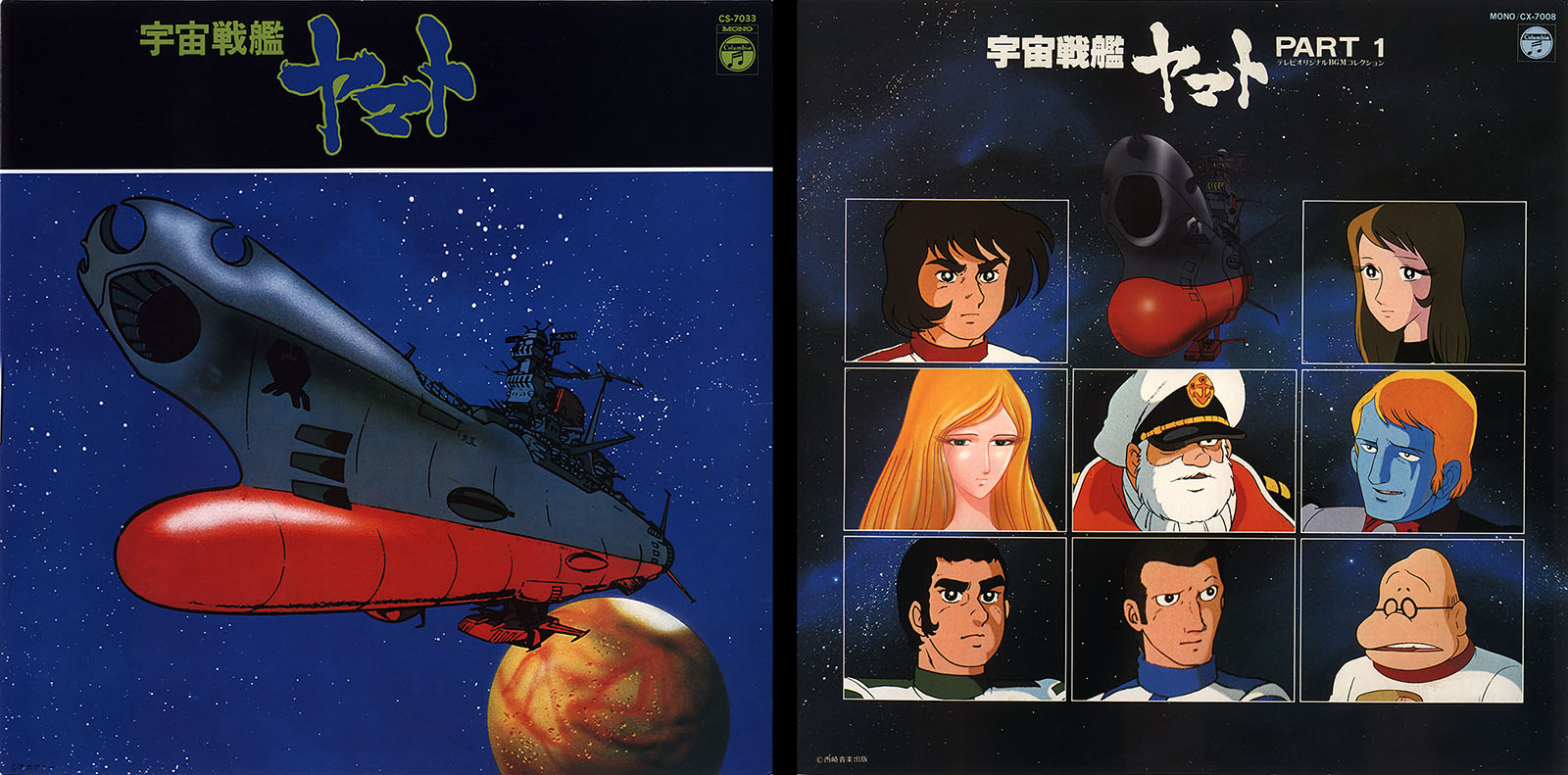
Hikawa: It seems like it was a service mentality — he wanted people to hear it in the best possible sound quality.
Anno: The Symphonic Suite is good, but personally, I really wanted to hear the same sound as the TV broadcast, not a re-recorded stereo version.
Hikawa: It was heavily rearranged, after all.
Anno: But it was great that King Records later started their Original Soundtrack series.
Hikawa: For Mobile Suit Gundam?
Anno: Gundam too, but really, it was the one before that, Ultra Kaiju Daihyakka [Ultra Monster Encyclopedia] (see info here). That one also initially included the show’s audio, and it just wasn’t right.
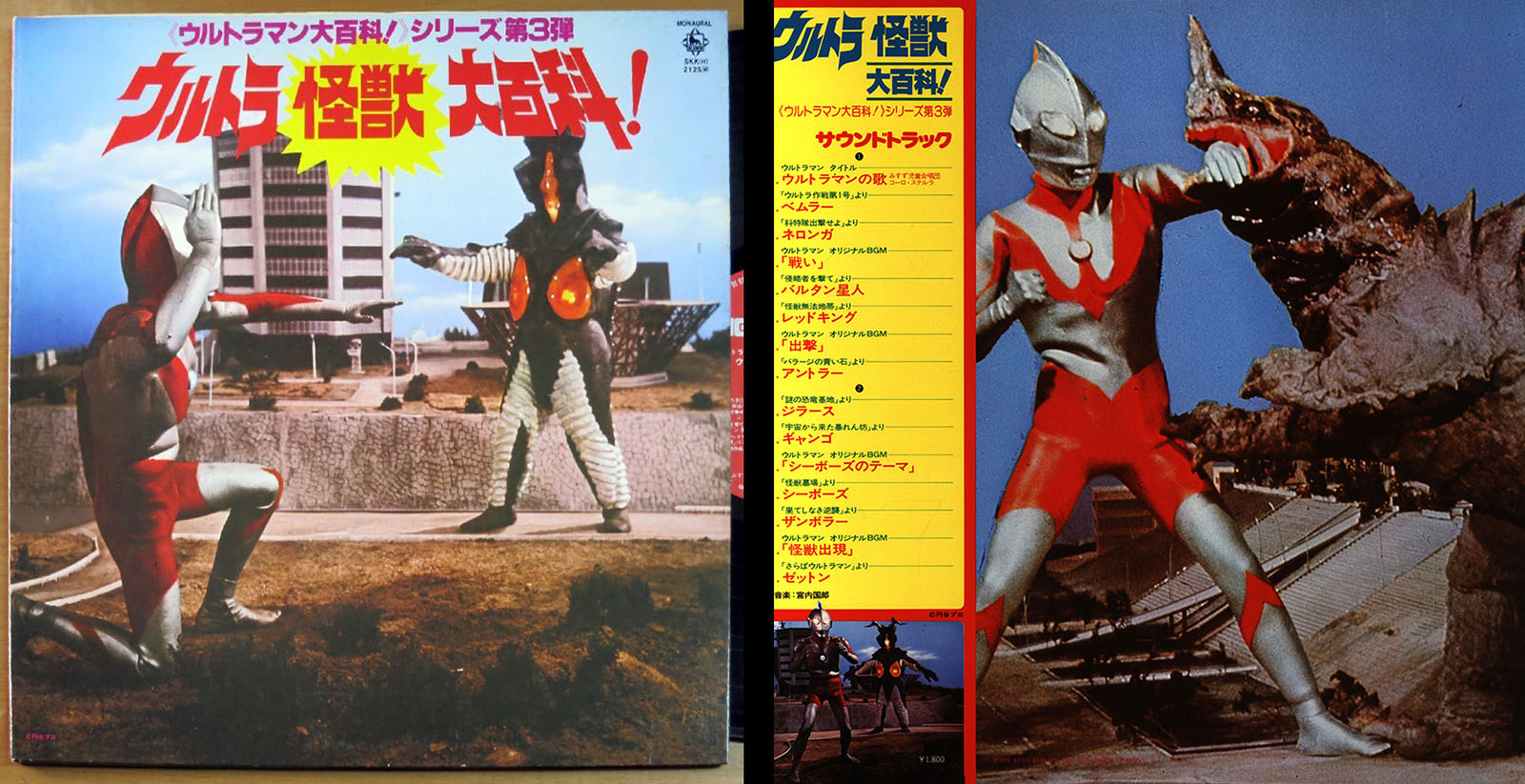
Hikawa: Right. It was drama-focused, with the BGM feeling like an afterthought.
Anno: Back then, I was disappointed because I wanted to listen to the music more than the drama episodes. I think many others felt the same way. I believe Space Battleship Yamato was probably the first to hit the jackpot, proving that soundtrack music could be a viable business.
Hikawa: That’s right. It seems it was still an era where people couldn’t quite believe instrumental music alone could sell. When you said “anime album,” it meant “songs.”
Anno: So a generation has emerged that craves the actual soundtrack music itself, not just insert songs or image songs. The music I listened to up until high school was mostly theme songs and soundtracks from TV shows and movies I watched, plus the kayōkyoku and enka songs my family listened to on TV or radio. Oh, and the folk songs my middle school friends lent me.
I read somewhere that a person’s musical sensibilities are apparently shaped by what they listen to before age 14. So my favorite music is mainly film scores, pop songs, folk songs, and anime/tokusatsu songs. After high school, I liked and listened to various Japanese music from the 80s and 90s. I’ve listened to Crazy Ken Band for the past 20 years or so, but my main tastes have always stayed anime/tokusatsu songs, film scores, old pop songs, and enka. Even past 65, I haven’t strayed from these. Among them, I think I especially love film scores because listening to them brings back memories of the images behind the music and the emotions I felt when I saw them.
Fundamentally Made of Dreams
Hikawa: Yamato projects elements of World War II, right? What about those military aspects?
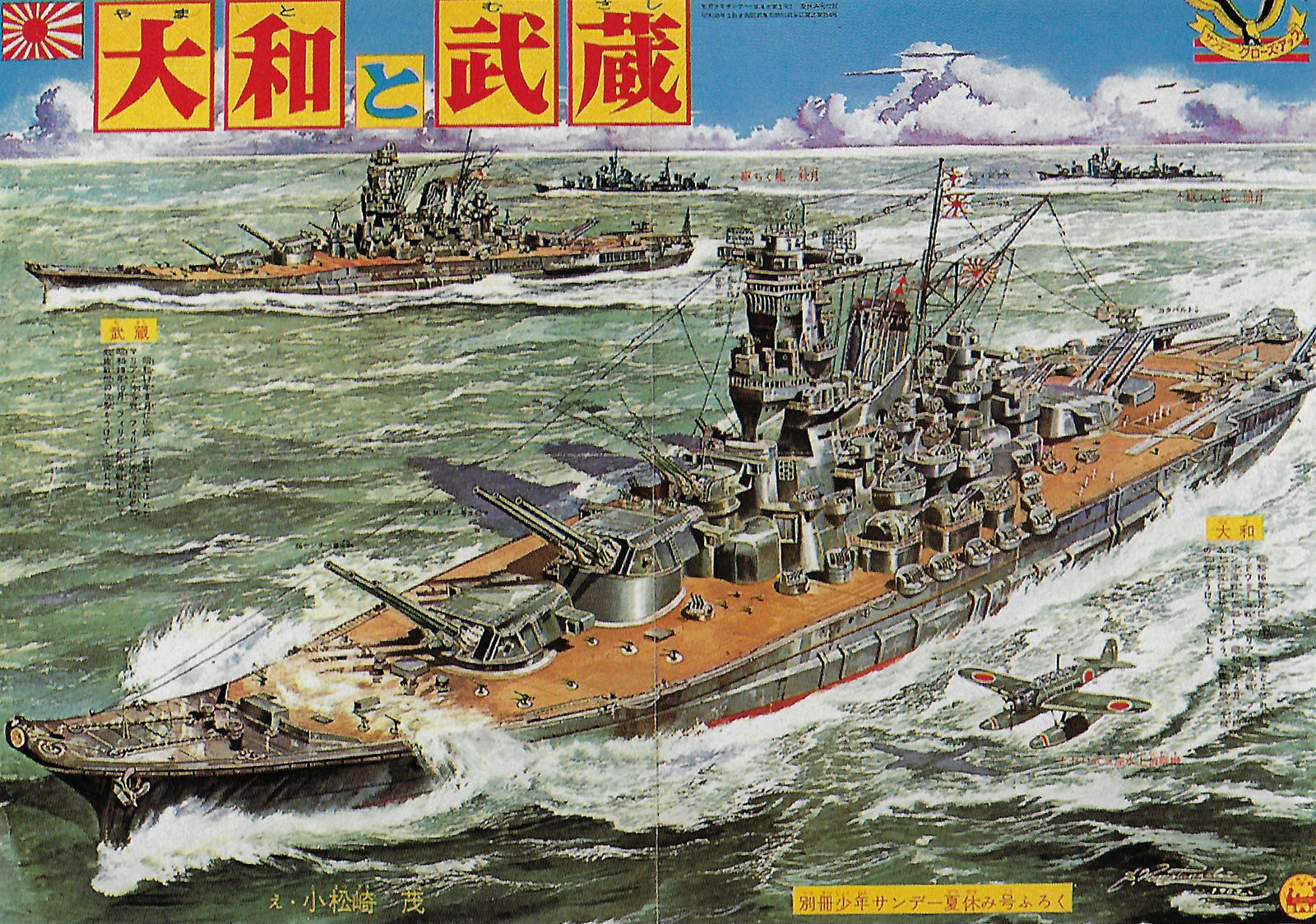
Anno: When we were kids, boys’ magazines had lots of color spreads at the beginning featuring the Battleship Yamato or Zero fighters. War movies were also frequently shown on TV.
Hikawa: Exactly. For us, the Battleship Yamato and the Zero fighter were like superweapons.
Anno: When we were kids, all the adults around us were war veterans, and some had actually been on the battlefield. My parents didn’t experience the battlefield because the war ended before they could be drafted, but back then, elementary and junior high school teachers, and elderly neighbors were all war veterans. There were wounded veterans too. I was born just 15 years after the war ended.
Hikawa: That’s right.
Anno: Yes. Since society was still grappling with the pre-war and wartime era, that lingering scent of war meant the image of the Battleship Yamato really stuck with us.
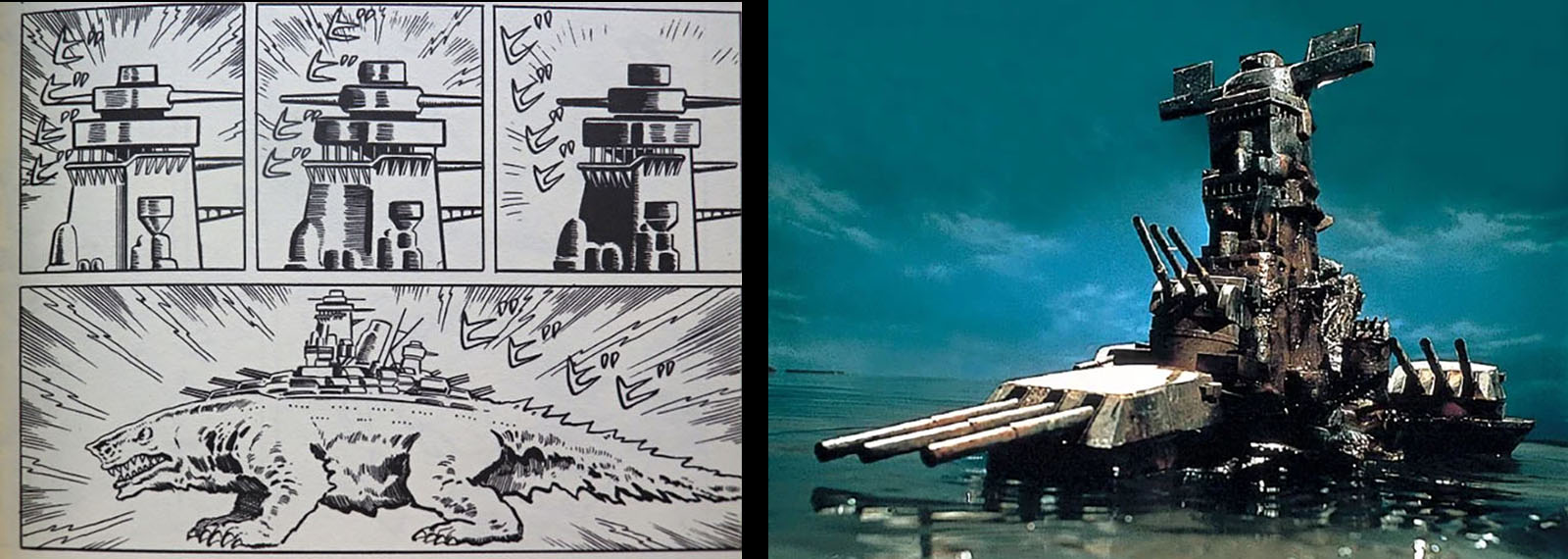
Interviewer: There was also a plan for the warship monster Yamaton in Ultraman [below left], and Iron Rocks appeared in Ultra Seven [below right].
Anno: I think it’s a difficult theme now, but back then, war was just a given. The idea that the battleship Yamato was reborn as the Space Battleship Yamato is written in the manga as Okita’s line.
Hikawa: Adults often disliked it when kids didn’t say Space Battleship Yamato and just called it Battleship Yamato.
Anno: Well, even if we insisted it was “space” (laughs), to parents it was just the Yamato. I think back then, including kids, there were tons of people who thought only the Yamato and the Zero fighter were special.
Hikawa: Story-wise, the battles really escalate in the latter half. How did you feel about that?
Anno: I was completely engrossed watching it. The story is simple too. Yamato is actually one of the correct uses for a warship. A ship’s fundamental purpose is to go somewhere, accomplish its mission, and return, or to transport something somewhere. A battleship is a ship whose purpose is to bring cannons where they’re needed. Yamato doesn’t just take its cannons to fight. It uses its cannons to protect itself while traveling a long, long way at faster-than-light speed to retrieve a device to save Earth, and it has to return within the deadline. That incredibly straightforward main story was great, right?
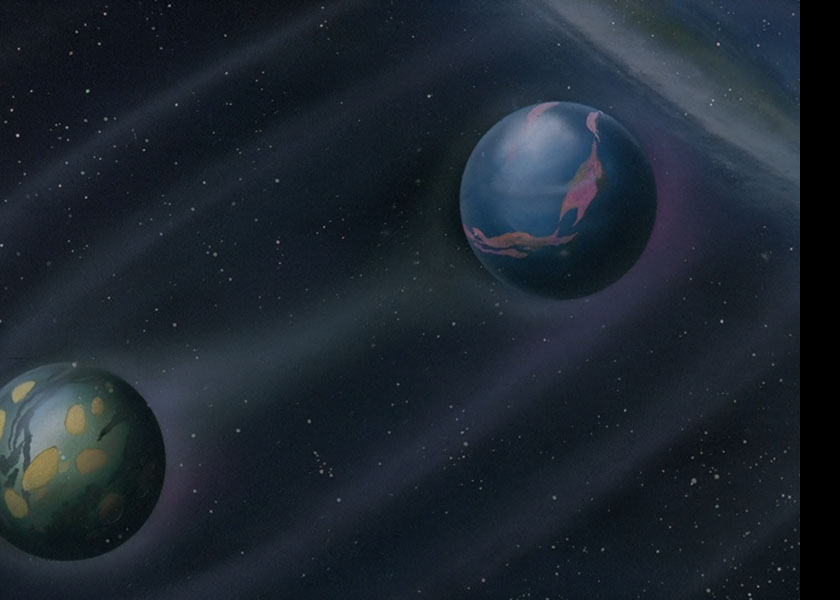
What’s strange is the setting where Iscandar and Gamilas are these bizarre twin planets. They mention it as early as Episode 2, right? Revealing such a massive spoiler right at the start.
Hikawa: Yeah, it even appears in the ending every time. (Laughs)
Anno: Right? It’s in the ending as early as Episode 1. You can tell from the visuals that this is the planet where Starsha was, and this is the Gamilas side. It’s pretty bold to reveal such a massive spoiler so quickly. Considering the structure, having the final destination and the final boss be the same place is actually good. It simplifies the setup, and having the location where they receive the gift and the final boss’s location be the same makes for an easier climax to depict.

Still, spoiling it right at the beginning. (Laughs)..it’s a spoiler as intense as the opening title sequence of The Star of La Seine, right? In Yamato 2199, they timed it so viewers gasped “Eh?!” along with the crew upon reaching the Large Magellanic Cloud. Unfortunately, most viewers already knew that, so it seems like it had little effect on anyone other than those who started watching 2199 without any prior knowledge.
Realistically, a single ship fighting its way to distant stars is incredibly difficult — it’s pure romance. Yamato is fundamentally built on dreams, right? Overall, it’s just a grand dream story, an allegory. But it has this special effect-like quality where, through various levels of realism, it makes you feel, moment by moment, that it might actually be real. That’s part of its charm. Even when you know tokusatsu are miniatures, there are those rare moments where you think, “Wait, is this live-action?” That’s the beauty of it, and I think Yamato has a similar feel.
Hikawa: I think one of the ship’s strengths was being a nearly closed space until reaching its destination. We depicted everyday things like eating, arguing, playing shogi, and various other intimate moments.
Anno: You can depict daily life inside the ship, too. That was also a big part of the ship’s solid internal setting. Though the sheer size of the interior isn’t realistic.
Hikawa: That part is a lie, right? (Laughs)
Anno: The side observation room at the party venue was way too huge. The onboard factory and hangar are bigger than Yamato‘s hull itself, right? The assembled Cosmo Cleaner D is probably too big too. (Laughs) Also, since they were going to retrieve it, they should have had a designated space ready for it. But what were they planning to do with something whose size they didn’t even know? (Laughs)
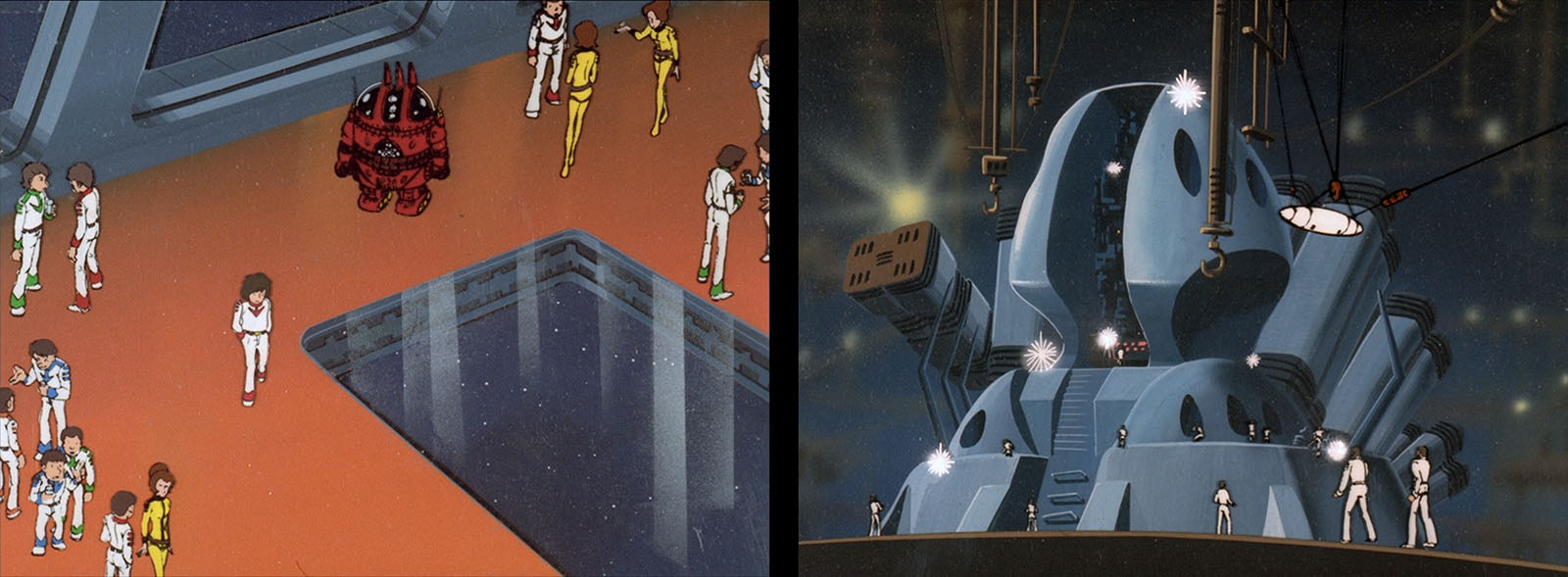
Hikawa: It’s precisely those rough edges that still feel like the “TV anime era.” Isn’t that true for Gundam too? It’s “half TV anime.”
Anno: The original Gundam was great because it incorporated so many elements from the giant robot wrestling shows that came before it. That perfect balance. I think it wasn’t until the sequel Zeta Gundam that they went full military, turning it into a rigid, realistic robot series. Personally, I feel like they got too caught up in realistic depictions, and Gundam‘s appeal was halved. That’s why I thought the Hong Kong Psycho Gundam was great.
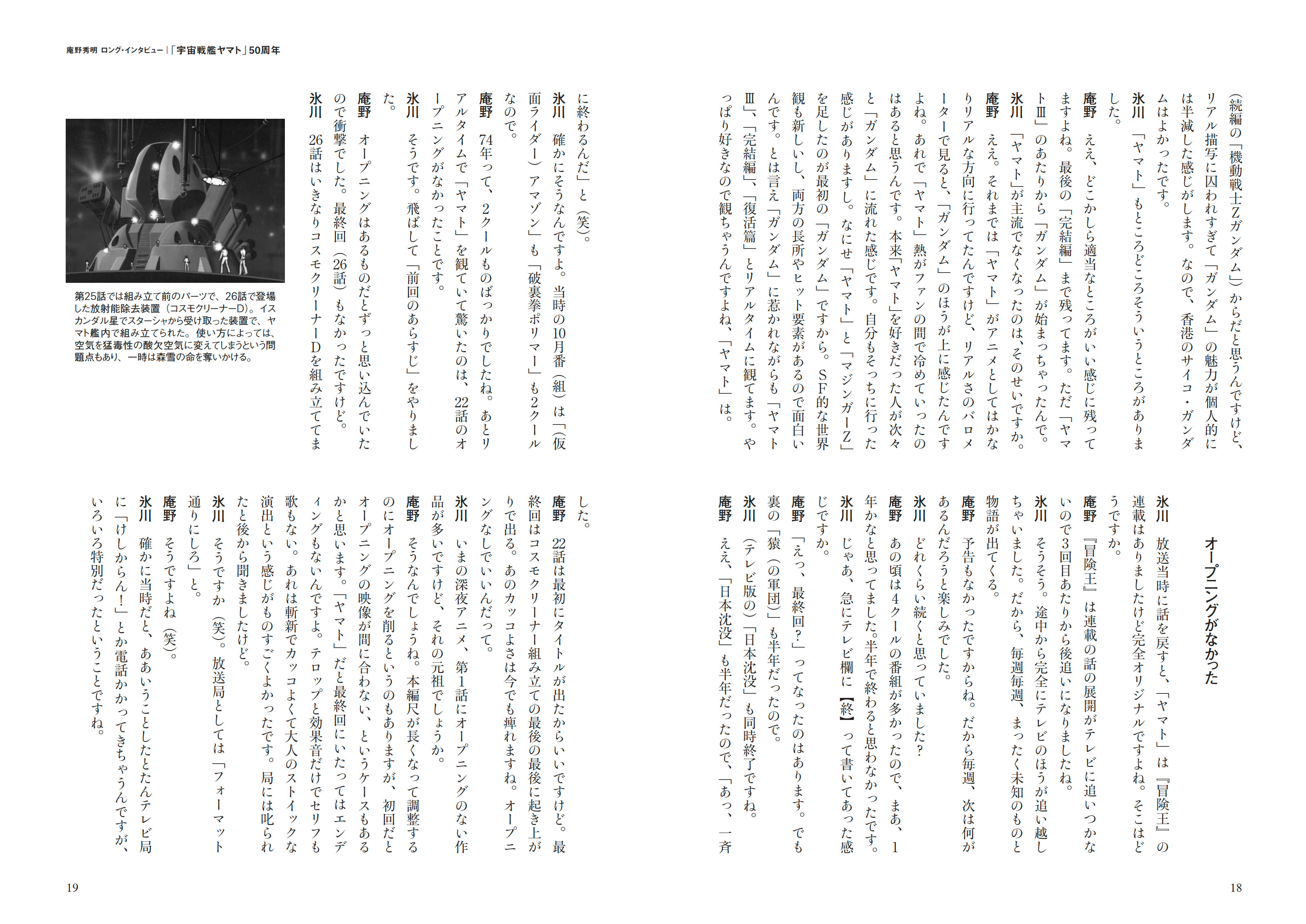
Hikawa: Yamato had bits like that too.
Anno: Yeah, it retained that nice sense of being somewhat casual in places. It lasted right up to The Final Chapter. But around Yamato III, Gundam started happening.
Hikawa: So that’s why Yamato stopped being mainstream?
Anno: Yes. Up until then, Yamato was heading in a fairly realistic direction for anime, but when you measure it by the realism barometer, Gundam felt superior. I think that’s why Yamato fever cooled among fans. It felt like people who originally liked Yamato started drifting over to Gundam one after another.
I feel like I drifted that way too. After all, the first Gundam was essentially Yamato and Mazinger Z combined. Its sci-fi worldview was fresh, and it had the strengths and hit elements of both, making it compelling. That said, even while drawn to Gundam, I still watched Yamato III, Final Yamato, and Resurrection as they came out. I just can’t help watching Yamato because I love it.